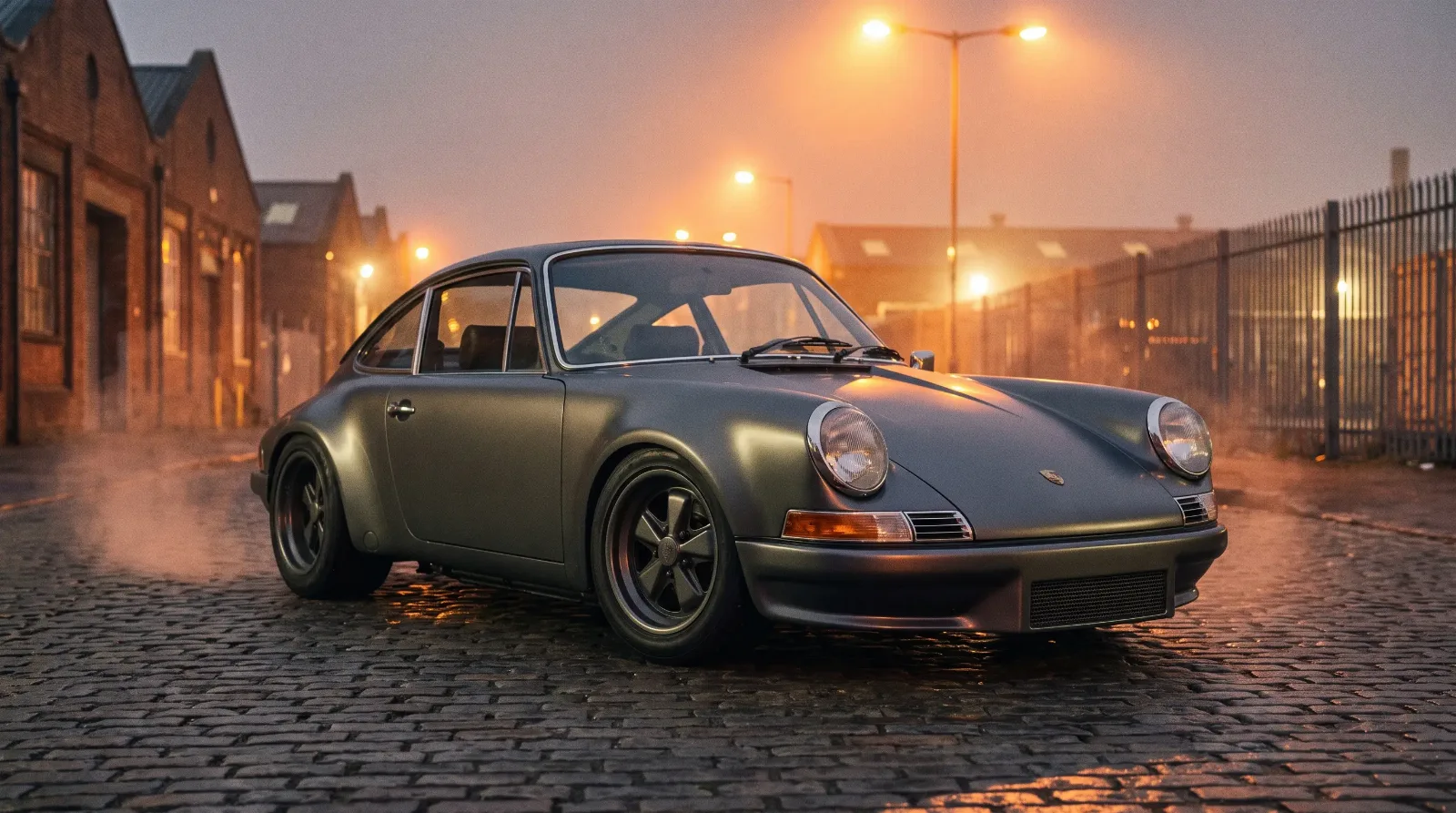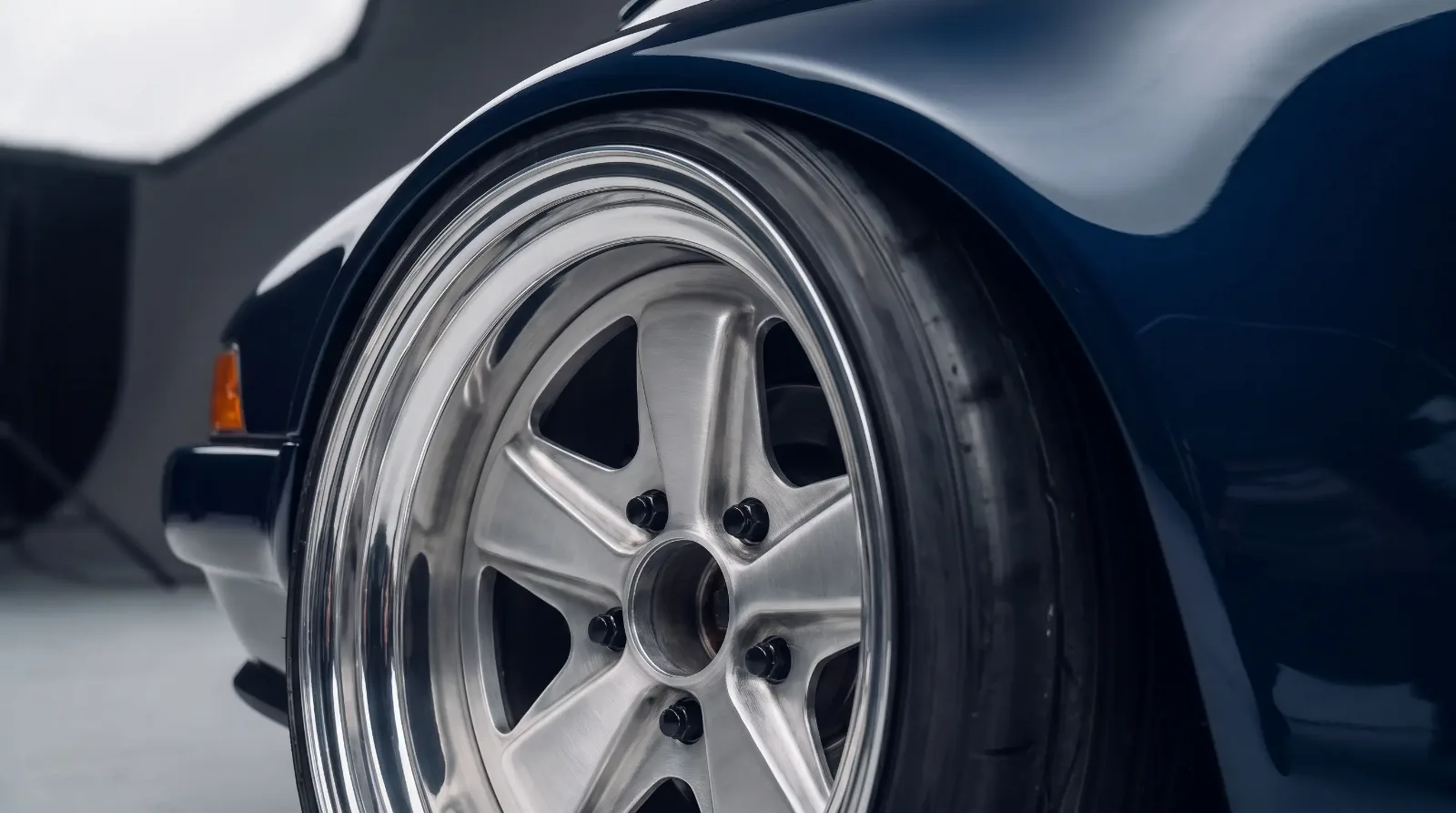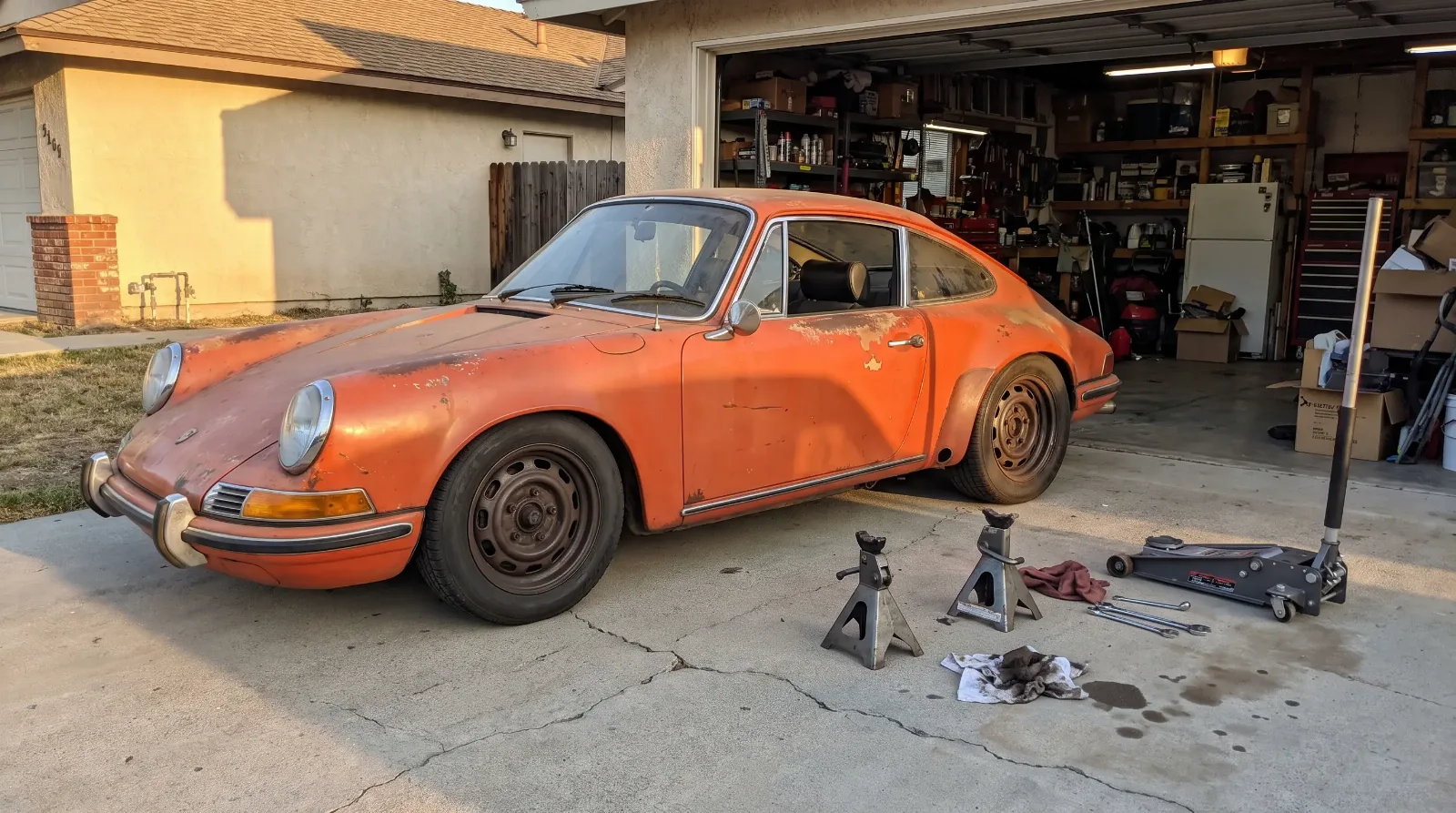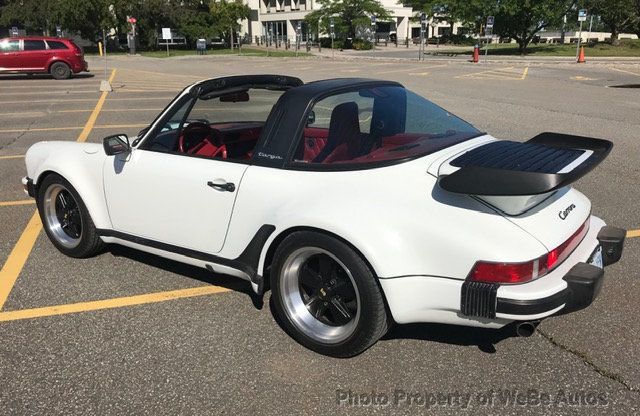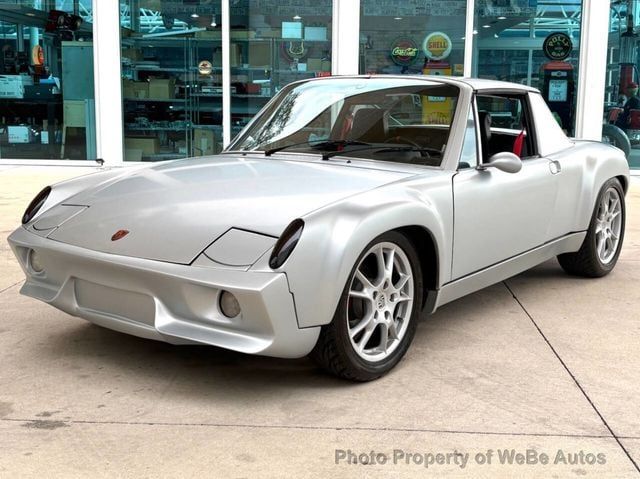
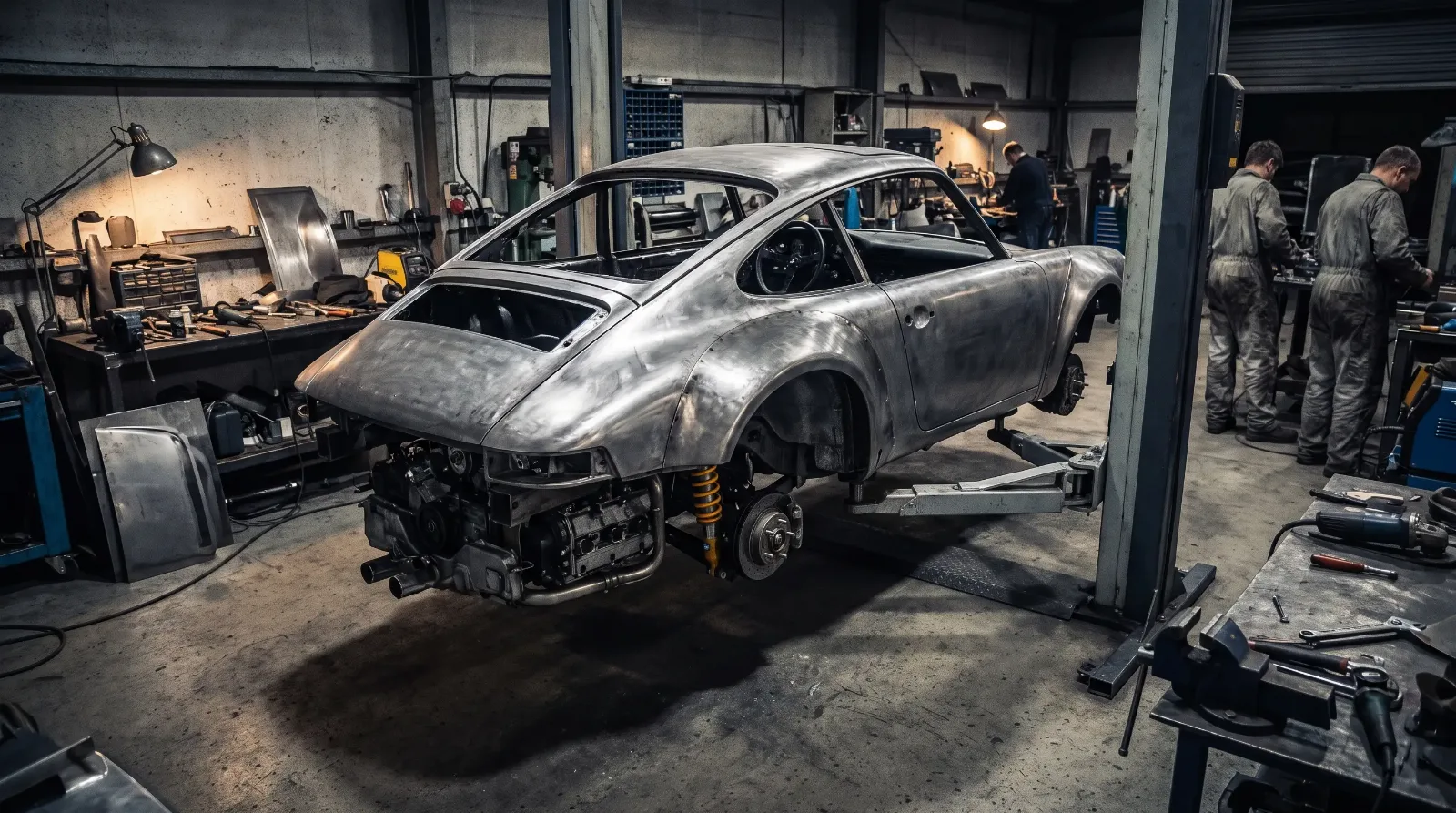
I've built two 911s from bare tubs and I still get asked the same question every time a client walks into the shop: can you just put a modern engine in this thing and call it done. No. That's not what a restomod is, and the gap between doing it right and doing it lazy is the whole story of why this movement blew up the way it did. A restomod takes a classic Porsche body, usually a long-hood 911 or an early 356, and rebuilds everything underneath it to modern standards while keeping the shape everyone fell in love with. Done right, it's the hardest kind of build there is.
The term gets thrown around loosely now. Some shops slap a crate engine in a rough shell, bolt on coilovers from a catalog, and call it a restomod. That's a parts swap with a paint job. The builds that actually move the market, the ones collectors line up for, treat the donor car as a starting point for a complete engineering exercise, not a canvas for whatever's on sale.
What "restomod" actually means, and what it doesn't
A true restomod starts with a body that's been stripped to metal, corrected, and often narrowed or widened with hand-formed steel, not fiberglass bolt-ons. From there the builder rethinks the whole car: chassis stiffness, suspension geometry, brakes, wiring, climate control, all of it gets modernized so the car drives like something built last year, not 1972. The outside can look nearly stock or dramatically reworked depending on the shop's house style, but the underlying commitment is the same. Nothing gets left half-finished because it's hidden under a fender.
This is different from an outlaw build, which leans harder into attitude and visual statement and often keeps more of the original mechanical layout. If you want to see how that other branch of the family developed, the outlaw movement took the same donor cars in a rougher, more rebellious direction. Same starting point, different destination. And if you want Porsche's full origin story before either of these subcultures existed, that history explains why these air-cooled shells are worth this kind of investment in the first place.
The engine swaps that actually make sense
Everybody wants to talk about the engine first, so let's get it out of the way. The 3.6 and 3.8 liter air-cooled flat sixes pulled from later 964s and 993s are the honest choice for a period-correct feel with real power gains, usually landing somewhere around 300 to 350 horsepower on a modestly built naturally aspirated rebuild, well short of the 400 to 700 horsepower figures the highest-end commissions from shops like Singer and Theon Design chase with fully custom internals. Some shops go further with modern water-cooled Mezger-based units or even Suburban-diesel-adjacent nonsense that has no business under a 911 decklid. I've turned down clients who wanted an engine that had nothing to do with the car's DNA. If the swap doesn't respect the character of an air-cooled flat six, you've built a kit car with a Porsche badge on it.
Budget matters here too, and it's the first thing that separates fantasy builds from real ones.
| Build tier | Typical investment | What you actually get |
|---|---|---|
| Entry restomod | $60,000 to $90,000 | Rebuilt period engine, upgraded suspension, refreshed interior |
| Mid-tier build | $120,000 to $200,000 | Widened steel body, larger displacement flat six, modern brakes and electronics |
| Top-shelf commission | $300,000 and up | Full hand-fabricated bodywork, bespoke chassis engineering, one-off interior |
Chassis, brakes and suspension: where the real money goes
Nobody buys a restomod for the badge. They buy it to drive it hard on a road that wasn't built in 1970. That means the suspension geometry gets reworked from the ground up, often with modern coilovers, revised camber curves, and bushings that don't turn to dust after a decade. Brakes get a serious upgrade too, usually big-piston calipers paired with vented rotors sized for the extra weight and power the swap adds. None of this shows up in a photo. It's the part of the build that separates a car that looks fast from a car that actually is.
Steering feel is where a lot of builds fall apart. Add power steering carelessly and you kill the thing that made these cars special in the first place. The good shops spend as much time tuning the rack as they do picking paint. That's not a detail, that's the whole point of the exercise.
Interior and electronics: the compromises builders accept
This is where I see the most disagreement in the industry. Some builders keep everything analog, no screens, no Bluetooth, nothing that wasn't available when the car left the factory. Others wire in modern climate control, hidden infotainment, and enough sound deadening to make the cabin feel like a current-generation car. Neither approach is wrong, but a builder needs to commit to one philosophy and execute it fully. The worst restomods I've seen try to split the difference and end up with a dash that looks like it was assembled by three different people who never spoke to each other.
Wiring harnesses get replaced entirely on any serious build. Forty-year-old insulation is a fire risk, full stop, and any shop that reuses the original harness under a modernized engine bay is cutting a corner that will bite the owner eventually.
"A restomod isn't a costume. If you can't explain why every single change is on the car, you didn't build a restomod, you built a mood board with a VIN number."
— Jim Vasquez
What separates a good restomod from a bad one
I judge a build by what I can't see as much as what I can. Panel gaps that stay consistent after five years of driving. A chassis that doesn't creak over speed bumps. An engine bay that looks like it was designed that way from day one instead of shoehorned in over a weekend. The best restomod shops treat the original car as a set of engineering constraints to respect, not a shell to gut and forget. For an entirely different but related take on how far a 912 or 914 can be pushed on a smaller budget, another angle on the same car shows the same principles applied down-market. And if you're actually in the market rather than just admiring the build sheets, browse Porsche restomods for sale to see what finished cars in this space actually trade for right now.
The best classic Porsche restomods on the road right now share one trait that has nothing to do with horsepower figures or paint codes. Every decision on the car serves the driving experience, not the Instagram post. That's a harder standard to hit than it sounds, and it's why the good shops stay booked years out while the pretenders churn through one bad build after another.