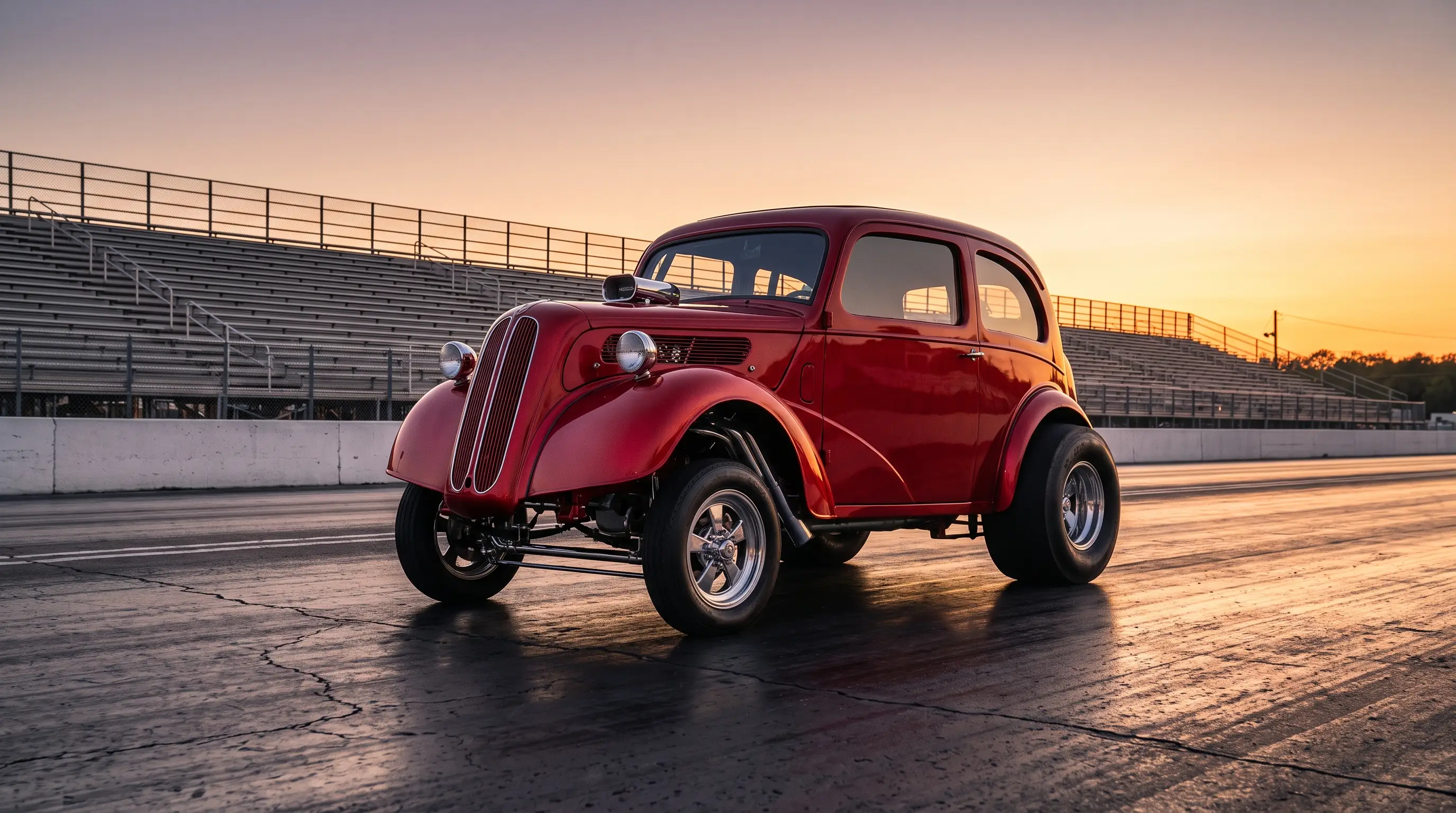
A pro street anglia is one of those cars that makes people stop mid sentence at a show. The Ford Anglia, a British economy car built through the 1950s and into the 1960s, has a weird little bubble roofline and a face that looks almost cartoonish, and none of that has anything to do with drag racing power. That contrast is exactly why a handful of builders decided the Anglia deserved a shot at the Pro Street treatment, stuffing serious V8 power into a body that was originally designed to sip fuel around English villages.
A strange import with a long drag racing history
The Anglia's connection to American drag racing actually predates Pro Street by a couple of decades. Gasser builders in the early 1960s already knew the car well, mostly in its earlier, rounder bodied 1948 to 1953 form, since its tiny size and light weight made it a natural for straight axle, blown fuel gasser builds running quick times against much bigger American iron. The later, bubble roofed 105E generation built from 1959 to 1967, the shape most Pro Street builders reach for today, saw its own share of strip time too. When Pro Street rolled around in the late 1970s and through the 1980s, some of those same gasser owners, or a new generation inspired by them, adapted the Anglia to the tubbed and street driven look rather than the pure strip focused gasser stance.
What set the Anglia apart from something like a Willys was just how far outside American norms the body looked. Where a Willys reads as a small American hot rod shape, an Anglia reads as something imported, oddly proportioned, and instantly recognizable even to people who could not name the car.
The mechanical reality of building one
Fitting a big American V8 into an Anglia is a tight squeeze in every sense. The engine bay was designed for a small inline four, so a V8 swap usually means custom motor mounts, reworked firewalls, and careful attention to weight distribution since the car is so light to begin with that even a modest V8 changes the whole balance dramatically. Tubbing the rear for slicks on a car this narrow required serious metal work, often more invasive proportionally than what a Chevelle or Nova needed for the same tire width.
| Detail | Typical Pro Street Anglia build |
|---|---|
| Base platform | Ford Anglia 105E, built 1959 to 1967 |
| Original curb weight | Roughly 1,600 to 1,800 pounds |
| Common engine swap | Small block or big block Chevy, occasionally blown |
| Drag racing lineage | Well established in 1960s gasser and fuel classes |
| Survival rate today | Extremely low, most examples were raced hard and used up |
How the gasser look influenced the Pro Street version
Traditional gasser Anglias ran straight axles and a raked, nose high stance, painted in bright, simple colors with big numbers or sponsor names across the doors, a look tied directly to the 1960s drag strip. When Pro Street builders adapted the car in the following decades, some kept that raked gasser stance as a deliberate nod to the car's racing roots, even after tubbing the rear and lowering the overall ride height to fit the street driven Pro Street formula. Others abandoned the gasser look entirely and went for a sleeker, lower profile more in line with what a Pro Street Nova or Camaro wore, treating the Anglia's odd shape as a blank canvas rather than a tribute to its own history.
That split created two distinct sub styles within the small world of Pro Street Anglias, and collectors today tend to have a strong preference for one or the other. Purists who value the gasser lineage look for cars that kept the raked stance and simple graphic treatment, while builders chasing pure spectacle preferred the lower, wider, more aggressive modern Pro Street look regardless of what it did to the car's original drag racing character.
Why so few of these cars survived
Anglias that got the Pro Street or gasser treatment were often driven hard and maintained on a shoestring budget, which is not a recipe for long term survival. A lot of these cars ended up cannibalized for parts once a build was finished with, or scrapped entirely after an accident on the strip. What remains today tends to be either a carefully preserved example from a well known builder or a rough project that has been sitting for decades waiting for someone with patience and a welder.
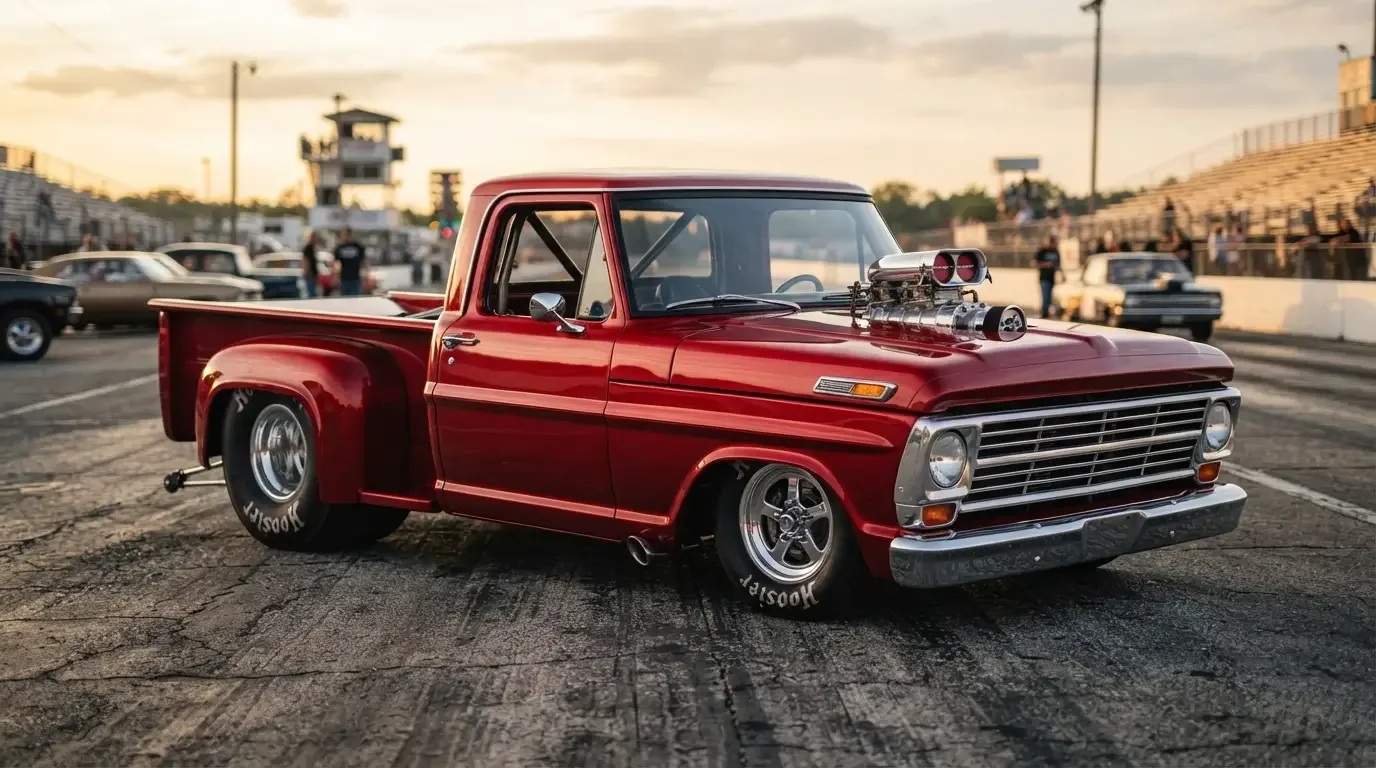
If you want the whole picture on how oddball shapes ended up carrying serious drag power during this era, the truck and oddball side of the movement follows the exact same logic that pushed builders toward a tiny British economy car in the first place.
A car that still surprises people who know cars
Even seasoned hot rodders who have seen decades of unusual builds tend to do a double take at a proper Anglia. Part of that reaction comes from how few people outside dedicated gasser and Pro Street circles know the car at all, and part of it comes from the sheer visual mismatch between the small, bubble roofed body and whatever V8 is stuffed under the hood. That reaction has not faded with time. If anything, as fewer of these cars survive and fewer builders take on the challenge, the ones still running draw an even bigger crowd than they did decades ago simply because genuine examples have become so uncommon.
Buying and living with one today
An Anglia is not a car for anyone who wants an easy restoration. Parts availability is thin in the United States, and most of what you need has to come from specialty gasser and hot rod suppliers rather than a general parts store. Anyone taking one on needs to be comfortable fabricating or sourcing pieces that simply are not sitting on a shelf anywhere nearby.
"You do not buy an Anglia because it is convenient. You buy one because you want to build something nobody else at the show has, and you are willing to do the work that takes."
- Mike Sullivan
For those ready to take on the search, it makes sense to shop classic Pro Street car listings regularly, since an Anglia build surfaces rarely and tends to move fast once a serious buyer spots one. Patience is part of the deal with this car, same as it was for the builders who took it on in the first place.