
Ford built 1,078,176 SN95 Mustangs from the 1994 through the 2000 model years, by the count of the published model-year tables. That is the result. The surprising part is that in 1989 the car had no budget, no approved design and a corporate study pricing a new Mustang at $1 billion, a figure that came close to ending the rear-drive pony car. The SN95 Mustang is the story of how a small team got that number down, kept the V8 and the rear axle, and handed Ford its best-selling Mustang years in a decade.
Car Features
10 min read
The SN95 Mustang Story (1994–2000): Ford Rethinks the Pony Car
How the SN95 Mustang went from a $1 billion problem to 1,078,176 cars: the Fox-4 platform, the last 5.0, the 4.6 and the New Edge.
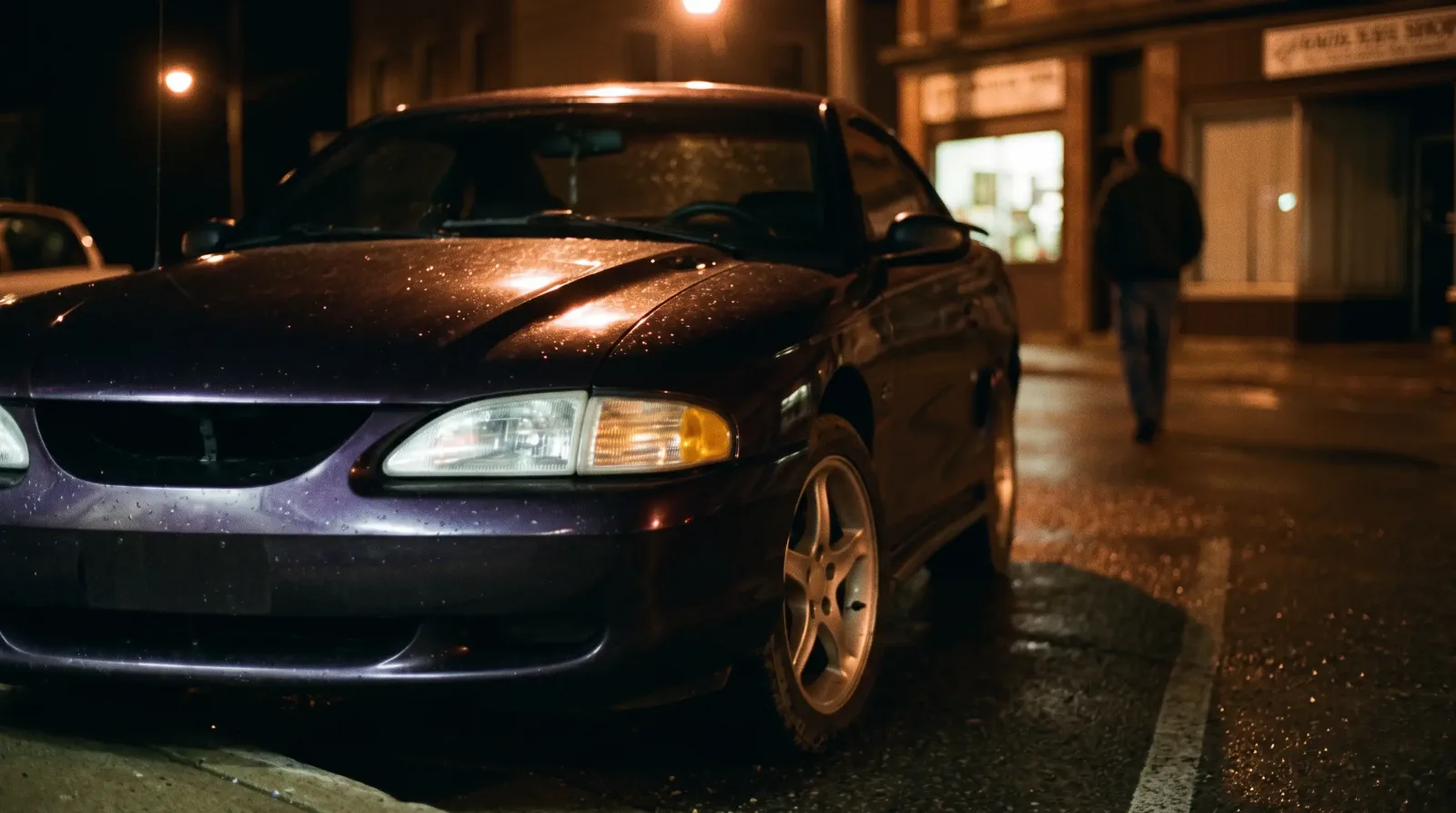
This is the overview of the whole generation, from the warehouse where it was planned to the 2000 model year. The individual years, engines and special editions each have their own deep dive; here the job is to put them in order and show what the numbers say.
Why the SN95 almost never happened
In the late 1980s Ford came close to letting a front-drive, Mazda-based coupe carry the Mustang name. Enthusiasts pushed back hard, and that car arrived as the Ford Probe instead. Winning the argument over a badge did not pay for a new rear-drive car, though, and the Fox platform under the Mustang had been in production since the 1979 model year. When the 1989 study put a full redesign at $1 billion, the case for the rear-drive car looked thin on paper.
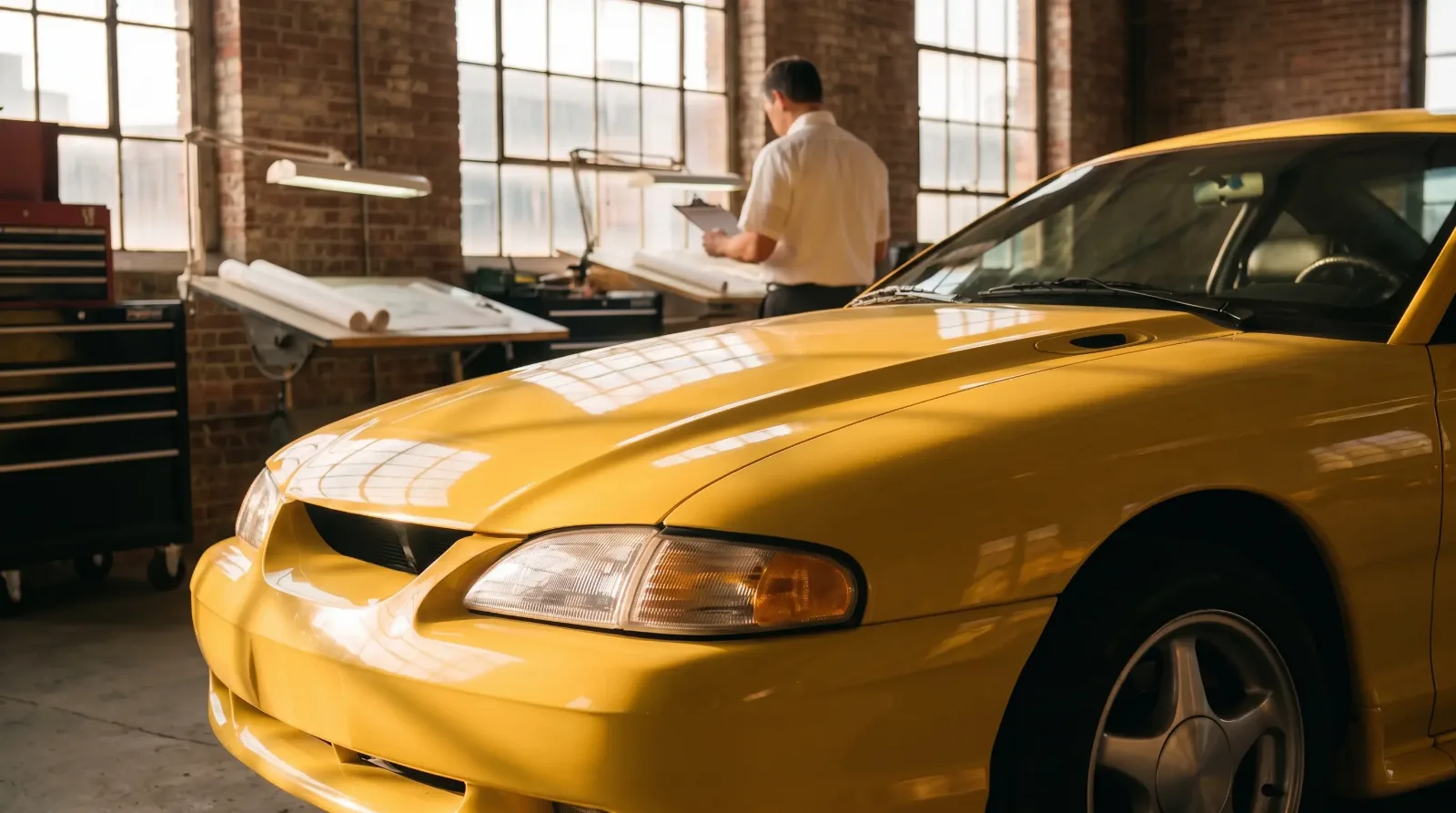
The answer came from the middle of the company. In August 1989 John Coletti, then the Mustang's engineering design manager, pulled together nine people who met informally on Thursday afternoons. Styling work began that November. In February 1990 Alex Trotman, head of North American Automotive Operations, approved a clay model, and by May 1990 the project had its code name: SN95. Once approved, the program passed to Will Boddie and Team Mustang, a group of about 200 people at its core who moved into a warehouse in Allen Park, Michigan, in June 1990.
The financial result is what made the rest of Ford pay attention. The program came in at about $700 million against a 36-month deadline, and Job One at Dearborn Assembly arrived on October 15, 1993, two months ahead of schedule. Anyone following the longer history of the Ford Mustang will recognize the pattern: the car survived because a few people inside Ford refused to let the formula die.
New skin on a Fox-4 floor
Ford says 1,330 of the 1,850 parts in the 1994 Mustang were changed. Roughly seven in ten parts were new. The floor pan and the front crossmember were not, because the SN95 rode on an updated Fox platform that Ford called Fox-4. The wheelbase moved from 100.5 inches to 101.3, less than an inch. That is what a $700 million program looks like: new everywhere you can see and touch, carried over where the money would have run out.
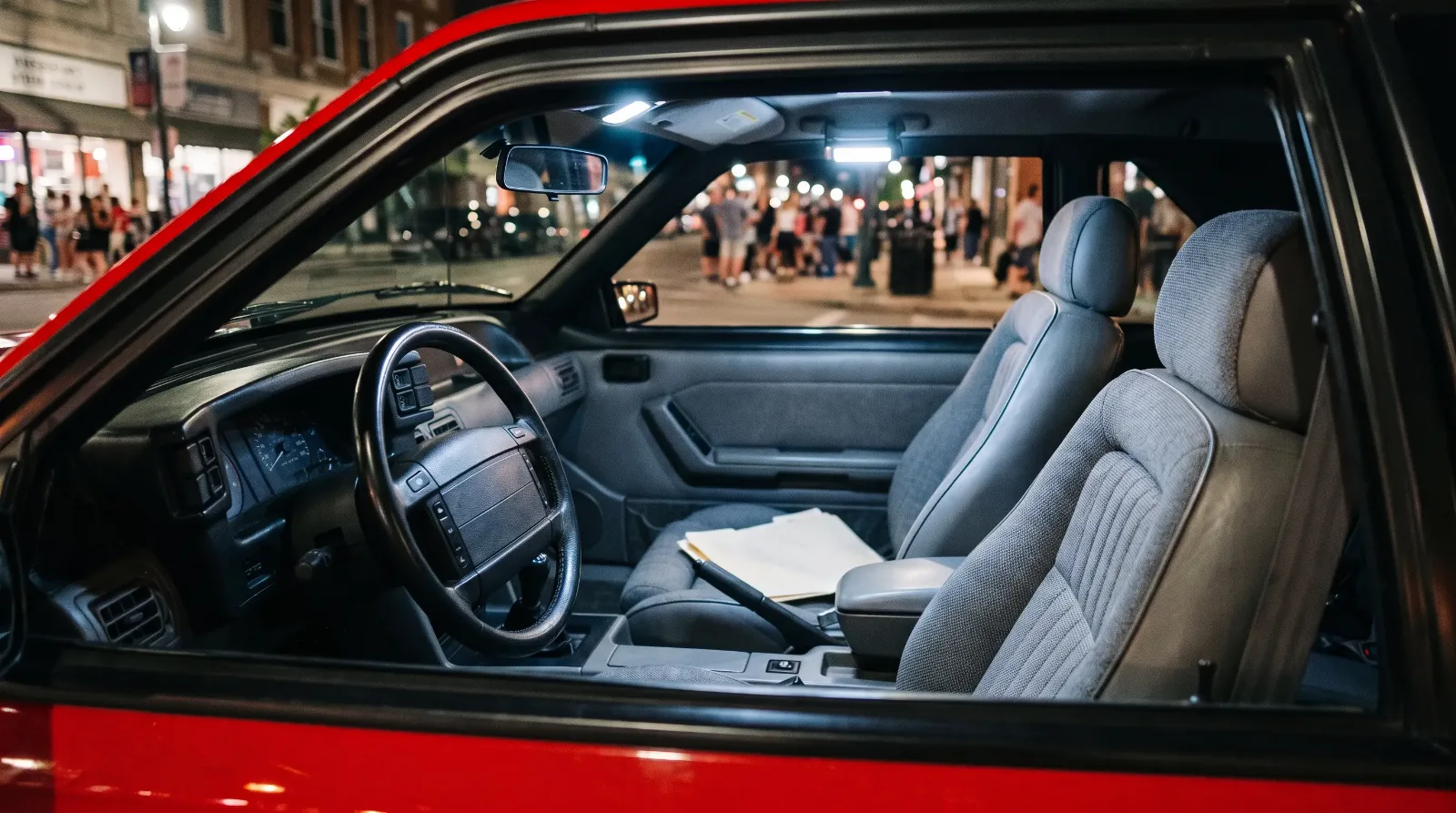
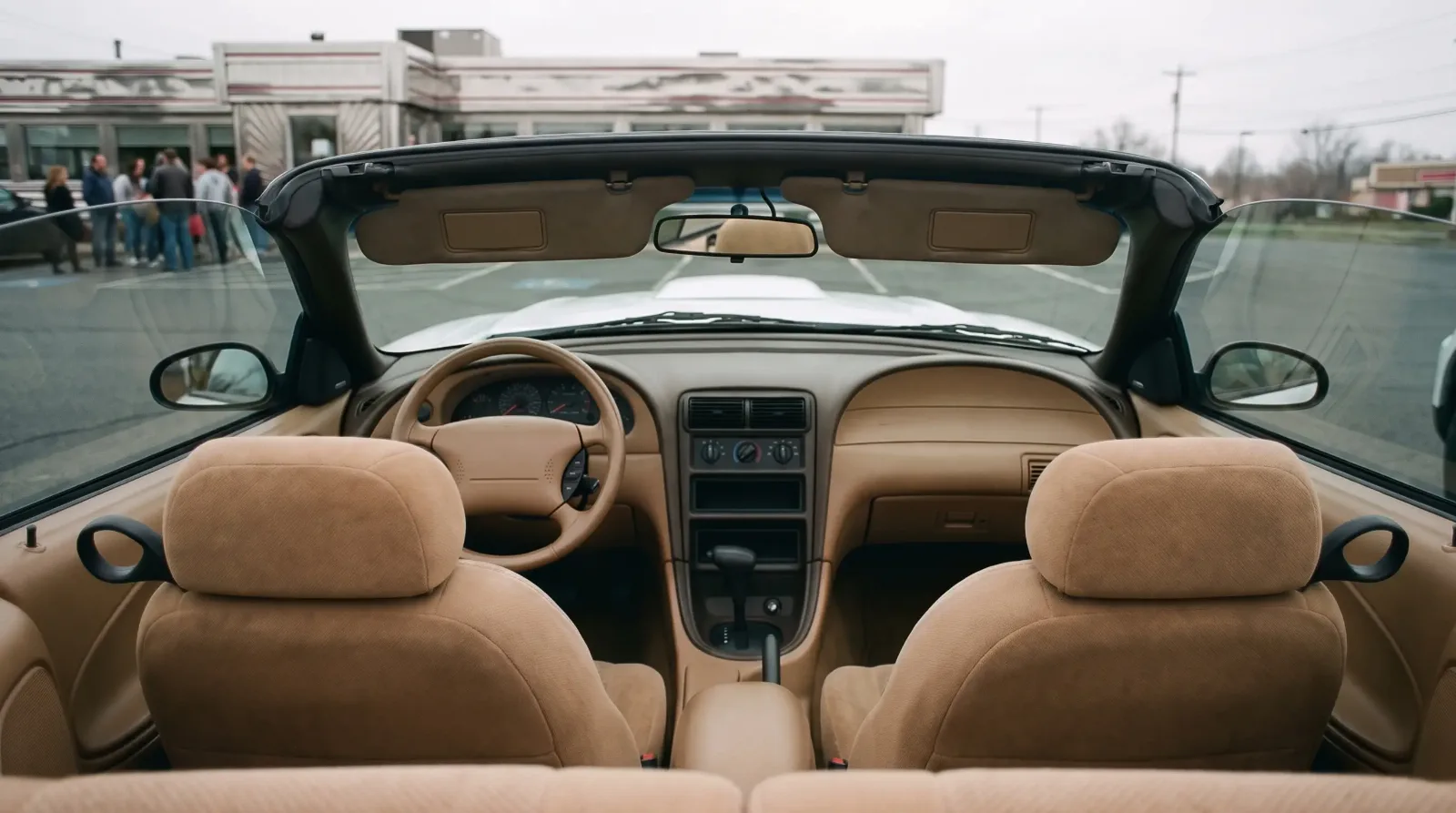
The body was all new, and the lineup was simpler. The notchback and hatchback were dropped, leaving one fastback-style coupe and a convertible. Of three design themes nicknamed "Bruce Jenner," "Rambo" and "Arnold Schwarzenegger," the Arnold theme was approved in November 1990 and reached production with only small changes. The running horse went back into the grille after a 16-year absence, and C-shaped side scoops, three-element taillights and a dual-cockpit dash gave the car its heritage cues.
The numbers that mattered for driving were underneath. Track width grew 3.7 inches over the 1993 car, the structure got stiffer, and four-wheel disc brakes became standard on every Mustang for the first time. The cost was weight: about 300 pounds more than the 1993 car. That trade shaped how the SN95 drove for its first five years.
1994 and 1995: the last pushrod 5.0 years
Ford showed the new car to the public at 100 sites across the country on the same Sunday in October 1993, and it went on sale nationwide on December 9, 1993. The 2.3 four was gone, so the base engine became a 3.8 V6 rated at 145 hp and 215 lb-ft. The GT kept the 5.0 HO pushrod V8 at 215 hp and 285 lb-ft. Launch prices started at $13,365 for the V6 coupe and $17,280 for the GT coupe, and Motor Trend named the 1994 Mustang its Car of the Year.
On paper the GT looked like a step sideways: 10 hp more than the re-rated 1993 Fox 5.0, carrying about 300 extra pounds. MotorWeek's same-day test put a 1994 GT at 6.8 seconds to 60 mph against 6.4 for a Camaro Z28, whose LT1 made 275 hp. The handling figures tell the other half. Motor Trend recorded 0.87 g on the skidpad and 66.3 mph through the slalom for the 1994 GT; the 1993 SVT Cobra, a car built specifically to handle, had managed the same 0.87 g and a slower 64.8 mph.
"Ten more horsepower and three hundred more pounds is a bad trade at a drag strip. Then a showroom GT out-ran the previous year's Cobra through the cones. The SN95 was never about the peak number. It was about a body stiff enough to use the power it had."
Dan Reeves
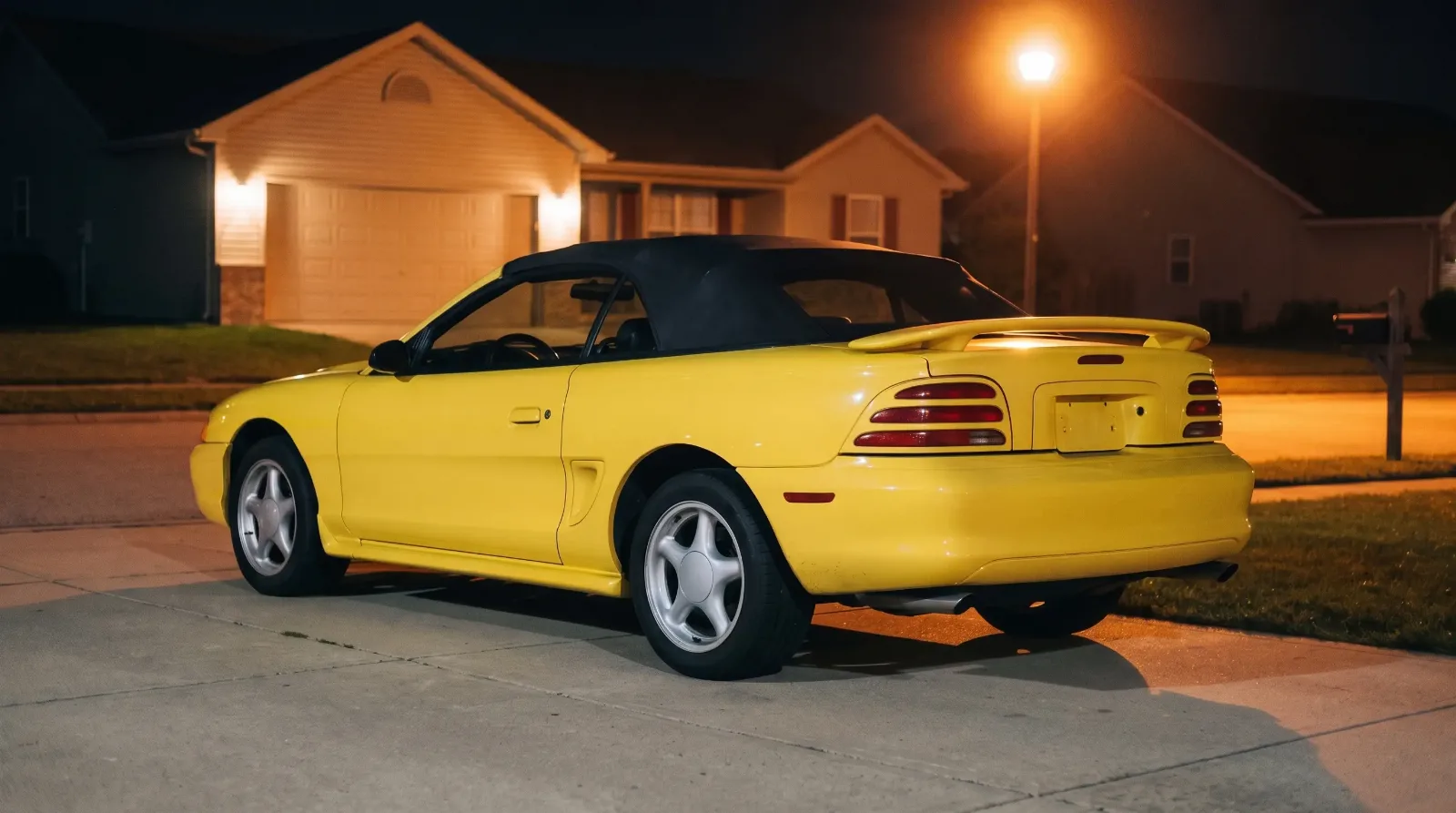
A 1994 Cobra convertible paced the 78th Indianapolis 500, and all 1,000 Cobra convertibles that year were Rio Red pace car replicas. Then 1995 delivered the volume: 185,986 Mustangs, up 51 percent and the highest total since 1989. It was also the last model year of the pushrod 5.0 in the Mustang, and the year Ford sold the GTS, a GT without fog lamps, rear spoiler or power seats, at $16,910. The commonly cited count is 6,370.
1996 to 1998: the 4.6 Modular arrives
For 1996 the GT traded the 302 for the 4.6 SOHC two-valve Modular V8, an engine that had first gone into production in the 1991 Lincoln Town Car. The rating came out identical: 215 hp and 285 lb-ft, with the peaks arriving 200 and 100 rpm higher. The swap brought the EEC-V engine computer, the T-45 five-speed in place of the T-5, and the 4R70W automatic in place of the AOD-E. Same number on the sticker, different engine to drive, and many 5.0 owners noticed the softer low end before anything else.
Production fell to 135,980 for 1996 and to 108,344 for 1997, the lowest year of the run. The recovery came in 1998, when the GT went to 225 hp and the base car picked up air conditioning, remote keyless entry and power windows and locks as standard. Output jumped to 175,522. For a sense of scale, Chevrolet sold 48,495 Camaros that year, a rough comparison of sales against production, but the gap is too wide to be a counting quirk.
The headline engine of these years lived in the Cobra. SVT's 4.6 DOHC four-valve V8, assembled by two-person teams at Ford's Romeo, Michigan plant, made 305 hp from 1996, and about 2,000 of the 1996 coupes wore color-shifting Mystic paint. That side of the story, along with the R models and the outside tuners, belongs to the SVT and Saleen cars, and it is worth reading alongside this one.
The Camaro won the spec sheet, the Mustang won the showroom
For most of the decade the Camaro had more power. The 1993 to 1995 Z28's LT1 made 275 hp, and the LS1 Z28 of 1998 was rated at 305. Even the six-cylinder fight went Chevrolet's way: the 3800 Series II V6 made 200 hp from 1995, while the Mustang V6 made 145 and then 150. On any spec sheet laid side by side, the Mustang lost.
The production numbers say buyers did not care much. Ford's best SN95 year, 2000, built 121,026 V6 coupes alone, more than the entire 1997 Mustang run. Most SN95 buyers were not shopping horsepower. They wanted an affordable, good-looking coupe with the right name, and a V8 version if they ever wanted one.
The racing record helped the image. In the 1997 Trans-Am Series, Tommy Kendall won the first 11 of 13 rounds in a Roush-prepared Mustang, a record run of straight wins, and took his third straight title. Those cars were tube-frame racers wearing the Mustang's shape, but every week on television the shape was winning.
1999 and 2000: New Edge and 260 hp
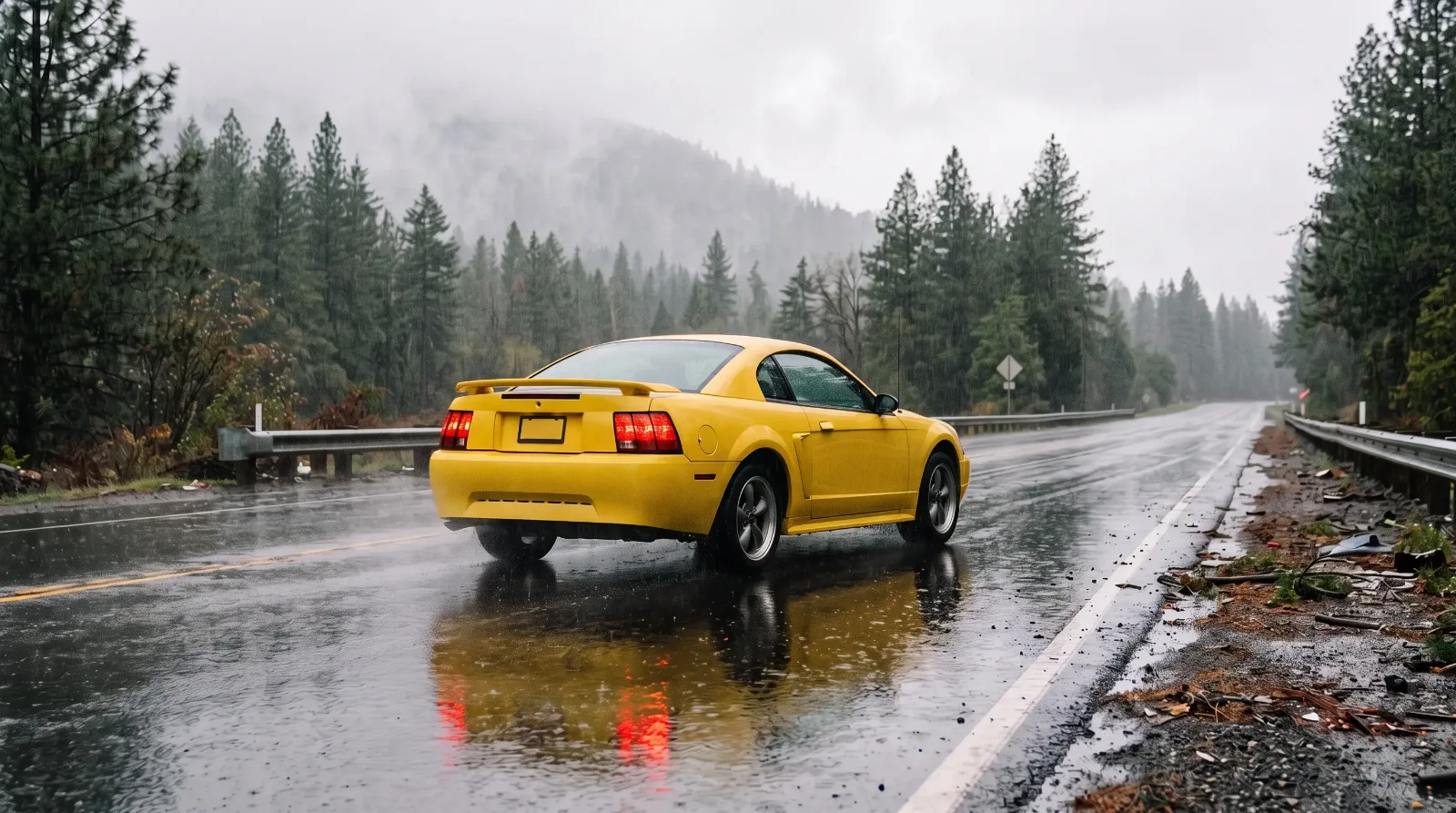
Production of the restyled car began in November 1998. Ford kept the platform and the 101.3-inch wheelbase and put creases through panels that had been all curves since 1994. Length grew to 183.2 inches and width to 73.1. Every 1999 V6 and GT carried a 35th Anniversary badge on each front fender, and the Limited Edition GT package ran to 4,628 cars.
The bigger news was under the hood. With revised heads, cams and intake, the GT went to 260 hp at 5,250 rpm and 302 lb-ft. That is 45 hp more than the 1996 engine from the same 281 cubic inches, and it settled the 4.6 argument for a lot of owners. The V6 rose to 190 hp. Ford also widened the rear track 1.4 inches, added traction control, foam-filled the rockers and gave the convertible a subframe connector.
Not everything went to plan. The 1999 Cobra was advertised at 320 hp with the first independent rear suspension on a production Mustang, owners' dyno tests showed about 285, and Ford stopped sales on August 6, 1999, to fix the cars. There was no regular Cobra for 2000, only 300 Cobra R models. The regular cars did fine without it: 2000 was the biggest year of the run at 215,239, including 3,091 GT Spring Feature Edition cars.
Reading the SN95 Mustang numbers as a buyer
Start with the whole run. The table below lines up the base and GT engine ratings against model-year production. Read the two right-hand columns together and the generation's shape is obvious: the GT's rating barely moved for five years, and production swung by more than 100,000 cars between the low year and the high one.
| Model year | V6 rating | GT engine and rating | Production |
|---|---|---|---|
| 1994 | 145 hp | 5.0 pushrod V8, 215 hp, 285 lb-ft | 123,198 |
| 1995 | 145 hp | 5.0 pushrod V8, 215 hp, 285 lb-ft | 185,986 |
| 1996 | 150 hp | 4.6 SOHC V8, 215 hp, 285 lb-ft | 135,980 |
| 1997 | 150 hp | 4.6 SOHC V8, 215 hp, 285 lb-ft | 108,344 |
| 1998 | 150 hp | 4.6 SOHC V8, 225 hp, 290 lb-ft | 175,522 |
| 1999 | 190 hp | 4.6 SOHC V8, 260 hp, 302 lb-ft | 133,907 |
| 2000 | 190 hp | 4.6 SOHC V8, 260 hp, 302 lb-ft | 215,239 |
| Total | 1,078,176 |
Behind those totals, the biggest share belongs to the V6. Add the V6 coupes and convertibles and you get 698,967 cars, about two of every three SN95s. The GT accounts for 330,838, and the SVT Cobras of every kind for 48,371.
Volume is the lesson. With more than a million built in seven years, a V6 coupe is the most common SN95 there is, and its price should reflect that. Scarcity lives in a short list: the 250 1995 Cobra Rs, the 300 2000 Cobra Rs, the 1,000 pace car replicas, about 2,000 Mystic Cobras, the 3,091 Spring Feature cars, the 4,628 35th Anniversary Limited Editions and the 6,370 GTS cars.
The engine split matters too. The 1994 and 1995 cars are the only SN95s with the Fox-era pushrod V8, and the 1999 and 2000 GTs are the ones with the 260 hp rating and the wider rear track. In between, the 1996 to 1998 GTs get the least attention of the run, so judge each one on its condition rather than its model year. Whatever the year, original paperwork and an unmodified drivetrain count for more than any single badge. Anyone comparing SN95 Mustangs for sale should start with the window sticker and the build date, then look at the car.
As an epilogue, the New Edge body carried on past the classic window, and SN95 production ended on May 10, 2004.
Sources and notes
- MustangSpecs: The 4th generation Ford Mustang overview
- Ford Motor Company: 45th anniversary look-back at the 1994 to 2004 Mustang (archived press release)
- The Roanoke Times, October 15, 1993: the new Mustang's budget and launch
- Wikipedia: Ford Mustang (fourth generation)
- GM-EFI: MotorWeek's 1994 Camaro Z28 vs Mustang GT test figures
- MustangSpecs: 2000 Ford Mustang production and specifications
Related Reading
Article
The Classic Ford Mustang Story
Article
The Fox Body Mustang Story (1979–1993)
Article
SVO, SVT Cobra and Saleen: The Tuner Mustangs (1984–2000)
Article
Team Mustang: How a Skunkworks Saved the Mustang
Article
Rambo, Bruce Jenner and Arnold: The SN95 Design Themes
Article
The 1994 Mustang: A New Pony Car in the 30th Year, and the Pace Car
External
/ford/mustang/sn95

About the author
Dan Reeves
Performance engine builder from North Carolina's motorsports corridor, focused on swaps, forced induction and making real, repeatable power.
Related Listings - Ford Mustang




Comments
Be the first to comment on this article.