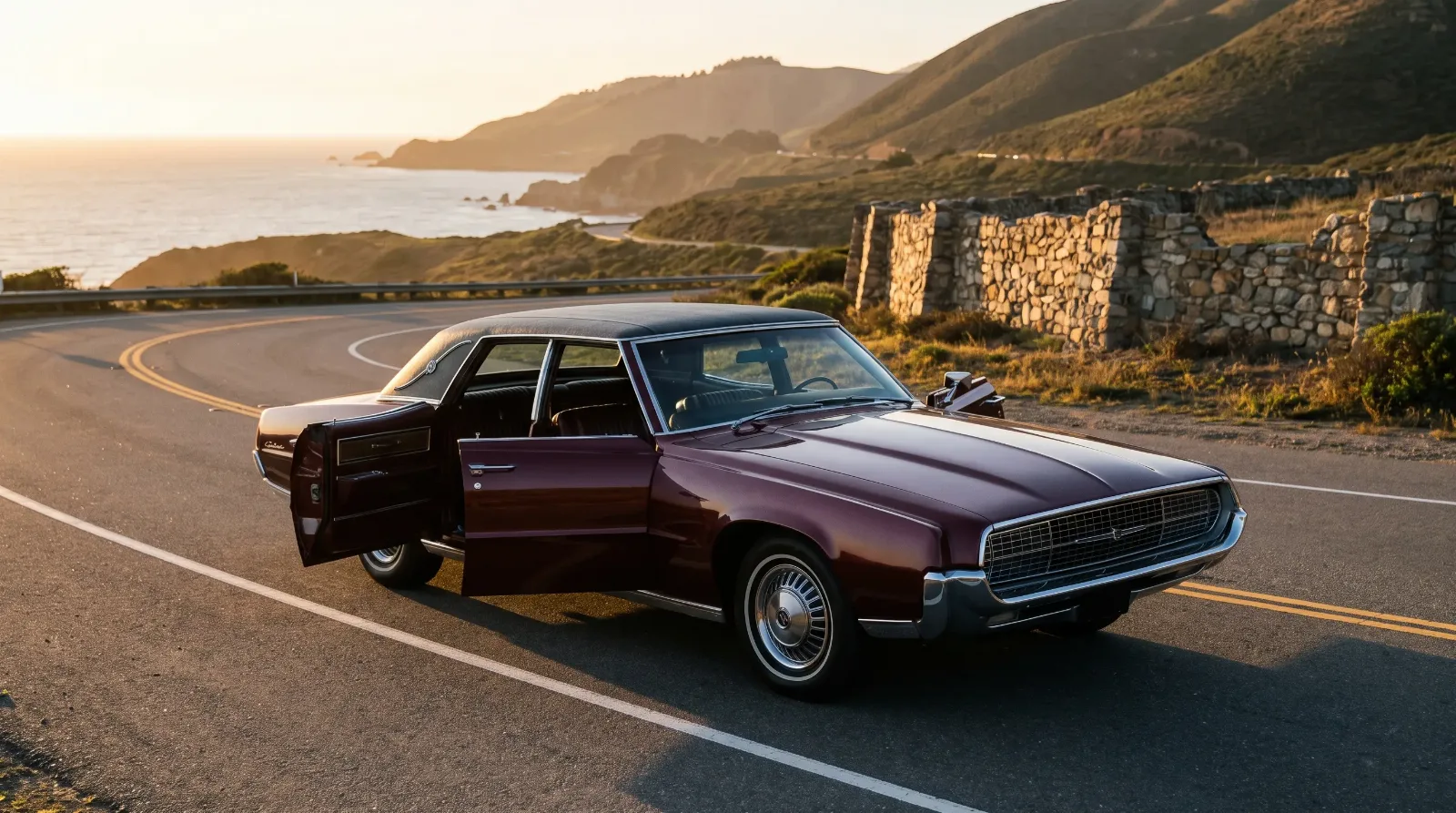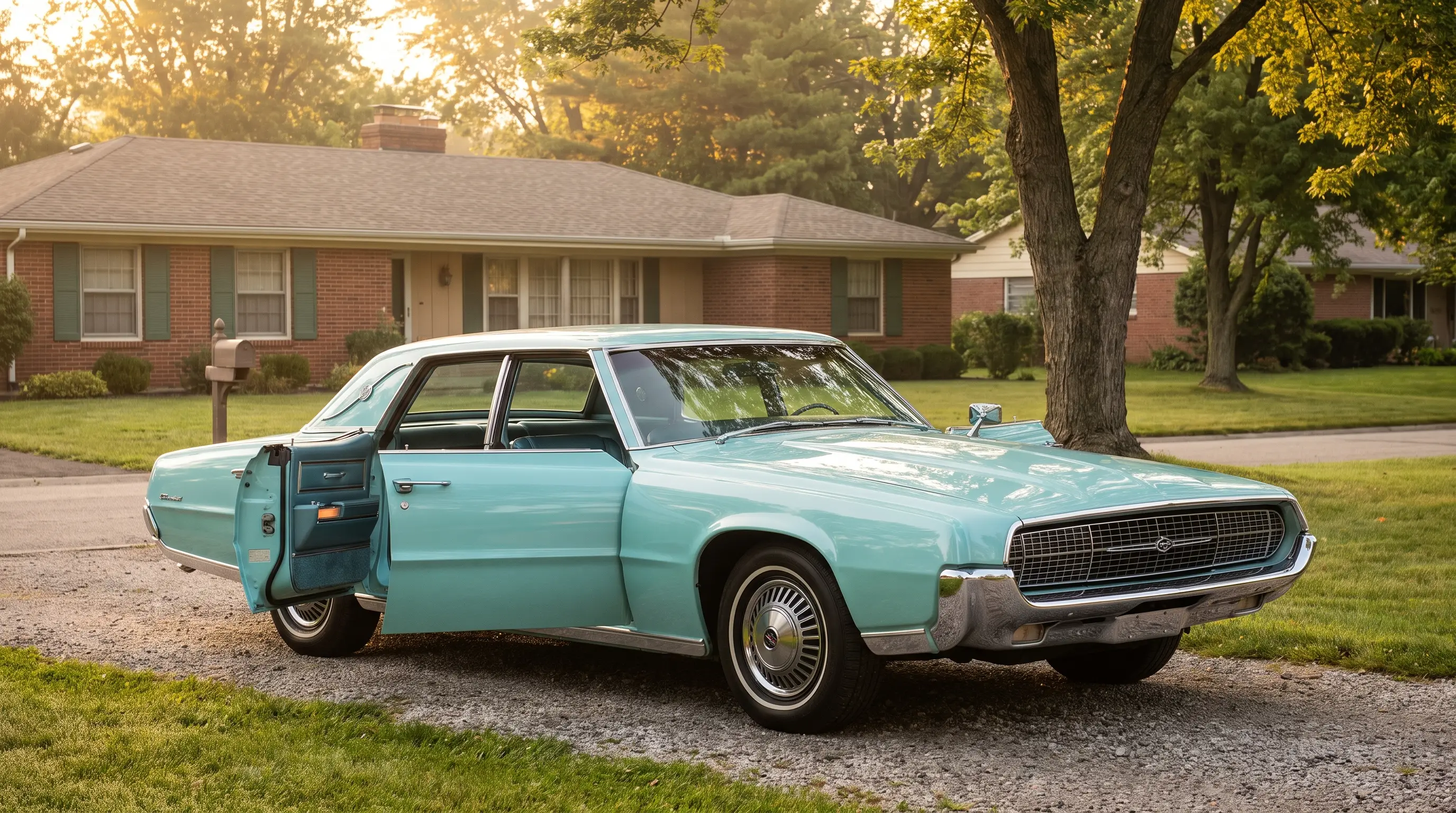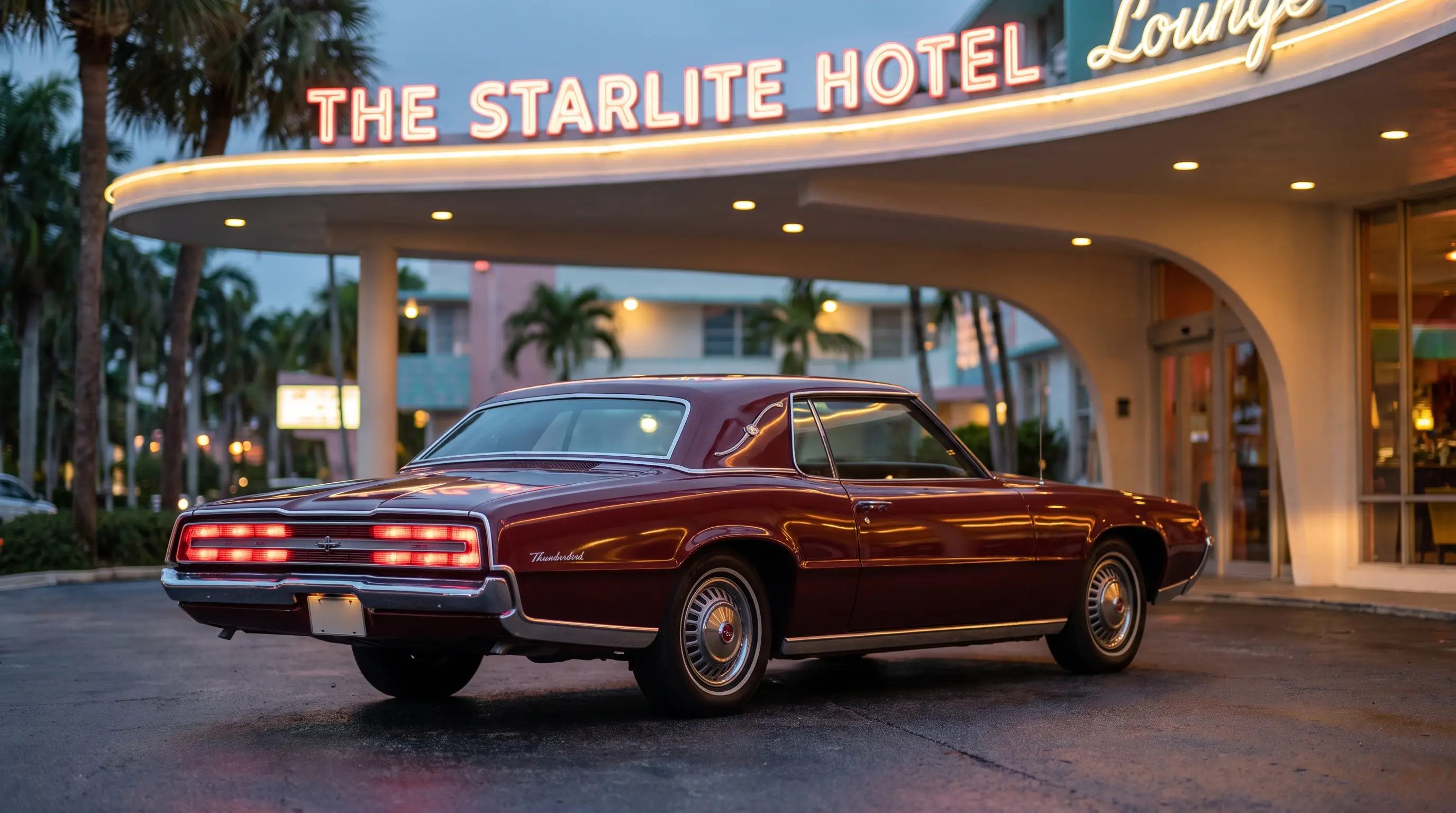
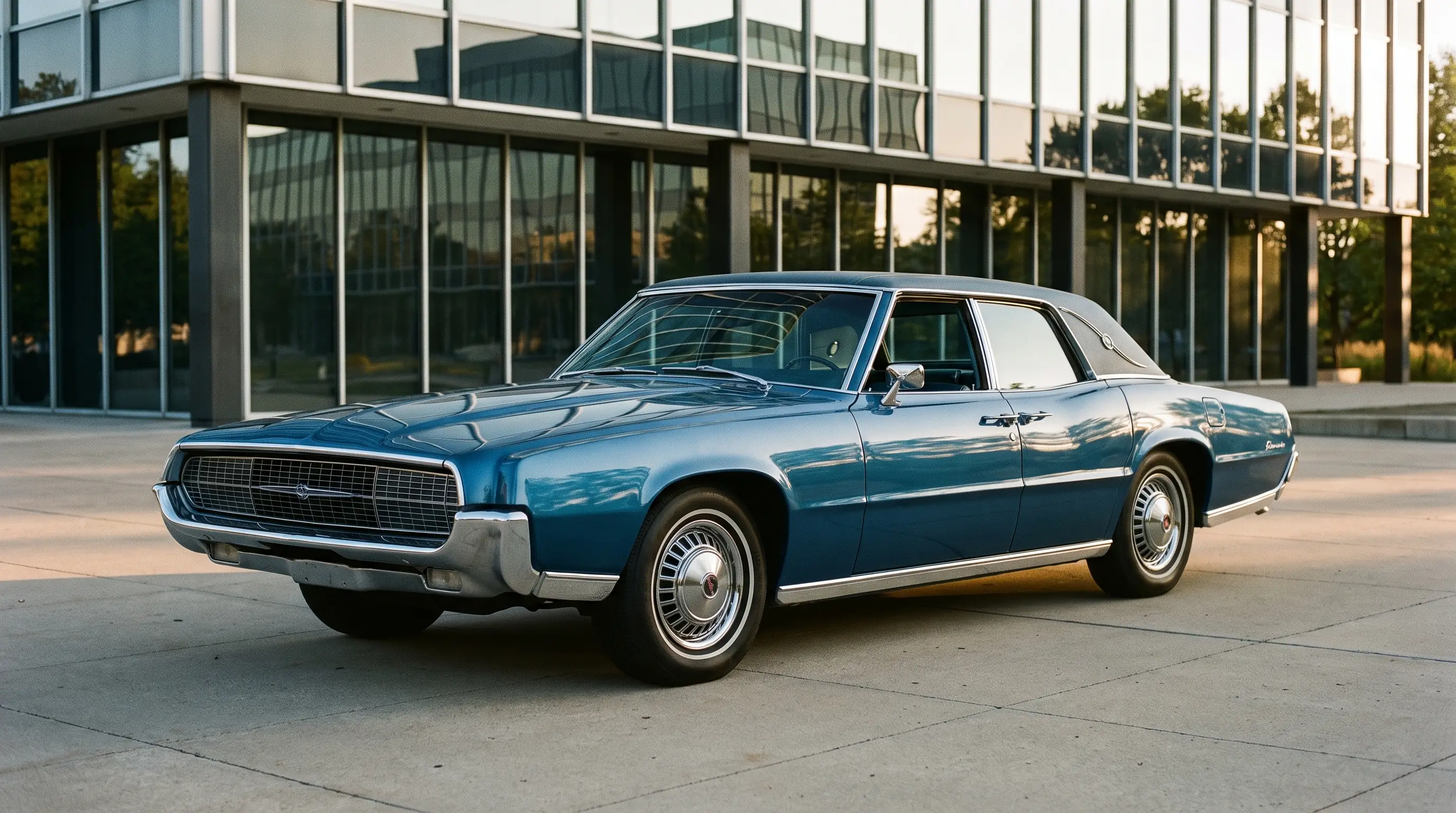
Production documentation for the 1967 Ford Thunderbird confirms something that still surprises casual enthusiasts: the fifth generation offered a genuine four-door sedan, marketed as the Thunderbird Landau four-door, and it was not a rare experiment quietly buried in a back corner of the lineup. Ford built it in real numbers and sold it as a serious member of the family alongside the two-door hardtop. The 1967 thunderbird four door deserves a more careful accounting than it usually gets, because the popular version of this story tends to compress a genuine, deliberate product decision into a punchline about Ford supposedly losing its way.
Why Ford built a four-door personal luxury car
The Thunderbird's identity through 1966 rested heavily on being a two-passenger, then later a four-passenger, personal statement car. So a four-door variant looks, on the surface, like a contradiction of everything the nameplate had stood for. But Ford's own market research for the mid-1960s pointed toward growing demand for cars that combined genuine passenger practicality with upscale styling and equipment, a segment that would eventually be dominated by cars like the Cadillac Fleetwood and later personal luxury sedans across the industry. Ford wanted the Thunderbird name to reach buyers who needed real rear-seat access, most often for family use, without stepping down into the ordinary Galaxie or LTD lineup.
The result was a car that kept the Thunderbird's formal roofline and much of its front-end identity while adding a genuinely usable rear door pair. It's worth reading 1967 ford thunderbird history for the full context of how the fifth generation's redesign made this variant possible in the first place, since the body-on-frame architecture adopted for 1967 gave Ford's engineers more flexibility to extend the wheelbase for a four-door than the previous unibody platform would have allowed.
The suicide doors, and why they weren't a gimmick
The rear doors on the four-door Landau were rear-hinged, opening from the front edge rather than the rear, a configuration nicknamed suicide doors by enthusiasts long before Ford ever built one. This wasn't decoration or nostalgia dressed up as innovation. Rear-hinged doors on the four-door Thunderbird solved a real packaging problem: they allowed a wider door opening without the door itself swinging as far into a tight parking space, and they let Ford avoid a B-pillar that would have interrupted the car's formal, pillarless hardtop appearance when both doors were open. You can read a related story covering that door design in more depth, since it's one of the more misunderstood engineering choices on the whole car.
What the four-door actually offered
Buyers choosing the four-door Landau got the same general equipment philosophy as the two-door hardtop and Landau, including the Thunderbird's formal instrument layout and upscale interior trim options, but with rear seat access and legroom that made the car genuinely usable as a family vehicle for buyers who didn't want to give up the Thunderbird badge to get it. The four-door retained the model's characteristic hidden headlights and sequential taillights, features that had become part of the Thunderbird's visual signature by this point, and it shared its formal roofline treatment with the two-door Landau rather than adopting a plainer sedan profile.
| Attribute | 1967 Thunderbird four-door Landau |
|---|---|
| Door configuration | Front doors conventional, rear doors rear-hinged (suicide doors) |
| Roofline | Formal, shared styling language with two-door Landau |
| Position in lineup | Alongside two-door hardtop and Landau, not a replacement for either |
| Market rationale | Personal luxury positioning extended to family-usable rear seating |
Comparing it against the two-door models
Set side by side with the two-door hardtop and Landau, the four-door Thunderbird shared its engine lineup, its formal front-end styling, and its general equipment philosophy almost completely. The differences came down to wheelbase, the rear door configuration, and interior packaging suited to genuine four-passenger family use rather than the more intimate two-door layout. Buyers cross-shopping the two body styles in period showrooms were essentially choosing between the same fundamental car with different practicality trade-offs, not choosing between two different products with different missions. That's a meaningfully different story than the popular narrative of a compromised sedan bolted awkwardly onto a sports coupe's identity.
Ford's dealers, according to surviving sales literature, presented the four-door as a genuine equal within the lineup rather than a lesser or apologetic option. The brochures gave the four-door Landau comparable page space and photography treatment to the two-door models, a detail that would have been an odd marketing choice if Ford genuinely viewed the variant as a mistake or an afterthought rather than a serious part of the product strategy.
How history has misjudged it
The four-door Thunderbird gets treated in a lot of casual retrospectives as evidence Ford diluted the nameplate, chasing sales at the cost of identity. That reading skips over the fact that Ford's competitors were moving in similar directions across the personal luxury and near-luxury segments during the same years, and that the four-door Thunderbird sold in numbers that justified its continued production for multiple model years rather than being pulled after a single disappointing season. A genuinely failed product experiment in this era typically vanished within a year or two. The four-door Landau did not.
"People love to tell the story that Ford ruined the Thunderbird by putting four doors on it, and the sales figures just don't support that version of events. Buyers who wanted a formal, well-equipped car with real rear seat room bought it on purpose, year after year, and Ford kept building it because they kept buying it."
- Tom Ramirez
Production numbers in context
The four-door Landau's production figures never approached the volume of the two-door hardtop, which remained the Thunderbird's core seller throughout the fifth generation. But comparing the four-door only against the top-selling two-door variant misses useful context. Measured against other niche body styles across Ford's broader lineup in the same era, the four-door Thunderbird's numbers hold up as a genuinely viable, ongoing product rather than a failed test run. Ford continued building it across multiple model years of the fifth generation, a commitment the company would not have made if dealer feedback and sales results had suggested the variant was dragging down the Thunderbird name.
Where it fits in the fifth generation's bigger story
Understanding the four-door variant properly requires seeing it as part of a broader 1967 redesign that pushed the Thunderbird toward a larger, more substantial personal luxury car, moving away from the tighter, sportier proportions of the earlier Flair Bird generation. That shift wasn't universally popular with Thunderbird traditionalists then or now, but it reflected where the American luxury market was actually heading in the late 1960s, toward bigger, more heavily equipped cars rather than smaller, sportier ones.
If you're researching the fifth generation for a purchase, understanding where the four-door sits in that lineup matters, since it's a genuinely distinct configuration rather than a rare oddity to dismiss. For buyers focused on the two-door body styles that remain more common in today's market, Thunderbirds for sale now will mostly show hardtop and Landau coupes, with the four-door surfacing far less often and drawing its own dedicated audience of buyers who specifically want the configuration that only existed for this one stretch of Thunderbird production.