The 1968 Ford Thunderbird arrived at a strange moment for Dearborn's personal luxury flagship. The car had just been reinvented for 1967 with a four-door body style and a wide, jet-inspired grille, and now the factory had to decide what to change on a design that was barely a year old. What they landed on for 1968 and 1969 was not a reinvention. It was a set of quiet corrections, some forced by new federal safety law and some driven by ordinary product planning, and together they tell you a lot about how Ford actually ran the Thunderbird program in the late 1960s.
Start with the federal mandates, because they explain more of the 1968 changes than styling ever will. The 1968 model year is when side marker lights became mandatory on every American car, and the Thunderbird got amber units up front and red ones out back, mounted low on the fenders where they would not disturb the sheet metal Ford had just finished tooling for 1967. Dual-circuit master cylinders became standard too, a genuine safety improvement that split the brake system into front and rear circuits so a single leak would not leave the driver with no brakes at all. An energy-absorbing steering column joined the options list as well, part of the same wave of regulation that reshaped the entire industry that year. None of this changed how the Thunderbird looked from thirty feet away, but it changed what was happening under the skin, and it is worth remembering that 1968 was as much a compliance year as a styling year.
What actually changed on the outside
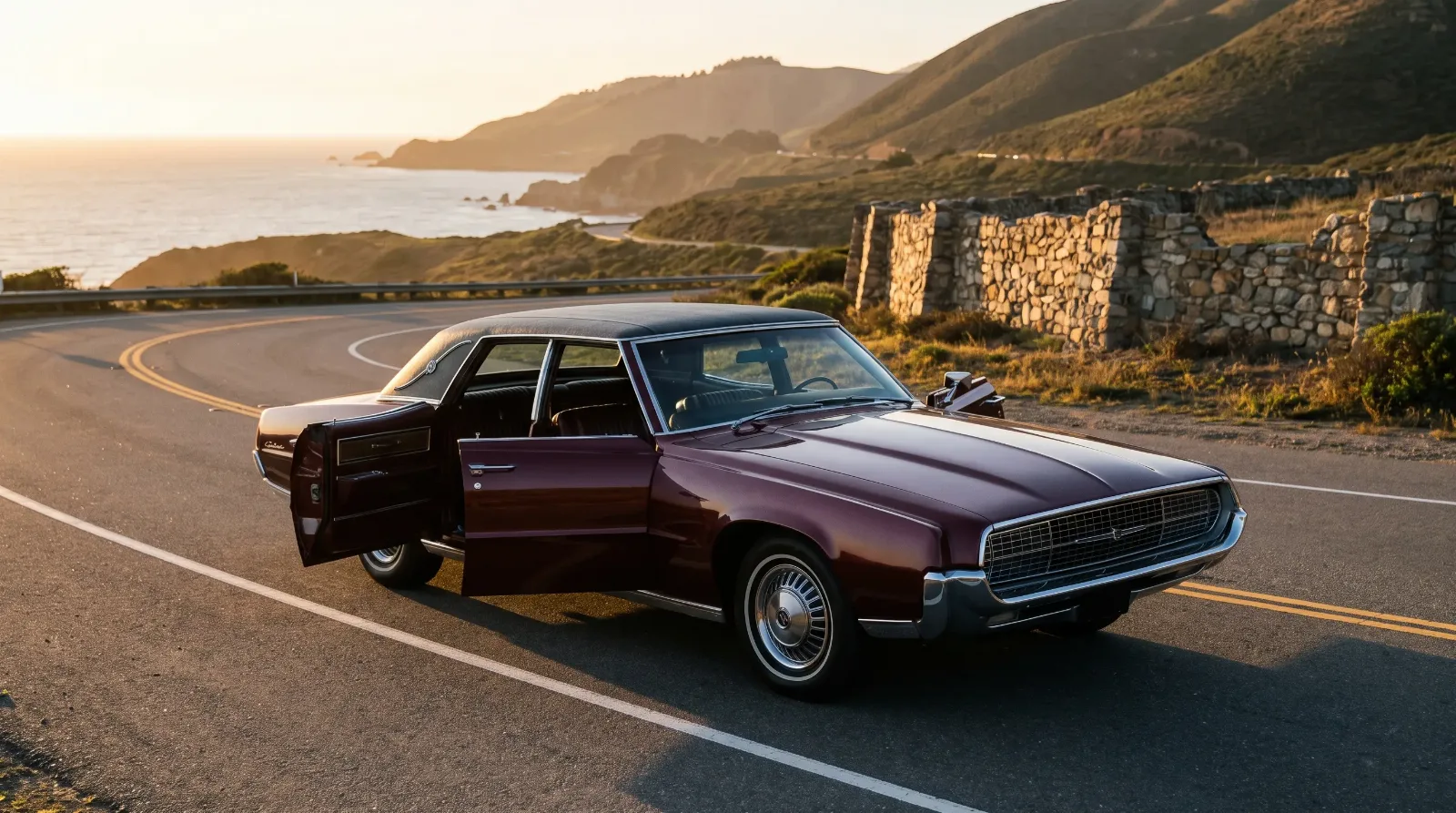
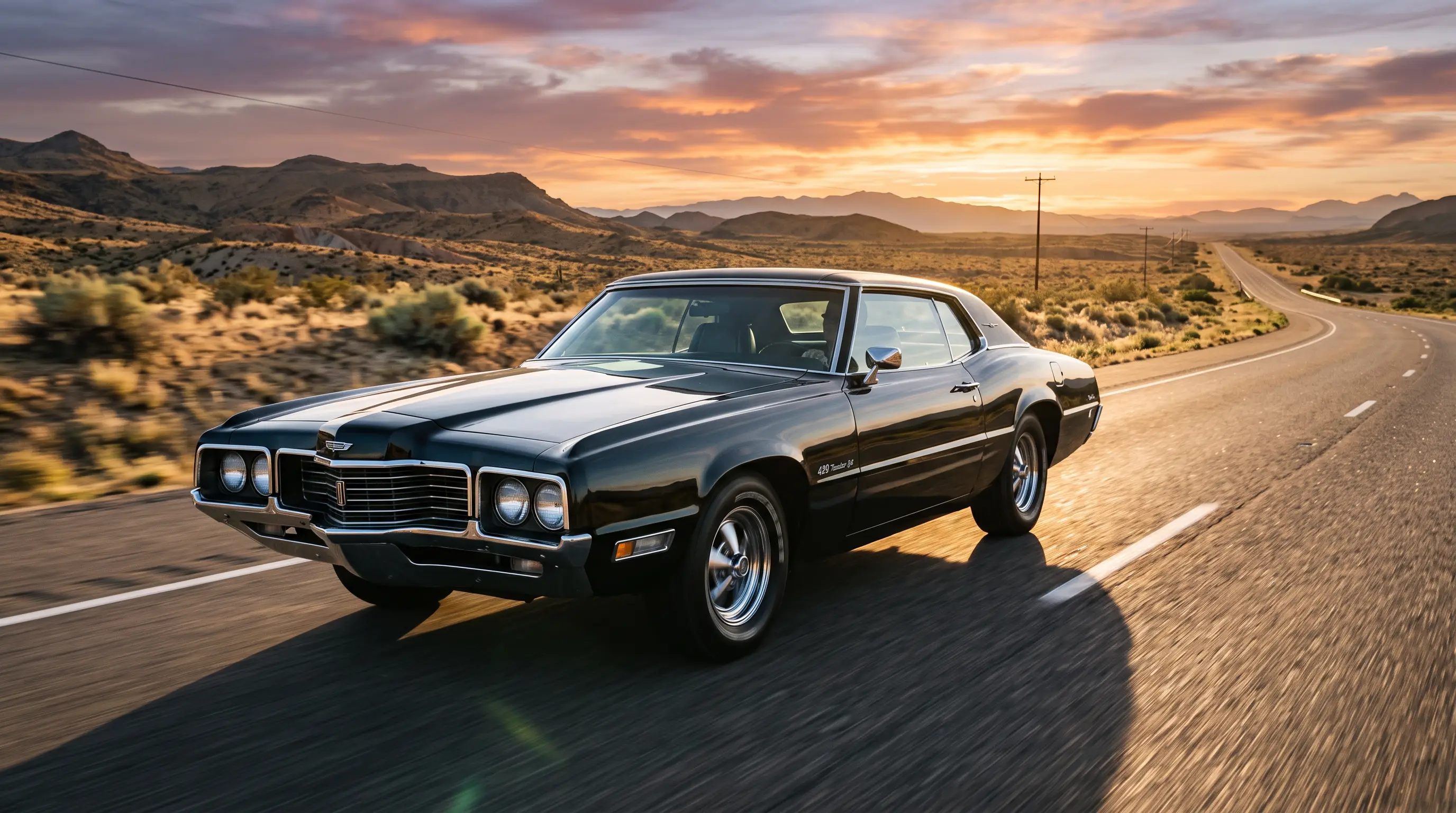
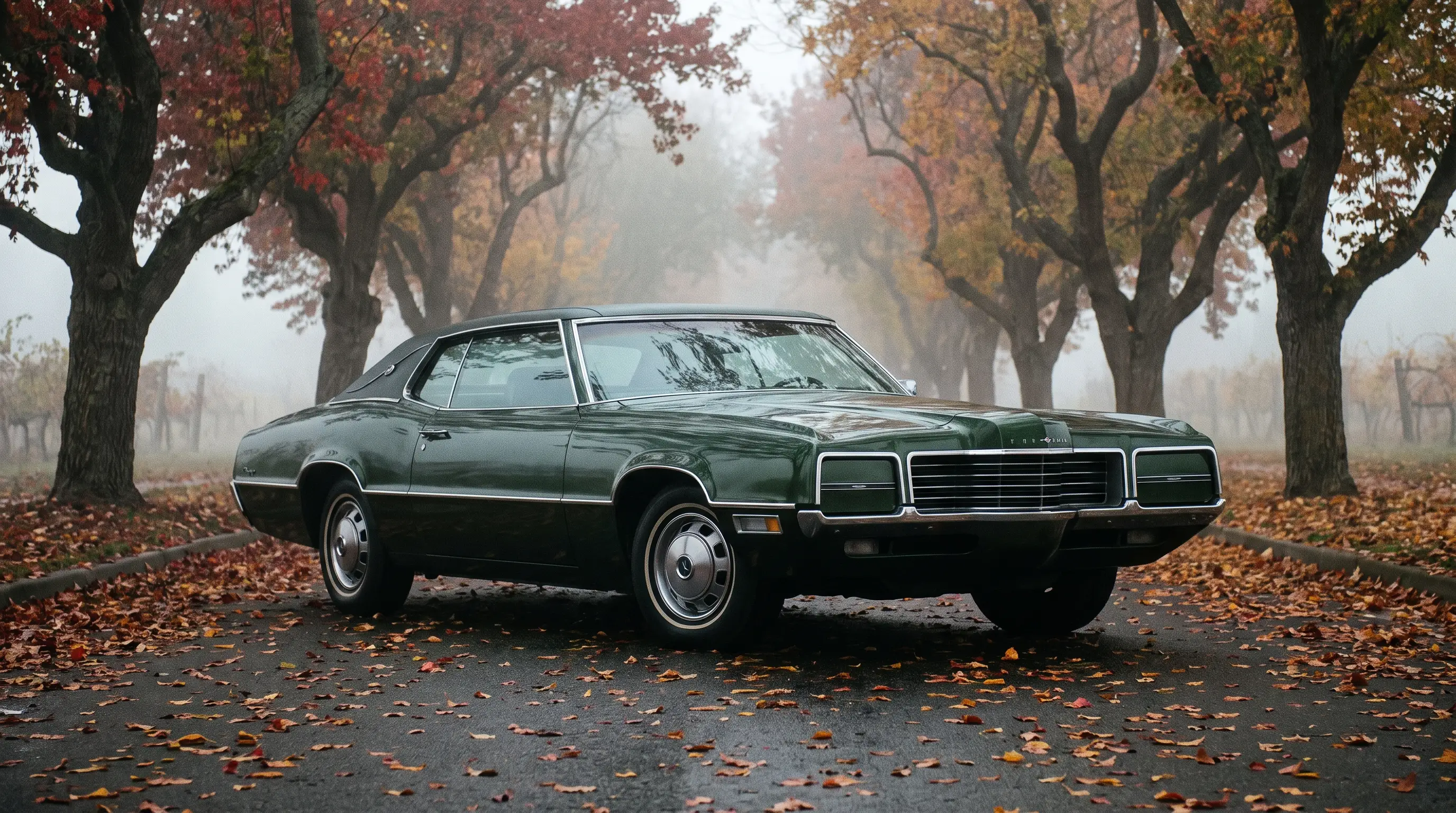
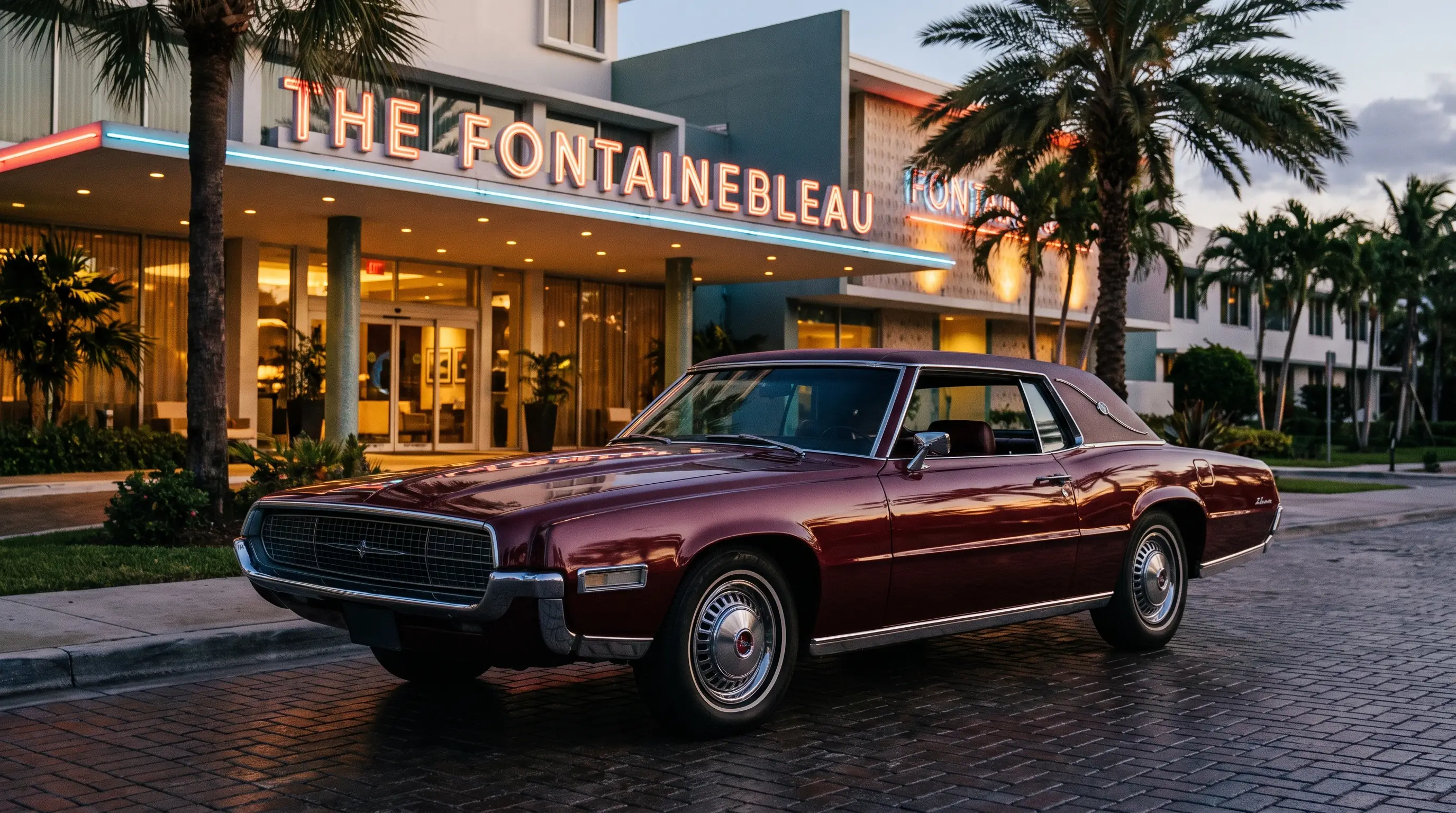
Visually, the 1968 Thunderbird kept the 1967 formula: hidden headlights tucked behind a full-width grille, a low beltline, and the sequential rear turn signals that had become a Thunderbird signature since 1965. The grille texture was revised, the marker lights were added as noted, and trim details moved around slightly, but a 1967 and a 1968 sitting side by side read as close cousins rather than strangers. The 1969 Thunderbird went a step further with a mildly reworked front end, featuring a divided grille treatment and revised taillamp trim that gave the tail a slightly cleaner look. It was still the same basic fifth-generation body underneath, riding on the same 115-inch wheelbase for the two-door cars and 117.2 inches for the four-door Landau, but the details told buyers Ford had not simply left the model alone for three years running.
The body style lineup stayed consistent across both years. Buyers could choose the two-door hardtop, the two-door Landau with its vinyl roof and simulated landau irons, or the four-door Landau, the first four-door Thunderbird body Ford had ever built, complete with rear-hinged doors that opened toward the center of the car. That four-door configuration had been the headline of the 1967 redesign, and it stayed in the lineup through 1971, giving Thunderbird buyers a genuinely unusual option among American personal luxury cars of the period.
Engines and drivetrain for 1968 and 1969 ford thunderbird models
Under the hood, the base engine for these years was Ford's 390 cubic inch V8, a familiar unit by the late 1960s and one that delivered adequate rather than thrilling performance in a car that weighed well over two tons in most configurations. Partway through the 1968 model year Ford replaced the old FE-block 428 with the new 385-series 429 cubic inch Thunder Jet V8 as the optional big block, rated around 360 horsepower, which gave the Thunderbird noticeably stronger acceleration and made it a more convincing highway cruiser, particularly with the SelectShift automatic transmission that was standard across the range. Ford did not chase raw horsepower figures with the Thunderbird the way it did with its muscle car lineup; this was a car sold on smoothness, isolation from road noise, and a long list of comfort features, not on stoplight bragging rights. Front disc brakes were standard, which mattered on a car this heavy, and power steering and power brakes came standard as well, reinforcing the sense that the Thunderbird was meant to be driven without effort.
"People forget the 1968 and 1969 cars were never meant to be dramatic. Ford had just spent a fortune reinventing the Thunderbird for 1967, and the smart move was to let the design breathe for a couple of years while the accountants and the safety regulators had their say. If you want to understand how a factory actually manages a model cycle instead of chasing headlines every September, these two years are a good case study."
- Tom Ramirez
The four-door Landau and changing buyer tastes
One of the more interesting stories buried in the 1968 to 1969 window is how buyers responded to the four-door Landau. Ford had bet that Thunderbird customers, many of them older and increasingly likely to be shopping as a family purchase rather than a solo indulgence, would embrace the practicality of rear doors on their personal luxury car. The bet paid off well enough that the four-door stuck around, but the two-door hardtop and two-door Landau continued to outsell it, which told Ford's product planners that the Thunderbird buyer still wanted the coupe silhouette first and the extra doors as an option, not the other way around. That balance of style over strict practicality would keep shaping Thunderbird decisions for years afterward.
Interior comfort as the real selling point
Inside, the 1968 and 1969 Thunderbird leaned hard into the personal luxury script. Buyers could option a genuine leather interior, air conditioning, an AM radio with an available 8-track player, tilt steering, and a center console that gave the cabin a cockpit-like feel despite the car's size. Ford marketed the Thunderbird as a car you settled into rather than one you wrestled with, and the option sheet backed that up. This is also where the 1968-1969 Thunderbird for sale market draws real interest today: surviving cars with intact interiors and working power accessories tend to command a premium over rougher examples, because so much of what made this generation special lived in the details buyers touched every day rather than in outright performance.
None of this happened in isolation. To understand why Ford built the car this way at all, it helps to go back to where this started, the 1967 redesign that set the template these 1968 and 1969 models refined rather than replaced. The four-door body, the hidden headlights, the wide-mouth grille, all of it traces back to decisions Ford made a year earlier, and the 1968-69 cars are best understood as the second and third chapters of that same story rather than a new one.
Buying one today
For collectors and casual buyers alike, the 1968 and 1969 Thunderbird occupy a reasonable middle ground in the fifth-generation lineup. They lack the immediate recognition of the redesigned 1967 or the dramatic pointed nose that arrived on the 1970 facelift, which keeps prices more approachable, but they carry the same engineering and comfort features that made the era's Thunderbird a genuine luxury proposition rather than a badge exercise. Rust in the rear quarters and floor pans is the usual concern on any surviving example, along with tired power accessories that were complex even when new. Anyone shopping for a classic Thunderbird for sale from this window of production should budget for a thorough mechanical and electrical check before buying, since the comfort features that make these cars appealing are also the ones most likely to have failed after five decades.
If the smooth, understated confidence of these two model years appeals to you, the market for a classic Thunderbird for sale today includes a fair number of surviving 1968 and 1969 cars, and they remain one of the more livable entry points into fifth-generation Thunderbird ownership.
Sources and notes
- Ford Thunderbird (fifth generation) - Wikipedia
- 1968 Ford Thunderbird - Hagerty Valuation Tools
- 1969 Ford Thunderbird - Hagerty Valuation Tools
- Original 429 Thunder Jet: 1968 Ford Thunderbird - Barn Finds
- 1968 Ford Thunderbird Specifications - Conceptcarz
- Cruise on 4/29: budget 429 Thunderbird four-door - Hagerty Media