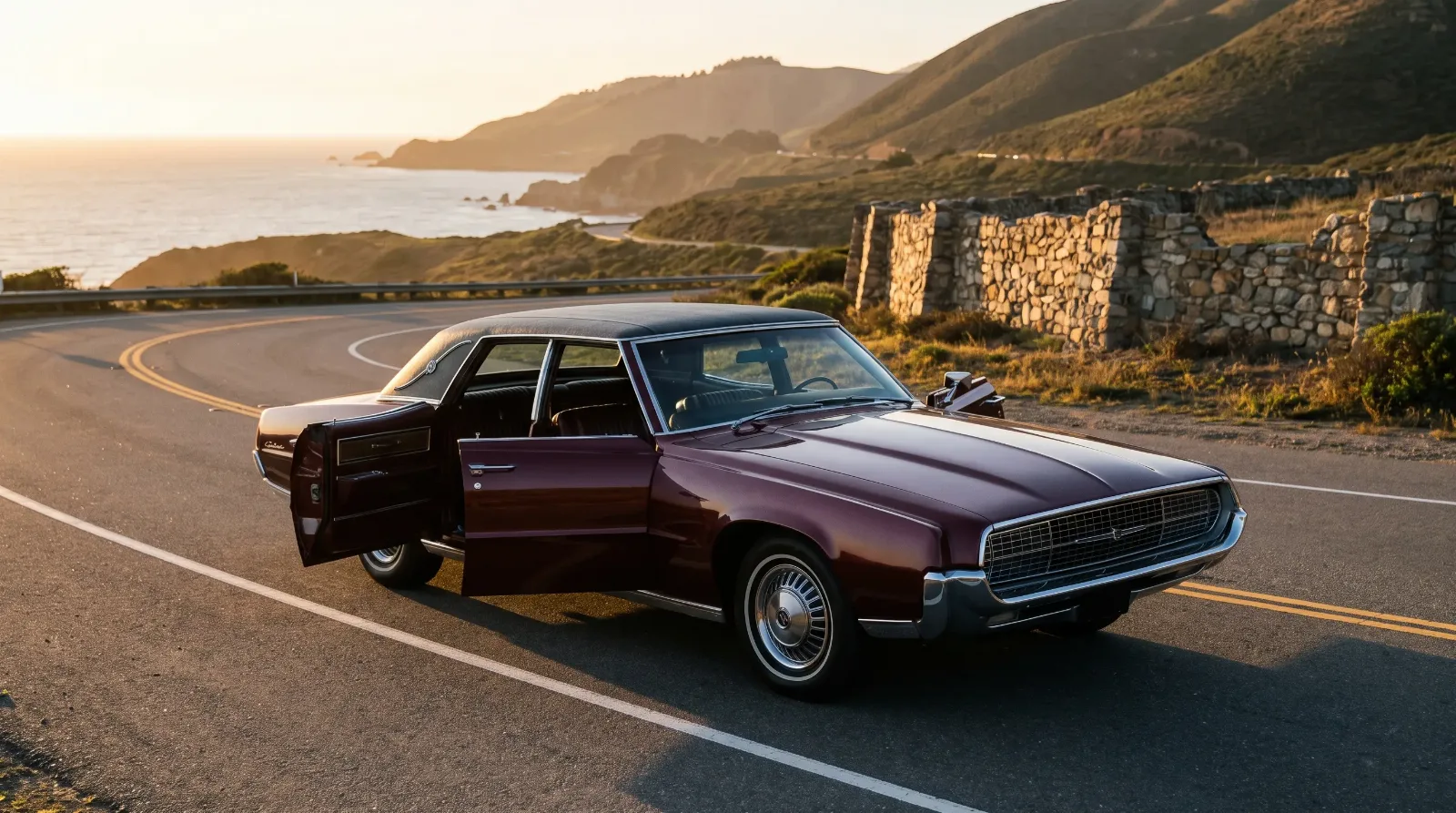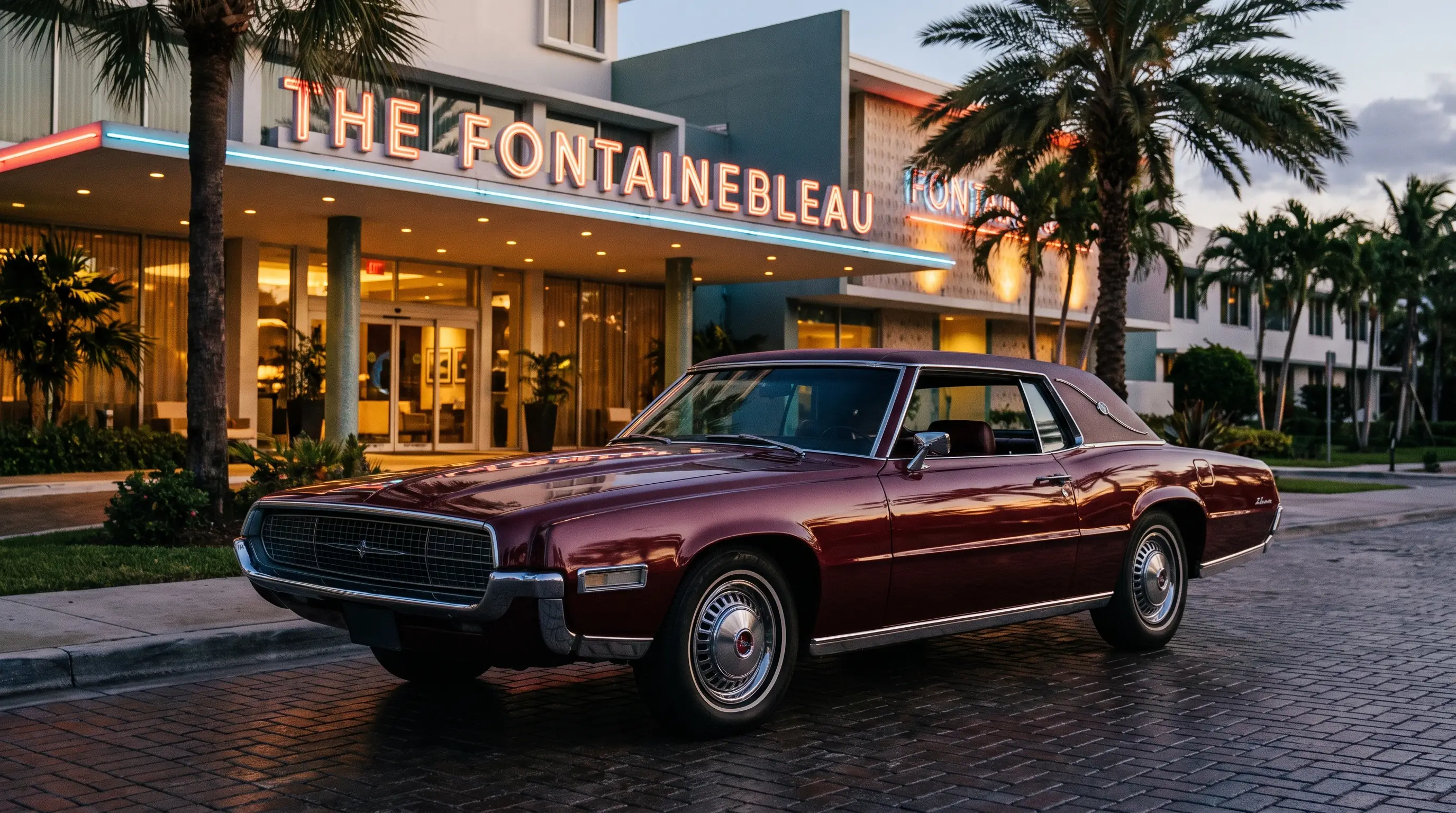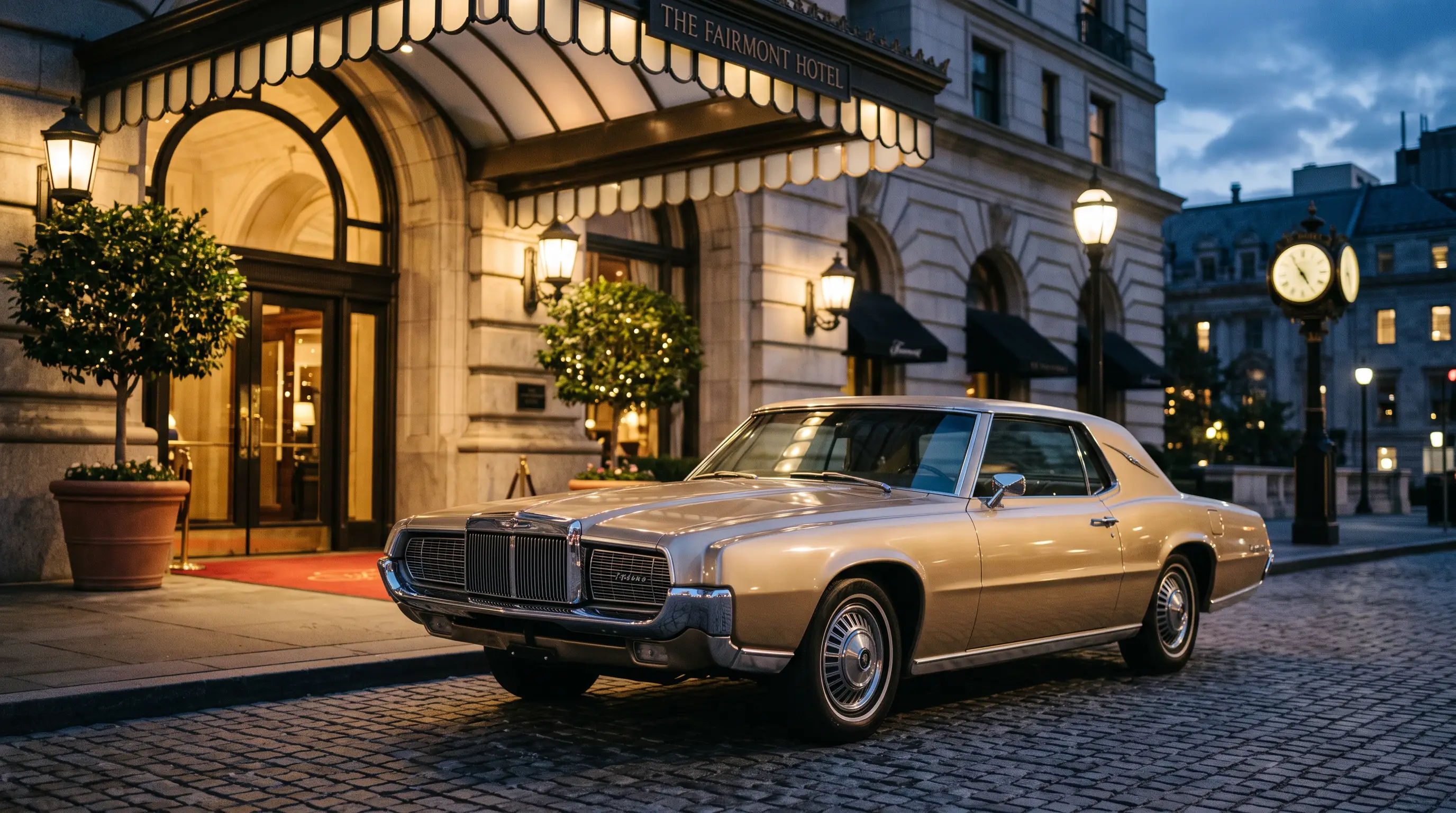
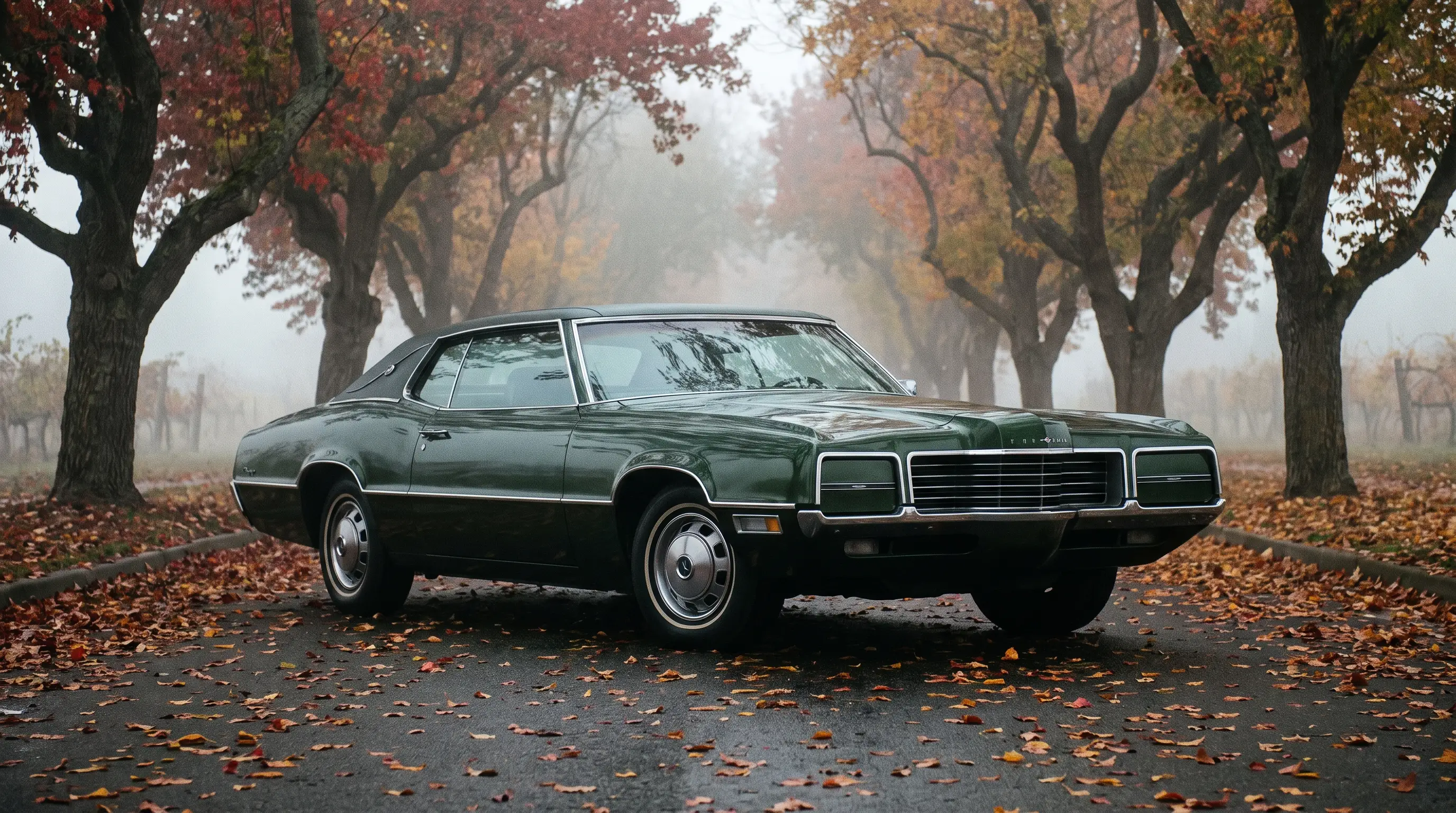
The 1970 Ford Thunderbird is the car that split fifth-generation opinion down the middle, and it still does. Where the 1967 through 1969 models wore a wide, flat grille flanked by hidden headlights, the 1970 facelift replaced that face with a pointed, beak-like front end and a single pair of round headlights mounted low in the fenders. Ford's own designers reportedly had mixed feelings about it. Buyers had mixed feelings about it. More than fifty years later, collectors still argue about it at car shows, which is exactly the kind of documented controversy a researcher should take seriously rather than smooth over.
The bird beak nose and why Ford built it
By 1970, the personal luxury segment was shifting toward bolder, more sculptural front-end designs, and Ford wanted the Thunderbird to look modern next to newer competitors rather than like a holdover from the mid-1960s. The result was a protruding, pointed nose that pushed forward ahead of the front bumper, a design language that would echo across several Ford products in the years that followed. The grille narrowed to a vertical, prow-like shape, and the exposed round headlights replaced the hidden units that had defined the Thunderbird's face since 1965. It was a genuine departure, executed on the same basic body shell that had underpinned the car since 1967, and it changed the Thunderbird's visual identity more than any single update between the 1967 redesign and the platform's replacement in 1972.
The 1971 model carried the same basic nose forward with only minor trim revisions, making 1970 and 1971 close visual siblings in a way that mirrors how 1968 and 1969 had related to each other earlier in the generation. Wheelbase held steady at 115 inches for the two-door body styles and 117.2 inches for the four-door Landau, and the overall greenhouse and roofline remained unchanged from the earlier fifth-generation cars. This was a facelift, not a platform change, and understanding that distinction matters when you are trying to place a 1970 or 1971 Thunderbird correctly within the wider fifth-generation story.
Engine changes for the 1970 ford thunderbird
Under the hood, the 429 cubic inch Thunder Jet V8, previously the optional big block, became the standard engine for 1970, replacing the 390 as Ford's big-block lineup was reorganized across several model lines that year. The 429 gave the Thunderbird a meaningful step up in torque, which suited a car that had grown heavier with each round of added safety equipment and sound insulation. SelectShift automatic transmission remained the only gearbox offered, and Ford continued to position the Thunderbird as an effortless highway car rather than a performance machine, even with the larger engine under the hood. Front disc brakes, power steering, and power brakes remained standard, consistent with the comfort-first engineering that had defined the car since the fifth generation began.
Body styles carried over from earlier fifth-generation cars
The three body styles that had defined the fifth-generation Thunderbird since 1967 continued into 1970 and 1971: the two-door hardtop, the two-door Landau with its vinyl roof and simulated landau bars, and the four-door Landau with its distinctive rear-hinged doors. The four-door remained a genuinely unusual proposition in the American personal luxury market, and by 1970 it had settled into a smaller but consistent share of total Thunderbird production, appealing to buyers who wanted the badge and the comfort features without giving up rear-seat access for passengers. Interior trim and options followed the established late-1960s Thunderbird playbook: leather upholstery, air conditioning, an AM radio with optional 8-track, and a driver-focused dashboard layout that had earned the car a reputation as one of the more cockpit-like American luxury cars of its time.
"Documenting the 1970 and 1971 cars properly means resisting the urge to treat the bird beak nose as a footnote. It was a deliberate, expensive styling decision, and the fact that it remains divisive among collectors today is itself part of the historical record. A car does not have to be universally loved to be significant."
- Sarah Whitfield
Why 1970-71 sits at the end of an era
The 1970 and 1971 Thunderbird represent the final chapter of the fifth generation before Ford replaced the platform entirely for 1972 with a larger car built on the Torino chassis and shared underpinnings with the Lincoln Continental Mark IV. That context matters for how these two model years should be read. They are not a transitional design pointing toward what came next; the 1972 redesign went in an entirely different direction, growing the Thunderbird substantially and dropping the four-door body style altogether. Instead, 1970 and 1971 are best understood as the fifth generation's last, boldest statement, a final restyle applied to a body shell that had already proven itself over three prior model years.
For anyone researching this window of Thunderbird production, it helps to trace the lineage back to the full story of how the fifth generation began in 1967, since the 1970 facelift only makes sense in contrast to the design it replaced. The pointed nose was a reaction to what came before it, and seeing both ends of that arc side by side is the clearest way to understand what Ford's design team was trying to accomplish.
Collecting the 1970 and 1971 cars today
Survivor cars from these two years tend to divide buyers along the same lines the original design did. Some collectors specifically seek out the bird beak front end because it stands apart from the more conservative 1967-1969 cars, while others prefer the earlier hidden-headlight look and treat 1970-71 as a secondary choice. Values reflect that split more than they reflect any real difference in mechanical desirability, since both windows share the same drivetrain philosophy and comfort-focused engineering. Rust remains the primary structural concern on any surviving example, particularly around the rear quarter panels, trunk floor, and the lower edges of the distinctive front fenders that house the round headlights. Documentation and originality carry real weight in this segment of the market, and buyers evaluating a car should ask for build sheets or Marti Reports where available to confirm engine and trim combinations, since condition and originality vary widely across surviving 1970 and 1971 cars. A patient search tends to reward buyers who know what to look for before they start negotiating, and you can browse classic Thunderbird listings to see current inventory across the entire fifth generation.
Reading a 1970-71 car correctly at a show
A trained eye can date a fifth-generation Thunderbird to within a year or two just by walking a slow circle around it, and the 1970-71 cars offer some of the clearest tells in the whole generation. The front bumper sits lower and more integrated into the pointed nose than it did on the 1967-69 cars, and the round headlight bezels have a distinct chrome surround that never appeared on the earlier hidden-headlight face. Taillight lenses received their own quiet update as well, carrying the sequential turn signal function forward but wrapped in a housing shaped to match the more angular rear bumper introduced alongside the new front end. None of these details show up in casual photographs the way the nose does, but they matter enormously to judges at concours events and to buyers trying to confirm that a car's front and rear clips actually match its title year rather than having been swapped during a earlier repair.
Engine bay presentation is another area worth close attention on these two years specifically. Because the 429 arrived as standard equipment for 1970, a genuinely correct restoration should show period-appropriate emissions equipment for a car built after 1968's more stringent federal rules took hold, along with the correct air cleaner housing and accessory brackets for that displacement. Cars that have had engines swapped from later, smog-era 429 or 460 applications are not uncommon, and the details of the accessory drive and carburetor setup are usually the fastest way to spot a mismatch. Buyers serious about originality on a 1970 or 1971 example should treat the engine bay with the same scrutiny they would give the exterior sheet metal, since a correct drivetrain adds meaningfully to both the historical accuracy and the resale value of a well-documented car.
Sources and notes
- Ford Thunderbird (fifth generation) - Wikipedia
- 1970 Ford Thunderbird Specifications - Conceptcarz
- 1970 Ford Thunderbird - Hagerty Valuation Tools
- 1971 Ford Thunderbird Landau - Hagerty Valuation Tools
- 1967-1971 Ford Thunderbird - HowStuffWorks
- 1970 Ford Thunderbird Landau specs - Automobile Catalog