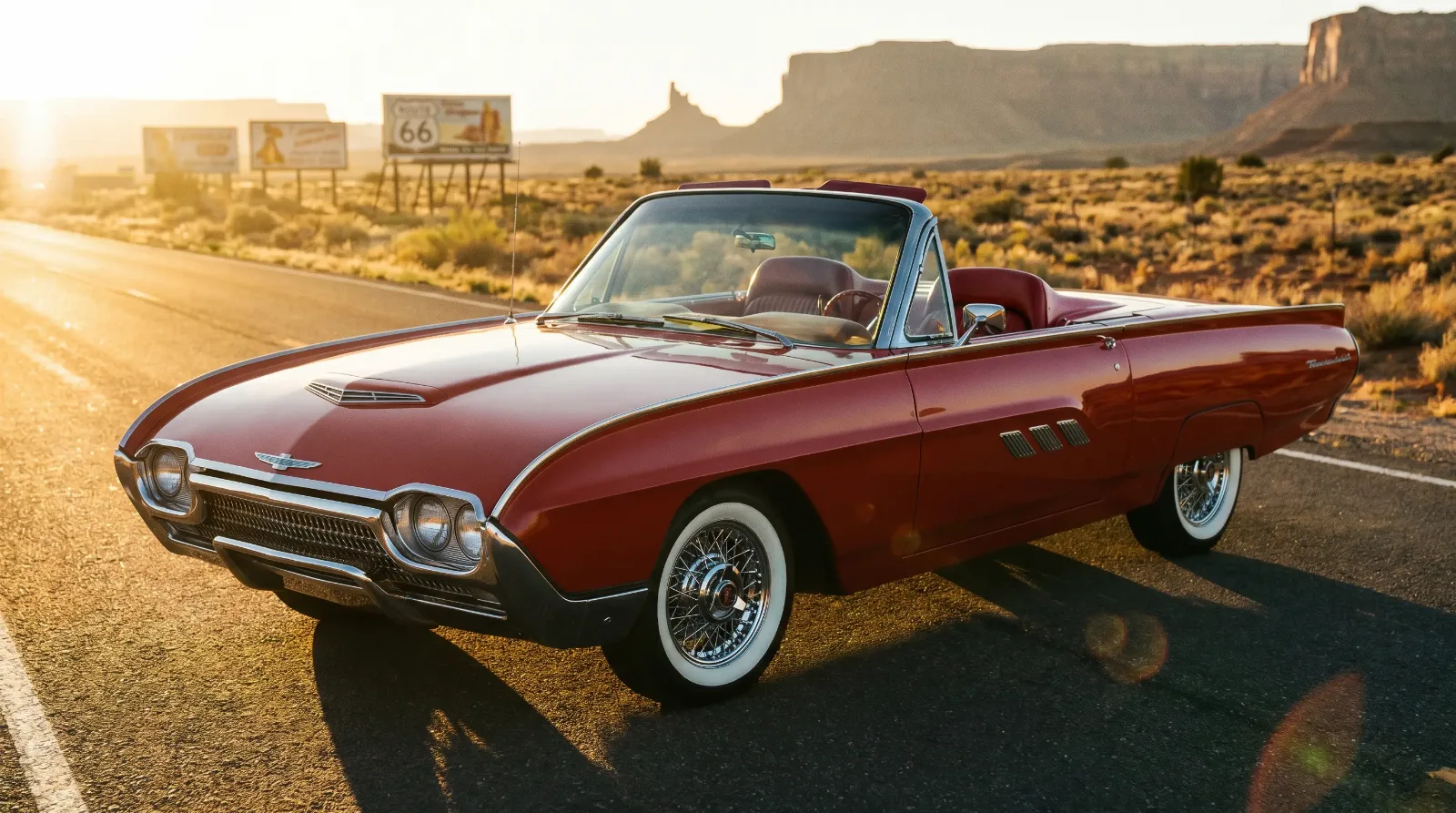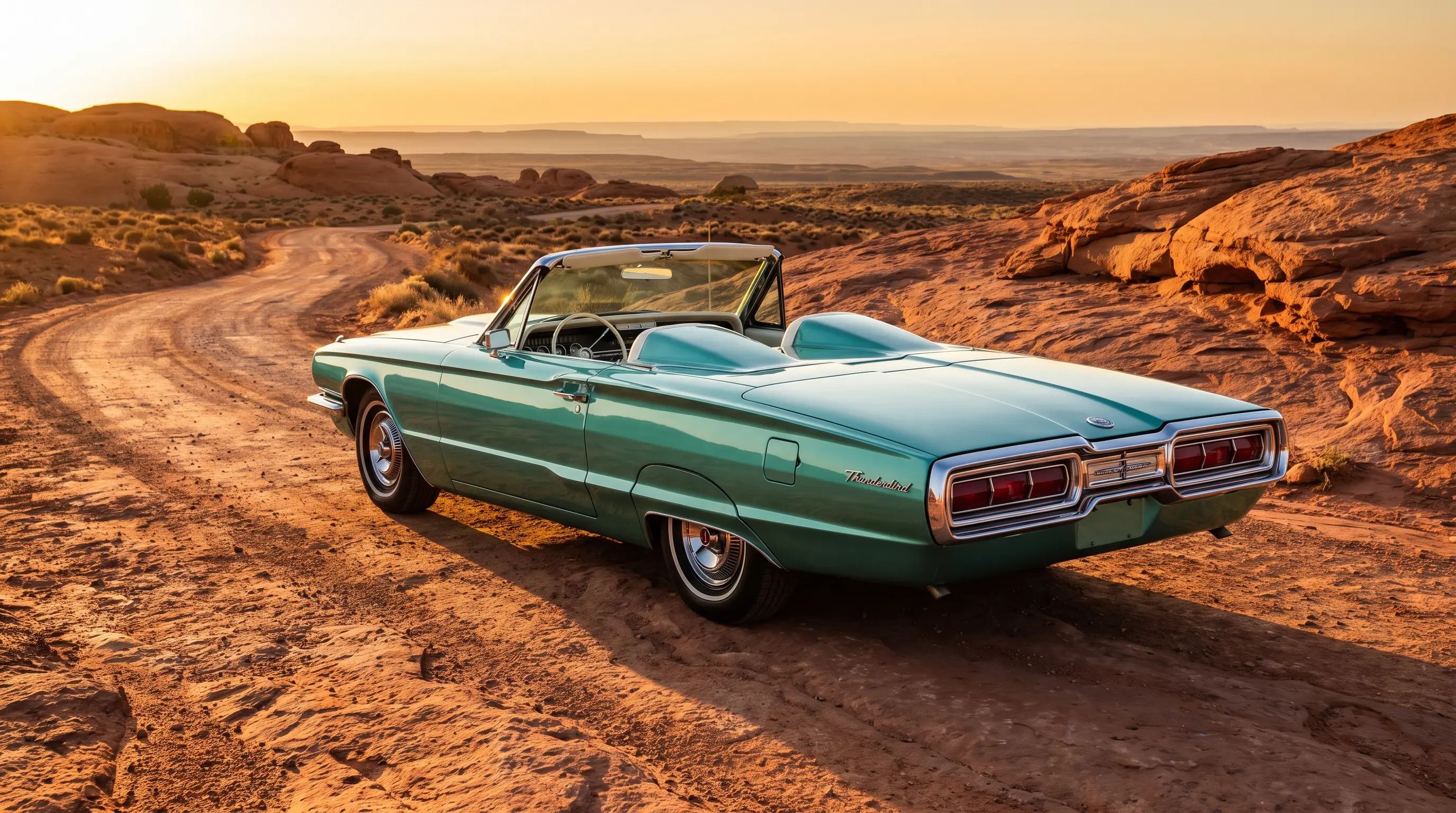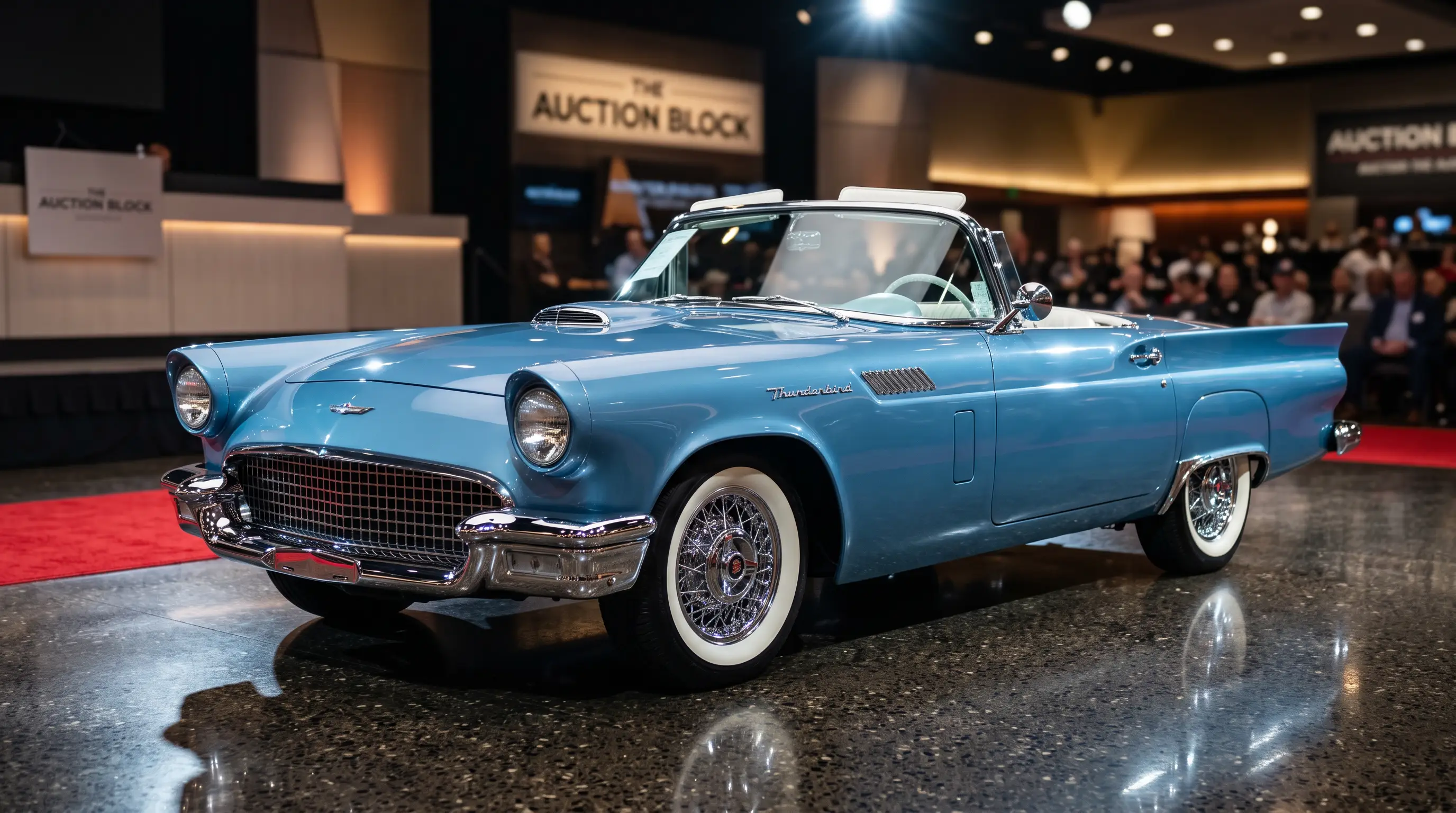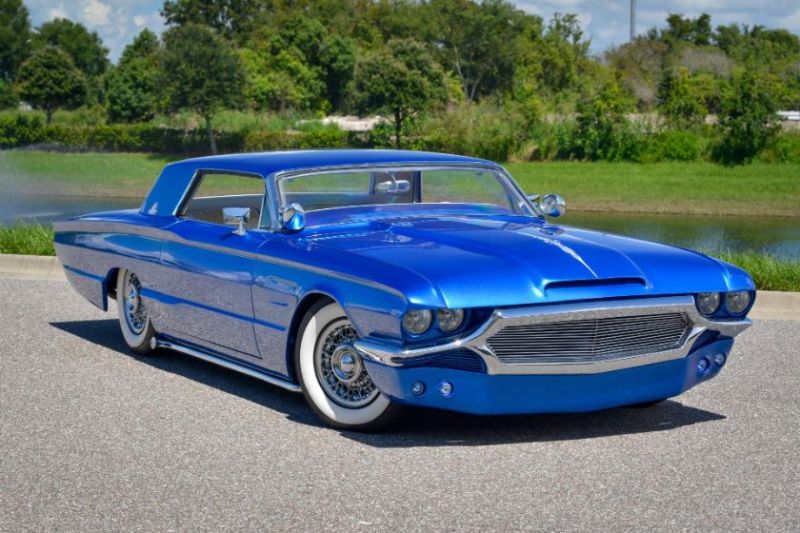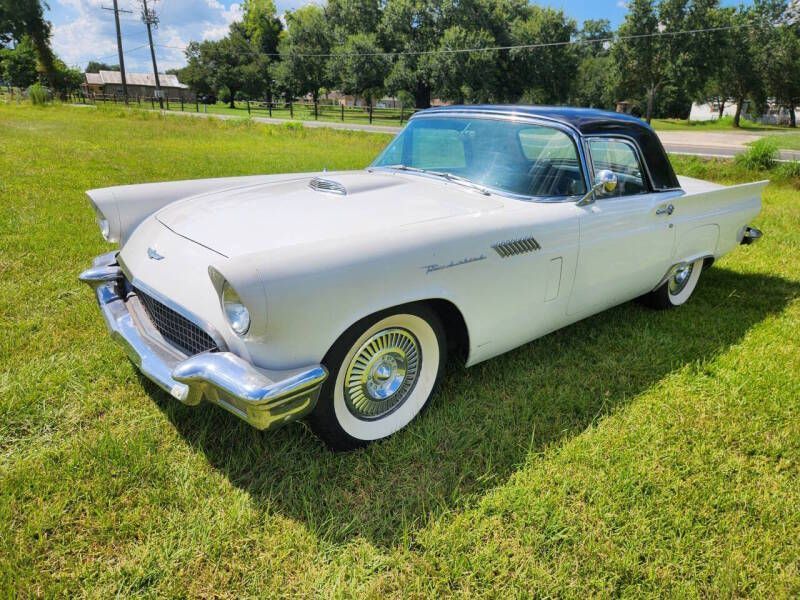
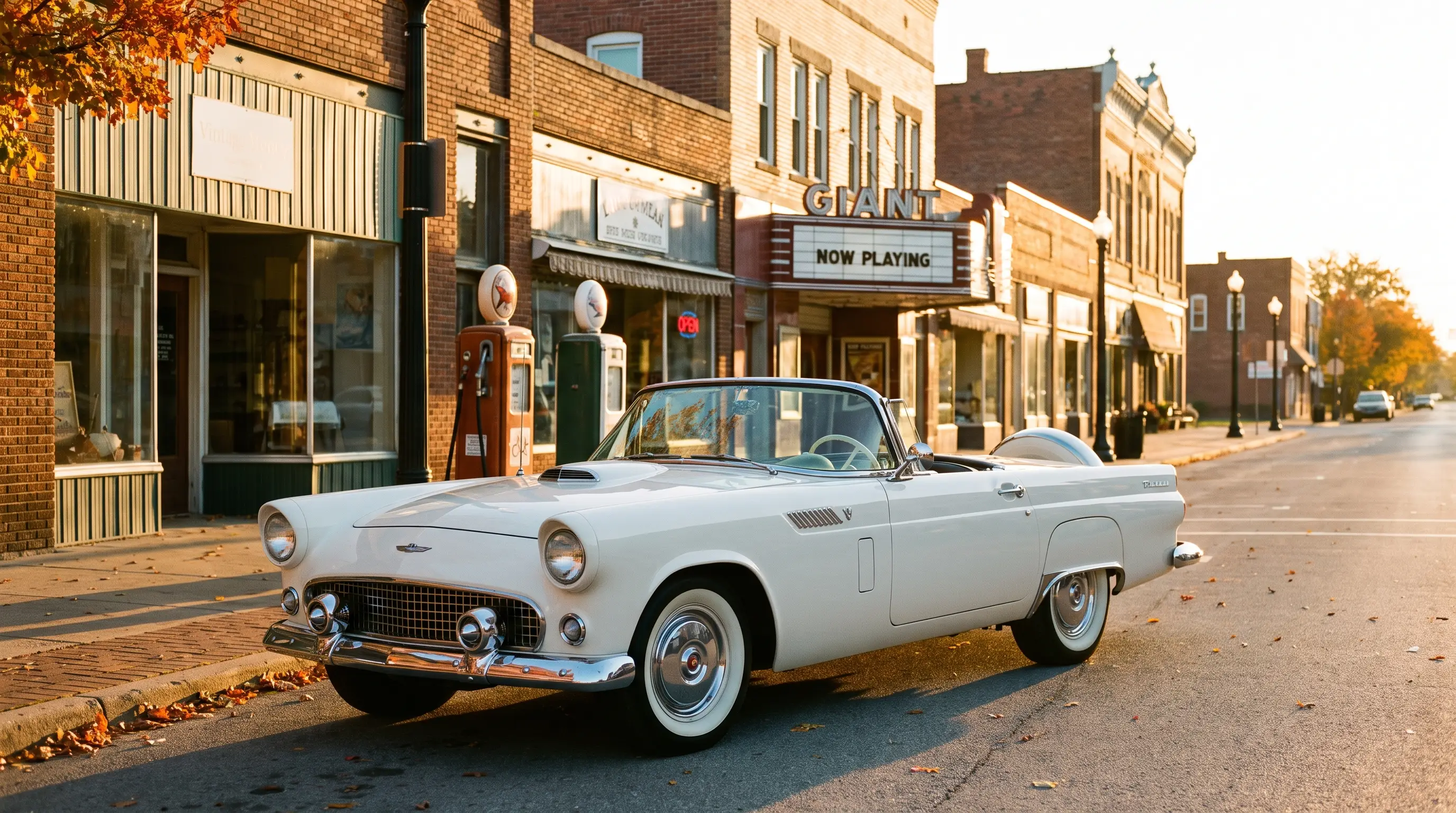
The white 1956 Thunderbird glides through the opening minutes of American Graffiti like a rumor made visible, and for a lot of people that single image is the reason the Ford Thunderbird history got tangled up with a mystery that was never actually resolved on screen. A woman in a white Ford T-Bird mouths the words "I love you" to a teenager on a bicycle, then vanishes into the California night, and the audience never learns who she is.
A car cast almost as carefully as an actor
George Lucas shot American Graffiti in 1972, setting the story in 1962, a full decade earlier, which meant every car on screen had to feel period correct without looking brand new. The white Thunderbird chosen for the mystery woman's brief appearance was a 1956 model, already six years old by the story's internal timeline, giving it the slightly worn, slightly mythic quality a fresh car could never have carried. Lucas needed a car that read as beautiful and unreachable at the same time, and the two-seat Thunderbird's low, sculpted body did exactly that against the backdrop of cruising teenagers and drive-in restaurants.
The choice was not arbitrary. By 1962, when the film is set, the two-seat Thunderbird had already been out of production for four years, replaced by the heavier four-seat models. A character driving one in that world was, by implication, driving something already slightly out of time, a leftover from an earlier, more glamorous chapter of the same decade. That layered nostalgia, a period film about a period six years before its own setting, gives the white Thunderbird a strange doubled weight it might not have carried in a story set in 1956 itself.
"The car never speaks and neither does she, not really. A few lip-read words through a windshield, and somehow that became the most remembered image in the whole film."
- Nora Beckett
Who was she supposed to be
The mystery woman, played by Suzanne Somers in one of her first screen roles, appears for less than a minute of total runtime and speaks no audible dialogue. Lucas never resolved her identity within the film, and that ambiguity became part of the story's lasting pull rather than a flaw in it. Richard Dreyfuss's character spends the rest of the movie chasing a glimpse of her, never catching up, which mirrors the way the whole film treats the last night of a particular kind of American youth: visible, close, already slipping away by the time you reach for it.
The Thunderbird does the same narrative work as the woman inside it. It appears, it is gorgeous, and then it is gone, leaving behind only the memory of white paint and a half-second of eye contact. Cars in film rarely get asked to carry that much emotional weight in so little screen time, but the Thunderbird's shape, all soft curves and confident chrome, was built to be looked at and remembered from a glance, which happens to be exactly what the scene required of it.
Why a Thunderbird and not something else
Plenty of white American cars existed in 1962 that could have carried the same scene. The Thunderbird's specific advantage was its association with aspiration rather than affordability. It was never the cheapest car on the lot, never the practical choice, and by 1962 it already carried a reputation as the car for people who had made it, or wanted to look like they had. Casting the mystery woman in a Thunderbird rather than a more common sedan told the audience something about her without a single line of dialogue: she was untouchable, a little glamorous, moving through the same streets as everyone else but somehow above the ordinary rules of the story.
That reading lines up with how the Thunderbird had been marketed for years before the film. Ford's own advertising leaned hard into the idea of the car as a reward, a marker of arrival rather than a stepping stone. American Graffiti did not invent that association. It borrowed an existing cultural shorthand and let one perfectly cast car do narrative work that would have taken pages of dialogue otherwise.
The scene's afterlife
American Graffiti became one of the most profitable films of its era relative to budget, and the white Thunderbird scene is consistently cited among its most remembered images, alongside the cruising strip and the drive-in restaurant sequences. That kind of cultural persistence turned an ordinary studio prop car into a genuine touchstone for Thunderbird enthusiasts, many of whom now specifically seek out 1956 models in white with the two-seat configuration, chasing a version of the exact car that appears on screen for less than a minute. For the broader picture of how moments like this shaped the model's reputation across decades of film and music, ford thunderbird history history traces the throughline from this scene to other pop culture appearances that followed.
Readers curious about a different but related cinematic Thunderbird moment, from a very different decade and a very different story, might also find a related story worth reading, since both films use the same nameplate to carry an entirely different kind of longing on screen.
Chasing the actual car today
Original 1956 Thunderbirds in white, with documentation connecting them to the era rather than the film itself, since the specific screen car's later history is not fully documented, remain some of the most sought after examples of the two-seat generation among collectors who grew up watching this scene on late night television reruns. The demand is emotional as much as mechanical, tied to a few seconds of footage that somehow outlasted most of the rest of the film in cultural memory. Anyone chasing that particular version of American car nostalgia can look through Thunderbirds for sale now and see how many white two-seat examples from that era are actually available, since good ones do not sit on the market long once word gets out.
Sixty years on, the car in that scene still does not have a confirmed name attached to it, and neither, in the world of the film, does the woman driving it. Some images are more powerful for staying unfinished, and the white Thunderbird gliding through a California night remains one of the clearest examples of that principle in American film.
Film scholars have written at length about why the sequence works, pointing to the cinematography, the silence, the way the camera lingers a beat longer than a normal transitional shot would need. Less has been written about the car itself, treated mostly as a prop rather than a character with its own history. That undersells what the Thunderbird was doing in that frame. A generic sedan would have registered as background. The Thunderbird registered as promise, and the promise never resolved, which is exactly why audiences still remember it decades after most of the rest of the film has faded from casual conversation.