The most expensive Thunderbird ever sold at auction is not a fluke of a hot bidding room. It is the predictable output of scarcity, originality, and a specific two-year window of engineering most Thunderbird buyers never think about. Ford built the Thunderbird as a personal luxury car, not a sports car, and that positioning matters more than nostalgia when you look at what the top sales actually have in common. Strip away the sentiment and the pattern is blunt: rare drivetrain, documented history, and a body style collectors already agree is the "right" one.
What actually moves a Thunderbird into six figures
Most 1955 to 1957 Thunderbirds trade in a wide but unremarkable band. A clean, driver-quality car with the base V8 and an automatic changes hands for real-world money, not headline money. The gap between that car and a record sale is not paint quality. It is three factors stacked on top of each other: a documented-rare engine option, first-year or last-year-of-body-style status, and a paper trail that survives an expert's cross-examination. Take away any one of those and the price drops hard, sometimes by half.
This is why the record-setting cars are almost never the ones with the flashiest color combination. Buyers paying record money are not shopping on curb appeal. They are shopping on a checklist, and the checklist starts with the engine block.
The supercharged 1957s: where the real money lives
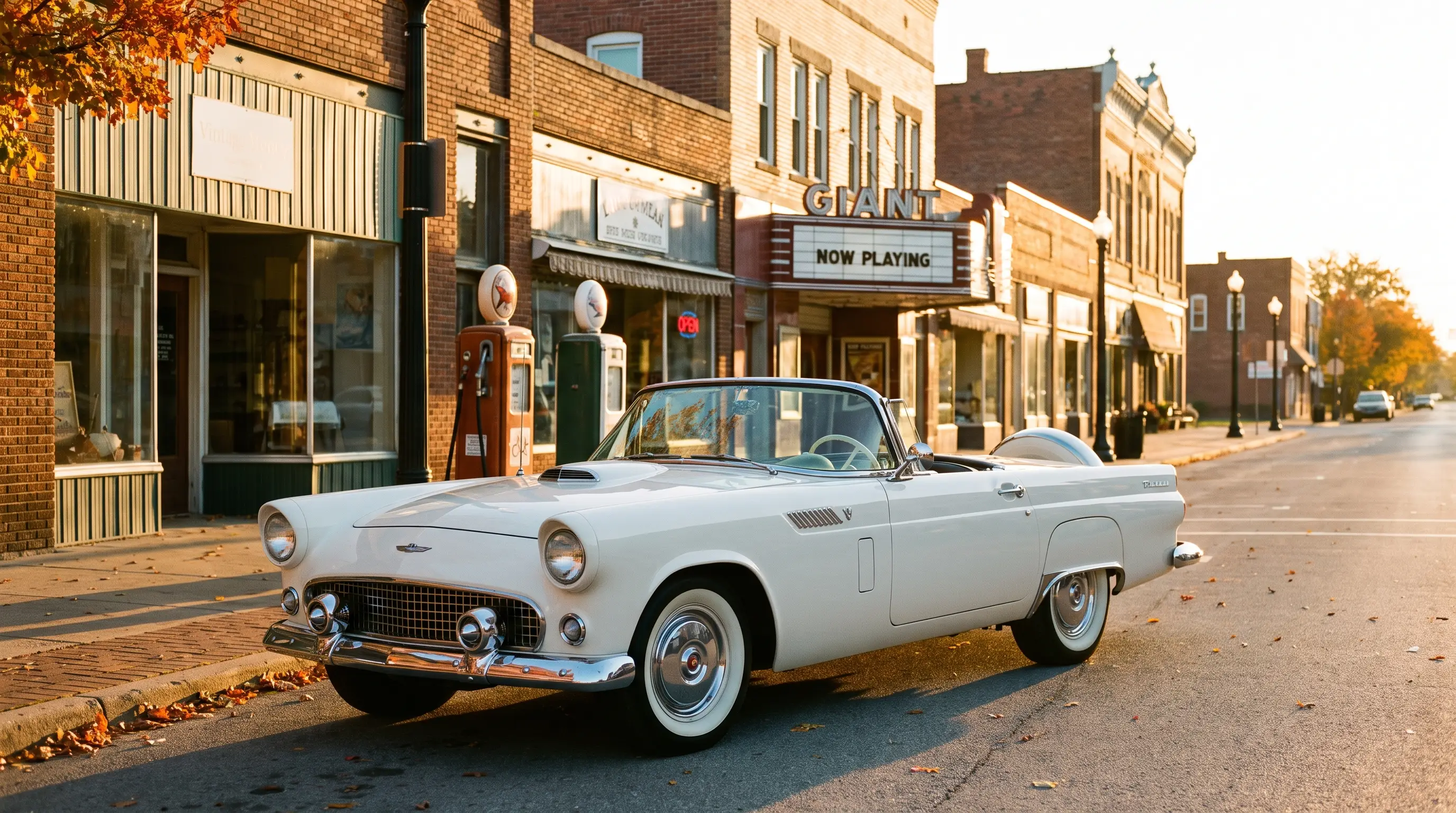
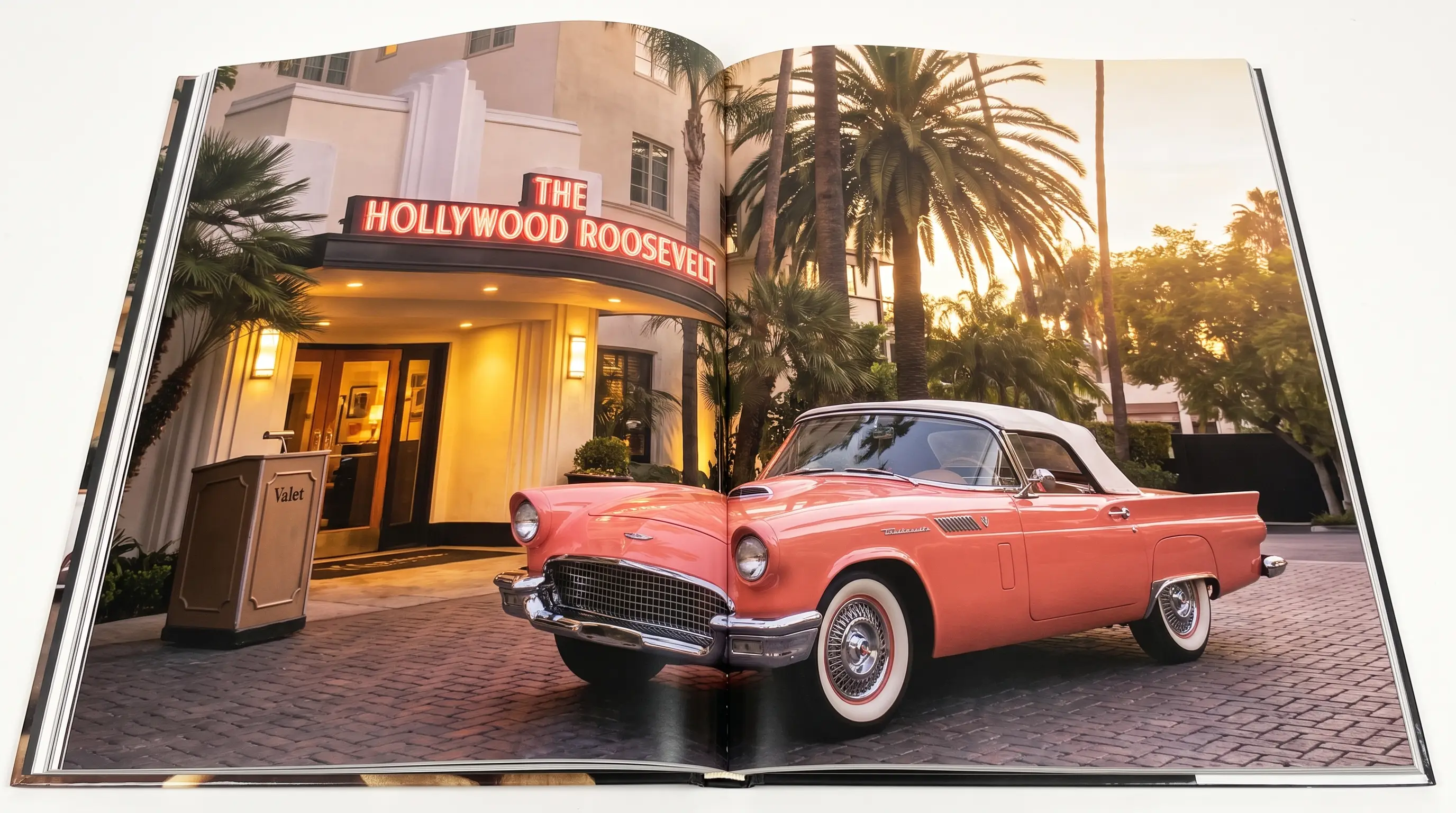
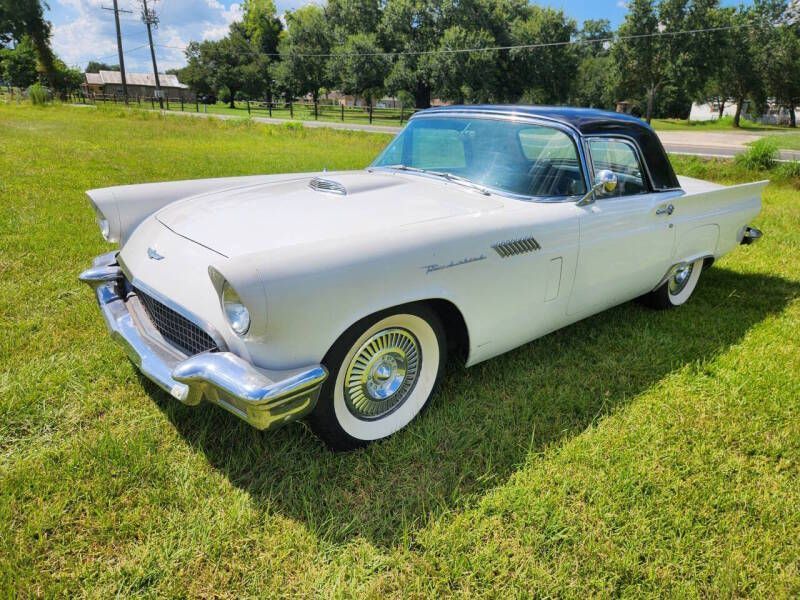
The 1957 Thunderbird, in its final year of the two-seat body before the 1958 redesign went to four seats, carries two option codes that dominate the top of the auction results: the E-code 312 with dual four-barrel carburetors, and the rarer F-code 312 with a McCulloch supercharger. Ford built the F-code in very small numbers, roughly 200 to 212 cars by most tallies (some Phase One D/F conversion cars and Phase Two production cars, with figures like 196 and 205 also cited depending on the source), and surviving, numbers-matching examples are treated by serious collectors the way a low-mileage first-edition book is treated by a rare book dealer. Condition matters. Originality matters more.
A documented F-code Thunderbird with a clean ownership chain is one of the few American cars from this era where the auction result genuinely surprises people who do not follow the market closely. Six-figure hammer prices for these cars are not new, and results have only tightened as fewer verifiable examples come up for sale each year.
The Sports Roadster years and a second, quieter market
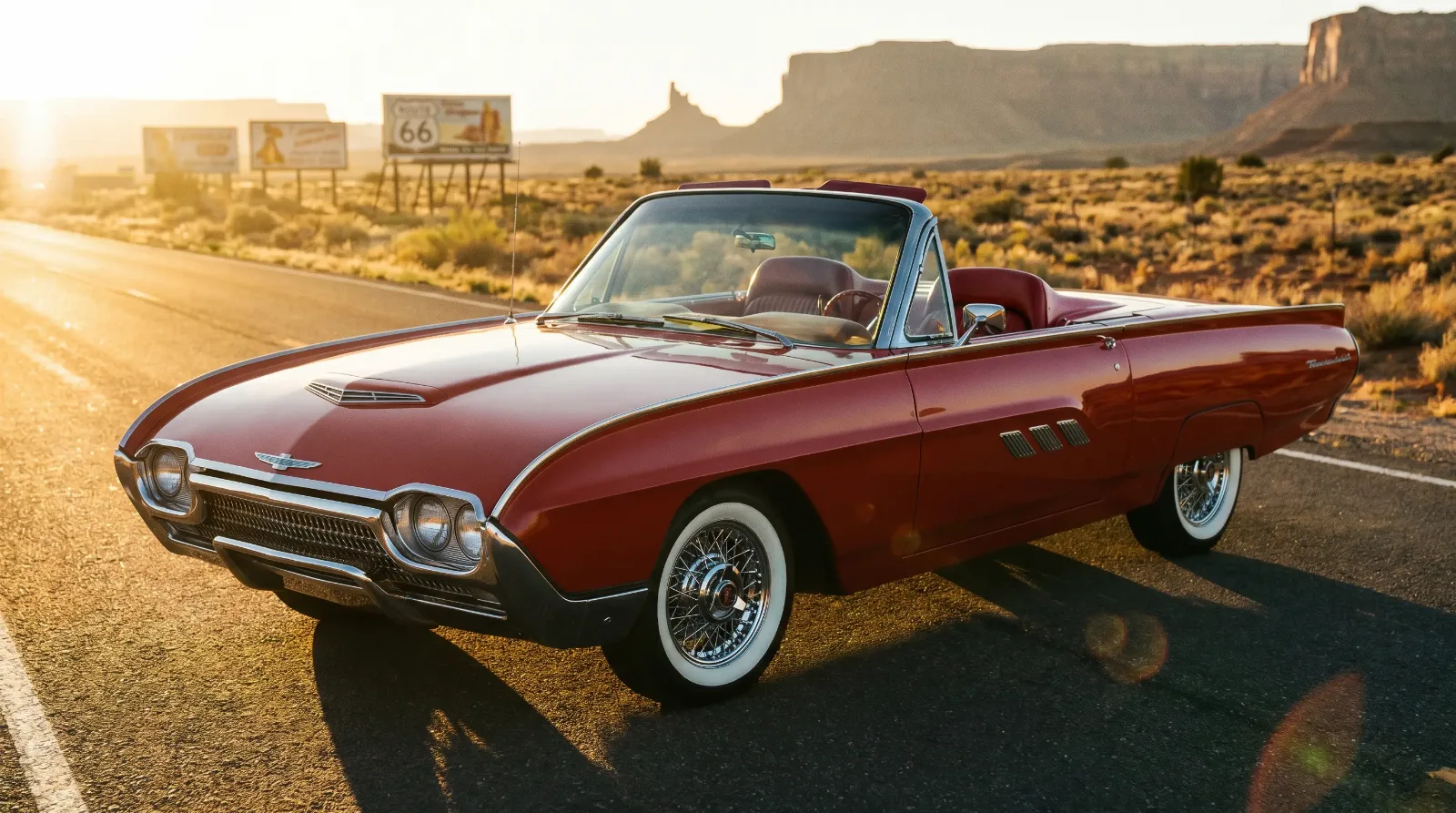
The 1962 to 1963 Sports Roadster, with its fiberglass tonneau cover and wire wheels, is the other classic-era Thunderbird that shows up near the top of results lists, though it rarely challenges the 1957 F-code cars dollar for dollar. It is a lower-production variant of an already lower-production body style, and the tonneau cover itself is a common point of failure and fraud, since reproduction covers and incomplete kits have been sold as original for decades. A verified, original Sports Roadster with its correct hardware commands a real premium over a standard 1962 to 1963 convertible, but the spread between "verified" and "claimed" is where a lot of buyer money has been lost.
None of this happens in isolation. The Thunderbird's auction results sit inside a broader story about how the car built and lost cultural standing across three decades, and that context explains why some years get chased hard while others barely register at auction. Reading the whole picture of the Thunderbird's rise and fall helps explain why bidders treat 1955 to 1957 and the early Sports Roadsters as a different tier from everything that came after.
What a record sale actually looks like on paper
| Factor | Record-tier car | Typical driver-tier car |
|---|---|---|
| Body style | 1955-57 two-seat, or 1962-63 Sports Roadster | Any year, any body |
| Engine | Documented F-code supercharged or E-code dual-quad | Standard single four-barrel V8 |
| Documentation | Build sheet, Marti-style report, multi-owner history | Partial or no paper trail |
| Restoration | Concours-level, correct materials and finishes | Driver-quality, mixed correctness |
| Market result | Six figures, competitive bidding | Well below six figures, single bidder common |
Reading the numbers without getting fooled by them
Auction headlines tend to report the single highest number of the weekend, and that number is almost always an outlier even within its own category. A single well-promoted sale of a documented F-code car does not mean every 1957 Thunderbird is suddenly worth that much, and it does not mean the market moved. It means one specific car, with one specific history, found one specific buyer willing to pay for certainty. The most expensive Thunderbird sales cluster around a handful of cars that keep reappearing in market commentary precisely because so few comparable examples exist to challenge them.
That scarcity cuts both ways for a buyer. It protects the value of a documented top-tier car, but it also means there is no deep bench of recent comparable sales to lean on when you are trying to value your own. Anyone pricing a Thunderbird against a record headline is usually pricing against a car in a different league entirely.
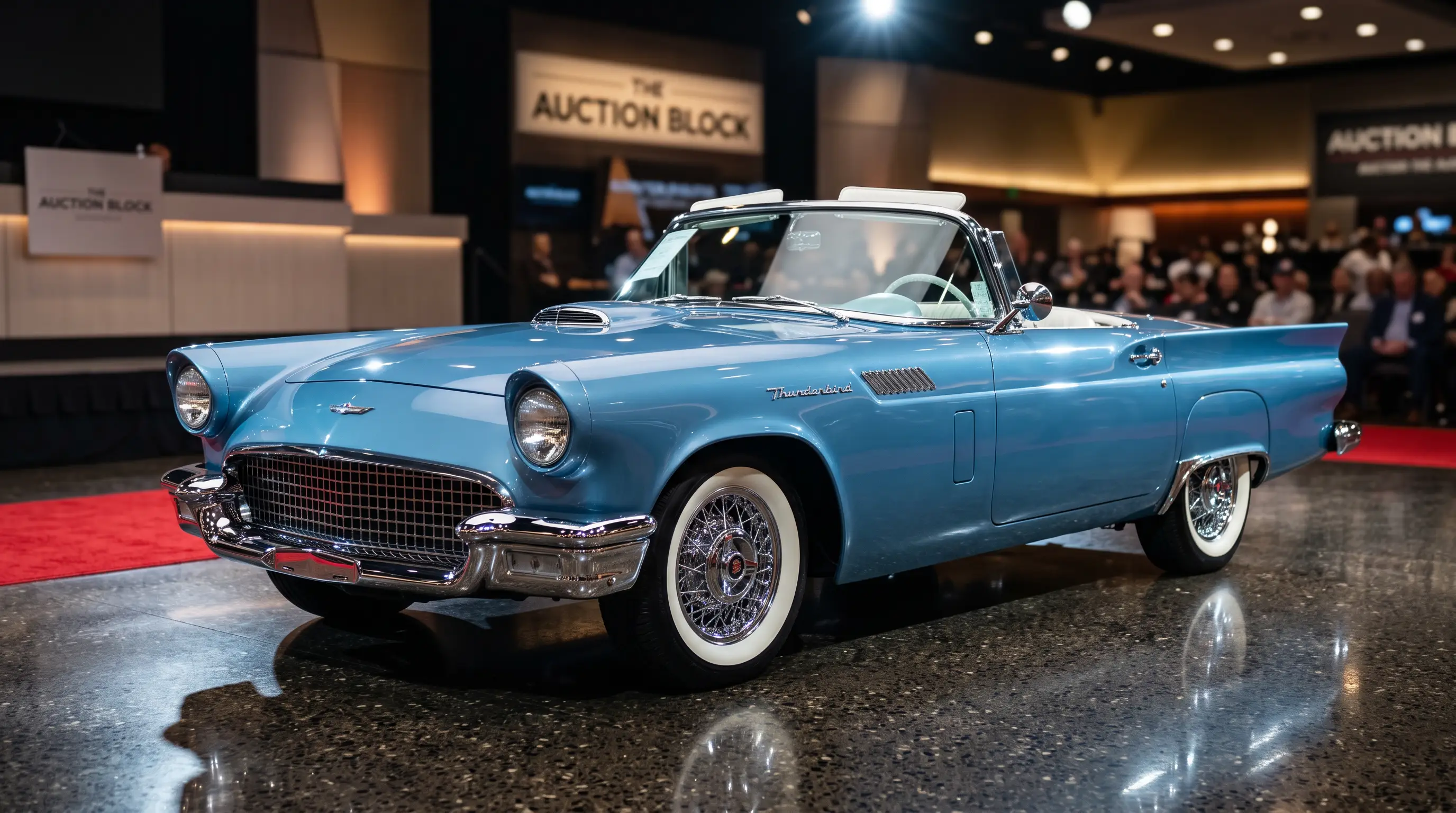
There is also a timing element that gets ignored in most coverage of a headline sale. Auction results are snapshots of a single room on a single day, and two rooms three months apart can produce very different numbers for cars that are nearly identical on paper. A supercharged 1957 that crosses the block during a marquee weekend, surrounded by serious pre-registered bidders and strong marketing, tends to outperform the same car sold at a smaller regional sale with a thinner bidder pool. None of that changes what the car is. It changes who is in the room and how badly they want it that afternoon. Buyers who track this market closely watch the venue and the season almost as carefully as they watch the car itself, because a soft sale at the wrong event can undersell a genuinely correct car by a wide margin, and an aggressive sale at the right event can push an average car past where it has any business being.
The lesson for anyone using auction results as a pricing tool is to weight recent, comparable, well-documented sales far more heavily than a single standout number from a year or two back. A record price tells you what one buyer was willing to pay under one set of conditions. It does not set a floor, and it rarely sets an honest ceiling either.
Regional variation matters too. A documented F-code car sold at a major national auction house tends to draw a different bidder pool than the same car offered through a regional sale or a private broker, and that pool difference alone can swing the final number by a meaningful margin. Serious buyers cross-reference more than one sale before they set an expectation, because a single result, however impressive, is one data point and not a trend line.
"People quote the record sale and then act surprised when their unverified convertible doesn't come close. The record car and the average car aren't in the same market. One has paperwork and a rare engine code behind it, the other has a nice paint job."
- David Mercer
The buy or pass verdict
If the goal is chasing record-level appreciation, a standard V8 automatic Thunderbird from any classic-era year is the wrong vehicle for that bet. The cars that have actually produced record results are narrow, specific, and increasingly hard to find without paying a premium for verification work up front. That is not a reason to avoid the model. It is a reason to buy with a clear purpose: a documented F-code or Sports Roadster for a collector chasing top-of-market results, or a well-sorted standard car for someone who wants the styling and the ownership experience without paying auction-headline money for it. Both are legitimate ways into the model. Confusing the two is how buyers overpay. For most people who just want to own the styling, the history, and the drive, it makes more sense to find a classic Thunderbird priced on its own condition and documentation rather than benchmarked against a record that was never going to apply to it anyway.
Sources and notes
- RM Sotheby's - 1957 Ford Thunderbird 'F-Code' (Hershey 2017)
- RM Sotheby's - 1957 Ford Thunderbird 'F-Code' (Amelia Island 2023)
- Hagerty - Buying a 1955-57 Ford Thunderbird buyer's guide
- Sports Car Market - 1957 Ford Thunderbird F-code profile
- Conceptcarz - Auction Results and Sales Data for 1957 Ford Thunderbird
- Old Cars Weekly - Vintage Muscle: the '57 Thunderbird F-Code