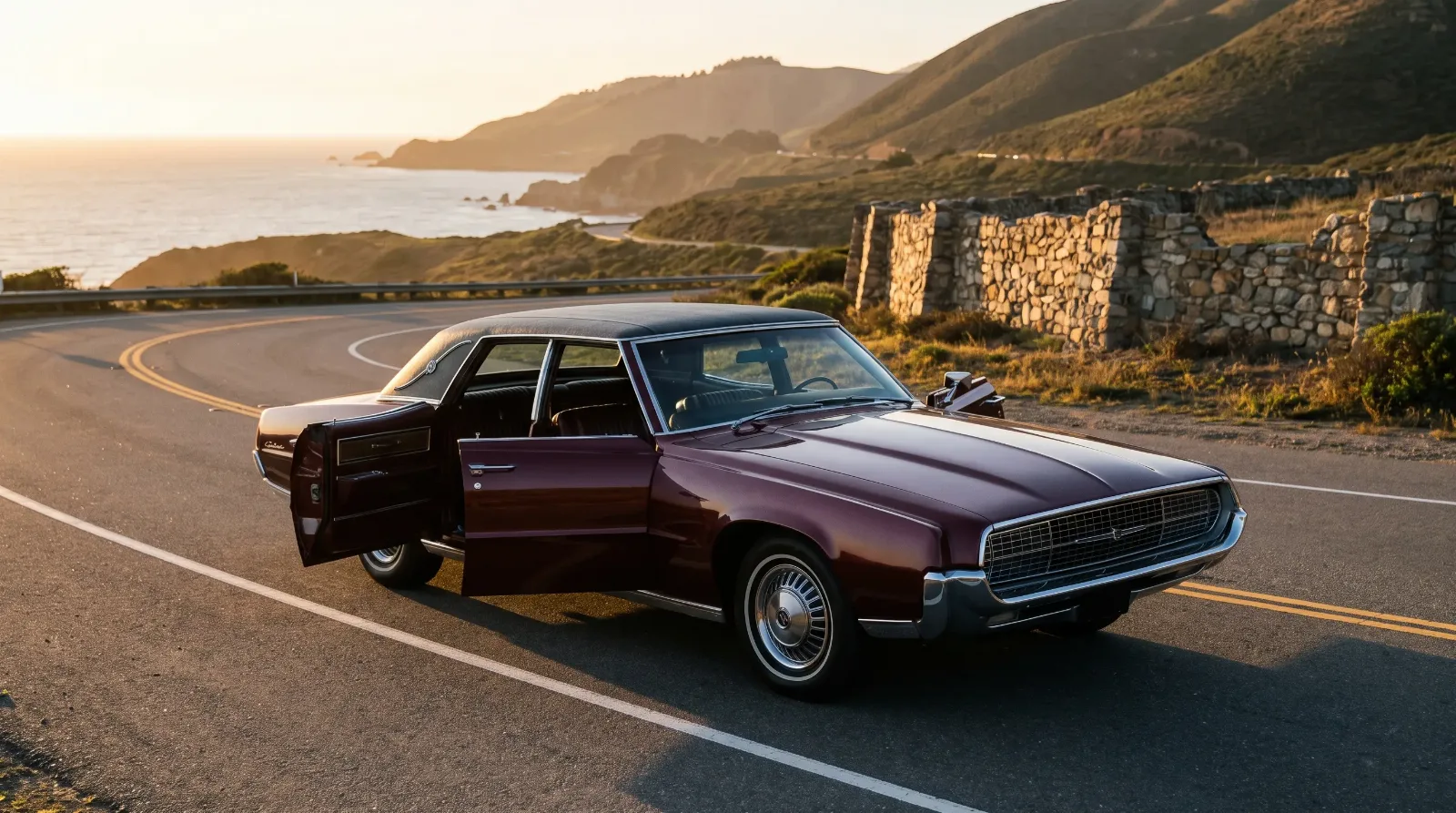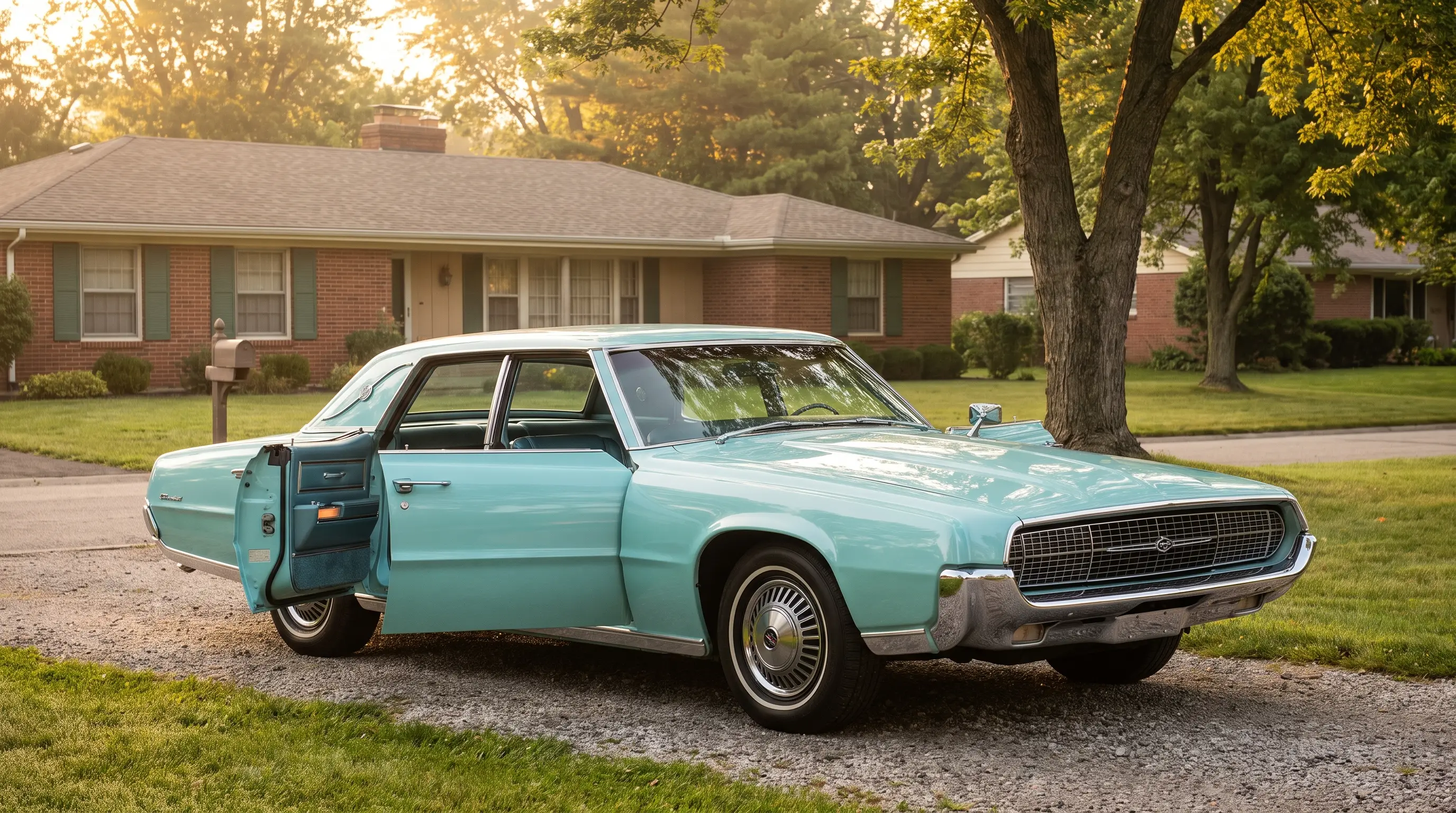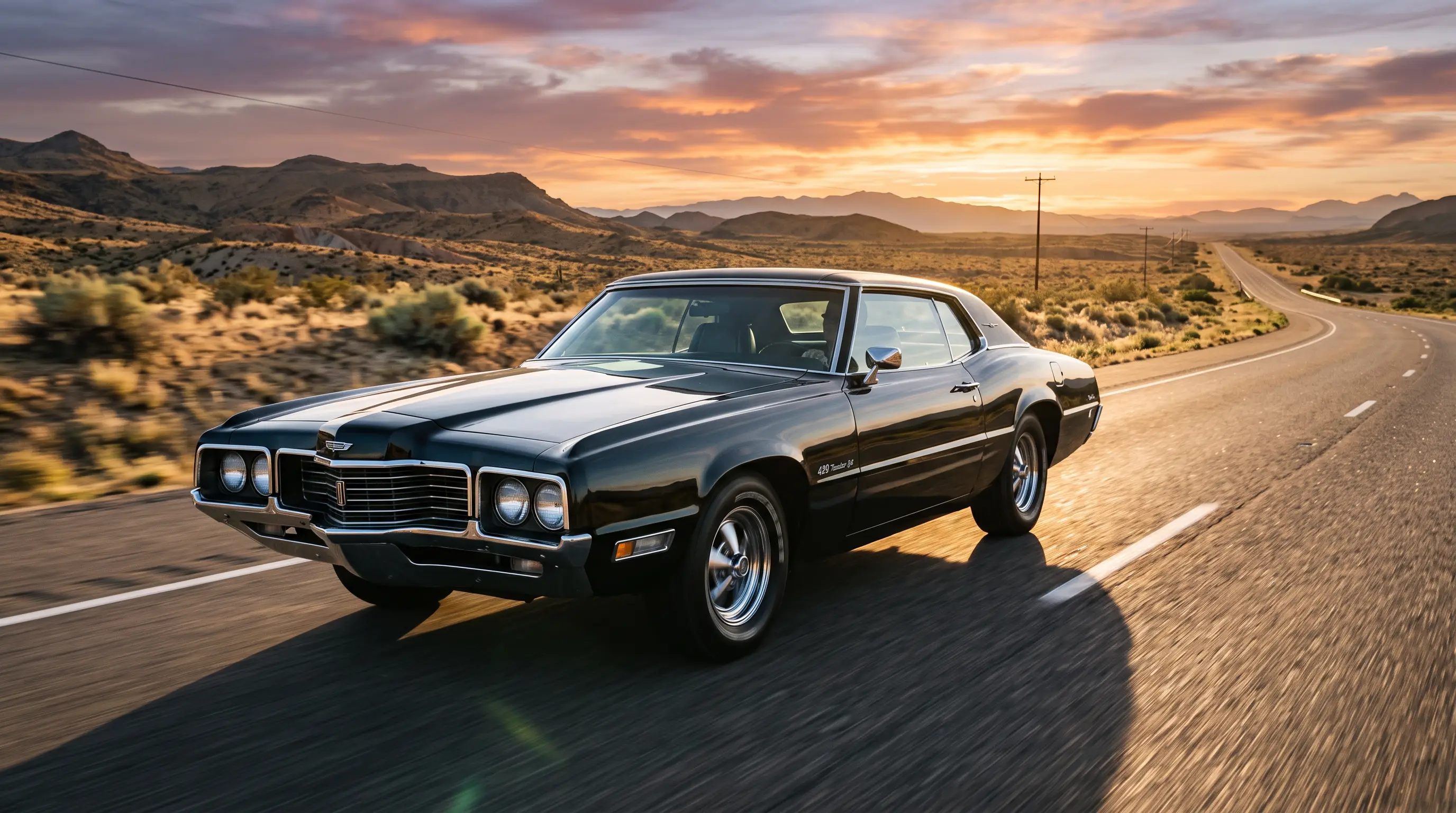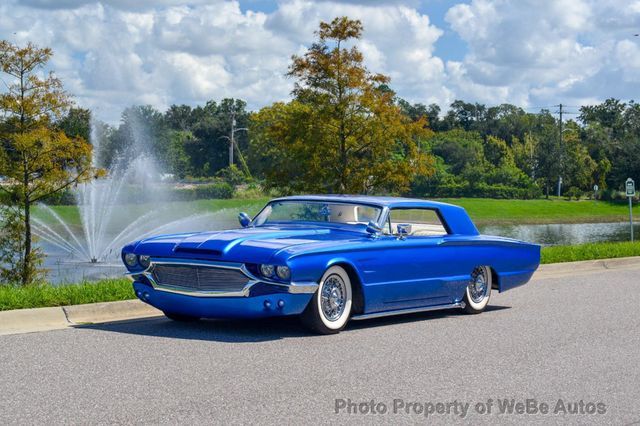
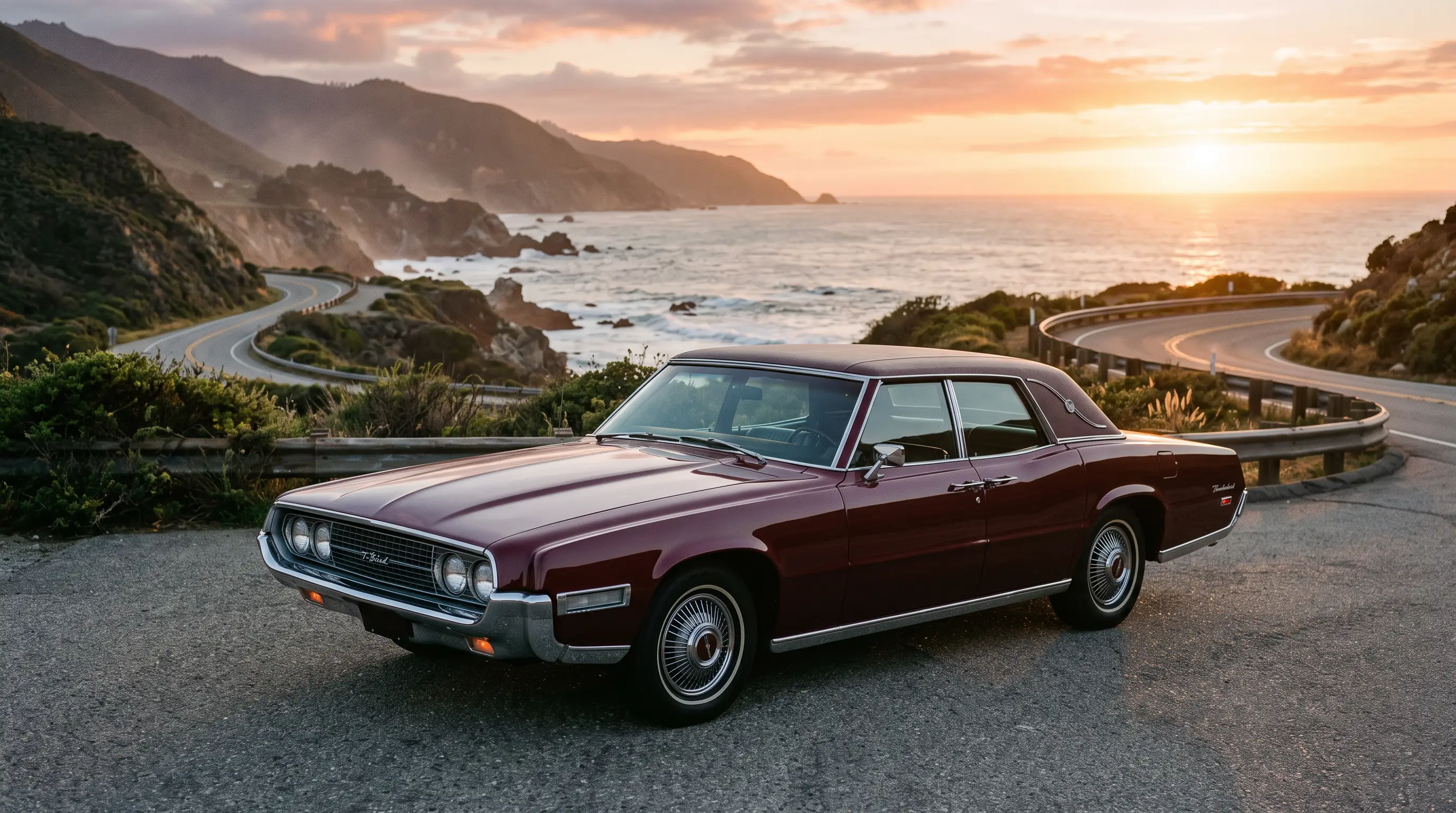
Production data on Ford's engineering choices for 1967 confirms a shift that a lot of casual Thunderbird histories gloss over entirely: after building the Flair Bird generation on a unibody platform, Ford went back to body-on-frame construction for the fifth generation. The 1967 thunderbird redesign wasn't a simple styling refresh layered onto the existing structure. It was a fundamentally different way of building the car, and understanding why Ford made that change corrects a common assumption that automotive engineering only ever moves in one direction, from body-on-frame toward unibody, as some inevitable march of progress.
What actually changed underneath
The 1958 through 1966 Thunderbird generations, including the Flair Bird, used unibody construction, where the body panels and structural frame are a single welded unit rather than a separate body bolted onto a ladder frame. Unibody construction generally offers a lighter structure and can improve rigidity for a given weight, which is part of why Ford had adopted it for the Thunderbird in the first place back in the late 1950s, well ahead of most of the American industry making the same switch.
For 1967, Ford's engineers moved the Thunderbird onto a body-on-frame platform, a construction approach broadly in line with the full-size Ford products of the period, though the exact degree of component sharing between the Thunderbird's frame and any specific full-size Ford model is not something Ford's surviving public documentation spells out in detail, so that claim is best left general rather than itemized part by part. What is documented clearly is the structural change itself and Ford's stated reasoning: the larger four-door variant introduced for 1967, covered in more depth in read the background on the fifth generation's full redesign, needed a structure that could handle the added length, weight, and stress of a genuine four-door body without the compromises a stretched unibody would have introduced.
Why body-on-frame suited the bigger car
A separate frame offers real practical advantages for a manufacturer building multiple body configurations off one basic platform, which is exactly the position Ford was in with the fifth-generation Thunderbird's two-door hardtop, two-door Landau, and four-door Landau all needing to share as much engineering as possible to keep tooling and development costs manageable. A body-on-frame architecture makes it considerably easier to stretch a wheelbase for a longer variant without re-engineering the entire structural shell, since the frame absorbs most of the load-bearing changes while the body panels can be adapted with comparatively less structural redesign.
That flexibility mattered directly for the four-door variant, which needed additional length for genuine rear-seat access and the rear-hinged door design covered in worth a look too, another piece in this series on the fifth generation's mechanical side. Building that longer body on a dedicated frame let Ford's engineers manage the added weight and stress points more directly than a stretched unibody shell would have allowed without a much larger and more expensive re-engineering effort.
What it meant for how the car drove and felt
Body-on-frame construction also shifted the character of the Thunderbird's ride and structure in ways period road tests noted directly. The fifth-generation car rode with a heavier, more isolated feel than the Flair Bird it replaced, consistent with the larger, more traditionally American full-size construction approach Ford adopted. This wasn't accidental or a byproduct nobody anticipated. Ford's own marketing for the period leaned into words like "substantial" and "commanding" for the redesigned car, language that tracks directly with what a body-on-frame structure delivers in terms of isolation and heft compared to the tauter, lighter unibody Flair Bird.
| Generation | Construction | Body styles |
|---|---|---|
| 1958-1966 (including Flair Bird) | Unibody | Two-door hardtop, convertible, Landau |
| 1967 redesign | Body-on-frame | Two-door hardtop, two-door Landau, four-door Landau |
What contemporary press coverage said
Automotive press coverage from the period generally treated the structural change as a footnote to the bigger story of the car's new size and styling, rather than as a headline engineering announcement in its own right. Road testers of the era were more focused on how the redesigned Thunderbird rode and handled compared to its predecessor than on explaining the underlying frame architecture to readers, which is part of why the structural switch gets so little attention in popular retellings of the car's history today. It simply wasn't the story period journalists were most interested in telling, even though it represented a genuine engineering decision with real consequences for how the car was built and how it would eventually be repaired decades later.
That gap in period coverage is part of why so much of what circulates about this switch among enthusiasts today rests on inference and repetition rather than direct citation of Ford engineering documentation. Reconstructing the actual reasoning requires looking past the marketing copy and toward what the redesign was actually trying to accomplish across three distinct body configurations sharing one platform.
Correcting the record on why it happened
The common shorthand version of this story treats the 1967 switch as Ford simply falling back on an older, cheaper technology, but that framing misses the actual engineering logic. Body-on-frame wasn't a step backward in this context so much as a deliberate choice suited to a specific product goal: a larger personal luxury car offered in three distinct body configurations, including one that had never existed on the nameplate before. Unibody construction remained the right choice for the tighter, sportier Flair Bird it replaced. It wasn't necessarily the right choice for a bigger car with a four-door variant sharing its architecture, and Ford's engineers made that call based on what the expanded lineup actually required structurally, not out of any retreat from more advanced engineering.
A note on shared engineering across the Ford lineup
Platform sharing across a manufacturer's lineup was already common industry practice by the late 1960s, and Ford's use of body-on-frame architecture for both the redesigned Thunderbird and its full-size passenger cars reflects that broader efficiency logic rather than any diminishment of the Thunderbird's status within the company. Sharing frame architecture didn't mean sharing an identity. The Thunderbird retained its own distinct sheet metal, its own interior treatment, and its own positioning above the LTD in Ford's internal hierarchy, even while benefiting from the cost efficiencies that came with related underlying engineering.
What this means for buyers today
Anyone comparing a Flair Bird generation Thunderbird against a fifth-generation car is, in a real structural sense, comparing two different kinds of vehicles built on entirely different engineering philosophies, not just two cars with different sheet metal draped over a similar chassis. That distinction matters for restoration work, since body-on-frame cars generally offer more straightforward access for frame and floor repairs than a unibody structure does, a practical consideration worth knowing if rust repair is part of your evaluation on any prospective purchase.
If you're weighing a fifth-generation car against the earlier Flair Bird, understanding this structural difference will help you evaluate what you're actually looking at beyond styling preferences. Buyers wanting to compare the two generations directly can shop classic Thunderbird listings spanning both eras, and knowing whether a given car sits on a unibody or a separate frame is worth confirming early in the process rather than assuming based on model year alone.