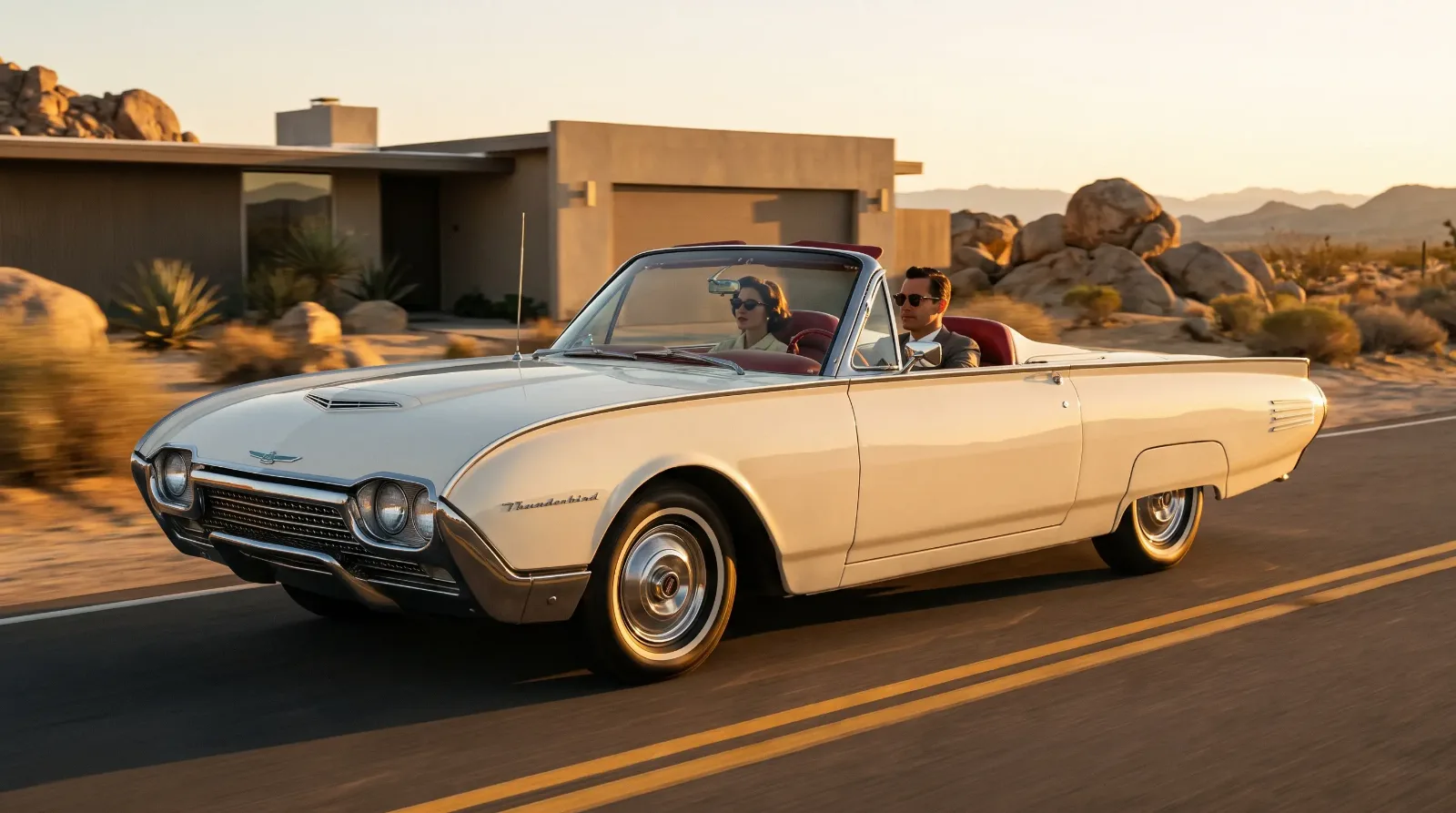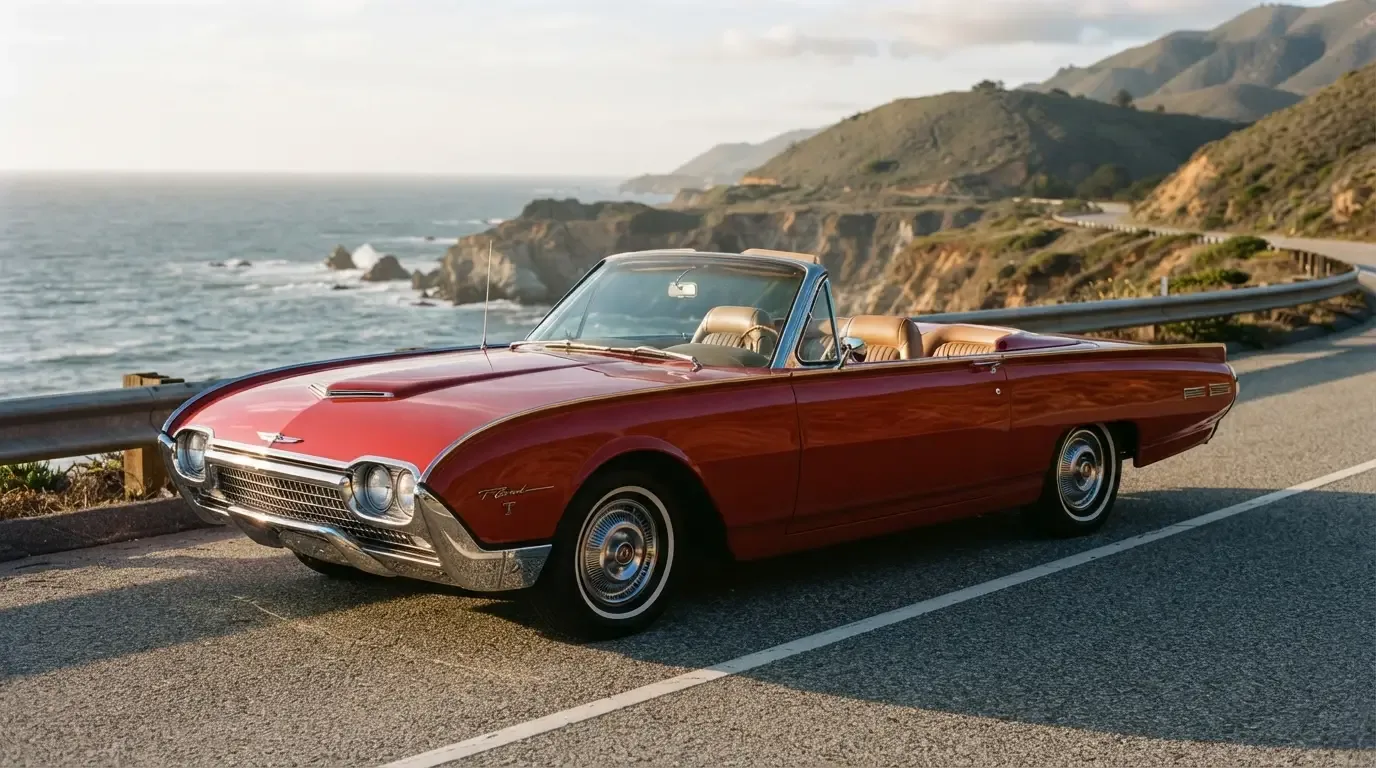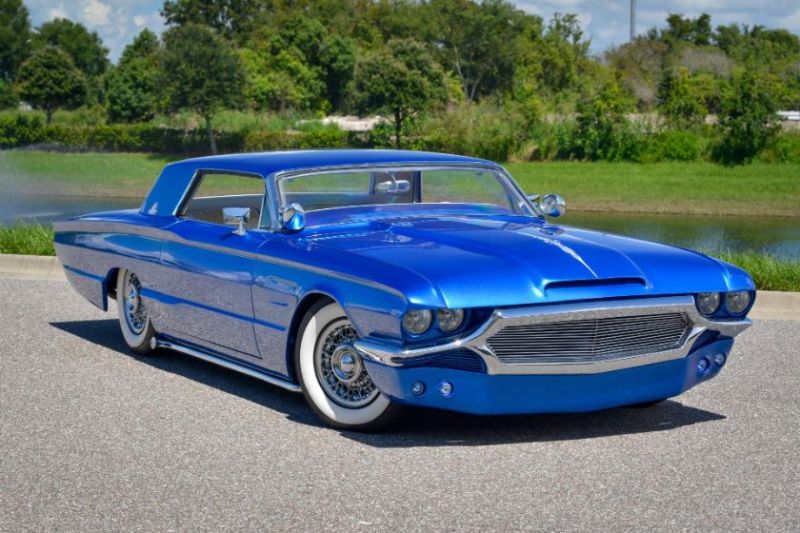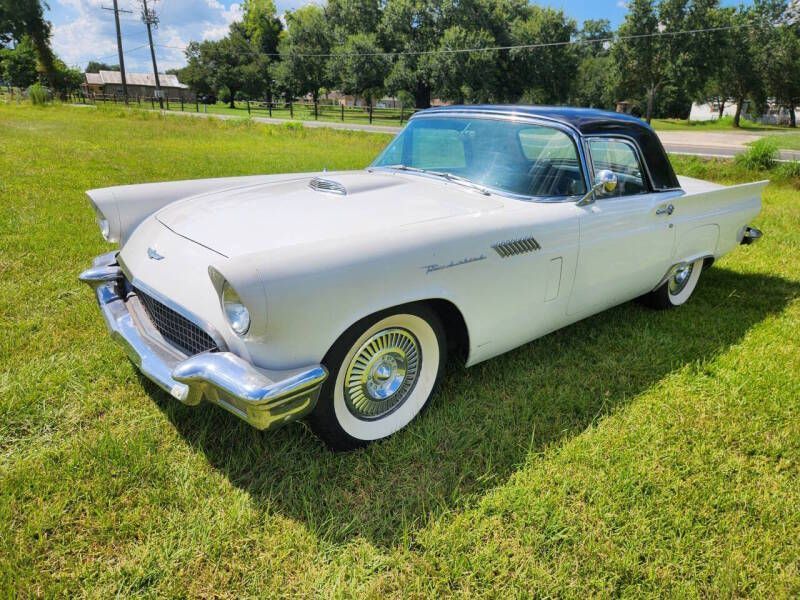
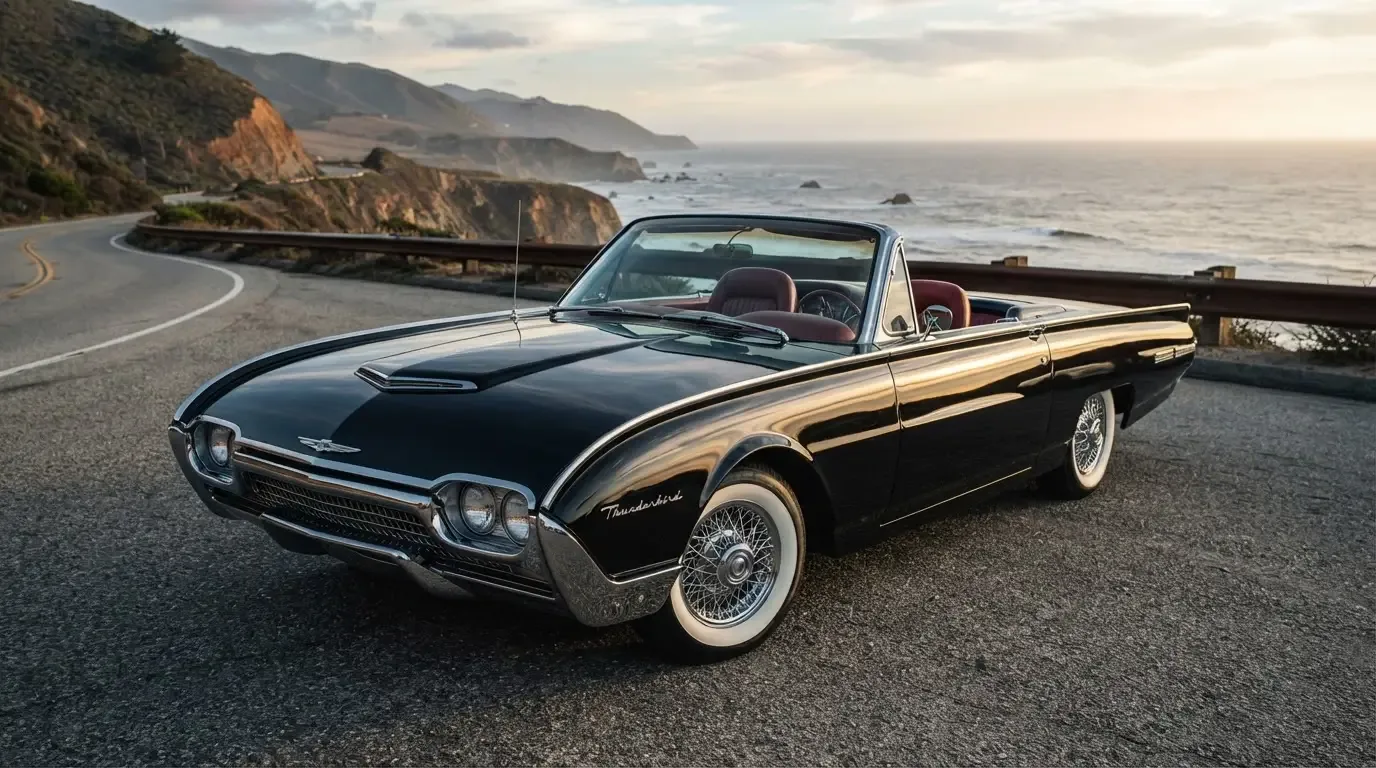
Ford's design studios in the late 1950s were full of engineers and stylists who had spent the decade watching the space race unfold in the newspapers, and it shows in the sheet metal Ford put on the street for 1961. The 1961 Thunderbird styling program abandoned the squared-off lines of the Square Bird generation entirely and replaced them with something rounder, tighter, and pointed at both ends like a projectile. Owners and enthusiasts started calling it the Bullet Bird almost immediately, and the name has stuck for six decades because it describes the car exactly.
This was not an accident of taste. Ford's design language across the early 1960s was absorbing the era's fascination with rockets and jet aircraft, and the Thunderbird became one of the clearest expressions of that influence in the entire American lineup. The front end tapers to a peak between the headlights. The rear deck tapers back to a point at the bumper. Viewed from above, the car reads less like a sedan and more like a fuselage with wheels attached.
The design language behind the missile look
Bill Boyer led the styling work that produced this generation, building on cues that had already appeared in Ford show cars earlier in the decade. The 1961 body sits on the same 113-inch wheelbase as its predecessor, but the surfacing is entirely different. Where the Square Bird used flat panels and hard creases, the Bullet Bird uses compound curves that catch light in a way period photography struggles to convey. Chrome trim runs in thin, controlled lines rather than the heavier applications common on other Ford products of the era, which keeps the emphasis on the shape itself rather than the ornamentation applied to it.
The dual headlights, recessed into pointed nacelles rather than mounted flush, reinforce the nose-cone read from the front three-quarter view. Ford's engineers also revised the unibody structure for this generation, which allowed the lower beltline and the more dramatic tumblehome that define the car's silhouette. None of this happened by accident. Ford was explicit internally about wanting a Thunderbird that looked like nothing else on the road, and the surviving design documentation backs that intent up consistently.
Interior details that carried the theme through
The exterior gets most of the attention when people discuss 1961 Thunderbird styling, but the cabin carries the same design logic. The dashboard uses a wraparound instrument cluster with a padded, curved cowl that echoes the exterior's rounded surfacing. Ford offered a swing-away steering wheel as an option this generation, a genuinely novel piece of engineering that pivoted the wheel toward the door to ease entry and exit, and it reads today as exactly the kind of forward-looking detail Ford wanted associated with the Thunderbird name.
Convertible models added a further mechanical flourish: a fully automatic power top that folded down and stowed itself beneath a hinged rear deck panel, a sequence that drew crowds at dealership demonstrations because nothing else in the class did it the same way. The hardtop's roofline, meanwhile, kept a formal, slightly reverse-angled rear window in early production before Ford settled the shape for the run. Every one of these details ties back to the same design brief: make the Thunderbird feel like it came from somewhere ahead of 1961, not from within it.
How the styling aged against its rivals
Compared to the Thunderbird's closest domestic competitors, the Bullet Bird's restraint is notable. Contemporary personal luxury and sporty coupes leaned on fins, extra brightwork, and two-tone paint schemes to signal status. The 1961 Thunderbird did the opposite, using a single dominant shape line and letting the body do the talking. That choice reads as more confident in hindsight than it likely felt to buyers standing in a showroom in 1961, comparing it against flashier competition. Design historians studying the period consistently point to this generation as the moment Ford's styling department matured past chrome-as-decoration and into shape-as-statement.
For the fuller account of how this body arrived, including the engineering decisions and market context that shaped it, the 1961 ford thunderbird story covers the ground this piece does not. And for readers coming to the Thunderbird nameplate for the first time, the full story traces how the car got here across three very different generations before this one.
"The Bullet Bird isn't dramatic because of any single feature. It's the discipline of the whole shape, front to rear, that makes it read as one continuous idea rather than a collection of styling trends stapled together."
- Sarah Whitfield
Documenting an original body for authenticity
Anyone researching a specific 1961 Thunderbird should start with the body build plate and the trim tag, which together record the original color combination, trim level, and the plant where the car was assembled. Ford ran final assembly for this generation at more than one facility, and cross-referencing the plate data against the car's VIN is the first step any serious appraiser or concours judge takes before evaluating whether the styling elements present on a given car are correct for its build date. Early and late production within the same model year sometimes carried small running changes, so a plate that does not match the details visible on the car is worth investigating before any purchase decision.
Reproduction trim exists for nearly every exterior piece on this generation, from the headlight bezels to the rear deck ornamentation, and while that keeps restoration realistic for owners without deep pockets, it also means a casual glance is not enough to confirm originality. Fit, casting marks, and finish quality on reproduction parts have improved over the decades but still differ from what left the factory in period, and a trained eye can usually tell the difference within a few feet of the car. This is not a small distinction for anyone documenting the car's history or presenting it for judged concours events, where the accuracy of every visible surface factors into the final score.
Why this generation still draws serious collector interest
Design integrity is a large part of why the 1961 to 1963 Thunderbird holds the reputation it does among people who study automotive styling rather than simply drive the cars. Original paint and unmolested trim on a Bullet Bird show the surfacing exactly as Ford's stylists intended it, without the distortion that a poor repaint or replaced brightwork can introduce to a design this dependent on precise curves. A car with its original chrome nacelles, correct swing-away wheel if optioned, and unaltered roofline is documenting a genuine design achievement, not just an old automobile.
Buyers looking at classic Thunderbirds on the market today who care about styling authenticity should pay close attention to whether trim pieces are original or reproduction, and whether any bodywork has softened the compound curves that define this generation's entire visual identity. The difference between a well-preserved Bullet Bird and one that has been repaired without regard for the original surfacing is immediately visible to anyone who has studied period photography closely, and it matters a great deal to the car's standing as a design object worth preserving.
Sources and notes
- Mac's Motor City Garage: Bullet Birds, The 1961-63 Ford Thunderbirds
- Classic Industries: 1961 Ford Thunderbird, First Year of the Three-Year Bullet Bird
- Ate Up With Motor: Gaudy but Glamorous, 1958-1966 Ford Thunderbird
- Curbside Classic: Vintage Car Life Road Test, 1961 Thunderbird
- Conceptcarz: 1961 Ford Thunderbird
- Wikipedia: Ford Thunderbird (third generation)