
The 1966 thunderbird value question comes up in almost every email I get about the Flair Bird generation, and the honest answer disappoints people looking for a simple number. There isn't one number. There's a spread, and the spread is wide enough that two nearly identical-looking cars can sell six months apart for figures that differ by tens of thousands of dollars, once you account for documentation, originality, and the specific trim configuration involved. If you're thinking about buying one of these cars as an investment rather than purely for enjoyment, you need to understand what actually drives that spread, because the visual condition of the paint tells you far less than most buyers assume.
Car Features
7 min read
Collecting the Flair Bird Today
A market-focused look at 1966 thunderbird value, breaking down how documentation, trim level, engine choice, and body style shift real sale prices.
The baseline market
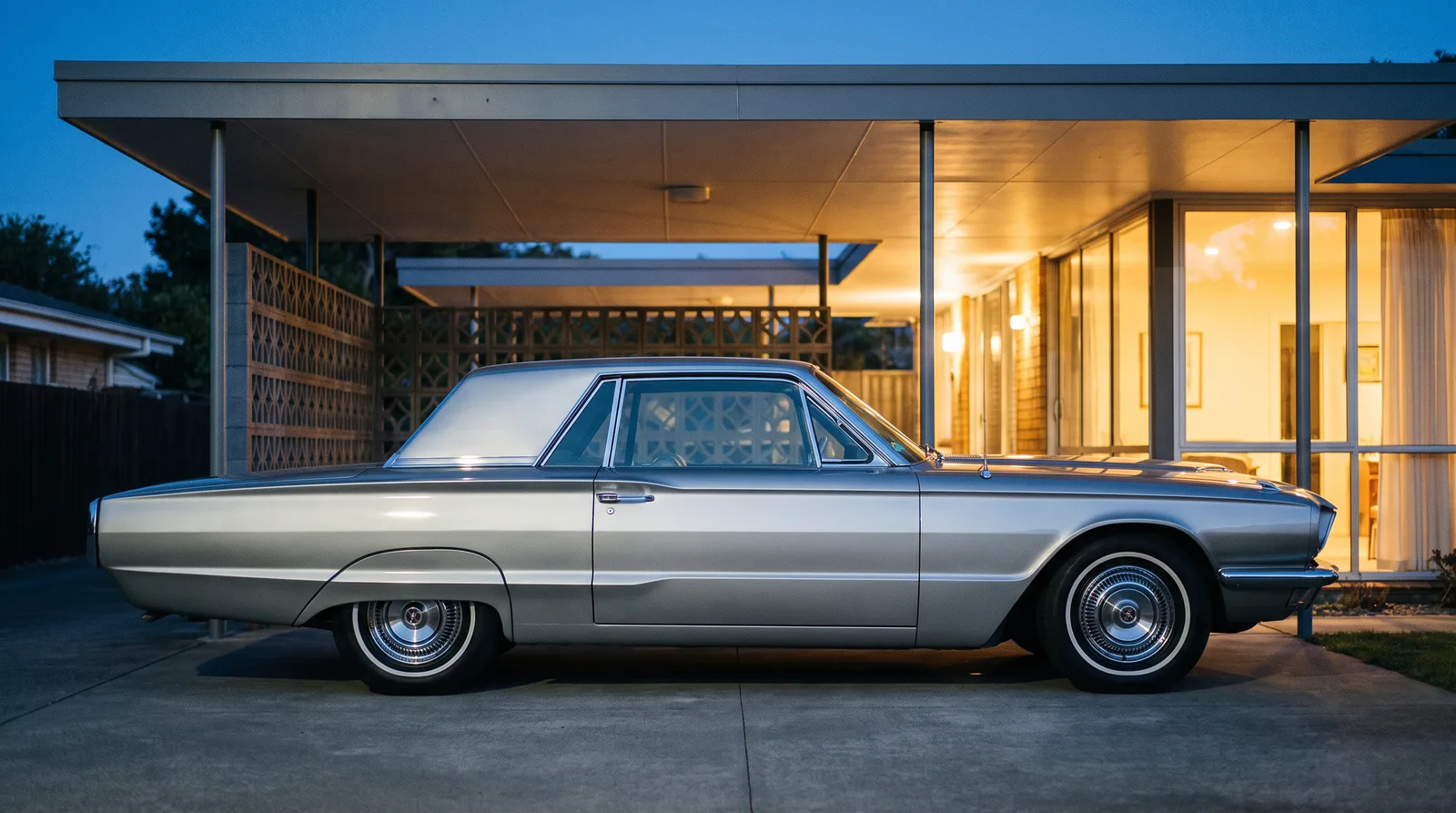
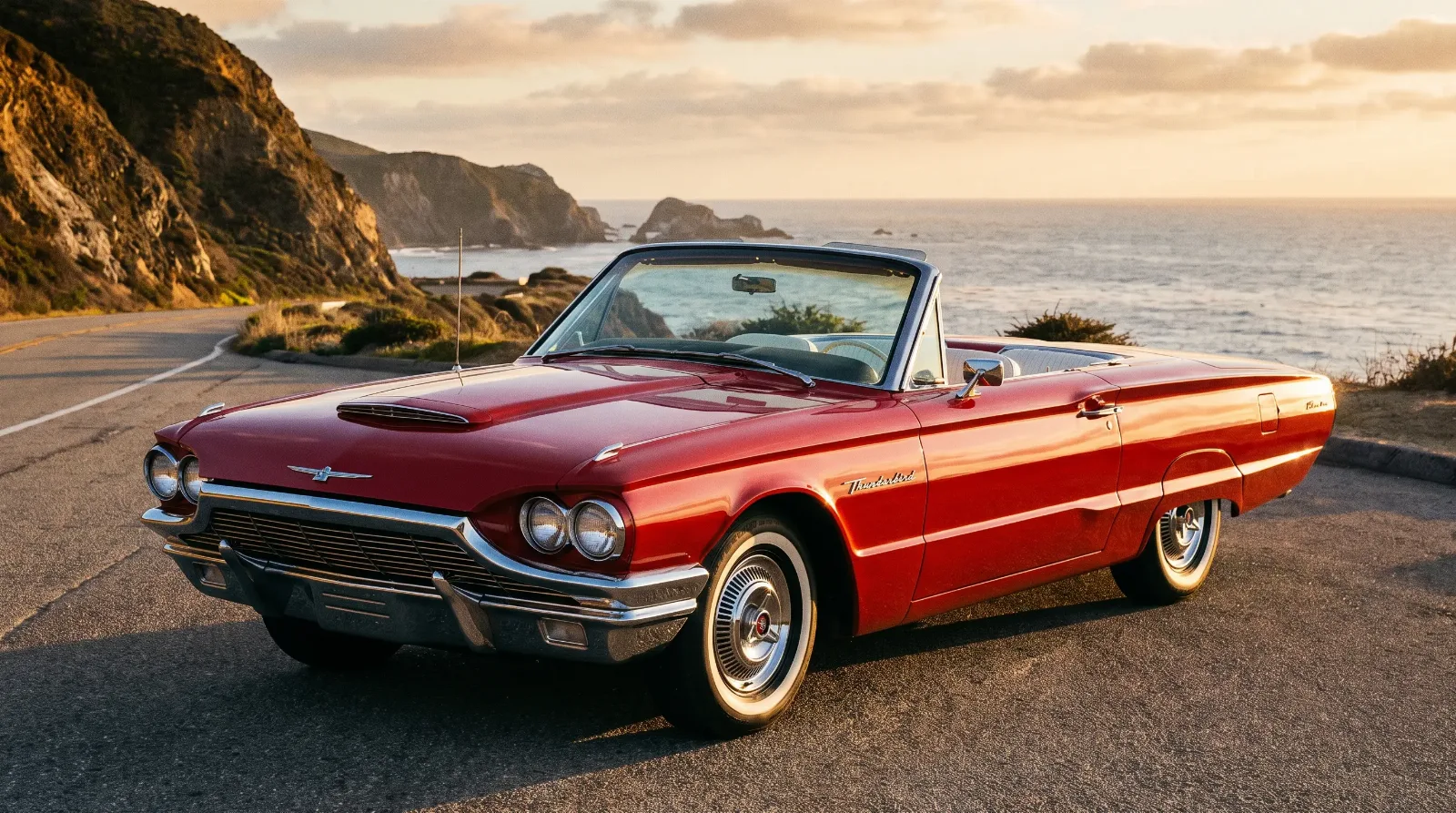
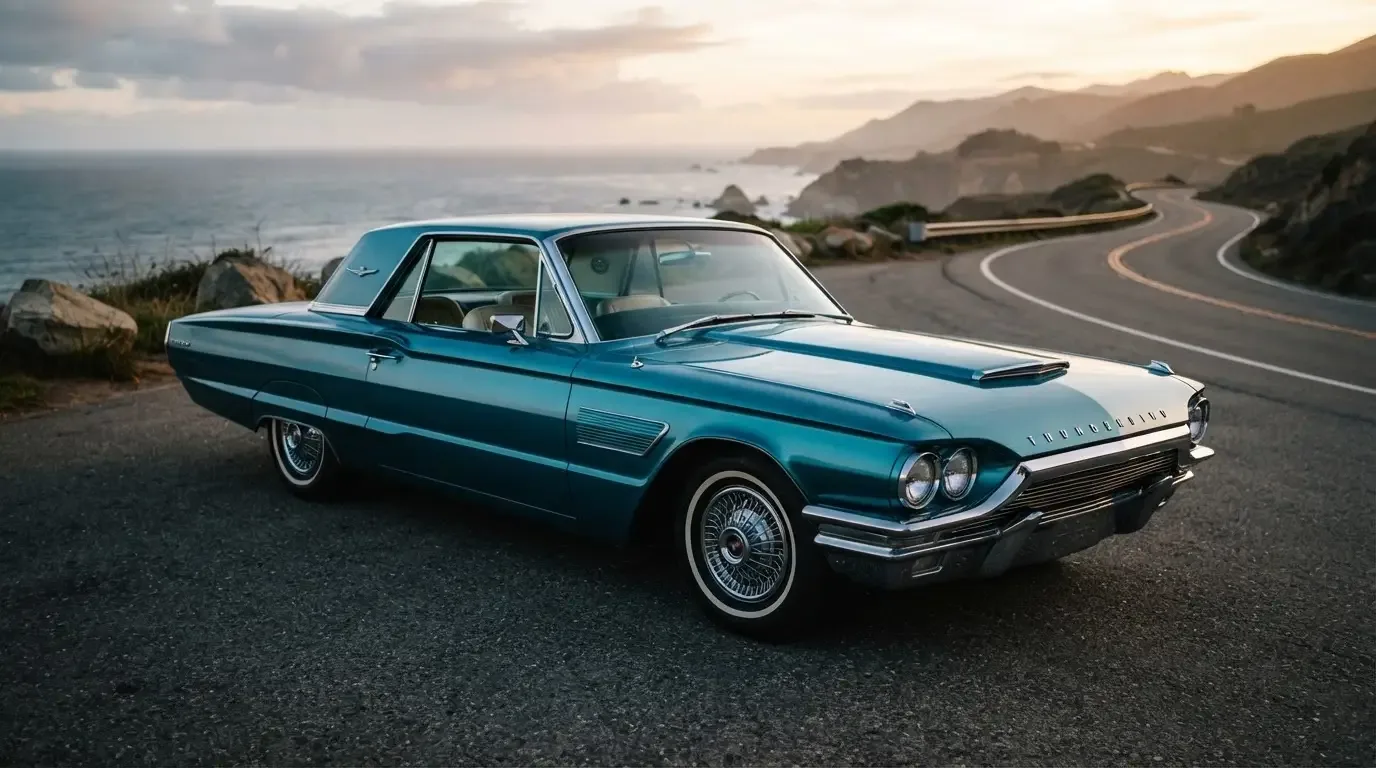
Hardtop coupes represent the bulk of surviving 1966 Thunderbird production and, unsurprisingly, the bulk of what trades hands at auction and through private sale. A solid, driver-quality hardtop with mechanical issues sorted and cosmetics that are presentable but not concours-grade tends to land in a middle range that most buyers would consider reasonable for a sixty-year-old American personal luxury coupe. Step up to a well-documented, low-mileage example with matching numbers and original paint, and the number moves meaningfully higher. Convertibles, always the rarer body style in this generation, command a further premium over hardtops in comparable condition, sometimes a substantial one, simply because fewer were built and fewer have survived in usable shape.
Hagerty's price guide has pegged a good, driver-quality 1966 Thunderbird convertible (their No. 3 condition) in the mid-twenty-thousand-dollar range, with a well-kept No. 2 example roughly seventy percent higher than that, and hardtop coupes have consistently priced well under those convertible numbers in comparable condition. Recent auction results track with that spread. A standard hardtop crossed the block at Mecum's Indy sale in 2026 for under thirty thousand dollars, squarely in line with what the guides suggest for a solid but unrestored coupe. What I can say with confidence, based on watching this market over multiple cycles, is that the gap between hardtop and convertible pricing has widened rather than narrowed over the past decade, which tells you convertible scarcity is being priced more aggressively now than it was a generation ago.
Documentation moves the number more than paint does
This is the point I try hardest to get across to first-time buyers. A car with a Marti Report or verified factory build sheet confirming original color, engine, and options will consistently outsell an undocumented car in similar cosmetic condition, sometimes by a wide margin. Buyers in this segment have gotten sophisticated enough to distrust a beautiful repaint with no paperwork behind it, because a repaint can hide rust repair, and a rust-repaired car carries real long-term risk that a fresh coat of paint does nothing to solve. I've watched a rougher-looking, honest, documented car outsell a glossier, undocumented one at the same auction on the same day. Condition matters, but provenance is what separates a good price from a great one.
Engine and trim variations that shift price
The 428 cubic inch V8 was the performance-oriented engine choice available in the 1966 Thunderbird lineup, and cars equipped with it tend to draw more interest from buyers who want a car that feels genuinely quick alongside its formal styling, not just a car that looks fast sitting still. That interest translates into a modest but real pricing edge over base-engine equivalents in similar condition. Town Landau and Town Hardtop trim, Ford's top-of-line configurations for the year, also carry a premium over standard trim, driven by their more extensive equipment lists and lower original production numbers relative to the base hardtop.
| Factor | Effect on value |
|---|---|
| Documented original paint and options | Meaningful premium over undocumented equivalent |
| Convertible body style | Premium over hardtop, driven by scarcity |
| 428 V8 engine | Modest premium over base engine |
| Town Landau / Town Hardtop trim | Premium over standard hardtop |
| Undocumented repaint | Discount versus original or documented paint |
Where restoration cost eats into the equation
Buyers new to this hobby routinely underestimate how much a full restoration actually costs relative to the finished car's market value, and the 1966 Thunderbird is no exception to that pattern. Rust repair on the rear quarters and lower body sections, common trouble spots on cars that spent decades in humid or salt-treated climates, can run into serious money once labor and correct panel sourcing are factored in. A buyer who pays a bargain price for a rough, rusty car and then commits to a full correct restoration frequently ends up with more money invested than a comparable, already-restored example would have cost outright. That math doesn't always work in the buyer's favor, and it's worth running honestly before assuming a cheap purchase price represents genuine savings.
Mechanical sorting adds to that calculation. A 428-equipped car with deferred maintenance on the carburetor, cooling system, and drivetrain can require a meaningful outlay before it drives the way the engine was designed to, and skipping that sorting to save money upfront tends to surface as expensive surprises later. Buyers who budget realistically for this work from the start, rather than treating it as an afterthought, end up with a more accurate picture of what a given car actually costs to own.
Regional and seasonal price movement
Like most collector cars, 1966 Thunderbird pricing isn't static across the calendar year or across the country. Major auction weekends tend to set the pricing tone that private sellers reference for months afterward, which means a car listed shortly after a strong auction result for a comparable example often carries a more aggressive asking price than the same car might have fetched a few months earlier. Regional demand matters too. Markets with active, well-organized Thunderbird clubs tend to support stronger local pricing than regions where the car has less of an established enthusiast base, since local buyers competing for a limited supply of good examples will push prices up faster than a thin, disorganized market ever would.
Reading the whole picture before you buy
None of these individual factors tells the full story on its own, which is why I always tell people evaluating a car to step back and read the whole picture of the Flair Bird generation's history before they get attached to a specific listing. Understanding why Ford built the car the way it did, and what made certain trims and colors rarer than others at the factory level, gives you the context to know whether a specific asking price is fair or optimistic. A seller quoting a premium price needs to be able to back it up with paperwork, not just a confident tone.
What I tell people shopping right now
My general advice hasn't changed much over the years. Buy the best documented example you can afford rather than stretching for a slightly nicer-looking car with no paper trail. Restoration and rust repair on these cars is expensive enough that a cheap, undocumented purchase frequently ends up costing more than a pricier, verified one once you've paid to sort out surprises. And don't assume every 1966 Thunderbird trades in the same range. Trim level, engine, body style, and paperwork combine to create real spread in this market, and treating all Flair Birds as one undifferentiated pool of value is the fastest way to either overpay or walk away from a genuinely good deal.
If you want to see how this plays out in real listings, take the time to find a classic Thunderbird and compare a few examples side by side rather than anchoring on the first one you see. The spread in this market rewards patience, and a little homework on documentation will save you more money than any amount of haggling on the sticker price ever will.
Sources and notes
Related Reading
Have a
Ford Thunderbird
for Sale?
Reach thousands of serious classic car collectors across the US.
Sell It Here →
Selling a classic? Here's how: sell my classic car
Are You a Classic Car Dealer?
List your full inventory and connect with targeted classic car buyers.
Join as a Dealer →
#marti report
#ford thunderbird
#classic car market
#flair bird
#Thunderbird collecting
#1966 Thunderbird value

About the author
David Mercer
Classic car market analyst with two decades of experience tracking collector car valuations, auction results, and investment trends.
Related Listings - Ford Thunderbird
Comments
Be the first to comment on this article.