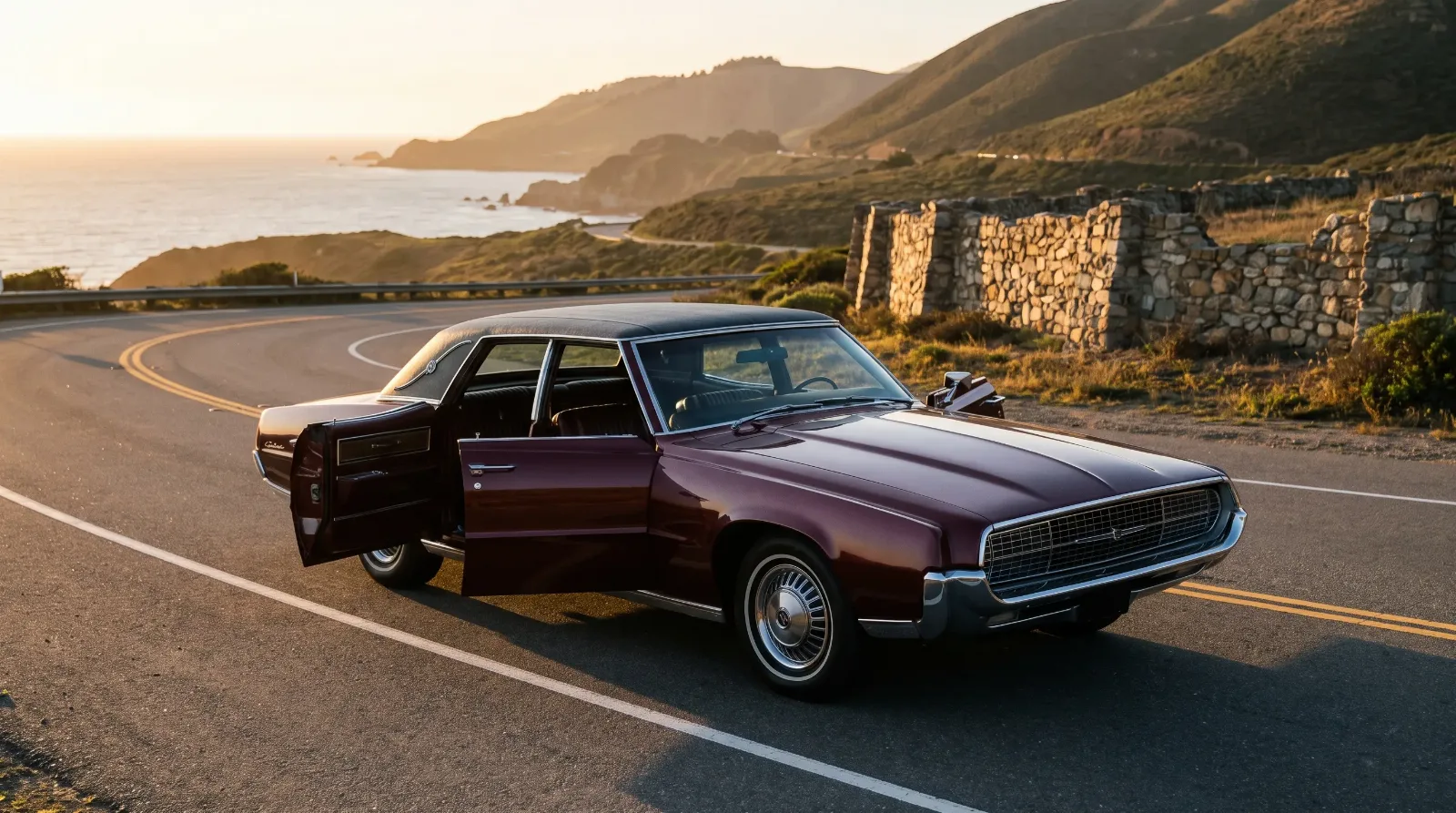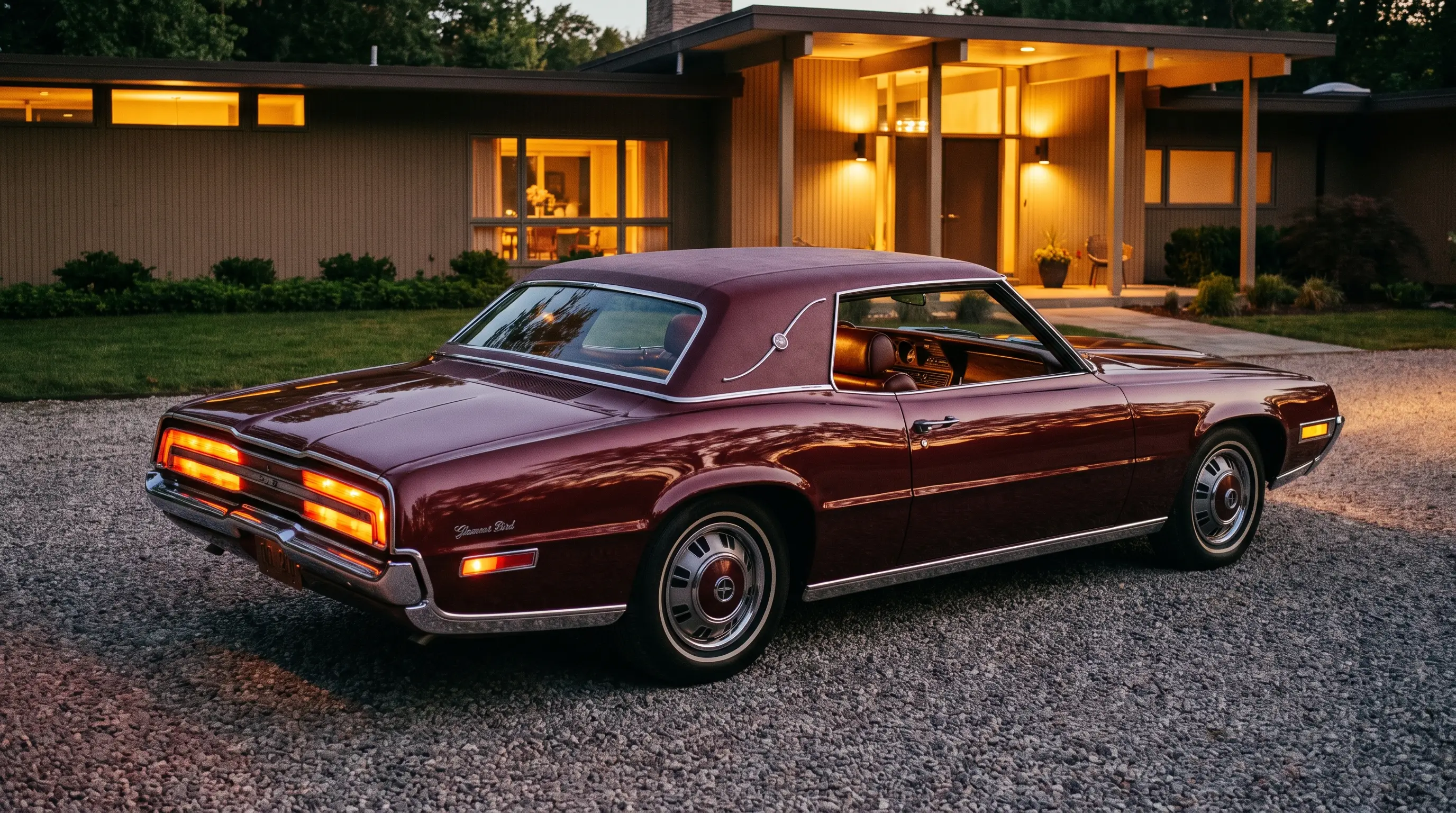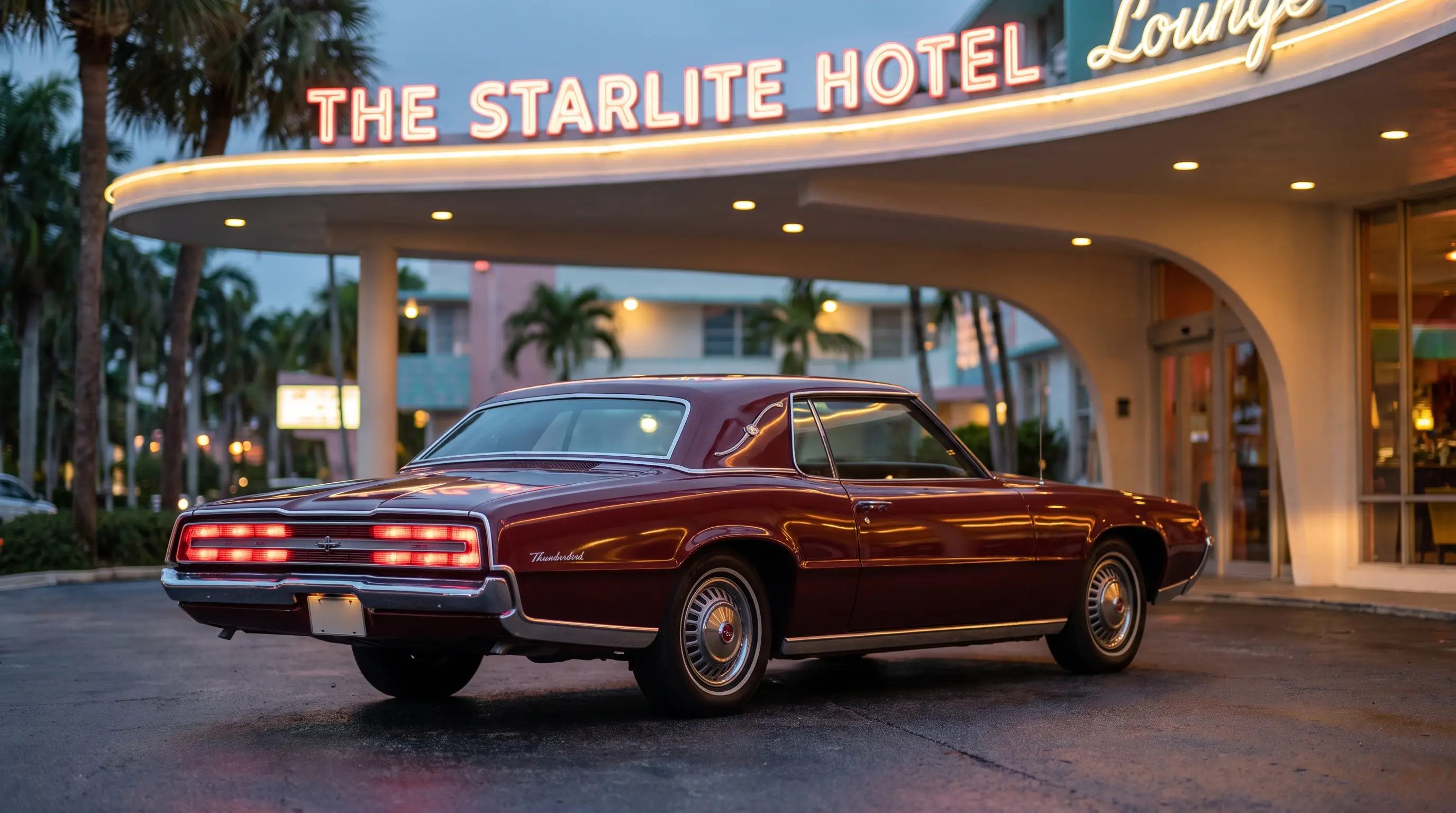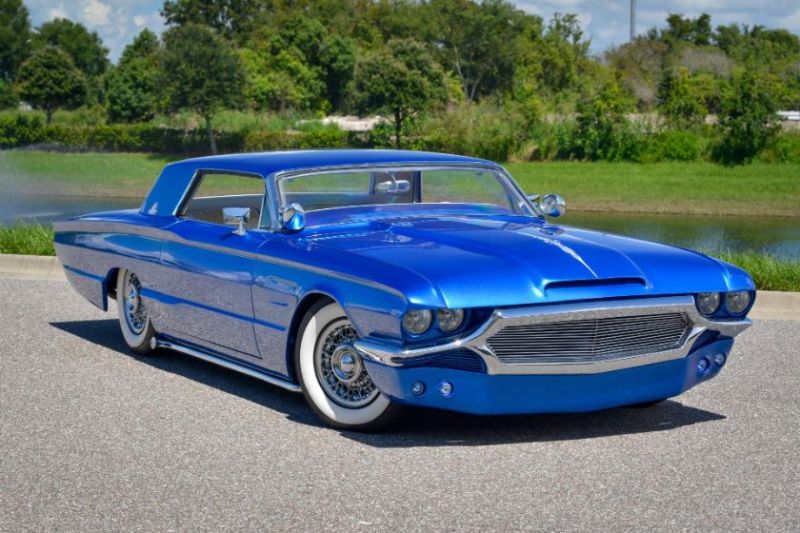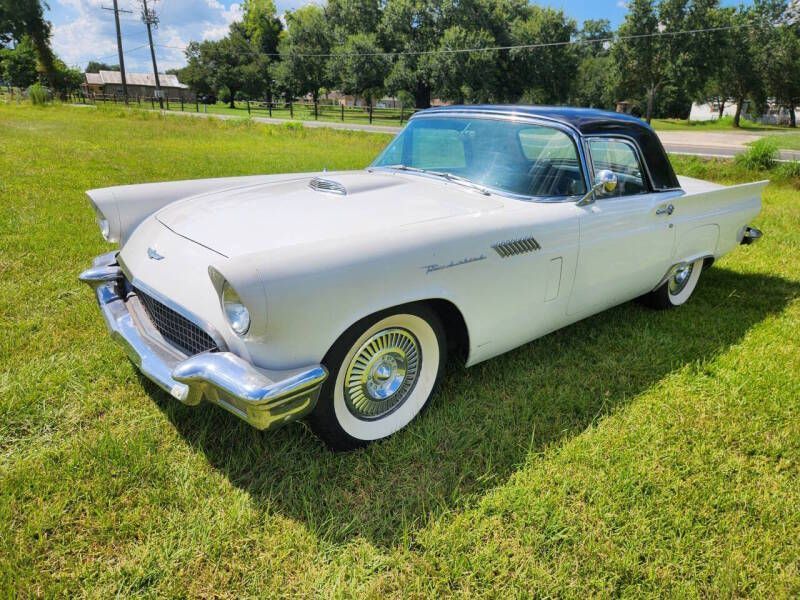
The 1967 thunderbird interior is one of the most underdocumented aspects of the fifth generation, which is a shame, because Ford's engineers and designers put real effort into a cabin that had to serve three genuinely different body styles at once. Building a coherent interior across the two-door hardtop, the two-door Landau, and the brand-new four-door Landau required decisions that most single-body-style cars never had to confront, and the results say a great deal about how Ford approached the Thunderbird as a total product rather than a styling exercise wrapped around an engine.
A driver-focused dashboard, ahead of its time
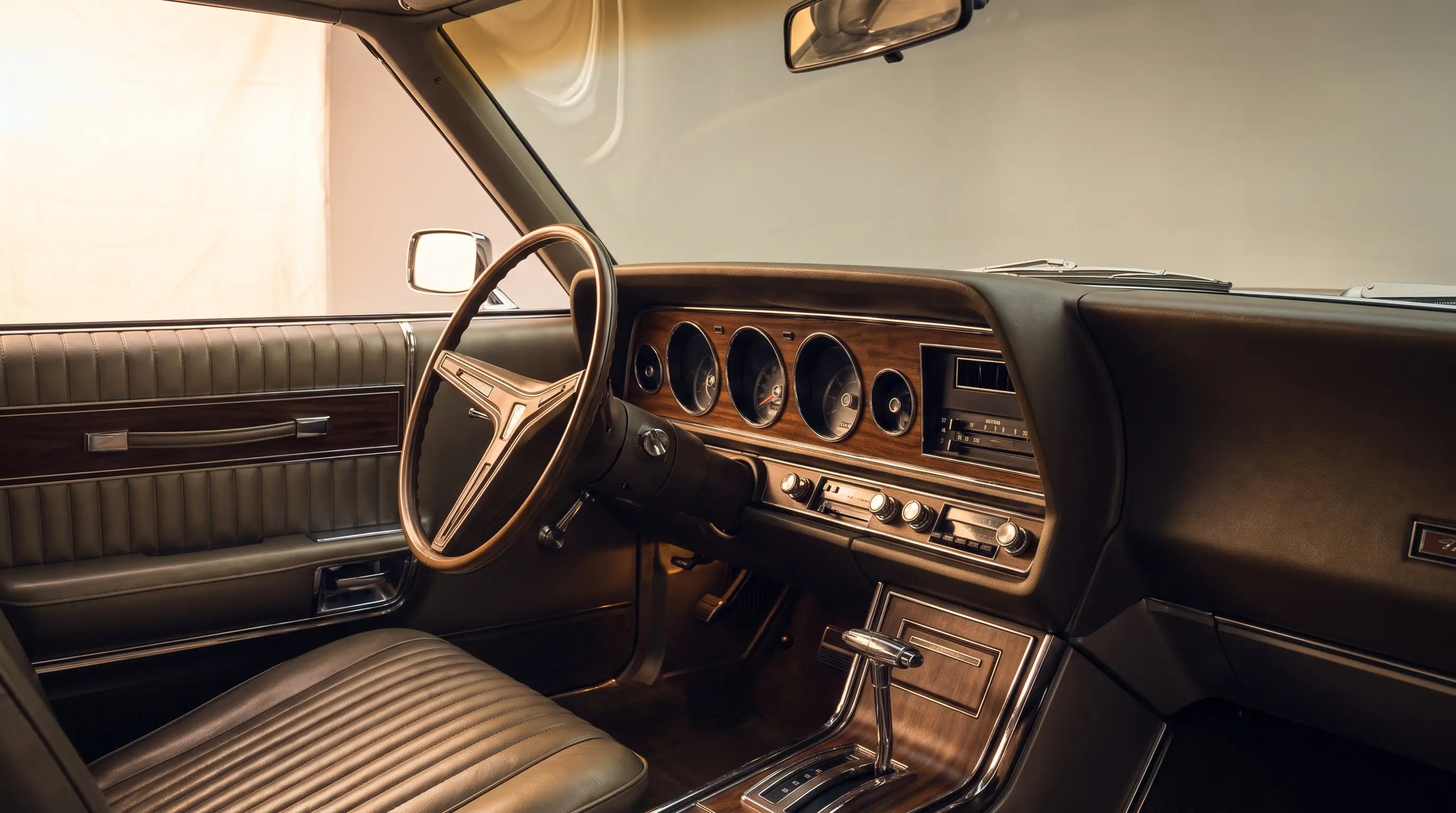
The 1967 Thunderbird's dashboard wrapped around the driver in a way that period reviewers frequently singled out as unusually cockpit-like for an American luxury car. Instrumentation and controls angled toward the driver's seat rather than sitting flat across the dash, a layout choice that made the Thunderbird feel more purposeful behind the wheel than its size and comfort-first mission might suggest. This was a deliberate carryover from earlier Thunderbird generations, which had always positioned the car as a driver's machine even as its mission drifted toward comfort and luxury, and the fifth generation kept that thread alive despite growing larger and heavier than any Thunderbird before it.
A center console ran the length of the front seating area in most configurations, reinforcing the cockpit feel and housing the shifter for the standard SelectShift automatic transmission along with additional switchgear as options accumulated. Ford offered a genuinely long options list for interior features by 1967 standards, including tilt steering, air conditioning, an AM radio with an available 8-track tape player, and power-adjustable seats on higher trim configurations.
Solving the four-door interior challenge
The real engineering challenge came with the four-door Landau. Ford had never built a four-door Thunderbird before 1967, and the rear-hinged door configuration meant the interior team had to design a genuinely comfortable rear seating area without compromising the coupe-like proportions that defined the Thunderbird brand. Their solution kept the same driver-focused dashboard and console design from the two-door cars up front, while opening up rear legroom substantially compared to what a two-door Thunderbird's back seat had ever offered. Rear seat passengers in the four-door Landau got proper doors to step through rather than climbing past a folded front seat, a genuine upgrade in dignity and convenience that period buyers, particularly older or more affluent ones, clearly valued given how the four-door body style stayed in production all the way through 1971.
Materials and craftsmanship
Upholstery choices ran from cloth and vinyl combinations on base trim up to genuine leather on higher option packages, available in a range of colors coordinated with the exterior paint chart. Wood-grain trim accents, some real and some applied, appeared across the dashboard and door panels depending on trim level, a common practice across the American luxury segment at the time that the Thunderbird executed with more restraint than some competitors. Carpeting was deep-pile and color-matched throughout the cabin, and sound insulation received real attention from Ford's engineers, since a quiet cabin was central to the Thunderbird's entire sales pitch by this point in its history.
"Go back to the factory documentation from 1967 and you can see how much internal debate went into the four-door interior specifically. Ford's engineers were genuinely worried about getting the rear seat experience right, because a cramped or awkward back seat would have undermined the entire point of offering a four-door Thunderbird in the first place. The fact that the body style lasted five model years tells you they solved the problem."
- Tom Ramirez
How the interior evolved through the generation
The dashboard and console architecture established in 1967 carried through the fifth generation with only incremental changes, gaining federally mandated items like an energy-absorbing steering column for 1968 and minor trim revisions in subsequent years, but the fundamental driver-focused layout stayed remarkably consistent all the way to the platform's replacement in 1972. That consistency makes the 1967 interior design a useful reference point for anyone trying to date or evaluate a fifth-generation Thunderbird's cabin, since major deviations from the original layout usually indicate either a later trim update or non-original modification. For the complete context on how this interior fit into the wider redesign, the full story of the 1967 relaunch covers the exterior and mechanical changes that accompanied these interior decisions.
What to look for in a surviving example
Original interiors in good condition are increasingly rare on surviving fifth-generation Thunderbirds, since sun damage, cracked dashboards, and worn upholstery are common after more than five decades. Power accessories in particular, power windows, power seats, and factory air conditioning systems, were complex when new and are frequently non-functional today unless a car has been carefully maintained or restored. Anyone shopping a fifth-generation car should test every power accessory individually rather than assuming a working example, since replacement parts for some interior components have become genuinely scarce. A well-preserved original interior, particularly one that retains its correct upholstery pattern and trim details, adds real value beyond what a repainted exterior alone can offer, and it is worth comparing several examples of a classic Thunderbird for sale before settling on one.
Documented changes across the production run
Factory records and surviving dealer literature show a steady, incremental evolution of interior details across the fifth generation rather than any single dramatic redesign. Switchgear positions shifted slightly as new federally mandated equipment was added, seat pattern stitching changed subtly from year to year as suppliers updated tooling, and even the specific shade of certain interior colors drifted enough between model years that a trained restorer can often narrow a loose seat cover to within a year or two based on stitch pattern and material alone. None of these changes were announced with any fanfare, and period buyers likely never noticed most of them, but they matter enormously to anyone doing careful restoration work today, since fitting a 1969 seat cover to a 1967 frame can produce a subtly wrong appearance that only becomes obvious once the car is finished and compared against period photographs.
Ford's parts and service documentation from the era also reveals how seriously the company treated interior durability testing for this generation. Internal engineering reports referenced accelerated wear testing on seat fabrics and vinyl trim, reflecting Ford's awareness that a personal luxury buyer expected an interior to hold up under years of regular use in a way that a base-model family sedan's interior did not need to. That testing regimen shows up today in how well many original interiors have survived, provided they were not exposed to prolonged direct sunlight or left unprotected through decades of outdoor storage. Vinyl components in particular held up remarkably well when garaged, while the same materials on a car stored outdoors for extended periods often show cracking and fading that no amount of conditioner can fully reverse.
For restorers working from incomplete original material, reproduction suppliers now offer reasonably accurate replacement upholstery and trim pieces for most fifth-generation configurations, though matching exact original color codes still requires careful cross-referencing against factory paint and trim charts rather than relying on supplier catalog descriptions alone. Getting these details right is part of what separates a genuinely correct restoration from one that merely looks close at a glance, and it is exactly the kind of documentation work that serious collectors and concours judges continue to reward.
Sources and notes
- Ford Thunderbird (fifth generation) - Wikipedia
- The More-Door Thunderbirds, 1967-71 - Mac's Motor City Garage
- Curbside Classic: 1967 Ford Thunderbird Landau Sedan
- 1967-1971 Ford Thunderbird - HowStuffWorks
- 1967 Ford Thunderbird Q-Code Four-Door Landau - Hagerty Marketplace
- 1967 Ford Thunderbird Specifications - Conceptcarz