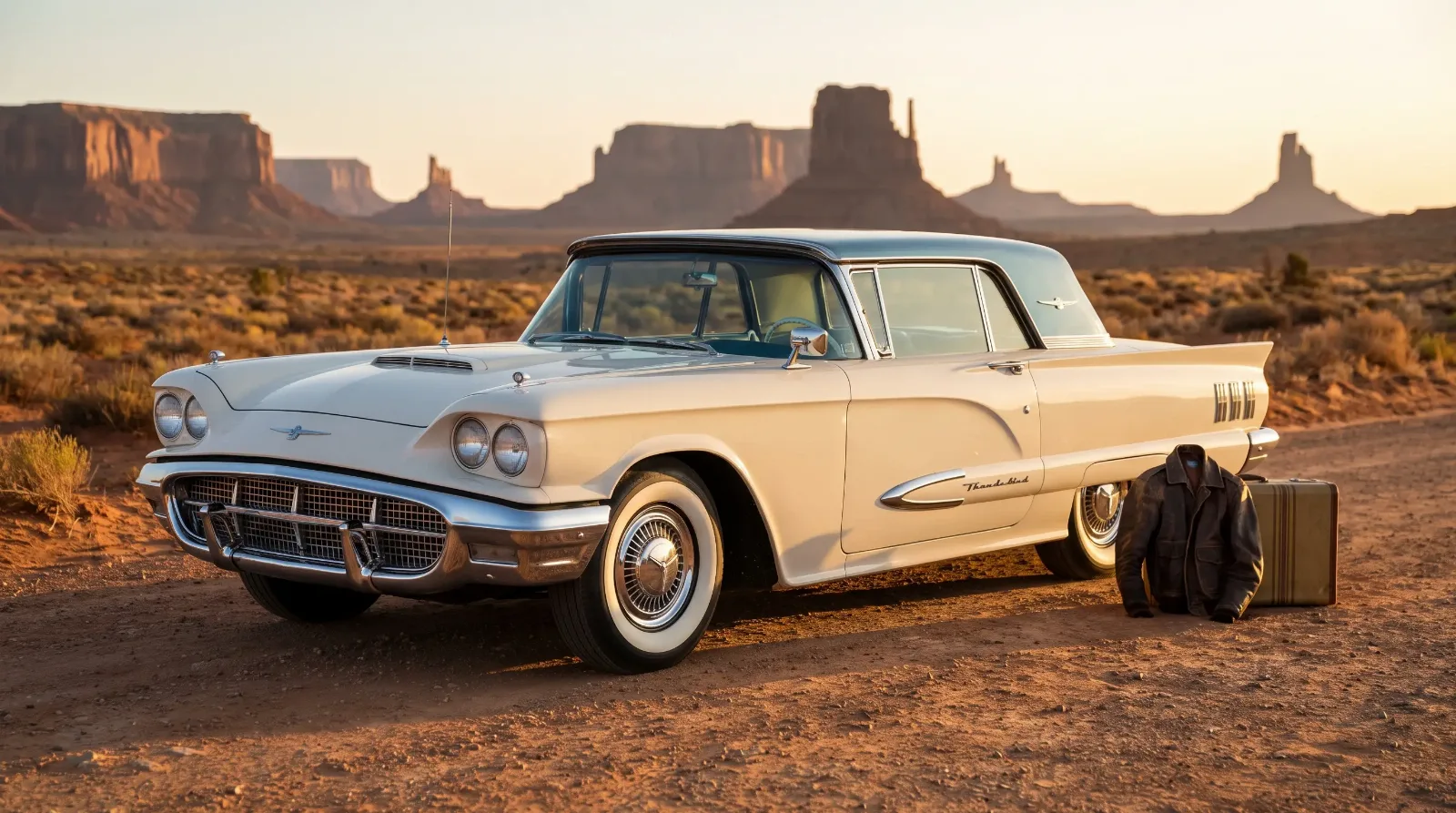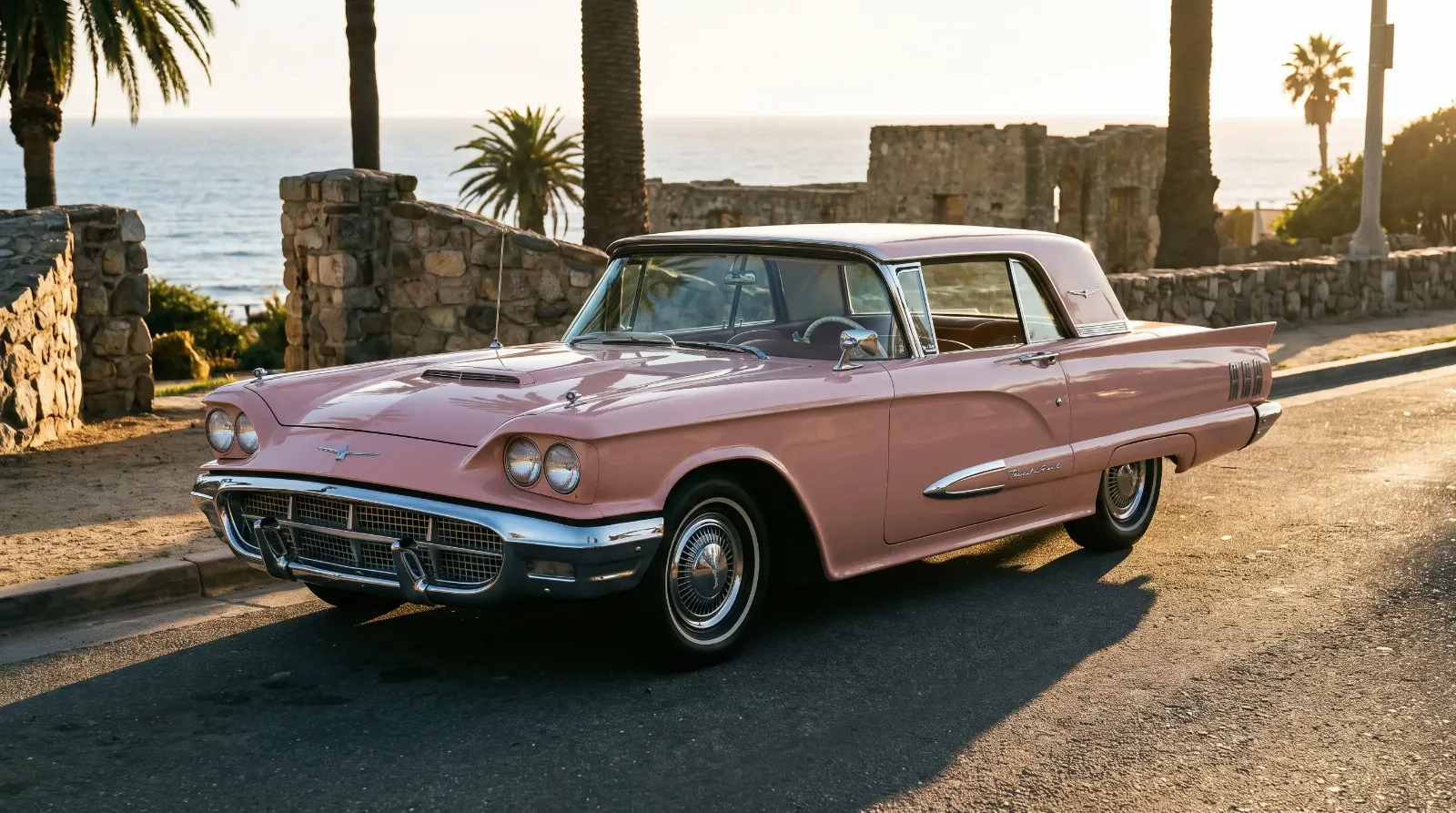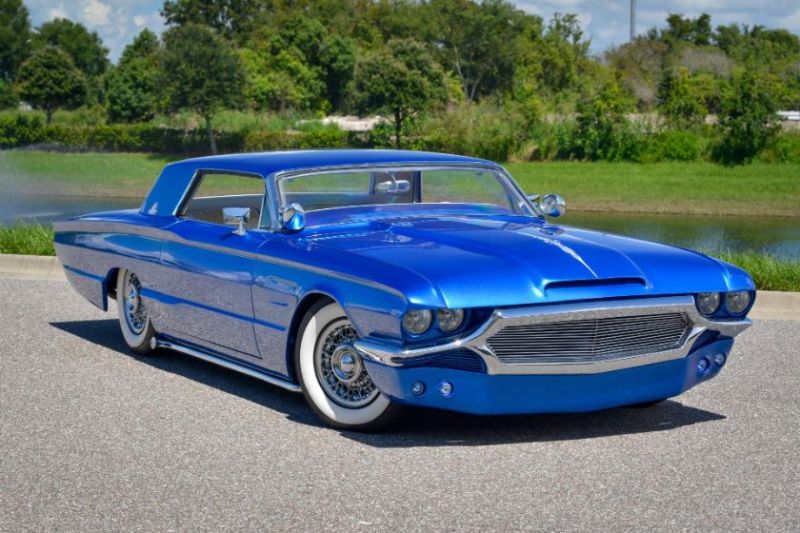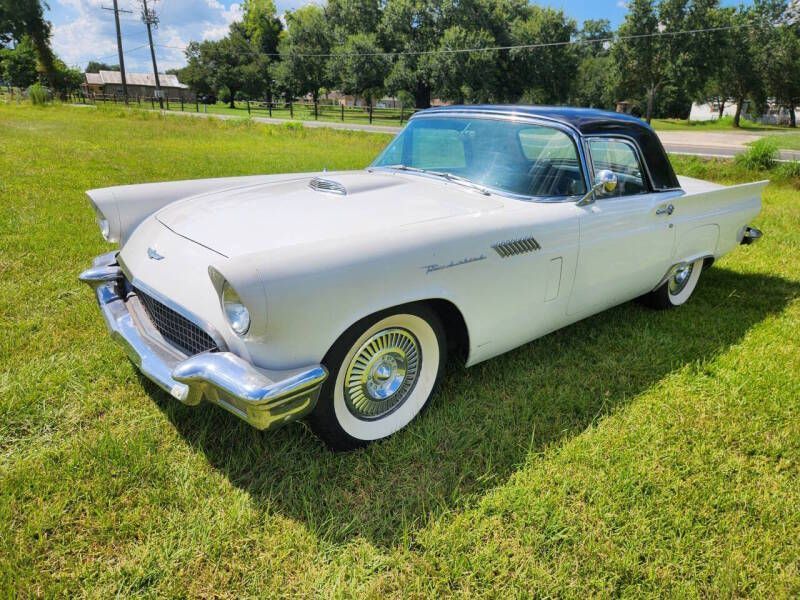
The 1958 Thunderbird interior borrowed a design language straight from the aviation industry, and Ford was not subtle about it. Dual cockpit seating, a console running down the center of the cabin, and instrument clusters styled to look like something out of a jet's flight deck were not accidental design choices. Ford's stylists wanted the driver and front passenger to feel like they were piloting something, and the layout of this interior is the clearest physical evidence of that ambition surviving in the car today.
The dual cockpit and what it meant
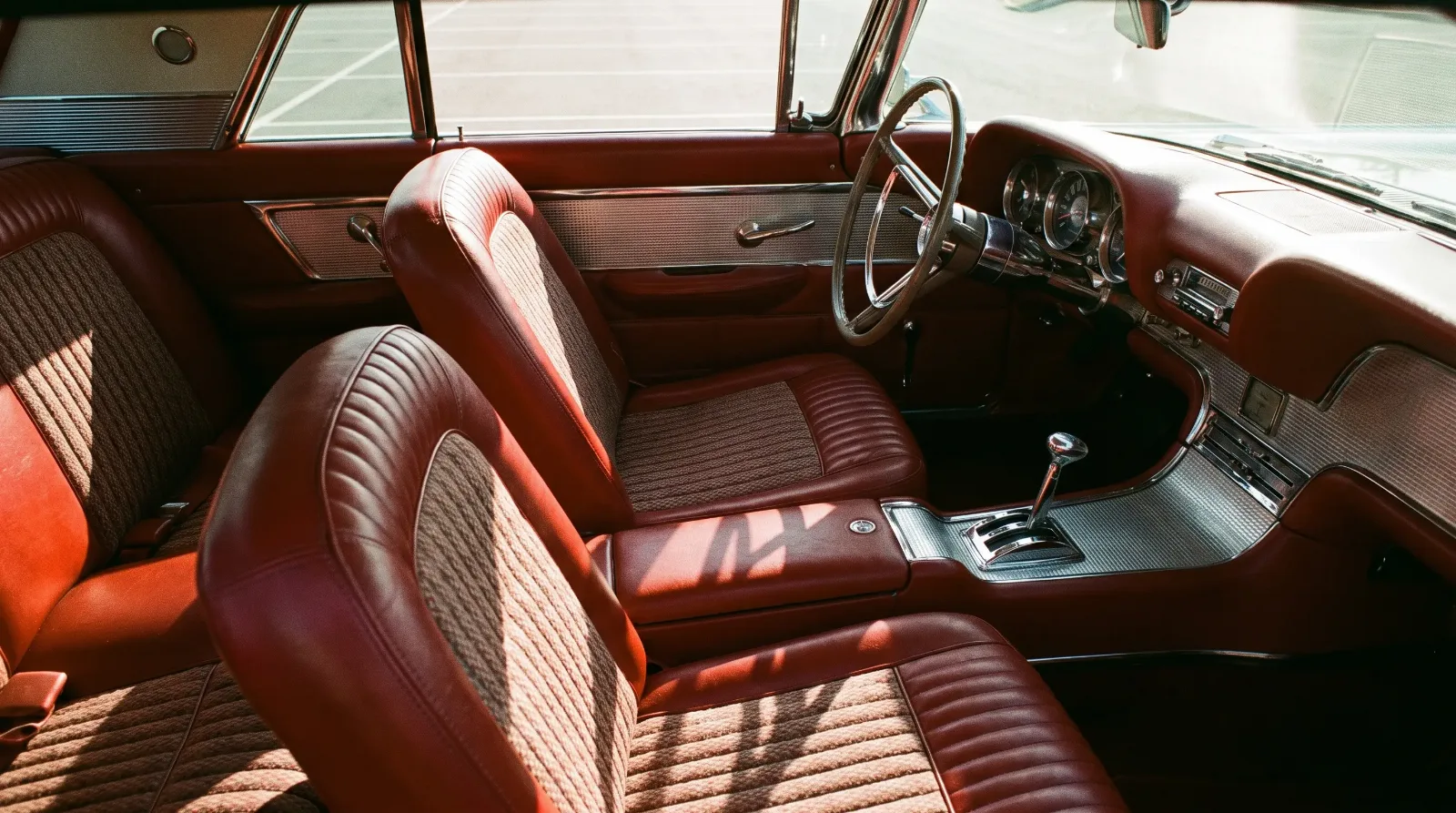
Where a typical American sedan of the late 1950s offered a continuous bench seat spanning the front of the cabin, the Square Bird split the front into two distinct bucket-style positions separated by a full-length console. This was a genuine departure from convention for a mainstream American manufacturer at this price point, and it directly served the aircraft-inspired brief. Each front occupant sat in their own defined space, framed by the console on one side and the door on the other, an arrangement period advertising described using explicitly aviation-adjacent language.
The console itself housed the shifter for the Cruise-O-Matic transmission along with various switches, continuing the theme of a control-focused environment rather than a simple bench with a column shifter. This was a deliberate signal to the driver that this car demanded, and rewarded, a bit more engagement than the family sedan parked in the next driveway.
Instrumentation styled like a flight deck
The dashboard carried the aviation theme furthest. Gauges were arranged in a cluster directly ahead of the driver, framed and styled with the kind of deep-set, hooded housings that period design language borrowed from cockpit instrument panels, a visual cue meant to suggest precision and purpose rather than the flatter, more decorative dashboards common on contemporary family cars. Chrome accents throughout the interior picked up light in a way that period photography and advertising leaned on heavily, another deliberate choice to reinforce the sense of a purpose-built cabin rather than a decorated one.
Steering wheel design followed the same logic, with a deep-dish design that period safety thinking, still years away from federal mandate, hadn't yet addressed in the way later decades would require. This was a design element born of style rather than safety engineering, worth noting for anyone evaluating an original wheel against a later replacement.
Materials and trim options
Interior trim was offered in a range of vinyl and cloth combinations coordinated with specific exterior colors, part of Ford's broader effort to present the Thunderbird as a cohesively designed object rather than a car assembled from a catalog of unrelated options. Leather was available but not standard, and buyers who wanted the more premium material paid accordingly. Door panels, seat inserts, and the dashboard trim all carried consistent design cues, brushed metal-look accents and the same rounded, aviation-adjacent shapes that showed up in the gauge cluster and console.
This coordination is part of what makes an incomplete or mismatched interior restoration so noticeable to anyone who knows the car well. A reupholstery job using a period-plausible but incorrect material or color combination breaks the intended visual continuity between exterior and interior that Ford's designers worked to establish, even if the individual materials look reasonable in isolation.
"This interior was built to make two people feel like they were flying something, not just driving it. That intention shows in every switch and every panel line if you look closely."
- Sarah Whitfield
What survives and what typically needs work
Vinyl trim from this era has generally held up better over decades than the cloth options Ford offered, simply due to the material's greater resistance to sun and moisture damage compared to period fabrics. Original vinyl in good condition on a surviving car is a strong positive indicator for a buyer, since correctly reproducing the specific grain pattern and stitching of the factory material is not a simple task for a modern upholstery shop working from scratch.
Dashboard pads, particularly on cars stored without climate control for extended periods, are a common failure point, cracking and fading in ways that are difficult to fully correct without a full reproduction pad, and sourcing a correct one for this specific model year takes some searching. Gauge cluster lenses and the chrome-look trim surrounding them are similarly prone to clouding and pitting with age, a detail worth close inspection during any in-person evaluation.
How the console evolved across the run
While the fundamental dual cockpit layout held steady from 1958 through 1960, the console and dashboard received detail revisions each model year, updated switch arrangements, minor trim changes, and refinements to the gauge cluster's appearance that reflect Ford continuing to iterate on an already-successful design rather than leaving it entirely static. A knowledgeable restorer can generally date a Square Bird's interior to a specific model year just from console and dash details alone, independent of any exterior cues, which is a useful cross-check when verifying that a car's interior components actually match its claimed year and trim tag.
This year-to-year consistency in the broader dual cockpit concept, paired with smaller annual refinements, mirrors what happened with the exterior styling across the same three model years: a settled core design receiving careful polish rather than a search for a better answer. It speaks to how confident Ford was in the original 1958 interior concept that so little of the fundamental layout needed revisiting once it reached production.
Climate control and comfort features
Air conditioning was available as a factory option on the Square Bird, a genuine luxury feature for a car in this price class in the late 1950s, and it integrated into the dashboard design without disrupting the aviation-inspired gauge arrangement that defined the rest of the cabin. Power windows and power seats were similarly available, continuing the theme of a cabin built around driver and passenger convenience as much as visual drama. A fully optioned Square Bird interior, air conditioning, power seats, power windows, represented a genuinely premium ownership experience for its era, one that justified the car's position above a standard Ford sedan in both price and prestige.
Surviving cars with these factory options intact and functional carry additional appeal for collectors specifically interested in experiencing the car as its most affluent original buyers would have. Non-functional air conditioning systems are common on surviving examples given the system's age and the specialized nature of servicing 1950s automotive refrigerant systems, so a buyer prioritizing a fully functional optioned interior should budget accordingly for that specific system's restoration.
Interior condition in the context of the whole car
An exceptional interior on a Square Bird with mediocre mechanicals is still a compromised purchase, but interior condition and correctness carry real weight in how these cars are valued at auction and in private sale, precisely because the cabin design is such a distinctive part of what made this generation notable when new. For the broader context of how the Square Bird came together as a complete redesign, our complete history covers the engineering and market decisions surrounding the car this interior was built for. When you're ready to evaluate real examples in person, browse classic Thunderbird listings and pay close attention to console and gauge condition specifically, since both are harder to correct properly than seat upholstery alone.