
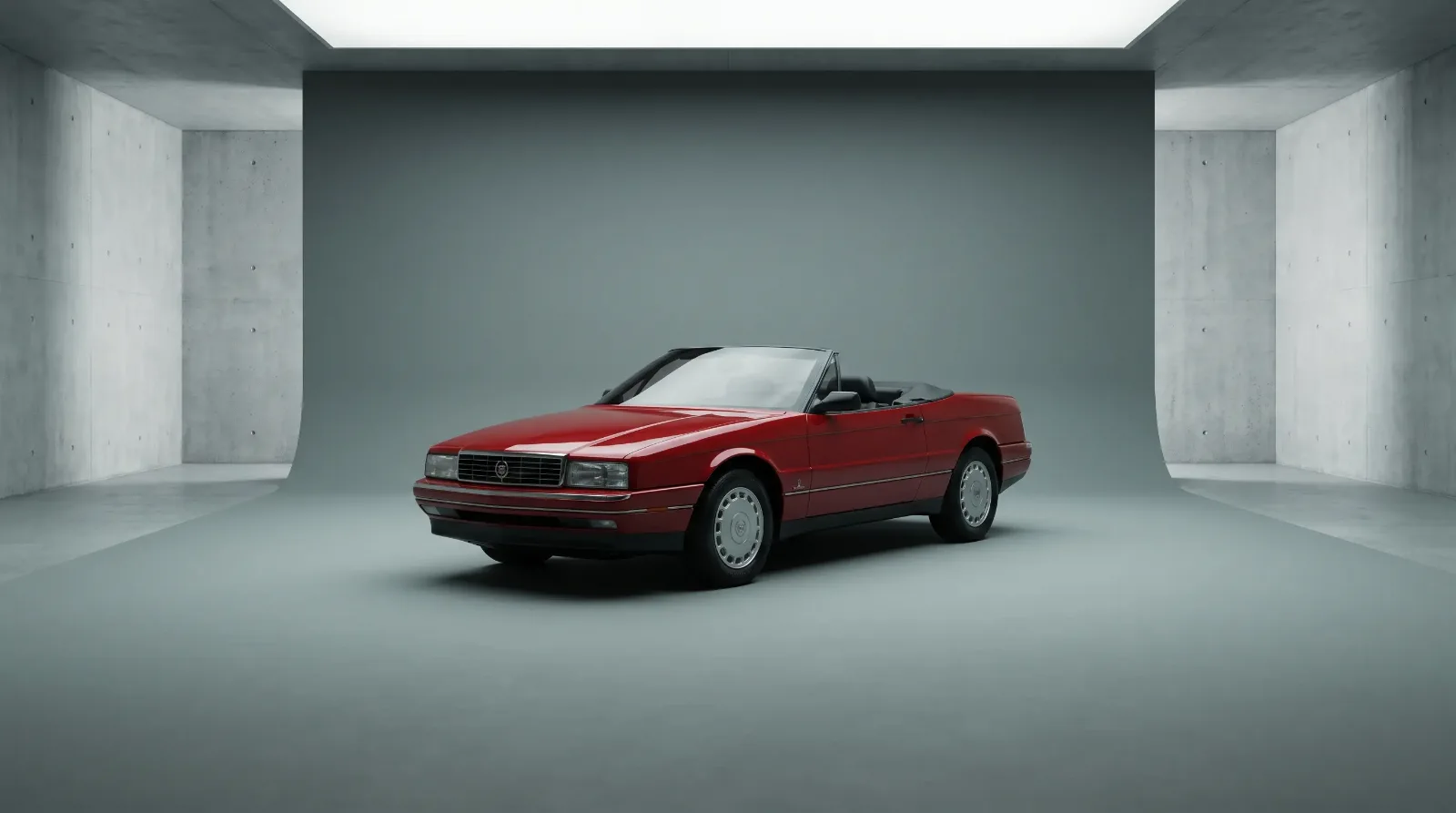
There is a shape that says luxury without saying anything at all. Long hood, short rear deck, a roofline that sits back over the rear wheels like a formal hat, and two doors that stretch nearly the length of an ordinary sedan. The personal luxury coupe was a distinctly American idea, and its silhouette was the whole product. Not a race car, not a limousine, but a car for one or two people who wanted the world to know they had arrived. The proportions did the talking.
Car Features
6 min read
The Personal Luxury Coupe Silhouette, Explained
The personal luxury coupe design decoded: long hood, short deck, formal roofline, and how proportion signaled prestige on postwar American classics.
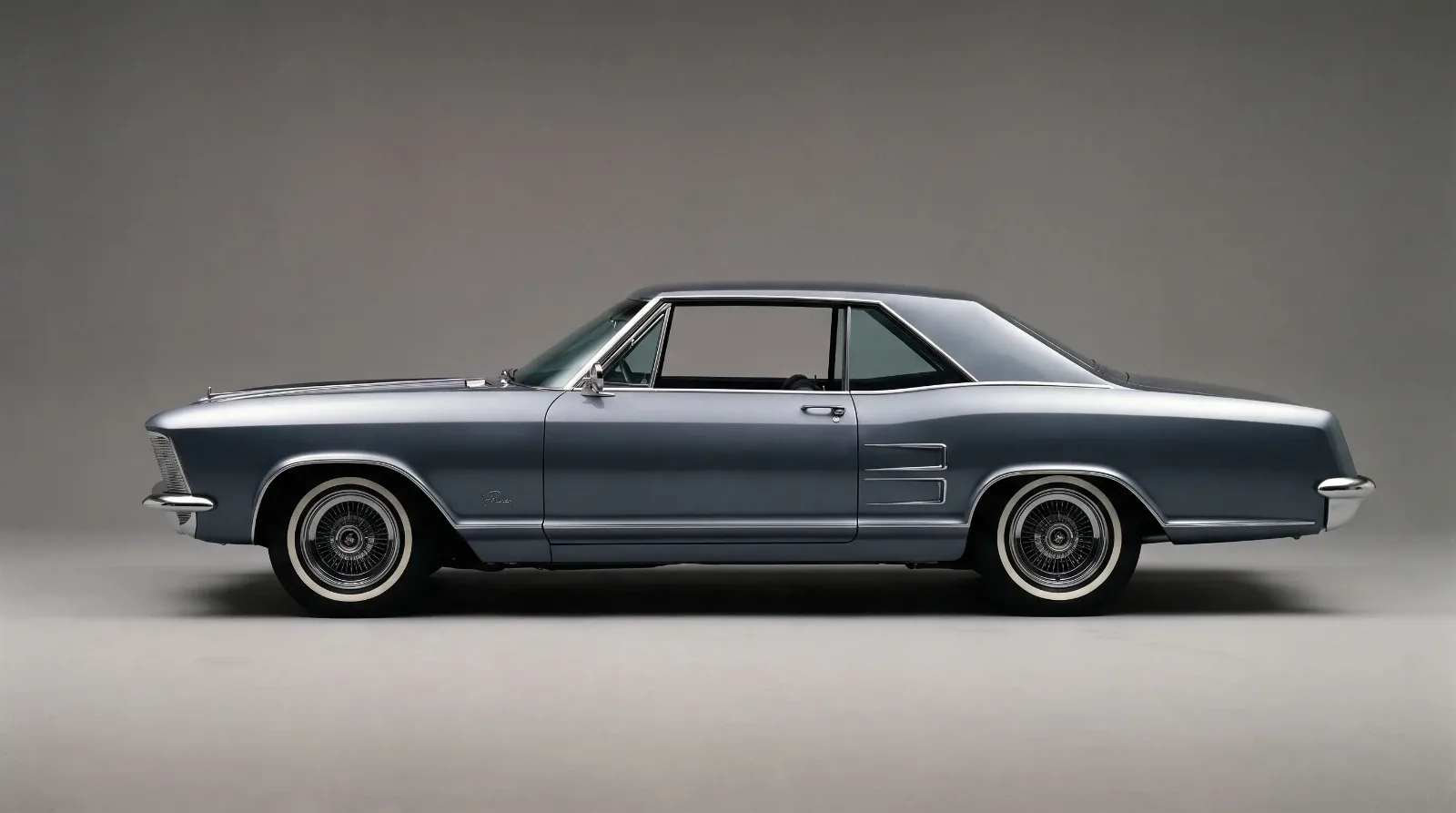
Understanding that silhouette means understanding what the designers were balancing. A personal luxury coupe had to look expensive and exclusive while riding on a fairly ordinary chassis, and often sharing its floorpan with a much cheaper car. The magic was all in the sheet metal above the beltline and the way the volumes were arranged. It is a lesson in how proportion, not ornament, creates the impression of cost.
Where the shape began
The segment has a clear starting point. The 1958 Ford Thunderbird, the four-seat car that enthusiasts call the Square Bird, took the two-seat sports Thunderbird and turned it into something new. Ford added a back seat and a formal roof, and it sold far better than the roadster ever had. That car established the template. A coupe that put comfort and image ahead of outright sport, aimed at a buyer who wanted exclusivity without a limousine.
Buick answered in 1963 with the Riviera, a car whose crisp, knife-edged lines under Bill Mitchell's direction at General Motors still read as one of the finest shapes of the decade. Oldsmobile followed with the front-wheel-drive Toronado in 1966, and Cadillac with the Eldorado on the same platform in 1967. Lincoln refined the formula into pure formal grandeur with the Continental Mark III in 1968 for the 1969 model year, all hood and hidden headlamps and a spare-tire hump pressed into the trunk lid. Each of these cars spoke a common visual grammar, one you can trace across the whole era through the classic luxury design language story.
Reading the silhouette
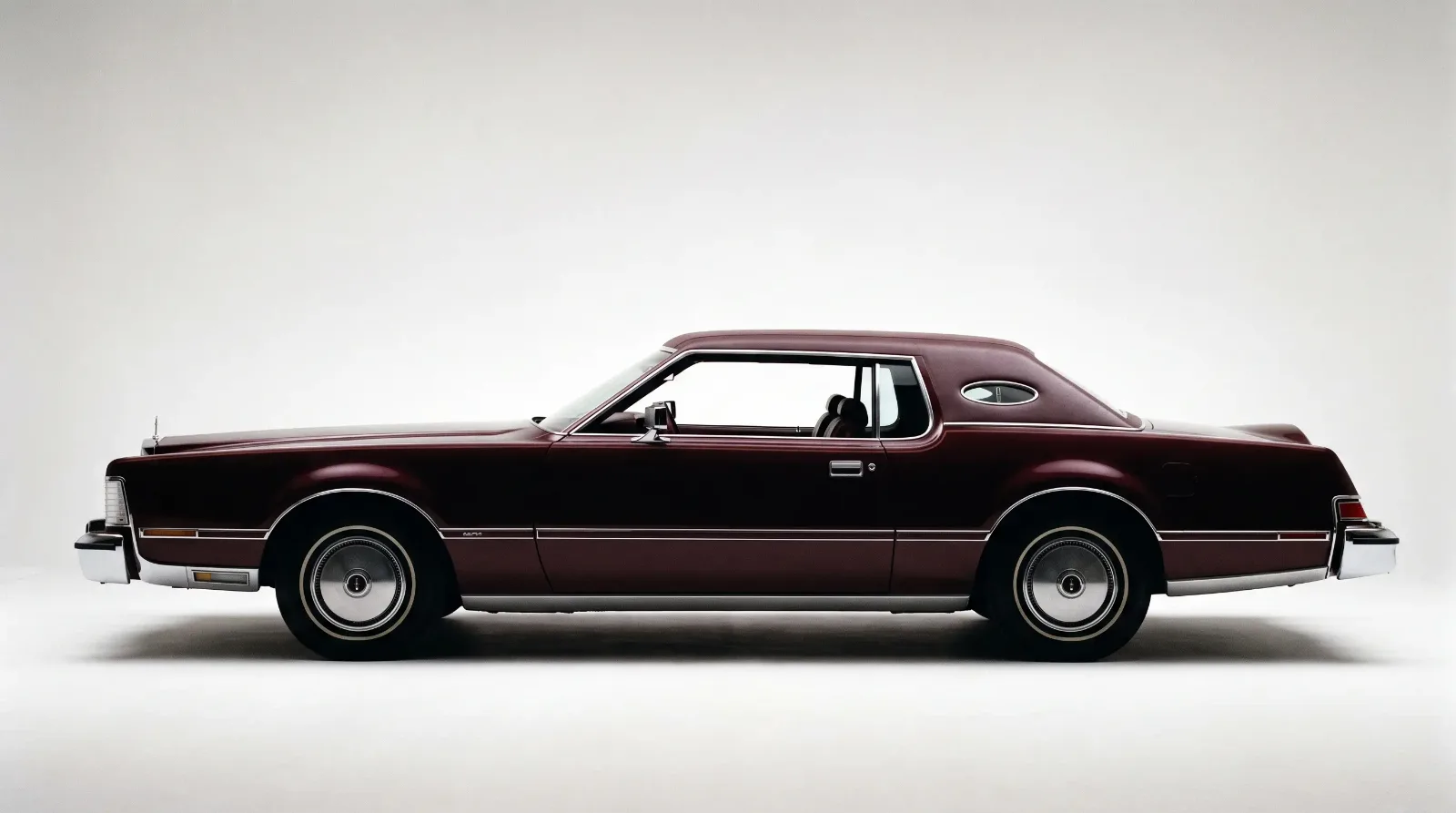
Break the shape into its parts and the intent becomes clear. Every proportion was chosen to signal a specific thing to anyone looking at the car in profile.
| Design element | What it signaled |
|---|---|
| Long front hood | Power and prestige, echoing prewar classics |
| Short rear deck | Sportiness, a personal car rather than a family sedan |
| Formal, upright roofline | Dignity and a private, chauffeur-adjacent cabin feel |
| Long doors, thick C-pillar | Exclusivity and a sense of an intimate, enclosed space |
| Low beltline break, small opera window | Privacy for rear occupants, a formal town-car reference |
The thick rear pillar mattered more than people notice. A wide C-pillar with a small window, sometimes an opera window, made the cabin feel private and formal, the opposite of the airy hardtops of the early 1960s. It was a deliberate move away from openness and toward a sense of enclosure that read as expensive. The coupe was selling intimacy. You and one passenger, wrapped in a cabin that the outside world could not fully see into.
The front-end treatment carried its share of the message too. A wide, low grille flanked by hidden or stacked headlamps stretched the visual width of the car, and the long dash-to-axle distance, the space between the base of the windshield and the front wheel center, is the single proportion that most reliably separates a genuine luxury coupe from a tarted-up sedan. Designers guarded that measurement carefully, because the eye reads a long dash-to-axle as expense even when it cannot name what it is seeing.
"The personal luxury coupe achieved its effect through proportion rather than decoration. Move the roof back, lengthen the hood, thicken the pillar, and the car reads as costly before a single piece of brightwork is applied. The best examples understood that restraint in the volumes allowed the ornament to matter."
Sarah Whitfield
The platform truth underneath
Here is what the silhouette was quietly hiding. Many of these cars shared their structure with far humbler models. The Chevrolet Monte Carlo of 1970 sat on a stretched version of the Chevelle chassis. The Pontiac Grand Prix shared much with its corporate siblings. What separated the personal luxury coupe from its donor was almost entirely the bodywork above the frame and the length of the front clip. Designers understood that a buyer was paying for a feeling, and the feeling lived in the profile.
This is not a criticism. It was clever product planning, and it is why the segment exploded through the 1970s into one of the best-selling body styles in America. The Cordoba, the Cutlass Supreme, the Thunderbird in its later forms, all of them leaned on the same silhouette to command a premium over the sedans they were related to. For collectors today, that shared engineering can actually be good news, because parts and mechanical knowledge are widely available. If the shape appeals to you, there are plenty of classic luxury cars for sale where the personal coupe profile is the whole draw. The broader arc of how these cars came to define an era is covered in the story of the classic luxury car.
Why the profile still commands attention
The personal luxury coupe faded as downsizing and fuel economy reshaped the market in the late 1970s and 1980s. The formal roofline and the long hood did not survive the shift to efficient, aerodynamic packaging. But the silhouette left a mark on how we read prestige. A long hood and a short deck still signal expense on a modern coupe, even when the engineering underneath has nothing to do with the prewar cars that first established the proportion.
That is the lasting lesson of the shape. It was never about what the car could do. It was about what the car looked like standing still, and how those volumes told a story of cost and exclusivity in a language the eye understood instantly. To see how one national design tradition borrowed from another to build these forms, continue with next: How Pininfarina and Mulliner Shaped American Luxury Car Design.
Related Reading
Have a
Classic Car
for Sale?
Reach thousands of serious classic car collectors across the US.
Sell It Here →
Are You a Classic Car Dealer?
List your full inventory and connect with targeted classic car buyers.
Join as a Dealer →

About the author
Sarah Whitfield
Third-generation classic car collector specializing in pre-war American and European coachbuilt automobiles. Researcher and concours enthusiast.

Comments
Be the first to comment on this article.