
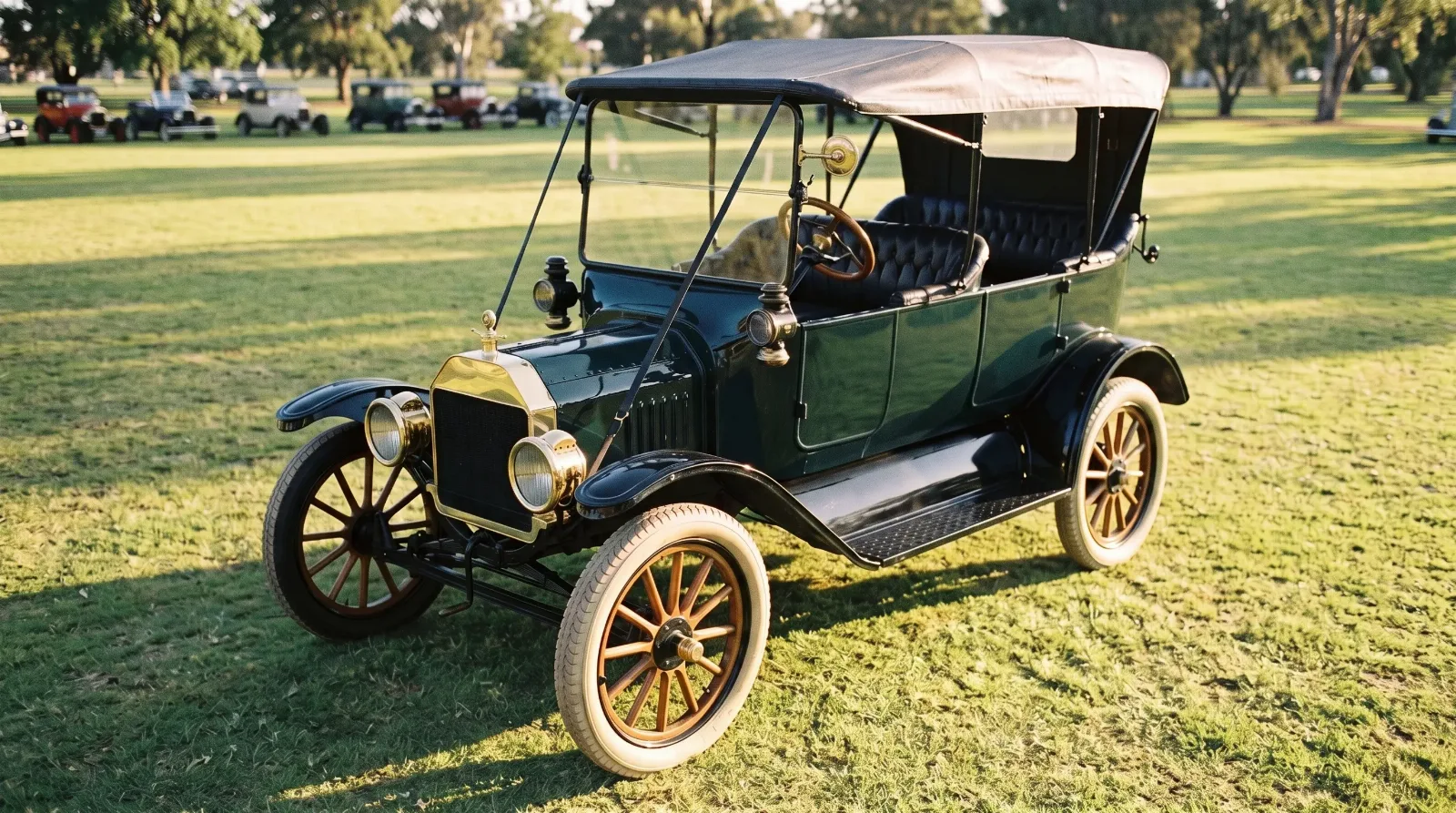
The two lever Model T is the car Ford built before it had finished deciding what the Model T was. The first 800 cars, built from October 1908 into early 1909, had two foot pedals and two control levers, with the second lever working reverse. After that, reverse moved to a pedal, and the three-pedal, one-lever layout that every later Model T driver learned became fixed. The difference sounds small. To a historian it is the clearest marker of the earliest production, and to an owner it is the single detail that most changes what a surviving car is worth studying.
Car Features
6 min read
Two Levers, Two Pedals: The Earliest Model Ts of 1908 and 1909
The first 800 Model Ts had two pedals and two levers, and the first 2,447 engines had water pumps. How to read the earliest cars of 1908 and 1909.
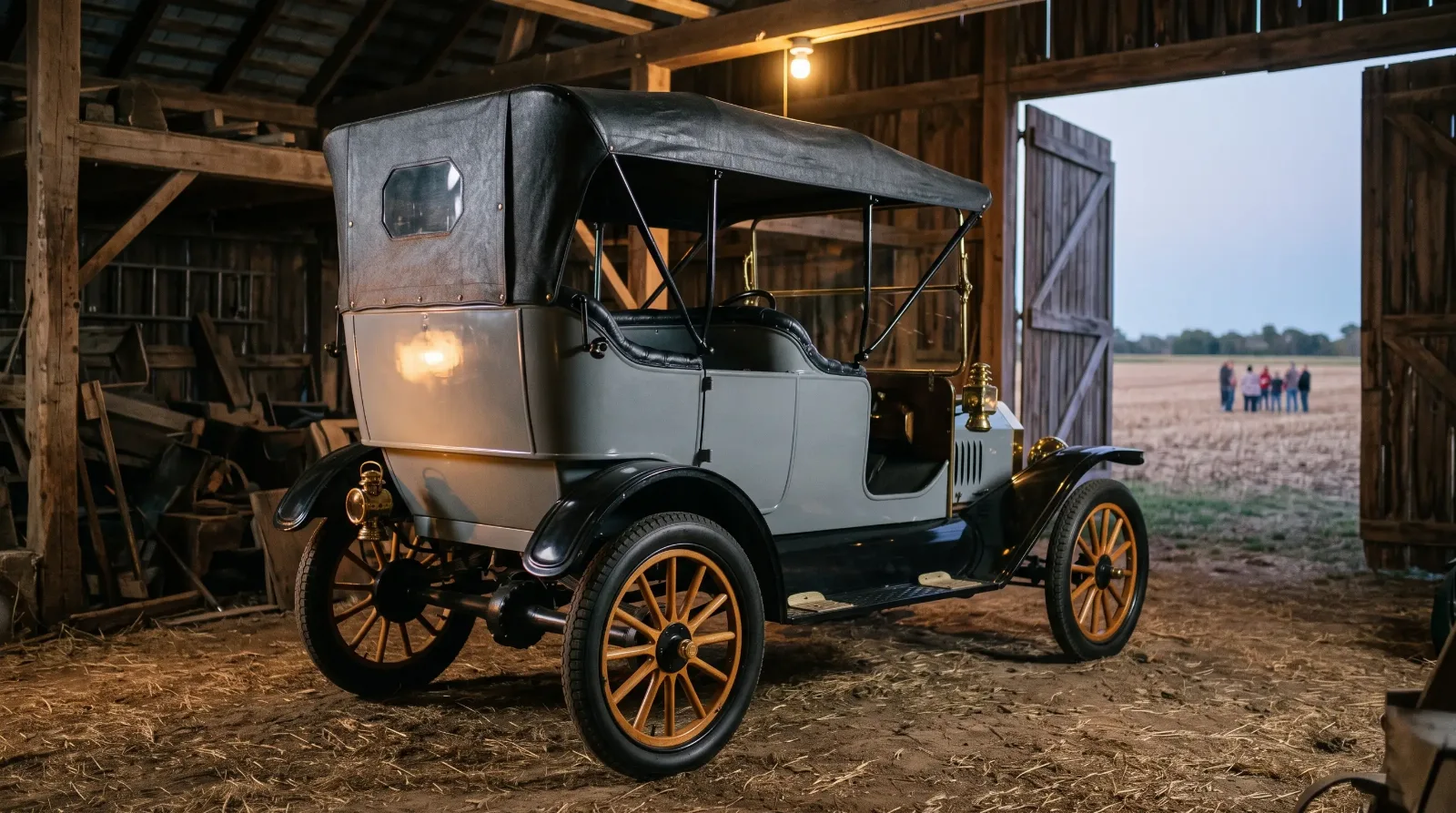
The broader production history is a separate subject; read more here. What follows is narrower: what set the first cars apart, how to read the evidence on one, and why the early record needs care.
What the two lever Model T actually had
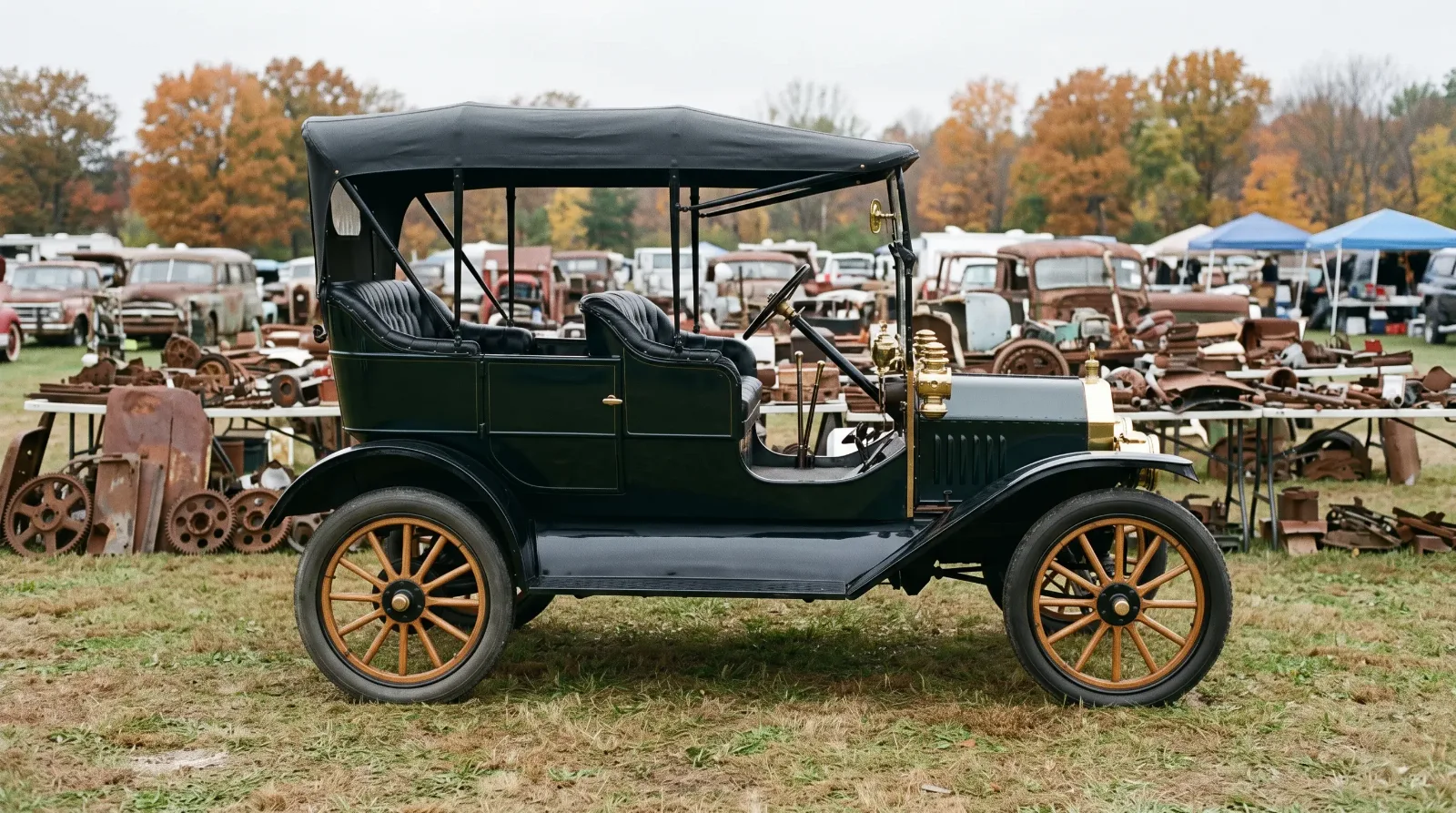
The standard Model T control layout, as the 1919 Ford Manual describes it, has three pedals and one floor lever. The left pedal gives low speed when pressed, neutral when held halfway and high when released. The center pedal is reverse. The right pedal applies a band in the transmission that serves as the service brake. The floor lever, pulled fully back, holds the clutch in neutral and applies the rear-wheel brakes, and it has to be fully forward for high gear.
The first 800 cars did not have the center pedal. Reverse was worked by a second lever, so the driver had two pedals underfoot and two levers to hand. Old Cars Weekly sets out how that worked. The left pedal still gave low when pressed to the floor, high when released and neutral in between, and the other pedal was the brake. The reverse lever put the clutch in neutral and applied the reverse band, and the second lever was the parking brake. The planetary transmission behind them was the same two-speed design, described in period as a "three speed" because reverse was counted.
The change to a reverse pedal came early in the 1909 model year, after about 800 cars. Ford's reasons are not set down in the records consulted here, and it is better to leave them unstated than to guess.
| Feature | Earliest cars | Later standard |
|---|---|---|
| Reverse | Second hand lever (first 800 cars) | Center foot pedal |
| Pedals and levers | Two pedals, two levers | Three pedals, one lever |
| Cooling | Water pump (first 2,447 engines) | Thermosiphon, no pump, from engine 2,448 |
| Serial range | About 1 to 2,500, October 1908 to April 1909 | Car largely standardized from about 2,500 |
| Colors | Gray, red, green by body style | Red dropped after June 1909 |
The water pump engines
The levers are the visible change. The less visible one is under the hood. The first 2,447 engines used a water pump to circulate coolant. From engine 2,448, built on April 22, 1909, Ford switched to thermosiphon cooling, in which hot water rises to the radiator and cooled water sinks back to the block with no pump at all. The 1919 manual puts the start of circulation at around 180 F.
Two cautions apply. One source notes that the old and new designs overlapped briefly, and another puts the exceptions before about engine 2,500, so a car numbered just above 2,447 with a pump is not automatically wrong. A second, weaker account says only the "first few hundred" engines had pumps. The 2,447 figure is the better supported of the two. The mechanical principles of both systems are covered in our early Ford engine guide.
Reading the serial number
The earliest cars carry serials from about 1 to 2,500, built between October 1908 and April 1909. The number is stamped on the engine between the center exhaust ports. From about number 2,500 the car was largely standardized, which makes that figure the practical boundary of what collectors mean by an "early" 1909.
The two thresholds do not line up neatly, and they should not be forced to. The reverse lever ends around car 800. The water pump ends around engine 2,448. A car numbered 1,500 should therefore have a reverse pedal and a water pump, and that combination is correct for its date. A car numbered 500 should have both the lever and the pump.
Records from these months are thin, and the 800 figure itself carries a note: forum counts differ from the commonly cited number, and The Henry Ford, whose own 1909 touring car has the reverse lever, describes the feature as used on only the first 1,000 or so cars. A surviving car whose controls do not match its serial deserves a closer look at the engine and transmission, because components on a car this old have often been replaced over a century of use.
"On a car from the first months, the serial is the document and the controls are the witness. When they agree, you have an early car. When they disagree, you have a question, and it is usually about what was changed in the 1920s."
Sarah Whitfield
Bodies and colors of the first season
For the 1909 model year Ford listed five body styles: touring, runabout, coupe, town car and landaulet. The touring car was priced at $850 and the runabout at $825.
The paint followed the body. Runabouts were mostly gray, touring cars mostly red, and town cars and landaulets green. Red was dropped after June 1909, so a red touring car is a strong indicator of the earliest months. Blue also appears in the colors of 1908 to 1913, and by 1912 every car was midnight blue with black fenders. None of this resembles the all-black Model T of popular memory, which belongs to roughly 1914 to 1925.
Why the earliest cars matter
The two lever cars show a design still being refined at the factory. Within about seven months of launch Ford had changed the reverse control and the cooling system, and the car was largely standardized after that. The Model T that followed would change in its trim, lamps and bodies, but its core controls stayed as they were settled in 1909.
That makes the first season a small and distinct group within the brass era cars. They share the brass trim and the color choices of the years before 1917, but they predate the layout every later owner learned. A two lever Model T is not just an early example. It is a record of the car before its design was settled, and it should be documented with that in mind.
Sources and notes
Related Reading
Have a
Ford Model T
for Sale?
Reach thousands of serious classic car collectors across the US.
Sell It Here →
Selling a classic? Here's how: sell my classic car
Are You a Classic Car Dealer?
List your full inventory and connect with targeted classic car buyers.
Join as a Dealer →

About the author
Sarah Whitfield
Third-generation classic car collector specializing in pre-war American and European coachbuilt automobiles. Researcher and concours enthusiast.
Related Listings - Ford Model T

Comments
Be the first to comment on this article.