
Walk any concours field and you will find owners who quietly wish the vinyl roof had never happened. It hid rust, it aged badly, and by the 1980s it read as a cost-cutting gimmick. Yet for roughly two decades the covered roof was one of the clearest signals a car was meant to be read as formal, expensive, and a little conservative. The vinyl top, the padded roof, and the small S-shaped irons bolted to the rear quarters all trace back to the same idea, and understanding where they came from explains why they mattered.
Car Features
6 min read
Vinyl Tops, Padded Roofs, and Landau Bars Explained
Vinyl tops, padded roofs, and landau bars defined classic luxury car styling. Here is where they came from, what they signaled, and the rust they hide.
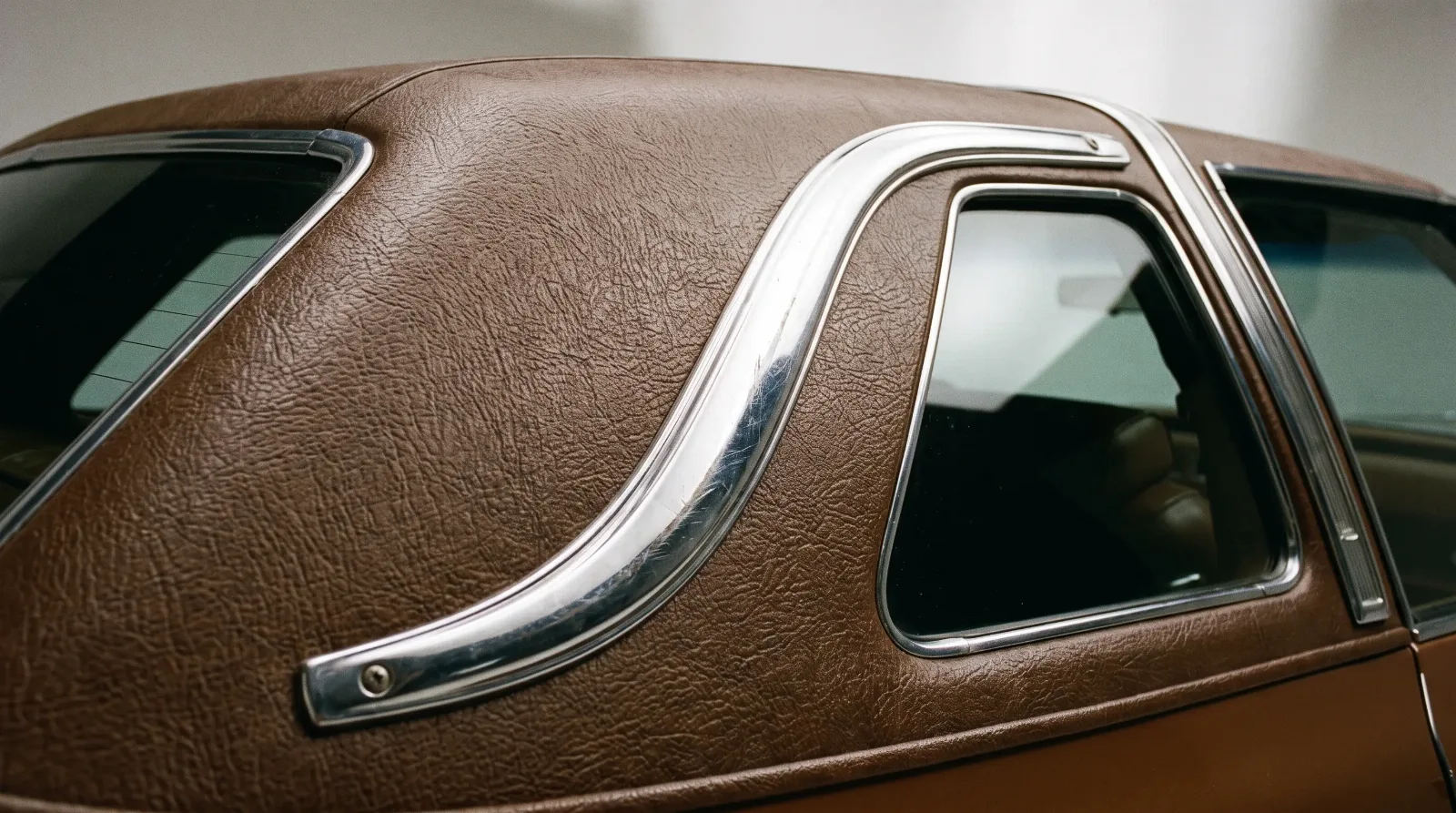
These were not random ornaments. Each borrowed from carriage-building language that buyers of the 1950s and 1960s still recognized, even if they could not name it. To see how the covered roof fits the wider vocabulary, it helps to know how luxury design language evolved across the postwar decades.
Where the landau roof actually came from
The word landau comes from the German town of Landau, where a four-wheeled carriage with a folding fabric top was built in the eighteenth century. The defining feature was a top that folded down in two halves, front and rear, joined by a pivoting iron on each side. That iron, with its distinctive curved shape, is the landau bar. It was structural. It carried the folding mechanism.
When automobiles adopted the look, the folding function disappeared almost immediately. Early coachbuilt town cars kept a genuine folding rear section over the passenger compartment, a body style often called a landaulet. By the postwar era the bars survived only as decoration. They no longer folded anything. They were bolted to a fixed roof to suggest a heritage the car did not have, and buyers understood the reference well enough that the suggestion worked.
Full tops, half tops, and the formal look
The vinyl roof came in several formats, and the differences carried meaning on the showroom floor. A full vinyl top covered the entire roof panel from windshield to rear glass. A partial or half top covered only the rear portion, usually stopping just behind the doors, which visually shortened the greenhouse and pushed the eye toward a formal, upright rear. The most restrained version, often called a formal or landau top, combined a padded rear section with landau bars and a small rear window.
The reason was appearance. A vinyl top broke up a large expanse of painted steel and made a hardtop coupe read like a convertible with the top raised. That association mattered because the convertible was the glamour body style, and a fixed-roof car that borrowed its silhouette borrowed some of its status too. Cadillac, Lincoln, and the personal luxury coupes of the era leaned on this heavily. So did the Ford LTD and Mercury lines that put the Landau name directly on the trunk.
"The vinyl top was never really about the fabric. It was about restating the convertible silhouette on a car that would never lower its roof, and buyers read that shorthand instantly, which is exactly why it sold."
Sarah Whitfield
Padded roofs and the cabriolet illusion
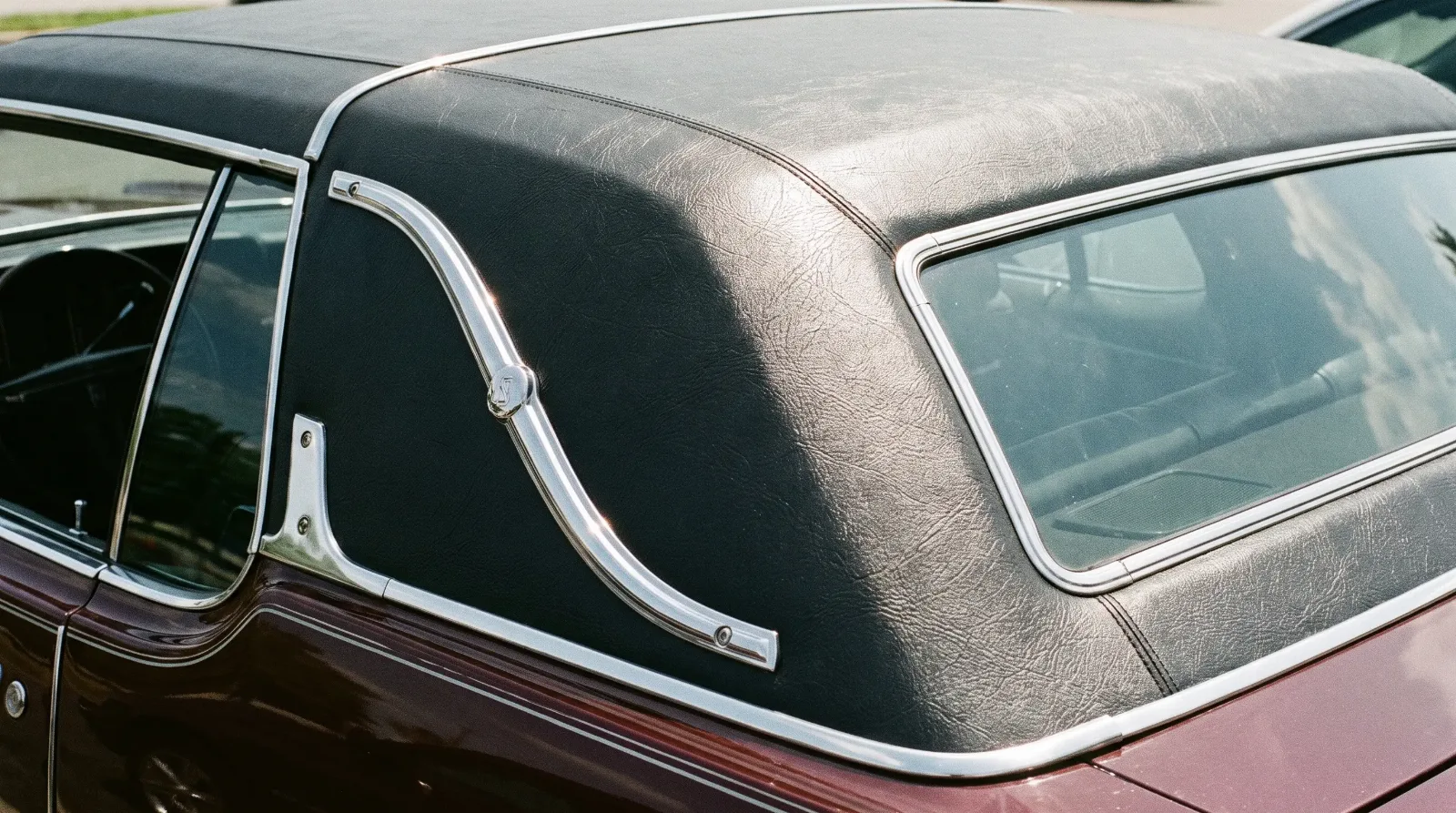
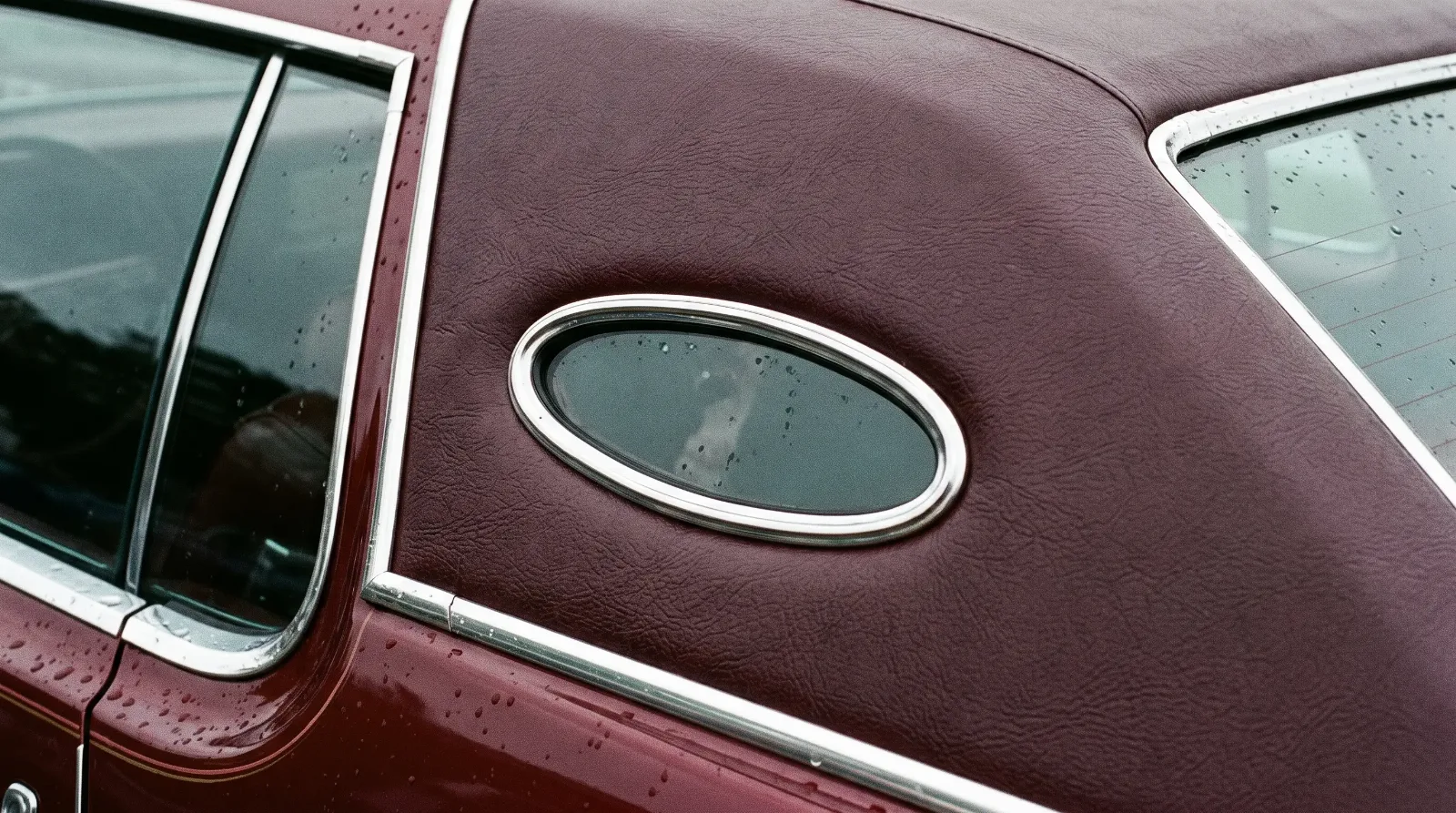
By the late 1960s and through the 1970s the plain vinyl top gave way to the padded roof. A layer of foam went under the vinyl, giving the covering a soft, upholstered thickness that a thin glued sheet could not. Combined with a small formal rear window, sometimes an oval opera window in the sail panel, the padded roof produced what marketing departments liked to call a cabriolet look. It imitated a folded soft top so convincingly that from ten feet away the casual observer could mistake a hardtop for a droptop.
This was the peak of the covered roof as a status object. It sat on top of the personal luxury coupe boom and became almost mandatory equipment on any car sold as prestige. The look was studied, deliberate, and for a while genuinely fashionable. If you want the wider arc of these signatures, it runs through the classic luxury car story from the tail-fin years to the malaise era.
Why collectors treat vinyl tops with suspicion
The covered roof has a serious downside, and it is the reason so many restorers strip it off. Vinyl traps moisture. Water works under the edges at the chrome trim, sits against the steel, and cannot dry. The roof panel rusts from underneath, often invisibly, until the vinyl bubbles or the trim lifts. By the time the damage shows on the surface, the metal beneath is frequently past saving. A car that looks solid can hide a perforated roof under an intact-looking top.
Adhesive failure is the next problem. Old vinyl shrinks, cracks, and peels at the C-pillars and around the backlight. The foam in a padded roof degrades into a damp, crumbling layer that accelerates the corrosion beneath. Reproduction tops are available for the popular models, but a correct installation is exacting work, and a badly fitted top wrinkles at the corners in a way a trained eye catches at once.
| Roof type | Defining feature | Main risk to a buyer |
|---|---|---|
| Full vinyl top | Covers entire roof panel | Hidden rust across the whole roof skin |
| Half / formal top | Rear portion only, upright look | Rust at the leading edge and trim line |
| Padded cabriolet top | Foam underlay, convertible imitation | Degraded foam holding moisture against steel |
| Landau top with bars | Padded rear plus decorative irons | Corrosion at the bar mounting points |
How to read a covered roof today
For a collector, the vinyl top is a period-correct detail on the right car and a liability on the wrong one. On a documented luxury coupe that left the factory with a padded landau roof, removing it destroys originality and hurts the car at a judged show. On a car where the top was added later or is hiding damage, it is a warning to inspect closely before you commit. The judgment call is whether the covering is honest to the car or covering for it.
The covered roof faded fast once the malaise era ended and taste turned against the look, but it defined a specific idea of American formality for twenty years. The next signature in this design vocabulary sat right at the front of the car. Read on for next: Hood Ornaments as Luxury Signaling.
Related Reading
Have a
Classic Car
for Sale?
Reach thousands of serious classic car collectors across the US.
Sell It Here →
Are You a Classic Car Dealer?
List your full inventory and connect with targeted classic car buyers.
Join as a Dealer →

About the author
Sarah Whitfield
Third-generation classic car collector specializing in pre-war American and European coachbuilt automobiles. Researcher and concours enthusiast.

Comments
Be the first to comment on this article.