
People throw the word coachbuilt around like it just means expensive. It does not. Coachbuilt means somebody built the body by hand, one at a time, over a wood frame or a hammered steel buck, and it usually means the chassis and the body came from two different companies. That is a completely different animal from a mass-production car where the body drops out of a stamping press by the thousand. I have shaped enough metal to respect what the old coachbuilders pulled off, and most people have no idea how much of it was done by hand and eye.
Car Features
6 min read
What “Coachbuilt” Actually Meant vs. Mass-Production Styling
Coachbuilt classic cars had hand-formed bodies built one at a time. Here is what the term really means and how it differs from mass-production styling.
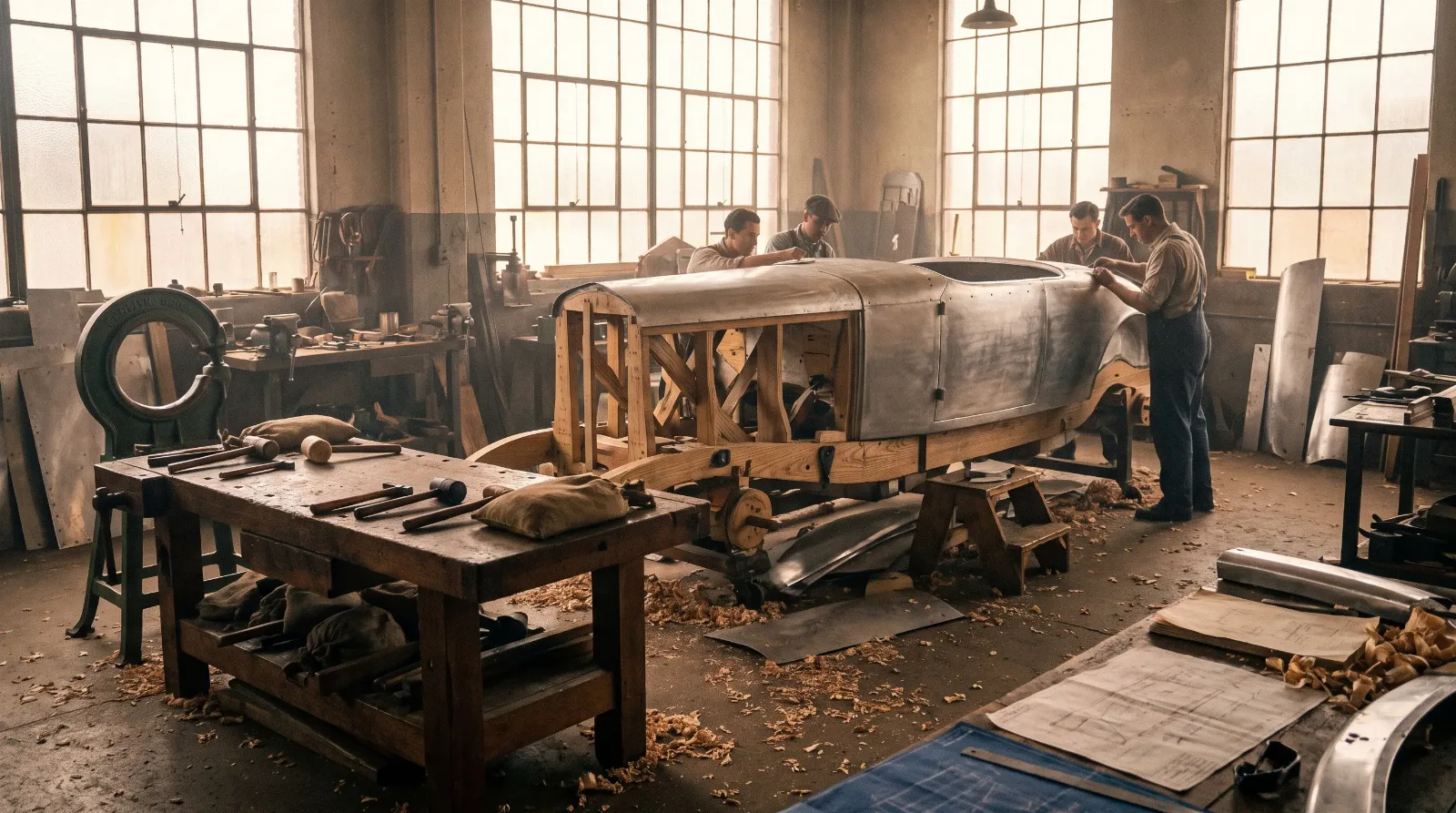
Understanding the split matters if you care about these cars, because it changes what you are actually buying. A coachbuilt car is a one-off or a tiny run. A styled production car is a design applied to a body somebody else stamped out. Both can be beautiful. They are not the same thing, and the market treats them very differently. This whole subject fits inside the full design story of how luxury cars came to look the way they do.
Chassis here, body there
In the classic era a wealthy buyer did not walk in and buy a finished car. He bought a chassis. Duesenberg, Rolls-Royce, Packard, Hispano-Suiza, they sold you a running frame with the engine, drivetrain, and often the firewall and hood. Then you took that chassis to a coachbuilder, a separate company, and they built a body onto it to your order. Murphy in Pasadena, Rollston in New York, Brewster, LeBaron, Derham. In Europe you had Figoni, Saoutchik, Park Ward, and the rest.
That is the literal meaning of the term. The coach, the body, was built by a specialist shop. The word comes straight out of the horse-drawn carriage trade, because that is exactly what those shops used to build before engines showed up. The skills carried straight over. Ash frames, hand-formed aluminum or steel panels, leather and wood interiors fitted like furniture.
How a body actually got made by hand
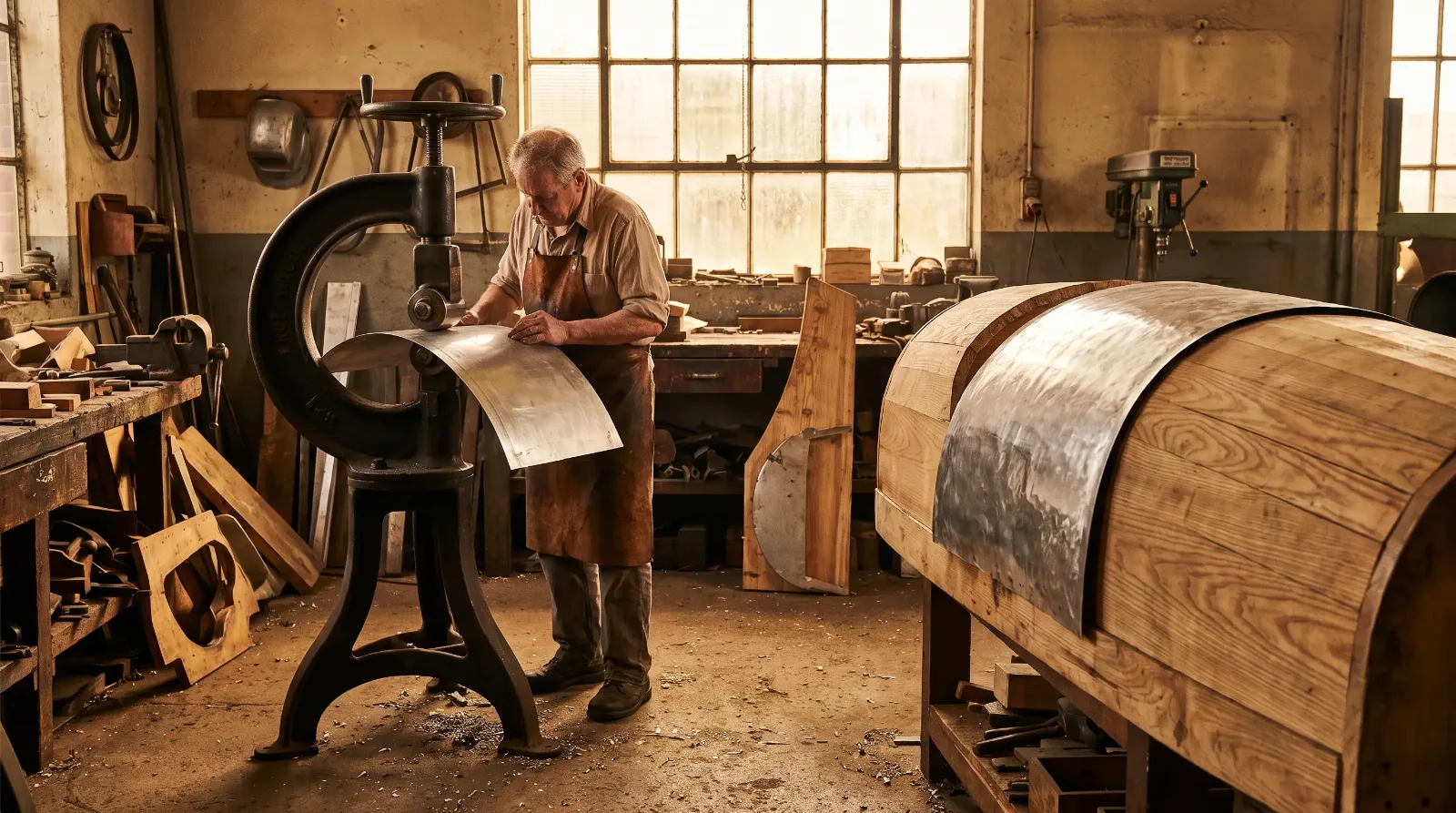
Here is the part people skip. A coachbuilt body started as a wood skeleton, usually seasoned ash, cut and joined to the shape of the design. The metal skin got formed over that frame by hand. A guy with an English wheel and a mallet worked flat sheet into a compound curve, checking it against the buck over and over until the panel sat right. No press. No die. Just the tool, the metal, and somebody who could feel a low spot through his glove.
That is why two cars built to the same design from the same shop are never quite identical. The human hand made every panel. The line of a fender was a decision a craftsman made with a mallet, not a number in a stamping die. When you see a Murphy body with the way the rear fenders flow without a seam break, that is not luck. That is a shop that knew how to move metal.
"You can copy the shape of a coachbuilt fender in fiberglass all day long. What you cannot copy is the thousand small decisions a metal man made moving that panel over the buck. That is the difference, and you feel it standing next to the car."
Jim Vasquez
What mass-production styling really is
By the 1930s the game was changing. Steel bodies got stamped in huge presses, and once you cut the dies for a body, you could make thousands of identical panels fast and cheap. That killed the coachbuilder for all but the richest buyers. Why pay for a hand-built body when the factory could give you a styled one for a fraction of the money?
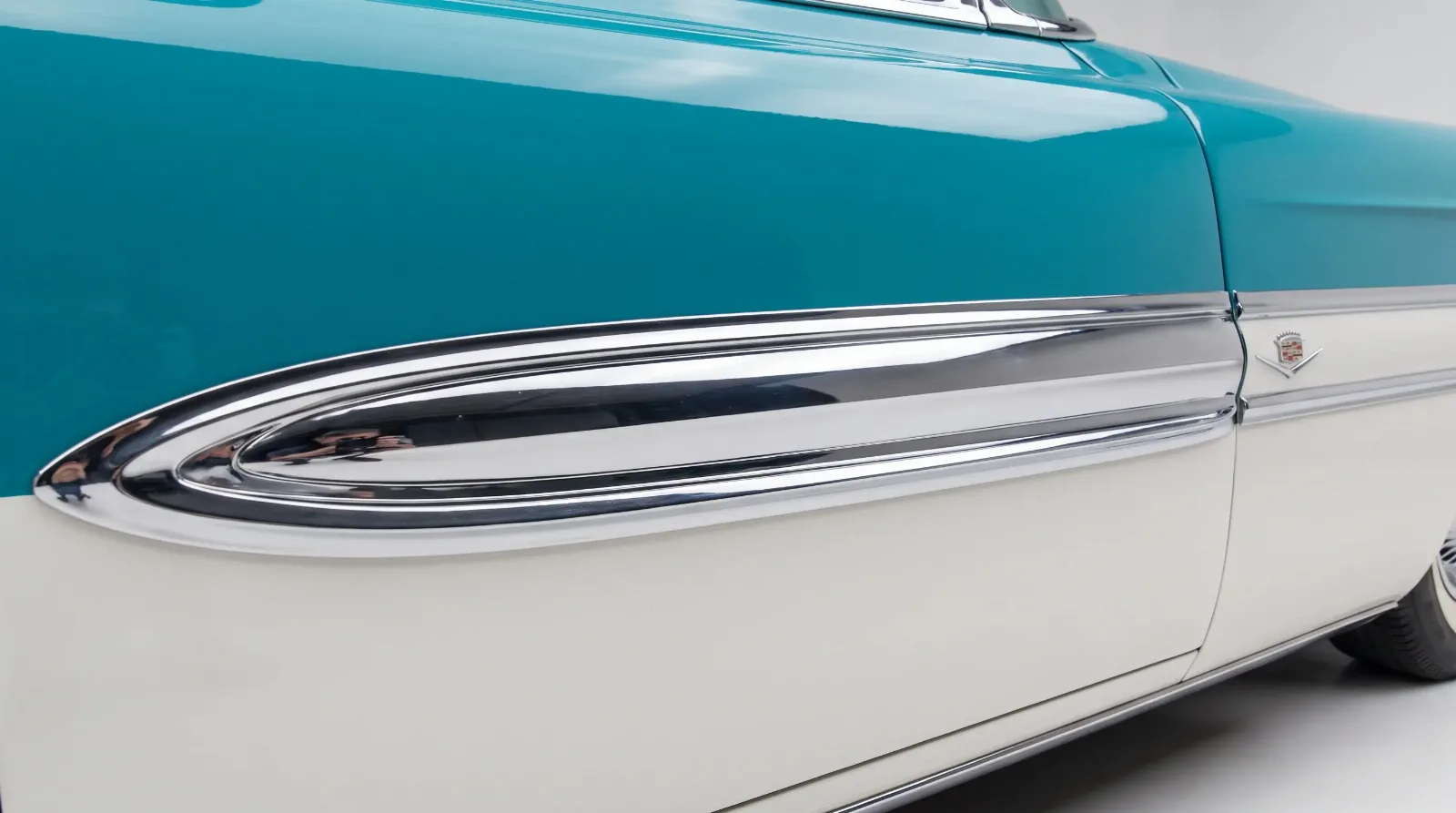
Mass-production styling is design applied to a stamped body. General Motors got there first in a serious way. In 1927 they set up the Art and Colour Section under Harley Earl, the first real in-house styling studio, and started designing how production cars looked instead of just how they worked. That is styling, not coachbuilding. The body still comes from a press. A designer just decides what shape the press makes. The two-tone paint schemes and color choices that came out of that studio culture are a whole subject on their own, covered in next: Luxury Car Color Palettes and the Two-Tone Paint Era.
Where the two worlds overlapped
It was not a clean break. For a while the big American luxury makers ran what they called semi-custom or catalog-custom bodies. A coachbuilder like LeBaron or Dietrich would design a body, and the factory would build a limited run of it, sold through the dealer as a catalog option. You got a coachbuilder's design without a true one-off price. Purists argue about whether that counts as coachbuilt. I say it depends how the body got made, not whose name is on the design.
The other overlap is the badge. Plenty of production cars wore coachbuilder names as trim levels long after the actual coachbuilding stopped. Seeing LeBaron or Brougham on a car does not mean a shop hand-formed the body. By then it was a name borrowed to sell a stamped car up a notch. That whole arc from real craft to borrowed nameplate runs through the classic luxury car story.
| Feature | Coachbuilt body | Mass-production styling |
|---|---|---|
| How the body is made | Hand-formed over a wood or steel buck | Stamped from steel dies |
| Quantity | One-off or tiny run | Thousands identical |
| Who builds it | Separate coachbuilder shop | The automaker's own plant |
| Design source | Commissioned or catalog custom | In-house styling studio |
| Panel variation | Every car slightly unique | Interchangeable, identical |
Why it matters when you buy
If somebody tells you a car is coachbuilt, ask who built the body and how. A genuine coachbuilt car from a named shop, with the history to back it, is a serious collector piece and priced like one. A production car wearing a fancy trim name is a nice car, but it is not the same thing, and it should not carry the same money. Reproduction bodies and re-bodied chassis muddy the water further, so provenance matters as much as the metal.
Respect the craft for what it was. Hand-building a car body is hard, slow work that almost nobody does anymore at that level. When mass production won, it won on price and speed, and it gave us styling studios that made ordinary cars look good. But it was not the same skill, and the cars that still carry real coachwork are worth understanding before you spend on one.
Related Reading
Have a
Classic Car
for Sale?
Reach thousands of serious classic car collectors across the US.
Sell It Here →
Are You a Classic Car Dealer?
List your full inventory and connect with targeted classic car buyers.
Join as a Dealer →
About the author
Jim Vasquez
Southern California hot rod and custom car builder with roots in the traditional kustom kulture scene.




Comments
Be the first to comment on this article.