
Ask ten people at a cruise night what a street rod is and you will get ten answers, most of them wrong. Somebody points at a chopped Deuce coupe with no hood and calls it a street rod. Somebody else points at a slammed 1970 Chevelle and says the same thing. Both are missing what actually makes the term mean something. A street rod is a specific animal with a specific definition, and once you know the boundaries, the whole hobby snaps into focus.
Car Features
7 min read
What Defines a Street Rod
The accepted definition of a street rod, the vintage-body-modern-guts idea, and the misconceptions that get the term wrong.
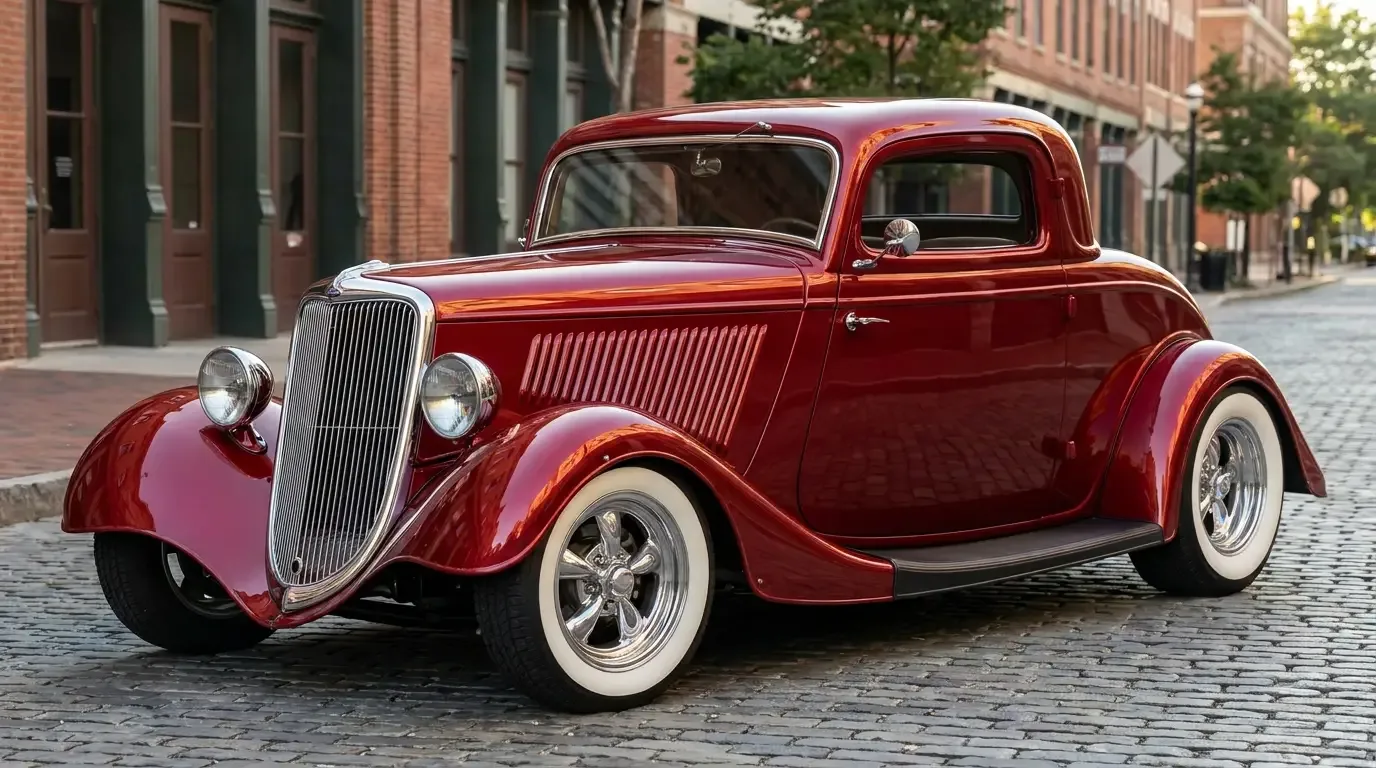
I have been building these cars in Southern California long enough to watch the label get stretched until it means nothing. So let me pull it back to where it belongs. A street rod is a pre-1949 American car or truck that has been modernized to drive comfortably and reliably on today's roads. That is the short version. The rest of this is why every word in that sentence matters.
The accepted definition, and where the line sits
The definition most builders and clubs use comes down to two things: the age of the body and the intent of the build. The body has to be old, and the National Street Rod Association drew that boundary at 1948 and earlier. If the car left the factory with a 1948 or older body, it qualifies. A 1949 model does not, and that cutoff is not arbitrary, though it can feel that way the first time you hear it.
The second half is intent. A street rod is built to be driven, not trailered to a show and babied. That means real upgrades under the vintage sheetmetal: a dependable engine, brakes that stop the car, suspension that tracks straight, and creature comforts the original never had. The body says vintage. Everything you cannot see says modern.
People confuse this with a hot rod all the time, and the confusion is understandable because the two families share the same driveway. If you want the full breakdown, I wrote a piece on street rod vs hot rod that walks through where they split. The quick version: a hot rod chases period-correct performance and looks, often stripped down and loud on purpose. A street rod chases comfort and reliability while keeping the old shape.
Modernized underneath, vintage on top
Here is the idea that trips up newcomers. A street rod is supposed to look like it rolled out of 1932, 1934, or 1940, but it is not supposed to drive like it. That tension is the whole point. You keep the body, the stance, the character of an old car, and you throw out almost everything mechanical that made those cars miserable to live with.
In practice that means a modern crate engine instead of a tired flathead, an independent front suspension instead of a solid axle that wanders, four-wheel disc brakes, an automatic or overdrive manual, and yes, air conditioning and a real heater. Nobody who has driven a bone-stock 1936 sedan across a state line in July argues against AC.
Common street rod upgrades include:
- A modern V8 crate engine, often a small-block Chevy or a modern Ford, chosen for parts availability over rarity.
- Independent front suspension, frequently a Mustang II-style setup, for ride and steering feel.
- Four-wheel disc brakes with a dual-circuit master cylinder for real stopping power.
- An overdrive transmission so the engine is not screaming at highway speed.
- Air conditioning, a modern heater, and often power steering and power windows.
"A street rod should fool your eyes at fifty feet and surprise you the second you turn the key. If it looks old and drives old, that is a survivor or a restoration. If it looks old and drives like a new car, now you have got a street rod."
Jim Vasquez
Common misconceptions worth clearing up
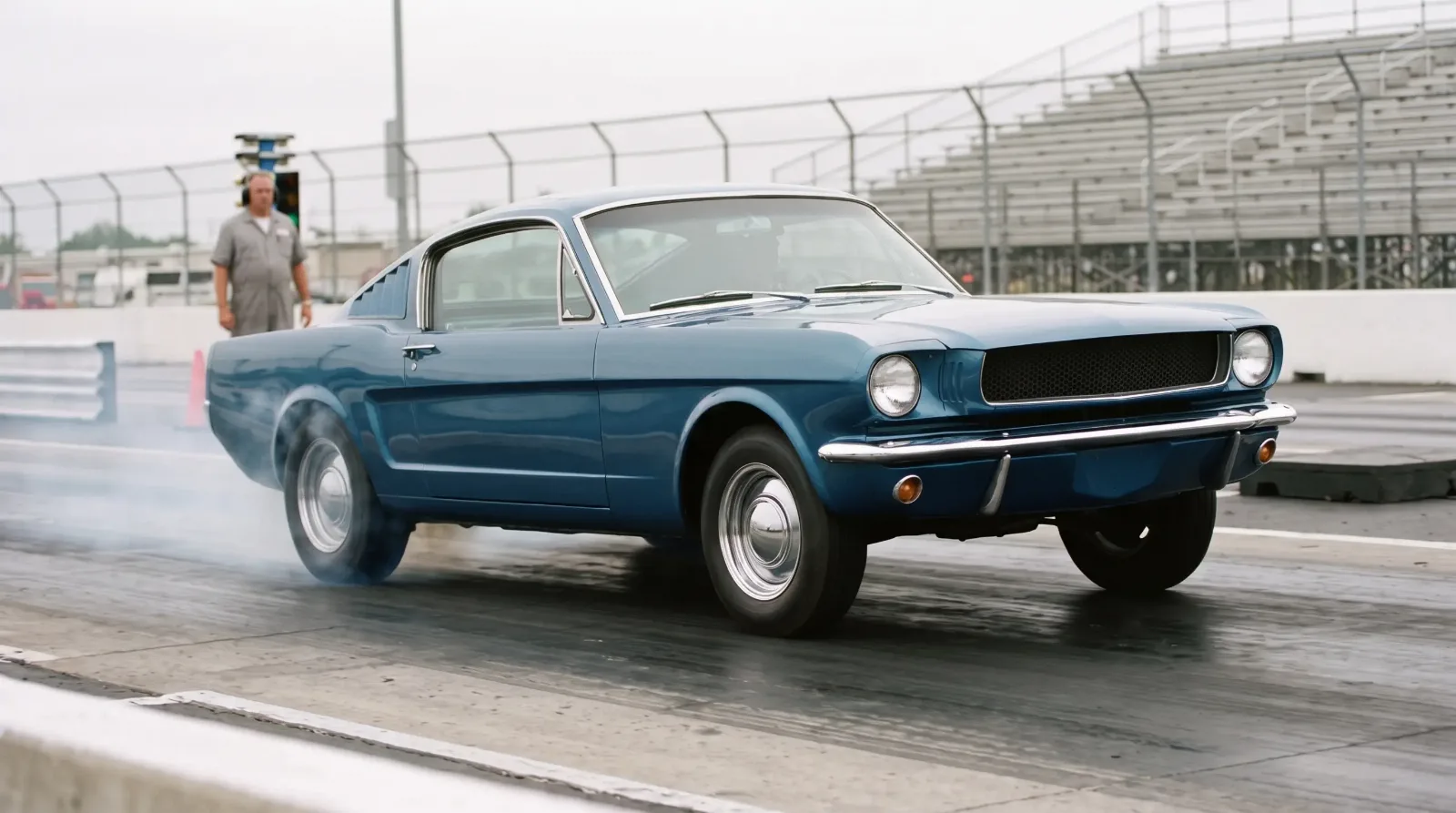
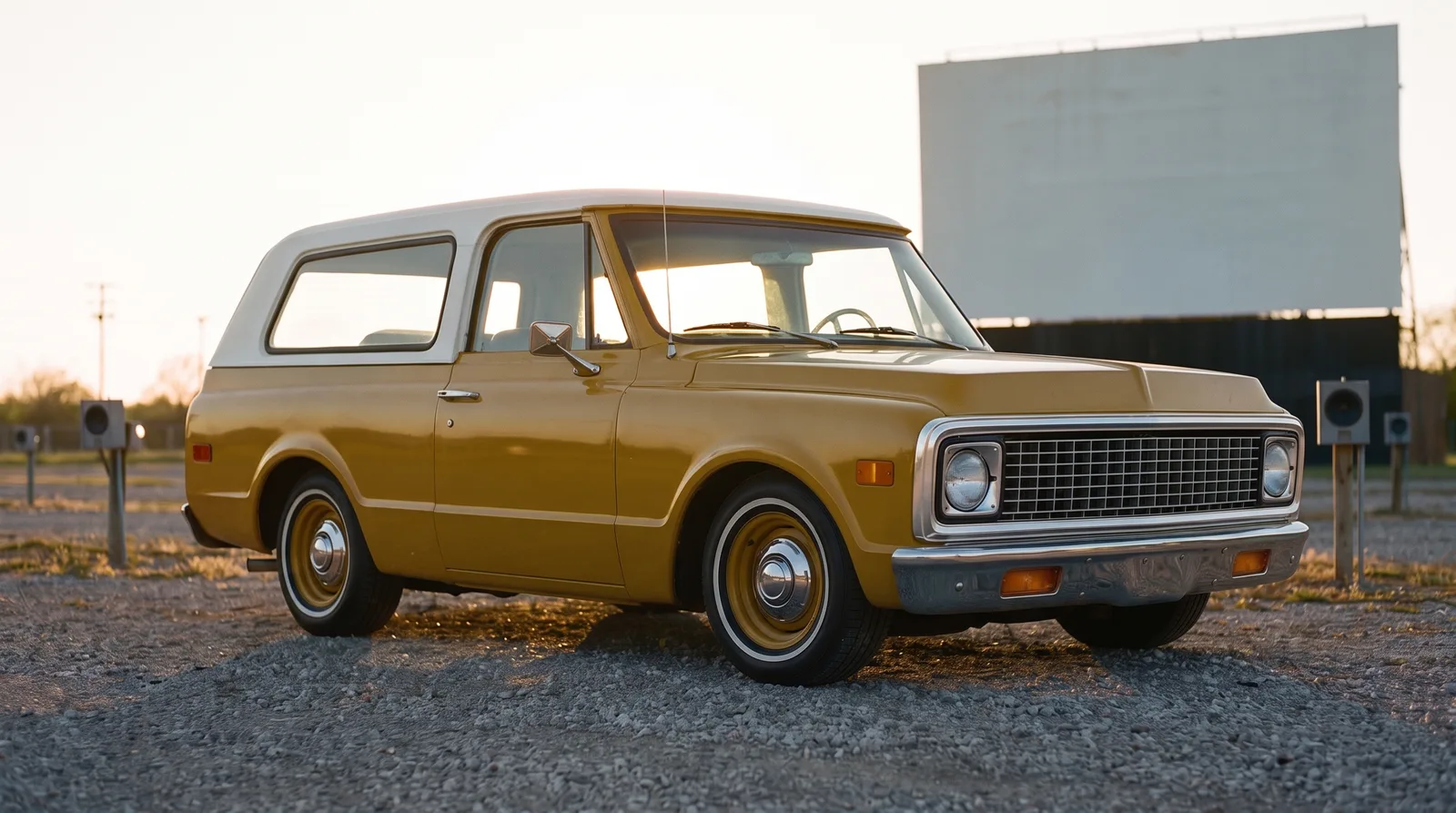
The biggest misconception is that any old modified car is a street rod. It is not. A 1968 Camaro with a modern LS swap and coilovers is a beautiful machine, but it is a restomod or a pro-touring build, not a street rod, because the body is far too new. The pre-1949 line is not snobbery. It is the definition.
The second misconception is that a street rod is the same as a rat rod. They are not close. A rat rod is deliberately raw, unfinished, and rough, celebrating patina and improvisation. A street rod is finished, refined, and built for comfort. If you want to see how far apart they sit, the Street Rod vs Rat Rod comparison lays it out clearly.
The third misconception is that the modern drivetrain somehow cheapens the car. Purists sometimes sneer that a crate engine is not authentic. But authenticity was never the goal of a street rod. The goal was always drivability. That is baked into the history of the movement, and if you are curious how it all came together, the story of the street rod traces the culture from backyard builds to national events.
Street rod at a glance
Sometimes the cleanest way to hold a definition in your head is to line it up against its neighbors. Here is where a street rod sits relative to the builds it gets confused with.
| Build type | Body era | Drivetrain | Priority | Finish |
|---|---|---|---|---|
| Street rod | Pre-1949 | Modern crate V8, IFS, disc brakes | Comfort and reliability | Finished, refined |
| Traditional hot rod | Pre-1949 | Period-correct, often stripped | Period style and performance | Finished, era-correct |
| Rat rod | Pre-1949, often mixed | Whatever runs, improvised | Raw attitude, low cost | Unfinished, patina |
| Restomod / pro-touring | Post-1948 | Modern drivetrain and electronics | Modern performance | Finished, high-end |
Read that table left to right and the boundaries do the work for you. Body era separates the street rod and hot rod family from the restomod world. Drivetrain and finish separate the street rod from the hot rod and the rat rod. Nail those two axes and you will never mislabel a car again.
Why the definition still matters
You might wonder why anybody should care about policing the term this tightly. It matters because the definition protects what the hobby is good at. Street rod clubs, national events, and the whole parts industry are organized around that pre-1949, built-to-drive idea. When you know a car is a street rod, you already know a lot: roughly what era body you are looking at, that it was built to cover real miles, and that the person who built it valued comfort over trophies.
It also matters when you are buying. A car advertised as a street rod should have modern running gear and a vintage body, and if it does not, the description is wrong and the price probably is too. Knowing the definition is the difference between paying for a comfortable, reliable classic and paying street rod money for something that is really a rough hot rod or an unfinished project.
So keep the sentence in your head. Pre-1949 body, modern everything underneath, built to be driven. That is a street rod. Everything else is a different animal, and knowing the difference is the first real step into the hobby.
Sources and notes
- National street rod club literature and event guidelines establishing the pre-1949 body convention.
- Period hot rod and street rod press covering the emergence of the term in the early 1970s.
- Builder and shop interviews on typical street rod drivetrain, suspension, and comfort upgrades.
- General marque and crate-engine reference material for common modernization choices.
Related Reading
Have a
Classic Car
for Sale?
Reach thousands of serious classic car collectors across the US.
Sell It Here →
Are You a Classic Car Dealer?
List your full inventory and connect with targeted classic car buyers.
Join as a Dealer →

About the author
Jim Vasquez
Southern California hot rod and custom car builder with roots in the traditional kustom kulture scene.


Comments
Be the first to comment on this article.