
On August 27, 2002, a red Z28 convertible came off the line at Sainte-Thérèse, Quebec, and that was the end of it. The plant closed the next day. In its 35th anniversary year, the car that had fought the Mustang through every decade simply stopped, and plenty of people who had grown up with one on the wall or in the driveway wanted to know why was the Camaro discontinued when it was faster than it had ever been. The honest answer is that nobody killed it with a single blow. A market shrank, a plant ran half empty, an old platform ran into new rules, and a company with bigger problems decided the car was not worth saving.
Car Features
7 min read
Why GM Ended the Camaro in 2002
Why was the Camaro discontinued in 2002? A shrinking coupe market, a plant on one shift, a new safety rule and an old platform. The full story.
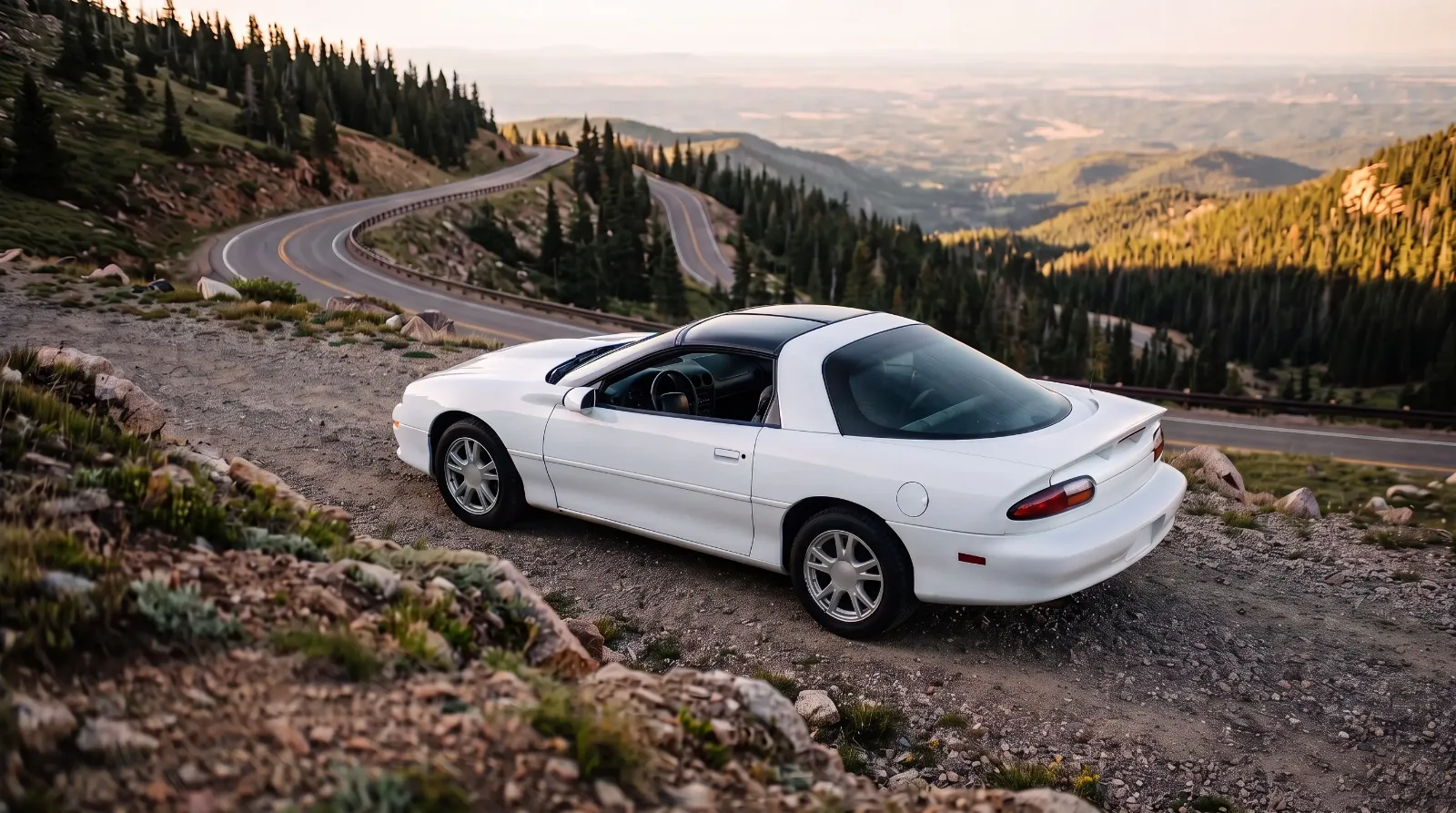
This is the closing chapter of the fourth generation Camaro, but the decision reached back further than the 1993 redesign. To understand it, you have to look at the market the car was sold into, the plant that built it and the people inside GM who tried to keep it alive.
Why was the Camaro discontinued? The reasons GM gave
GM made the announcement in late September 2001: the 2002 model year would be the last for both the Camaro and its Pontiac twin, the Firebird, and the Sainte-Thérèse plant would close in the fall of 2002. The company's spokesman was John Middlebrook, GM vice president and general manager of vehicle brand marketing and corporate advertising.
The official reasons were about the market, not the car. GM said the "regular sport" segment had fallen 53 percent from 1990 to 2000, largely because buyers who once wanted a coupe now wanted a truck. It also pointed to large excess capacity across the industry. In plain terms, too many factories were chasing too few sports coupe buyers, and GM had one plant devoted almost entirely to a shrinking class of car.
GM also promised that its Service Parts Organization would keep supplying replacement and reproduction parts, accessories and technical support. That was a small thing in the headlines and a big one for owners.
A shrinking market and a plant on one shift
The sales history tells the story better than any press release. Camaro and Firebird sales combined had peaked at nearly 500,000 in 1979. By calendar 2001 they were down to 66,466. In that same year Ford sold 170,000 Mustangs, and the Camaro outsold the Corvette, a car costing far more, by fewer than 2,000 units. For a mass-market pony car, that last number was hard to defend in a boardroom.
The factory reflected it. Sainte-Thérèse had been set up to run two shifts of Camaros and Firebirds, and by 1996 it was down to one. It was still on one shift in 2001. Scott Settlemire, a Camaro product manager in the late 1990s, described what that meant: "that's when you lose stupid amounts of money." A plant built for two shifts and running one carries the cost of the whole building on half the cars.
| Model year | Camaro production |
|---|---|
| 1993 | 39,103 |
| 1994 | 119,799 |
| 1995 | 122,738 |
| 1996 | 61,362 |
| 1997 | 60,202 |
| 1998 | 54,026 |
| 1999 | 42,098 |
| 2000 | 45,461 |
| 2001 | 29,009 |
| 2002 | 41,776 |
Those are Hagerty's yearly figures, and other sources differ on several years, but the shape is not in dispute. Production peaked in 1995 and then fell by roughly half within a year. The 1996 figure was hurt by an 18-day strike over outsourcing that idled 81,500 GM workers in March of that year, but the cars never climbed back. The 2001 total of 29,009 was the lowest of the run, partly because production stopped early to prepare for the 35th Anniversary cars.
Marketing, a new safety rule and an aging layout
Inside GM, the people closest to the car tell a less tidy story than the official one. John Heinricy, a Chevrolet engineer who later retired as GM's Director of High-Performance Vehicles, put it bluntly: "I blame marketing... They just didn't take the car seriously." Settlemire offered a different detail that makes the decision look even stranger in hindsight: the car became profitable again in its last years, because more buyers chose V8s. The Camaro was earning money just as GM was deciding to stop building it.
Then there were the rules. A new head-impact standard took effect on September 1, 2002. Settlemire has said that meeting it would have meant heavily padding the windshield opening, which on a car built around a steeply raked windshield was not a quick fix. That date fell five days after the last car was built.
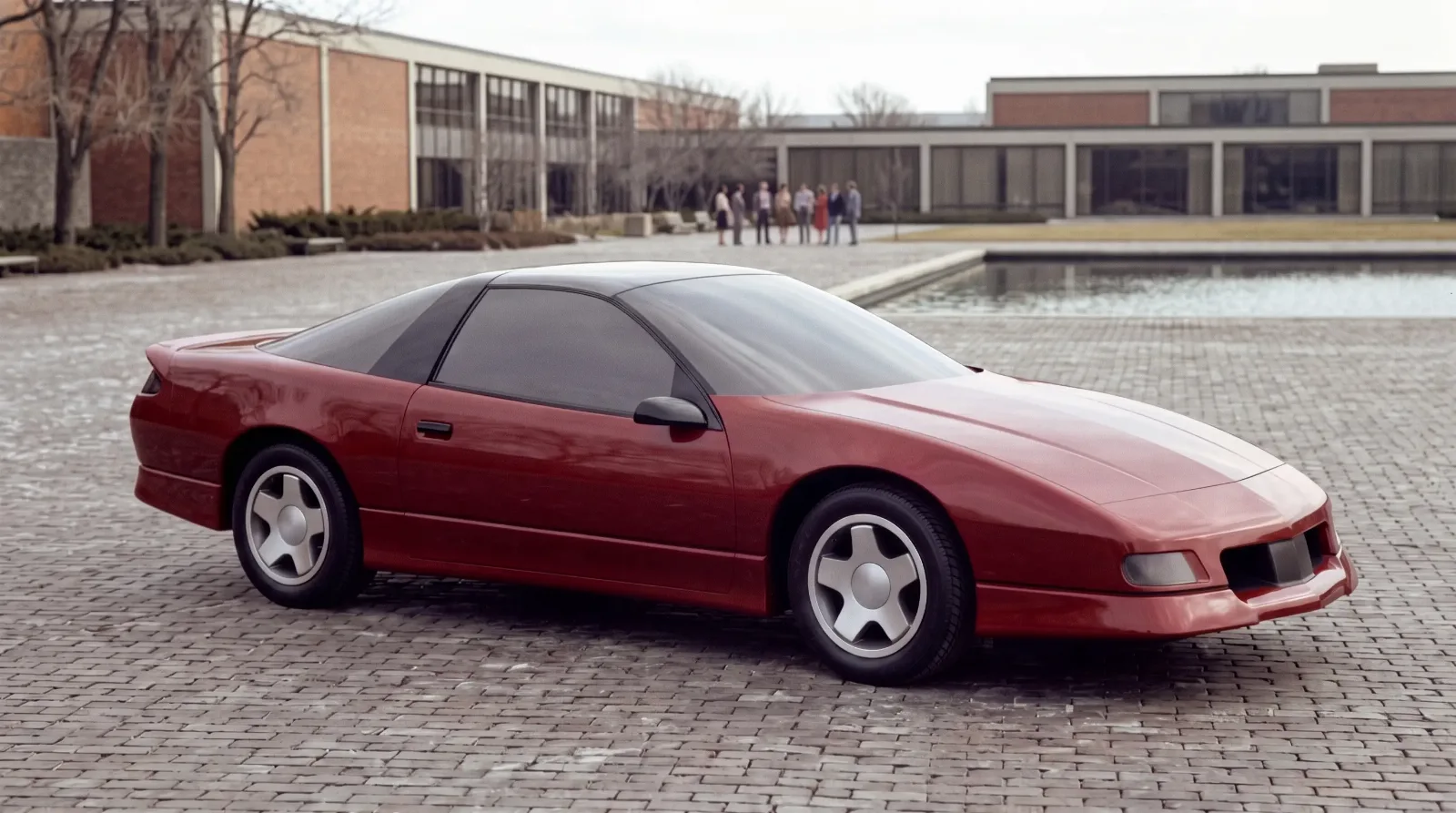
The platform itself was part of the problem. GM had already spent years in the 1980s studying a replacement, the GM-80 program, which would have moved the car to front-wheel drive. That effort was cancelled in 1986 after missing weight targets, struggling in crash tests and running up composite-panel costs. The story of the front-drive Camaro that was cancelled matters here because it left the F-body without a true clean-sheet successor. The 1993 car was about 90 percent new by Hagerty's count, yet it still rode on the old floor pan, and by 2002 a fresh one would have cost real money for a segment GM no longer believed in.
Outsiders saw the same thing. Jim Hall of AutoPacific called the car's 2+2 layout "increasingly irrelevant." GM's own numbers pointed the same way: the buyers who had once filled the sport coupe segment were now in trucks. The Camaro still had a loyal audience. It just was not big enough for a plant of its own.
"The Camaro never lost its fans. It lost its place in the showroom. By 2002 the people who loved it most were the ones least likely to buy a new car every few years."
Patrick Walsh
The last year and what the ending left behind
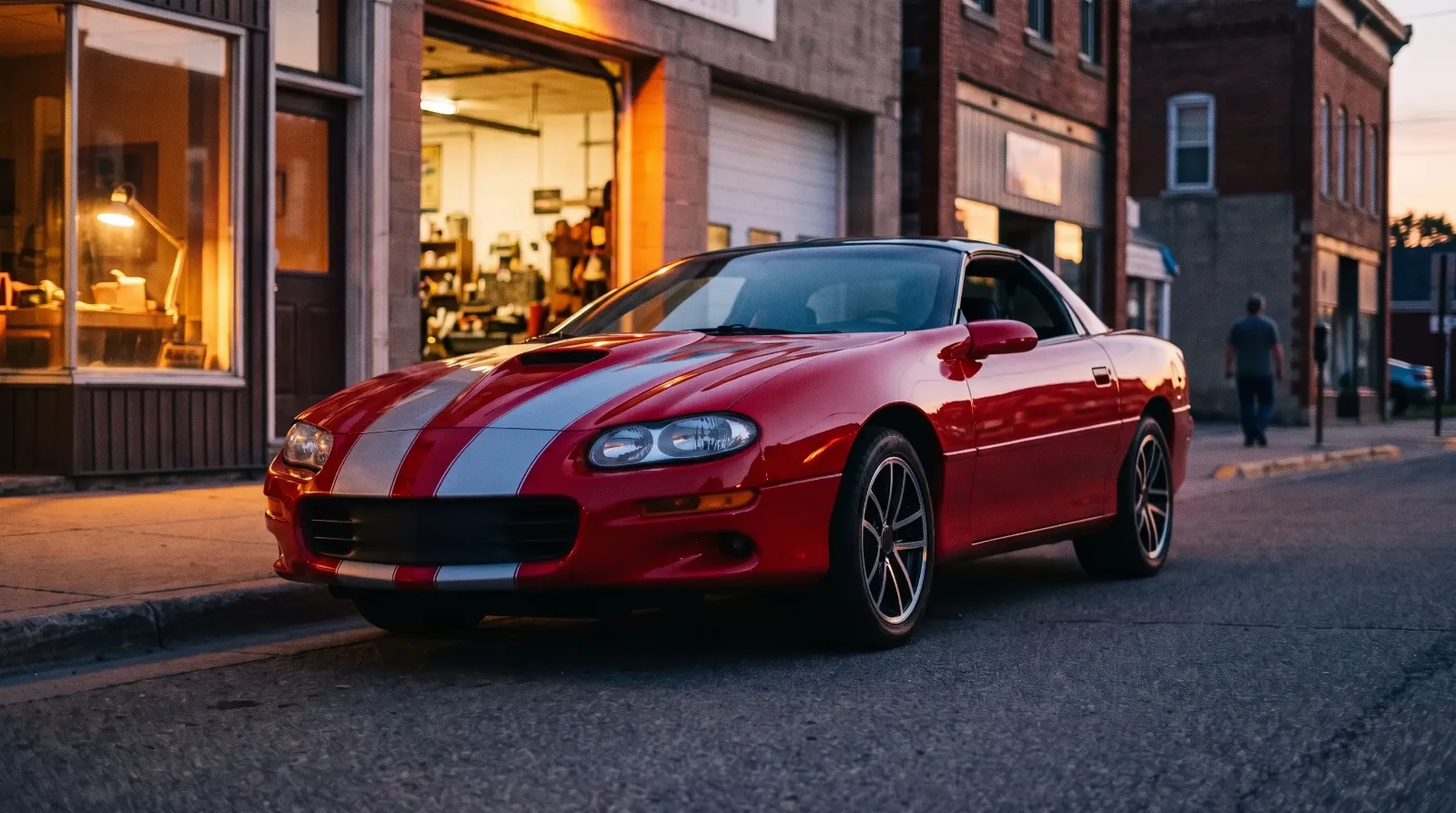
Chevrolet did not let the car leave quietly. The 2002 model year brought the 35th Anniversary package, RPO Z4C, available only on the SS: Bright Rally Red paint, silver heritage stripes with a checkered-flag motif, 17-inch wheels and an Ebony leather interior with Medium Gray inserts. In all, 3,369 buyers paid $2,500 for it on top of the $3,625 SS package. Total 2002 production came to 41,776, and the SS made up 11,191 of those, close to half of the Z28-based cars. GM kept the first and last 2002 Camaros for its museum.
Those numbers say something about who was still buying. The final-year customer was not looking for basic transportation. He or she wanted the fastest, best-equipped version, and was willing to pay for a send-off. Even so, final-year output was less than a third of the Mustang's.
One widely cited count puts the fourth generation at 633,196 Camaros over its ten model years; adding up the yearly figures most often quoted gives a little under 605,000. It was a good car by almost any measure that mattered to the people who drove one, and it was cancelled for reasons that had very little to do with how it drove. If you want to see where 2002 sits in the whole arc, from the 1967 launch through the IROC years, the classic Camaro guide lays it out. The Camaro name returned in 2010 with a fifth generation, but that is another car and another story.
Sources and notes
- Automotive Fleet: Camaro/Firebird on hiatus after 2002 model year (GM announcement, September 2001)
- Taipei Times (NYT News Service), August 2002: the end of the Camaro and Firebird, with 2001 sales figures
- Hagerty: Fourth-gen Camaro, the one that died first (Heinricy and Settlemire interviews)
- Hagerty valuation tools: 2002 Chevrolet Camaro production and 35th Anniversary details
- Wikipedia: Chevrolet Camaro (fourth generation)
- Wikipedia: Chevrolet Camaro (third generation), production from October 1981
Related Reading
Have a
Chevrolet Camaro
for Sale?
Reach thousands of serious classic car collectors across the US.
Sell It Here →
Selling a classic? Here's how: the best sites to sell a classic car
Are You a Classic Car Dealer?
List your full inventory and connect with targeted classic car buyers.
Join as a Dealer →
#camaro history
#chevrolet camaro
#pontiac firebird
#fourth-generation Camaro
#2002 Camaro
#Sainte-Thérèse
#GM F-body

About the author
Patrick Walsh
Automotive journalist covering classic car shows, events, and the enthusiast community across North America.
Related Listings - Chevrolet Camaro


Comments
Be the first to comment on this article.