
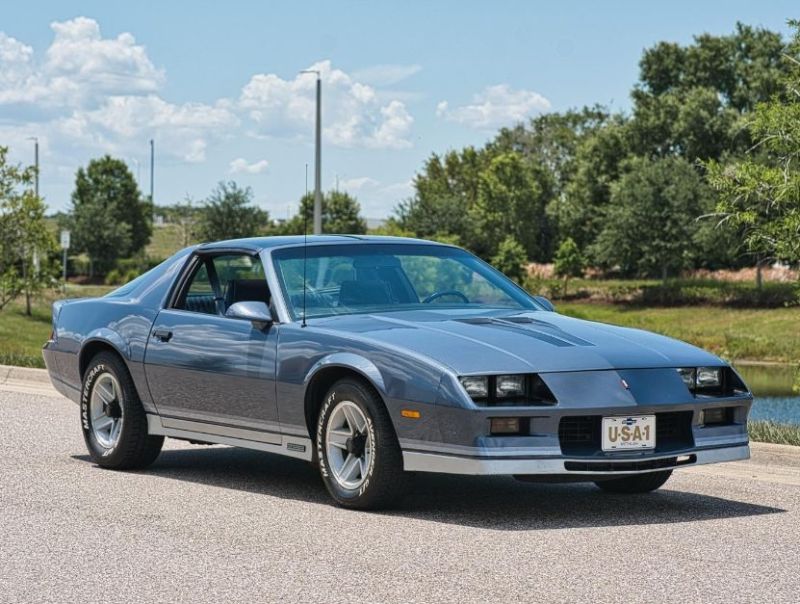
Every swap meet has one. An IROC-Z with the 350 badge, a shifter poking out of the console and an owner who swears it came that way. It didn't. No IROC-Z 350 manual car ever left a Chevrolet plant. From 1987 to 1990 the 5.7-liter tuned port engine came bolted to one transmission, the four-speed TH700-R4 automatic, and that was the end of the conversation at the order desk. The more interesting question is why, because the answer most people repeat is only half the story. If you need the wider picture of the car first, our IROC-Z guide has it.
Car Features
7 min read
Why the IROC-Z 350 Never Came With a Manual
From 1987 to 1990 the IROC-Z's 350 came only with an automatic. The axle, the five-speed and what a manual 350 car really is.
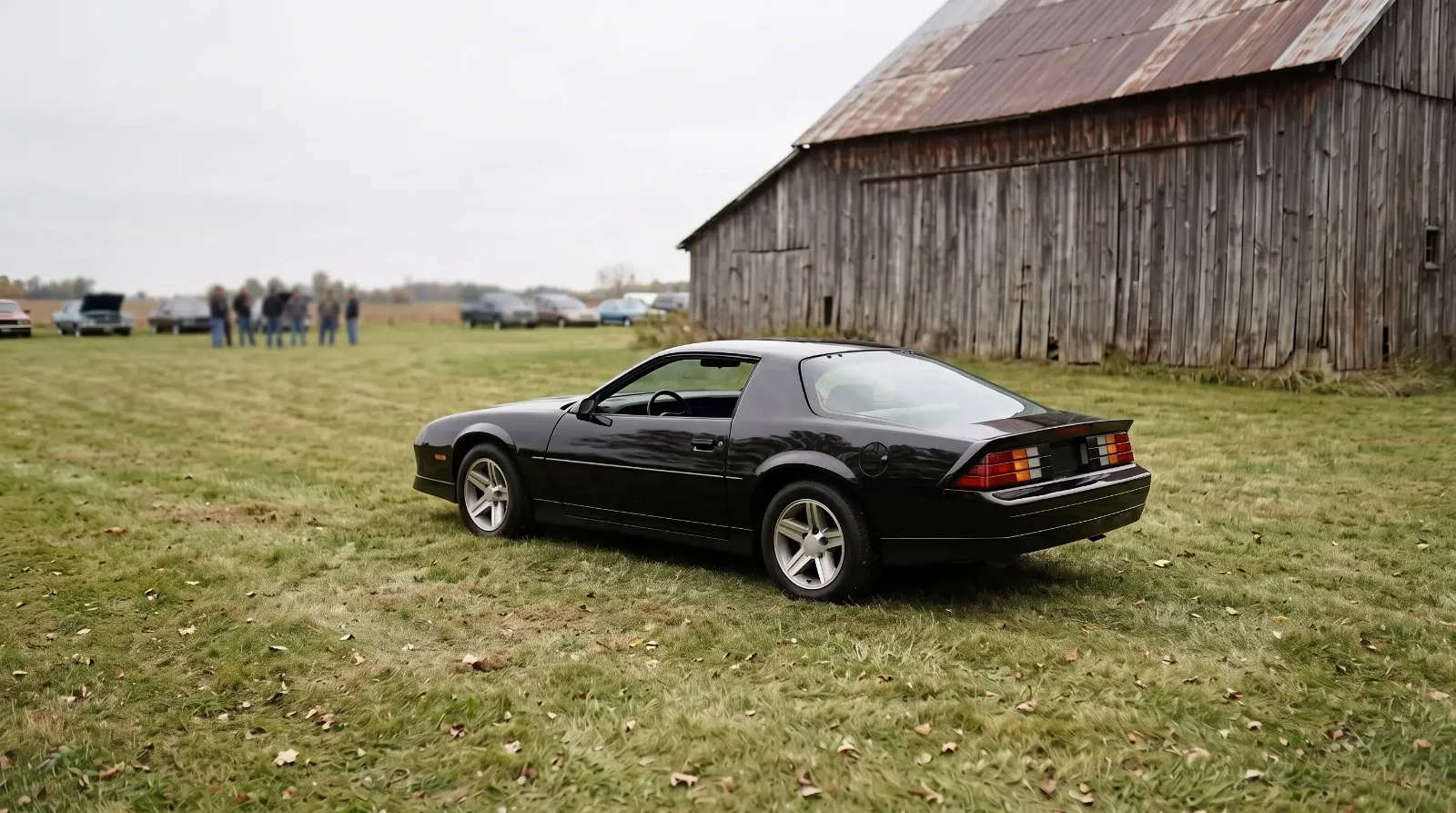
No IROC-Z 350 manual left the factory
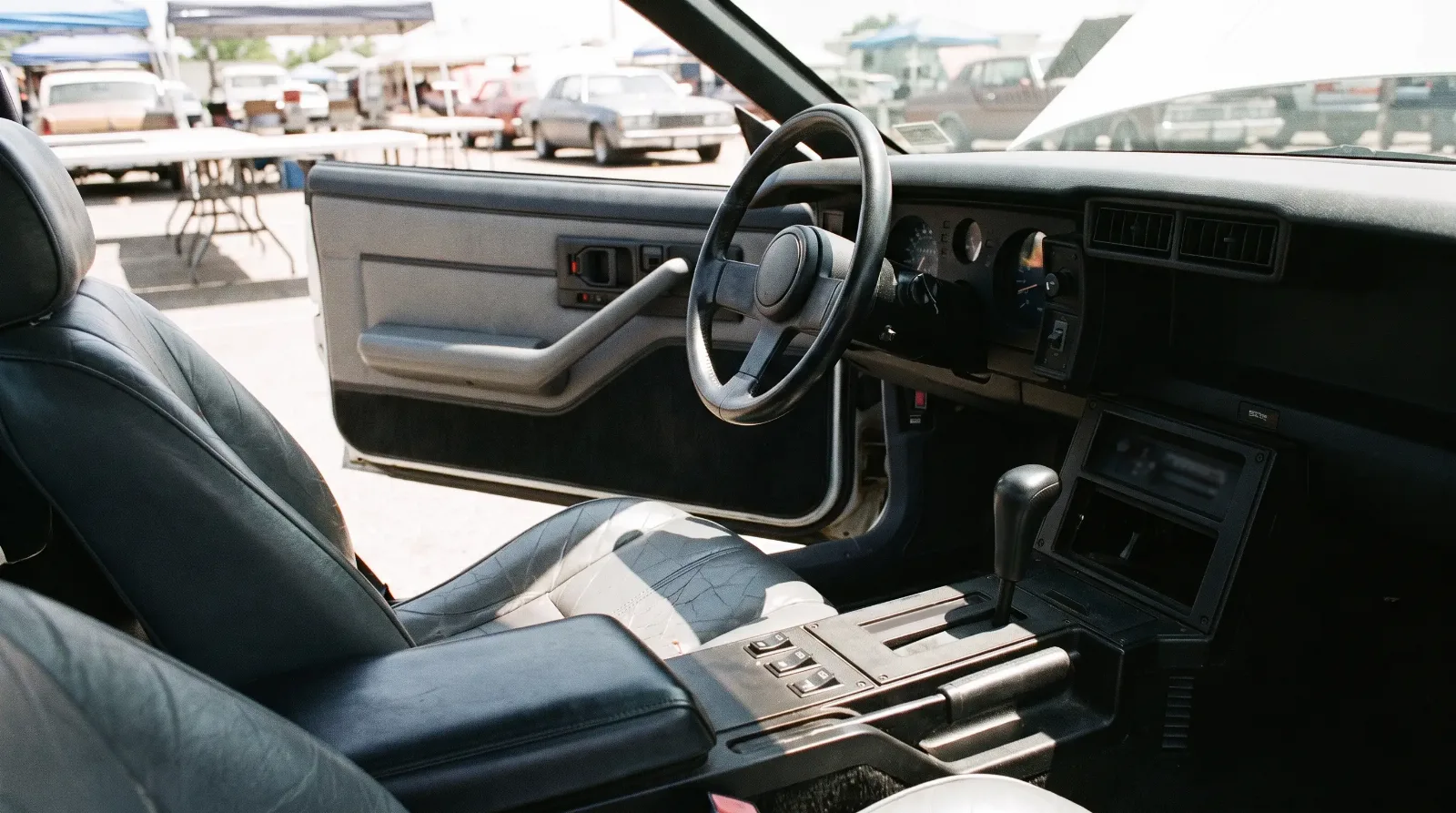
Start with what the order sheet allowed. The 350 was RPO B2L, a $1,045 option in 1987, and it was offered only in the IROC-Z coupe that year. Check the box and the transmission box checked itself: MX0, the automatic with overdrive. The five-speed, MM5, was on the same list, but not for that engine.
That rule held for every year of the IROC-Z. In 1987 the 350 made 225 hp and 330 lb-ft. In 1988 it was rated at 230 hp and the same 330 lb-ft. By 1990 it was up to 245 hp and 345 lb-ft. More power each time, same gearbox every time.
Meanwhile the smaller tuned port 305, the LB9, did get a stick. In 1985 the LB9 was automatic only too, but by 1987 you could have it with the five-speed, and the manual car was rated higher: 215 hp against 190 hp for the automatic. So the hot setup for a shift-it-yourself buyer was the 305, which tells you the problem was never the IROC-Z itself. It was the 350's torque.
| Model year | 350 TPI (B2L) rating | 350 transmission | 305 TPI (LB9) with five-speed |
|---|---|---|---|
| 1987 | 225 hp / 330 lb-ft | Automatic only | Yes, 215 hp |
| 1988 | 230 hp / 330 lb-ft | Automatic only | Yes, 220 hp |
| 1990 | 245 hp / 345 lb-ft | Automatic only | Yes, up to 230 hp |
| 1991 to 1992 (Z28) | 245 hp / 345 lb-ft | Automatic only | Yes, 230 hp |
The published reason: the rear axle
The explanation with the best paper behind it points at the back of the car, not the middle. One period-expert writer says GM judged the Monza-based 10-bolt, with its 7.62-inch ring gear, not up to 330 lb-ft behind a stick. Enthusiast references measure that ring gear at 7.625 inches for 1985 to 1989, so the numbers line up.
The logic holds up in the garage. An automatic has a torque converter between the engine and everything behind it. It softens the hit. A manual doesn't. Drop the clutch on a 350 with sticky tires and the whole load slams into the driveline in one shot. A small ring gear doesn't like that, and warranty departments like it even less.
There's a wrinkle. The same enthusiast sources list a Borg-Warner 9-bolt with a 7.75-inch ring gear as available from 1987. Which cars got it, and whether GM ever saw it as the fix that would allow a manual 350, is not something I can pin down from records I trust. So take the axle story as the published reason, not the whole reason.
"Somebody at GM pictured a kid with a 350, a clutch pedal and a Friday night. Then they pictured the warranty claim. The automatic won."
Mike Sullivan
The enthusiast reason: the five-speed
Ask in a forum and you'll hear a different villain: the Borg-Warner five-speed. The argument is that the gearbox the Camaro used couldn't take the 350's torque, so GM didn't offer it. Plenty of people believe this. It sounds right. It's also unsourced. I haven't seen it in anything from GM or from a named writer of the period, only in forum threads and opinion columns.
Could both be true? Sure. Engineers rarely kill an option for one reason. A light axle and a gearbox near its limit would each be enough to make a product planner nervous. But if you're going to argue about it at a car show, the axle has the better citation. The five-speed is what people say.
Chevrolet had done this before
The automatic-only 350 wasn't a one-off decision. It was a habit. In 1981 the Z28's 350 was automatic only, and buyers who wanted a manual got the 305. In 1982 the Cross-Fire injection engine, the top option, came only with an automatic. Then the IROC-Z 350 did the same thing for four model years, and after the IROC-Z name went away the 1991 to 1992 Z28 kept the rule.
It isn't an unbroken streak. The H.O. 305 that arrived in 1983 was a five-speed-only engine that year, and for a while the stick got the stronger motor. But each time Chevrolet put its biggest-torque engine in the car, the first answer was an automatic. That pattern says more than any single engineering memo would. GM's planners kept deciding that the top engine plus a clutch was a risk they didn't need to take, whatever the weak part was that year.
It broke for good with the next car. The 1993 Z28 came with the LT1 and the choice of a six-speed manual or a four-speed automatic. The buyers who had been asking for a stick behind the big engine since 1987 finally got one, just not in an IROC-Z.
Spotting a converted IROC-Z 350, and pricing it
Converting an IROC-Z 350 to a manual is a well-worn path, and owners have been doing it for decades. Nothing wrong with that on a driver. The problem starts when somebody calls the result factory and prices it like a unicorn. There is no unicorn. A manual 350 IROC-Z is a modified car, full stop.
The paperwork settles it. The factory option codes on a real 350 car will show B2L with MX0, the automatic. A car that shows B2L with MM5 has a story that doesn't match Chevrolet's own rules, so ask for the documents and read them yourself. If you want to know what each code on that list means, start with the G92 codes and work outward from there.
Volume matters for value too. The 350 was never the common engine. In 1990, for example, 2,415 of the 4,213 IROC-Z coupes had the 5.7. Dealer listings put the 1989 count at a little over 12,000, but I have not seen that figure traced back to Chevrolet. Either way, scarcity of the engine does not make a converted car rarer. It makes it a modified car built from a less common starting point.
So the short answer to why the IROC-Z 350 never had a manual is that GM didn't trust the drivetrain behind it with a clutch, and the axle is the part it is on record about. The long answer is that Chevrolet made the same call for over a decade, and only the next generation changed it. For how the IROC-Z fits in the rest of the classic Camaro story, keep reading from there.
Sources and notes
Related Reading
Have a
Chevrolet Camaro
for Sale?
Reach thousands of serious classic car collectors across the US.
Sell It Here →
Selling a classic? Here's how: compare the places to sell classic cars
Are You a Classic Car Dealer?
List your full inventory and connect with targeted classic car buyers.
Join as a Dealer →

About the author
Mike Sullivan
Detroit-area muscle car enthusiast and restoration specialist with three decades of hands-on experience working on American iron.
Related Listings - Chevrolet Camaro
Comments
Be the first to comment on this article.