
The cheapest muscle cars to build are the ones that never were muscle cars. A base Malibu, a plain Dart, a Fairlane 500 with a two-barrel small-block: same body shell as the hero car, a fraction of the price, and no factory option code to protect. Buy the body, not the badge, and the money goes into parts that make power instead of paperwork that proves it.
Ownership & Lifestyle
7 min read
Cheap Muscle Cars to Build: Starting From a Base-Model Body
A base Malibu, Duster or Torino shares the hero car's shell for far less. Which bodies to start from and where the build money really goes.
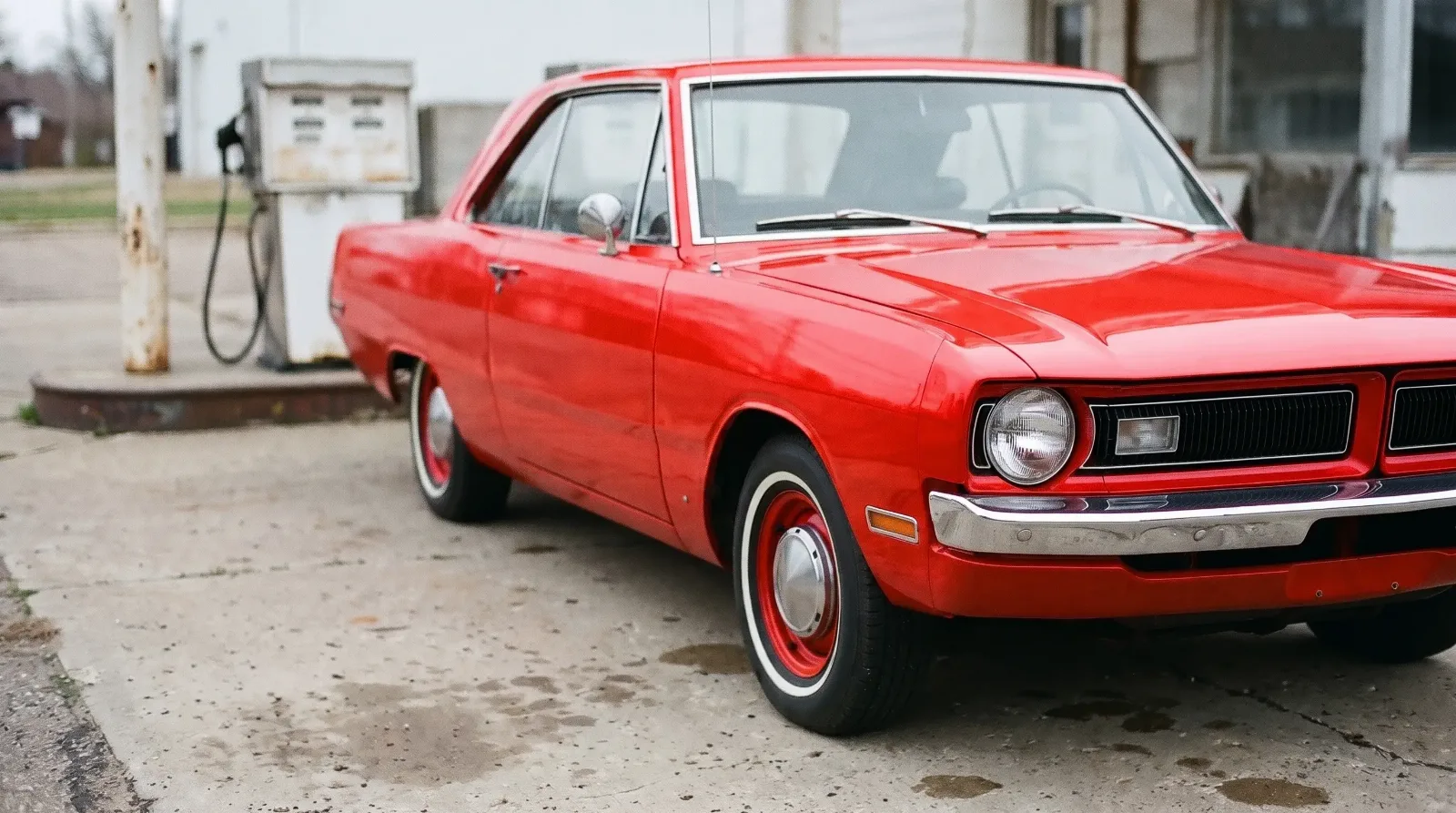
That is the short version. The rest of this piece is the arithmetic: which base cars make the best starting points, what they came with, what they can take, and where a budget build stops making sense. For the bigger picture of what the market charges for factory cars, read more here.
Why a base-model body is the cheapest start
A factory SS, R/T or GT carries a premium for one reason: provenance. The VIN, the build sheet and the original engine are what the collector pays for. Strip those out and the shell underneath is the same steel the base car got.
That premium is money you cannot bolt on. Spend it on a base car and the car is no faster. Spend it on a crate engine, brakes and a rear end and the car is a lot faster. The base buyer also gets something the collector does not: permission to cut, drill and swap without destroying value.
The catalog horsepower on those hero cars was also generous. Through 1971, American makers advertised SAE gross horsepower, measured on a stand with no air cleaner, no fan and no restrictive exhaust. For 1972 Detroit switched to SAE net, measured as installed, and the same engine family suddenly showed a much smaller number: a Dodge 318 went from 230 to 155 horsepower on paper. A healthy modern small-block in a base body can match or beat the real, installed output of a lot of period big-blocks. Do not pay for a number that was never at the wheels.
The cheapest muscle cars to build, ranked by starting point
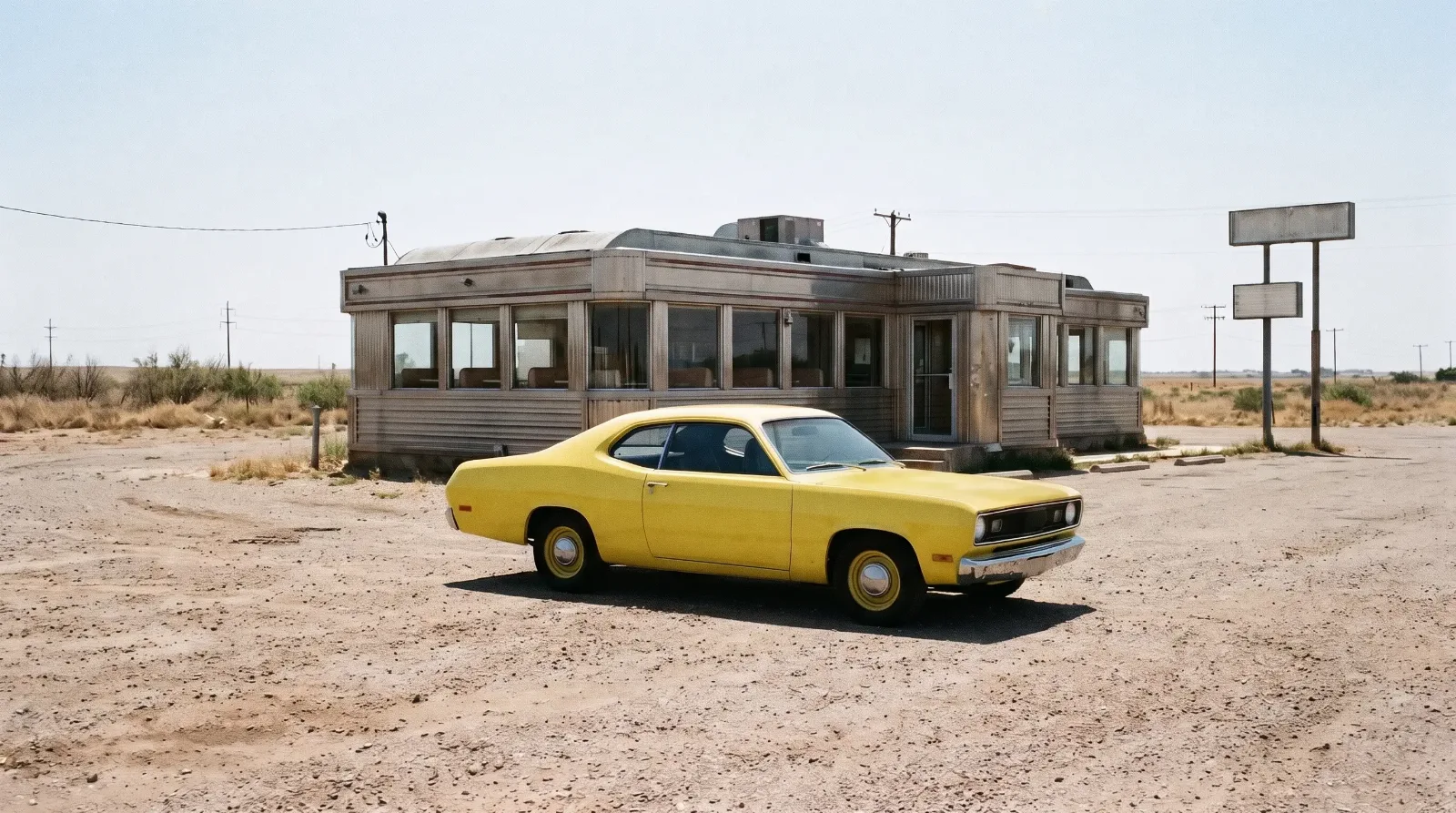
These are the bodies with the best ratio of purchase price to parts support. Asking prices for base cars swing too much with condition and region to pin to one number, so the last column says what each body brings to a build instead.
| Base car | Years | Common base engine | Hero-car sibling | What it brings to a build |
|---|---|---|---|---|
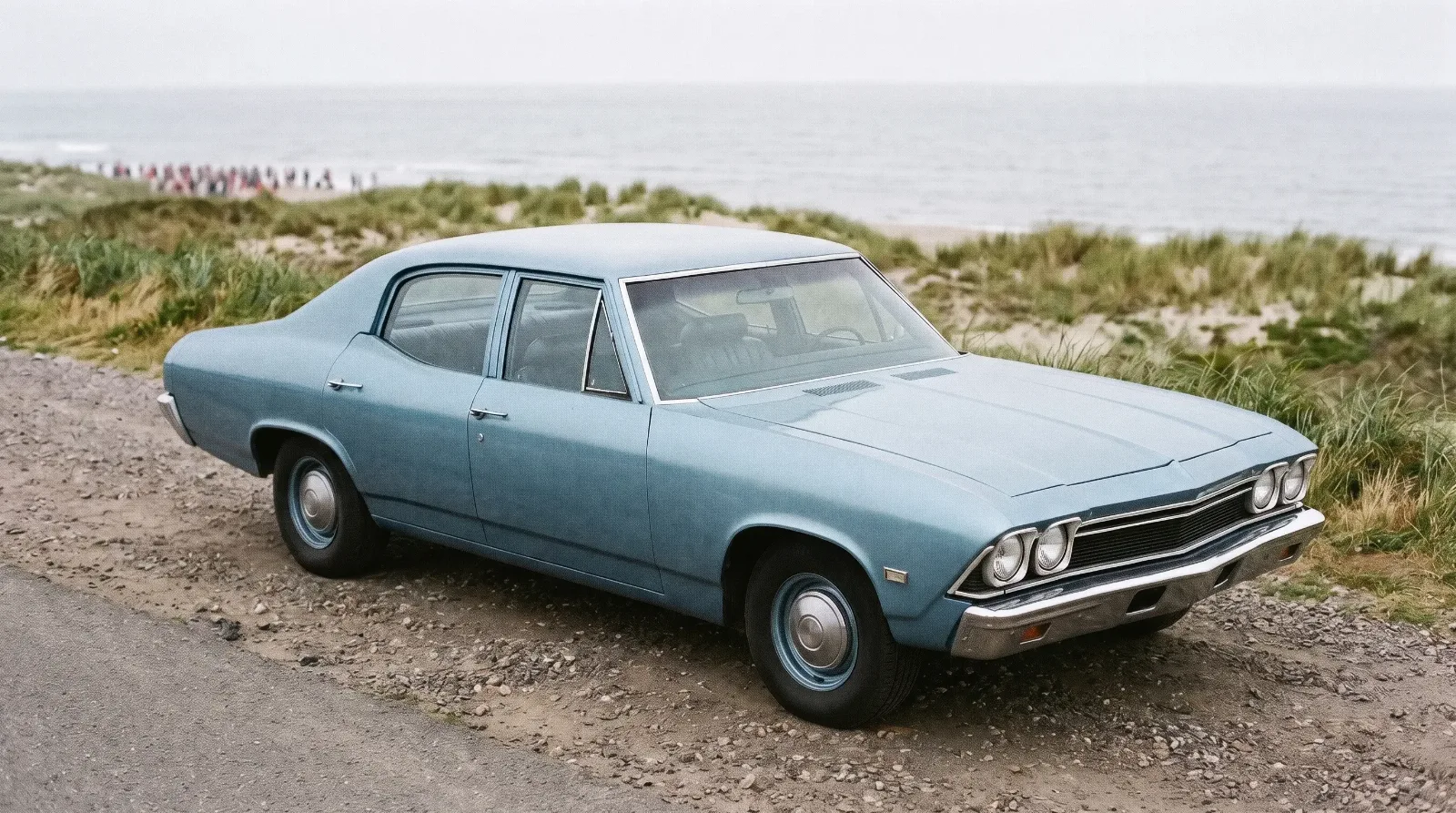
| Chevrolet Malibu two-door | 1968 to 1972 | 230 or 250 six, 307 V8 | Chevelle SS | Room for any small-block or big-block, the deepest parts catalog here |
| Chevrolet Nova two-door | 1968 to 1974 | 230 or 250 six, 307 V8 | Nova SS | Light, and shares many chassis parts with the Camaro |
| Plymouth Duster / Dodge Dart | 1970 to 1976 | 198 or 225 slant six, 318 V8 | Duster 340, Demon 340, Dart Swinger 340 | Light unibody, small-block bolts in where the six came out |
| Ford Torino / Fairlane 500 | 1968 to 1971 | 200 six (1968), 250 six (1969 on), 289 or 302 V8 | Torino GT, Cobra | Big engine bay, and the 116 in two-doors share Ford parts with the GT |
| Pontiac LeMans / Tempest two-door | 1968 to 1972 | 250 OHC six (1968 to 1969), Chevrolet 250 six (1970 on), Pontiac 350 V8 | GTO | Pontiac V8 bay, A-body chassis parts shared with the Chevelle |
The Mopar A-body and the Nova stand out. They are light, they share a parts counter with very popular performance cars, and the small-block bolts in where the six came out. The intermediates (Malibu, LeMans, Torino) have more room and more weight.
The Mopar pair also shows why the plain body wins. As of October 2026, Hagerty's price guide put a 1972 Dodge Dart two-door hardtop with the 318 at $8,000 in #3 (good) condition, while a 1972 Plymouth Duster 318 was valued at $16,700. Same platform, same engine family, twice the money for the more wanted name.
Where the budget actually goes
A base-body build is cheap at the purchase and expensive in four places, in this order.
Rust repair comes first. It is the only line that can exceed the price of the car. Floors, trunk pan, quarter panels and frame rails decide the budget before anything mechanical does.
Brakes come second. Plenty of base cars left the factory with four-wheel drums and manual steering, because front discs and power assist were extra-cost options; Chevrolet did not make front discs standard on the Chevelle until 1973. A front disc conversion is the first mechanical upgrade, not the last.
Third is the rear axle. Six-cylinder and economy cars often got a lighter axle and tall gears for fuel economy. If you add a V8 with real torque, plan on a stronger axle and a gear somewhere in the 3.23 to 3.73 range, a sensible street compromise. A Ford 9-inch or a Dana 60 costs real money; a junkyard Ford 8.8 or a Chrysler 8 3/4 is often the better value.
Engine and transmission come last on purpose. A mild small-block making around 300 real horsepower costs much less than the rest of the car combined if it is built sensibly. Spending more on engine before the body and brakes are done is how builds end up in a garage with a dust cover.
"Put a dyno sheet in the glovebox and a set of front discs on the car. Nobody cares what the fender badge used to say."
Dan Reeves
One more line item decides the total: what engine the car has when you buy it. A base V8 car costs more to buy than a base six, and it pays that difference back. The V8 car usually already has the engine mounts, the larger radiator, the V8 rear axle and sometimes the heavier springs. The six car needs all of that before the swap is done.
The numbers are simple. If a running small-block coupe costs $1,500 more than the six-cylinder version of the same car, and the swap parts (mounts, radiator, driveshaft, axle, exhaust) cost more than $1,500, buy the V8 car. Price those parts before you shop and you will usually find that they do.
The exception is when you want to keep the six. A hopped-up inline six is a cheap, honest build, and it has its own following. We cover those cars separately in our guide to six-cylinder pony cars.
Clone or tribute: say what it is
Here is the line that matters at sale time. Building a base Malibu to look like an SS is fine. Selling it as an SS is fraud. Every buyer with a decoder and a flashlight will check the VIN, the cowl tag and the engine stamping.
Call it what it is: a tribute, a resto-mod, a street build. Document the parts and the dyno results. A well-built base car with receipts sells to the right buyer for a fair price. A fake SS sells once, to an angry one.
Picking the right body is half the job. Picking a build plan you can finish is the other half, and our project car guide covers how to set that plan before you buy.
Sources and notes
- How American engines lost horsepower overnight in the 1972 switch to SAE net (Carscoops)
- 1968 Chevelle facts, figures and specifications (Over-Drive Magazine)
- 1968 Chevrolet Nova facts, figures and specifications (Over-Drive Magazine)
- Plymouth Duster: engines and 340 ratings, gross and net (Wikipedia)
- Ford Torino: base engines 1968 to 1970 (Wikipedia)
- 1972 Dodge Dart values, Hagerty Price Guide (October 2026)
Related Reading
Have a
Classic Car
for Sale?
Reach thousands of serious classic car collectors across the US.
Sell It Here →
Selling a classic? Here's how: where to sell your classic car online
Are You a Classic Car Dealer?
List your full inventory and connect with targeted classic car buyers.
Join as a Dealer →
#affordable classic cars
#budget muscle cars
#chevrolet nova
#cheapest muscle cars to build
#muscle car build
#base model muscle car
#Plymouth Duster

About the author
Dan Reeves
Performance engine builder from North Carolina's motorsports corridor, focused on swaps, forced induction and making real, repeatable power.
More in Ownership & Lifestyle
Comments
Be the first to comment on this article.