
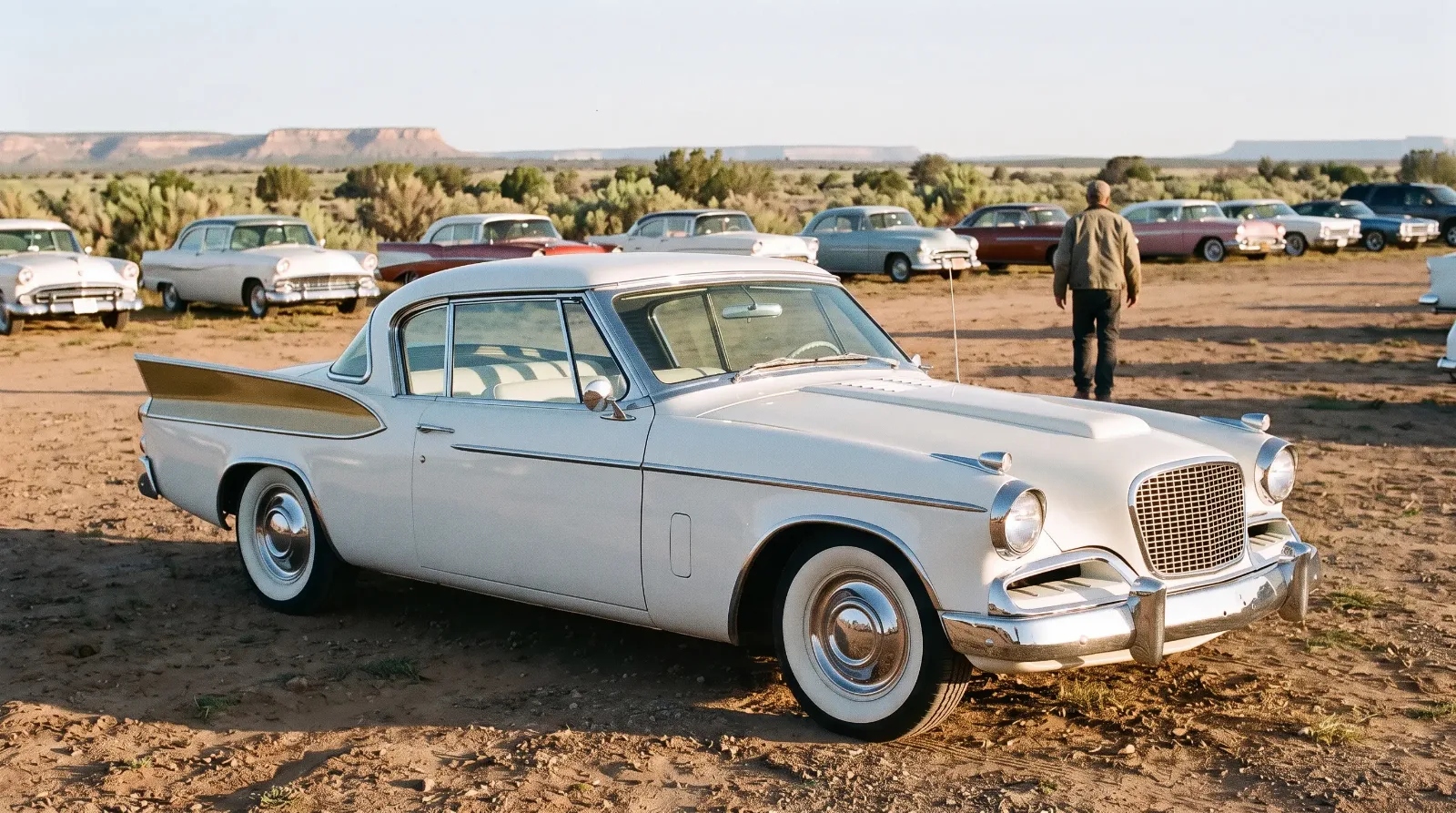
Picture two classic car dealers at a regional show, an hour before the gates open. One sells prewar American iron, the other sells British roadsters, and a customer has just asked the first one about a car only the second one stocks. A phone number changes hands, a sale happens a week later, and three months after that somebody asks the only question that matters: was there a fee, and did anybody write it down? That is a dealer to dealer referral in its plainest form. Here is how they work, how payment is structured, and where state rules limit who may be paid. For the wider picture of who pays whom, start with our dealer referral guide.
Ownership & Lifestyle
8 min read
Dealer-to-Dealer Referrals: How They Work and Where the Law Draws Lines
How a dealer to dealer referral works, the ways the referring dealer gets paid, and the state licensing rules on who may take a fee.
What a dealer to dealer referral actually is
A dealer to dealer referral is one dealer sending a buyer, a seller or a car to another dealer who is a better fit. A marque specialist gets calls about cars it will never stock; a full showroom turns away a consignment. Passing the lead on keeps the customer happy and keeps the referring dealer's name in the conversation.
What comes back to the referring dealer takes one of three shapes:
- Nothing but goodwill. The favor is returned later in kind.
- A fee. Cash or something of value tied to the referral. This is where state licensing law starts asking questions.
- Platform credit. A software vendor or trading platform pays the referring dealer in account credit or discounts when the referred dealer signs up and pays.
There is no published rate for the second shape. No published referral or finder's fee norm between collector car dealers could be found. Anyone quoting you a "standard" percentage is quoting a habit, not a rule.
How the payment can be structured
The cleanest documented examples of dealers paying dealers come from platforms and software vendors, where the terms are written down and the reward is credit rather than cash. None is a classic car program, but the mechanics carry over.
| Program | Who refers whom | What the referrer gets | Trigger |
|---|---|---|---|
| OPENLANE Europe (announced 2025-10-02) | Automotive professional refers another company | EUR 300 promo credit for both sides, valid 6 months, no cap | Referred company pays for its first vehicle |
| DealersCloud Ownership Program (read 2026-10-19) | Existing dealer customer refers another dealer | Discounts: 25% off for 1 referral, 50% for 2, 75% for 3, a free subscription for 4 or more | Referred dealer stays active; after 4 active referrals for 30 days each, 25% of each extra customer's subscription |
| autofox.ai (read 2026-10-19) | Partner refers a dealer or reseller | 20% of customer revenue in year 1, then 10% while the customer stays | A qualified lead becomes a paying customer |
In each, payment is triggered by the referred dealer paying, the terms are the same for every referrer, and the money comes from a vendor, not from a car sold to a consumer. That last point keeps these programs clear of the licensing rules below. If you want the general distinction between one-time bounties and ongoing shares, the piece on recurring commission programs covers it.
Cash between two lots is a different animal. A dealer who pays another dealer a fee for sending a buyer who then purchases a car is paying for the arrangement of a vehicle sale, and that is exactly what state dealer laws regulate.
Where the law draws lines
Federal law says little about vehicle referral fees. The states say a great deal, and they do not agree. An attorney writing in the trade press put it this way in 2011: "Most states have either laws or regulations that prohibit or regulate these fees in some manner." Some states bar a dealer from paying anyone who is not a licensed salesperson. Others treat a cash referral as brokering, which needs a license or is banned outright.
Texas is the state with the clearest written rule, so it makes a useful case study:
- Arranging a sale for a fee makes you a dealer. Under 43 Tex. Admin. Code 215.85, arranging or offering to arrange a used vehicle sale for a fee counts as acting as a dealer and needs a General Distinguishing Number (GDN), except for bona fide employees of a GDN holder. A buyer referral service that charges dealers fees needs a GDN too, unless it meets seven conditions, among them equal terms and the same periodic fee for all dealers, no per-referral or transaction-based fees, no exclusive market area and no price setting.
- Independent dealers may pay past customers, narrowly. A licensed independent dealer may pay a referral fee, in cash or value, to an individual who bought a vehicle from that dealer within the prior four years. The fee may depend on the referred person buying, or be paid simply for sending a new prospect. The arrangement may not be used for financing.
- Not everyone gets that permission. The Texas rule does not extend to franchised, wholesale, motorcycle, house trailer, trailer or independent mobility dealers.
Texas wrote a door for a dealer paying a past retail customer. It wrote no general door for one dealer paying another per car, and shut it for wholesale dealers. Whether a fee between two licensed dealers is allowed in your state is a question for your state's dealer licensing board, not for a handshake at a car show.
The licensing threshold for being a dealer at all also varies. Kansas, for instance, treats the sale of five or more vehicles in one calendar year as prima facie evidence of being in the business, which requires a dealer license unless rebutted. A restoration shop that starts taking fees for steering customers' cars to dealers can drift into that territory without noticing. The business side of a shop is covered in the full guide.
These rules vary by state and change over time. Confirm with your state's motor vehicle or dealer licensing agency, and with your attorney or accountant, before you pay or accept any referral fee. This is not legal advice.
Put the dealer to dealer referral in writing
Dealers who trade referrals for years tend to collect a story about a fee nobody remembered agreeing to. The cure is a single page, signed before the customer ever calls.
"The handshake is the part everybody remembers. The receipt is the part that settles the argument, and the argument always comes."
Wayne Coburn
Retail referral programs show what a clean page looks like. One used luxury dealer in Maryland, for example, requires the referral to be registered before the friend contacts the dealer, pays one check per vehicle, and mails it within 30 days after the purchase. Borrow the structure, not the dollar amount:
Referring a dealer to a platform instead
There is a second kind of dealer to dealer referral that avoids the per-car question altogether: sending a fellow dealer to a listing platform and being paid by the platform. Our partner program works this way. As of 2026-10-19, a partner earns 20% of a referred dealer's subscription payments for the dealer's first 12 months, with yearly plans also earning 20%, prorated to the months left in that window. The attribution cookie lasts 60 days, each commission is confirmed 30 days after the sale, and a payout can be requested by PayPal once the confirmed balance reaches $50.
For example, using the plan prices shown on 2026-10-19: a referred dealer on the $299 a month Dealer Pro plan produces $59.80 a month for the referrer, and at most $717.60 over the 12 months if the dealer pays every month. That is arithmetic on published figures, not a forecast.
The exclusions matter. Privately negotiated dealer offers earn no commission, nor do the Ad-Free subscription or payments under $5. You cannot refer yourself or your own business, and a refund or chargeback removes the commission. If you share a partner link with another dealer, disclose that you earn a commission on it, as the FTC requires. The step by step of how such links are tracked and paid is in the details.
The platform pays for a subscription, not for arranging a vehicle sale. Whether you keep trading favors across the show field or put the arrangement on paper, write down who sent whom, and when.
Sources and notes
- 43 Tex. Admin. Code 215.85, brokering and referral fees (Cornell LII, last amended effective 2024-06-01)
- Attorney Tom Hudson on bird-dog referral fees, Auto Dealer Today, 2011-02-23
- Kansas K.A.R. 92-50-42, five-vehicle dealer presumption (Cornell LII)
- OPENLANE Europe dealer referral offer, announced 2025-10-02
- DealersCloud partner and Ownership programs, read 2026-10-19
- Classic Cars Arena partner program terms and dealer plan prices, read 2026-10-19
Related Reading

Have a
Classic Car
for Sale?
Reach thousands of serious classic car collectors across the US.
Sell It Here →
Selling a classic? Here's how: sell my classic car
Are You a Classic Car Dealer?
List your full inventory and connect with targeted classic car buyers.
Join as a Dealer →
#classic car dealers
#dealer licensing
#referral income
#referral fees
#bird dog fees
#dealer to dealer referral

About the author
Wayne Coburn
Longtime Corvette owner, judge and club figure who knows the cars, the records and the people behind them.
More in Ownership & Lifestyle
Comments
Be the first to comment on this article.