
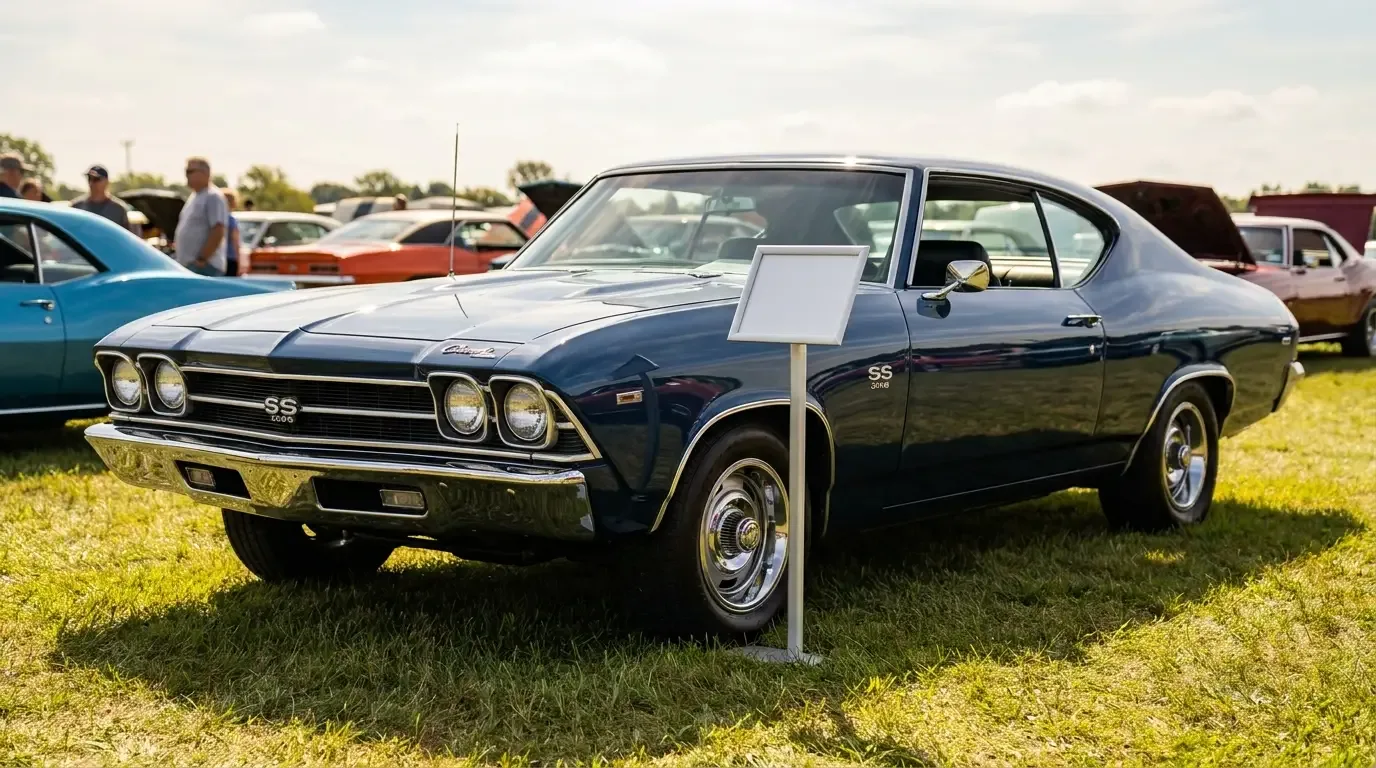
A real SS396 and a clone built from a base Malibu can look identical from ten feet away. Same stripes, same badges, same hood, same wheels. The difference lives in the paperwork and the numbers stamped into the metal, and that difference is worth tens of thousands of dollars depending on the year and configuration. I have spent enough time cross-referencing trim tags against build sheets to know that most disputes in this hobby are not really about opinion. They are about which piece of documentation someone is choosing to trust, and which piece they are choosing to ignore.
Market & Values
7 min read
Clone vs Real: The Chevelle SS Value Divide
How to verify a real factory SS Chevelle against a clone using cowl tags and casting numbers, and why the value gap is so large.
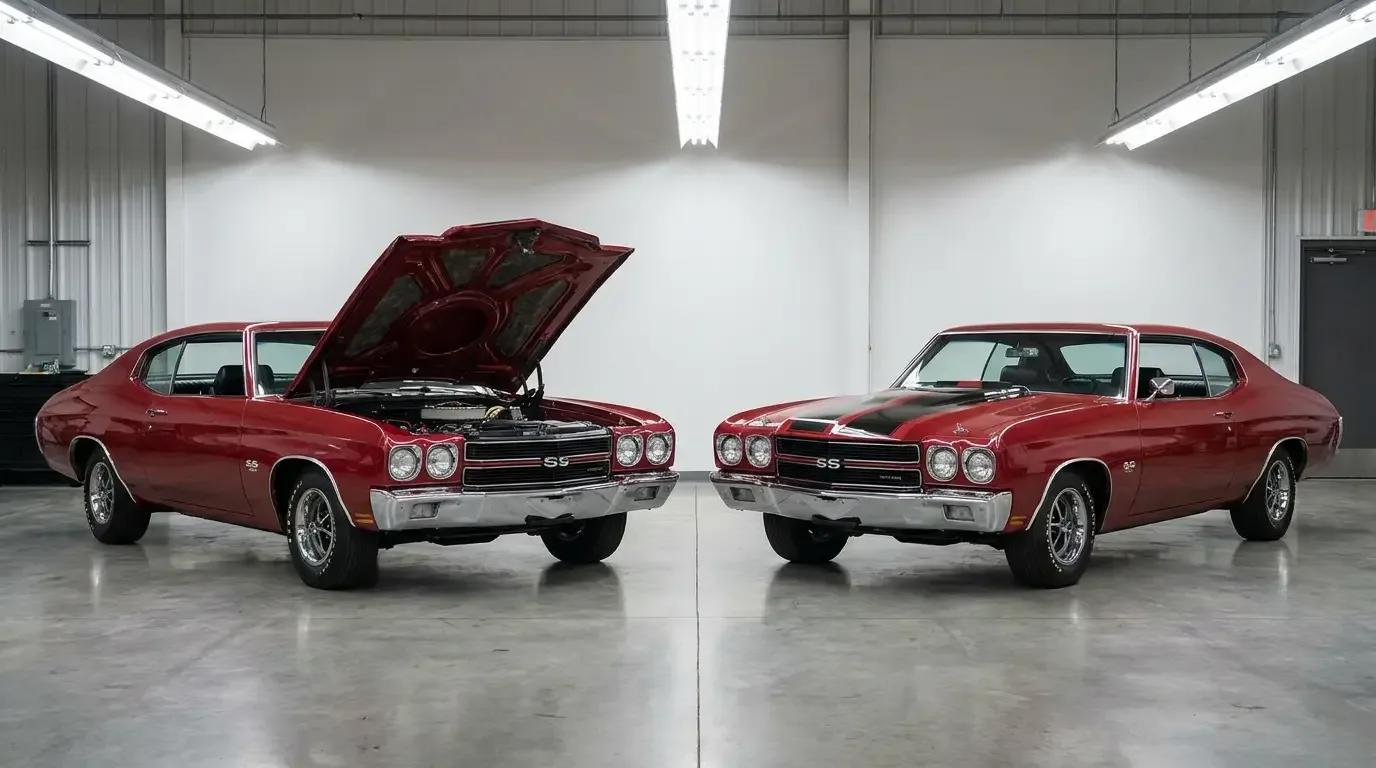
The gap between a documented real SS and a well-executed clone is not a small percentage. Depending on the model year and the specific option combination, a verified factory SS can bring double what an identical-looking clone brings, sometimes more for the rarest combinations. That is not the market being sentimental. It reflects genuine scarcity. Chevrolet built plenty of SS-package Chevelles, but they built vastly more standard Malibus and Chevelle 300s, and any of those base cars can be dressed to match an SS with parts that are, frankly, not hard to source.
How to actually verify the car in front of you
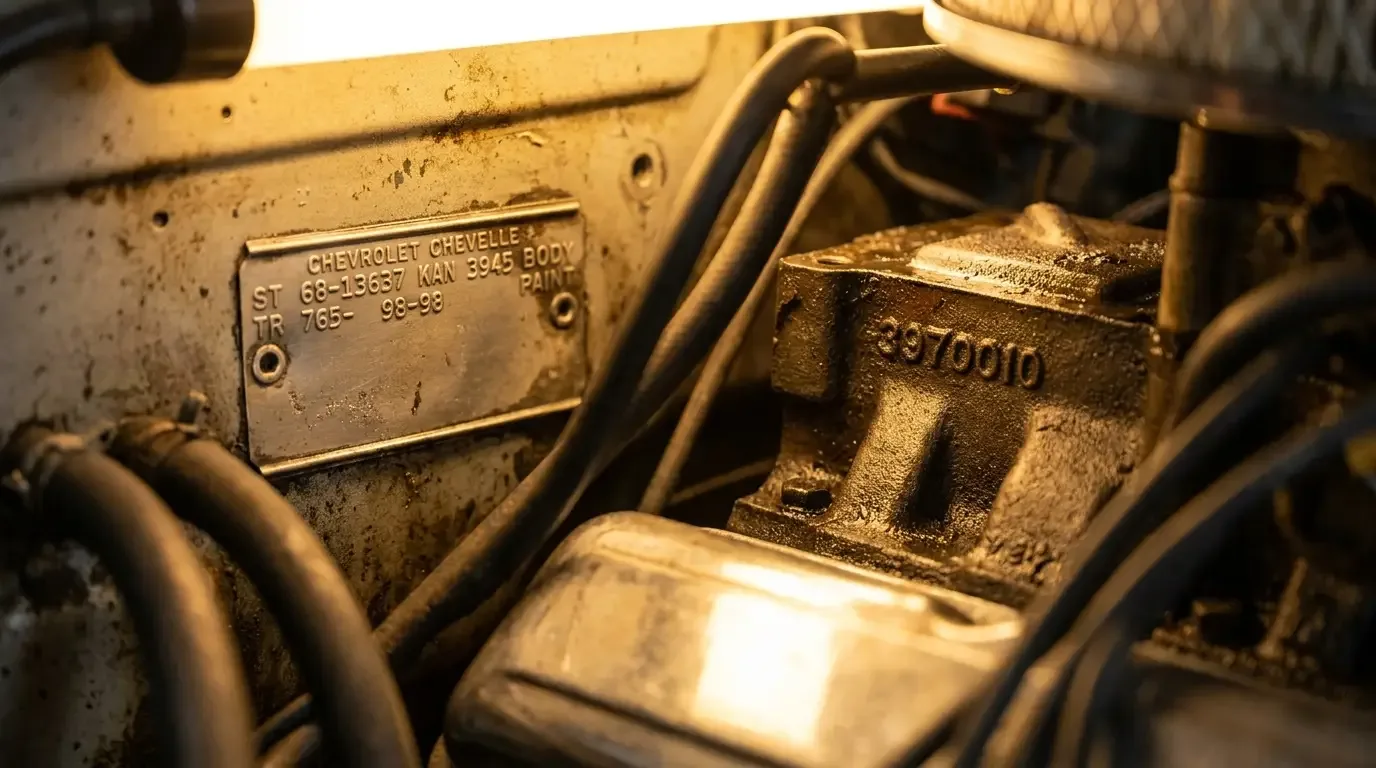
Start with the cowl tag, mounted on the firewall or cowl panel depending on the year. It lists the style number, which tells you the body configuration Chevrolet assigned at the factory, the trim combination, and the build date. Through 1968, the SS396 was its own series with a style number distinct from a standard Malibu, so a mismatched cowl tag ends the argument on the spot. Starting in 1969, Chevrolet folded the SS into an option package rather than a separate series, and the cowl tag alone will not tell you whether the car left the factory as an SS. For those later years the drivetrain casting numbers and, ideally, a surviving build sheet carry more weight than the cowl tag by itself.
From there, casting numbers on the engine block, cylinder heads, and intake manifold tell you whether the drivetrain currently in the car matches what Chevrolet would have installed for that build combination and date range. A block with a casting date months after the car's build date is either a service replacement, which happens and is not automatically disqualifying if documented as a warranty swap, or a later substitution that breaks the numbers-matching claim entirely. Neither of those is a moral failing on the current owner's part. It is simply a fact that changes the value conversation, and pretending otherwise does not help anyone at the point of sale.
Where clones come from, and why that matters
Most clones were not built to deceive anyone. A huge share started as enthusiast projects in the 1980s and 1990s, when a rough standard Chevelle was cheap and an SS badge kit cost a few hundred dollars. Someone wanted the look and the performance without paying SS prices, and at the time nobody expected these cars to become six-figure collectibles. The deception problem shows up later, when that history gets lost or deliberately obscured as the car changes hands, and a clone gets represented, intentionally or through simple ignorance, as an original SS.
"I've had owners get angry at me for what a cowl tag says. I understand it. Nobody wants to hear that the car they've loved for twenty years isn't what they thought. But the tag doesn't have an opinion. It just has a style number."
Tom Ramirez
I do not think less of a well-built clone as a driver. Some of them are better cars mechanically than tired originals that have been through three amateur restorations. What I object to is a clone priced and sold as documented original, because that misrepresentation costs the buyer real money and erodes trust across the whole market. A clone, honestly represented as a clone, has its own healthy market at its own honest price point.
| Verification point | What it confirms |
|---|---|
| Cowl tag style number | Whether the car left the factory as an SS-package build or a standard series |
| Engine block casting number and date | Whether the drivetrain is original to the build or a later replacement |
| Build sheet (if surviving) | Corroborates cowl tag data with option-level detail, when it matches |
| Dealer invoice / Protect-O-Plate | Ties the documented build to a specific delivery and original owner |
| VIN derivative digits | Confirms series and body style consistent with the cowl tag claim |
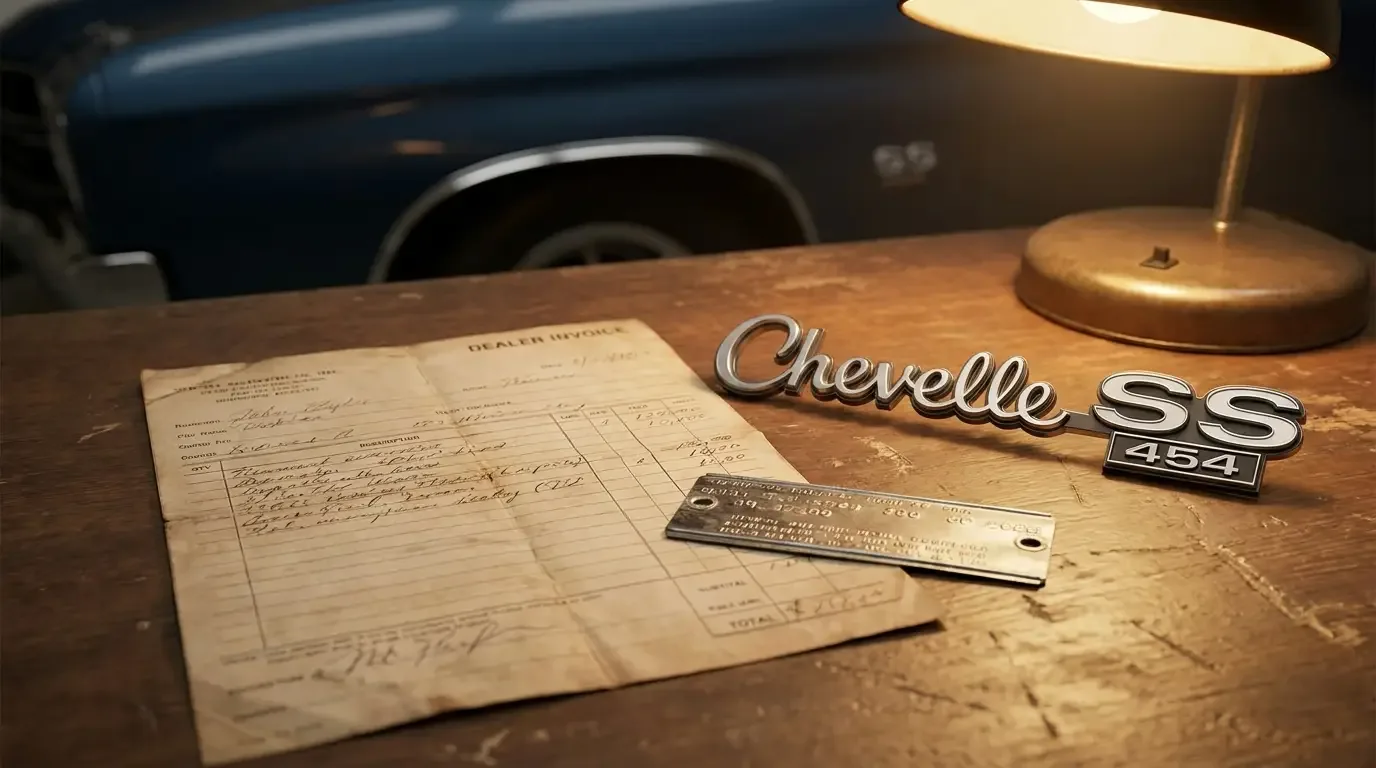
I would rather see all four or five of these line up than rely on any single one. I have seen build sheets that were swapped between cars over the decades, sold at swap meets to whoever wanted the story more than the truth. A build sheet alone, unsupported by the cowl tag, is not proof. It is a claim.
What happens when a clone gets exposed at sale time
I have watched deals collapse in the final week over exactly this issue. A buyer sends a pre-purchase inspection report to a marque specialist, the specialist requests cowl tag photos, and the style number does not match the claimed build. At that point the seller usually has three options: renegotiate the price down to clone territory, disclose everything and let the buyer decide, or walk away from the deal and try again with a less careful buyer. None of these are good outcomes, and all of them are avoidable if the car had been correctly represented from the start.
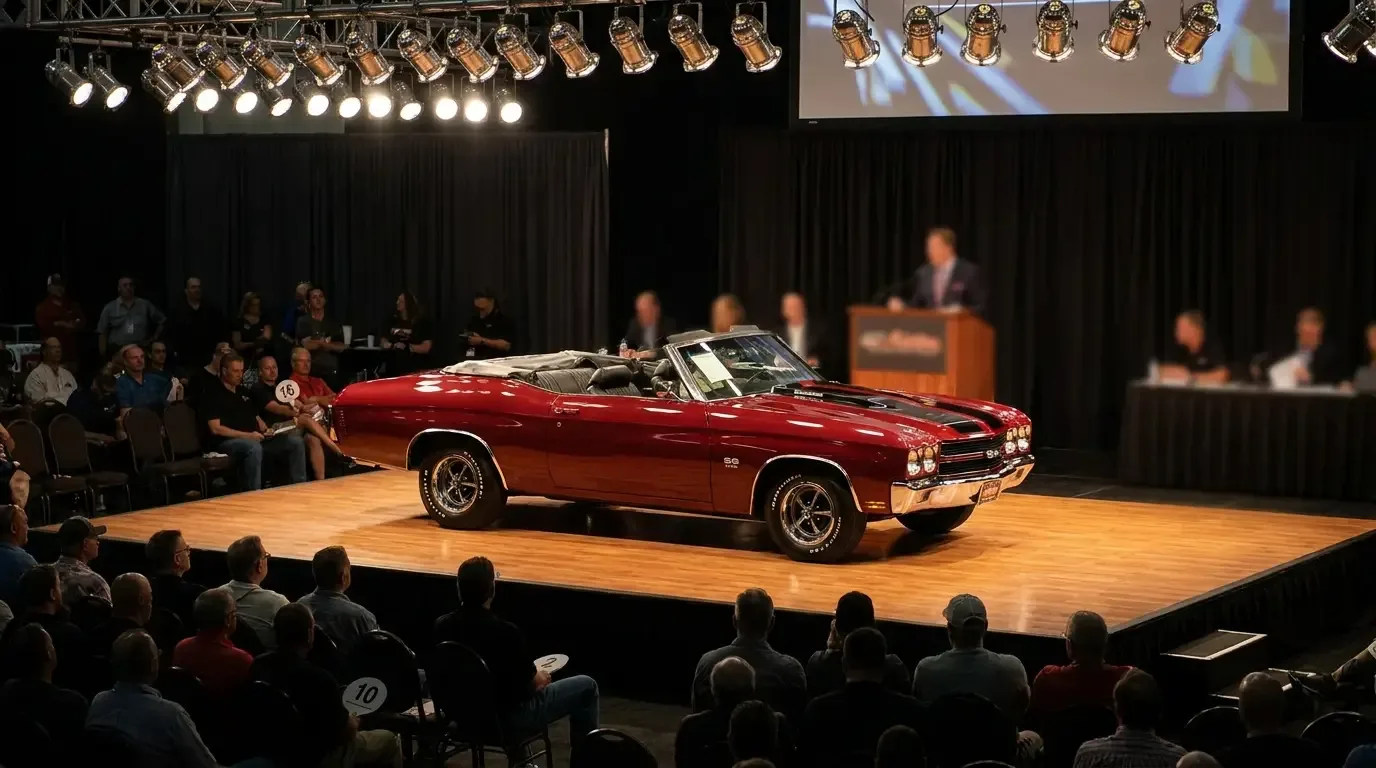
Sellers who misrepresent a clone as original, even unintentionally through inherited bad information, expose themselves to more than a lost sale. A documented pattern of misrepresentation, even across a single transaction, damages a seller's standing with the specialist community that tends to talk to each other before a big auction season. I have seen consignors turned away from a marquee sale slot over a documentation dispute that surfaced during due diligence on a previous car. The hobby is smaller than it looks from the outside, and reputation compounds the same way documentation does.
What this means for value at every tier
The value divide is not binary between "real" and "fake." There is a documented, numbers-matching original at the top. Below that, a documented original with a period-correct but non-original drivetrain, still legitimately an SS by build but not numbers-matching, which brings less than a matching-numbers car but more than a clone. Below that, an honestly disclosed clone with quality workmanship. At the bottom, a clone misrepresented as original, which is worth the least once the truth comes out, because the discovery itself damages trust in everything else the seller has claimed. Buyers pay for certainty as much as they pay for the car itself, and misrepresentation destroys certainty entirely.
This is exactly why documentation-first buying matters more in the Chevelle SS market than in almost any other muscle car segment I track. The volume of clones built over five decades means casual verification is not optional anymore. If you are shopping in this space, treat every SS badge as a claim to be checked, not a fact to be assumed, and you will save yourself from the single most common and most expensive mistake I see repeated in the collectible Chevelle world.
For the fuller picture of how the Chevelle earned this kind of scrutiny in the first place, the full Chevelle story covers the model's rise from a mid-size sedan platform to one of the most cloned muscle cars in the hobby. Once you understand what separates documentation from decoration, you can shop verified Chevelle SS listings with a much clearer sense of what you are actually paying for. And if documentation is only part of what makes a car worth pursuing, the broader criteria are covered in next: What Actually Makes a Chevelle Collectible.
Sources and notes
- SS396.com: tips to spot a real Super Sport
- Motor Junkie: how to tell if a 1967 Chevelle SS396 is real or fake
- El Camino Central: cowl tag decoding reference
- Team Chevelle forum: Chevelle SS vs SS clone discussion
- Supercars.net: 1964-1972 Chevrolet Chevelle SS production history
- Hagerty Media: Chevelle SS valuation and authentication coverage
Related Reading
Have a
Chevrolet Chevelle
for Sale?
Reach thousands of serious classic car collectors across the US.
Sell It Here →
Are You a Classic Car Dealer?
List your full inventory and connect with targeted classic car buyers.
Join as a Dealer →

About the author
Tom Ramirez
Corvette researcher and historian based in Bowling Green, Kentucky. Two decades documenting Corvette production history from original factory records.
Related Listings - Chevrolet Chevelle

Comments
Be the first to comment on this article.