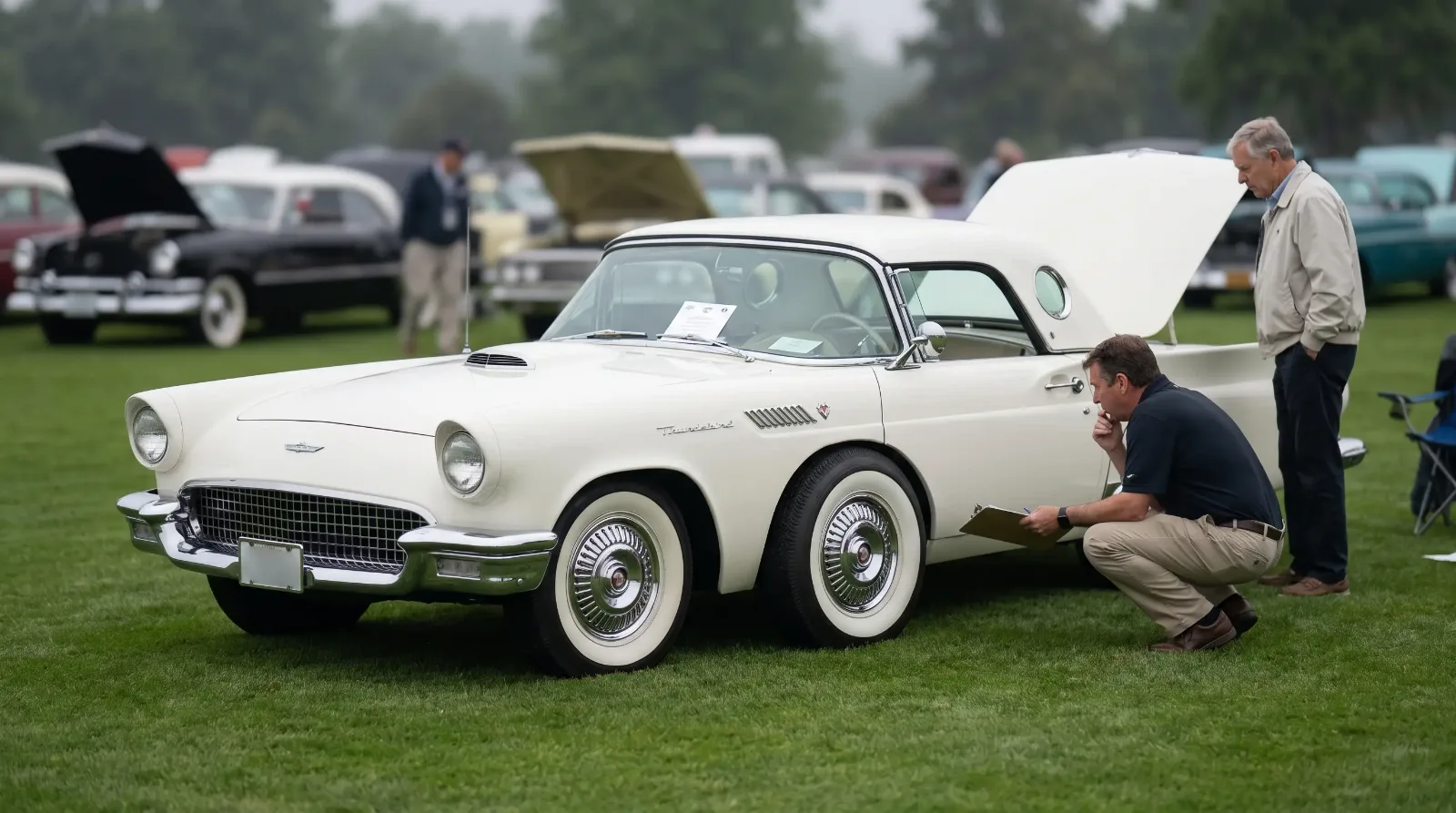
Picture a 1957 Ford Thunderbird rolling onto the field at a judged regional meet. Its owner has called it a #1 car for years, and from twenty feet away nobody would argue. Fresh paint, bright chrome, an engine bay you could eat off. Then imagine the judging sheet coming back. Wrong hose clamps, a reproduction battery with the wrong markings, a paint finish smoother than the factory ever managed, an interior fabric close to correct but not quite. Nothing a casual buyer would spot. All of it written down in somebody else's handwriting. In a scene like that, the owner drives home with a very nice #2 car and a much better sense of what the numbers mean.
That is the whole point of a classic car condition rating. It takes a word everybody uses loosely, "excellent," "mint," "show quality," and pins it to a standard a stranger can check. When you sell, that stranger is your buyer, and the grade you claim is the first thing he will test. This piece walks through the scale in more detail than a price guide has room for. For how the grade fits into setting a price, along with comps, guides and appraisals, see the main guide on this.
Where the numbers come from
The numbered scale most of the hobby uses today is the one Hagerty publishes, and most value guides and appraisers work with some version of it. Hagerty describes a #1 to #6 scale, where a lower number means better condition, and uses plus and minus signs for cars that fall between tiers. The core for running cars is #1 to #4. Below that sit #5 for project cars and #6 for parts cars, which matters if you are selling something that does not run or is missing major pieces.
Two things about the scale trip people up. First, the number describes condition, not desirability. A #3 convertible with a big engine can be worth far more than a #2 sedan of the same model, because they are priced in different markets. The grade compares a car to other examples of itself, not to everything else on the road. Second, the tiers are not evenly populated. By Hagerty's own account, based on its insurance data and in-person ratings, the vast majority of collector cars are #3 cars. If you grade yours higher, you are claiming it sits in the minority, and a buyer is entitled to ask you to show why.
Walking the car tier by tier
The definitions read cleanly on paper. Out in the driveway they get slippery, so it helps to break the car into areas and ask what each tier looks like in each one.
| Area | #1 Concours | #2 Excellent | #3 Good | #4 Fair |
|---|---|---|---|---|
| Paint and body | Correct finish and color, panel fit to factory standard or better, no visible flaws | Excellent paint, flaws only under close inspection | Looks good from a few feet away; chips, small blemishes or older paint up close | Faded, chipped or mismatched paint visible from a distance |
| Chrome and trim | Correct, flawless, properly finished | Very good, minor marks | Some pitting or dulling, may have reproduction pieces | Pitted, dented or missing pieces |
| Interior | Correct materials and patterns, like new | Clean, minimal wear | Driver wear, some non-original items | Worn or torn upholstery, cracked dash |
| Engine bay | Correct parts, finishes and markings throughout | Clean and detailed, minor deviations | Clean enough, some incorrect parts | Leaks, wrong parts, deferred maintenance |
| Function | Everything works as it did new | Everything works | Runs and drives properly, small items may not work | Drivable, but not everything works as it should |
A car takes the grade of its weakest important area, not its best one. A #2 body over a #3 interior and a #3 engine bay is a #3 car with good paint. That is the single rule owners resist most, and the one buyers apply first.
Below the core scale, a #5 is a project: it may run or not, but it needs significant work across several areas to become a usable car. A #6 is a parts car, valued for what can be taken off it rather than for what it is. Sellers sometimes grade a #5 as a "rough #4" because it starts. Starting is not the test. If it needs more than ordinary repairs to drive safely, buyers will price it as a project.
The grading traps owners fall into
Most overgrading comes from a few predictable places.
Fresh paint. A recent repaint makes a car look a full tier better than it is from the curb. Buyers who know the scale walk past the paint and look at chrome, gaps, rubber seals, the trunk floor and the underside. If those tell a #3 story, the paint does not change it.
Restored versus correct. "Fully restored" says money was spent. It does not say the work matches factory specification. Upper tiers depend on correctness: the right fasteners, finishes, markings and materials. A nicely restored car with modern parts and an off-pattern interior can top out at #3 no matter how clean it is.
Originality confusion. An unrestored car with honest wear may grade #3 on condition while still drawing a strong price as a survivor. Do not inflate the grade to capture that premium. Grade it accurately and sell the originality separately, with documentation to back it up.
The function blind spot. Owners stop noticing a dead clock, a sticky window or a gauge that reads wrong. Buyers notice all of them in the first ten minutes, and each one argues for the lower tier.
"Every car sounds like a #2 when the owner is telling the story. The grade is whatever's left after somebody else reads the sheet."
— Wayne Coburn
How to grade your own car honestly
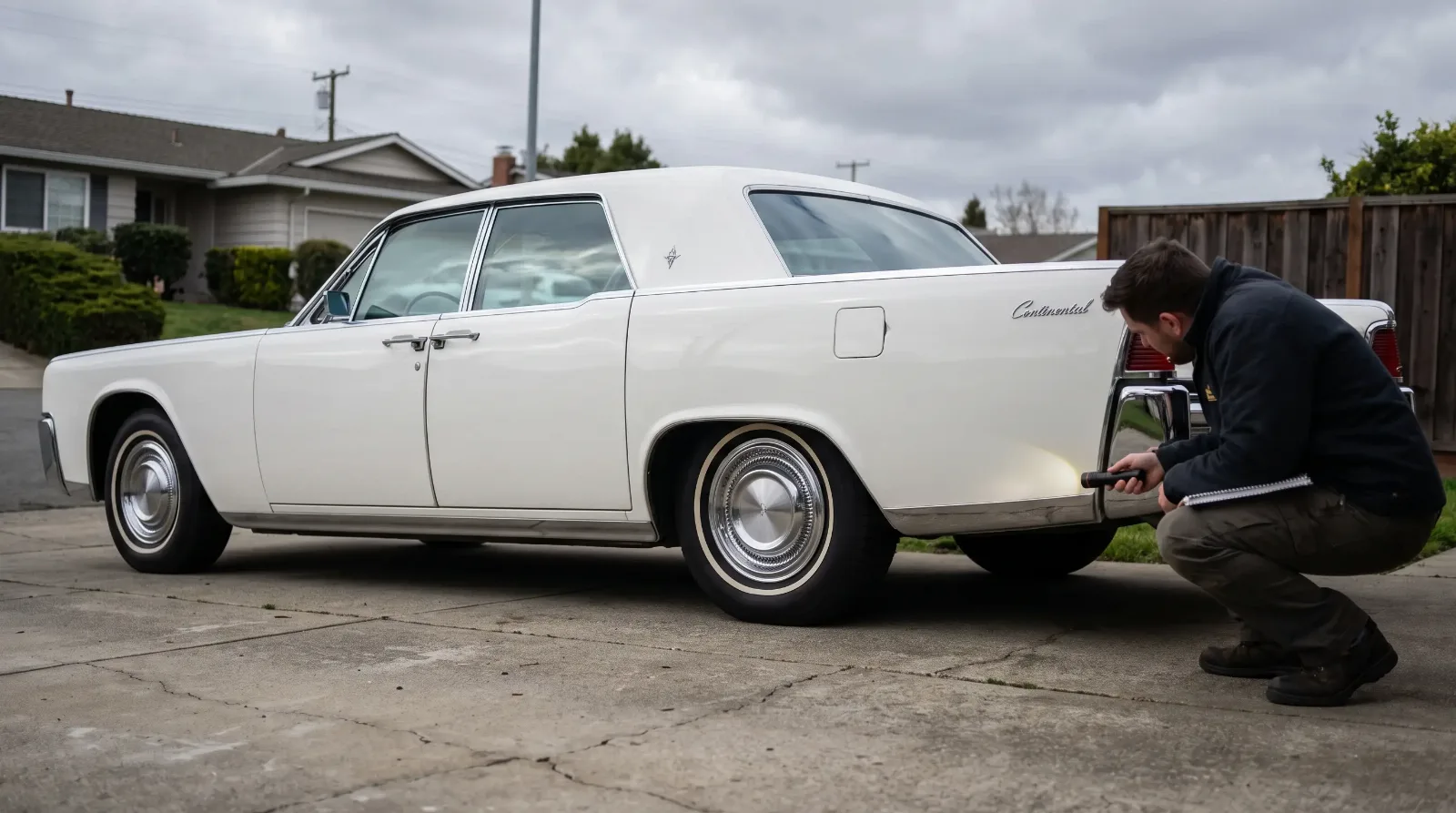
Do it in daylight, outside, with the car washed but not freshly detailed. Look at it from about twenty feet, then from arm's length, then from underneath. Write down what you see in each area from the table above before you decide on a number. Owners who pick the number first and then look for evidence nearly always land a tier high.
Then get a second opinion from someone with no stake in the result. A knowledgeable club member, a marque specialist, or a shop that works on your make will do. Hand them the published definitions and ask for a grade before you share yours. Where the two disagree, take the lower one, because that is where your buyer will start.
On a rare, heavily documented or high-value car, or any car where the grade is likely to be disputed, a classic car appraisal puts the grade in writing from someone who inspected the car. That report, with photographs and the reasoning behind the grade, does more in a negotiation than any amount of description in the listing.
What the grade does to the price
The grade is the hinge every value guide turns on. Pick a tier and the guide hands you a range; move one tier and the range can shift a long way. That is why a one-tier mistake does more damage to a listing than almost any other pricing error. It also matters when you read comparable sales, because a sold price only means something once you know what condition the car that sold was actually in, and auction descriptions are not always as strict as the scale. Sorting the real comps from the misleading ones is its own skill, so see this next once you have settled on a grade.
Get the grade right and the rest of the pricing conversation goes quickly. Buyers who see an honest grade, backed by photos and paper, tend to argue about the last few hundred dollars instead of the first few thousand. Go back to that hypothetical Thunderbird. Listed honestly as a #2, with the judging sheet in the folder, it gives a buyer something better than a claim: a reason to pick up the phone.
Sources and notes
- Hagerty: What does a car's condition really look like?
- Hagerty UK: The #1 to #6 condition scale with photos for each grade
- Hagerty Valuation Tools: the collector resource for vehicle values
- J.D. Power: Classic, Collectible, Exotic and Muscle Car Appraisal Guide
- J.D. Power Values: vehicle valuation guides