
The DIY vs professional classic car restoration question gets answered wrong more often than any other decision in this hobby. People answer it with pride, or with a budget spreadsheet, when they should answer it with an honest look at the car and their own skills. A luxury marque is not a small-block Chevy. The systems are more complex, the parts are harder to find, and the finish standard is higher. Some of it you can do in your own garage. A good chunk of it you cannot, and pretending otherwise is how a car sits half-apart for six years.
Market & Values
6 min read
DIY vs Professional Shop: The Restoration Decision for Luxury Marques
DIY vs professional classic car restoration for luxury marques, what you can do at home, what needs a shop, and the hybrid split that saves the most money.
I have pulled apart enough of these to tell you where the line usually falls. The mechanical and disassembly work rewards a patient owner. The specialist trades, the plating, the wood, the leather, the final paint, are where amateurs bleed money and time. If you have worked through restoring and collecting a classic luxury car, this is where you decide how much of it you actually do yourself.
What you can realistically do yourself
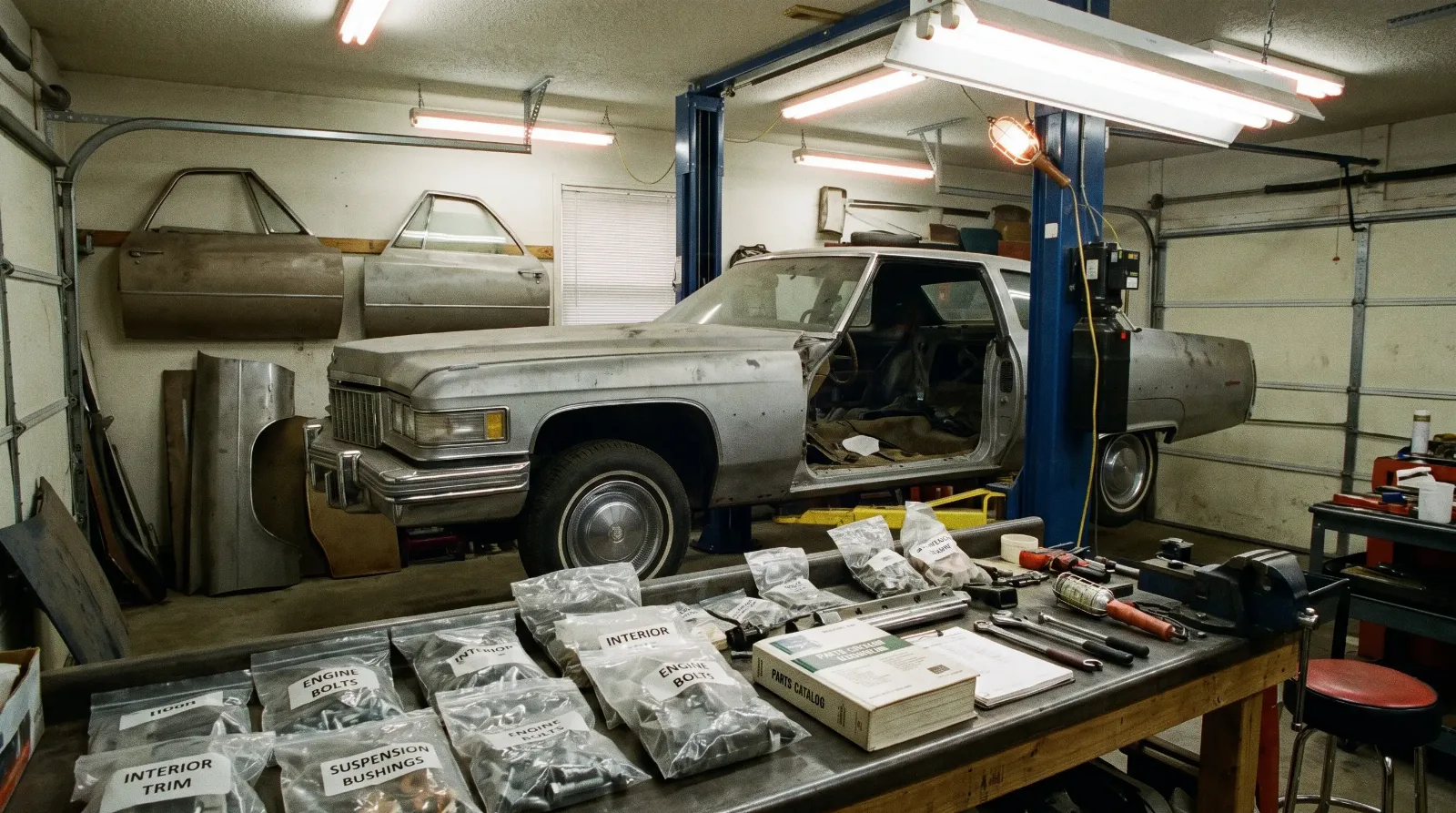
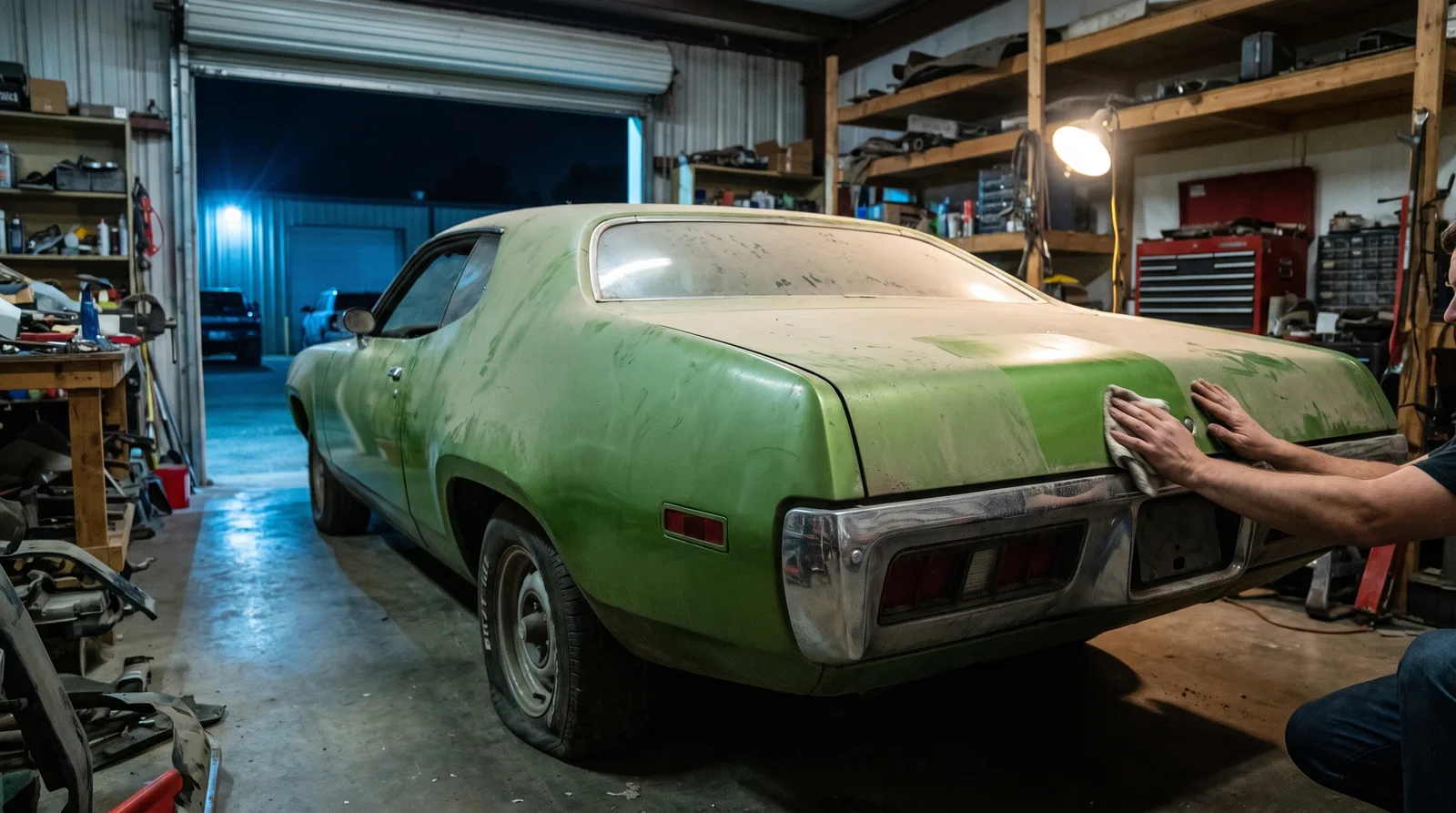
Plenty, if you are honest about your skill and your space. Disassembly is the biggest one. Carefully taking a car apart, bagging and labeling every fastener, photographing every connection, and cataloging what needs to be rebuilt is real work with real value, and a shop charges by the hour to do exactly that. Do it right and you save money and you learn the car. Do it sloppy and you hand the shop a box of mystery parts, which costs you more, not less.
Mechanical work is the other honest DIY zone for a lot of owners. Brakes, suspension, fuel and cooling, general engine service, all of it is doable with a manual, the right tools, and patience. Interior removal, trim cataloging, cleaning, and small repairs sit here too. What all of this shares is that a mistake is recoverable. You can redo a brake job. You cannot un-burn a set of leather hides you tried to dye in the garage.
What belongs in a professional shop
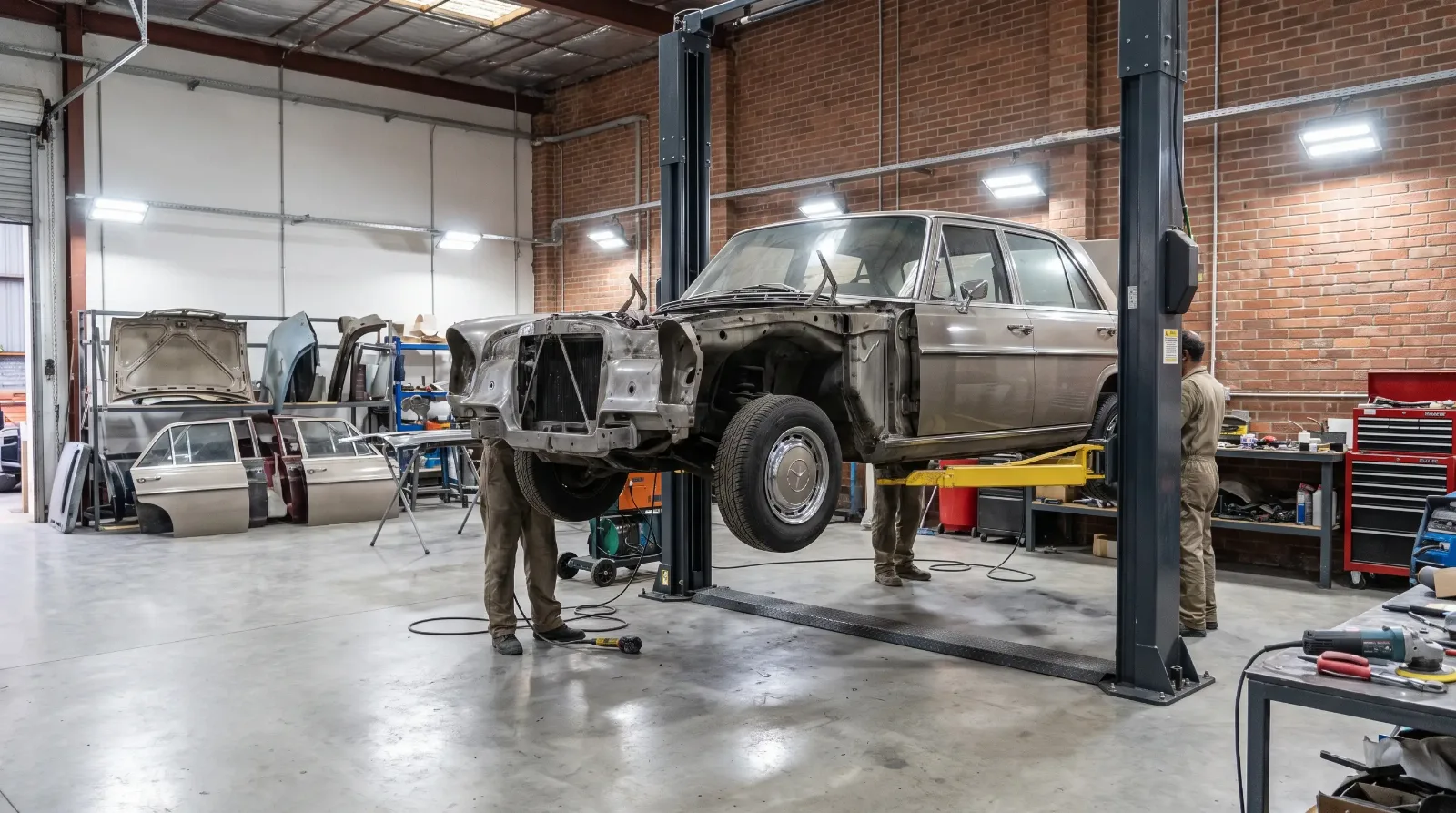
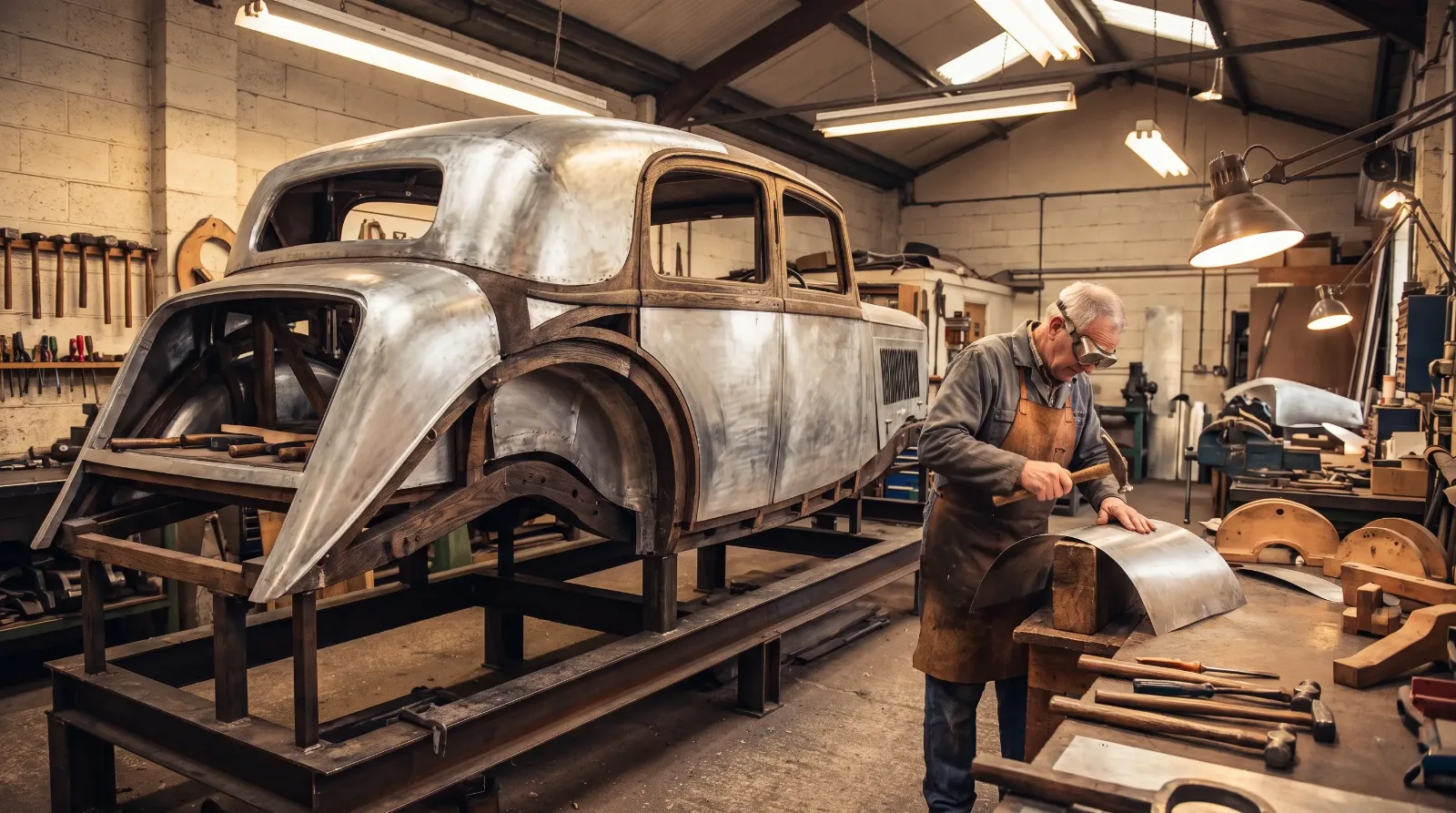
Here is the part people do not want to hear. The trades that make a luxury car look like a luxury car are specialist work, and the equipment and skill to do them are not sitting in your garage. Chrome replating needs a plating shop with tanks and permits. You are not doing that at home, full stop. Final paint on a luxury classic needs a booth and a painter who has laid a lot of it, because the panels are big and the standard is unforgiving. Wood veneer restoration and the leather work on a proper interior are craft trades with their own long apprenticeships.
The complex systems are the other professional zone. Self-leveling and hydraulic suspension, the electrical on a heavily optioned car, and any machine work on the engine belong with someone who knows the marque. These systems are expensive to get wrong and expensive to fix twice. The money you save doing the brakes yourself disappears fast if you cook a hydraulic system learning on the car.
🔧 Inspection Priorities
- Be honest about the metal. If the car needs structural rust repair or panel fabrication, that is professional work. Bad metal hidden under filler by an amateur is the most expensive mistake in the whole project.
- Check your own space and tools. No booth means no final paint. No lift means the underside work is miserable and slow. Match the job list to what you actually have.
- Price the specialist trades first. Get real quotes on chrome, paint, wood, and interior before you start. These fixed costs decide whether the whole project makes sense.
- Watch the hidden systems. Hydraulics and complex electrics are where DIY confidence gets expensive. If you are not sure, that is your answer.
The hybrid approach most owners land on
The smart money is almost never all-DIY or all-shop. It is a split. You do the disassembly, the cataloging, the mechanical work, and the reassembly of everything you are qualified to touch, and you farm out the plating, the paint, the wood, the leather, and the systems you have no business learning on. That mix can cut a restoration budget hard without cutting the quality, because you are only paying shop rates for the hours that genuinely need a specialist.
It only works if the trades hand off clean. A painter does not want your bodywork if it is wrong under the primer. A plater does not want pot metal you have already buggered trying to polish. Do your part to their standard or do not do it, because a shop redoing your work costs more than if you had never touched it. Before you commit to any of this, look at what finished cars trade for by browsing current classic luxury cars for sale, because that number tells you how much restoration the car can carry before you are upside down. For the background on why these marques justify the effort, read the complete classic luxury car story.
"Do the work you can recover from and pay for the work you cannot. Brakes, suspension, taking it apart, that is yours. Chrome, paint, wood, and the hydraulics, that is somebody who does it every day. The guys who blow the budget are the ones who tried to save money on the one thing that needed a pro, and then paid twice to fix it."
Mike Sullivan
Making the call for your car
The decision is not about how handy you are. It is about matching each job to the right hands and knowing which mistakes you can walk back. A patient owner with a garage and a manual can carry a big share of a restoration and save real money doing it. That same owner trying to plate his own bumpers or spray his own topcoat is going to end up paying a shop to fix it anyway. Split the work along the line of what is recoverable, and the car comes out right without the budget running away from you. Once the car is done, the long game is holding its value, so continue with next: Originality, Value, and the Long-Term Cost of Ownership After Restoration.
Related Reading
Have a
Classic Car
for Sale?
Reach thousands of serious classic car collectors across the US.
Sell It Here →
Are You a Classic Car Dealer?
List your full inventory and connect with targeted classic car buyers.
Join as a Dealer →
#Restoration
#restoration cost
#DIY restoration
#classic luxury cars
#restoration shop
#luxury marques

About the author
Mike Sullivan
Detroit-area muscle car enthusiast and restoration specialist with three decades of hands-on experience working on American iron.
Comments
Be the first to comment on this article.