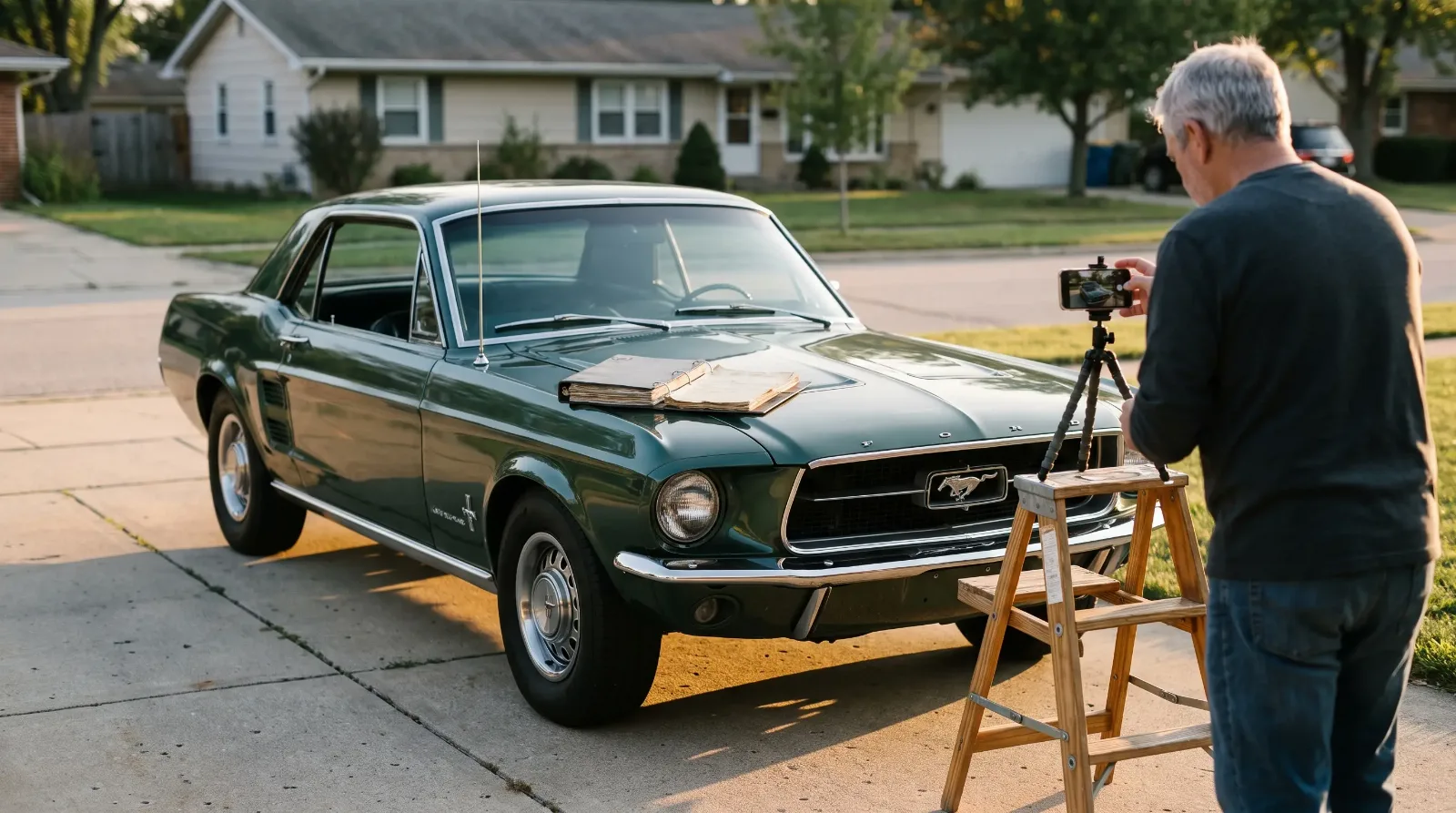
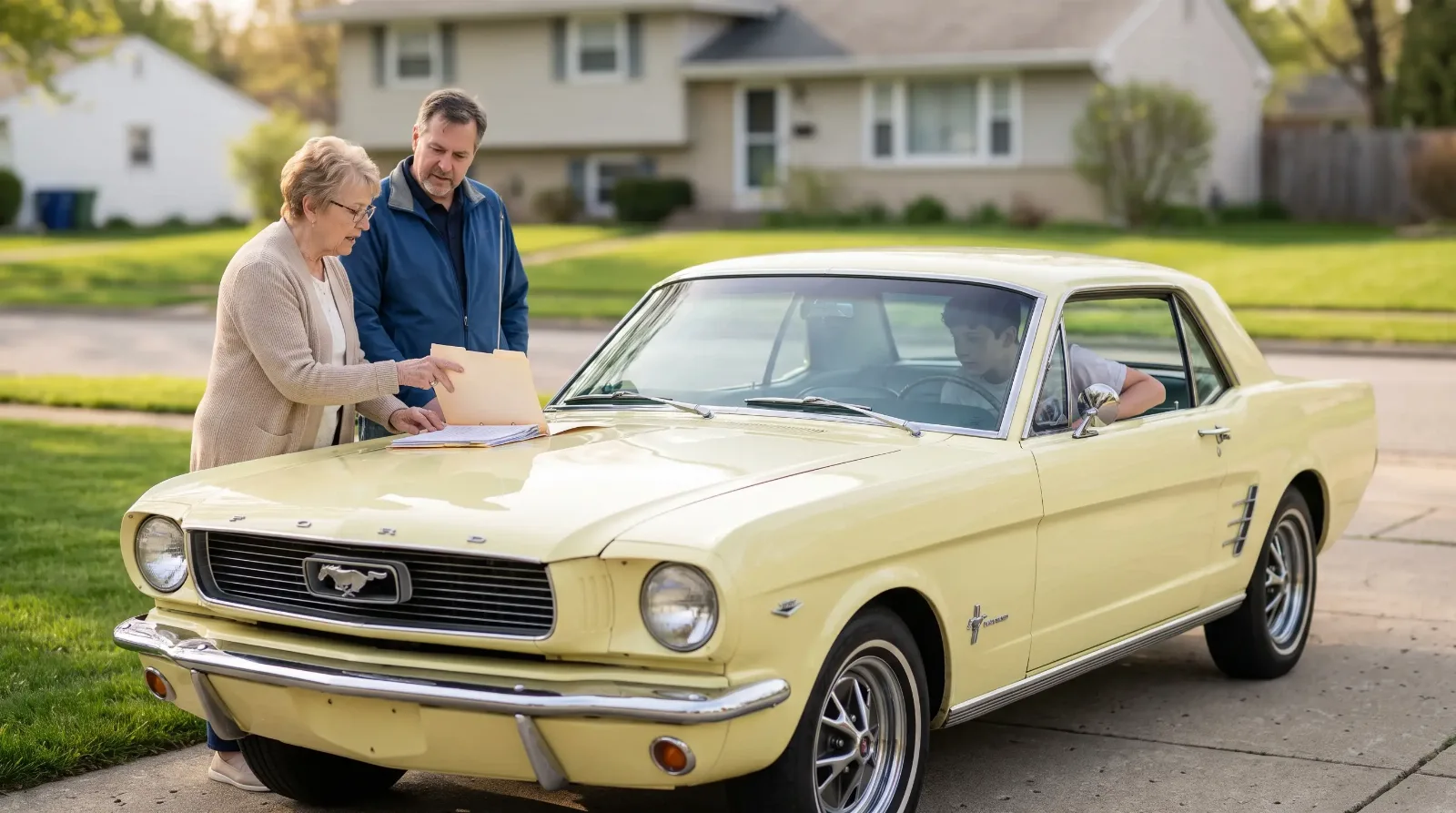
The buyer showed up on a Saturday morning in a rented pickup with his teenage son riding shotgun. The seller, a retired schoolteacher, had owned the 1966 Ford Mustang coupe for twenty-six years. She walked them around it, opened the folder of receipts on the hood, and told them about the time the temperature gauge started climbing halfway through a trip to the coast. The son asked if he could sit in it. Forty minutes later they were shaking hands on a price within a few hundred dollars of what she had asked, and she was explaining which key worked the trunk.
That is a private sale at its best. No auctioneer, no commission, no dealer's margin, just two people and a car. It is also the version people remember, and it leaves out the eleven phone calls that went nowhere, the man who offered half the price by text at midnight, and the "buyer" who wanted to send a cashier's check for more than the asking price. A private sale classic car deal can be the most rewarding way to sell, and it can also be the most tiring. Here are both sides, told straight.
What a private sale actually gives you
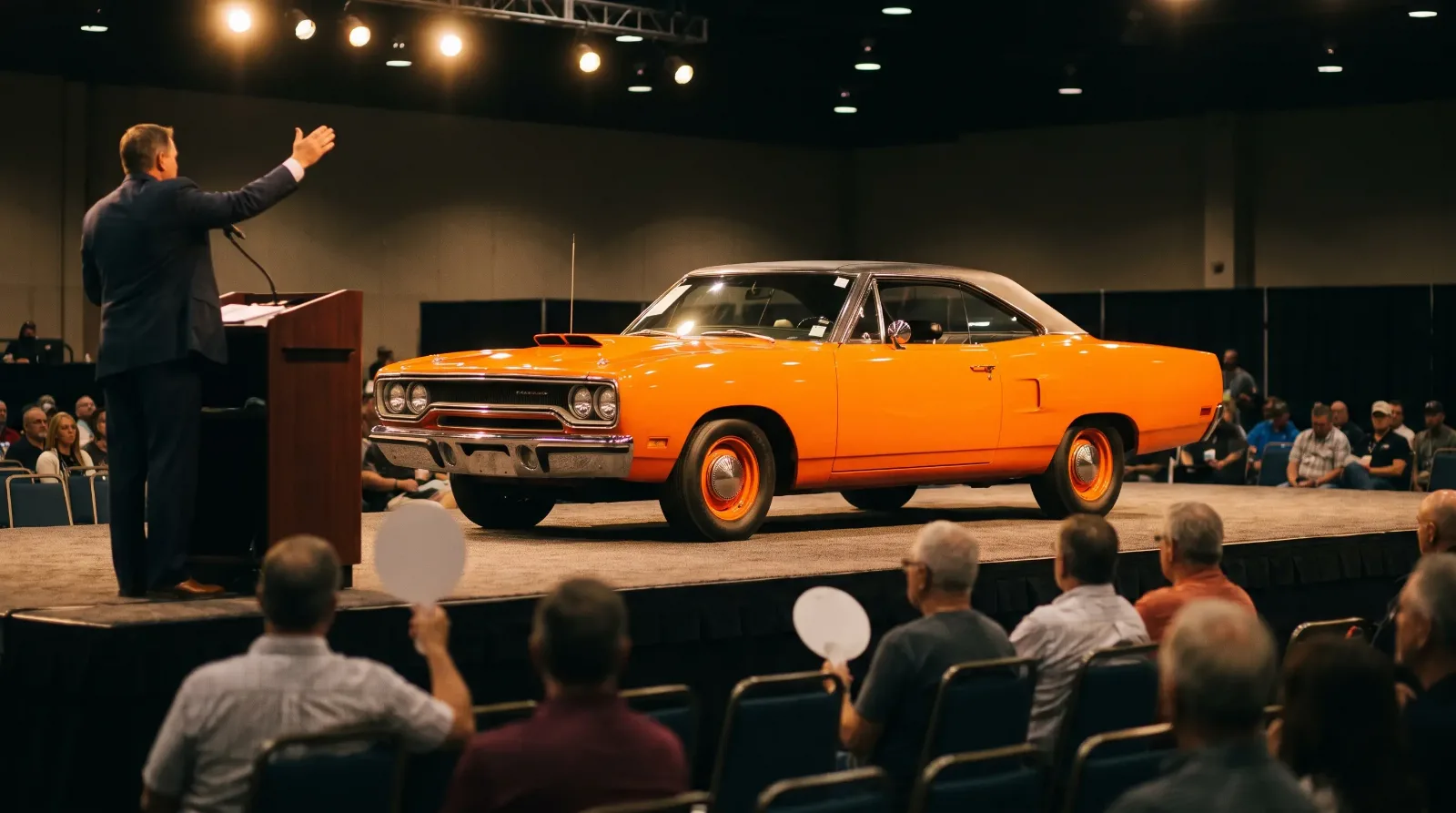
The first advantage is the simplest one: money. When you sell directly, nobody takes a percentage of the price. Your costs are the listing fee, a good detail, and maybe an inspection report from an independent shop. Compare that with a live auction, where Mecum, for example, charges a 6% seller's commission at no reserve or 10% with a reserve on top of an entry fee, or with consignment, where a dealer commonly keeps something like 5% to 15% of the sale price or a flat fee. On a $40,000 car, that gap can buy a lot of gas.
The second advantage is control. You set the price. You decide who comes to look, when, and whether they get to drive it. You can turn down an offer without paying a no-sale fee, and you can wait for the right buyer instead of accepting whatever the room gives you on a slow afternoon.
The third advantage gets talked about less, and it may matter most for ordinary cars. In a private sale, the story travels with the car. A buyer standing in your driveway can hear how the car was kept, see where it lived, and ask what you would fix next. For a clean driver without a thick file of factory documents, that conversation often does more for the price than any catalog description could. If you are still weighing private sale against auction and consignment in general terms, our guide on best way to sell classic car lays out how the three methods compare on net proceeds and effort.
The costs that never show up on an invoice
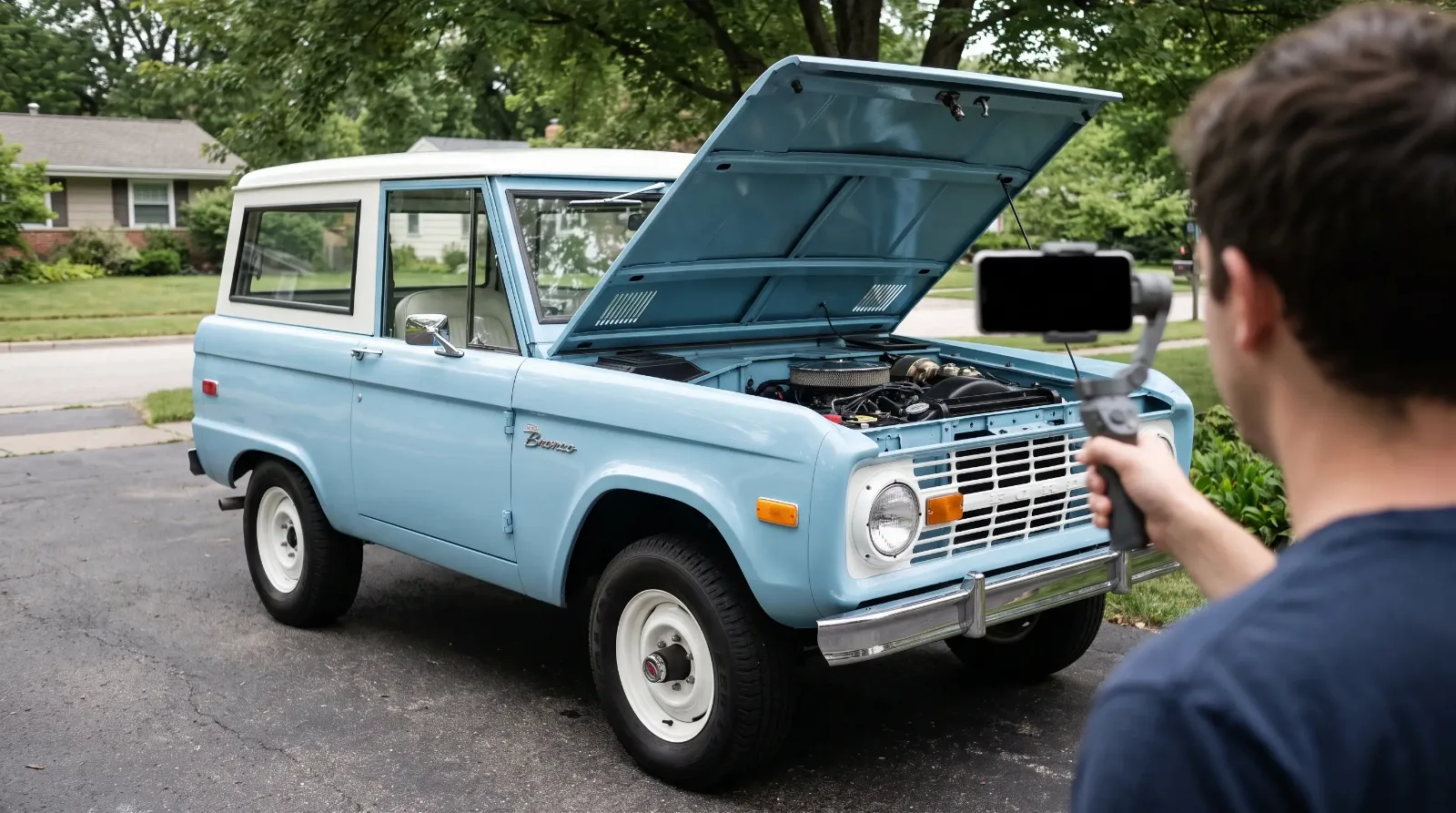
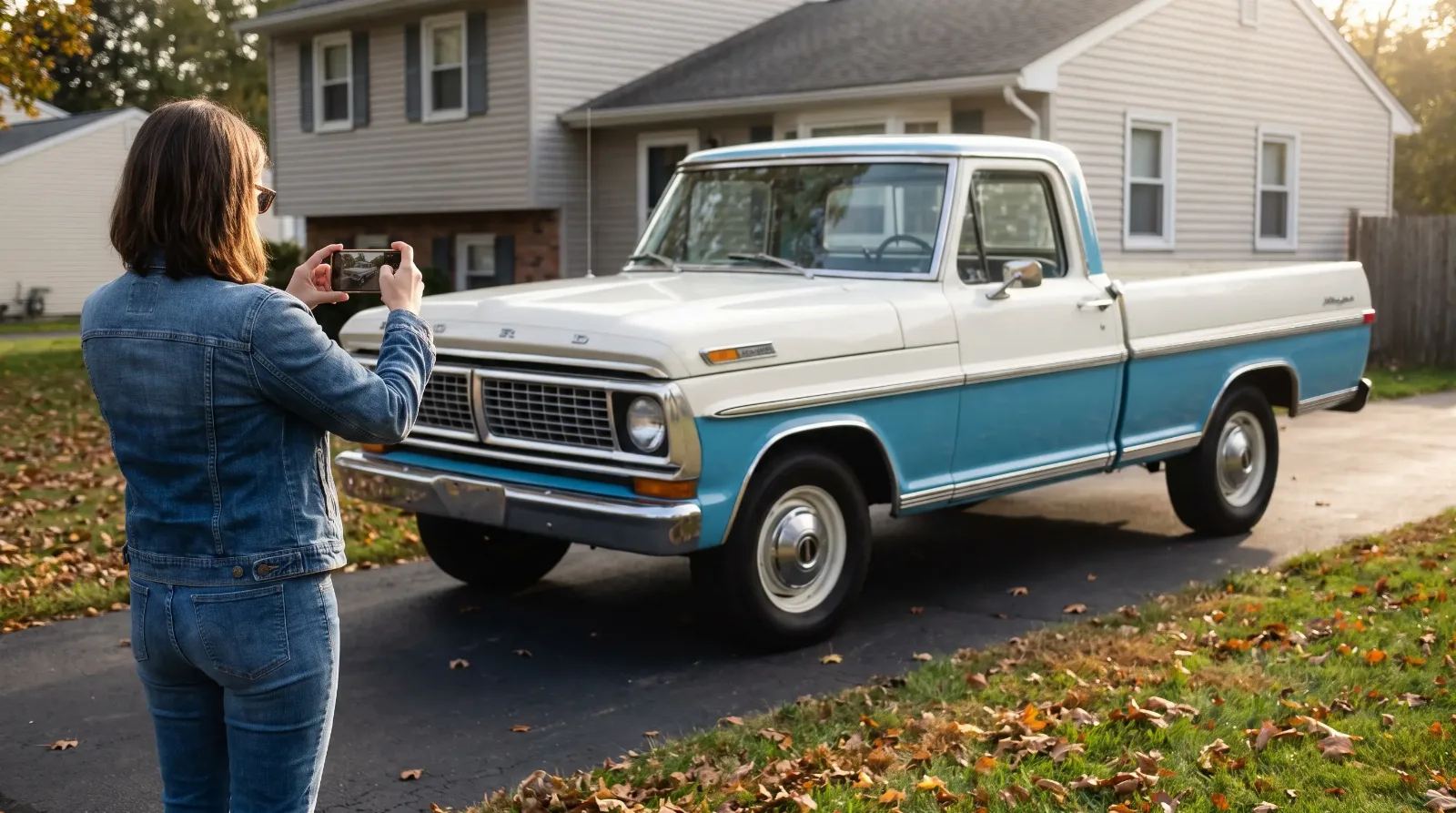
Here is the other side. A private sale is cheap in dollars and expensive in hours. You become the photographer, the copywriter, the receptionist, the tour guide and the closing agent. Most sellers underestimate how many conversations it takes to find one real buyer.
There is also no deadline. An auction ends on a set day whether you like the result or not. A private listing can sit for weeks, and if the price is wrong it can sit for months while you wonder why nobody serious has called.
Then there is the security problem. When you sell privately, you are the one checking whether the money is real. The common scams have not changed much in years: overpayment by check with a request to wire back the difference, a "shipping agent" who needs a deposit, a buyer who insists on a payment app. Keep in mind that PayPal and Venmo purchase protection both exclude motor vehicles, and Zelle has no purchase protection at all, so none of those services will rescue either side of a car deal that goes wrong.
Private sale pros and cons, side by side
For owners who like to see it laid out, here is how the main factors stack up. The estimates are general and depend heavily on the car, the price and the market for that model.
| Factor | Private sale | What you give up or gain versus the alternatives |
|---|---|---|
| Net proceeds | Highest of the common methods, because no commission is taken | Auctions and consignment take a percentage; a dealer cash offer often lands about 20% to 30% below a private price (our estimate, reflecting reconditioning, holding cost and margin) |
| Selling costs | Listing fee from $0 (Facebook Marketplace) or $5 (Craigslist) up to a paid classic marketplace package, plus detail and photos | No entry fee, no seller's commission, no no-sale charge |
| Time to sell | Days to several months | No fixed end date, unlike an auction |
| Your effort | High: photos, description, calls, showings, paperwork | Consignment hands most of this to a dealer |
| Fraud risk | Falls on you | Auction houses and dealers handle payment collection |
| Price control | Full | No reserve gamble, no hammer surprises |
| Best fit | Driver-grade cars, projects, cars with a good owner story | Rare, heavily documented cars often draw more bidders at auction |
Who should sell privately, and who should not
Private sale tends to suit the owner who has time, lives somewhere a buyer can reasonably reach, and owns a car that makes sense to a regular enthusiast. Think of the solid driver with a decent repaint and a stack of receipts, the honest survivor, or the project with all its parts in labeled boxes. Those cars rarely shine in a bidding room next to concours-level examples, but they do very well when a buyer can take them around the block.
It suits less well the owner who cannot handle showings, who is selling an estate car from another state, or who has a truly significant car where competitive bidding could push the price well past what any single buyer would offer. It also suits poorly anyone who needs certainty by a date. If speed and simplicity matter more to you than the last few thousand dollars, a trade is sometimes the honest answer, and our piece on when a trade in classic car deal makes sense walks through the math.
"The best private sales I've seen weren't the ones with the slickest listing. They were the ones where the owner told the truth early, priced the car like a buyer would, and was home when the phone rang."
— Patrick Walsh
Making the private route easier on yourself
The owners who sell quickly and without drama tend to do the same handful of things before the first call comes in.
Where you list shapes who calls. Free local sites bring volume, and a lot of it is noise. Paid classic marketplaces bring fewer, more serious buyers, and they differ a lot in what you pay and how far the ad reaches. ClassicCars.com, for instance, sells private-seller packages from $149.99 to $349.99 and says its newsletter goes to around 180,000 subscribers, a bigger list than ours. On ClassicCarsArena the listing is a flat one-time fee of $49, $99 or $179, with no commission and no success fee, the ad stays up until the car sells, and the buyer pays you directly. The Featured and Premium packages also go out to more than 15,000 newsletter subscribers who signed up to hear about new listings, across the US and Canada. If the private route sounds right for your car, you can list your classic for sale and see who calls.
The schoolteacher with the Mustang said afterward that the best part was not the price. It was watching the son climb behind the wheel and grab it with both hands. You do not get that from a hammer falling in a ballroom. You also do not get it without fielding a few dozen messages first. Know which of those two things you can live with, and the decision mostly makes itself.
Sources and notes
- Classic.com: auction fees and prices (Mecum entry fees and 6% / 10% seller fees)
- ClassicCars.com: private seller packages and newsletter reach
- FTC: how to spot, avoid and report fake check scams
- Venmo: Purchase Protection eligibility (vehicles excluded)
- California DMV: Notice of Transfer and Release of Liability