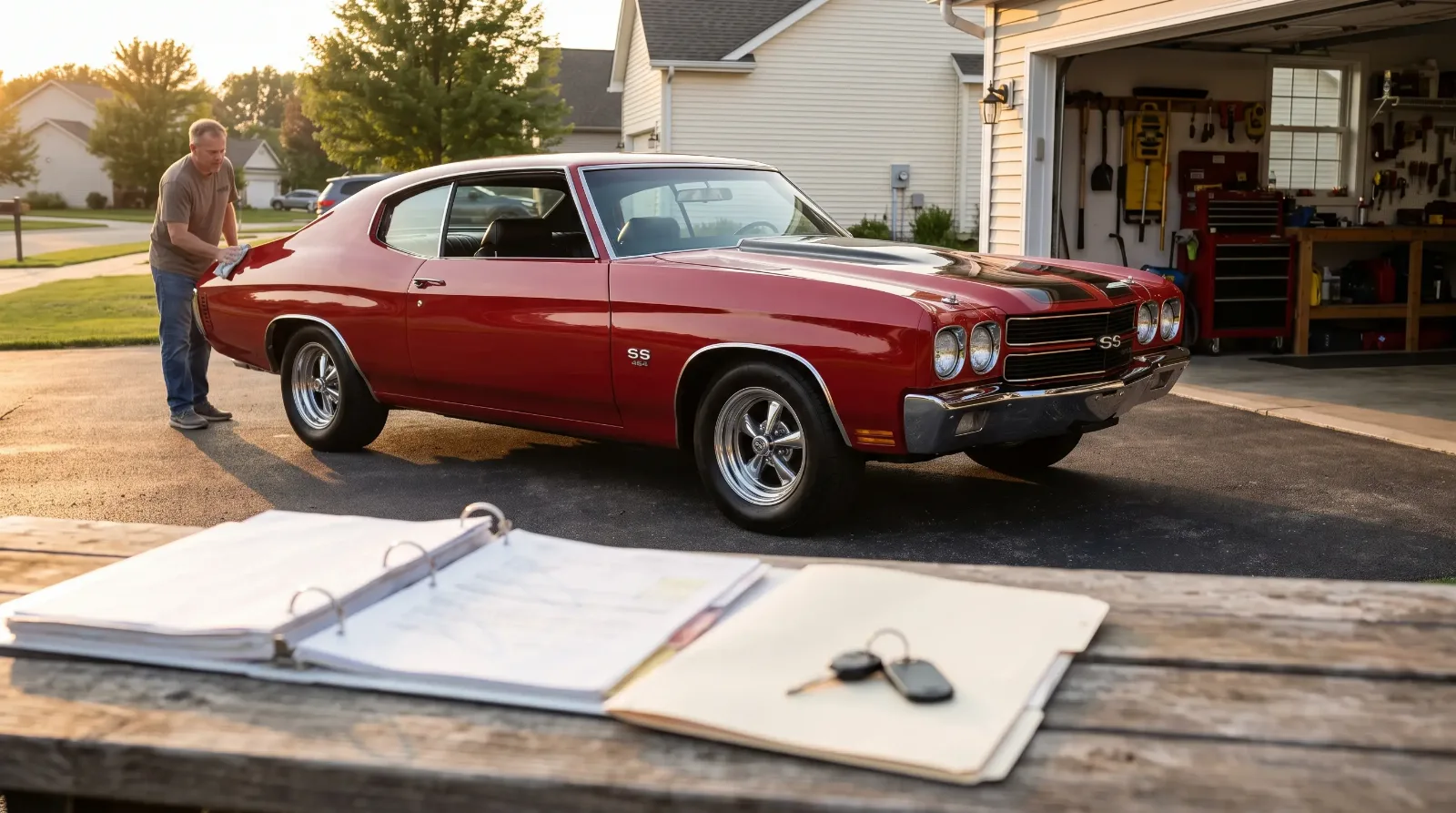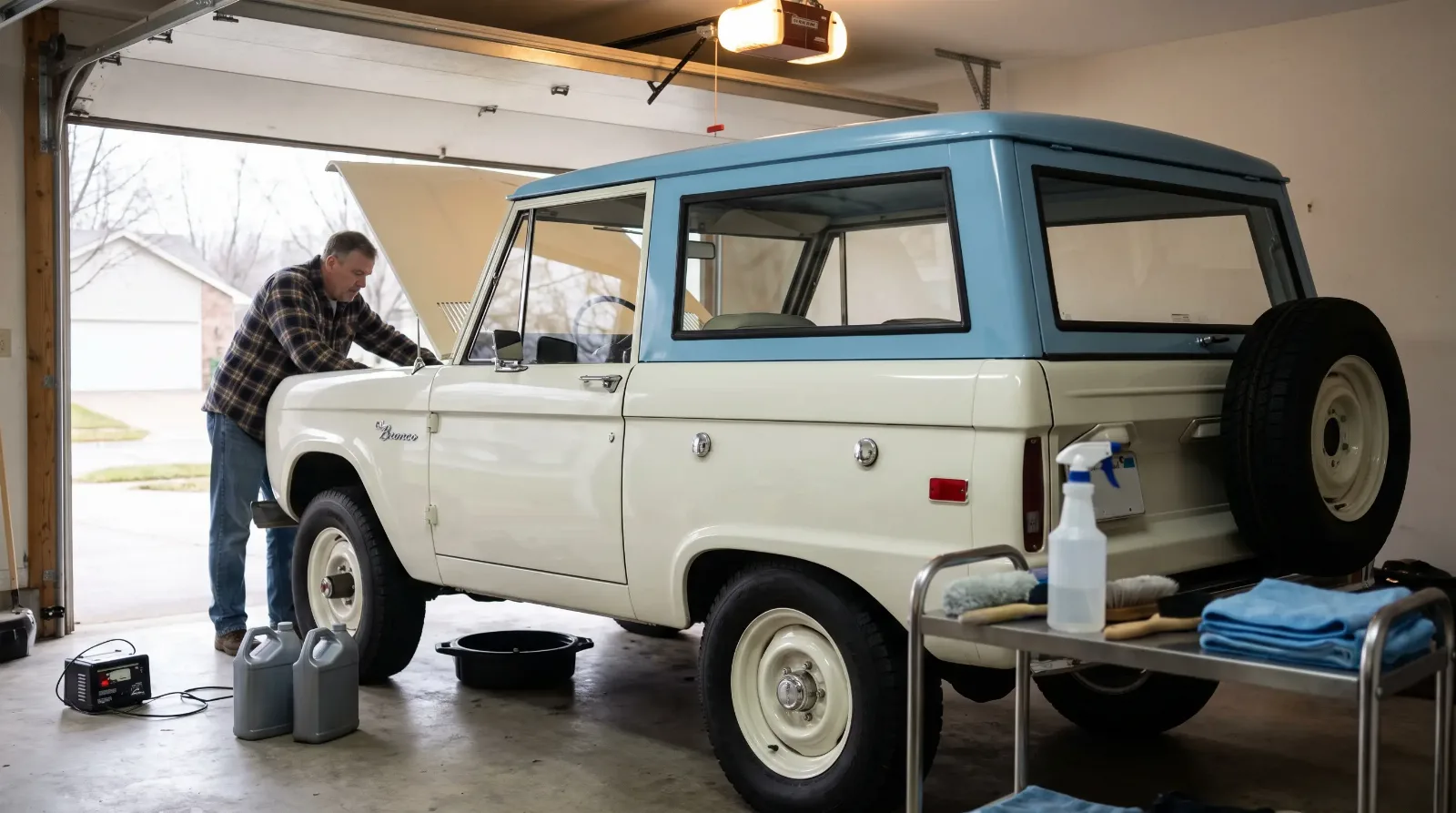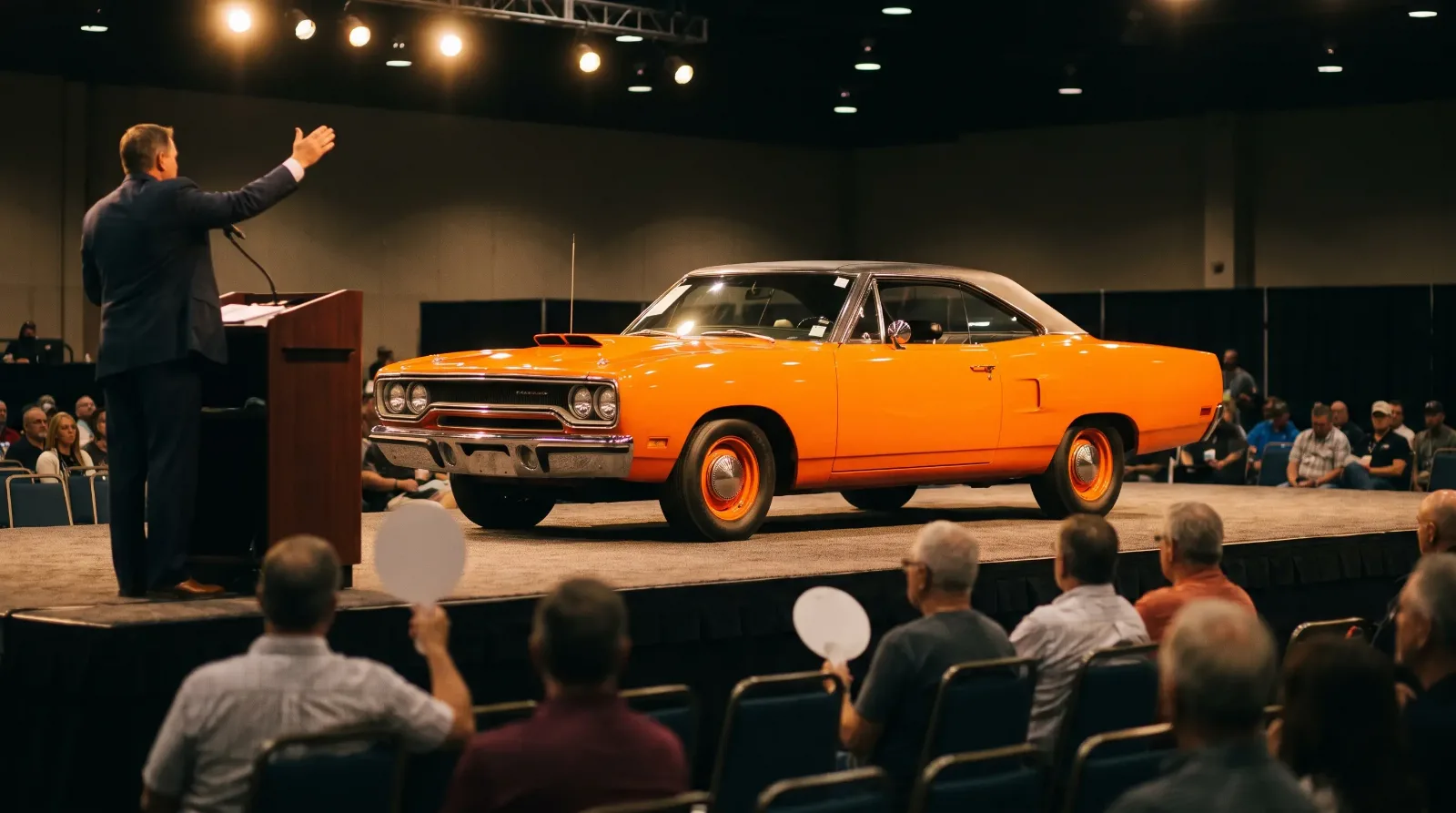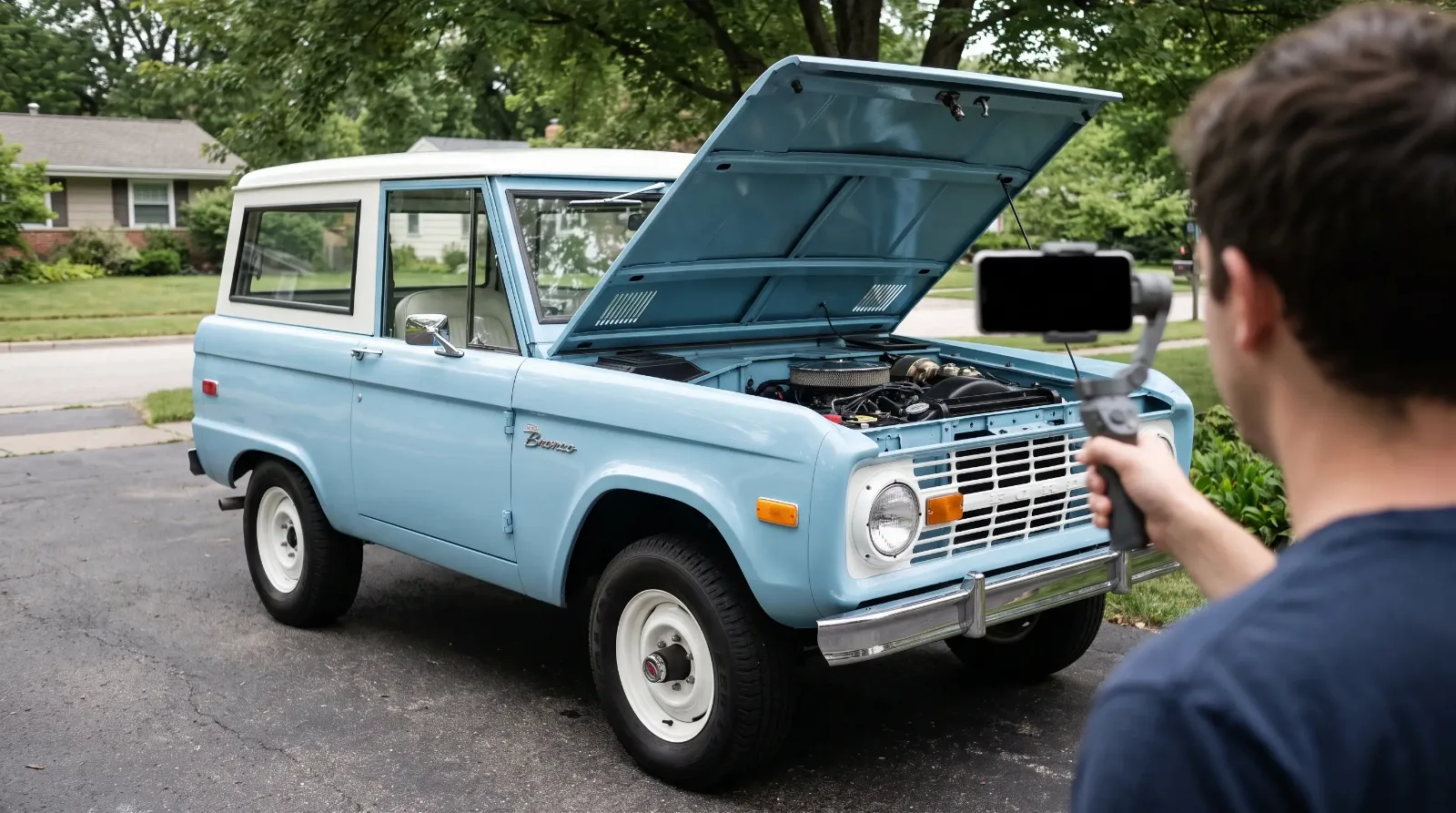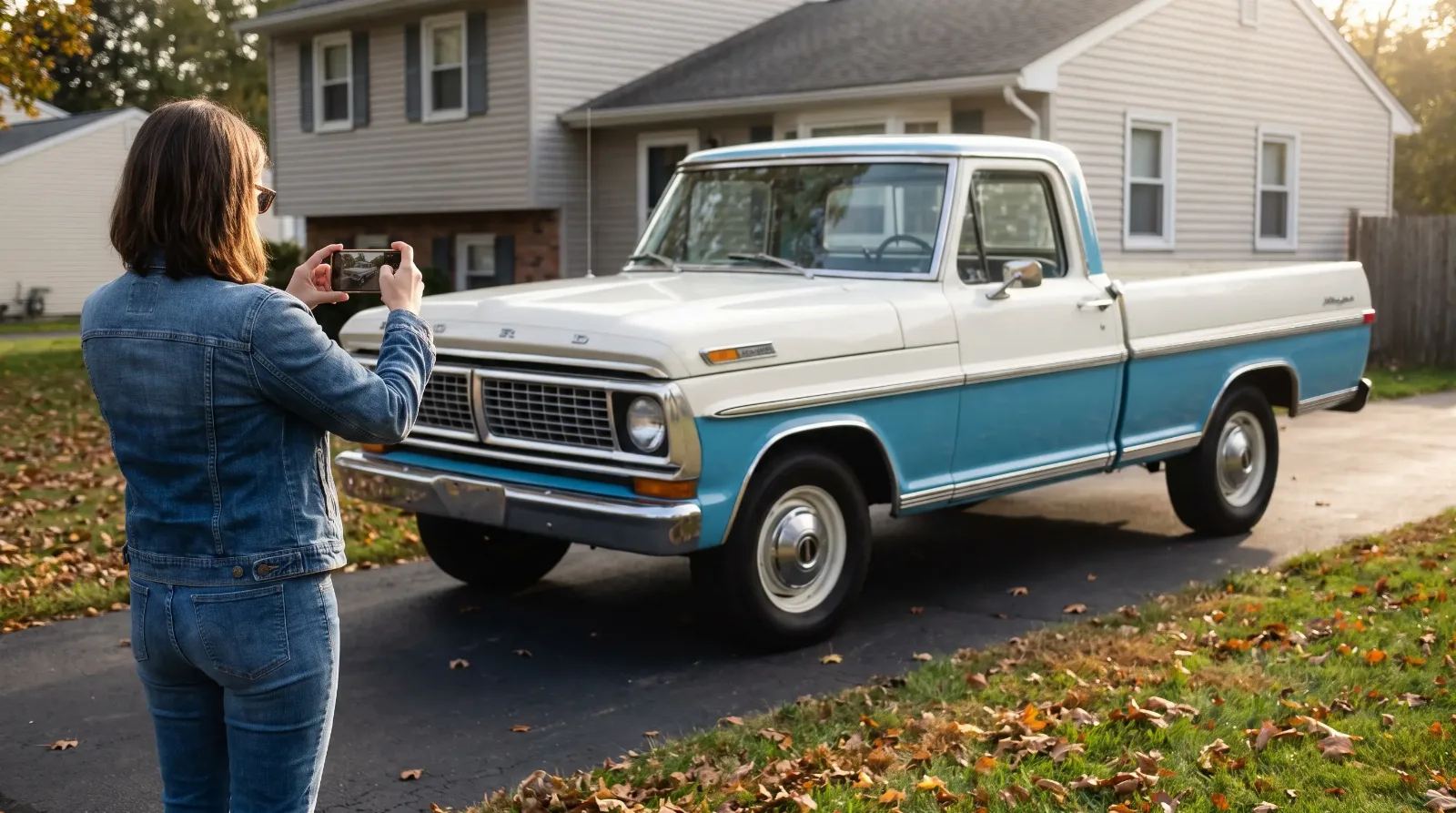
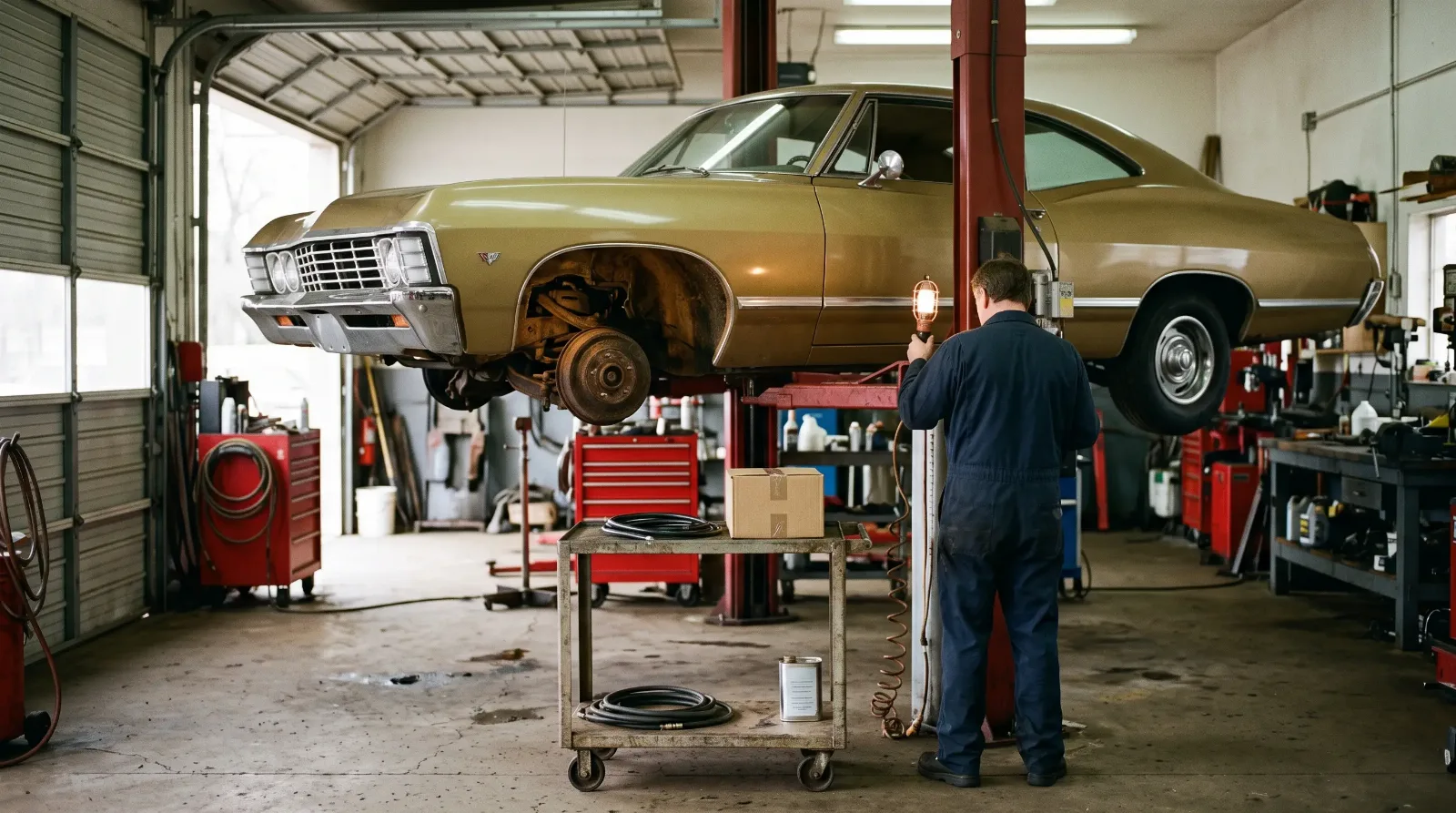
Most repairs before selling a classic car lose money. Not all of them. The cheap ones that stop a buyer from walking usually pay back several times over. The expensive ones that turn a decent driver into a slightly nicer decent driver almost never do. The difference is easy to see once you stop thinking about what the car deserves and start thinking about what a buyer will pay for.
This piece is about one decision: which items on your list get fixed before the listing goes up, and which get disclosed and priced in. For the full selling process around that decision, see the bigger picture.
The only math that matters
A repair pays off when it adds more to the sale price than it costs, or when it keeps a buyer at the table who would otherwise leave. That's it. Everything else is how you feel about the car.
Two things work in your favor. First, buyers overestimate repair costs. A brake job you can get done for a few hundred dollars turns into "it needs brakes, knock off two grand" in a buyer's mouth. Second, small faults stack. One dead gauge is nothing. A dead gauge, a drip, a soft pedal and a slow crank add up to "this car was neglected," and a buyer prices neglect, not parts.
Two things work against you. A buyer pays for the car as a whole, not your invoices. And a classic's value is set mostly by its overall condition grade. Fixing one big thing rarely moves the whole car up a grade.
Repairs that earn their money back
These have one thing in common. They're cheap compared to what a buyer would knock off for them, and they make the car start, stop, drive and sit dry. Costs below are rough, approximate national ranges at an independent shop, parts and labor, for a typical American V8 car, built from published repair-cost averages. Your car and your zip code will move them.
| Repair | Rough cost | Why it pays |
|---|---|---|
| Tune-up: plugs, wires, points or ignition check, carb adjustment | $200 to $500 | First-try starts and a clean idle. Buyers judge the whole engine on the first ten seconds. |
| Battery | $150 to $450 | A slow crank gets priced as a starter, wiring and engine problem. |
| Brake service: pads or shoes, hoses, fluid flush | $400 to $1,000 | A soft pedal ends a test drive. A firm one keeps the buyer driving. |
| Tires, if the date codes are old | $500 to $1,200 a set | Old rubber is a safety objection, and the buyer will price it high. |
| Small oil leaks: valve cover or pan gasket | $300 to $800 | A puddle during a showing costs more than the gasket. |
| Electrical small stuff: bulbs, fuses, a gauge, the horn | $50 to $300 | Each dead item is a talking point. Fix them all and the talking points go away. |
| Weatherstrip and trim clips | $300 to $900 | Cheap, visible and it makes the car read as cared for. |
Few cars need every line. Add up the ones yours does need and the total usually lands in the low thousands at most. Compare that to what a buyer would knock off for the same list. That's usually the best return you'll see on anything you spend before the sale.
"Fix what a buyer will notice in the first ten minutes. Leave what he'd only find with the car apart. The first list costs hundreds and kills deals. The second costs thousands and rarely changes the price."
— Dan Reeves
Repairs that lose money
Paint. A quality repaint with proper prep commonly runs $5,000 to $20,000, and more for show-level work, while a cheap one can hurt the price. Buyers who know cars get suspicious of fresh paint on a car about to be sold. They wonder what's under it. Unless the car is genuinely ready for the next grade in every other way, the paint money doesn't come back.
Engine or transmission rebuild. A full rebuild at a machine shop commonly runs several thousand dollars, and more for anything rare or high performance. If the engine runs, doesn't smoke, holds oil pressure and doesn't knock, leave it alone. A buyer of a driver-quality car pays for a running engine, not a fresh one. A rebuild with no break-in miles and no dyno sheet or receipts also invites the question of whether it was done right.
Interior redo. New upholstery, carpet, door panels and headliner add up fast: a full classic interior commonly runs $3,000 to $10,000 or more. A worn driver's seat on an original interior is often worth more as an honest original than as a new kit that doesn't quite match.
Upgrades. Disc brake conversions, modern stereos, aftermarket wheels, an electronic fuel injection swap. These are taste. One buyer pays extra. The next wants it stock and knocks money off. You will rarely recover what you spend on mods in the weeks before a sale. If the car already has them, list the original parts in the deal if you still have them.
The gray zone: fix it, quote it or price it
Some problems are too big to ignore and too expensive to fix profitably. Rust in the floors or rockers. A transmission that slips. An engine that smokes. A rear end that howls. Here you have three choices, and fixing it is often the worst.
The better move is to get a written quote from a real shop, then put the quote in the binder and price the car with it. A buyer who sees "trans slips in second, shop quote attached" can do the math. A buyer who discovers it on the test drive assumes the worst and offers accordingly. Honest disclosure with a number attached usually costs you less than the repair would.
The exception is when the fault blocks the sale entirely. A car that won't run, won't stop or can't legally be driven to an inspection limits your buyers to people with trailers and low offers. If the fix to make it drivable is modest, do it. If it isn't, price the car as a project and sell it to someone who wants one.
Paper beats parts
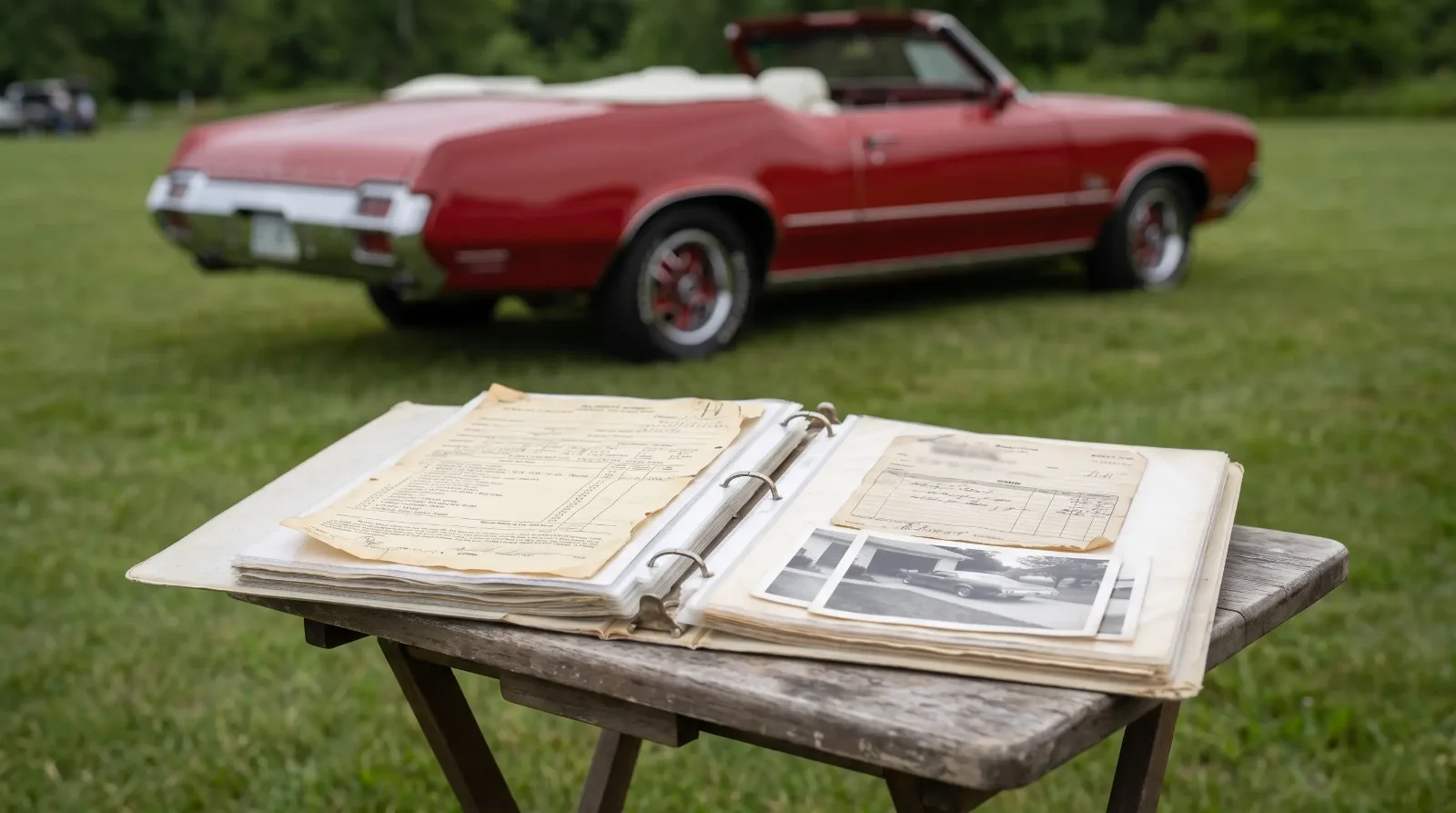
Here's the cheapest thing on any list. Gather the receipts you already have. Every dollar you've already spent is worth something only if a buyer can see it. A brake job with a receipt in the binder is a brake job. A brake job you mention on the phone is a claim.
So before you spend another dollar on the car, spend an evening on the paperwork: receipts, build records, photos from past work, old registrations. Put it in order and let it do the talking. There is more on what counts and how to present it in our guide to classic car documentation. Then fix the cheap things, quote the big ones, and leave the paint alone. That's where the money is.
Sources and notes
- RepairPal: brake pad replacement cost estimate (also brake shoe, brake hose and battery estimators)
- RepairPal: valve cover gasket replacement cost estimate (also oil pan gasket, spark plug and plug wire estimators)
- Coker Tire: Coker Classic reproduction tires and prices
- AAA: how much does it cost to paint a car
- ThePricer: car reupholstery costs, including classic interiors
- Hagerty: what a car's condition rating really looks like
RepairPal averages are national figures that lean toward modern cars; older carbureted cars are often simpler to work on, so treat every number here as an approximate range, not a quote. Weatherstrip ranges assume a reproduction kit at roughly $300 to $400 in parts plus installation.