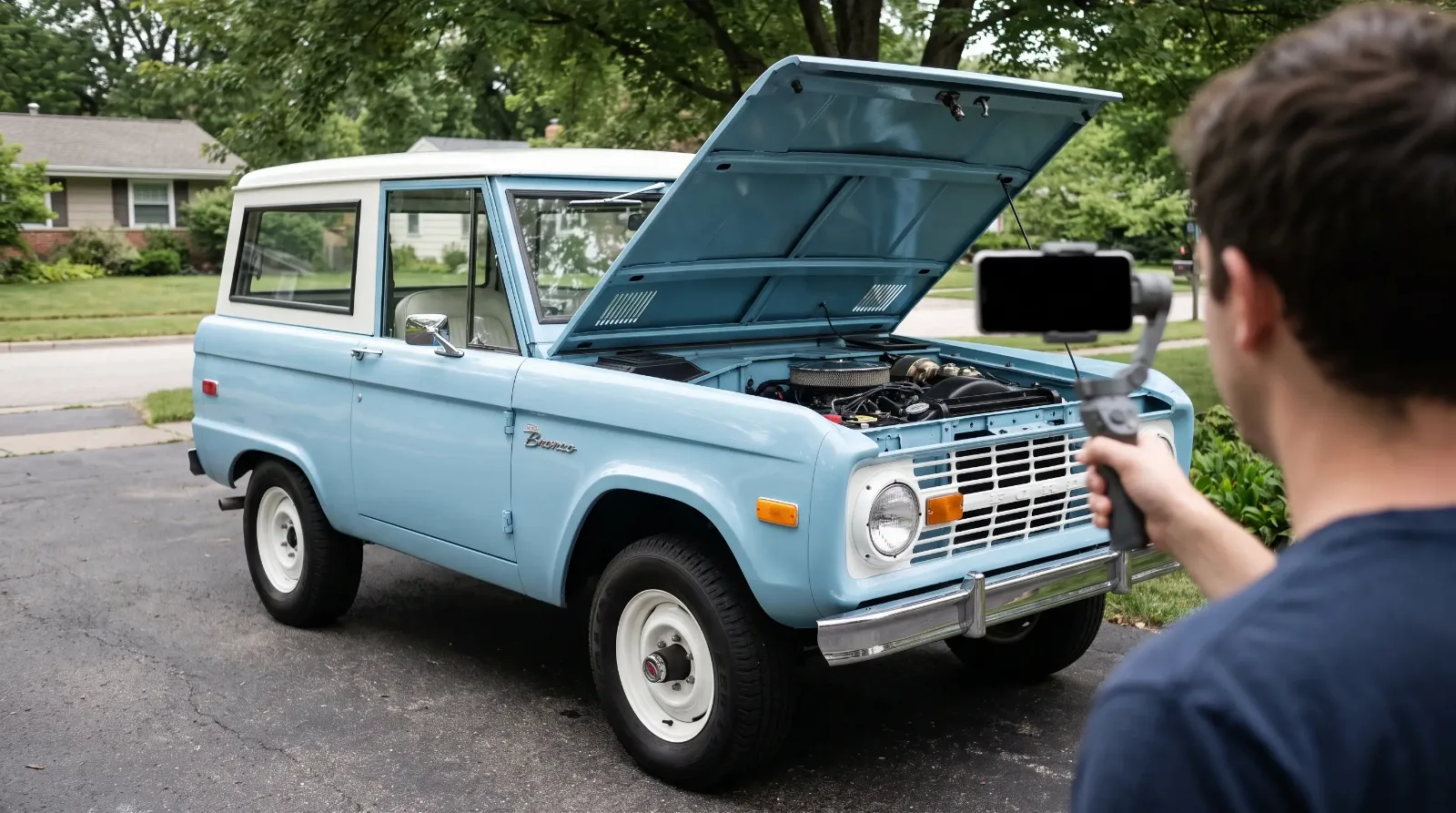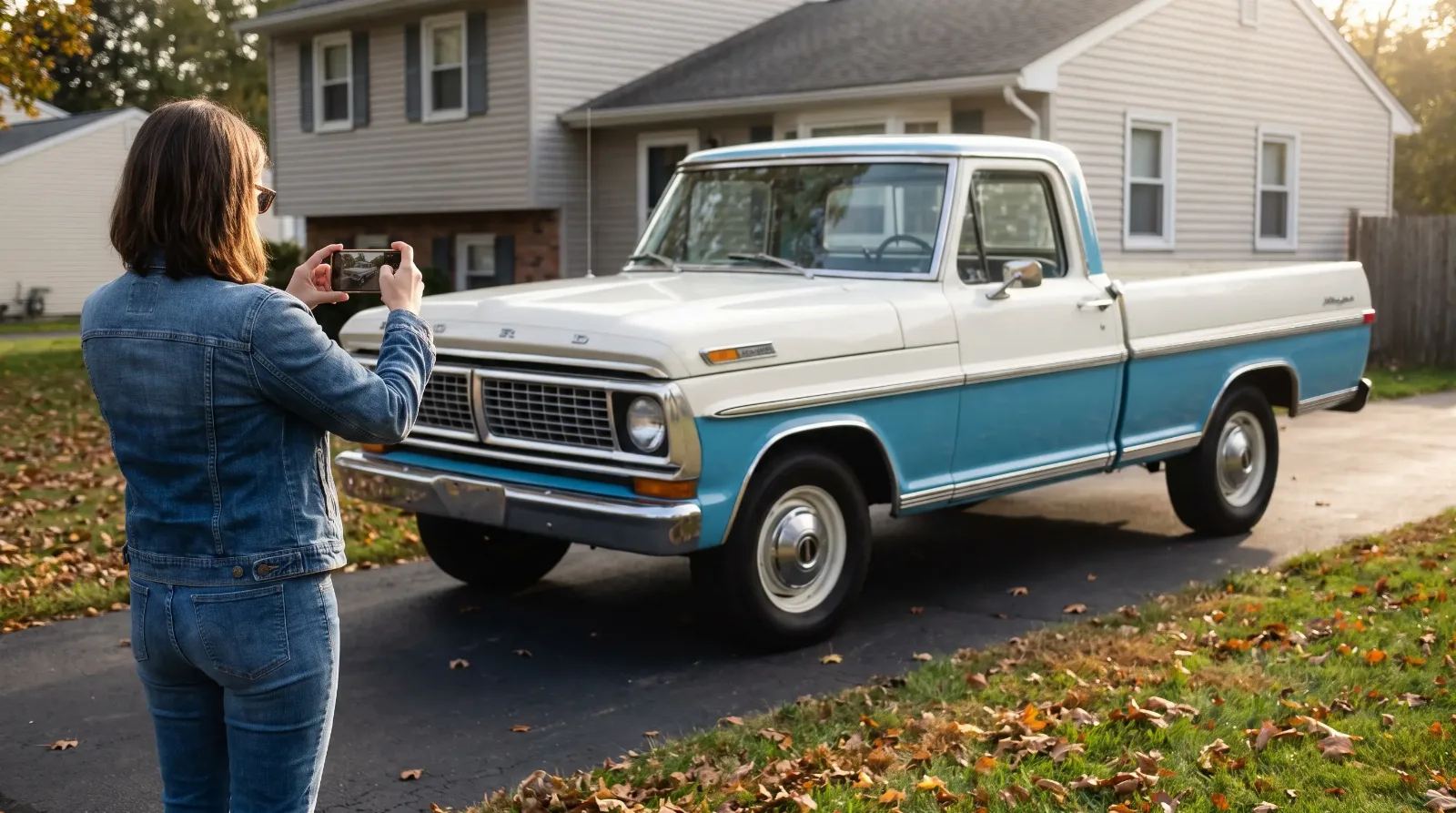
A fellow at a judged meet once spent the better part of an afternoon telling anyone who would listen that his big-block convertible was a one-family car, bought new by his uncle and never out of the bloodline. Nice story. People nodded. Then a buyer asked to see the original title and the dealer invoice, and the fellow went quiet, because all he had was a folder of parts receipts from the 2010s and a photo of his uncle standing next to a car that might or might not have been this one. The car sold, eventually, for a lot less than he wanted. The story didn't change. The paper did.
That's the whole case for classic car documentation in one afternoon. Buyers will listen to your history, and they'll enjoy it, and then they'll pay for whatever part of it you can prove. If you're working through the full how to sell a classic car guide, this is the step that sits underneath pricing, the listing and the negotiation. It decides how much of your asking price a buyer believes before he ever sees the car.
Why paper moves the price
A collector car is priced on two things at once: the condition in front of you and the confidence behind it. Two cars can look identical at fifteen feet and still be worth very different money, because one comes with a build sheet, a chain of titles and a stack of dated receipts, and the other comes with a handshake and a "trust me." The first buyer is paying for the car. The second buyer is paying for the car minus a discount for everything he can't check.
Documentation does three jobs for a seller. It supports originality, so a claim like "numbers matching" or "factory four-speed" stops being an opinion. It shows how the car was treated, which tells a buyer whether the restoration was done once and done right or done three times by three different people. And it shortens the conversation. A buyer holding your binder asks fewer questions, and the ones he asks are about the car, not about you.
There's a quieter benefit too. Paper protects your price from the condition argument. Most collector cars sit in the middle of the condition scale, and a buyer will always try to push yours down a tier. A dated receipt for a professional paint job or an engine rebuild is the cleanest way to hold the line, because it turns "looks like a respray" into "here's who did it and when."
The documents that carry the most weight
Not all paper is equal. A buyer will look at a factory document for a full minute and flip past a tire receipt in a second. Here's roughly how the pile sorts out, from most persuasive to least.
| Document | What it proves | Weight with buyers |
|---|---|---|
| Build sheet or broadcast sheet | The options and drivetrain the car was assembled with | Very high; often the single most valuable sheet of paper in the car |
| Original window sticker or dealer invoice | Factory equipment, original price, selling dealer | Very high, especially with the original owner's name on it |
| Factory or registry records (for example a Marti Report for 1967 and later Fords, Mercurys and Lincolns, or a Pontiac Historic Services packet for 1961 to 1986 Pontiacs) | Independent confirmation of build data from the maker's own records | High; buyers trust a third party more than the seller |
| Chain of titles and old registrations | Who owned it, where, and for how long | High; a short, unbroken chain calms nervous buyers |
| Restoration invoices and progress photos | What was done, by whom, and what the metal looked like before paint | High for recent, professional work; moderate for owner work |
| Routine service receipts | Ongoing care: oil, brakes, cooling system, tune-ups | Moderate; shows a car that was maintained, not just stored |
| Show awards, judging sheets, period magazine features | How the car scored against a standard, or that it has a public history | Moderate; judging sheets count for more than trophies |
Notice what sits at the top. Anything that came from the factory, or from somebody who has no stake in your sale, outweighs anything you produced yourself. That's not a knock on owner records. It's just how a careful buyer thinks.
Building a binder buyers actually read
A shoebox of receipts is documentation in the same way a pile of lumber is a house. It's all there, technically. Nobody wants to sort it.
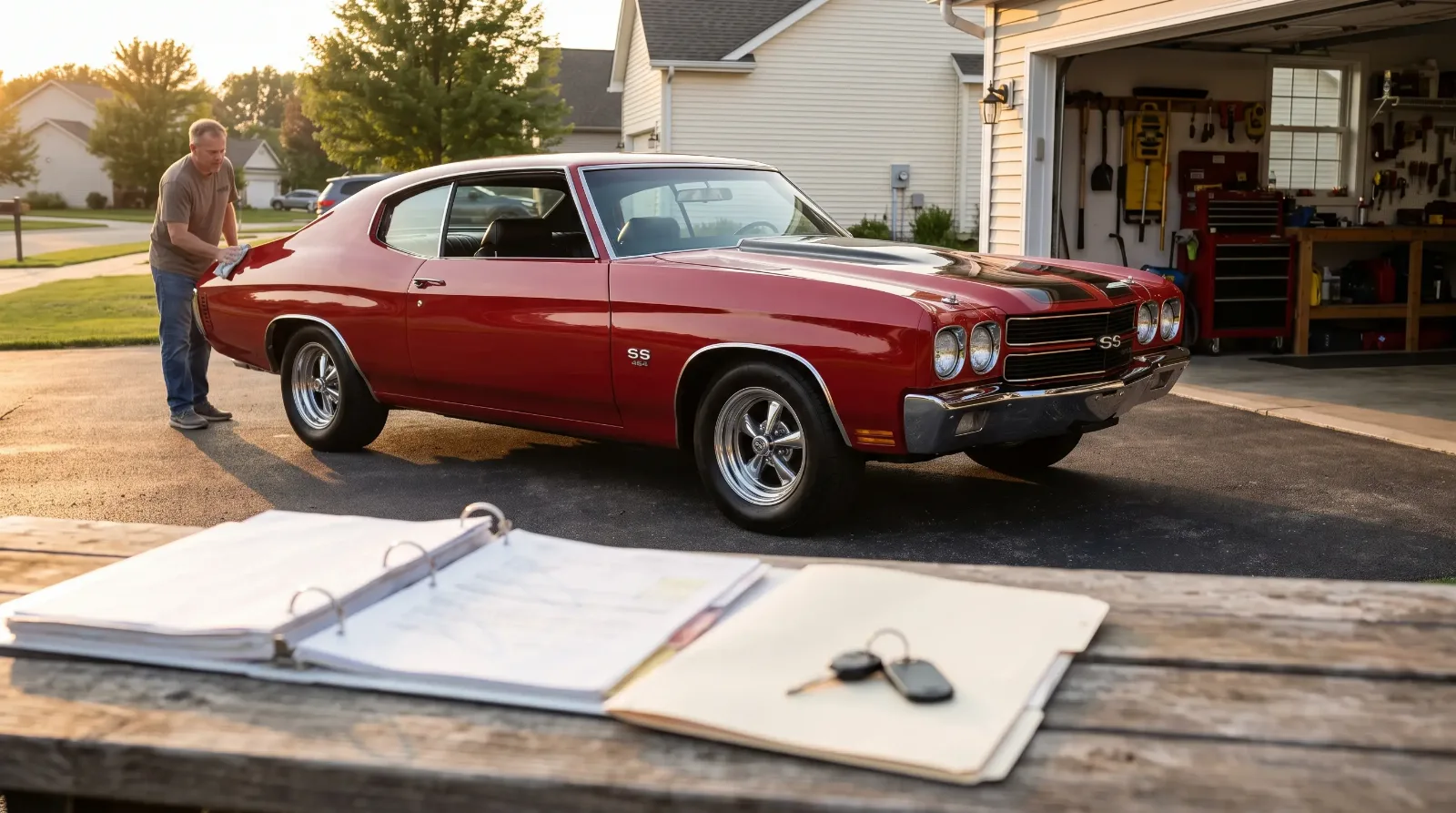
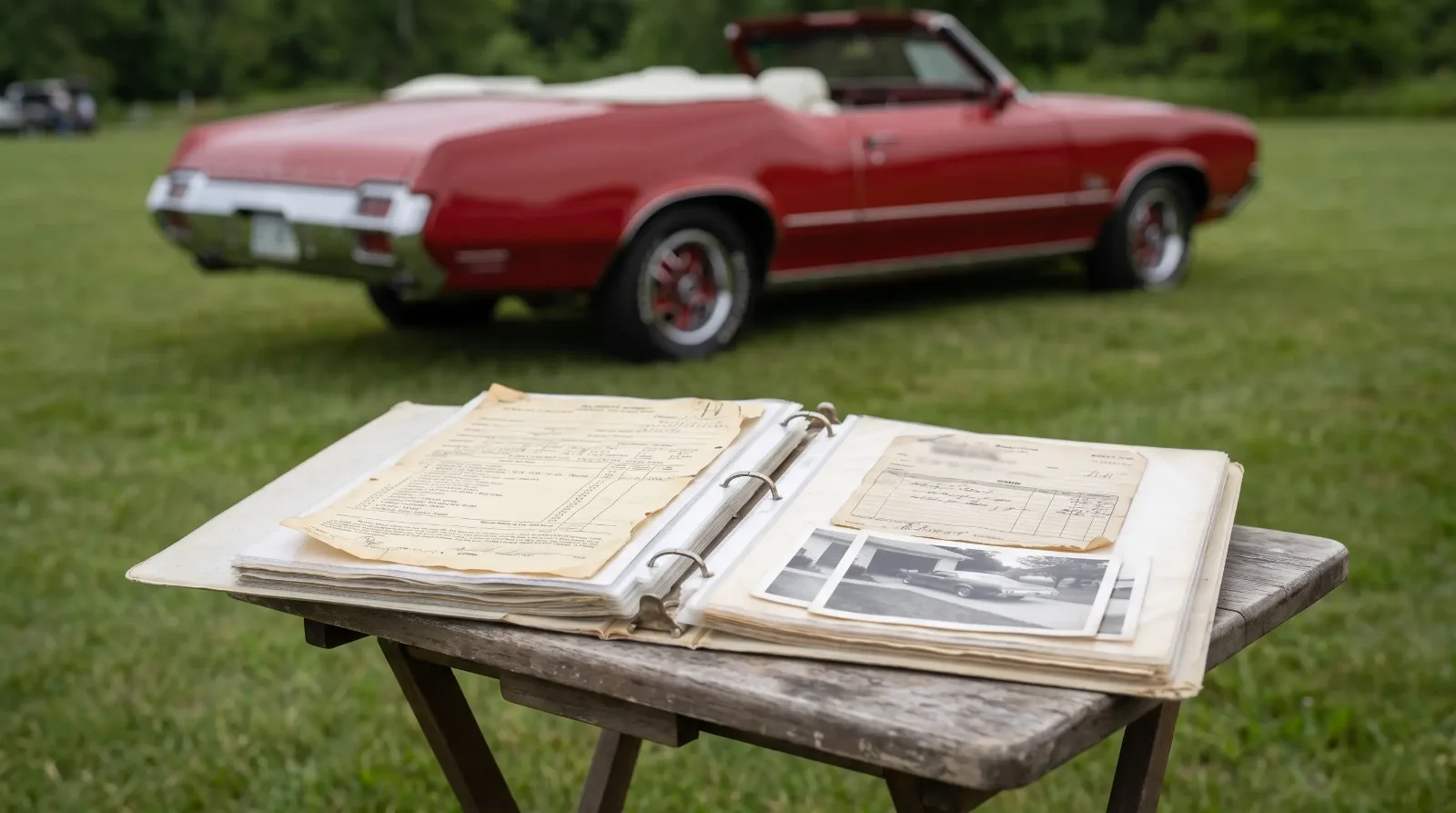
Put everything in one binder, in date order, oldest first, so the car's life reads like a story from the factory forward. Lead with a single cover page: year, make, model, VIN, engine and transmission, color codes, and a short paragraph on ownership. Then the factory and registry documents, then titles and registrations, then restoration work, then routine service. Use sheet protectors. Highlight the line on each receipt that matters, the part number or the work description, so a buyer doesn't have to hunt.
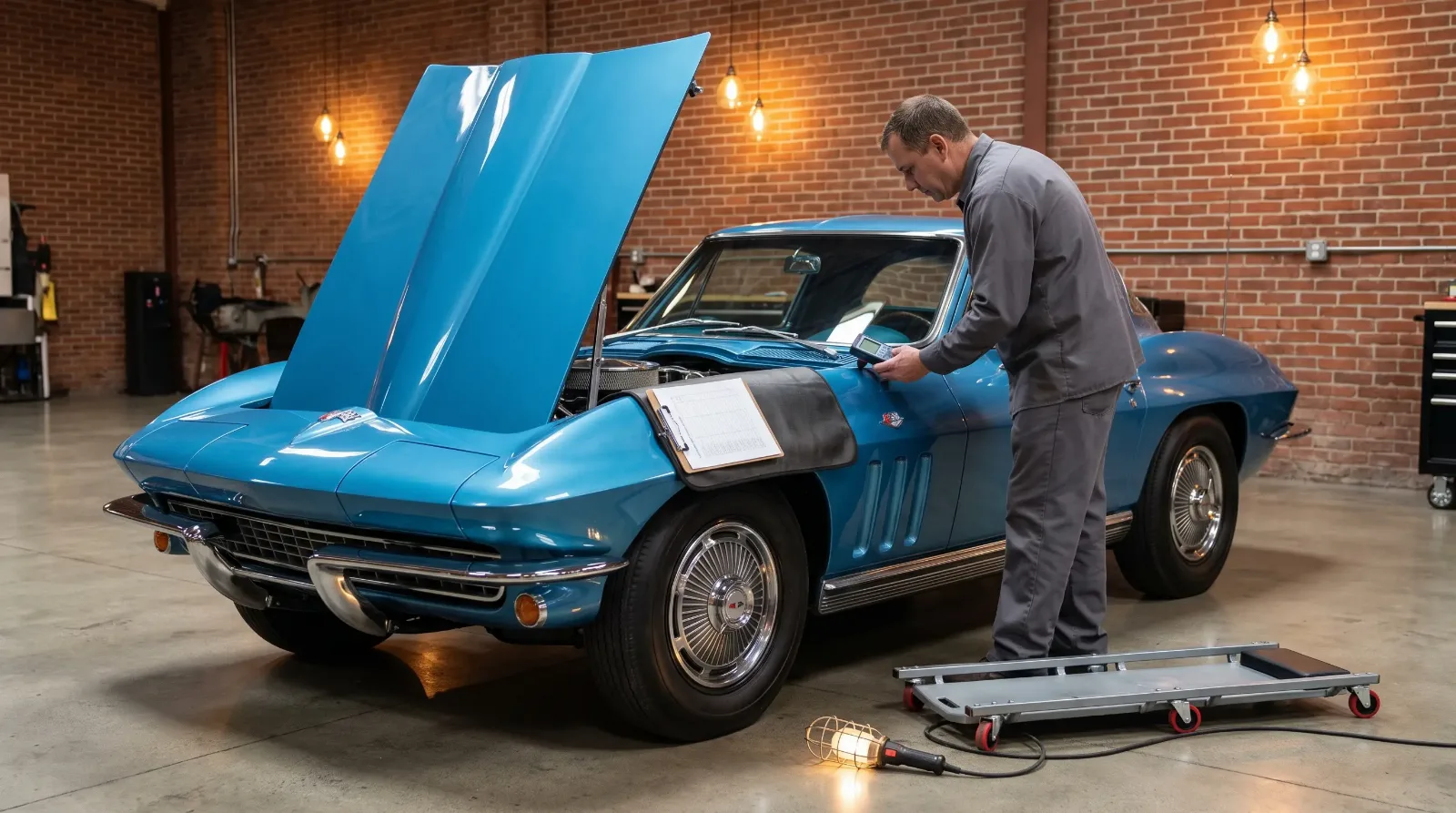
Keep the originals at home. Bring copies to showings and scan everything into one PDF for remote buyers. A serious out-of-state buyer will ask for it, and a seller who can send a clean file in ten minutes looks like a seller with nothing to hide. Before a buyer takes your records to his inspector, there's a good argument for having the car checked yourself first and putting that report in the binder too; the details are here.
"I've watched a lot of arguments about a car's history go around and around a parking lot. The ones that ended quickly all ended the same way. Somebody opened a folder, put a finger on one line, and that was that."
— Wayne Coburn
Filling the gaps without inventing anything
Most cars have holes in their history. A decade where nobody knows who owned it. A restoration done by a shop that closed in 1998. A previous owner who kept nothing. That's normal, and buyers expect it on a car that's fifty or sixty years old.
What hurts you is filling a hole with a guess and presenting it as fact. If you don't know whether the engine is original, say so. If the "documented mileage" rests on one old registration and your memory, describe it exactly that way. A buyer who catches one stretched claim will assume the rest of the binder is stretched too, and he'll price accordingly.
There are honest ways to close gaps. Title history can often be requested from a state DMV, though access to prior owners' personal details is restricted under the federal Driver's Privacy Protection Act, and each state sets its own forms and fees. Texas, for example, charges $5.75 for a title history, and you need to be the owner or have a permitted use. Prior owners can often be found through club registries, and a short signed letter from one of them describing what they did with the car is real documentation. Factory or registry reports, where they exist for your make, cost a modest fee and settle originality questions with somebody else's authority instead of yours. And for work you did yourself, a dated, typed summary with whatever receipts and photos you still have is fine, as long as the page says plainly that it's your summary.
Putting the paper to work in the listing
Documentation only adds value if the buyer knows it exists before he calls. Mention the key documents in the first lines of your listing description, right after the basic facts. "Original build sheet, window sticker and Marti Report included" in the opening line pulls a different kind of buyer than the same fact buried in paragraph six.
Then photograph it. Shoot the build sheet, the window sticker, the cover page of the binder and a few spreads of the receipts laid out in order. Blur or cover anything personal, like a prior owner's home address. Buyers scroll through photos faster than they read, and a picture of an original invoice stops the scroll.
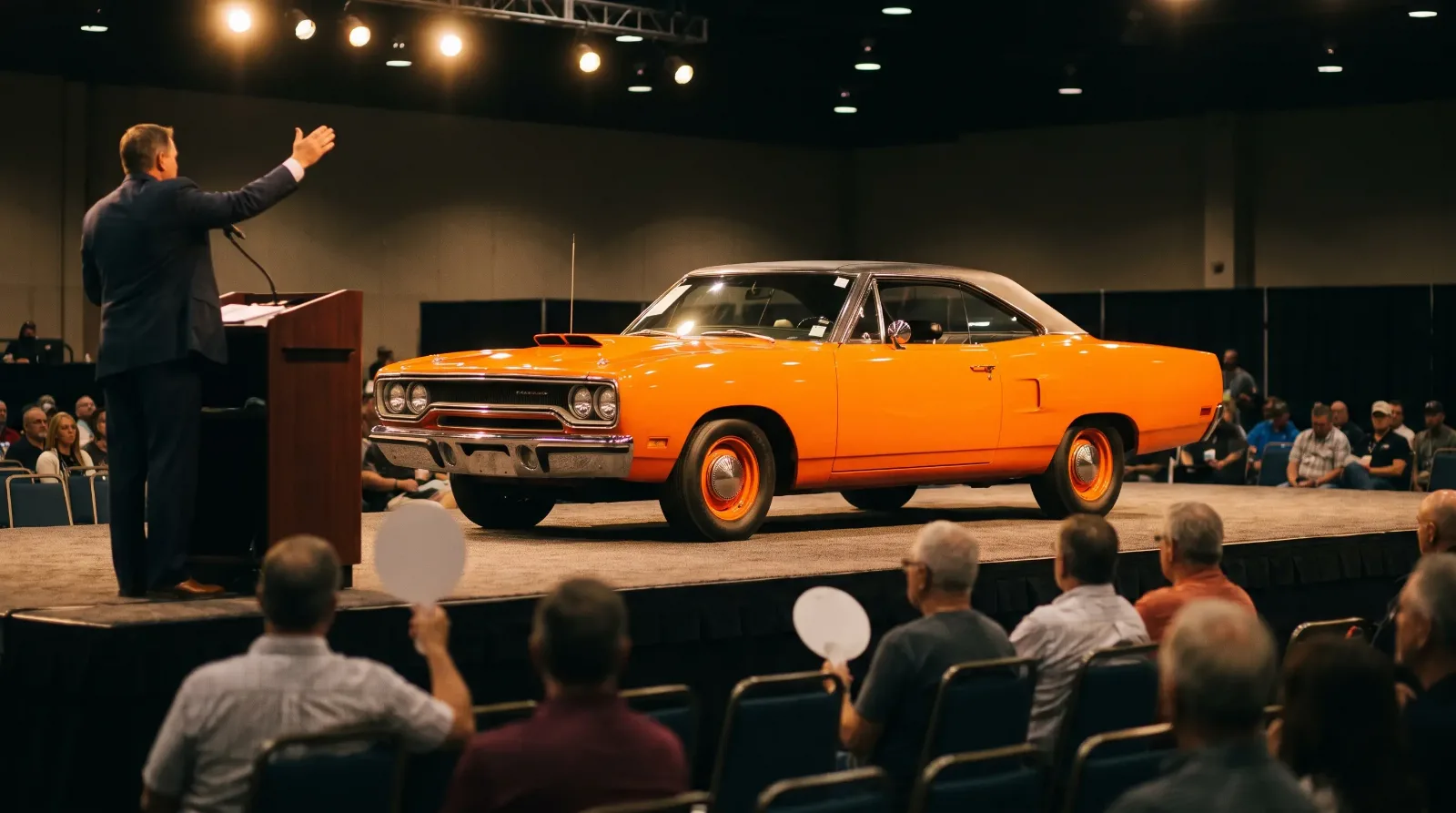
Finally, put the paper where serious buyers are looking. Some sales channels lean on documentation more than others: collector-focused marketplaces and auction catalogs reward a deep file, while a quick local sale may never get that far. If you're still deciding, it's worth reading up on where classic cars actually sell so the binder ends up in front of the people who'll pay for it. When the deal closes, the originals go with the car. The binder is part of what the buyer bought, and handing it over complete is the last thing that makes the story true.
Sources and notes
- Marti Auto Works: Ford, Lincoln and Mercury production records, 1967 to 2020
- Pontiac Historic Services: dealer invoices and documentation for 1961 to 1986 Pontiacs
- TxDMV Form VTR-275, Request for Texas Motor Vehicle Information (title history fees and DPPA rules)
- Max Wedge: where Mopar broadcast sheets are typically found
- eBay Motors blog: how a Marti Report shows the way a classic Ford left the factory