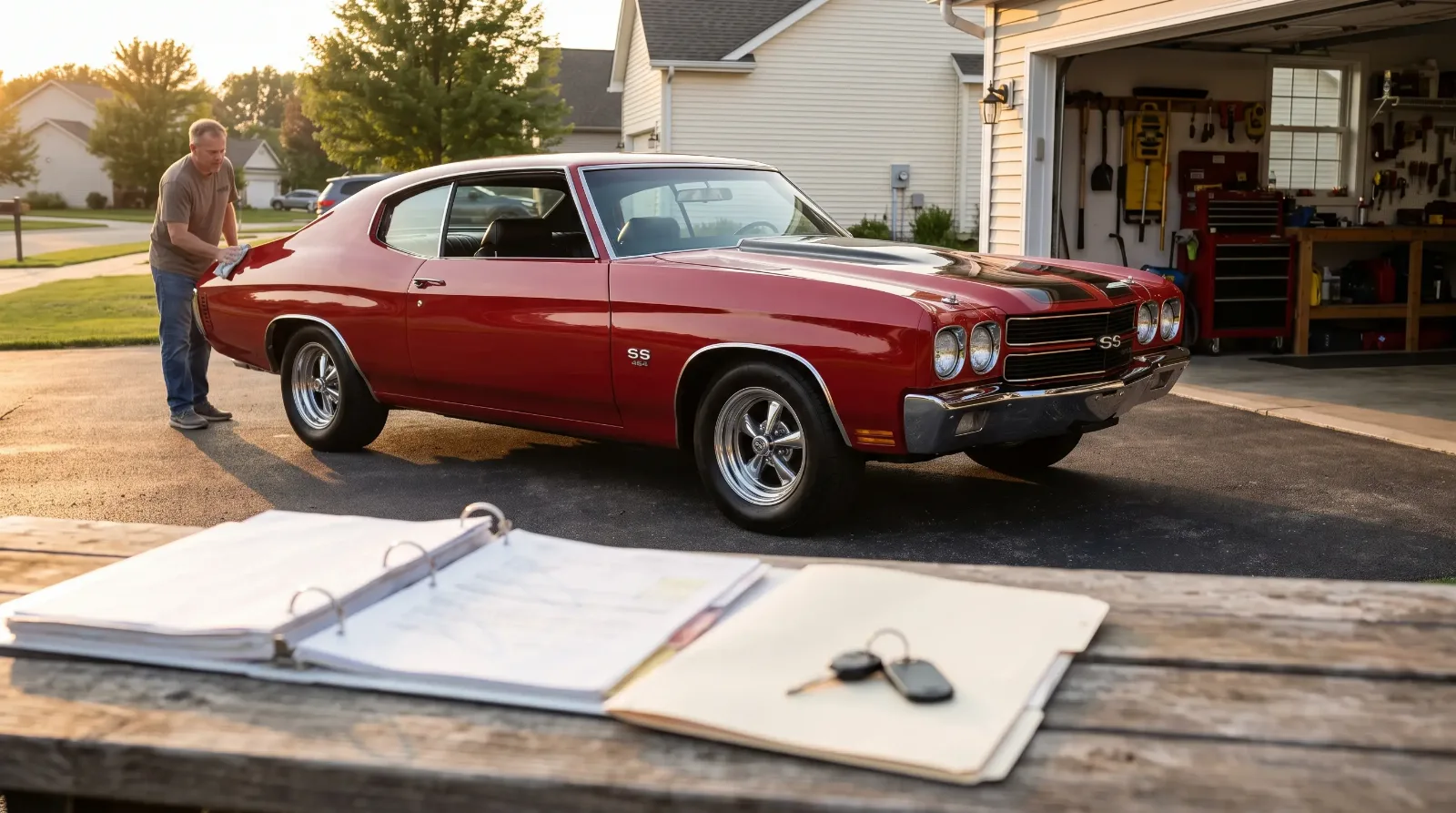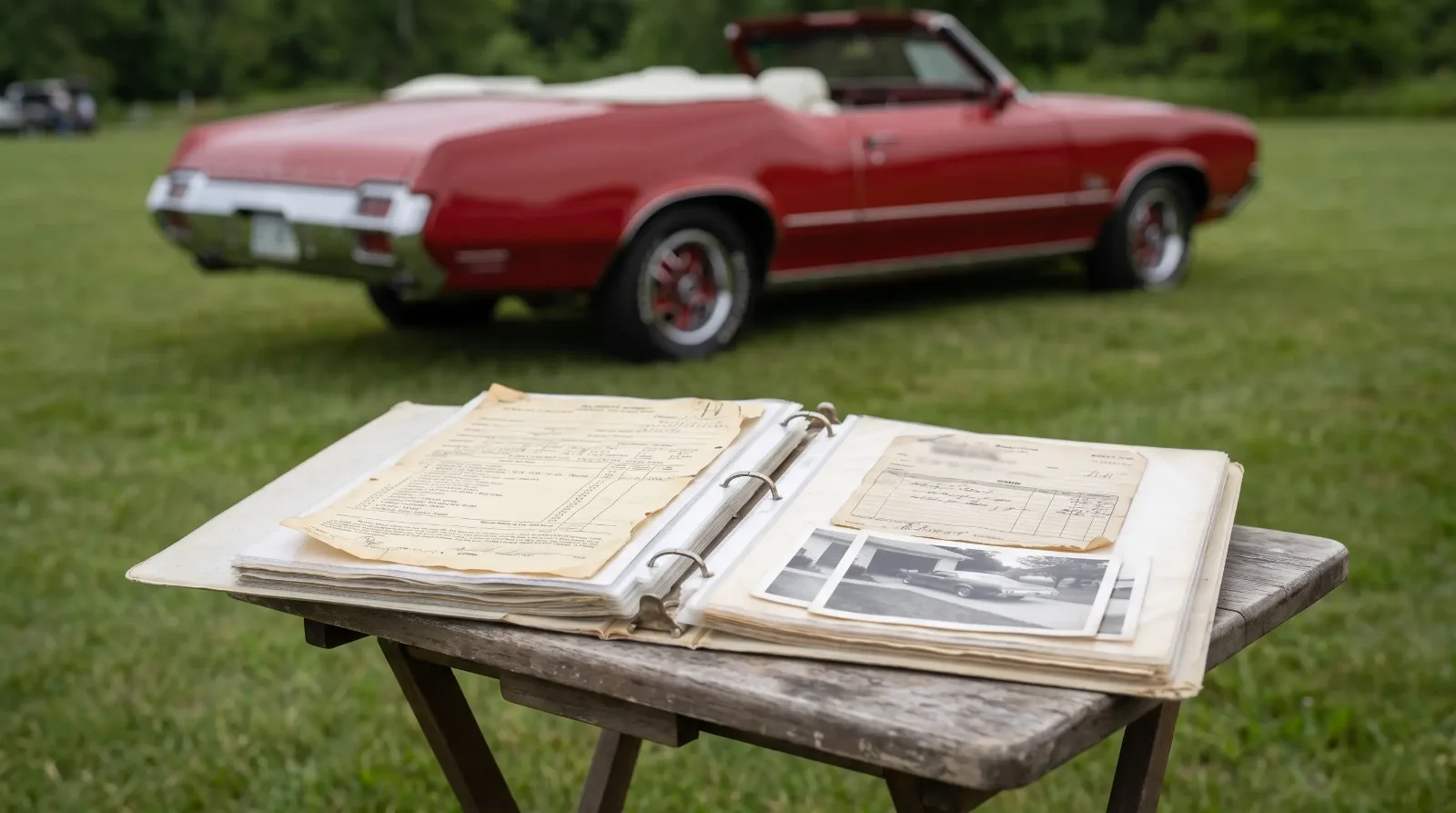
There's a common belief among sellers that inspections are the buyer's business. The buyer orders one, the buyer pays for it, and the seller's job is to make the car available and hope nothing ugly turns up. That's half right. A buyer's pre-purchase inspection is still his to arrange. But a pre-sale inspection classic car owners commission for themselves, before the listing goes live, is a different tool with a different purpose, and it's one of the more useful pieces of paper a seller can have.
The reason is simple. Every collector car has something wrong with it. The question is who finds it first. If the buyer's inspector finds it, it becomes a negotiating point with a price attached by someone who wants the price lower. If you find it first, you get to decide what to do about it, and you get to describe it in your own words. Anyone working through how to sell classic car basics will see inspections mentioned at the buyer stage. This piece is about moving that step to the front.
What a pre-sale inspection is, and what it isn't
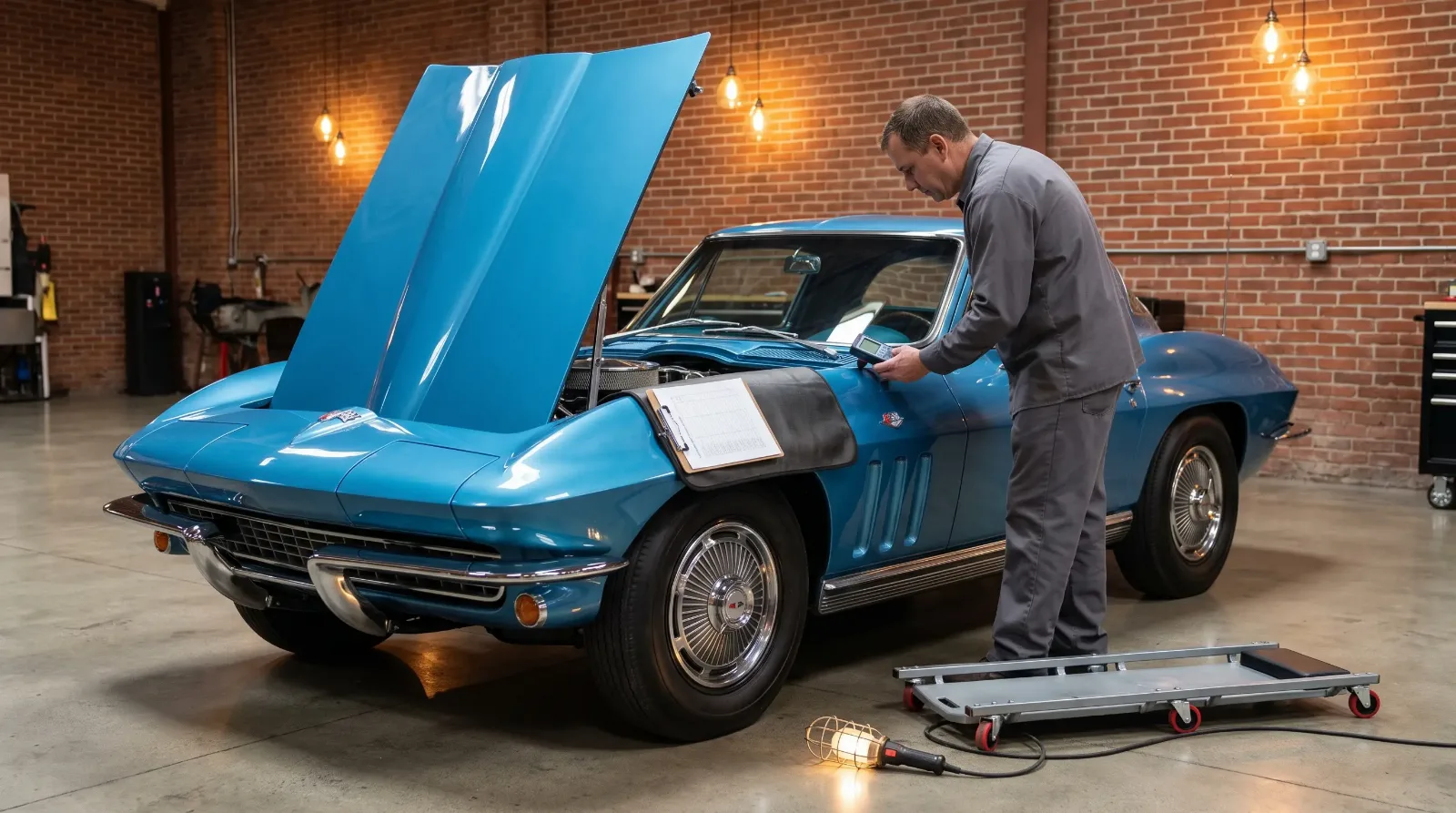
A pre-sale inspection is a documented, third-party condition check that you order before you list. A competent shop or marque specialist goes over the car from the frame up, records what they find, and gives you a written report, ideally with photos. That report is a record. It's not a sales brochure and it's not a guarantee, and you shouldn't present it as either.
It also doesn't replace the buyer's own inspection. A careful buyer will still want his inspector to look at the car, and he should. No reasonable buyer accepts a seller-commissioned report as the final word, any more than you'd accept a buyer's estimate of your car's flaws as the final word. What the pre-sale report does is narrow the gap between the two. When the buyer's inspector confirms most of what's already in your report, the conversation shifts from "what are you hiding?" to "the seller already told us that."
One correction worth making: a pre-sale inspection is not an appraisal. An appraiser assigns a value. An inspector describes condition. The two often get blurred, and some specialists offer both, but if you want a number for pricing, ask for it separately and expect a separate fee.
What the inspector checks and what it costs
The scope depends on the car and on who you hire. A general repair shop will cover the mechanical basics. A specialist in your make knows the specific failure points and the originality details that matter to buyers of that model, and charges more for that knowledge. Here's a typical breakdown.
| Check | What it tells a buyer | Typical cost (estimate) |
|---|---|---|
| Basic mechanical and road test | Brakes, steering, suspension, leaks, charging system, how it drives | Roughly $150 to $300 at a general shop |
| Compression and leak-down test | The health of the engine internals without taking it apart | Roughly $100 to $250 extra if not included |
| Underbody and frame on a lift | Rust, prior collision repair, frame straightness, floor and rocker condition | Usually part of a full inspection |
| Paint depth readings | Original paint vs. respray, filler under the paint | Usually part of a specialist inspection |
| Originality and numbers check | Date codes, casting numbers, stampings against the VIN and build data | Specialist inspections often run $300 to $600 or more, usually quoted per car |
Treat those figures as a rough guide. Prices vary a lot by region and by how rare the car is, and a specialist for a high-dollar model can charge well above the top of that range. Ask for a written quote and a sample report before you book. A good inspector will happily show you one.
Turning the report into a better sale
Once you have the report, you have three choices for each item on it: fix it, disclose it, or price it in. Most sellers end up doing a mix of all three.
Fix the small things that make a car feel neglected, especially if they'd show up on a test drive. A weeping valve cover gasket, a sticky caliper, a dead gauge. These are cheap to correct and expensive to leave, because a buyer's inspector will price them high. Bigger items are a harder call. Some repairs return more than they cost and some don't, and the honest answer depends on the car and the job; the details are here.
Whatever you don't fix, disclose. Put the full report in your binder, mention it in the listing, and photograph the summary page. Sellers worry this scares buyers off. In practice it tends to do the opposite. A buyer reading "inspected in August 2026, report available, minor oil seep at rear main noted" trusts the rest of the listing more, not less. The flaw was going to be found anyway. Now it's found on your terms.
And use the report when you set the price. If the inspector confirms the car is a solid #3 with honest original paint, price it like one. If he finds an older repair you didn't know about, it's far better to learn that now than at the table with a buyer who just found it himself.
"A report doesn't make a car better than it is. It makes the car exactly what it is, in writing, before anyone has a reason to argue. That's worth more to a seller than most people expect."
— Tom Ramirez
When it's worth it, and when to skip it
A pre-sale inspection earns its fee in a few clear situations. The car is valuable enough that a few hundred dollars is a small share of the price. You expect remote or out-of-state buyers who can't easily see the car in person. You're claiming originality or matching numbers and want somebody else's name on that claim. Or the car has had a restoration you didn't do yourself, so you honestly don't know everything that's under the paint.
It makes less sense on a modest driver priced at a level where the inspection fee is a meaningful chunk of the sale, or on a project car being sold as a project. In those cases a clean description, good photos of the underside and an honest list of known issues may do the same job for free.
Timing matters too. Order the inspection before you photograph and list the car, not after. You want the report in hand when you write the description, so the listing and the report say the same thing. A report dated a year ago won't carry much weight, so if the car has been sitting, get a fresh one.
Handling the buyer who wants his own inspection anyway
He will, and you should welcome it. Offer your report up front, then make the car available for his inspector at a reasonable time and place. Let him choose the shop and pay for it. If the two reports disagree on something, that's a useful conversation, not a crisis. Ask to see what his inspector found and why. Sometimes a second set of eyes catches something real. Sometimes it's a difference of opinion that your own report helps you answer.
The inspection is usually followed by a drive, and how you handle that drive matters as much as the report. There's a separate guide on test drive selling classic car logistics, from checking a license to who rides along. Get both right and most serious buyers will be talking about price, not about whether they can trust you.
Sources and notes
- American Collectors Insurance: classic car inspections, what you need to know
- Vehicle Inspectors: pre-purchase inspection cost, 2026 pricing guide (classics custom-quoted)
- The Pricer: how much a compression test costs
- Hagerty: what a car's condition rating really looks like (#1 to #4)
- Vehicle Inspectors: why private sellers get a pre-listing inspection (the seller's view; written by an inspection company)
Cost figures are estimates assembled from published shop and inspection-service pricing; your local quote may differ.