
The word "best" gets thrown around a lot in this trade. Every shop website has an award, every owner has a favorite, and every forum thread about who to trust ends in a fight. If you want a more reliable way to separate the best classic car restoration shops from the merely busy ones, look at records. A good shop leaves a paper trail, and the paper trail tells you more than any gallery of finished cars.
Restoration & Tech
6 min read
What Makes the Best Classic Car Restoration Shops Different
The best classic car restoration shops share habits you can check: documentation, correct detail knowledge, honest scheduling, and auditable billing. Here is what to look for.
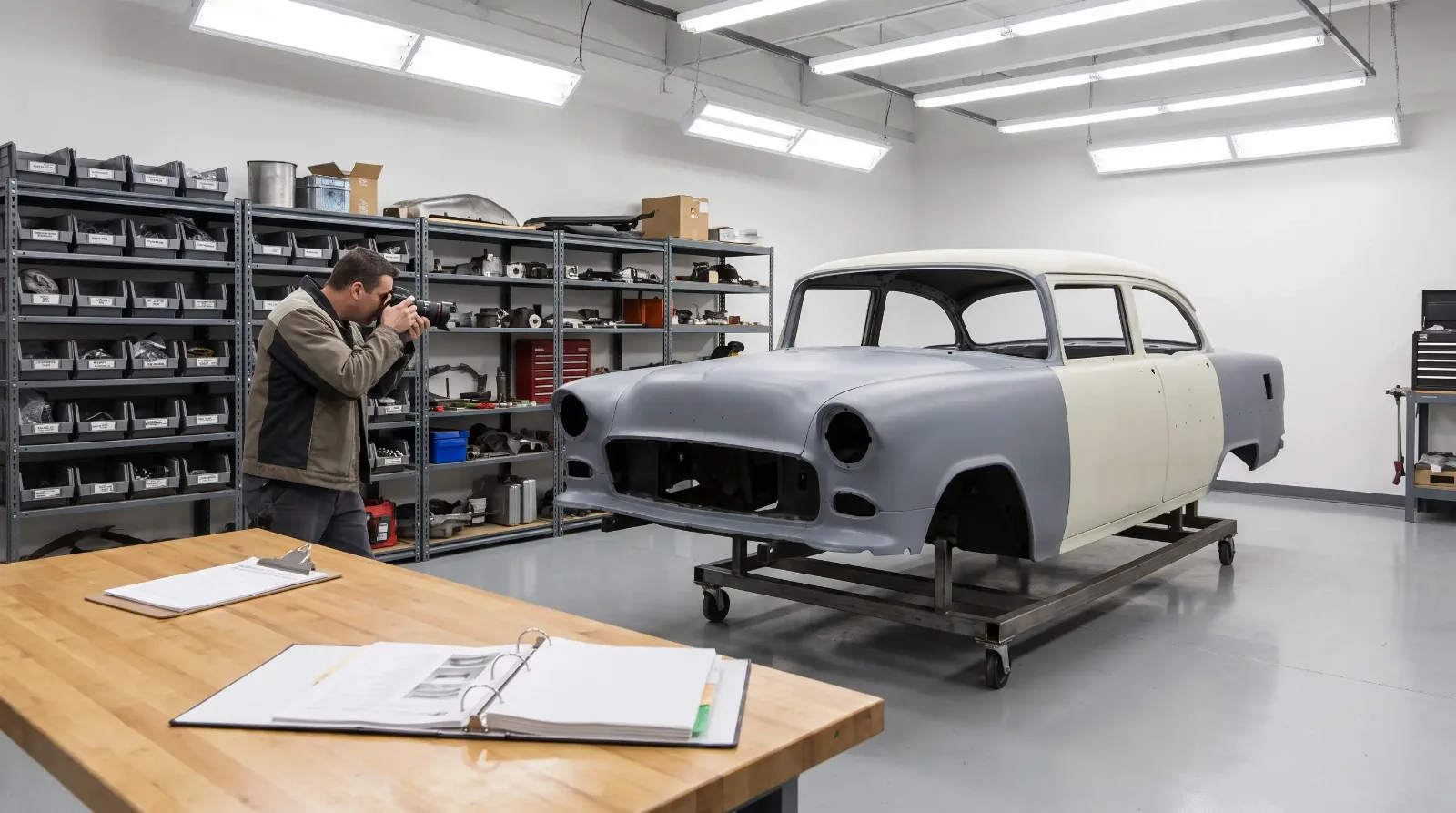
When you start looking at classic car restoration shops in the USA, keep a short list of what to measure. What follows is the list I use. It does not name shops, because the point is that you can apply it to any of them.
They document before they touch
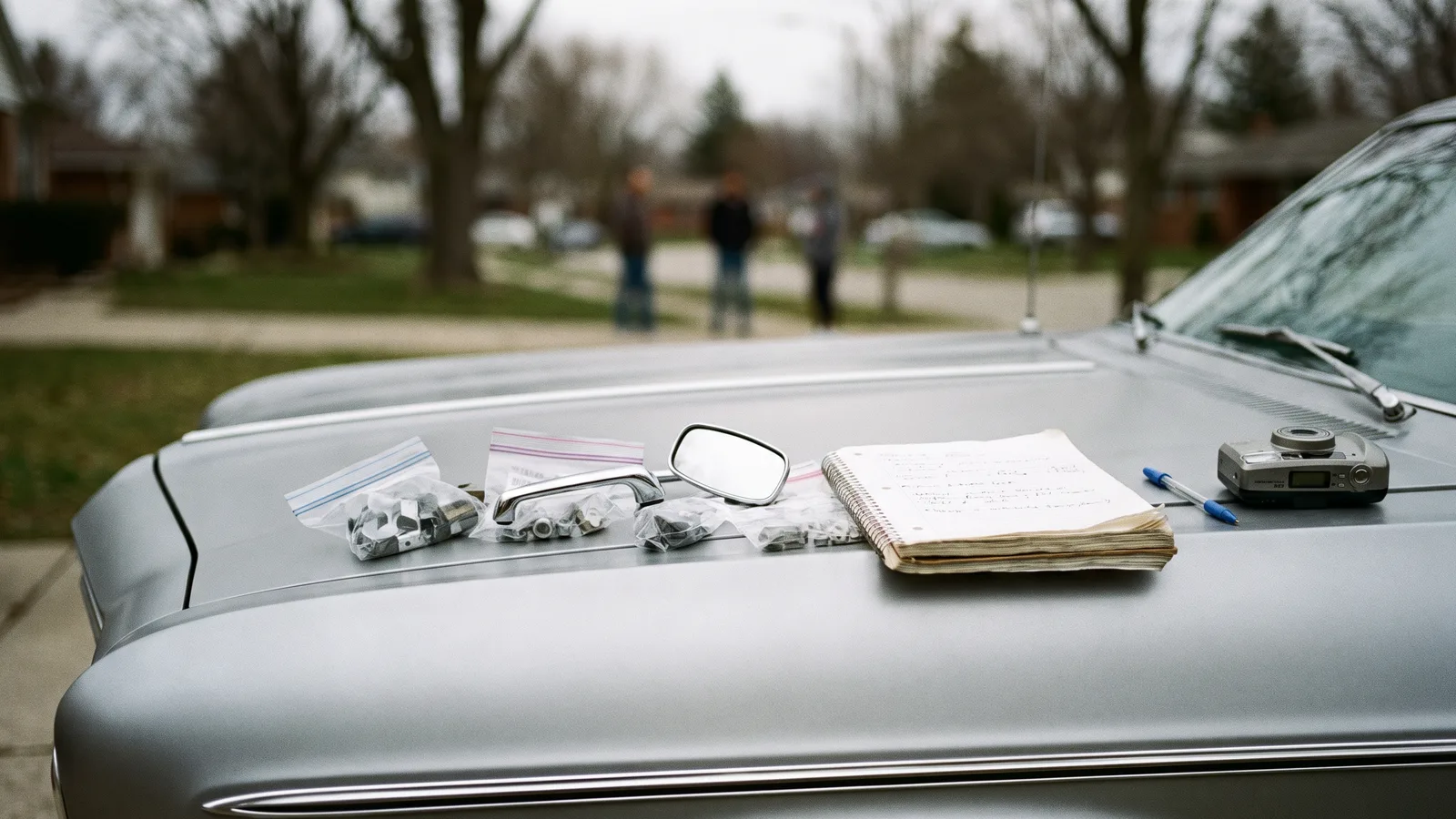
The first sign of a serious shop is what happens at intake. The car gets photographed from every angle. Tags, stampings, and casting numbers are recorded. The teardown is cataloged and bagged. A car without documentation is a conversation, and a car with it is a case closed. Shops that understand this extend the habit to the job itself, with dated photos at each stage.
Ask to see a sample project file from a finished job, with the customer's name removed. It should include intake photos, a parts list, a revision log for the estimate, and progress images. If the shop has never built one, you have learned something.
They know the correct details
Specialists are not defined by their equipment. They are defined by what they know about the model: correct finish on a bracket, the right type of fastener, which weld pattern the factory used. The best shops work from factory assembly manuals, original build records, and the judging guides of the marque's owner clubs. When you ask why a part is finished a certain way, they point to a source instead of an opinion.
| What you ask | A strong answer | A weak answer |
|---|---|---|
| How do you decide what is correct? | Cites factory manuals and judging standards | "That is how we always do it" |
| Can I see a car from my model? | Shows a completed job and explains the sourcing | Shows only generic show cars |
| How do you handle surprises? | Written change order before extra work | Verbal update and a larger invoice |
| Who does the work? | Names the technicians and their specialties | "The team" |
The weak answers are not proof of bad work. They are signals to dig further before you hand over a deposit.
They are honest about capacity
This is the one owners resist hearing. A shop with a flexible, immediate opening is often a shop without much work lined up, and the reasons for that can be innocent or not. A shop that is genuinely well regarded tends to have a schedule, and tells you straight when it can start. We cover that in more detail in our piece on waiting lists. For now, just notice whether the shop tells you its timeline without being pushed.
The best operators will also tell you when they are not the right fit. A shop that does frame off work on prewar cars may refer you elsewhere for a late model project. That kind of referral costs them a job and earns them a reputation, which is how this trade works.
They bill in a way you can audit
Cost transparency is not the same as being cheap. The best shops often charge more per hour than the average and still come out ahead, because their estimates track reality. Look for itemized invoices, hours logged by task, and a clear process for approving additional work. A written estimate with a range is more honest than a single number, and a shop that explains where the range comes from is a shop that has done this before.
Expect a deposit, expect progress billing, and expect to see parts receipts on request. Payment structures vary from shop to shop, so compare terms in writing instead of relying on what someone told you at a show.
"I do not care how nice the finished cars look. Show me the paperwork from the car before it was finished, and I will tell you what kind of shop you have."
Tom Ramirez
They protect the car while it waits
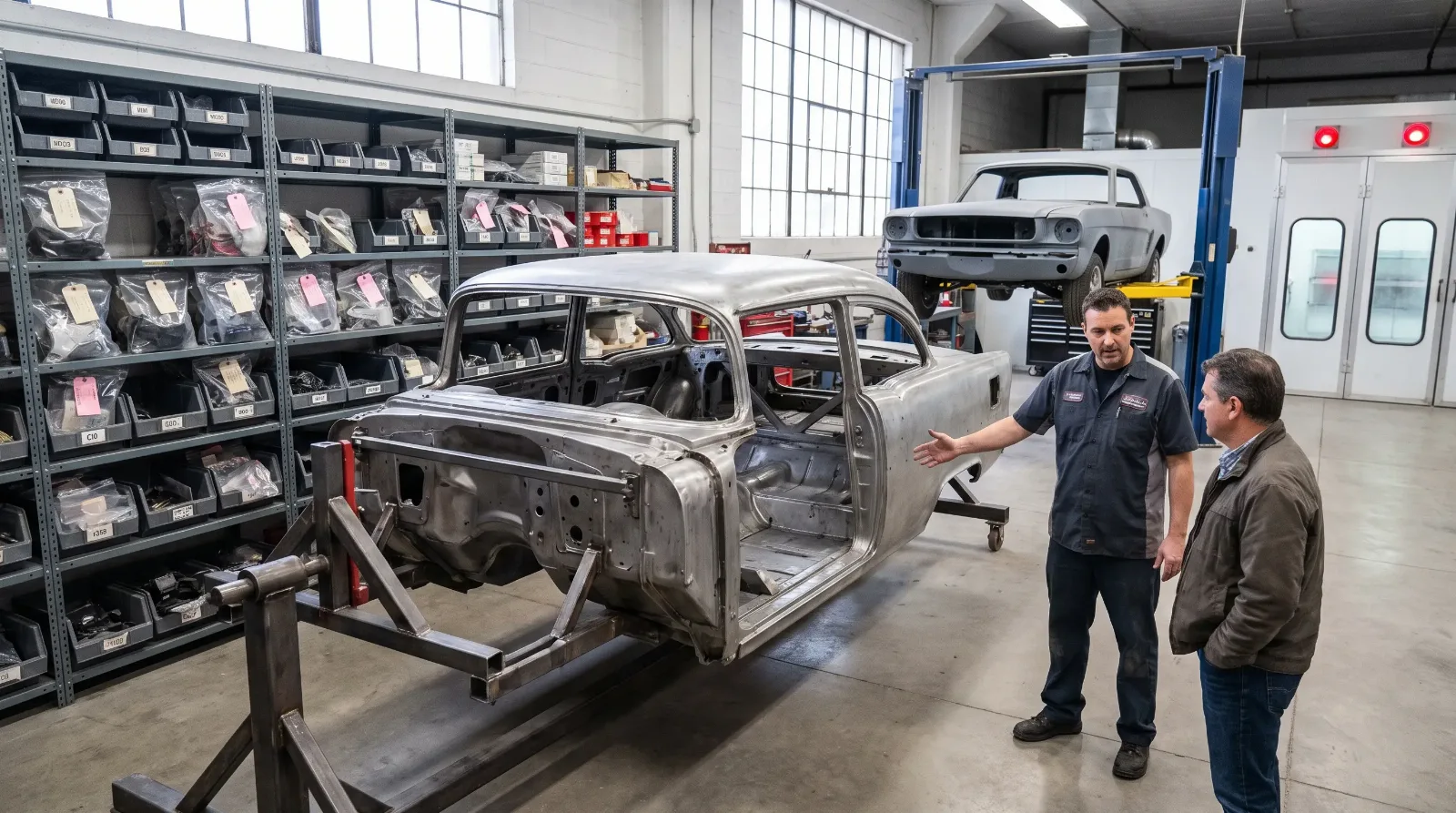
A restoration car spends much of its time sitting between stages. How it sits matters. Bare metal after blasting can flash rust in a humid shop within days unless it is sealed, and a body shell without bracing can flex. Ask what happens to the car between steps: whether it is stored indoors, whether panels are primed or coated after stripping, and whether removed parts are shelved by project rather than piled together. The answers are dull and they are the difference between a clean build and one that spends a month undoing its own storage.
Ask also how the shop communicates. Photo updates on a regular schedule, a named point of contact, and a written record of decisions are all signs that the owner is treated as part of the project. Silence for months followed by a large invoice is the pattern to avoid.
How to verify what they tell you
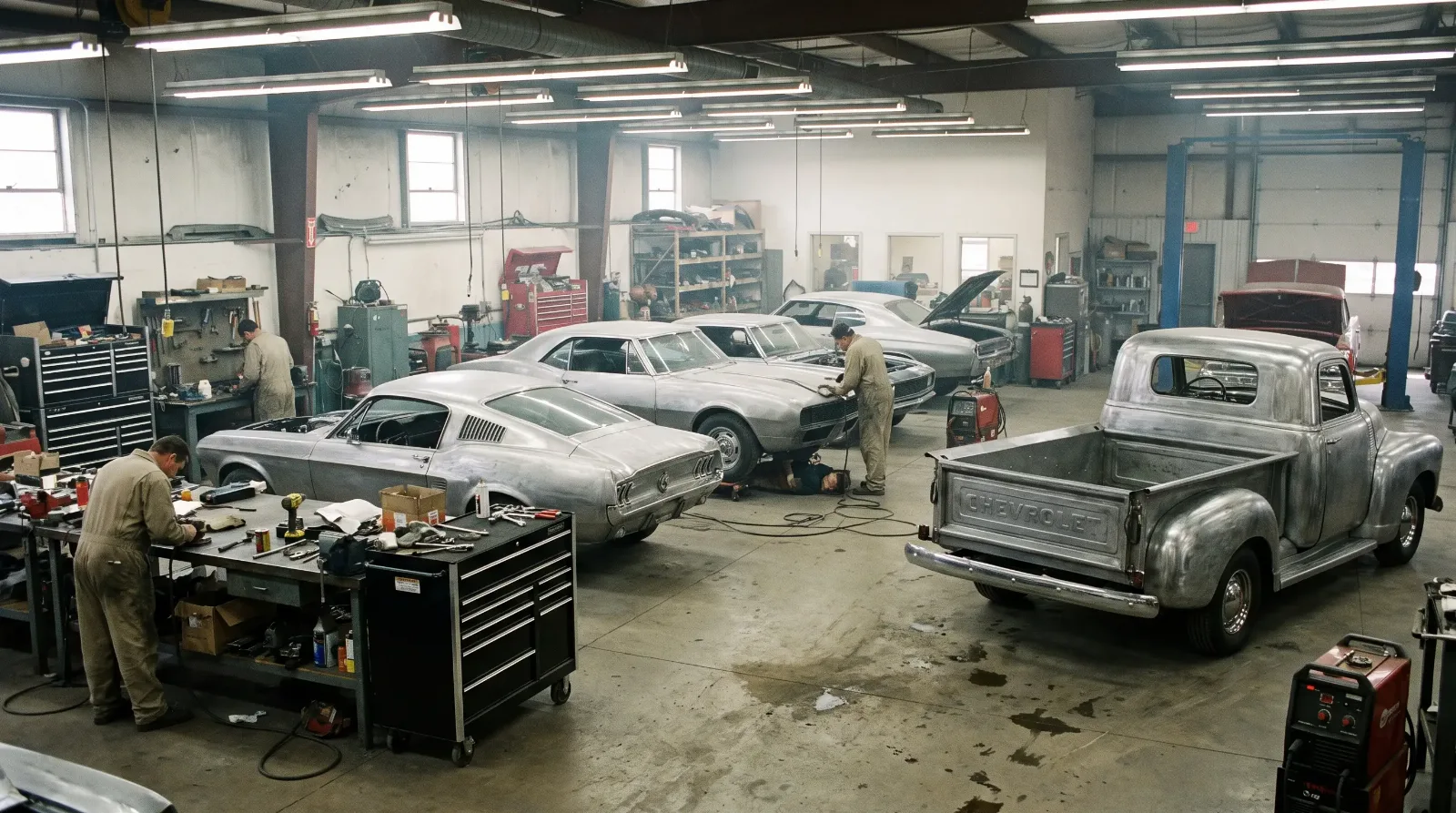
Talk to former customers, and ask them the dull questions: did the final bill match the estimate, did the shop return calls, were there surprises that were not handled in writing. Visit in person if you can. Look at the floor, the storage racks, and how cars in progress are protected. A clean, organized floor does not guarantee good work, but a disorganized one tells you about the way parts are tracked.
Finally, put your own homework next to theirs. Our guide on how to choose one walks through the full selection process, and the records based approach here slots into it as the part about quality. If a shop passes that test, the awards on the wall matter much less.
Sources and notes
- NCRS judging and awards, judging guides as an originality standard, point-based flight awards
- National Corvette Restorers Society, technical advisors and judging manuals used as restoration references
- Antique Automobile Club of America, published judging classes and judging guidelines for judged meets
- Concours d'Elegance (Wikipedia), how judges rate each component and the authenticity emphasis
- SEMA, the trade association with a dedicated automotive restoration council
Related Reading
Have a
Classic Car
for Sale?
Reach thousands of serious classic car collectors across the US.
Sell It Here →
Selling a classic? Here's how: compare the places to sell classic cars
Are You a Classic Car Dealer?
List your full inventory and connect with targeted classic car buyers.
Join as a Dealer →

About the author
Tom Ramirez
Corvette researcher and historian based in Bowling Green, Kentucky. Two decades documenting Corvette production history from original factory records.
More in Restoration & Tech
Comments
Be the first to comment on this article.