
I have seen a lot of carburetors that came out of a shoebox labeled "rebuilt" and went straight onto an engine that ran worse than before. The kit was new. The carb underneath was worn out. A rebuild kit replaces gaskets and soft parts. It does not fix a casting that has lost its shape.
Restoration & Tech
6 min read
Carburetor Rebuild: When to Rebuild, When to Replace
A carburetor rebuild is cheap until the casting is worn out. Here is how to tell a rebuildable carb from a core, what each route costs, and what ethanol does to old parts.
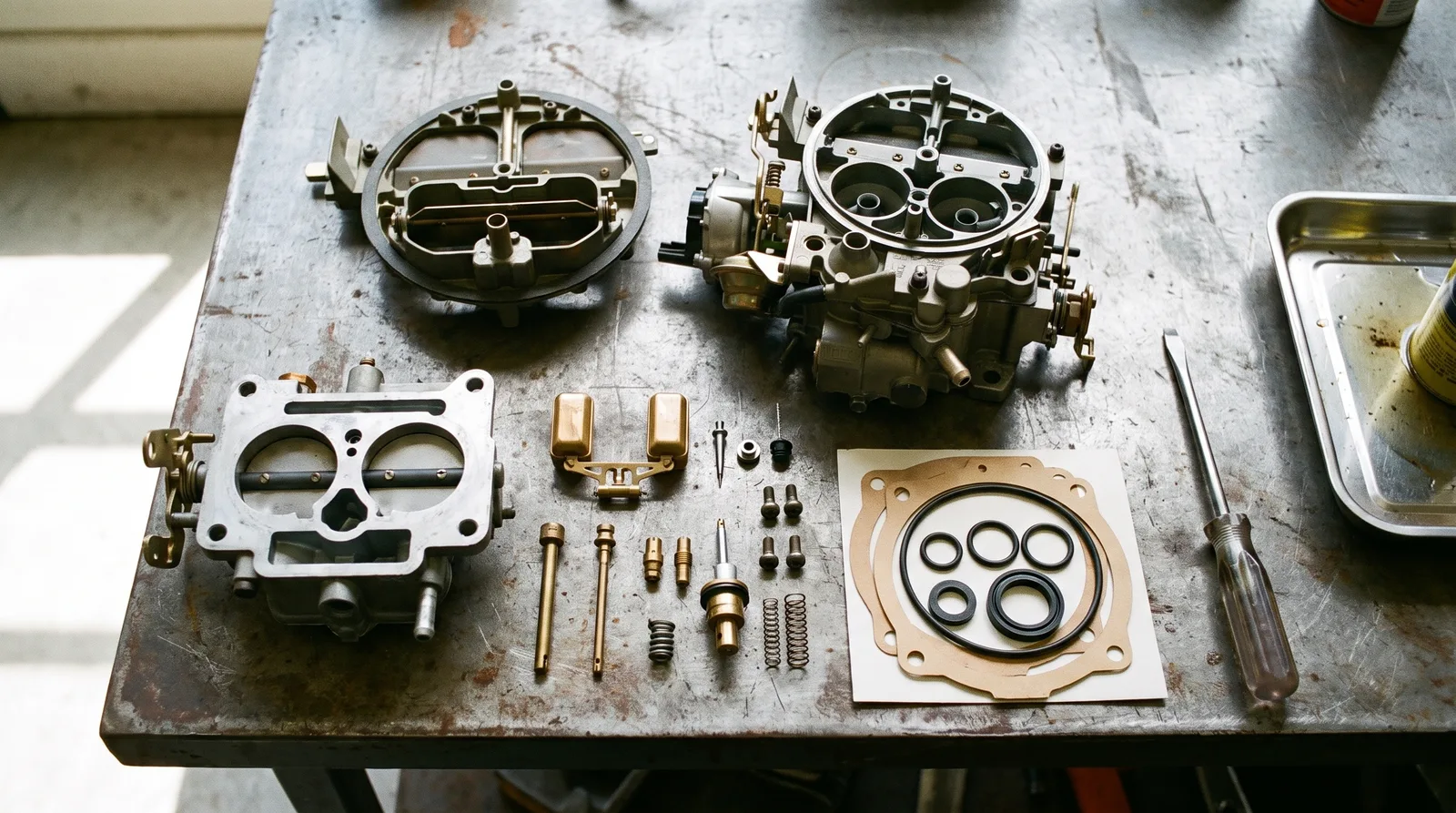
That is the whole decision in two sentences. Before you spend anything, you need to know which kind of carburetor is on the bench. This is one of the jobs in a classic engine rebuild that people routinely underestimate, and it is also one of the few where a good decision saves real money.
What a rebuild kit actually does
A standard kit gives you gaskets, a needle and seat, a pump diaphragm or cup, and some small seals and check balls. Those parts wear, harden and swell, so replacing them restores the original function when the body is in good condition. Kits for common Holley, Carter and Rochester units usually cost well under a hundred dollars or a little over, depending on the model, and a careful first timer can finish a simple two barrel in an afternoon.
Cleaning matters more than the kit. Varnished fuel leaves a hard film in the passages, and a spray can does not reach it. Soak the body in a proper carburetor cleaner or run it through an ultrasonic tank, then blow the passages out and check each jet with light. A plugged idle circuit is the number one reason a freshly rebuilt carb will not idle.
Photograph the unit from every angle before disassembly, and keep the parts in labeled containers. Many carburetors have small differences in bleeds and linkages that matter at reassembly.
Signs the carb needs replacing, not rebuilding
Look for wear in places the kit does not touch. Wobble in the throttle shafts lets unmetered air into the engine, which makes the idle impossible to set. You can check by wiggling the shaft up and down in its bore, and one classic workshop guide puts the trouble point at more than about 0.005 inch of clearance. Excessive play is a vacuum leak that no gasket will cure, and fixing it means reaming and bushing the bores, which is shop work.
Check the base flange for warpage with a straightedge, and look for cracks around the bowl and the choke housing. Pitted metering surfaces and stripped screw holes are other warning signs. Stuck or broken choke parts are common, and some are only available from specialist suppliers.
| Route | Best for | Typical cost | Risk |
|---|---|---|---|
| DIY rebuild kit | Sound body, no shaft play | Tens of dollars | Missed wear, plugged passages |
| Professional rebuild | Original carb on a numbers matching car | A few hundred dollars | Quality varies by shop |
| Remanufactured unit | Common Rochester, Carter, Holley | A few hundred dollars, often more | Wrong calibration for your engine |
| New aftermarket carb | Driver, modified engine | Several hundred dollars, more for large units | Not period correct |
If the quote for a professional rebuild approaches the price of a new unit, the new unit usually wins on a driver. If the car is a numbers matching restoration, the original casting, with its date code, is what you pay for, and the rebuild is worth the cost.
Ethanol and old parts
Fuel changed under these carburetors. Gasoline blended with ethanol, typically up to ten percent at the pump, attacks old rubber, can swell or harden some fuel bowl gaskets, and pulls moisture into the bowl, which leads to corrosion during storage. When you buy a kit, look for one that states its soft parts are ethanol compatible, since older rubber compounds were designed for straight gasoline.
Fuel lines and the fuel pump matter just as much as the carburetor. A new carb fed by a tired pump or a collapsing rubber hose will starve under load and look like a carburetor fault. Replace rubber lines with ethanol rated hose, and fit a filter you can see.
Multiples and specialty carburetors
Everything above gets harder when the engine runs more than one carburetor. A multi carb setup has to be balanced and synchronized, and every unit must match in wear and calibration. The same reasoning applies to period multiples such as Tri-Power and six barrel setups, where one worn throttle shaft throws the whole intake out of balance. Rebuilding those is a job for someone who has done it before.
If you do not have the tools or the patience, there are shops that still tune carbs and will rebuild, flow test and calibrate a unit for your engine. Ask whether they bench test, and ask what the warranty covers. A shop that can answer both without hesitating is worth the price.
One more point on cost. A rebuild that fails and has to be redone costs more than a replacement bought once. If you are unsure of your own skills, pay for a professional rebuild on the first carburetor and watch how it is done. Many owners then handle the next one themselves with confidence and the right spec sheet.
Tuning after the rebuild
A rebuilt carburetor is only as good as its setup. Set the float level to the factory spec, adjust the idle mixture screws with a vacuum gauge, and confirm the accelerator pump shot with a measuring cup. Check the choke for full travel and the fast idle cam for correct engagement.
"The kit is the cheap part. The expensive part is guessing. Measure the shaft play, check the float, and you will know in ten minutes whether this carburetor deserves the money."
Mike Sullivan
Carburetion also depends on the spark. Weak ignition makes a good carb look bad, and many owners chase fuel problems that are really ignition problems. Before you blame the carb again, look into electronic ignition, which removes a common source of inconsistent running and makes tuning far easier.
Sources and notes
- U.S. Department of Energy, Ethanol Blends, most U.S. gasoline contains up to 10 percent ethanol (E10)
- FuelEconomy.gov, Ethanol, ethanol content varies by region; E15 is restricted to 2001 and newer vehicles
- Moss Motoring, A Complete Carburettor Rebuild, checking throttle shaft play, marking plate orientation, rebushing or oversize shafts
- Wheels Alive, Ethanol and classics, ethanol attacks old rubber and absorbs moisture in classic fuel systems
- Wikipedia, Carburetor, general carburetor design, circuits and components
Related Reading

About the author
Mike Sullivan
Detroit-area muscle car enthusiast and restoration specialist with three decades of hands-on experience working on American iron.
More in Restoration & Tech

Comments (1)
K
Kevin Tran
3 days ago
ngl my first carb rebuild was a buddy's datsun, and yep, it was the plugged idle circuit