
You can spend months and thousands of dollars on a rebuild and lose it all in the first five minutes. A flat tappet cam that is not broken in properly wipes a lobe, sheds metal into the oil, and takes the lifters with it. The failure is quiet at first. Then the engine starts ticking and misfiring, and the damage is done.
Restoration & Tech
6 min read
Engine Break-In: Flat-Tappet Cams and Zinc Oil
Flat tappet cam break in is the first 20 minutes that decide the life of a rebuilt engine. Here is the oil, the lube, the rpm and the mistakes that wipe lobes.
The fix is not complicated. It is a short procedure, the right oil, and the discipline to follow it. This article covers all three, and it assumes the machine work is finished. If you are earlier in the process, start with the full guide on what to do after the rebuild and how the whole sequence fits together.
Why flat tappets are the problem
A flat tappet lifter slides against the cam lobe. It does not roll. That sliding contact carries high pressure at the lobe nose, and the surfaces survive only because a thin film of anti wear additive forms on them. The most common additive is zinc dialkyldithiophosphate, usually shortened to ZDDP.
Modern passenger car oils carry far less ZDDP than they did decades ago. Phosphorus limits were reduced in the API SM and later categories, with phosphorus capped at roughly 800 parts per million in the common 20 and 30 grade oils, mainly to protect catalytic converters. Roller cams in modern engines do not need the additive. Your old flat tappet engine does.
Lifters rotate in the bore because the cam lobe is slightly tapered and the lifter face is slightly convex. That rotation spreads wear. A lifter that does not spin will wipe its lobe in minutes.
Matched parts and the first oil
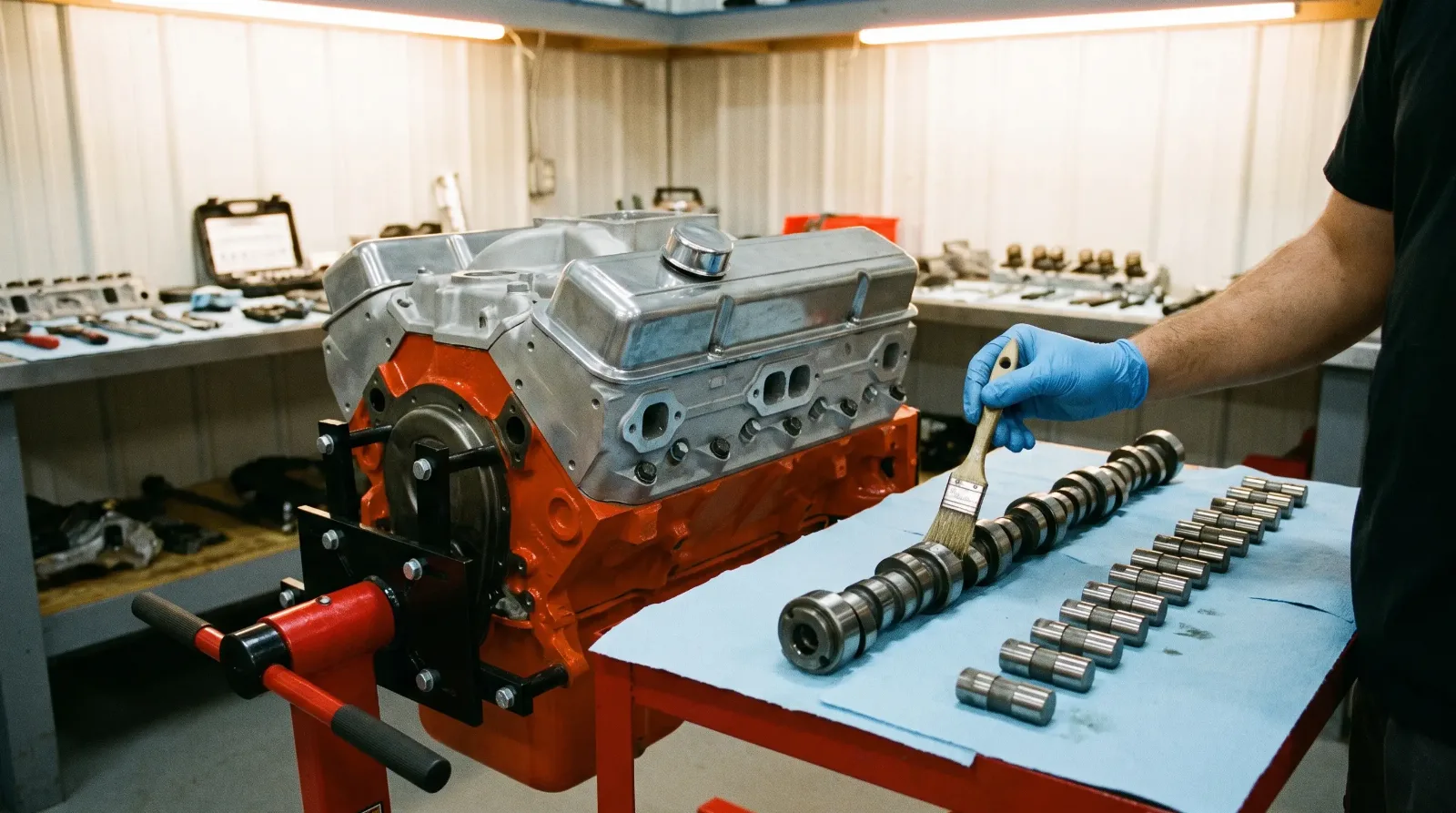
Use the cam and lifters as a matched set. Mixing a new cam with old lifters is the quickest route to a flat lobe, because used lifters have a worn crown and a hardened face that no longer fits the new profile. The same goes for a new set of lifters on an old cam.
Coat every lobe and the face of every lifter with the assembly lube that came with the cam. Do not substitute engine oil, and do not wipe it off. Use the supplied break in additive in the first fill, or choose a dedicated high zinc break in oil. Skip oils with the API starburst, which are formulated for modern roller cam engines, and choose a low detergent break in oil; many builders favor a conventional break in oil for the first run.
The numbers are straightforward. Run a high zinc break in oil, often 1,400 parts per million or more, for the first run, then keep a classic or racing oil in the engine for life. Many owners also add a ZDDP supplement at oil changes. That works, but it is a patch. A properly formulated oil is better.
The break in procedure
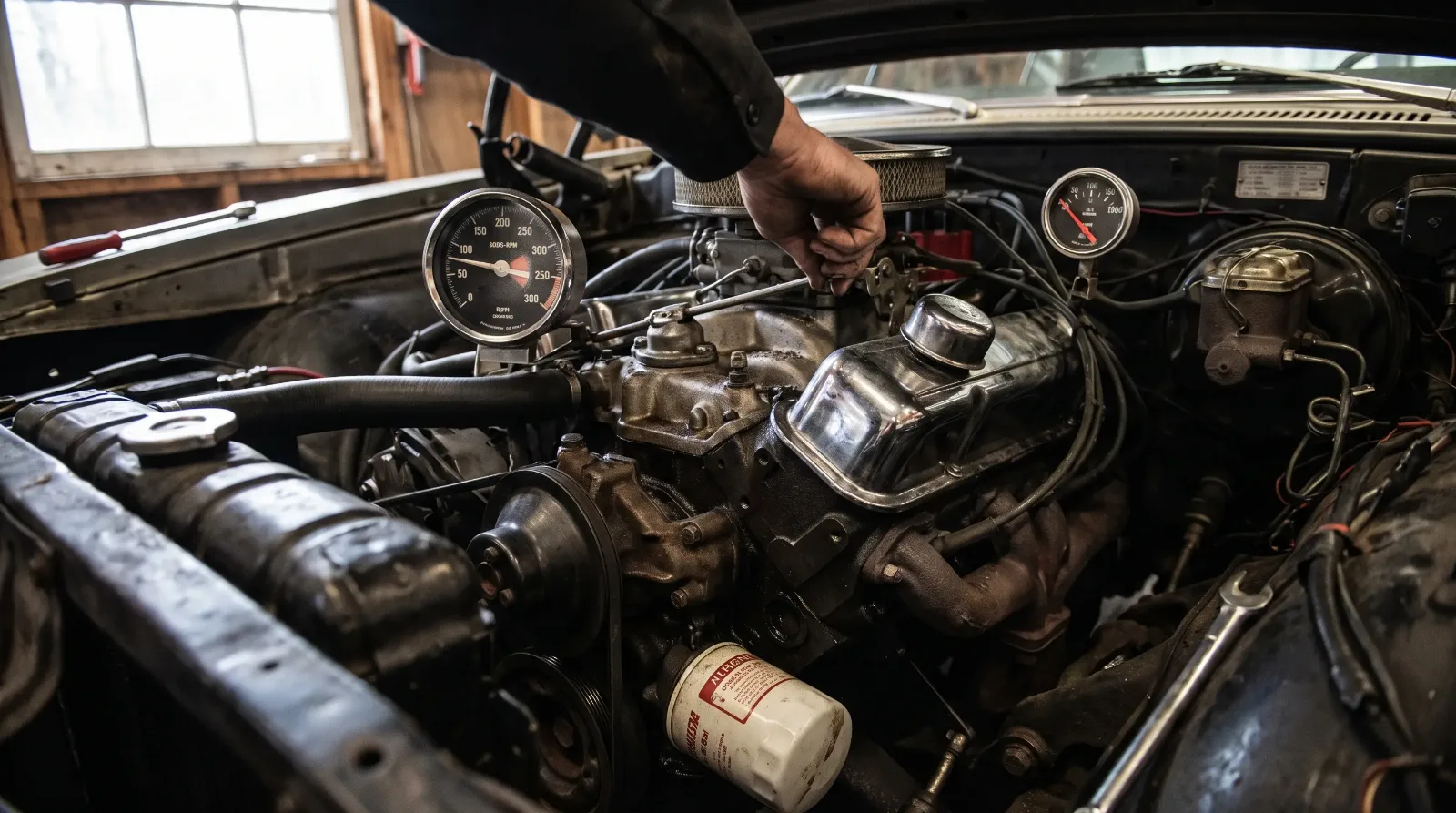
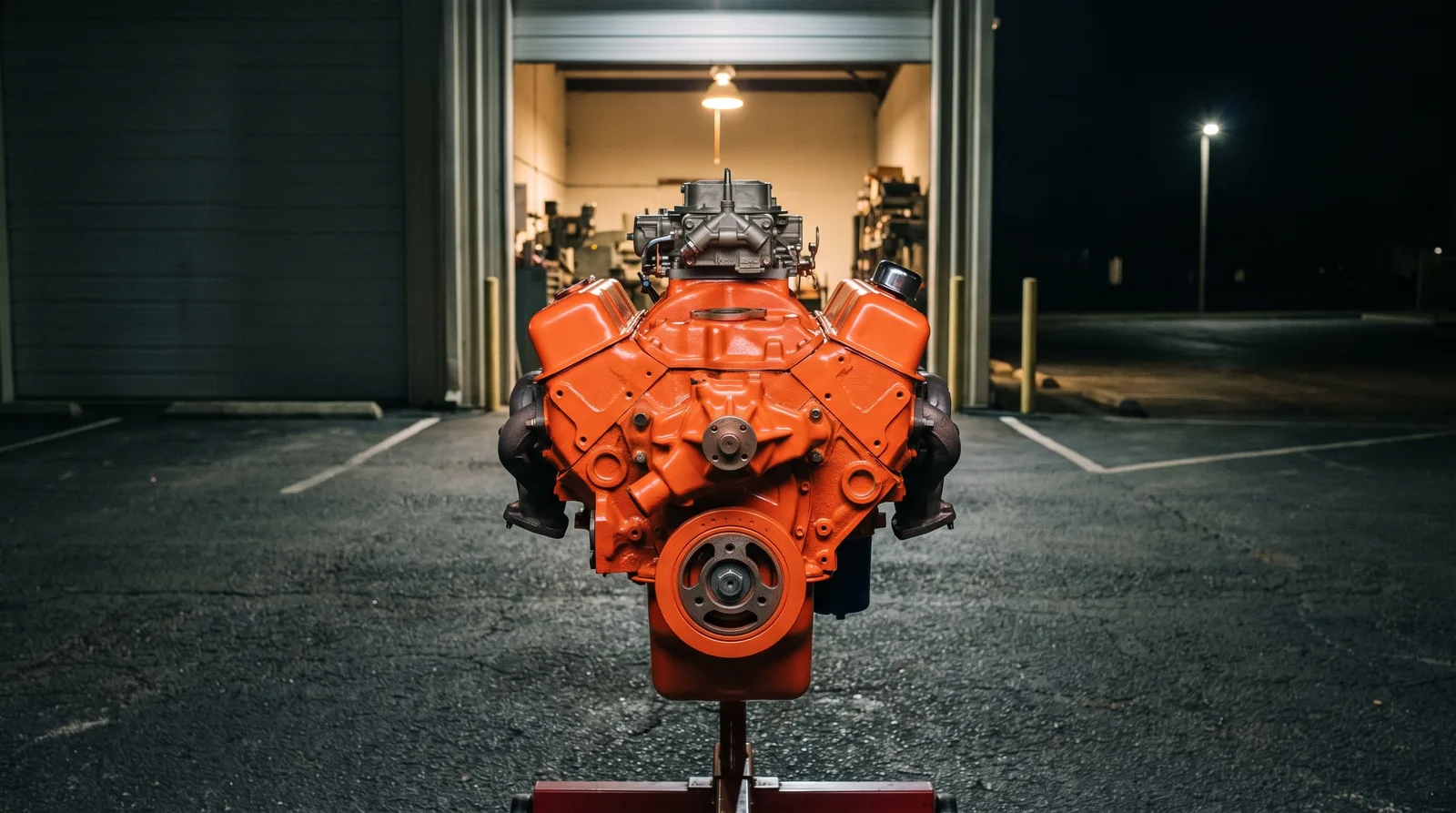
Prime the oil system before you fire the engine. Spin the pump with a priming tool until oil shows at every rocker, and confirm pressure on a gauge. Set the initial timing and carburetor idle before you crank, because the first start has to catch quickly and hold rpm.
- Start and hold rpm. The moment the engine catches, bring it to 2,000 to 2,500 rpm and keep it there. Do not let it idle.
- Run for 20 to 30 minutes. Vary the rpm slightly within that range to keep the oil splashing onto the cam.
- Watch the vitals. Check oil pressure, coolant temperature and leaks. Shut it down at once if pressure drops or you hear a tick that does not fade.
- Change the oil. Drain the break in oil after the run, cut open the filter, and look for metal. A little fine fuzz is normal. Chunks and flakes are not.
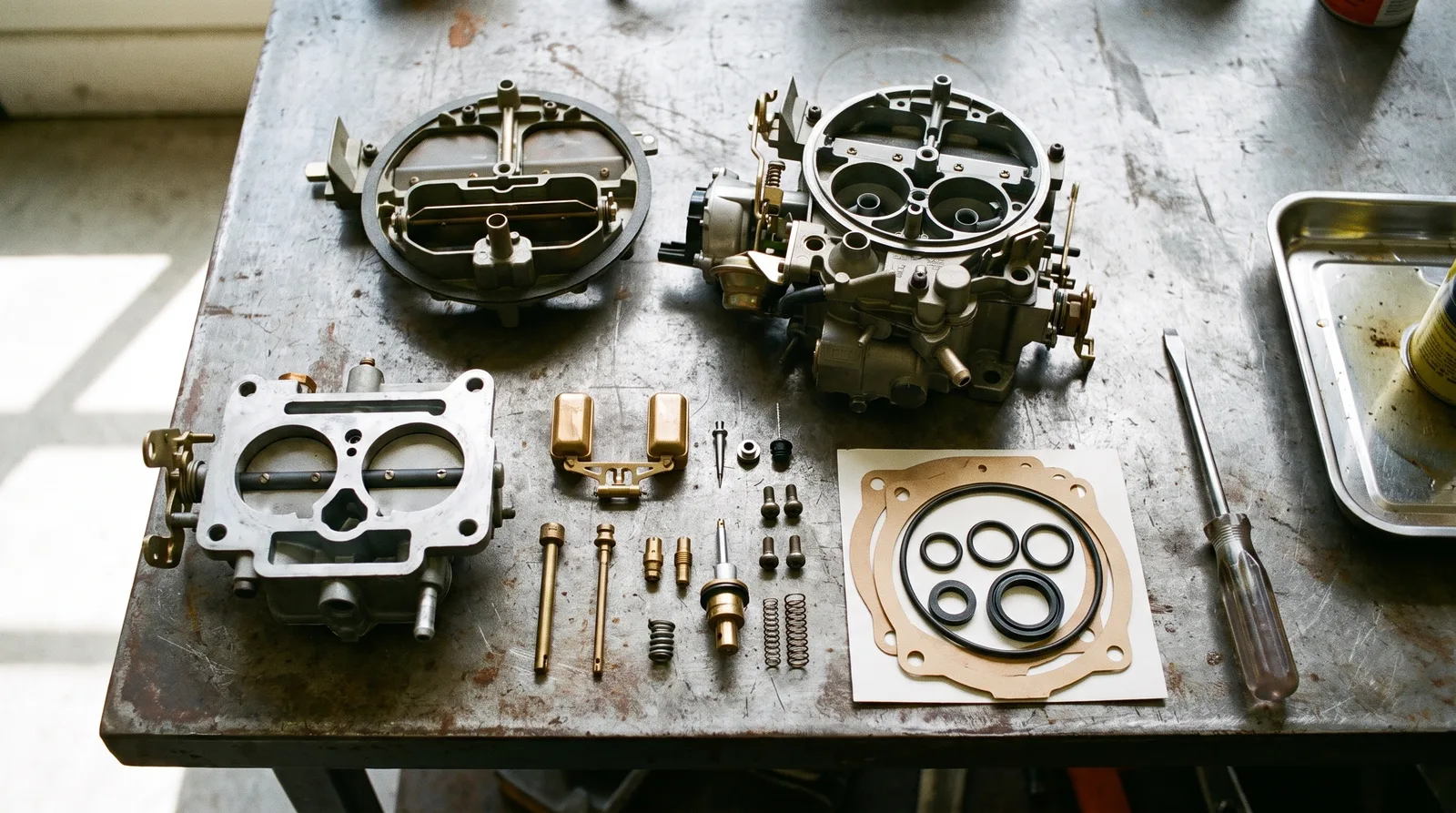
Idling in the first minutes starves the cam of splash oil, and the lobes run dry exactly when they need the most protection. If the engine will not hold rpm because the carburetor or the timing is off, stop and fix that before the run. A first start is no time for experiments, and it helps to have the carburetor rebuild finished and bench tested beforehand.
Spring pressure and what to avoid
Valve spring pressure is the second variable. High seat pressure loads the cam lobe hard, and a new cam is at its most fragile. Some cam manufacturers recommend running reduced spring pressure for break in, often by removing the inner spring on a dual spring set and reinstalling it after break in. Follow the maker's instructions for your specific cam, because the numbers differ by grind.
| Variable | Target | Mistake |
|---|---|---|
| Cam and lifter set | Matched, new together | Reusing old lifters |
| Assembly lube | Cam lobes and lifter faces | Wiping it off or using plain oil |
| Zinc content | High zinc break in oil, 1,400 ppm or more | Fresh modern API oil |
| Run rpm | 2,000 to 2,500 | Idling after first start |
| Run time | 20 to 30 minutes | Shutting down early |
Avoid dry starts. Long cranking without oil pressure scrubs the lobes. Avoid long idle periods on the first few drives as well, and keep the engine off the dyno at full load until the first oil change.
"A cam lobe has about half an hour to learn its lifter. Give it oil, speed and a matched set, and it will last decades. Skip any one of those and you will be pulling the engine."
Dan Reeves
When to skip flat tappets entirely
If originality is not a concern, a hydraulic roller conversion removes the whole problem. A roller lifter rolls instead of sliding, so it does not depend on zinc, and it permits more aggressive lobe profiles. The conversion kits cost more, usually several hundred dollars more than a flat tappet set, and the engine may need different pushrods and valve cover clearance.
For a numbers matching restoration, the flat tappet stays. For a driver, run the numbers: parts cost, the risk of a single bad start, and what the oil will cost over the years. Either way, the break in is the same discipline, short and unforgiving. Do it once, do it right, and change the oil afterwards.
Sources and notes
- OnAllCylinders: how to break in a flat tappet cam, rpm and time, reduced spring loads, low detergent break in oil, oil change afterwards
- OnAllCylinders: best way to break in a flat tappet camshaft, API SM zinc reduction, lobe taper and lifter rotation, moly break in lube, inner spring removal
- MOTOR Magazine: Performance Perspectives, April 2010, ZDDP history, catalytic converter limits, break in oil and classic oil zinc levels
- Wikipedia: Zinc dialkyldithiophosphate, API SM and SN limits on 20 and 30 grade oils and effect on flat tappet engines
- Wikipedia: Tappet, flat, hydraulic and roller tappets, rotation in the bore, convex base profile
Related Reading
Have a
Classic Car
for Sale?
Reach thousands of serious classic car collectors across the US.
Sell It Here →
Selling a classic? Here's how: the best sites to sell a classic car
Are You a Classic Car Dealer?
List your full inventory and connect with targeted classic car buyers.
Join as a Dealer →

About the author
Dan Reeves
Performance engine builder from North Carolina's motorsports corridor, focused on swaps, forced induction and making real, repeatable power.
More in Restoration & Tech

Comments
Be the first to comment on this article.