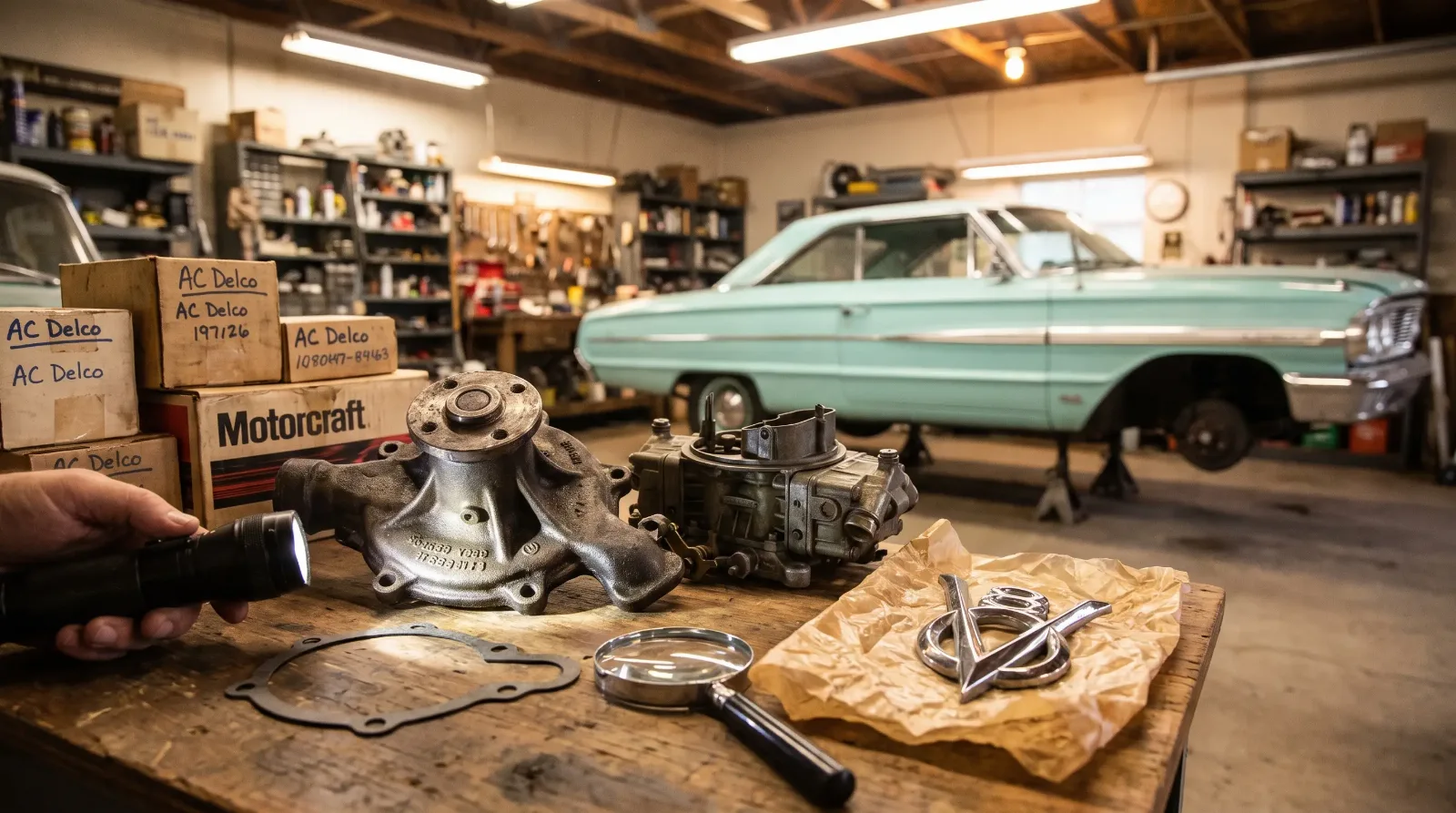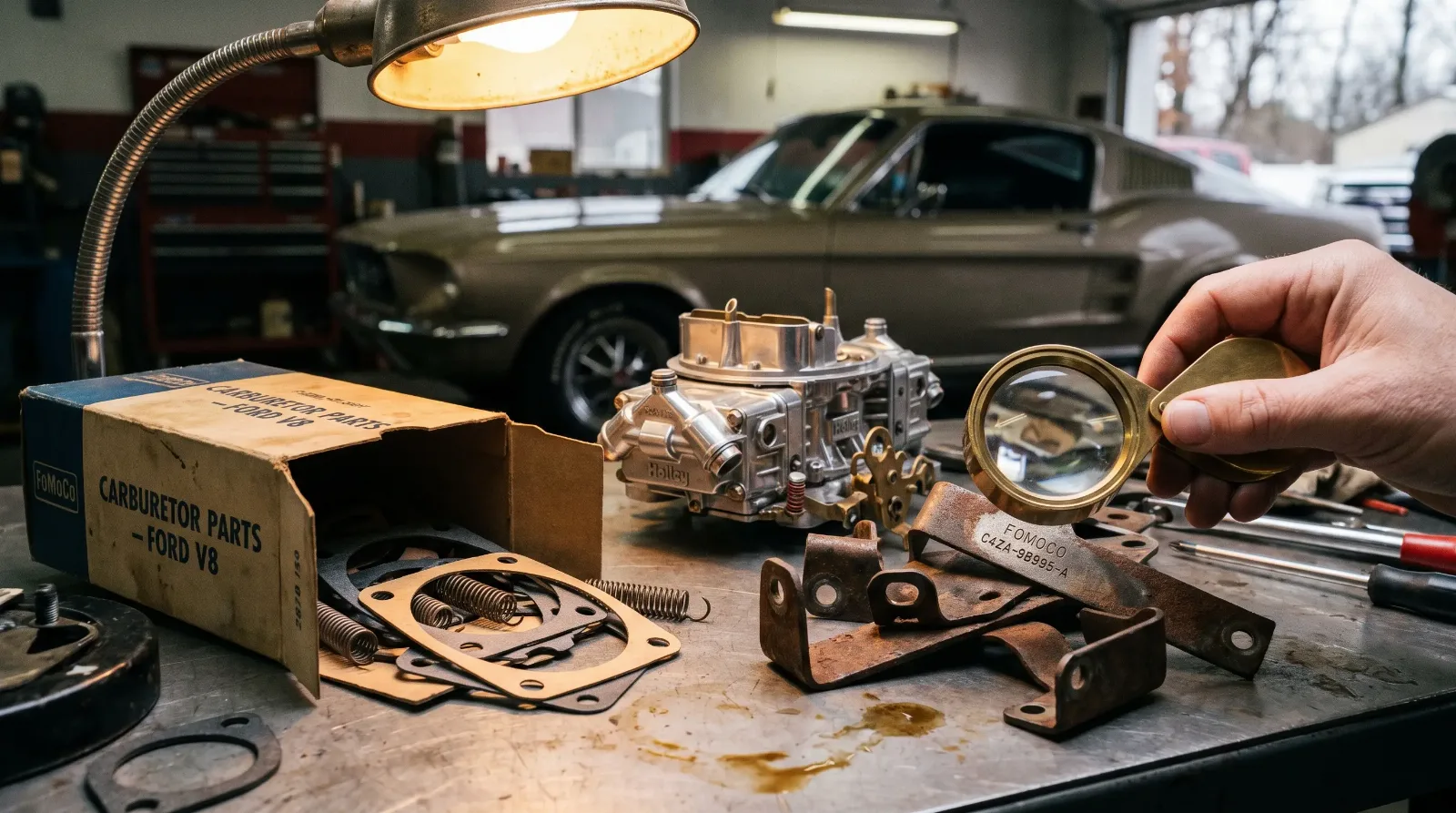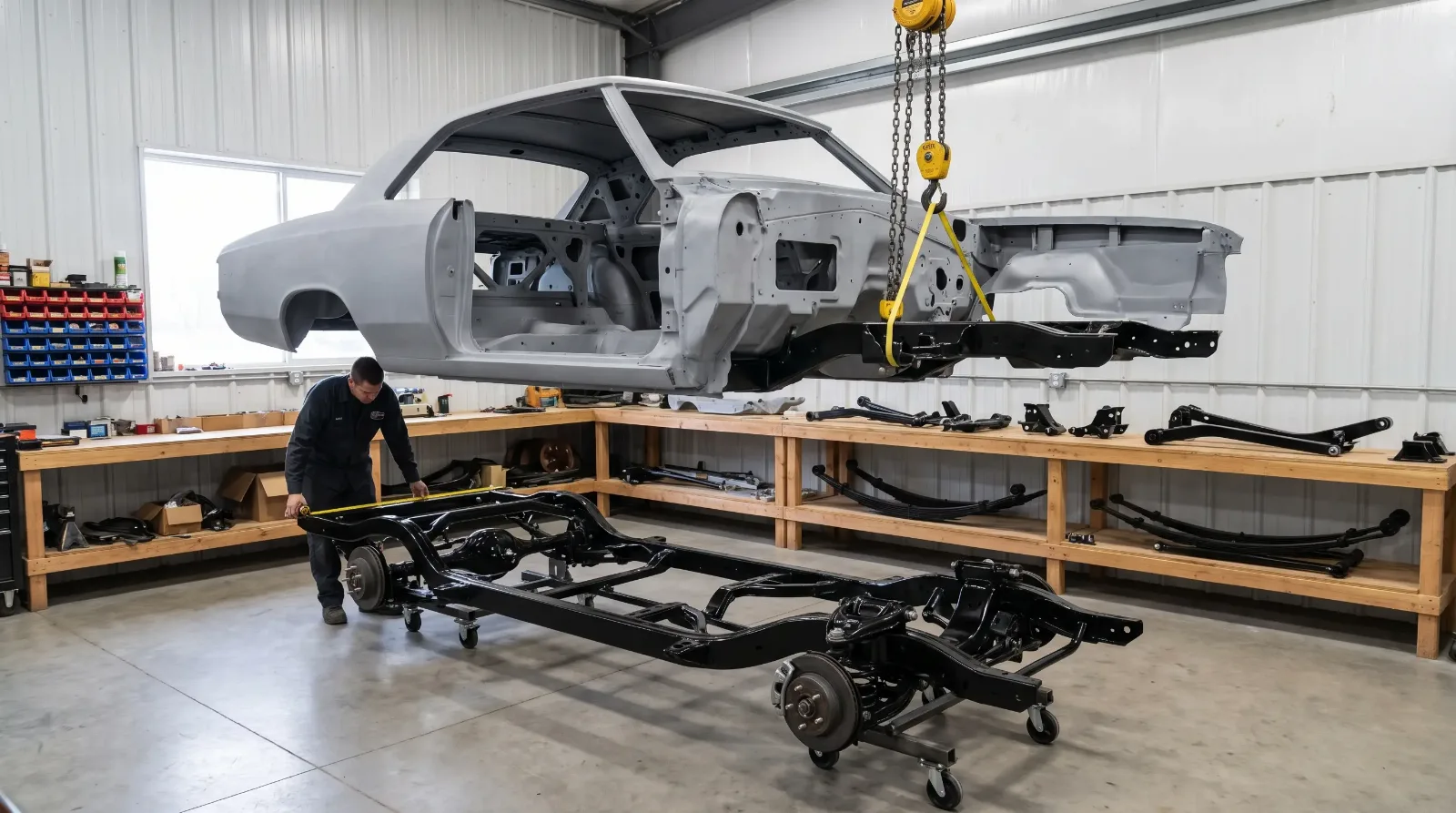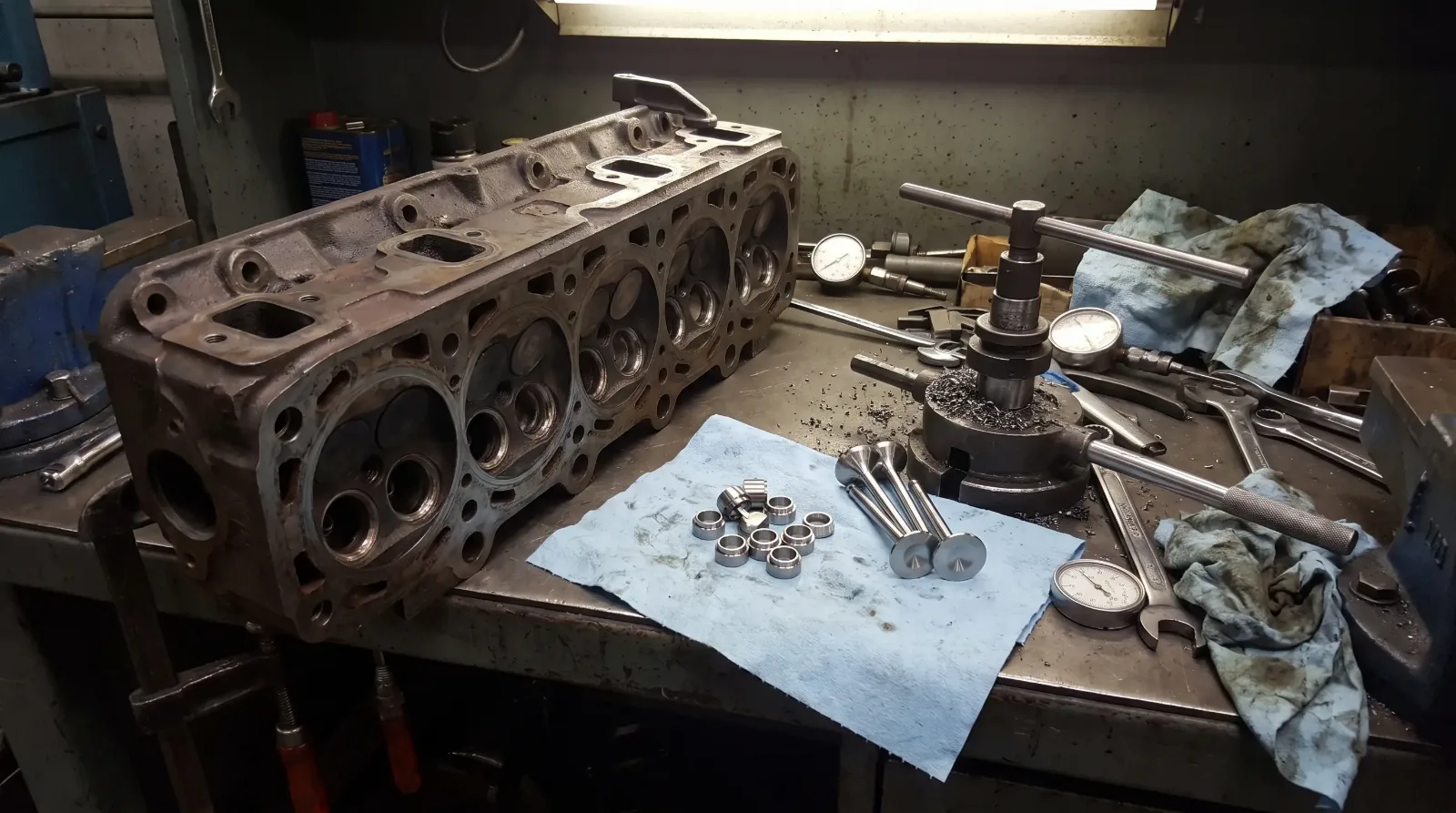
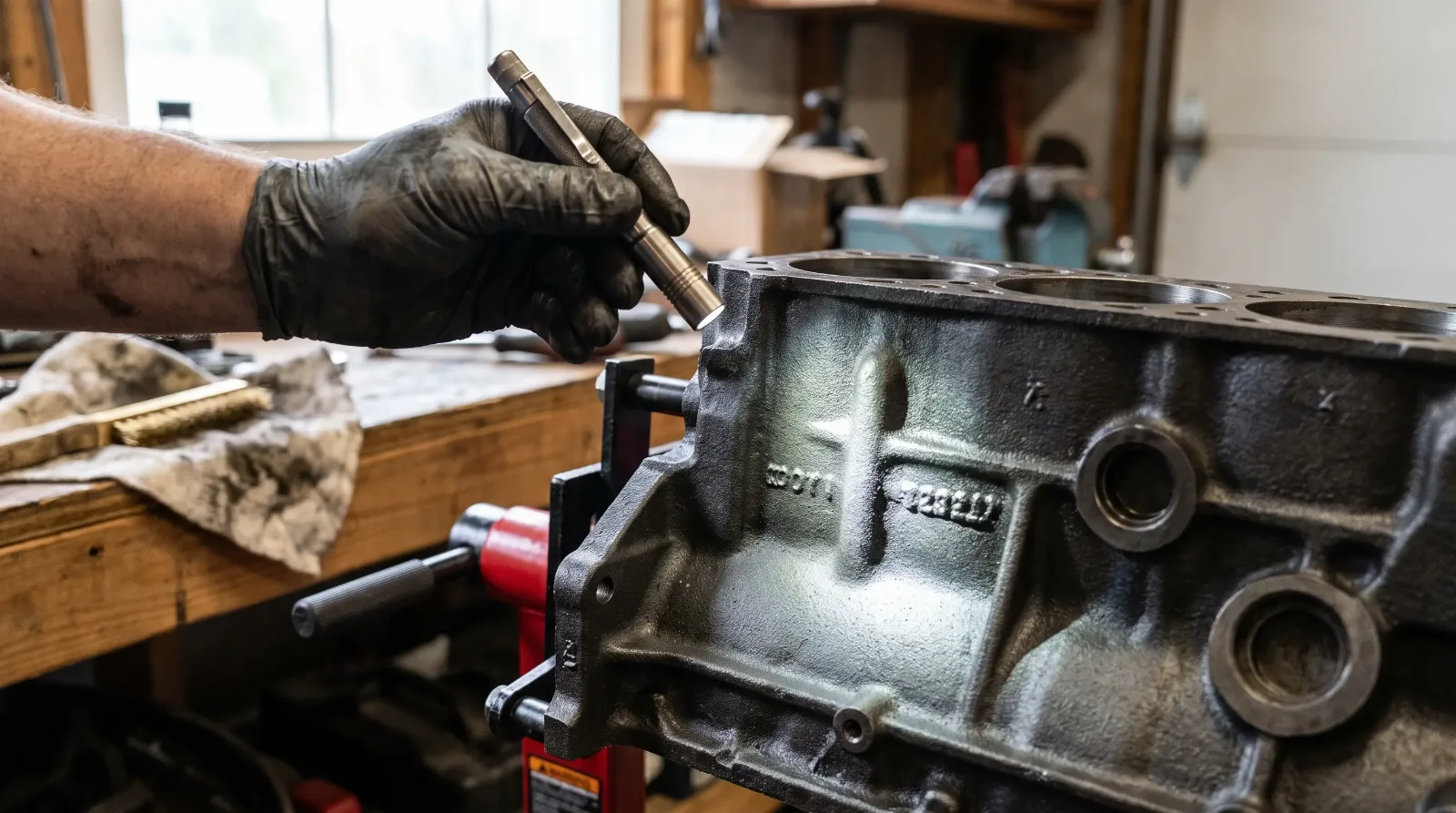
Somebody at every club meet has a theory about an engine, and it usually collapses when somebody else crawls under the hood with a flashlight and a rag. The numbers cast into an engine do not argue. They sit there in raised metal, in a spot most people never clean, and they settle the question of what the part is and roughly when it was made.
Casting numbers, part numbers and date codes are three different things, and mixing them up is how people end up wrong with great confidence. This is how I keep them straight, and why it matters for any set of restoration parts you plan to buy.
Three kinds of numbers
A casting number is molded into the metal when the part is cast. It identifies the casting itself, the rough shape that comes out of the mold, not necessarily the finished part. One casting can become several different finished parts after machining.
A part number is the number the manufacturer assigned to the finished, usable part. It may be stamped, printed on a tag or listed in a parts catalog. It often does not match the casting number, which is a common source of confusion.
A date code tells you when the part was made, usually by a stamp or a cast-in marking. Many manufacturers used a letter for the month and numbers for the day and year, but the format varied by company, part and period. Never assume one system applies across makes.
| Type | Where it is found | What it tells you |
|---|---|---|
| Casting number | Cast into blocks, heads, manifolds, housings | Which casting it is, and the likely application |
| Part number | Stamped, tagged or printed on finished parts | Exact part as listed in a catalog |
| Date code | Cast or stamped near the casting number | Approximate production date |
| Assembly stamp | Stamped on a pad on the block or other surfaces | Engine or unit identity, sometimes tied to the VIN |
Finding the numbers
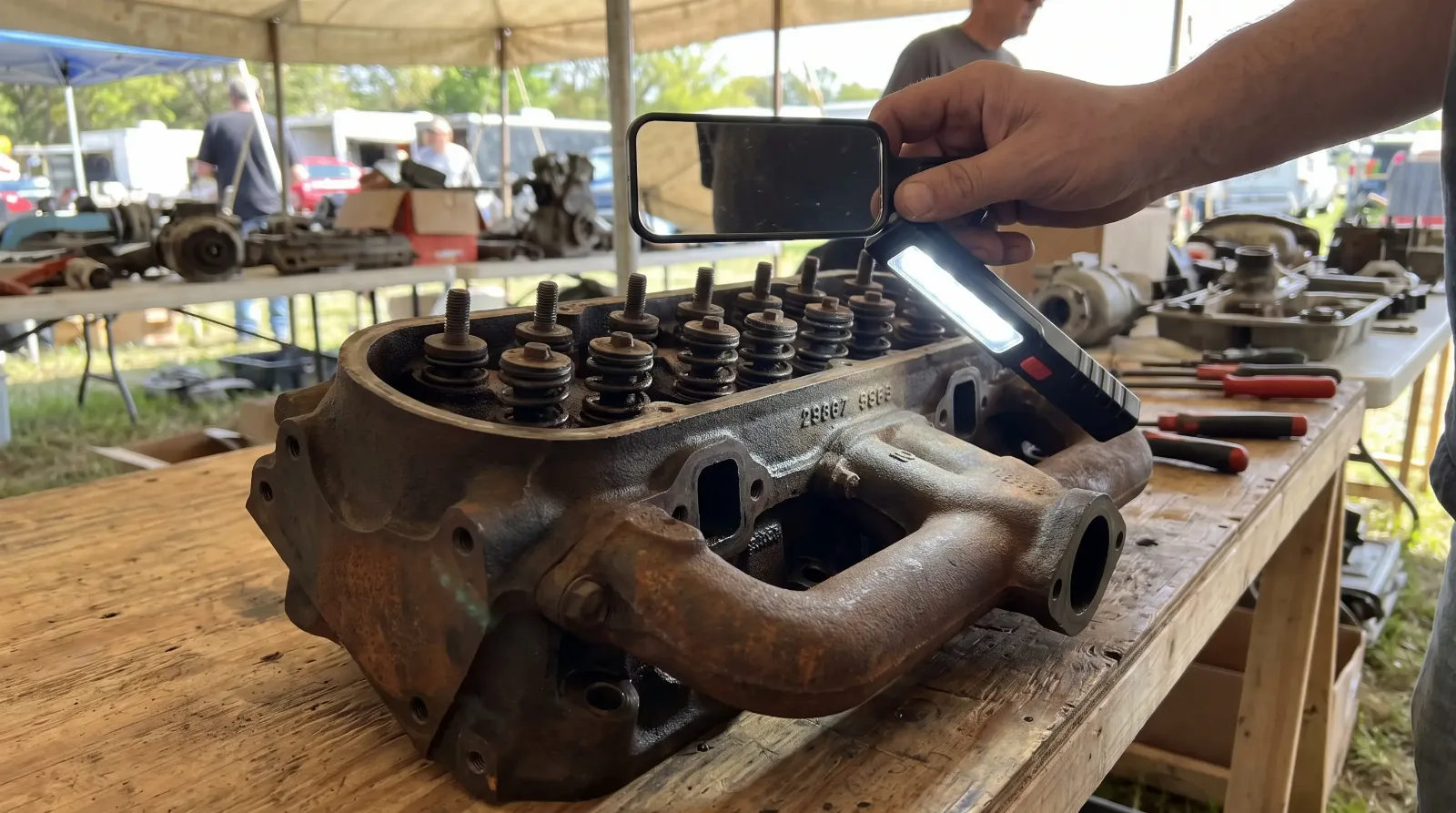
Numbers hide in awkward places. On a V8 engine block, casting numbers are often on the back of the block near the bellhousing, on the side or under the intake. On small-block and big-block Chevrolet V8s, the block casting number sits on a ledge at the rear of the block, most often on the driver's side, while date codes may be nearby or on a different face. Cylinder heads usually carry numbers on the end or under the valve cover area. Intake and exhaust manifolds have them on the outside surfaces. Transmissions, rear axles and carburetors have their own tags or stampings.
Clean the area first. Decades of grease and paint hide the metal, so use a degreaser and a brass brush, not a steel wire wheel that can scratch the numbers. A small mirror and a bright light help a great deal when the number sits in a tight corner. Take a photo, because you will want to look again later.
Reading a date code
Most date codes combine a month marker, a day and a year digit. A code that reads something like a letter, two numbers and one more number may translate to a month, a day and a year, but the exact rule depends on the maker. Look up the code system for your specific make, engine and period before you decide what it means.
Two examples show how different the systems are. A General Motors casting date uses a letter from A to L for the month (A for January, L for December), then the day, then the last digit of the year, so J 25 7 reads as October 25, 1967. The digit alone does not name the decade, so read it together with the casting number. Ford castings put the year digit first, then a month letter, then the day, so 9B7 reads as February 7, 1969. Ford also skips the letter I in its month letters, which means the two companies do not share one chart. Ford part numbers carry their own information in the prefix: the first character is the decade (C for the 1960s), the second is the year, the third is the car line (Z for Mustang) and the fourth is the engineering group, or on service parts the division, where Z means Ford Division and Y means Lincoln-Mercury. So a C7ZZ part is a 1967 Mustang service part, and the double Z does not simply mean service.
What you do with the date is simple. A date code should fall shortly before the date the car was built, usually within a few weeks to a few months. The casting date comes first, then the engine assembly date, then the date the car was built, so a part dated after the car was assembled was not original to that car. A part dated years earlier is possible, since parts sat in inventory, but it deserves a question. This is the logic behind the term numbers matching, and it matters most when you decide whether to start rebuilding the block or replace it with something that is correct.
Using the numbers to decide correctness
Here is the practical use. You look up the casting number in a reference for your make. Reference books, marque club registries and factory records can tell you which casting was used in which application. If your car should have one casting and has another, the part is not original to the car, though it may be a period replacement that still runs fine.
That matters for value. A car with a correct, original engine is worth more than one with a close substitute, and numbers-matching cars typically bring a much higher price than cars without matching components. It also matters when you are replacing parts. Match the number to the application before you buy, because cast iron looks the same from ten feet away. For a worked example from one engine family, the story of how Pontiac engine casting numbers are read shows how much information sits in a few digits.
"You can argue about a part all night. Then somebody reads the number off the casting, and the argument is over."
Wayne Coburn
VINs and the other numbers on the car
Casting and part numbers sit beside the identification numbers on the body, and the two systems cross-check each other. A VIN decoder tells you the model, the assembly plant and the year, and it lets you compare what the car should have against what it does. A guide such as the first-generation Camaro VIN decoder shows how to read one example in detail. On many cars, the engine stamp pad carries a partial VIN or a sequence number that links the engine to the body, and that stamp is one of the things judges and buyers check. On a GM engine, for example, the partial VIN is stamped separately at the final assembly plant, which is why its font and location can differ from the casting and assembly stampings.
Beware of tampering. Stamp pads have been ground off and restamped. A restamped number often shows uneven depth, mismatched fonts or a surface that has been smoothed. If a number looks wrong, ask a specialist before you assume anything.
When the numbers say you need help
If a car shows a mismatch, you have choices. You can accept it as a period-correct driver and price it accordingly, you can source a correct replacement, or you can restore it as it is. Each is a legitimate decision, and none is a scandal. The mistake is paying for a numbers-matching car and finding out later that the numbers do not match.
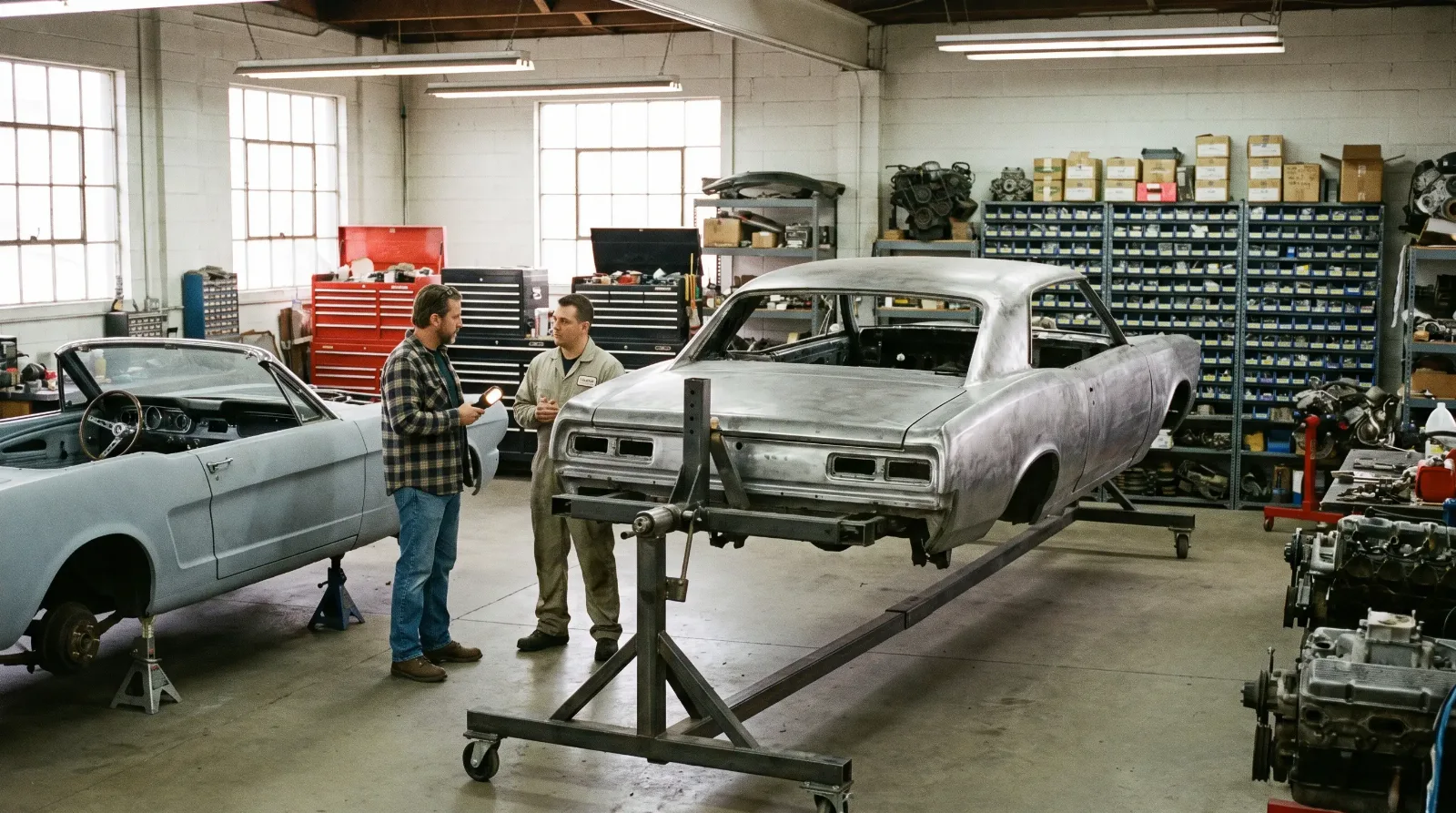
When the car is headed for a serious restoration, a shop that knows the marque will save you from errors that only show up at judging. Look for restoration shops that do correct work, and ask how they verify parts before they install them. Good ones check the numbers as a matter of routine.
Where you will meet these numbers again
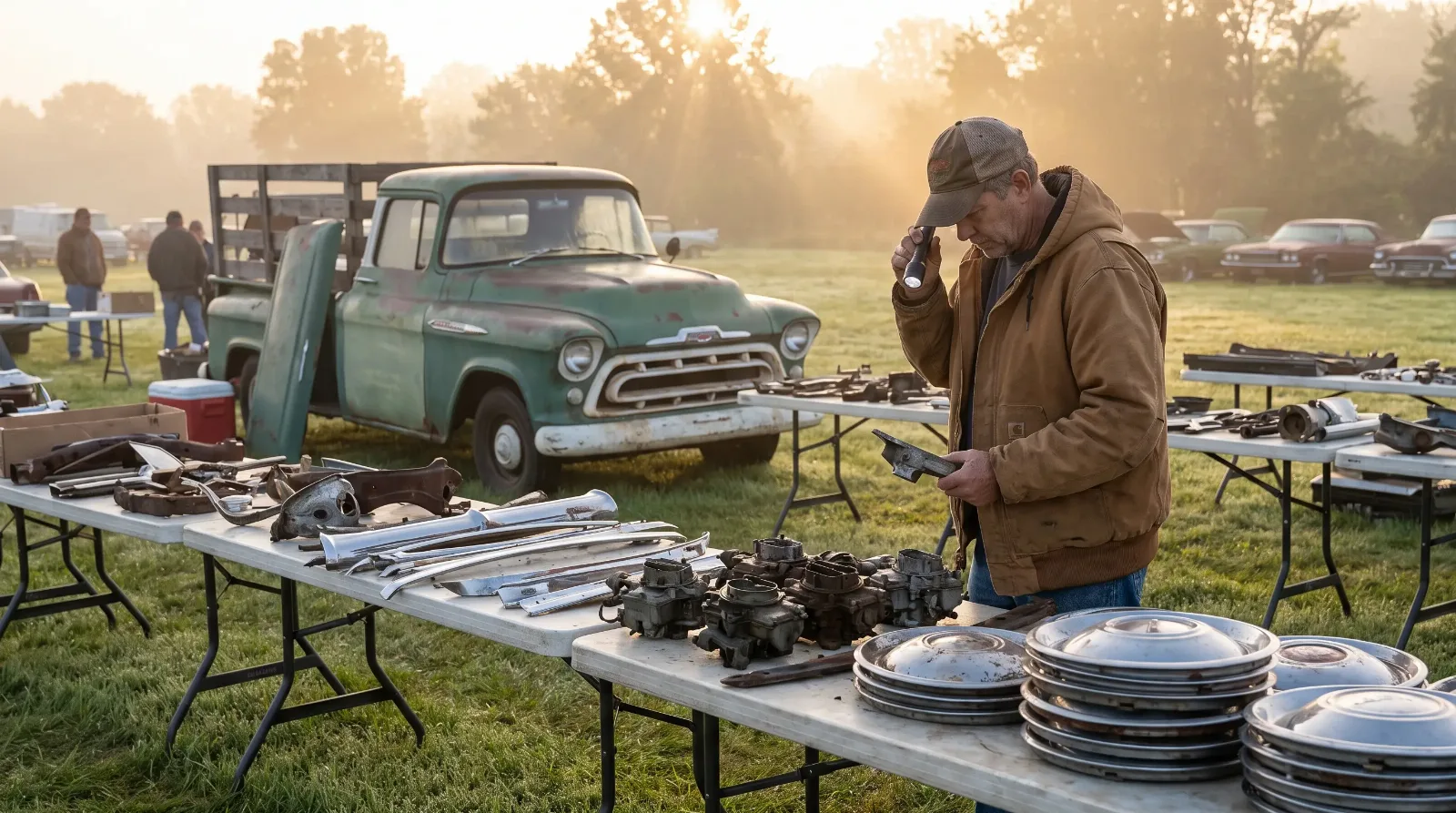
You will see them every time you buy used parts. At swap meets, a seller can tell you a casting is correct for your car, and you can check it yourself in thirty seconds if you carry a reference sheet and a small light. Do that before you hand over cash. It makes you a better buyer, and sellers respect it.
Learn the numbers for your make, write them down and keep the list with you. The metal does not change its story, and neither should you. Photograph every number on your car before the restoration starts, and keep those photos with the build record. Years later, when someone asks whether the block is original, you will have the answer in a folder instead of in your memory.
Sources and notes
- Chevellestuff, engine date stamp characters, GM casting date format, block location and casting versus assembly stampings
- MustangSpecs, deciphering Ford part numbers and date codes, Ford prefix decoding, Z as Mustang and service division letters
- MustangTek, Ford date decoding, Ford casting date format and the omitted letter I
- Wikipedia, numbers matching, what matching components are and why casting, assembly and build dates must follow in order
- Classic Industries, 1966 Mustang data plate guide, body plate fields including the coded build date
- Classic Industries, Camaro trim tag decoder, VIN versus trim tag as separate identification systems