
You can spend six months on bodywork, lay down beautiful clear coat, and still walk away disappointed, because fresh paint almost never looks like glass straight off the gun. Clear dries with a slight texture, like the skin of an orange, and the difference between a good paint job and a show finish is mostly what happens after the spraying stops. That work is color sanding and buffing, and it takes patience more than it takes talent.
Restoration & Tech
6 min read
Color Sanding and Buffing for a Show Finish
How to level orange peel and bring up a mirror gloss on a restored car: grit sequence, polishing steps, burn-through risks and what it costs.
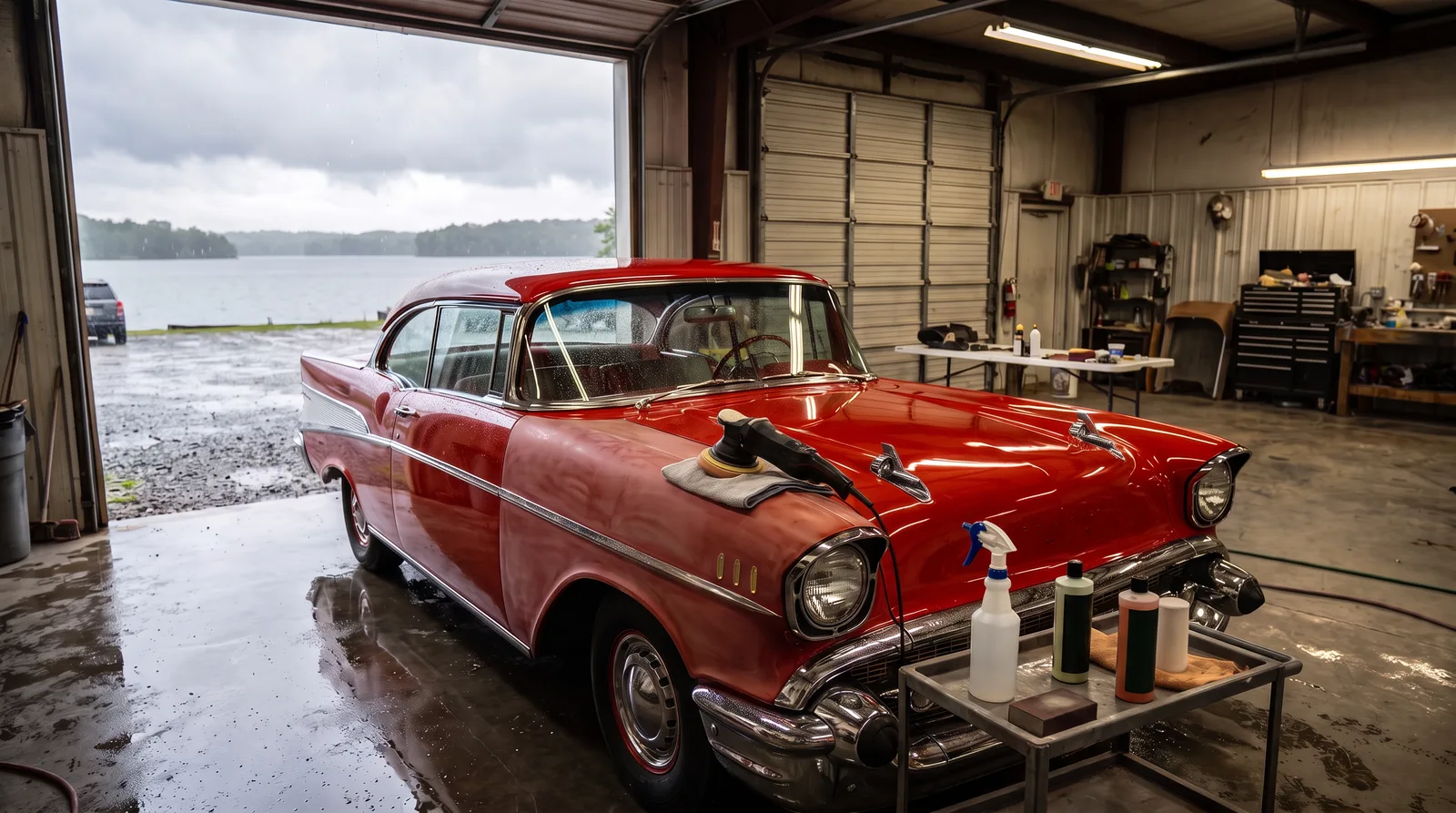
If you want the whole picture of how a paint job comes together, start with our classic car paint job guide. This piece covers the final steps, the ones that turn a decent coat into a mirror.
Why the finish needs to be cut flat first
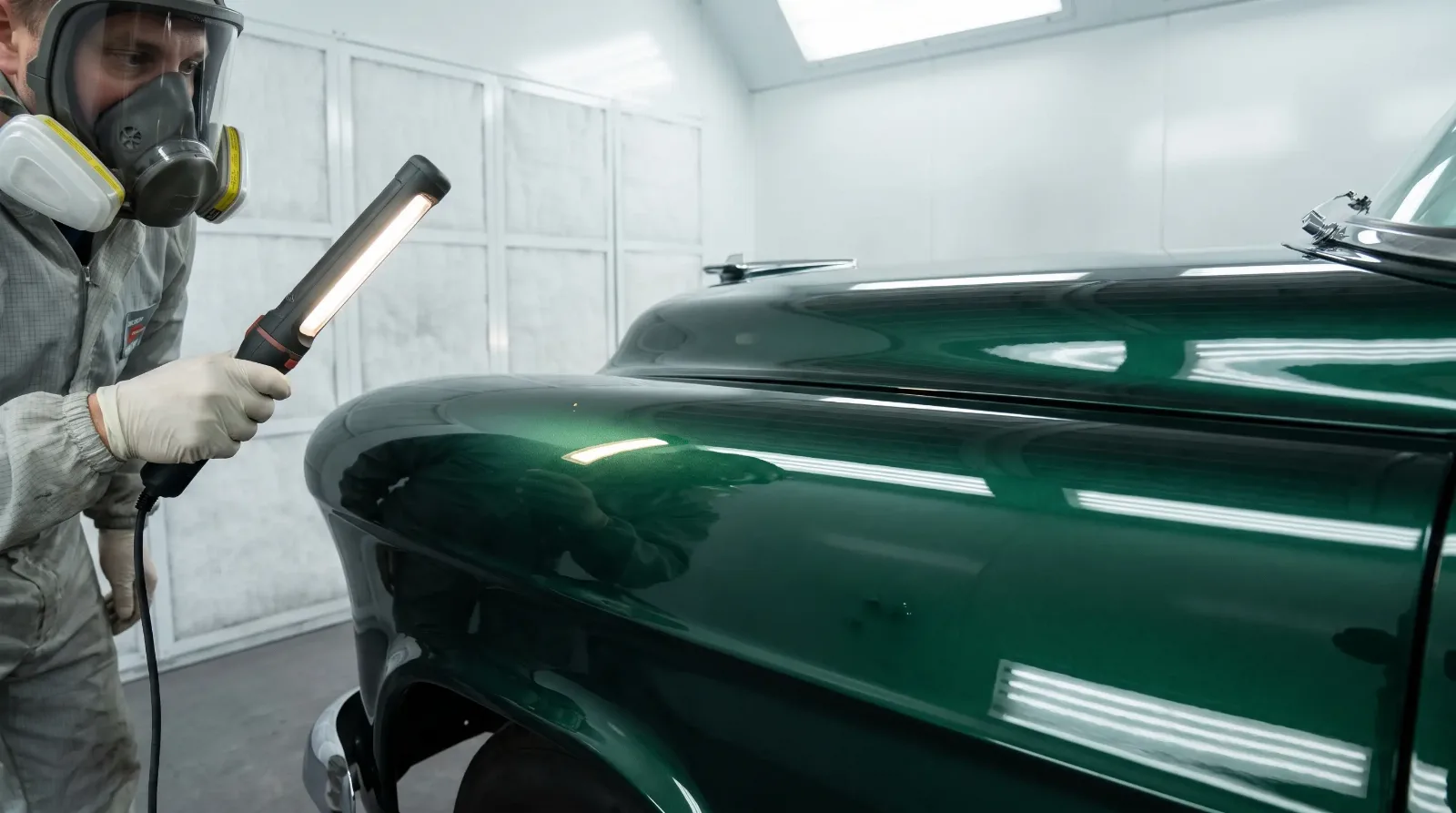
Orange peel is the bumpy texture in cured clear. Hold a straightedge or a reflected fluorescent tube up to the panel and you will see the wavy line instead of a sharp one. To fix it you have to level the high spots down to the low spots, which means sanding the surface flat, then restoring the gloss by polishing.
Before you touch the car, let the clear cure fully. Rushing a soft film causes sand scratches to swell back later and polish to load up. Many painters wait at least a day or two before cutting 2K clear, and plenty wait several days or longer so the film can finish outgassing, depending on the system, the temperature, and whether the car was baked. Check the product data sheet instead of guessing.
The sanding sequence
Start with a flat, firm block and a fine wet paper. Most painters begin somewhere between 1000 and 1500 grit, depending on how heavy the peel is, and step up through 2000 and 3000, sometimes finer still. A few go finer with foam-backed discs or lapping films. The point is to remove the peel evenly without cutting into the color layer.
- Keep the surface wet with a little soap in the water so the paper does not load up.
- Use light pressure and long, overlapping strokes. Let the grit do the work.
- Sand until the shine is replaced by a uniform dull haze with no gloss pockets left. Shiny low spots mean more sanding.
- Wipe the panel dry and look at it from different angles under a strong light.
Edges and body lines are where people get into trouble. Clear is thinnest there, and the block will dig through it fast. Tape edges off, or ease up and hand-sand them with a soft pad. Burning through to the color coat means a respray of that panel, and nobody wants that conversation at the end of a long job.
Buffing to a mirror
Once the panel is flat and uniformly hazy, polishing brings the depth back. A rotary buffer works faster, but it also generates heat and can burn through a thin film in seconds. A dual-action polisher is slower and far more forgiving. Use a cutting compound with a wool or firm foam pad first to remove the sanding marks, then step down to a medium polish, then a fine finishing polish on a soft pad.
- Work in a small area, about two feet square, and keep the pad moving.
- Use only as much compound as you need. Too much just makes a mess and cools the surface too fast.
- Clean the pad often. Dried compound scratches the finish you just created.
- Wipe the panel with a clean microfiber and check under swirl-finding light before moving on.
Keep a close eye on the surface temperature. If the panel is too hot to rest your hand on, stop and let it cool. That simple habit prevents most burn-throughs.
Common mistakes and how to avoid them
The biggest one is sanding before the paint is ready. The next is skipping grits. Jumping from 1500 straight to a final polish leaves scratches too deep for any polish to hide, and they come back as haze in sunlight. Another is cross-contamination, where a bit of coarse compound ends up on a finishing pad and ruins an hour of work.
Some defects cannot be fixed with a sander at all. Fisheyes, solvent pop, and die-back come from the spraying process or the prep, and cutting them out may only expose them deeper. If you see those, read up on paint defects before you commit to more sanding.
"We do not hurry the last ten percent. That is where the car stops looking painted and starts looking finished, and the people walking past it at a show can tell."
Hector Morales
Special finishes need a different touch
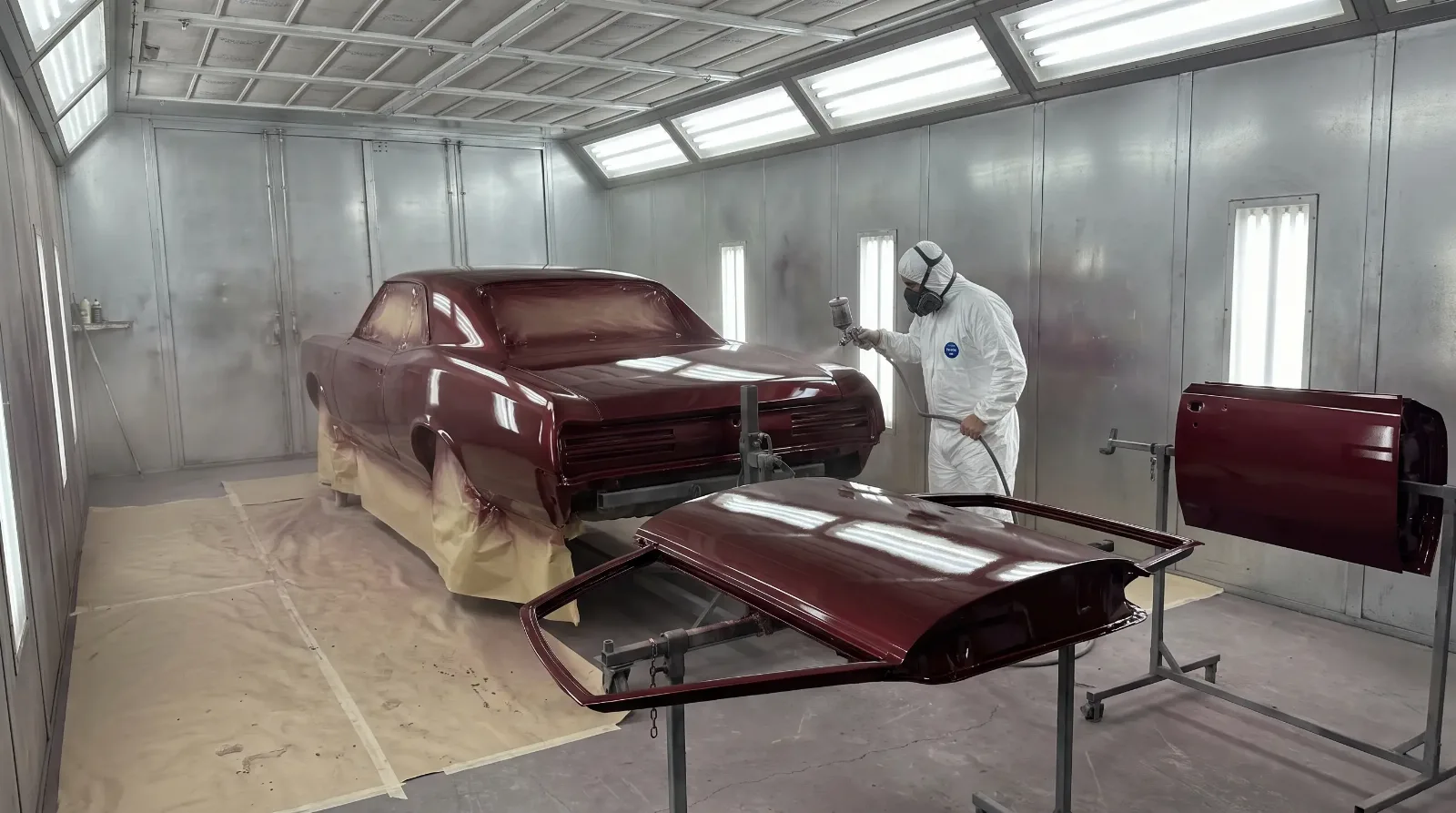
Not every finish should be flattened and polished the same way. Heavy candy and flake jobs have layers of clear sprayed over metallic or pearl, and sanding too aggressively can cut through into the effect coat and leave a patch you cannot repair. If you work with that kind of paint, our explainer on how candy and metalflake layers are built shows why the clear on top needs to be generous before anyone picks up sandpaper.
Time is the real cost. A full car is days of careful work for a skilled hand, not an afternoon, and a first timer should expect to take considerably longer. Shops bill it as labor, at about $85 to $150 an hour at most independent restoration shops, so the total climbs with the size of the car and the condition of the paint; ask for a written quote. Doing it yourself saves money, but you pay in hours and in the risk that you will cut through. Practice on a spare panel or a junkyard hood first.
Finishing touches
After the final polish, wait before waxing. Fresh clear is still releasing solvents, and a common recommendation is to wait 30 to 90 days, depending on the paint system. Then protect the work with a good sealant or wax and a soft wash mitt. A mirror finish is delicate, and every swirl from a bad car wash is a small insult to the weeks you put in.
Sources and notes
- When to buff a car after painting, Paint Strategies, cutting and buffing as early as 24 to 48 hours, and waiting 30 to 90 days before wax
- How to use paint thickness gauges for automotive detailing, DeFelsko, clear coat about 1.5 to 2.0 mils and why a gauge protects against breakthrough
- How to check paint thickness before polishing or sanding, The Track Ahead, factory clear about 50 microns and roughly 10 to 15 microns removed by wet sanding and polishing
- Orange peel (texture), Wikipedia, what the texture is, its spraying causes, and removal with ultra-fine sandpaper
- Automotive paint, Wikipedia, layered paint systems and cure behavior of two-component clear coats
Related Reading
Have a
Classic Car
for Sale?
Reach thousands of serious classic car collectors across the US.
Sell It Here →
Selling a classic? Here's how: where to sell your classic car online
Are You a Classic Car Dealer?
List your full inventory and connect with targeted classic car buyers.
Join as a Dealer →

About the author
Hector Morales
East LA lowrider builder and lifelong member of the car-club scene, writing lowrider culture, hydraulics and custom paint from the inside.
Wet sanded my Trans Am hood at 1500, then skipped 2000 to save an evening. Haze came back the first sunny day in July. Saved nothing. Just saying.