
Everybody wants to talk about the paint gun, the brand of clear, the number of coats. Almost nobody wants to talk about the room the paint goes down in. That is backwards. I have watched a mediocre painter in a clean, well-lit, properly ventilated booth beat a gifted painter working in a garage with a box fan, and it was not close. The environment decides how much of your work survives into the final finish.
Restoration & Tech
7 min read
Paint Booth vs Garage: Why the Environment Decides the Finish
A paint booth controls dust, light, air and cure. Here is what a garage cannot match, when a garage job still works, and how to judge a shop's booth.
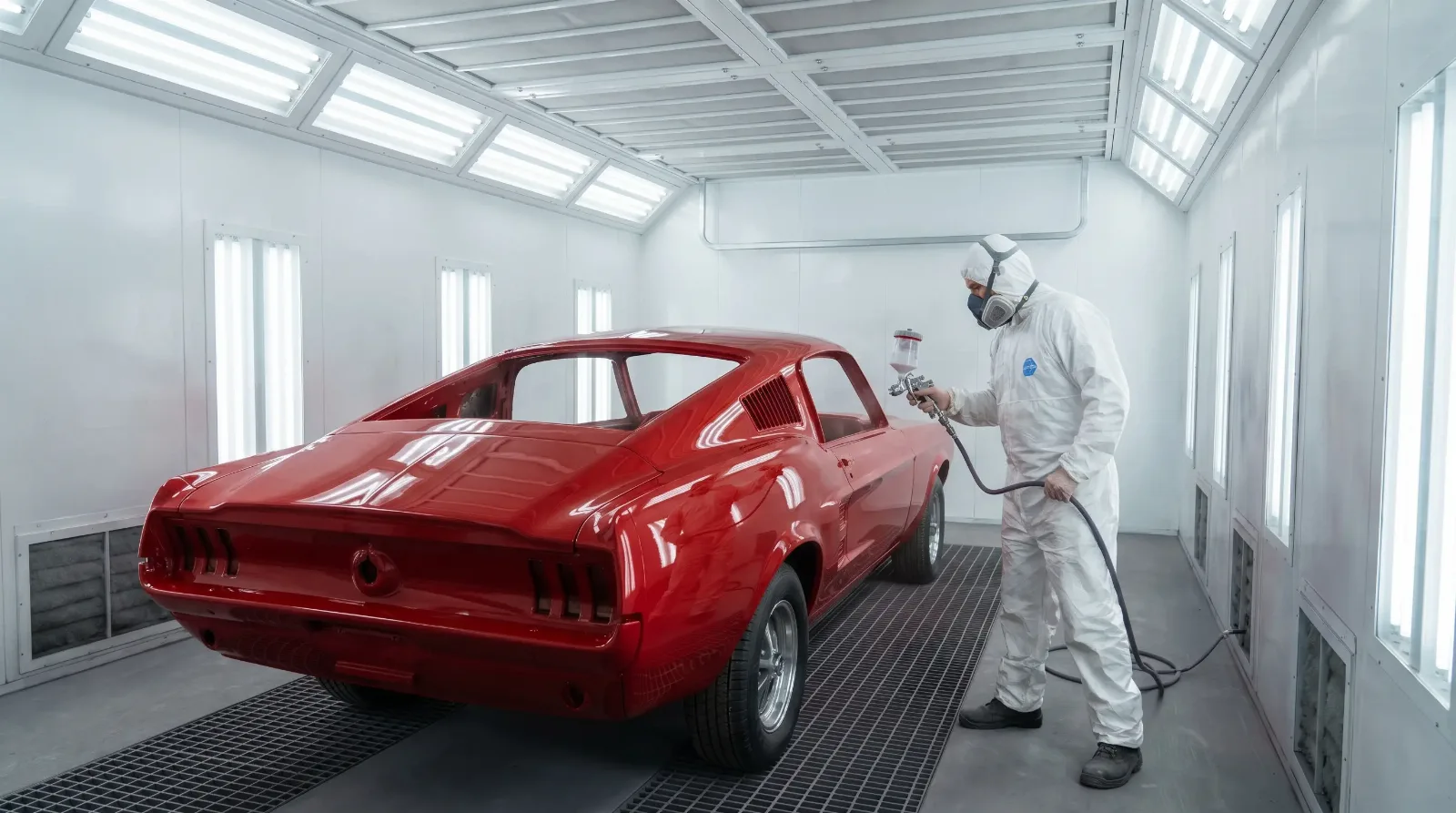
What a paint booth actually does
A real booth is not just a big box with a door. It is an air system. Filtered air comes in, usually through ceiling filters, moves across the car in a controlled direction, and leaves through exhaust filters, carrying overspray and solvent vapor with it. In a typical downdraft booth the air is replaced about three times a minute, and booth makers say air velocity matters even more than the count, so dust that gets stirred up does not settle on wet clear coat.
That moving air does three jobs. It keeps airborne dirt off the surface, it pulls solvent vapor away from the painter, and it gives the paint a predictable flash and cure time. Add a heated bake cycle and you also get a surface that hardens in a known window instead of whenever the weather allows. A list of paint and body restoration shops is a good place to find outfits that run a downdraft or cross-draft booth instead of a converted bay.
Why a garage fights you at every step
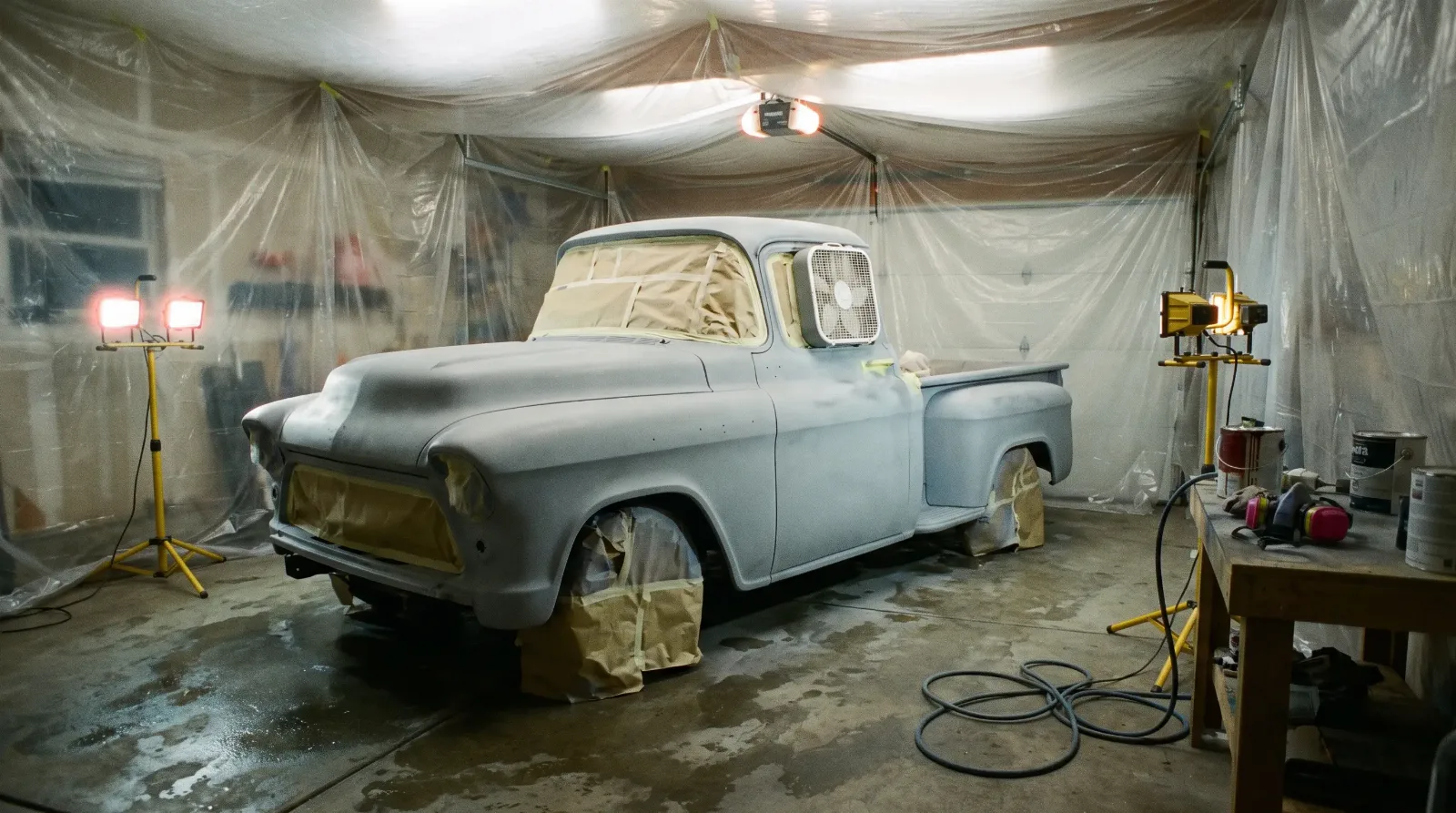
A home garage has dust in every corner, and every door that opens pulls more in. Concrete floors hold fine grit that rises the moment you walk across it. Drywall dust, sawdust from the last project, pollen coming under the door, even the lint off your clothes lands in wet paint and stays there. You will not see most of it until the clear is dry and the light hits it from a low angle.
Then there is light. A garage with a couple of fluorescent tubes hides flaws while you are spraying and exposes them the next morning. A booth has side and ceiling lighting built so you can see the wet edge and the fall of the metallic across a long fender. Without that, you are guessing, and guessing is how you get runs on the lower door and a dry, sandy look on the roof.
Temperature and humidity are the other half of it. Most reducer and clear systems are designed to be sprayed within a fairly narrow range, usually spelled out on the product's data sheet, with hardeners and reducers sold for cool, mid, and hot temperature bands, roughly the 60s into the 80s Fahrenheit. A cold garage slows flash time and invites runs. A humid one can cloud the finish, especially with fast reducers. Booths with a heat source and air movement hold conditions steady. The same garage in July and in February is two different paint shops.
Safety is not optional
Most modern two-part urethane clear coats contain isocyanates, a known cause of occupational asthma, and breathing the mist is a genuine health problem. A CDC study of autobody shops found clear coat spraying produced the highest isocyanate levels, and most painters wore half-face cartridge respirators rather than supplied air. A garage with a box fan pushing vapor toward the water heater is also a fire risk. Overspray settling on a pilot light is how people get hurt. A proper booth is built with sealed, vapor-rated lighting and exhaust that carries vapor outside. If you ever do spray at home, use a supplied-air respirator, not a paper mask or a basic cartridge half-mask, and keep ignition sources far away. I am not going to pretend the garage method is safe because lots of guys got away with it in the sixties.
When a garage job can still make sense
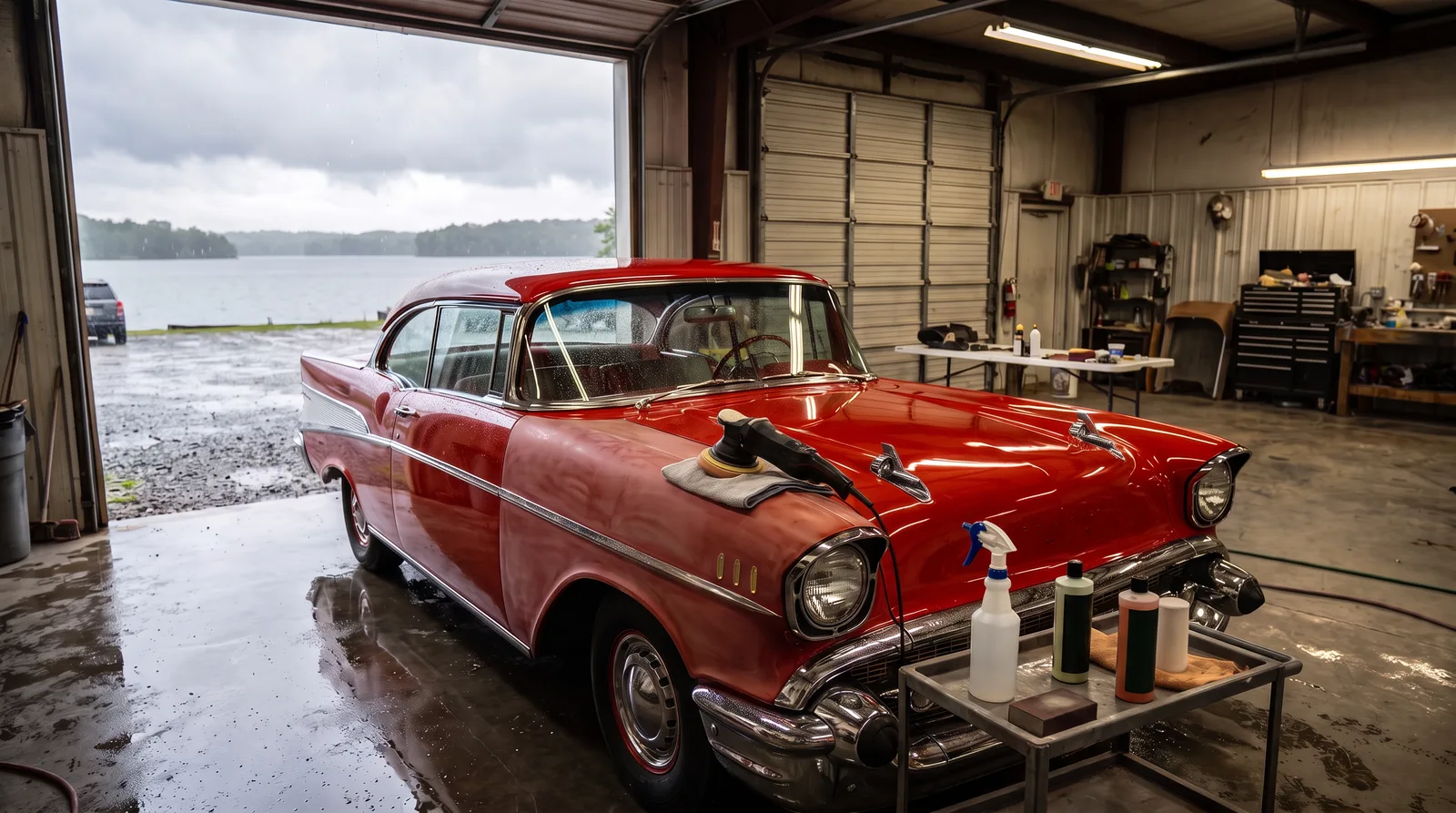
I am not saying nobody should ever shoot paint at home. A fender for a daily driver, a single-stage coat on a work truck, or a chassis and underbody job where nobody will be looking with a loupe, all of that is fair game. Some of the best traditional builds I know started with sprayed primer in a driveway and ended with finish paint in a rented booth. Dividing the work that way is smart. Do the sanding, blocking, and priming where you can control your time, then spend your money on the part where air quality matters.
If you do go garage, build a temporary booth. Wet the floor to hold down dust, hang plastic sheeting from the ceiling, add intake filters and a proper exhaust fan that vents outside, and do not skimp on lighting. It will still not match a real booth, but it narrows the gap.
How to judge a shop's booth before you hand over keys
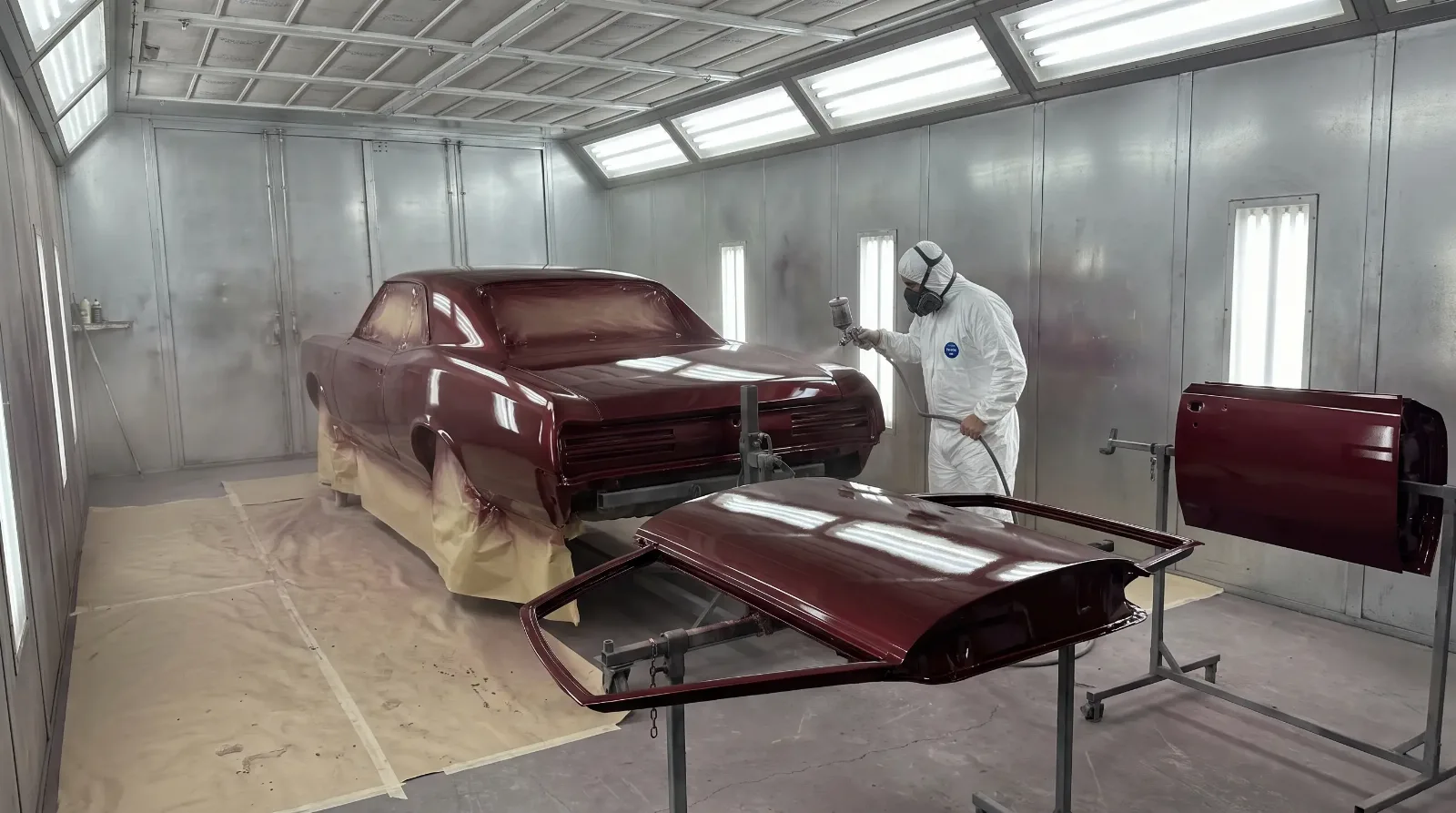
Ask to see the booth, not just the showroom. Look at the filters, because a dusty, overdue filter system defeats the whole point. Look at the floor and walls for overspray buildup and clutter. Check the lighting. Ask whether the booth has a bake cycle and whether the car stays in it or moves to a rack in the open shop. A shop that treats the booth like a storage closet will treat your car the same way.
"The painter gets the credit, but the room did half the work. If the shop will not show you the booth, you already know how the finish will look."
Jim Vasquez
Booth rental is another route if you have the skills but not the building. Some shops rent bay time by the day, with published averages for car-size booths running from a couple hundred dollars to a few hundred dollars a day, plus possible cleaning fees. That keeps the cost far below a full paint job and still gets you the controlled air. For anything you intend to show or drive proudly, it is the least-bad compromise.
What good conditions buy you afterward
A clean spray environment means less nib and dirt to remove later, which matters when you get to color sanding. Every speck you do not have to cut out is clear coat you keep. A cleanly sprayed car can be wet-sanded lightly and buffed, while a dirty one gets sanded hard and loses film thickness. On a car you plan to keep for decades, that thickness is real value.
Put the money where it counts. The difference between a good job and a great one is rarely the brand on the can. Choose your booth the way you choose your body man, because together they decide what a quality paint job turns out to be.
Sources and notes
- Air Changes vs. Air Velocity, Global Finishing Solutions, crossdraft about 2.5 and downdraft about 3.5 air changes per minute, velocity as the real metric
- Maximizing Your Spray Booth Performance, FenderBender, filters, lighting, air balance and booth cleanliness
- Isocyanate Exposures in Autobody Shop Work: The SPRAY Study, CDC, isocyanate levels in clear coat spraying and respirator types used
- Hybrid Refinishing and Baking, I-CAR, force-dry temperatures are quoted for metal temperature, with surface caps near 150 F
- Spray Paint Booth Rental Cost, ThePricer, published daily rental ranges for car-size booths
Related Reading
Have a
Classic Car
for Sale?
Reach thousands of serious classic car collectors across the US.
Sell It Here →
Selling a classic? Here's how: where to sell your classic car online
Are You a Classic Car Dealer?
List your full inventory and connect with targeted classic car buyers.
Join as a Dealer →

About the author
Jim Vasquez
Southern California hot rod and custom car builder with roots in the traditional kustom kulture scene.
More in Restoration & Tech
Comments (1)
K
Kevin Tran
1 week ago
tbh shot my 240 bumper in the garage once. still finding gnats in the clear