
When the paint looks wrong on a freshly restored car, the owner usually knows something is off before they can name it. A pinprick crater, a dull patch that was glossy last week, a crinkled edge. Most of these defects have specific causes, and knowing the name tells you where the mistake happened. That matters, because the fix depends on whether the problem sits in the clear, the color, or the surface underneath.
Restoration & Tech
6 min read
Paint Defects on Restored Cars: Fisheyes, Solvent Pop, Die-Back
Fisheyes, solvent pop, die-back, runs and cracking: what causes each paint defect on a restored car, how to fix it and how to prevent it.
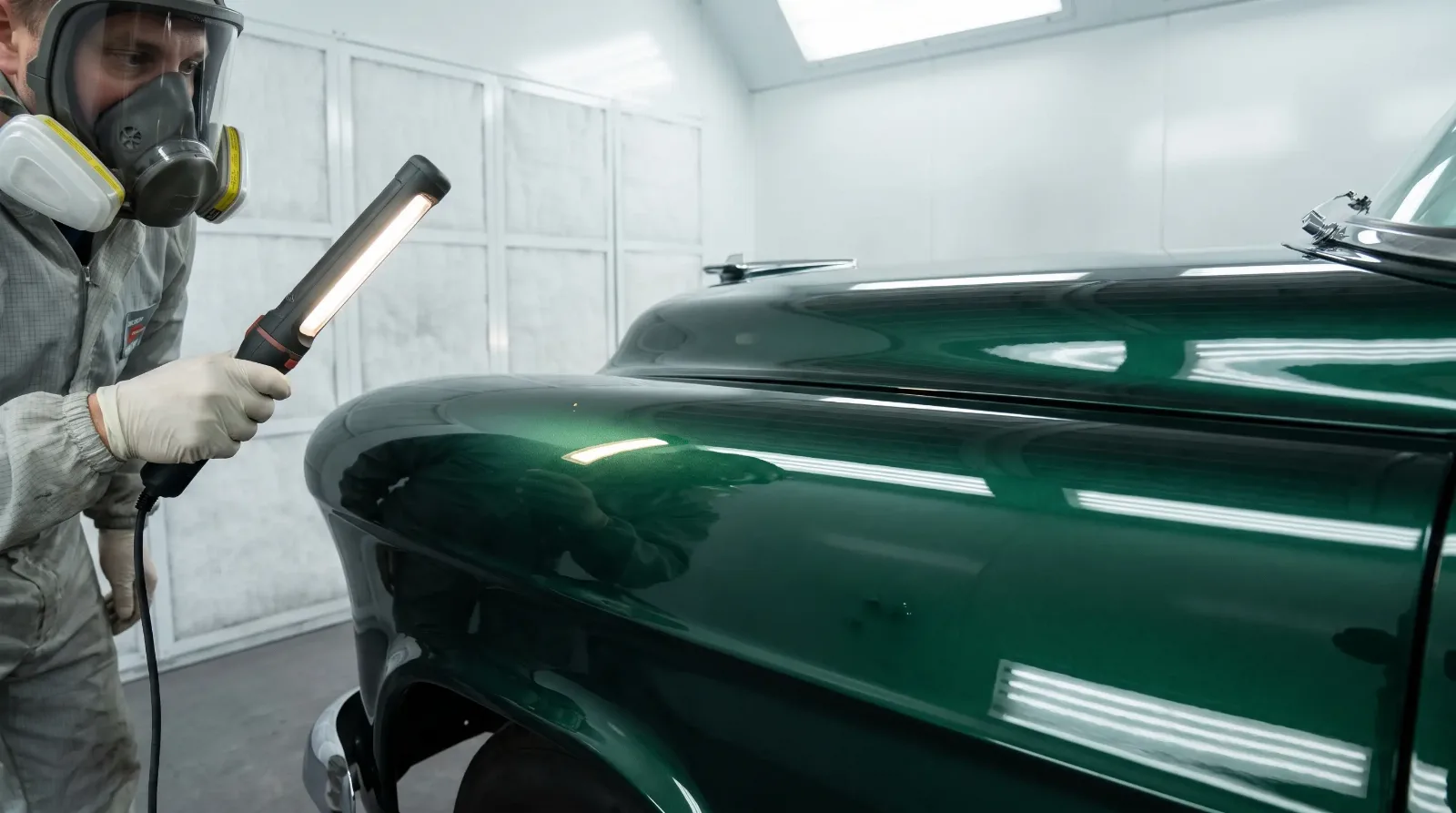
It also helps to know what normal looks like. Our walk-through of how a paint job should go lays out the sequence, and every defect below is a break from it.
Fisheyes
A fisheye is a small round crater where the paint pulled away from the surface, leaving a ring around a bare spot. The usual cause is contamination: silicone from polish or tire shine, wax, oil, grease, even hand lotion. Silicone is the worst offender because it spreads through the shop on rags and sprayer air lines and is hard to remove once it is in the pores of the metal or old finish.
Prevention is cleaning. Wipe panels with a wax and grease remover, using one clean cloth to apply and another to wipe it off before it dries. Keep silicone products out of the shop entirely. If fisheyes show up mid-spray, stop. Adding more paint over them only buries the problem. Once the finish cures, sand the area flat, clean again, and respray. Some painters add a fisheye eliminator additive when the defect keeps appearing, but it treats the symptom rather than the contamination, so cleaning and resanding come first.
Solvent pop
Solvent pop looks like tiny blisters or pinholes, often with a rough, bubbly surface. It happens when solvent gets trapped under a skin of paint that dried too fast. Heavy coats, too little flash time between coats, a reducer that is too fast for the temperature, or heating the panel too soon can all cause it. The solvent has to escape eventually, and it punches through the surface on the way out.
The cure is slower, thinner coats and the correct reducer for the shop temperature. Respect the flash time on the data sheet. Light surface popping can sometimes be sanded and buffed out. When the pinholes go deeper into the film, the area normally has to be sanded back, primed, and refinished.
Die-back
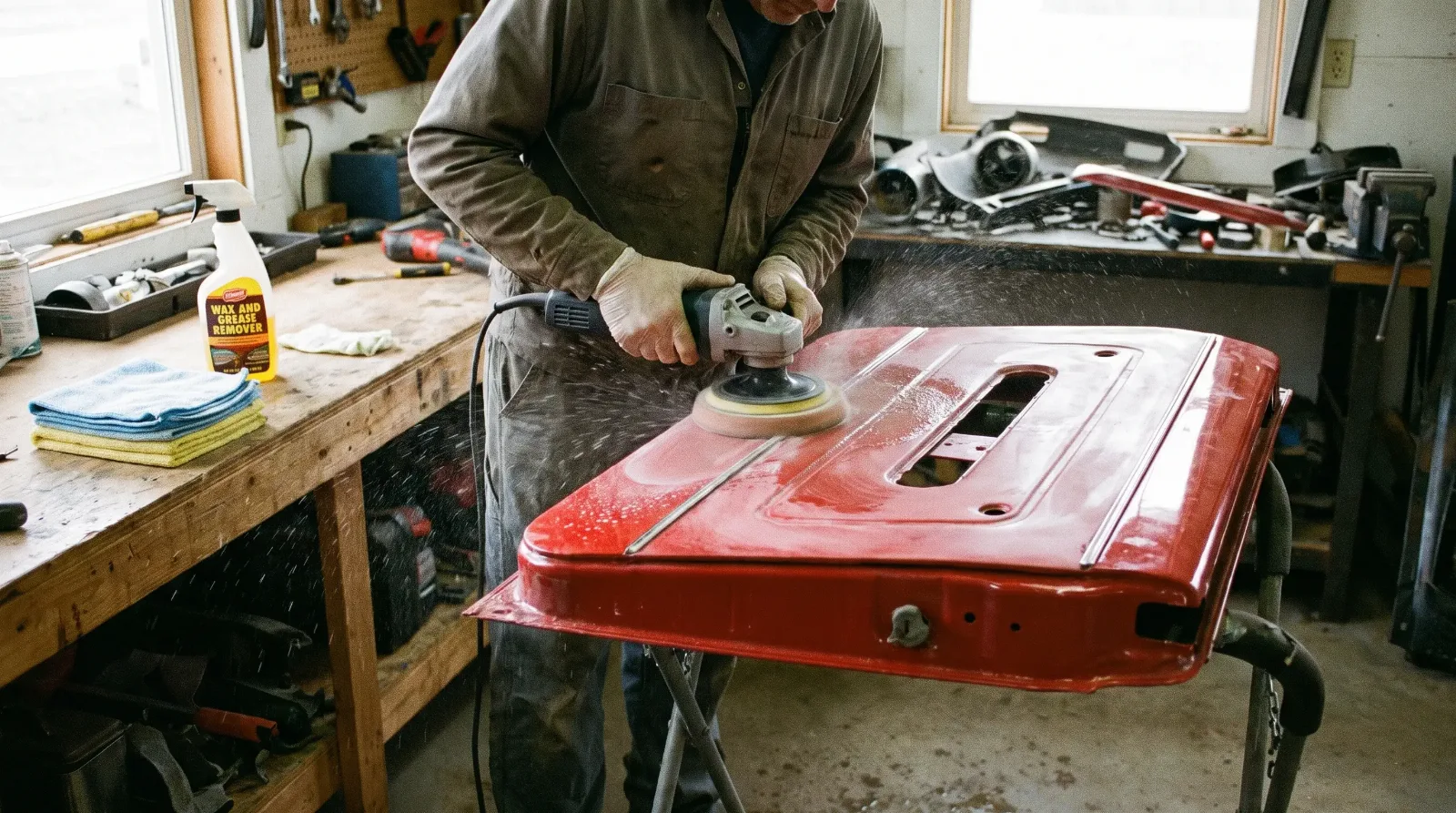
Die-back is the dull, flat look that shows up days or weeks after a car was shot and polished. The paint film shrinks as solvents continue to evaporate and the finish settles into the sanding marks underneath. If a car was polished before it fully cured, those marks show through again. Too little film build or primer that was not fully dry makes it worse.
Prevention again comes down to patience. Fully sand primer with a fine enough grit, use quality primer-surfacer, and give the car time to cure before final polishing. If die-back appears, you can often wait a few weeks, then lightly sand and re-polish once it has stabilized. Rushing the repair just invites a second round.
Runs, sags, and orange peel
Runs and sags come from too much paint in one spot or a slow-flashing reducer, and gravity does the rest. Orange peel usually traces to gun setup and adjustment or incorrect paint viscosity. A light run can be cut flat with a razor blade and fine sandpaper after the finish has hardened, but a heavy sag may require sanding the whole area and repainting.
These are the defects most easily fixed in finishing, which is why many builders correct them with a final sand and buff. Other problems cannot be fixed that way, and sanding harder can make things worse.
Cracking, lifting, and bleed-through
Hairline cracking, often called mud cracking when it looks like dry lake bed, is commonly traced to thick body filler, thick primer, or heavy coats applied without proper drying between them. Lifting, where fresh paint wrinkles over old paint, happens when solvents in the new coat attack an old finish, especially old lacquer or enamel that was never catalyzed, so a solvent test on questionable finishes is wise. Bleed-through shows up when old stains or pigments creep into new topcoats. Each of these generally requires removing the affected finish and priming past the edge of the defect, not just patching it.
That is why surface prep matters so much. Stripping to bare metal is expensive and slow, but it removes unknown layers and avoids guesswork on older cars with decades of repaints. Many restorers consider that choice worth the price on a high-value car.
"Paint rarely fails in the paint booth alone. It fails in the sanding room, the cleaning routine, and the rush to deliver, and by the time you see it the cause is a month old."
Hector Morales
Choosing who to trust with your car
Defects tell you a lot about a shop. A painter who explains the cause, shows you the repair plan, and offers to correct it is worth keeping. One who shrugs and says it will buff out is not. Before you hand over a car, review how a shop handles prep, cleanliness, and curing, and make sure the written estimate covers warranty on defects. A good guide to choosing the shop will help you ask the right questions before the work starts.
Once the paint is done right, the next job is protecting what you cannot see. Moisture and salt can damage the best finish from the inside out, so plan your rust-proofing with the same care you gave the paint.
One last habit pays off on every job. Photograph the panels in raking light before delivery and again after a few weeks of cure, and keep the notes with the build file. If a defect does appear, those pictures show whether it came from the paint process or from something that happened after the car left the shop, and that settles most warranty arguments quickly.
Sources and notes
- Paint detailing techniques: how to approach commonly seen defects (FenderBender), runs, orange peel, solvent popping and fisheye causes and repairs
- 4 common causes of finishing defects and how to remedy them (Global Finishing Solutions), solvent popping, edge mapping and adhesion problems
- Lifting / wrinkling (PPG Refinish), causes, prevention and repair of lifting over old finishes
- Paint defects analysis (Skill-Lync), overview of causes of runs, orange peel, fisheyes and solvent pop
- Understanding coating defects (UL Prospector), cratering, fisheyes and trapped-solvent popping
Related Reading
Have a
Classic Car
for Sale?
Reach thousands of serious classic car collectors across the US.
Sell It Here →
Selling a classic? Here's how: sell my classic car
Are You a Classic Car Dealer?
List your full inventory and connect with targeted classic car buyers.
Join as a Dealer →

About the author
Hector Morales
East LA lowrider builder and lifelong member of the car-club scene, writing lowrider culture, hydraulics and custom paint from the inside.
More in Restoration & Tech
Comments
Be the first to comment on this article.