
Nobody had to think about ethanol when these vehicles were built. Fuel was gasoline, the tank was bare steel or terne coated, and the hoses were rubber that lasted as long as the truck did. Then pump gasoline changed, and a lot of old fuel systems started failing in ways owners did not expect. If you are putting money into rebuilt engines, spend the same care on what feeds them. A fresh engine running on a rotten tank is a short story.
Restoration & Tech
8 min read
Fuel System Restoration: Tank, Lines, Pump and Ethanol Fuel
Ethanol fuel is hard on old tanks, hoses, and carburetors. Here is what to replace, what to keep, and how to protect a classic car fuel system for the long run.
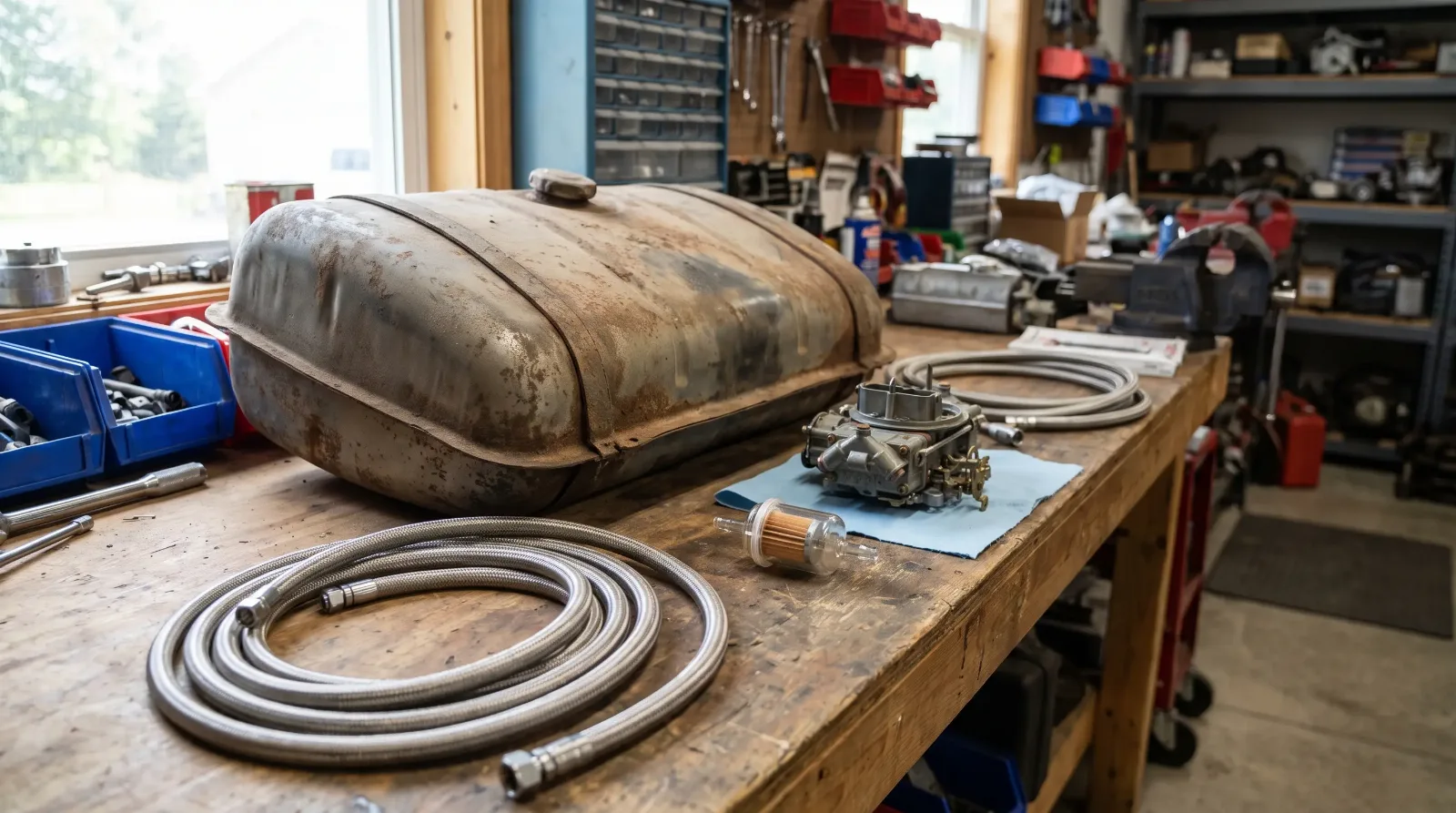
What ethanol does to an old fuel system
Most pump gasoline in the United States now contains up to 10 percent ethanol, usually labeled E10. Some stations sell E15, which the EPA approves only for model year 2001 and newer light-duty vehicles, and E85 is a different animal altogether: it is for flex fuel vehicles only. Ethanol causes three problems for older vehicles.
First, it attracts water. Ethanol blended fuel pulls moisture out of the air (a vented tank, as on most classics, makes this worse), and once enough water collects, the mixture can separate and settle at the bottom of the tank. That water sits where the pickup draws fuel. Second, it dissolves some old rubber, sealing materials, and gasket compounds, and it softens certain tank sealers. Third, it leaves varnish and gummy deposits in carburetors if the car sits for months. Rust and flaking tank sealer follow, and then the carburetor jets clog.
None of this means you cannot run pump fuel. It means you build the system for the fuel you will actually buy.
The tank comes first
Take the tank out and look inside with a light and a mirror. Light surface rust can be cleaned. Heavy scale, pinholes, or a seam that weeps means replacement. A good tank costs less than a ruined carburetor and a stalled afternoon.
| Tank option | Notes |
|---|---|
| Clean and seal existing tank | Only for sound steel; use an ethanol rated sealer and follow the cleaning and prep steps exactly, since most cannot be resealed over |
| Reproduction steel tank | Closest to original look and fit |
| Stainless steel tank | Will not rust; common on restomods |
| Fuel cell or modified tank | For custom installs and EFI conversions |
Sealer kits have a mixed record. If the tank is sound and you follow the directions exactly, a quality sealer rated for ethanol can work for years. If the steel is thin, sealer only hides the problem and it will come loose and plug the filter. When in doubt, replace.
Lines, hoses, and filters
Hard lines should be inspected for pitting. Steel lines rust from the outside, so check the stretch along the frame where road salt and moisture sit. Replace anything that is thin, kinked, or crusty. Pre bent kits and stainless lines make this easier now than it was twenty years ago.
For flexible hose, use material rated for ethanol blended fuel. Look for markings that say SAE J30R9, which is rated for ethanol blends and also resists fuel vapor permeation far better than older low pressure hose. SAE J30R7 is also listed for E10 in low pressure carbureted use, but plain unmarked rubber hose from an old parts bin is not worth trusting. Replace every flexible section, including the short connections to the pump and carburetor. Cracked rubber leaks on a hot engine, and a fuel leak next to a hot manifold is not a small problem.
Add a filter between the tank and pump, and another before the carburetor. A clear glass or plastic housing lets you see when debris is coming through. Check it at every oil change for the first season.
The pump and the carburetor
A mechanical pump driven off the camshaft is simple and has worked for generations. Most only need a new unit. Rebuilding an old pump rarely makes sense when a new one is inexpensive. If the car has an electric pump, use one with the right pressure for your carburetor. Most carbureted engines want only a few psi, roughly 4 to 7 on many street carburetors (check the spec for yours), and more than that can push the float needle open and flood the engine. A regulator is cheap insurance.
When you rebuild the carburetor, pay attention to the float level, the fuel bowl gasket, and the accelerator pump. Those are the parts that fail first with ethanol. Clean every passage and replace the needle and seat. A professional rebuild is usually a few hundred dollars, depending on the unit. Do not skip this step if the car sat for years.
Keeping the system healthy
A restored fuel system still needs good habits. Ethanol blends last only about 30 to 45 days in a vented tank, so if the vehicle sits more than a month or two, add a stabilizer rated for ethanol (it slows separation, it does not prevent it), and fill the tank to reduce air space. Run the engine long enough to circulate treated fuel into the carburetor before storage. Where you can find ethanol free fuel, it is a real option for cars that sit often, and many regions have stations listed on public databases. It usually costs noticeably more per gallon.
- Use the highest quality fuel you can find, and buy from busy stations.
- Avoid E15 and E85 unless the vehicle was converted for them.
- Drain the carburetor bowl for storage longer than three months.
- Check hoses and clamps every spring for hardening or seepage.
"I have yet to see a vehicle ruined by a good tank and fresh hose. I have seen plenty ruined by a leaky line nobody looked at."
Robert Halloran
Fuel injection conversions
Some owners avoid the whole carburetor and ethanol worry by installing electronic fuel injection. Throttle body kits and full multiport systems handle varying fuel quality and cold starts better than a worn carburetor. They also need a return line or a return style tank, a high pressure pump, and a clean electrical supply, so the job grows quickly. Expect a four figure bill for a kit and the supporting parts, and more for a full multiport system. It makes sense for a driver, and it makes less sense for a car being judged on originality.
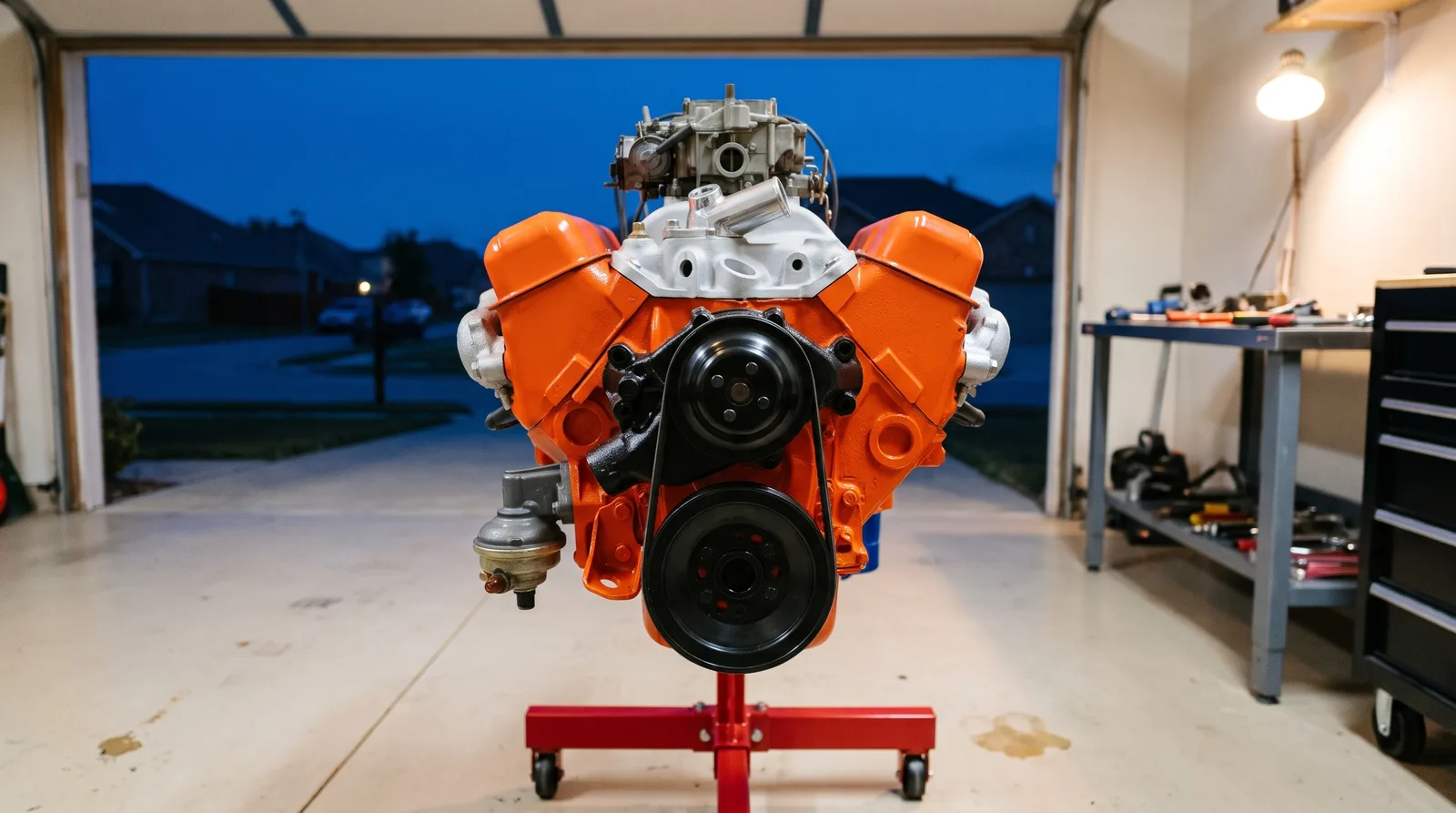
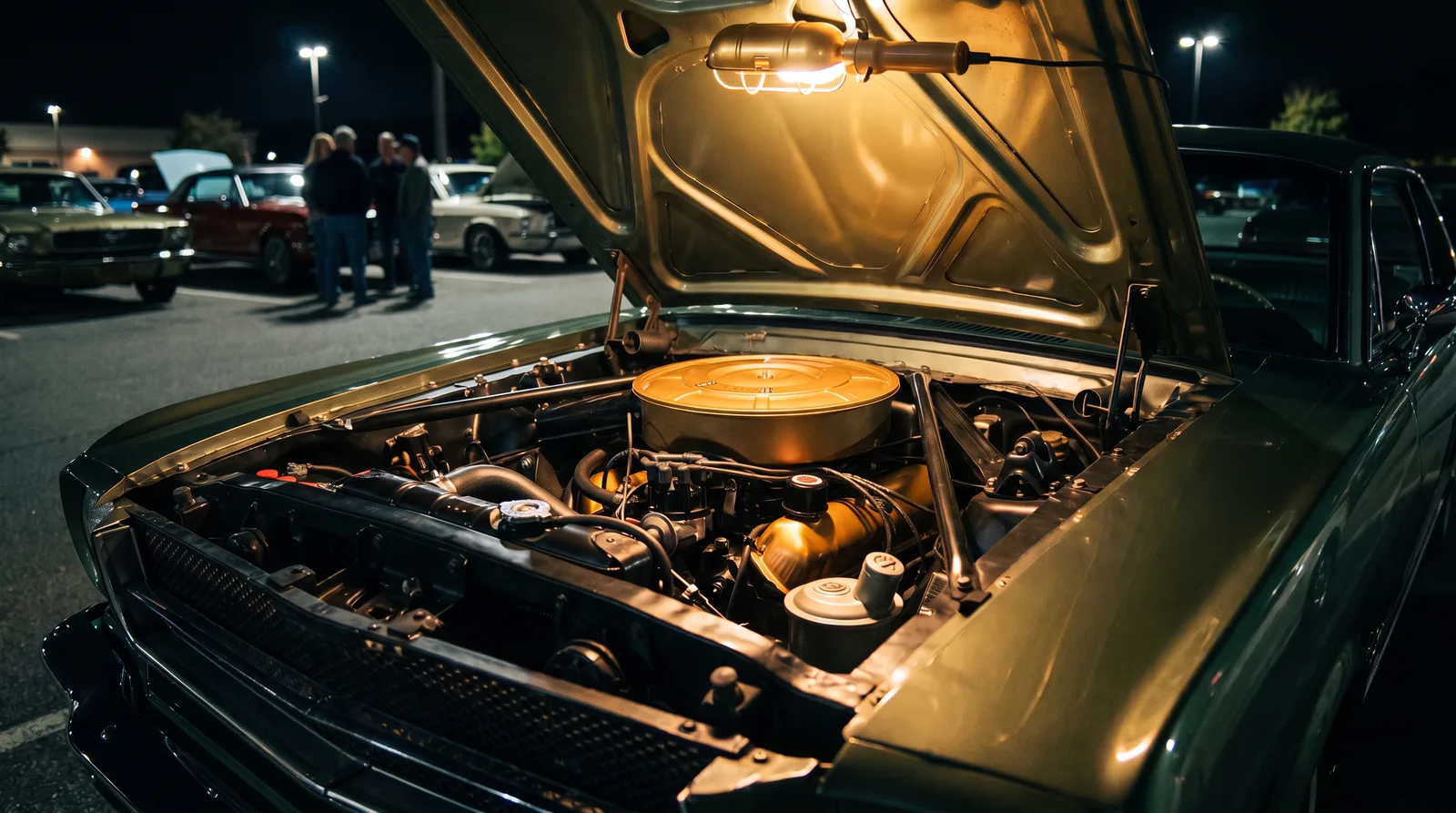
Work that touches the tank also touches the bay and the frame. Once everything is clean and sound, you will want the engine compartment to match, which is where engine bay detailing picks up. The fuel lines, clamps, and filter housings all show, and correct routing and hardware matter to anyone who looks closely.
Buying a vehicle with a questionable fuel system
If you are shopping for a project, drain a little fuel into a clear jar. Cloudy fuel, rust flakes, or a sour varnish smell tell you the tank and carburetor will need work. Budget for a tank or at least a cleaning, new hose, and carburetor work, which can add up to four figures on a neglected vehicle. That figure is worth knowing when you compare asking prices on classic trucks, because a seller who says the truck just needs a carb cleaning is often underestimating the job.
The short list
Replace the tank if it is rotted. Replace all rubber hose with ethanol rated hose. Rebuild the carburetor with a current kit. Add filters and a regulator. Treat fuel when the vehicle sits. Do those five things and the vehicle will run on pump gas for a very long time.
Sources and notes
- U.S. DOE Alternative Fuels Data Center: Ethanol blends, E10 in most U.S. gasoline, E15 limited to model year 2001 and newer, E85 for flex fuel vehicles only
- Moss Motoring: The ethanol issue, water absorption and phase separation, swelling float needles, seals and hoses, 30 to 45 day fuel life in vented tanks
- Frost: How to restore a classic car fuel tank, clean, de-rust and seal process, replacing lines, clips and filters during the job
- POR-15 fuel tank sealer product page, ethanol resistant sealer, prep requirements, cannot be resealed over, steel tanks only
- Wikipedia: Fuel injection, injection works at higher pressure than a carburetor and replaced carburetors by the early 1990s
Related Reading
Have a
Classic Car
for Sale?
Reach thousands of serious classic car collectors across the US.
Sell It Here →
Selling a classic? Here's how: where to sell your classic car online
Are You a Classic Car Dealer?
List your full inventory and connect with targeted classic car buyers.
Join as a Dealer →

About the author
Robert Halloran
Texas-based classic truck enthusiast with decades of experience buying, restoring, and writing about American pickups from the 1940s through the 1980s.
More in Restoration & Tech


Comments
Be the first to comment on this article.