
I have pulled apart enough tired classics to tell you which ones scare me, and it is never the car with faded paint. It is the one that looks perfect at fifteen feet and has brake lines older than the owner's kids. A shiny car that will not stop is the worst kind of project. A scruffy car that starts every time and brakes straight is a car you can actually use.
Restoration & Tech
6 min read
Mechanical Restoration: A Reliable Classic Without Touching the Paint
A mechanical restoration makes a classic safe and dependable while leaving the paint and interior alone. Here is what to fix first, what it costs in 2026, and when it beats a full restoration.
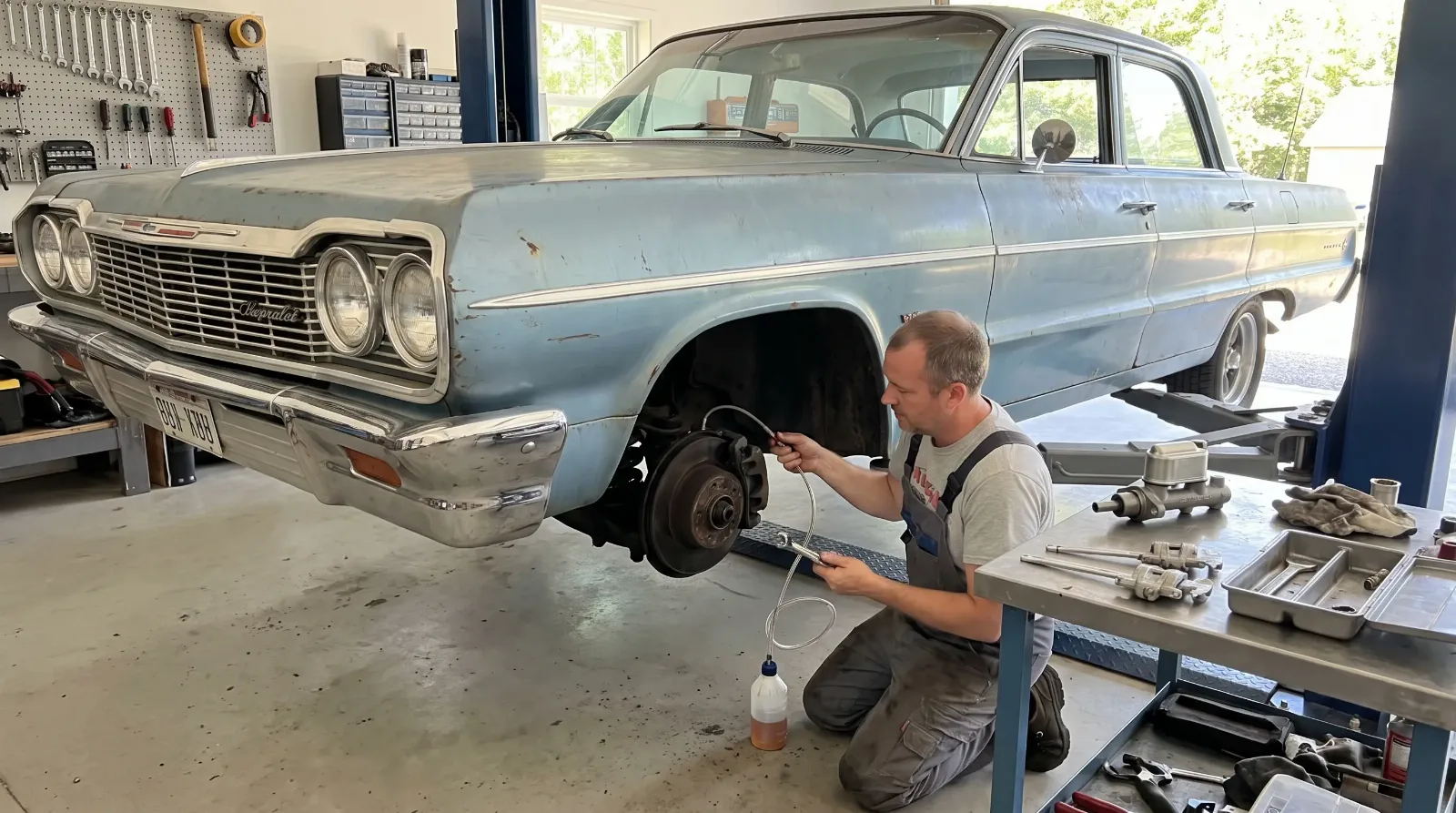
That is the whole case for a mechanical restoration. Fix what makes the car go, stop and steer. Leave the paint and interior alone until the car has earned them.
What a mechanical restoration means
A mechanical restoration brings the running and safety systems of a car back to dependable condition without a cosmetic overhaul. The body, the paint and the interior stay as they are, patina and all. The work concentrates on the engine, cooling, fuel, ignition, brakes, suspension, steering, driveline and electrical. In the restoration levels guide, this sits at the driver end of the scale: the goal is a car you trust, not a car you judge.
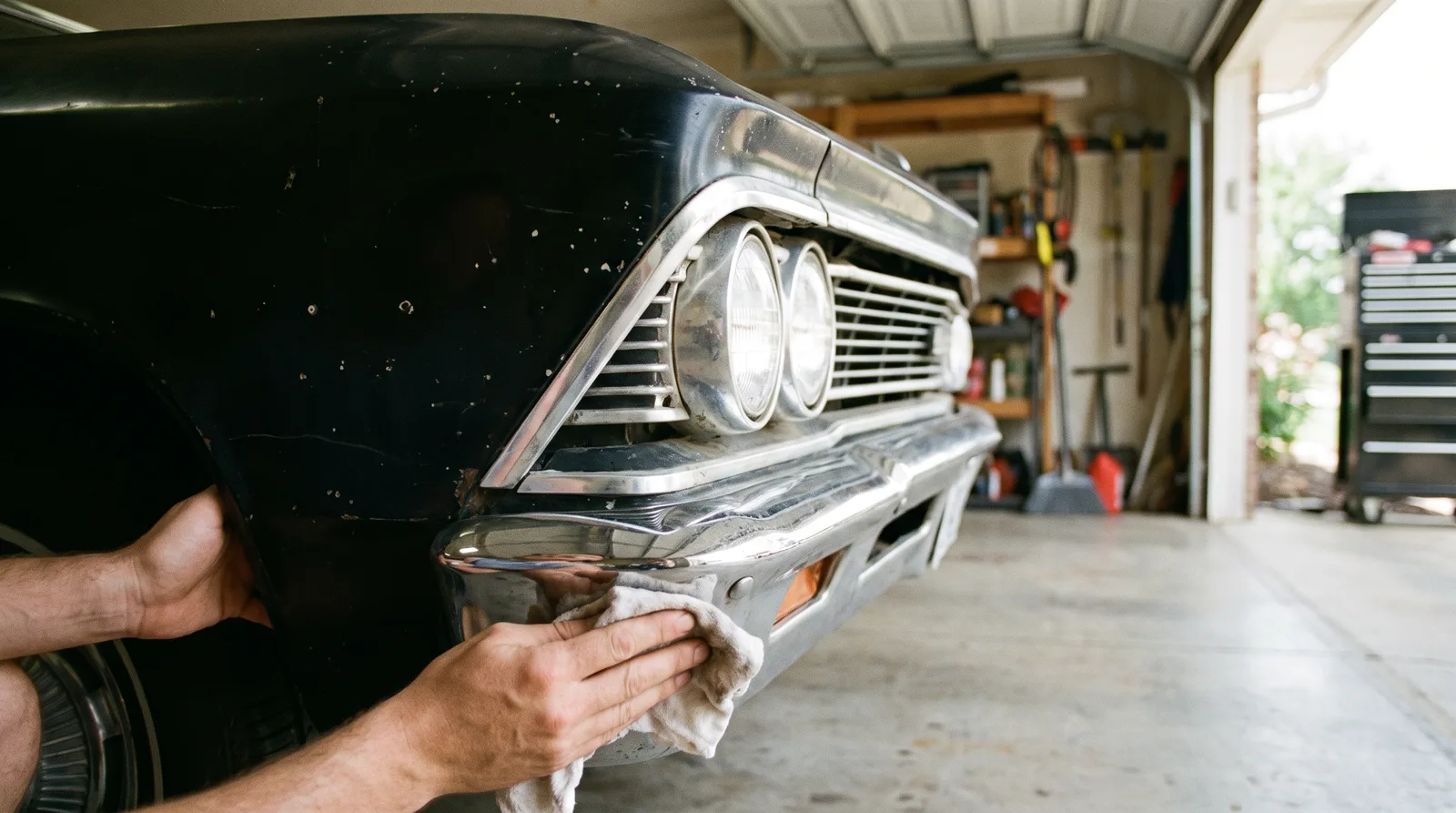
There is a quiet advantage here, too. An unrestored surface shows the car's history, and plenty of owners prefer a faded, honest car that runs like new over a flawless one that sits.
The order that matters
Do not start with the engine because it is the fun part. Start with the systems that can hurt you. Safety first, then reliability, then performance.
🔧 Inspection Priorities
- Brakes. Replace rubber hoses, inspect steel lines, rebuild or replace calipers, wheel cylinders and the master cylinder. Old brake fluid absorbs moisture over time, so flush it too. Brakes, steering and suspension together commonly run about $3,000 to $7,000 on a driver-level job.
- Steering and suspension. Worn ball joints, tie rod ends and bushings make a car wander and can fail suddenly. These are usually priced together with the brakes, as noted above.
- Fuel system. Old tanks hold varnish and rust, and old rubber lines can leak. Tank cleaning or replacement plus lines and a pump commonly costs from several hundred dollars to a couple of thousand, depending on the car.
- Cooling system. Radiator, hoses, thermostat and water pump. Costs vary widely with the car and whether the radiator is recored or replaced.
- Wiring. Brittle insulation and bad grounds cause fires and gremlins. A new harness is typically a parts cost of several hundred to a couple of thousand dollars before labor.
The order is by cost of getting it wrong. A seized water pump ruins an afternoon. A failed brake hose ruins a life.
Engine and drivetrain decisions
Here the real fork in the road appears. A running engine that makes decent oil pressure, has good compression and does not smoke does not need to be torn down. A tune up, new ignition parts, a carburetor rebuild and fresh fluids often solve what feels like a failing engine. Many owners throw money at a rebuild when the problem is a bad condenser or a gummed up carb.
When the engine really is tired, though, the numbers show it. Low or uneven compression, heavy blow-by, knocking, or metal in the oil mean a rebuild. That is where rebuilding the engine comes in, and it is a large decision on its own, commonly $4,000 to $8,000 for a shop-built stock long block on a common small-block V8, more for performance builds, and big-blocks or rare engines can double that. Do a compression and leak-down test first so you are spending money on evidence.
| Symptom | Likely first fix | Rebuild needed? |
|---|---|---|
| Hard starting, rough idle | Ignition parts, carb rebuild | Rarely |
| Overheating | Radiator, thermostat, water pump | Rarely |
| Low oil pressure when hot | Check sender and oil, then bearings | Often |
| Blue smoke, low compression | Leak-down test | Often |
What it costs in 2026
A thorough mechanical restoration of a typical classic, covering brakes, suspension, steering, fuel, cooling, ignition and wiring, commonly lands in the low to mid five figures, depending on the car and how much is worn. Add an engine or transmission rebuild and the total climbs quickly. Compare that to a full restoration, which for a common American classic at driver level runs about $45,000 to $100,000 and more at show level. You get a car you can drive across the state for a fraction of the cost. The paint will not match the mechanicals, and that is fine.
"Spend the money where the car moves, not where it shines. Nobody ever got stranded because the fender was faded."
Mike Sullivan
When this beats a full restoration, and what comes next
It wins when the body and interior are sound enough to enjoy, when you want to drive the car this season, and when the market value of the car will not repay a full build. It also wins as a first phase. Plenty of owners make the car reliable, drive it for a year, and then decide what cosmetic work it deserves.
One more thing about a reliable classic: it has to be driven to stay reliable. After the work is done, put a few hundred miles on it in short trips close to home. Re-torque what needs re-torquing, check for leaks after every drive, and bleed the brakes again once the new parts have seated. Most first month failures are small ones, a loose clamp or a weeping fitting, and they are far easier to fix in your own driveway than on the shoulder of a highway.
It loses when the body is rotten or the frame is damaged, because then a mechanical job is just money spent on a car that will need to come apart anyway. Have a shop check the structure before you spend on the running gear.
If the car keeps its original finish and you plan to leave it that way, the approach has a name: sympathetic restoration. It treats the wear as part of the story and puts the effort into making the car dependable. Pick the level that fits how you will use the car, and do the safe work first.
Sources and notes
- Heritage Parts Centre: how to start your car after storage, supports the stale fuel, perished fuel line and brake fluid points and the short first drive
- Gold Eagle: updating brake lines and brake pads on classic cars, supports replacing corroded original brake lines and the cost of front brake kits
- Wikipedia: brake fluid, supports glycol-based fluid absorbing moisture and lowering its boiling point
- Wikipedia: automotive restoration, supports the restoration versus preservation distinction and patina preservation
- Motoring Research: Porsche restoration preserves decay, an example of keeping patina while making the mechanicals reliable
- Supercars.net: preservation, barn find or parts car, supports the idea that an original car should still be safe and mechanically sound
Related Reading
Have a
Classic Car
for Sale?
Reach thousands of serious classic car collectors across the US.
Sell It Here →
Selling a classic? Here's how: compare the places to sell classic cars
Are You a Classic Car Dealer?
List your full inventory and connect with targeted classic car buyers.
Join as a Dealer →

About the author
Mike Sullivan
Detroit-area muscle car enthusiast and restoration specialist with three decades of hands-on experience working on American iron.
More in Restoration & Tech
Comments
Be the first to comment on this article.