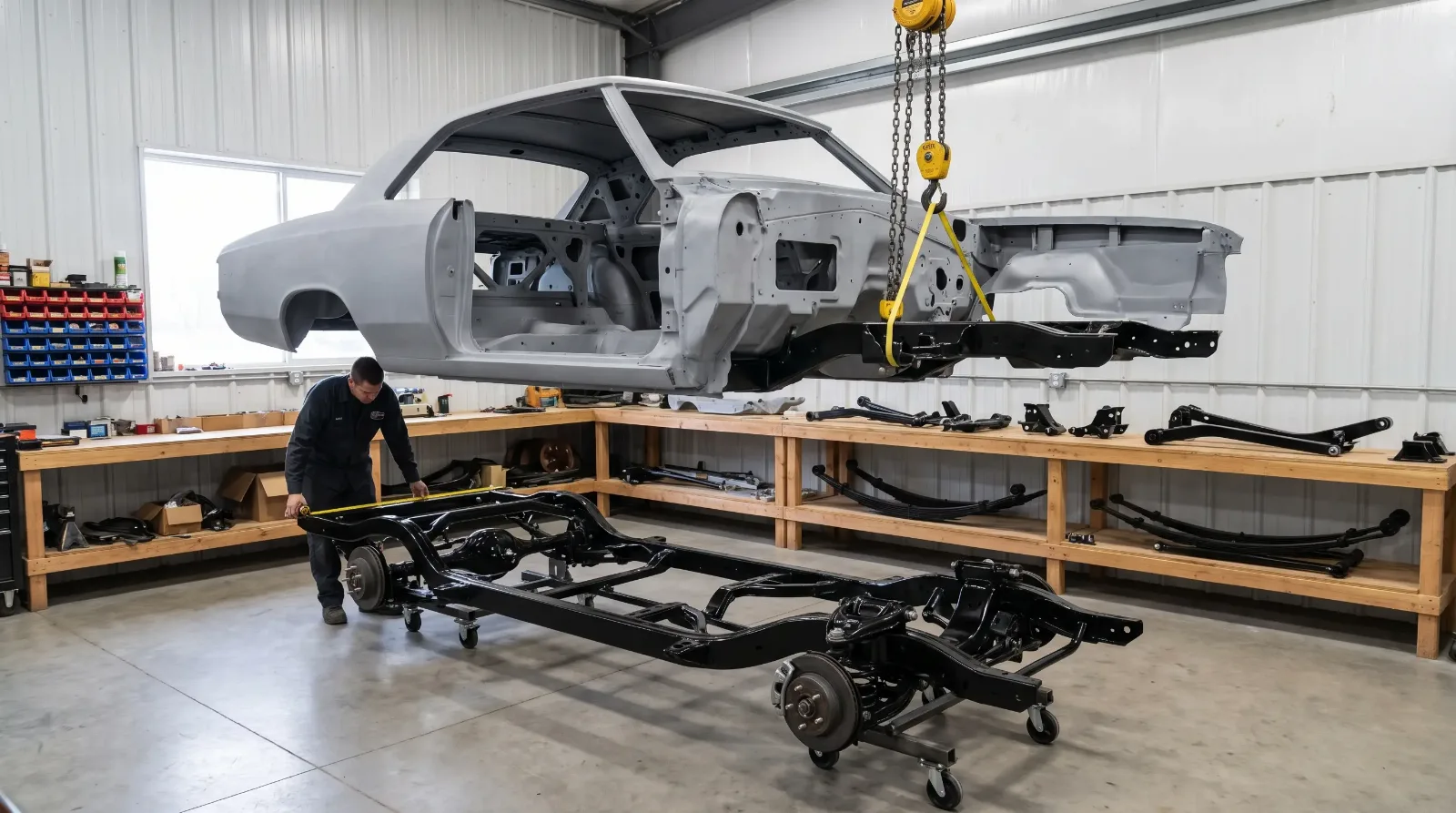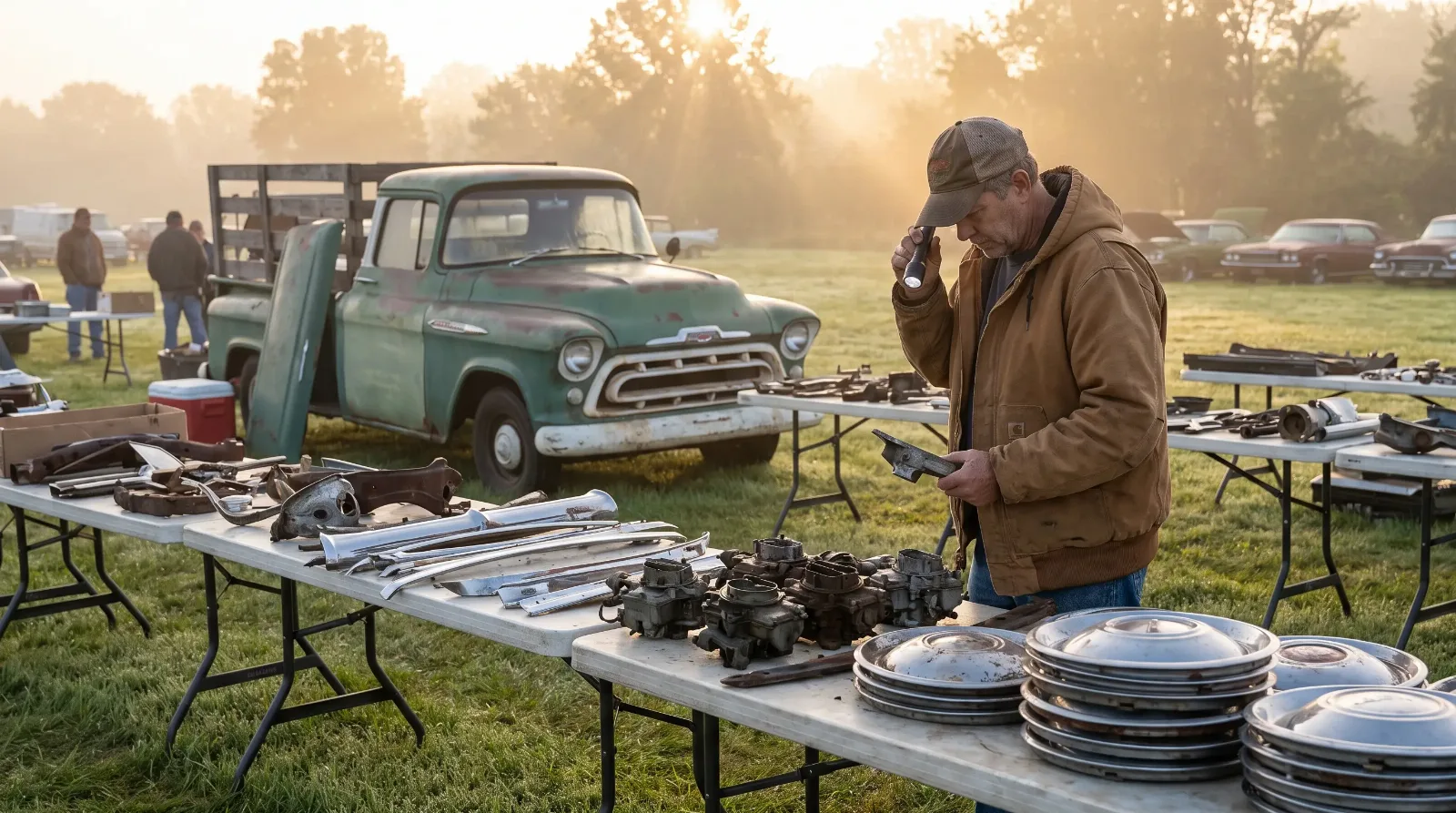
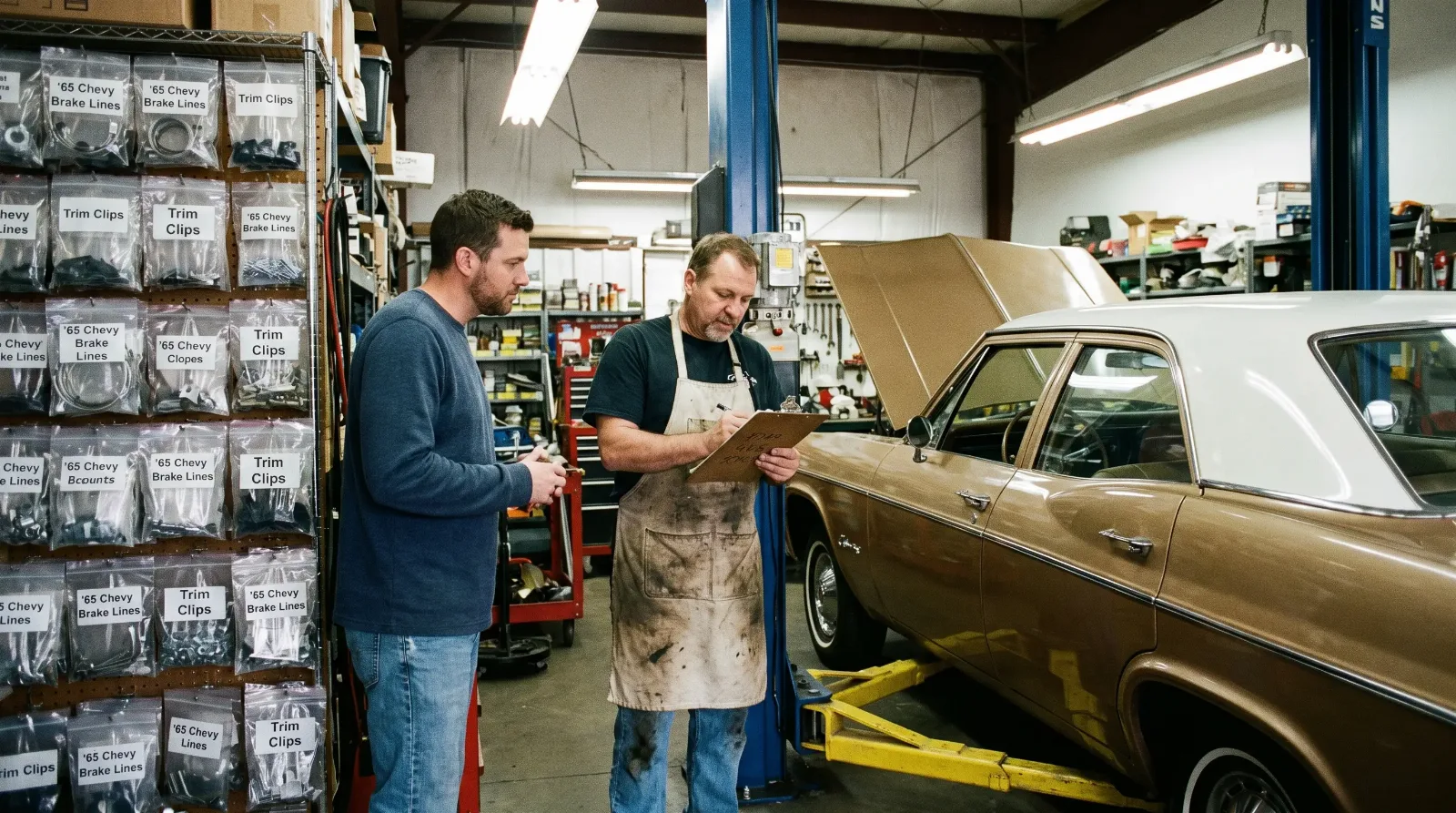
I've sat across the desk from a lot of shop owners over the years, and the ones worth hiring never mind being questioned. The ones who get short with you usually have a reason. A restoration is a long, expensive job, and the contract is only as good as the conversation that comes before it. Here are fifteen questions to ask before you sign, and what to listen for in the answers. If you are still building a shortlist, start with these classic car restoration shops and then come back with this list in hand. For the broader process, see how to choose a restoration shop.
Scope and experience
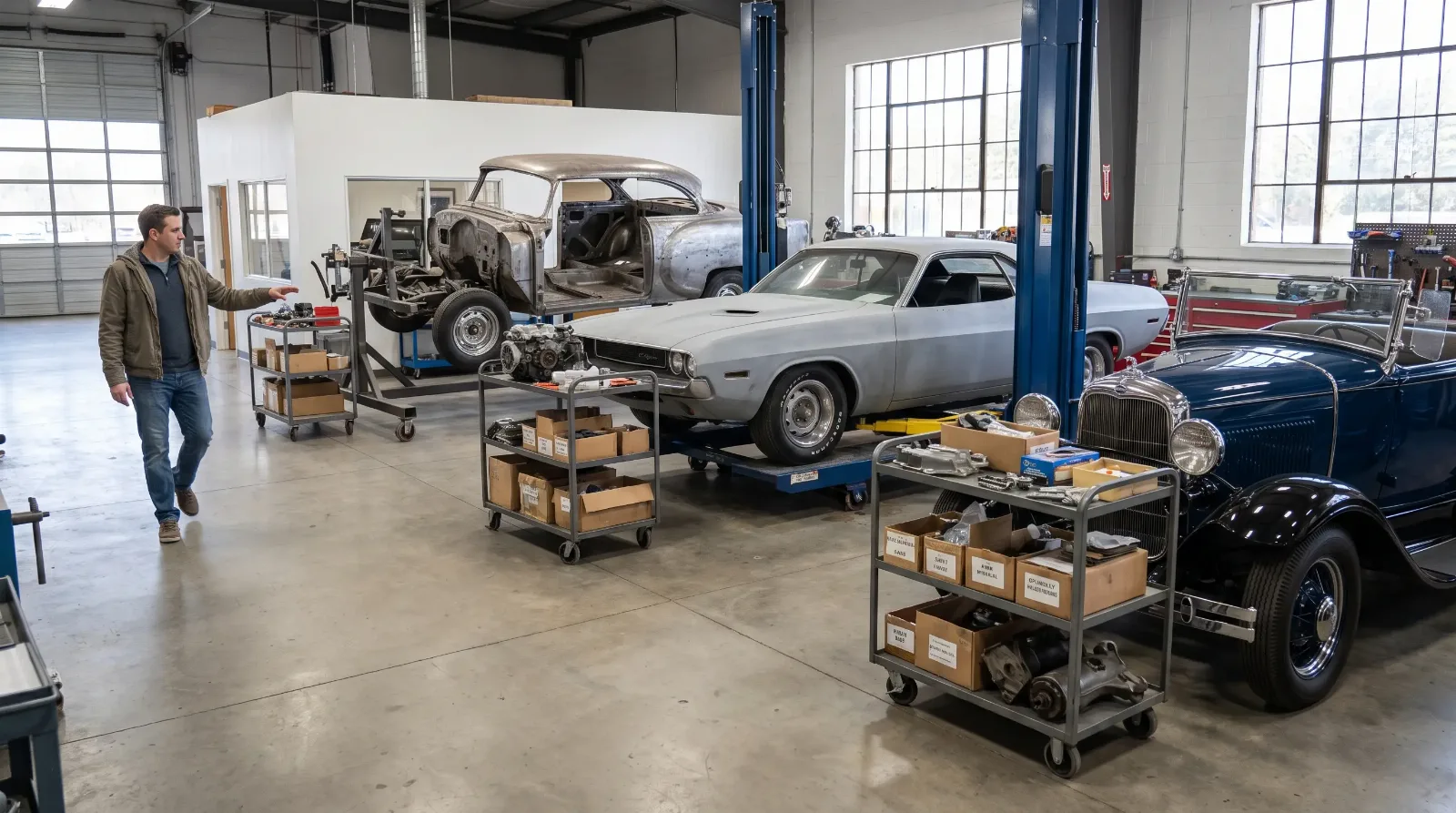
- Have you worked on this make and model before? A shop that has done three of your car knows where the rust hides and which parts are junk. Ask to see one.
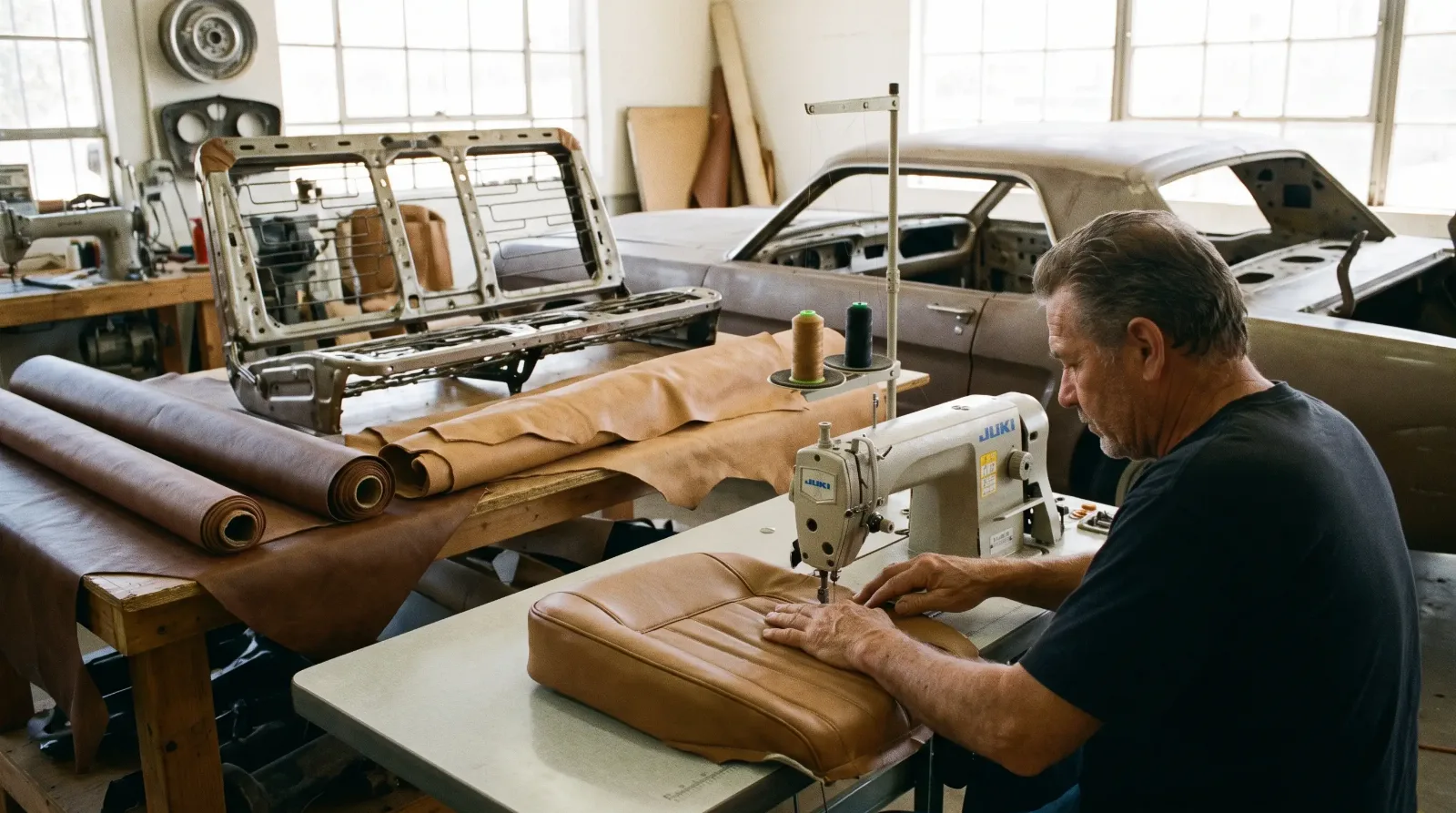
- Who will actually work on my car? The owner you meet may not touch it. Find out who does the bodywork, the paint and the mechanical work, and whether any of it is sublet.
- What is your typical project size? A shop built for ten-year full restorations may not be the right place for a driver refresh, and the reverse is true too.
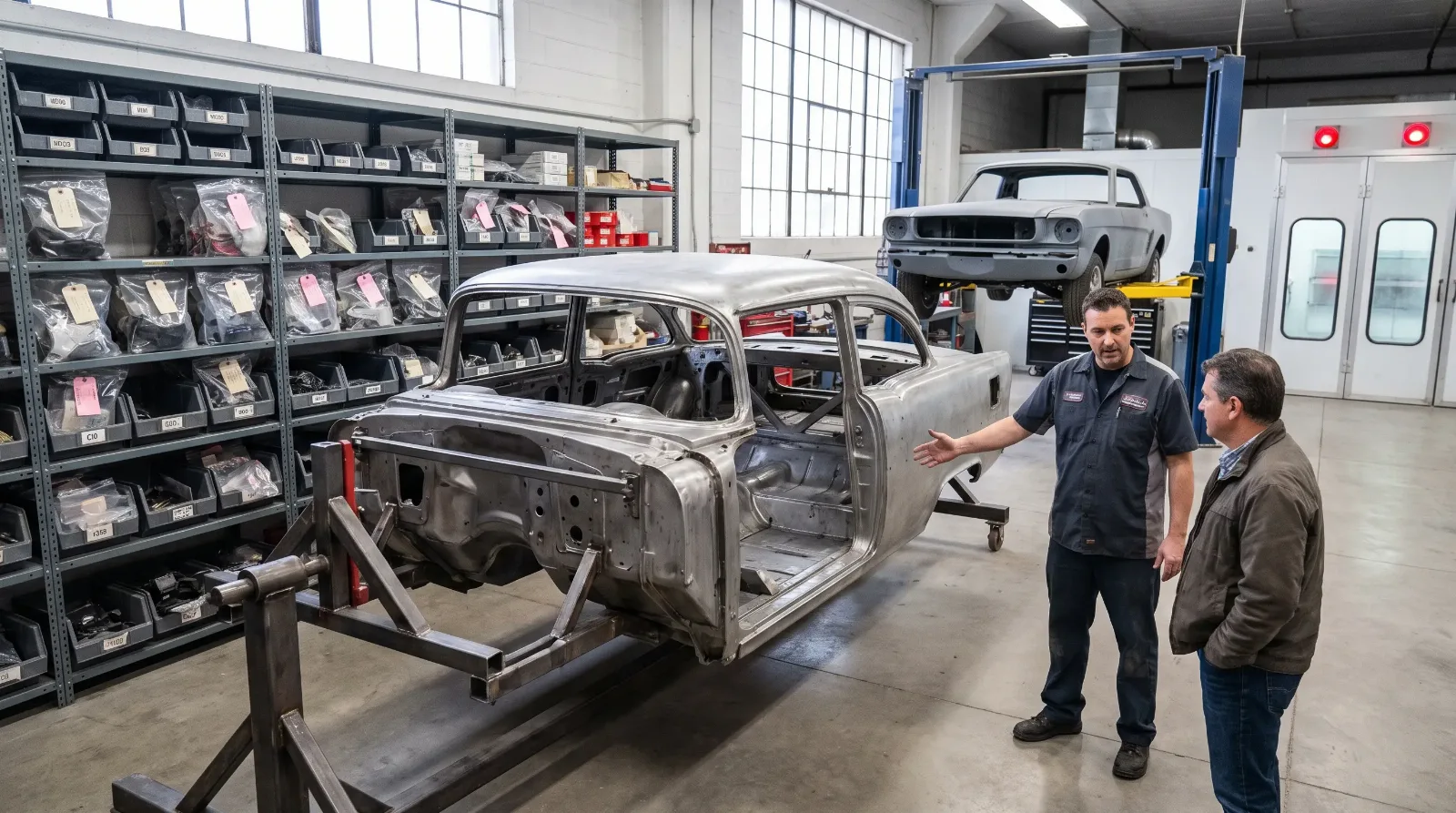
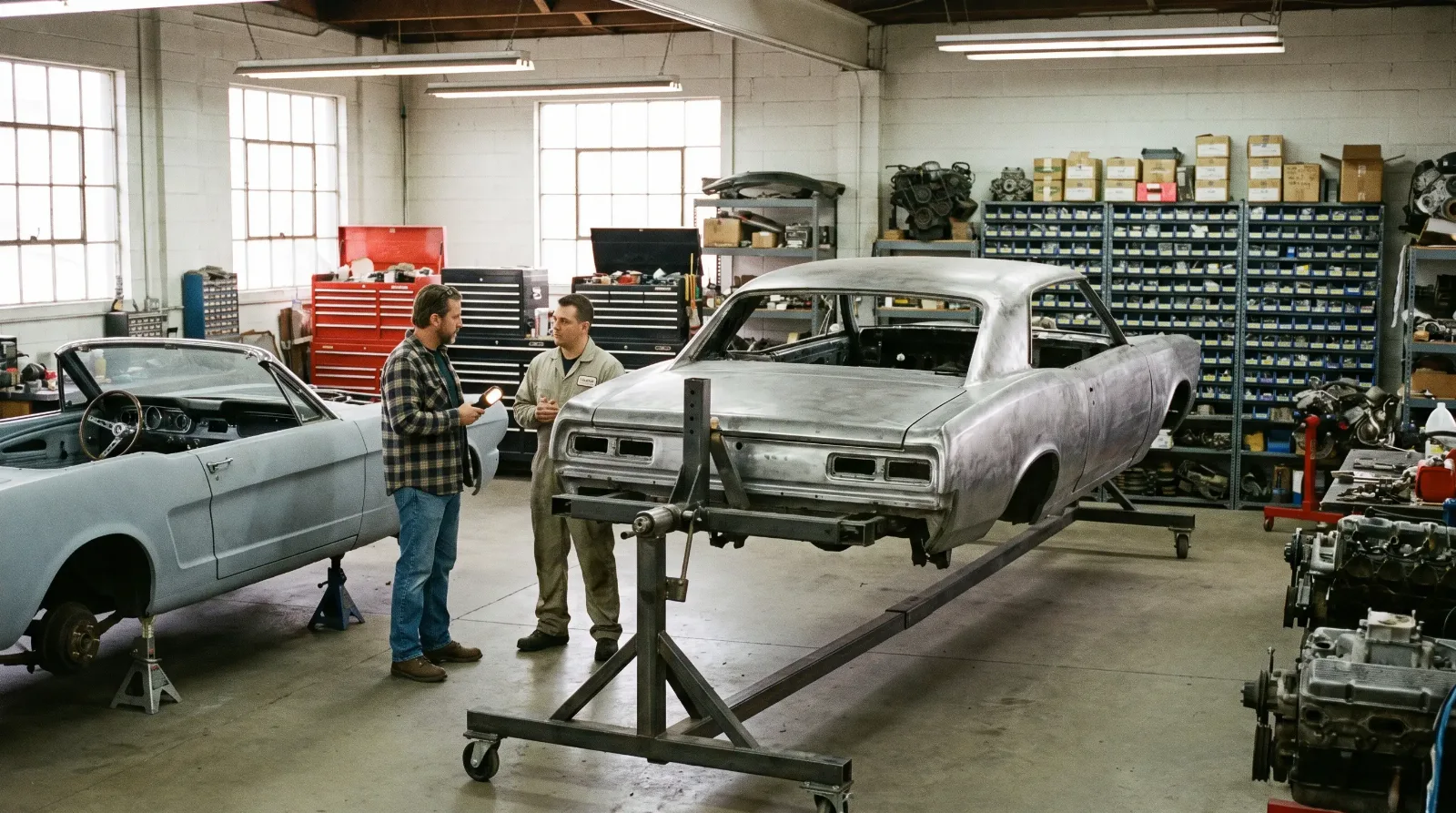
- Can I see current projects? Walk the floor. Look for organized parts storage, labeled bags and cars in different stages with a plan behind them.
Money and billing
- How do you bill, hourly or fixed? Both can work. Many high-end restorers bill time and materials, since the true scope is not known until the car is apart. Hourly needs a cap or a regular budget review. Fixed needs a clear scope, because change orders are where fixed bids get expensive.
- What is your shop rate, and how does it vary by task? Some shops charge different rates for bodywork, mechanical work and fabrication, while others use one blended rate, so ask which. Most independent shops run about $85 to $150 an hour, with marque and concours specialists at $175 or more.
- What do you need as a deposit, and when are progress payments due? Look for payments tied to completed stages, not to calendar dates. Be cautious of large up-front sums.
- How do you handle surprises? Every project has them. The right answer is that they stop and call you before spending money, with a written change order.
Process and communication
- How will I get updates, and how often? Photo updates every few weeks, with notes on hours and parts, are a good standard. Silence is the single most common complaint owners have.
- Do you document the work with photos? Pictures taken during disassembly and before panels are closed up protect you and add to the car's file when you sell.
- Can I visit while the car is in the shop? The answer should be yes, with reasonable notice. Hesitation is a signal.
- What is the realistic timeline, and what could change it? Ask for a range, not a promise, and ask what ordinarily delays a job like yours. Parts sourcing and paint scheduling are the usual culprits.
Protection and proof
- What insurance do you carry on my car while it's in your care? Ask for a certificate of insurance, and find out what your own policy covers while the car is at a shop.
- Who owns the parts, and what happens if the project stops? You want a written agreement on ownership of removed parts, new parts bought on your behalf and the car itself.
- Can I talk to past customers? Ask for two or three recent references, including one whose project ran over budget. How the shop handled that conversation tells you what you need to know.
What a good shop does without being asked
A few signs show up before you ask a single question. The shop sends a written estimate with the scope broken into stages. It asks about your goals for the car, whether that is a weekend driver or a show winner, instead of quoting one standard job. It tells you what it does not do, and refers you elsewhere for it. And it gives you the name of the person who will run your project. None of these is a guarantee, but a shop that does all four is already ahead of most.
Before you ask
Do a little homework first. Find out what a typical restoration of your model costs, so you can tell a reasonable quote from a lowball, and decide in advance what you care about most: originality, finish quality, cost or schedule. A shop will happily tell you what you want to hear if you do not know what you want. Bring the car's history, any documentation and a list of the work you expect. Written questions, handed over before the visit, also give the shop time to prepare real answers.
Reading the answers
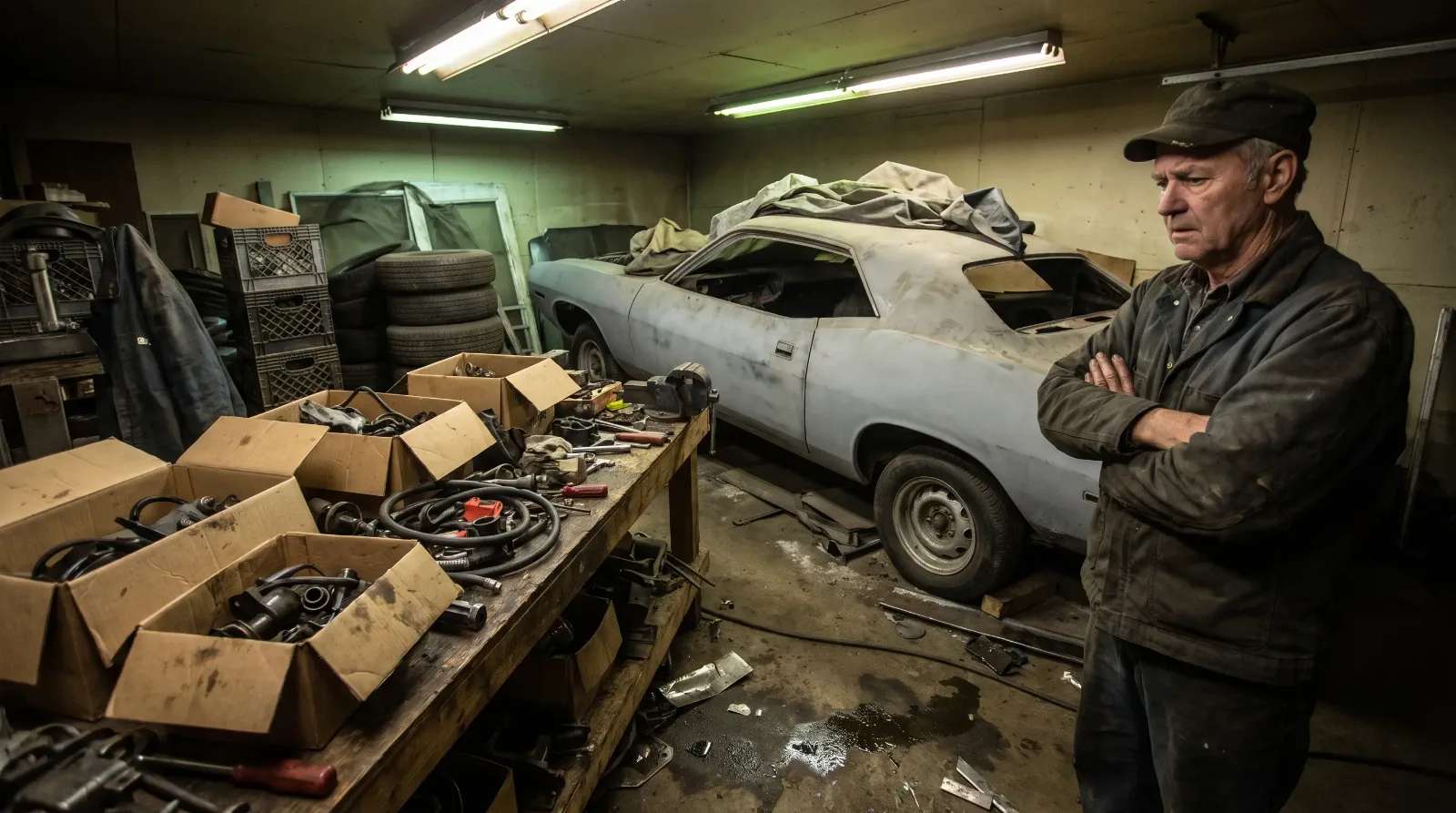
Good answers are specific. They name a process, a timeline or a past car. Bad answers are vague, defensive or full of reassurance in place of facts. If a shop cannot answer five or six of these without hedging, keep looking. And if the answers are fine but something still feels off, compare them against the red flags that experienced owners learn to spot before the first deposit is paid.
"The best shop I know hands you a written scope before you've asked. The worst ones tell you not to worry about it."
Mike Sullivan
Take notes during the visit, and put the key answers into the contract. A shop that agrees to everything in conversation but balks at writing it down has told you what you needed to learn. Hiring a restoration shop is a business decision, so treat it like one, and take your time. A few extra weeks of vetting costs far less than a project that goes sideways. And if a shop passes every question on this list, do one more thing: visit once more unannounced, during working hours, and see whether the place looks the way it did on the day you were expected.
Sources and notes
- FTC, Auto repair basics, written estimates, approval before extra work, repair orders and keeping records
- Wikipedia, Mechanic's lien, how an artisan's lien on a vehicle works and that rules vary by state
- Grundy, Restoration shop insurance, garagekeepers coverage of customer cars, including vehicles under construction
- Finch Restorations, Fixed price or time and materials, why many restorers bill hourly and keep clients updated
- Antique Automobile Club of America, clubs, forums and judging resources for finding shop references