A restoration shop holds your car, your deposit and months of your time. If it fails, the loss is not only the money. It is the car in pieces, parts you cannot identify and a title you may have trouble getting back. The warning signs usually show up early, and most of them are visible before a deposit changes hands. This is a risk-based list, ordered roughly by how much damage each one can do. For the positive side of the process, see our guide to picking a shop.
Financial red flags
The first group concerns money. A shop that asks for a large percentage of the total estimate up front has put its cash flow ahead of your protection. Reasonable deposits exist, but they should be modest, covering parts ordering and early labor, and tied to a defined scope, with later draws linked to completed stages of work. Some restoration guides treat a request well into five figures as a reason to pause. A shop that refuses to put the payment schedule in writing, or one that requests cash only, adds a second risk: you have no record if there is a dispute.
Open-ended billing with no budget review is the next signal. Hourly work is fine, but without regular statements and a cap, you are signing a blank check. The same applies to a very low estimate. A bid far below competing quotes is not a bargain. It usually means a narrow scope, assumptions that will not hold, or a plan to recover the difference through change orders. The way the estimate is built tells you more than the total, and reading the estimate line by line is worth the time.
Communication red flags
A shop that is hard to reach before you sign will be harder after. Watch how quickly it answers questions, whether the answers are specific and whether the person you meet is the person who will manage the work. Evasion on simple matters, such as who does the paint or how long a stage takes, is a sign that the answers will not improve once the car is on the lift.
Updates are the other half. A shop that will not share progress photos, discourages visits or goes quiet for weeks at a time may be hiding delays, subletting work or running behind. Owners who end up in disputes often describe exactly this pattern. Ask early how updates will work, and treat a vague answer as a warning.
Operational red flags
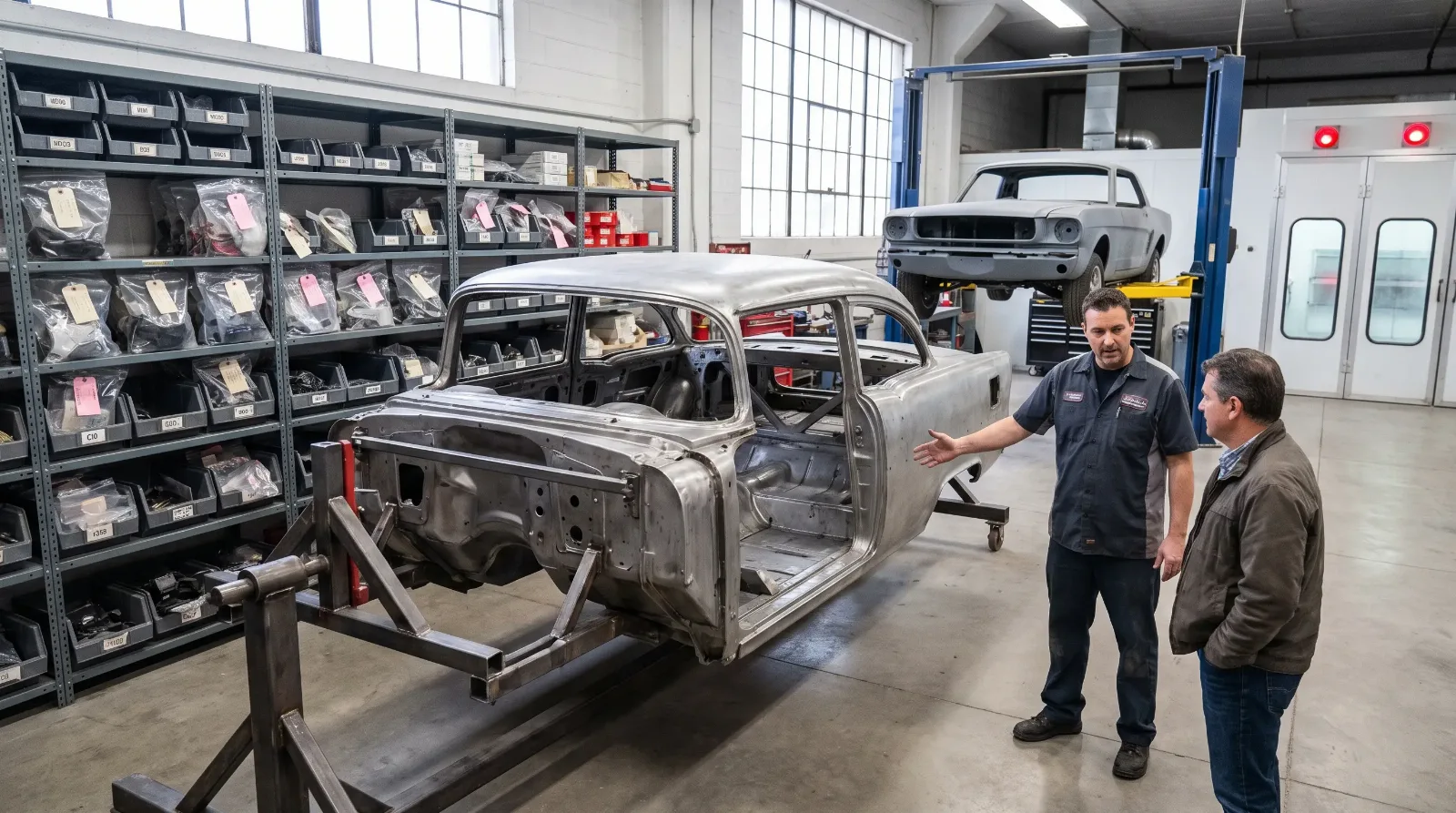
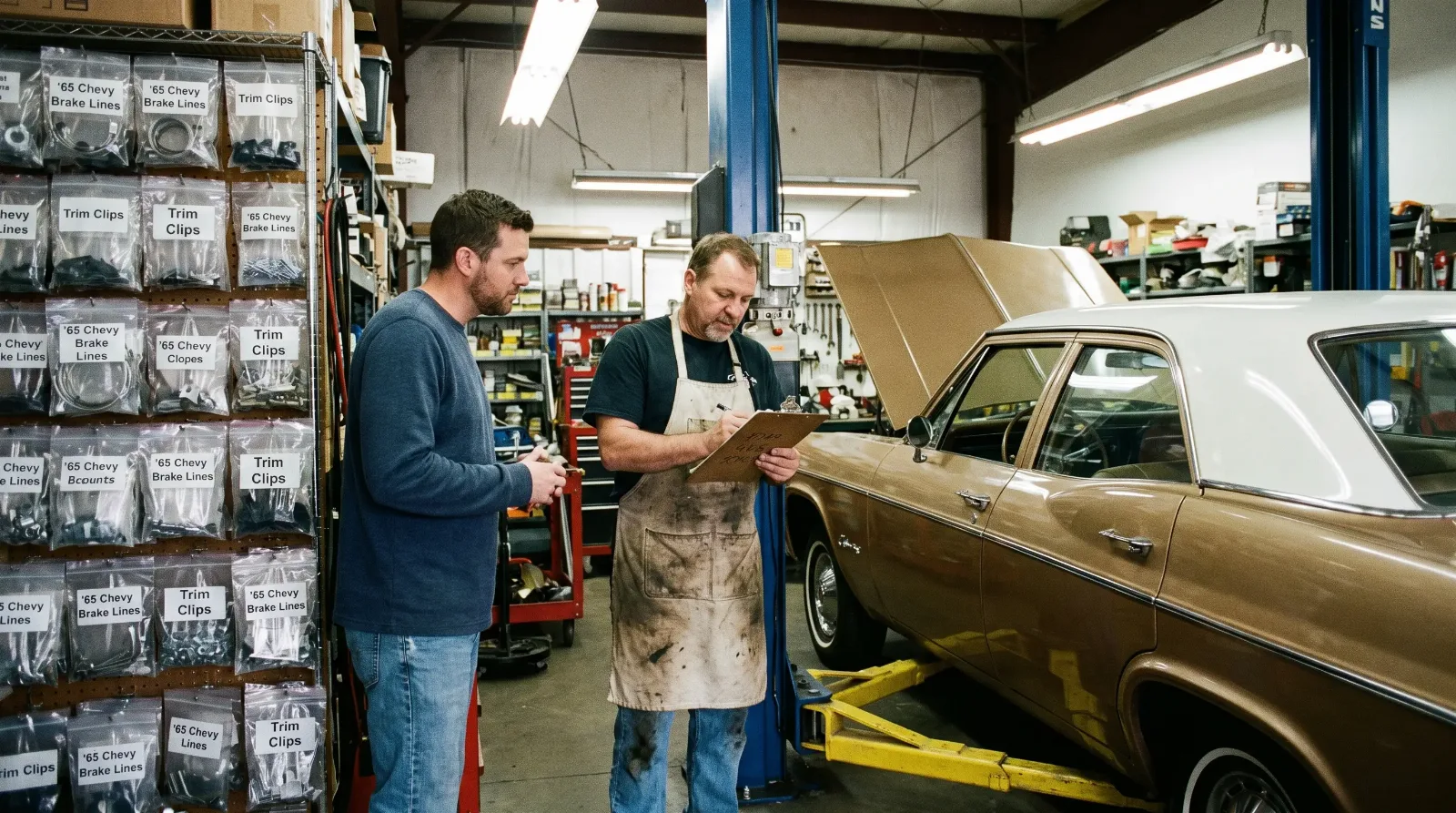
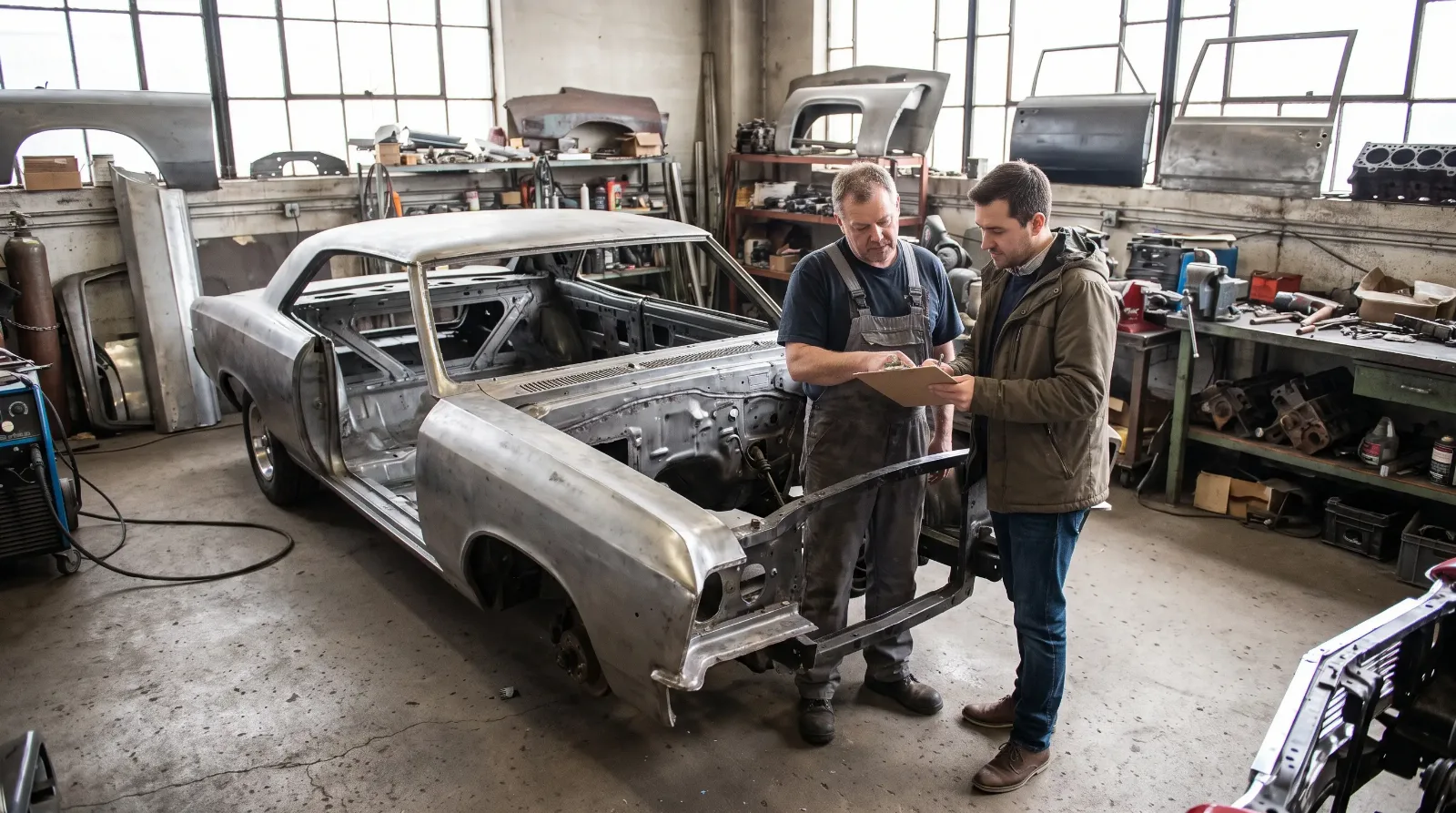
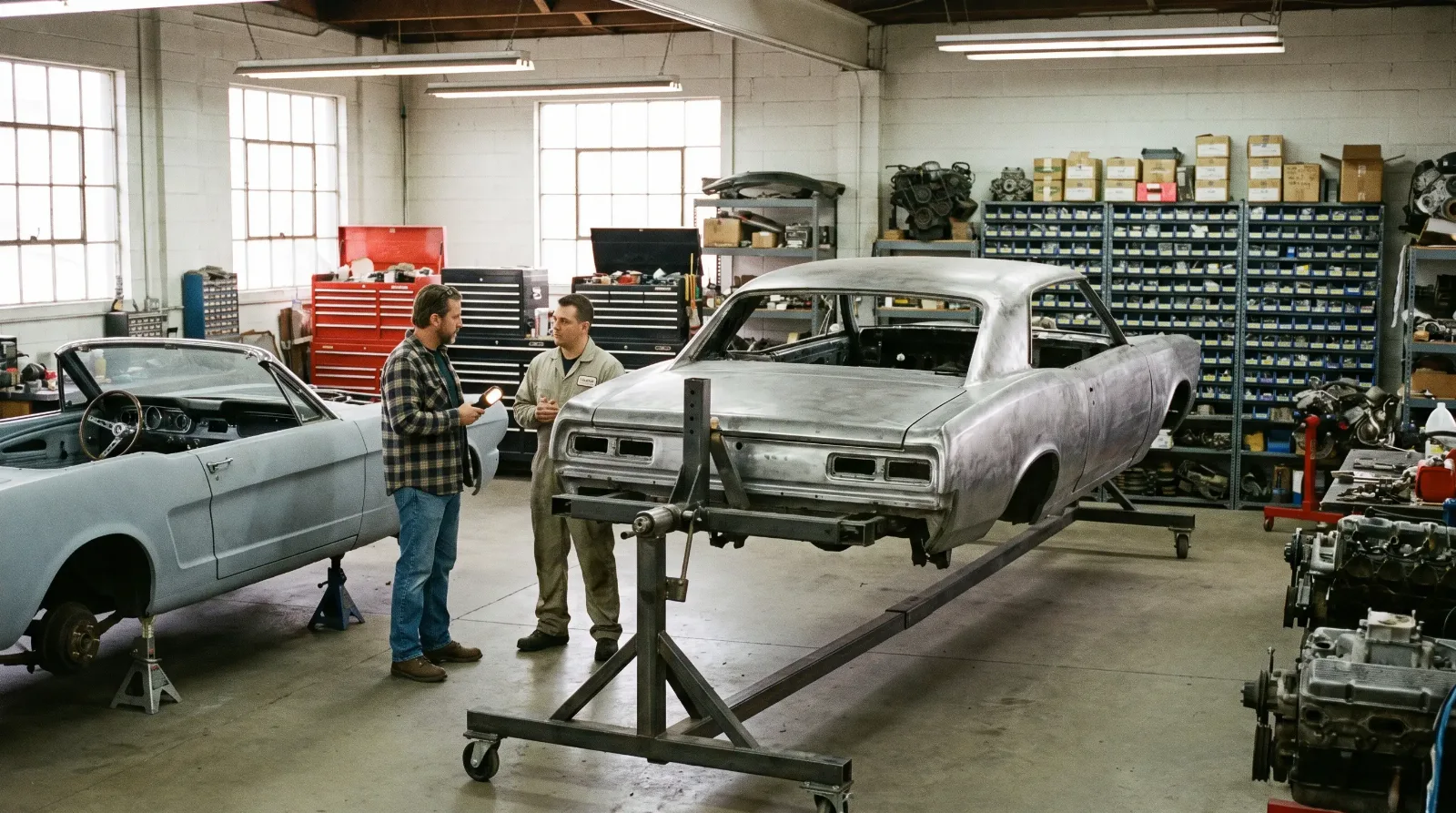
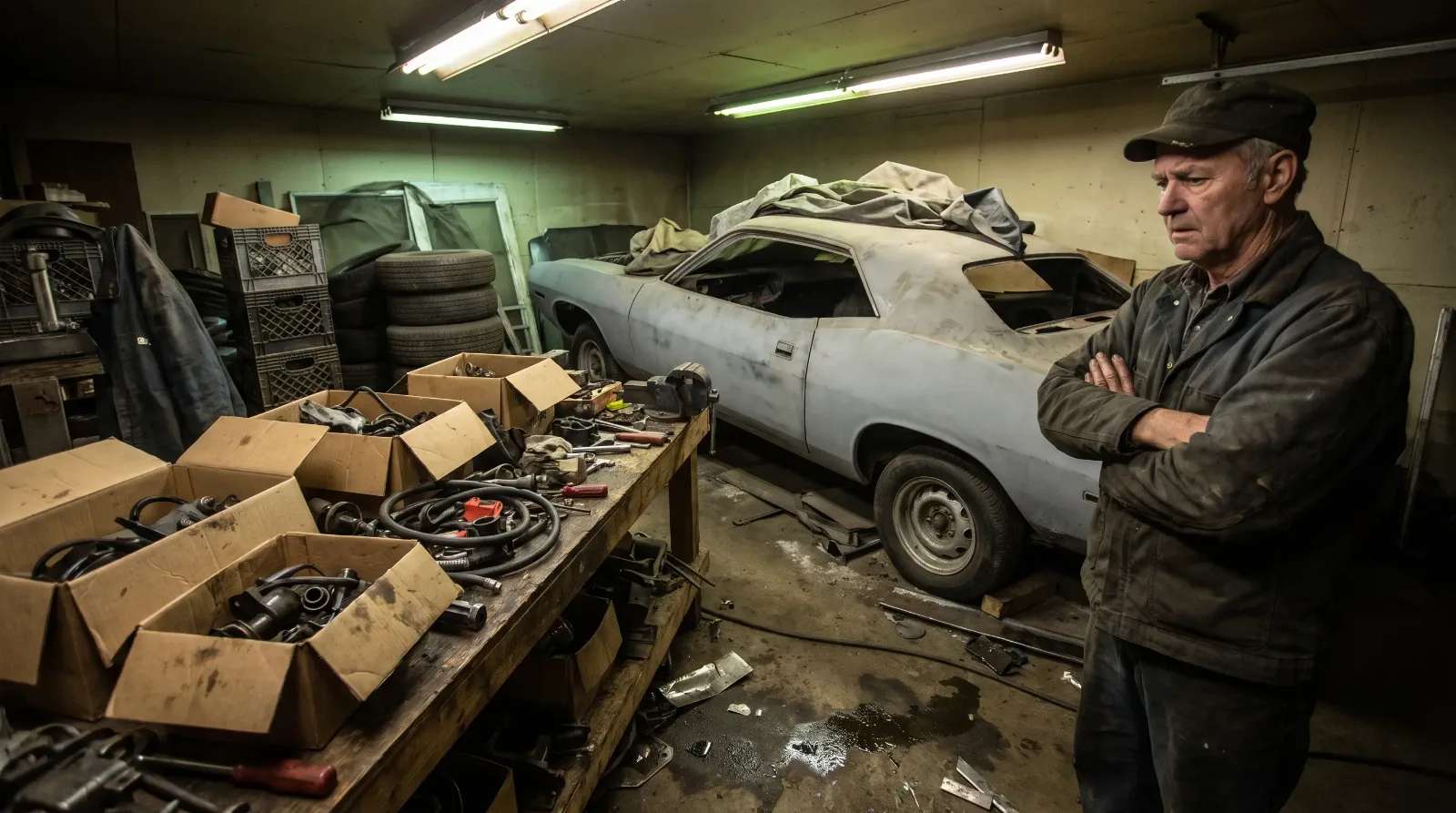
Walk the shop. A disorganized floor with cars stacked in corners, loose parts in open piles and no labeling suggests the same attention to detail will be applied to your project. Missing parts are a particular risk on older cars where replacements are scarce. Look at cars that have been in the shop a long time, and ask why.
Insurance is a hard line. If a shop cannot show a certificate covering customer vehicles in its care, a fire, theft or accident becomes your problem. Missing licenses or permits, where your state requires them, belong in the same category. And a shop with no recent finished cars to show, only works in progress, has not demonstrated that it can complete a job.
Reputation red flags
Reputation can be checked. Ask for references and call them, and ask each one about budget, timeline and how problems were handled. Be wary of a shop that offers only glowing reviews, no references or a list of customers who all happen to be unavailable. Search for complaints, small claims filings and discussions on marque forums. One unhappy customer is information. A pattern is a decision. The common mistakes owners make with older performance cars are covered in common restoration mistakes on muscle cars, and many of them trace back to a shop that should have been rejected at the start.
"A red flag is not proof of fraud. It is proof of risk, and the cost of that risk lands on you, not on the shop."
Marcus Feld
Pressure red flags
Be wary of urgency. Claims that the price will rise tomorrow, that the shop has only one slot left or that a competitor is about to take the car are sales tactics, not scheduling facts. The same goes for a shop that badmouths every other shop in town, or one that promises a finish date far earlier than anyone else quoted. Honest shops know how long this work takes and will not pretend otherwise to win the job.
Contract red flags
The paperwork is a flag in its own right. No written agreement, or one that is a single page with no scope, is a problem. So is a contract that gives the shop broad rights to hold the car, change the price or sublet work without notice. Look for clauses on storage fees, on what happens if either side ends the deal, and on who owns removed and purchased parts. If a clause is unclear, ask for a plain-English explanation and for it to be rewritten if the answer is unsatisfactory. A shop that welcomes the scrutiny is usually a safer bet than one that rushes you past it.
When to walk away
One minor flag can be resolved with a direct question. Two or three, especially from different categories, should end the conversation. The decision rule I use is simple: if a problem would be expensive to fix after the contract is signed, it is a reason to walk away before. Pressure to sign quickly, a discount that expires today or reluctance to let you consult an attorney or a second shop are each reasons to leave on their own.
If you are already in a project and the signs are appearing, act quickly. Document the car's condition with dated photographs, request an itemized statement in writing and review your contract for termination terms. Retrieve the car and any parts you have paid for as soon as it is practical. Consult a local attorney if a dispute is developing, because rules about liens and ownership differ by state. A restoration is a long relationship, and the cheapest time to leave a bad one is at the start.
Sources and notes
- Mechanic's lien (Wikipedia), supports the artisan's lien distinction for vehicles and state-by-state variation
- Possessory lien (Wikipedia), defines a lien that lasts only while the holder has possession
- Auto repair basics (FTC Consumer Advice), written estimates, written authorization, itemized repair orders and record-keeping
- Choosing a restoration shop (In the Garage Media), deposits, draws, progress photos, shop tours and open-ended estimates
- Knoxville man gets 1969 Mustang back missing parts (AOL), a news example of delays and missing parts at a restoration shop