
The engine is where a rat rod build gets real. You can bolt on all the patina and skulls you want, but the thing has to start, run, and stop. That means an engine, a transmission, a rear end, and a cooling setup that all talk to each other. Get one wrong and you have a lawn ornament. This is the mechanical side of the build, and it splits along one hard line: cheap and reliable, or cool. Sometimes you get both. Usually you pick.
Restoration & Tech
10 min read
Rat Rod Engines and Drivetrains
Flathead vs cheap small-block vs junkyard diesel, plus transmissions, rear ends, and the cooling setup that keeps a rat rod from stranding you.
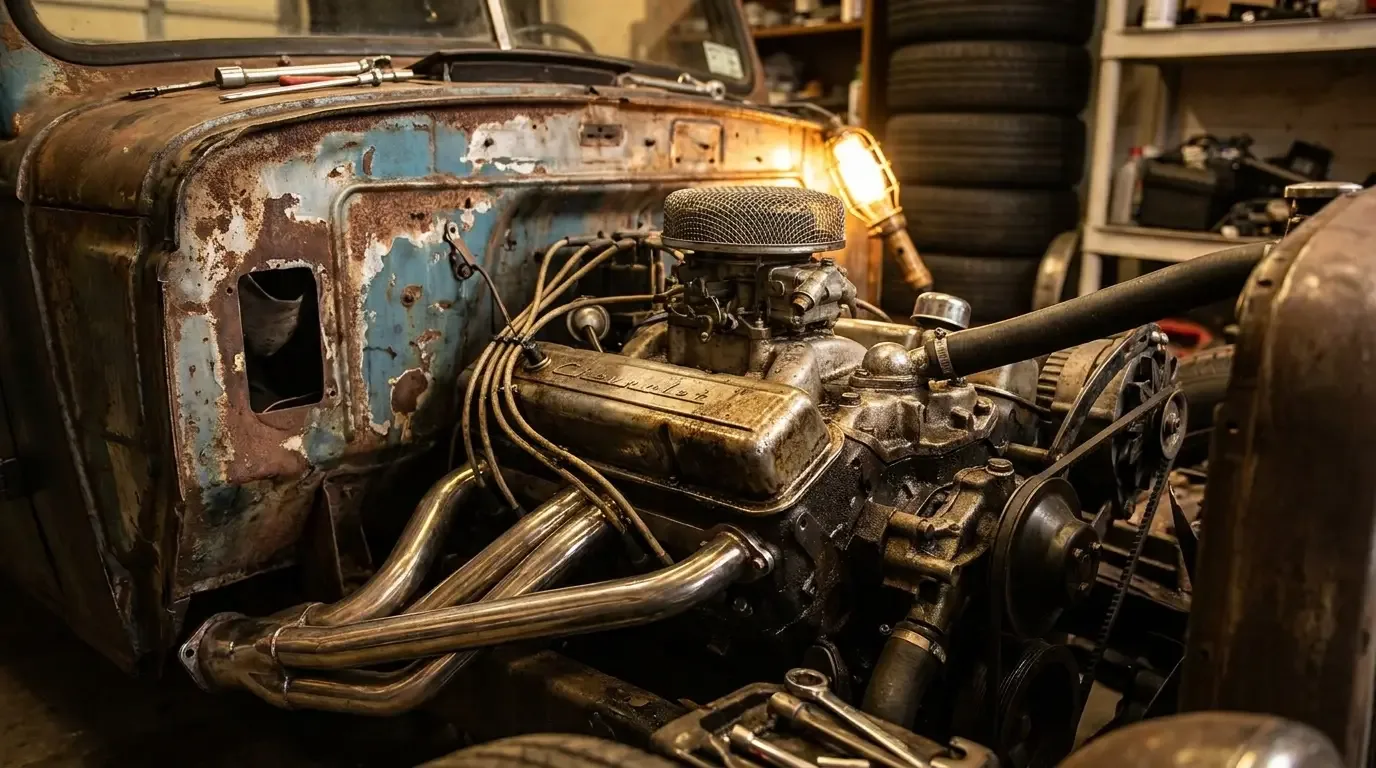
A rat rod engine is almost never new. It comes out of a junkyard, a barn, or a buddy's shed. The whole point is low buck, so you work with what runs and what parts cost nothing. Before we get into the choices, understand that a rat rod is a low-budget custom by definition. If you are still fuzzy on the category line, read what is a rat rod first, then come back and we will talk hardware.
Flathead, small-block, or diesel
Three engine families show up in rat rods more than anything else, and they each say something different about the build.
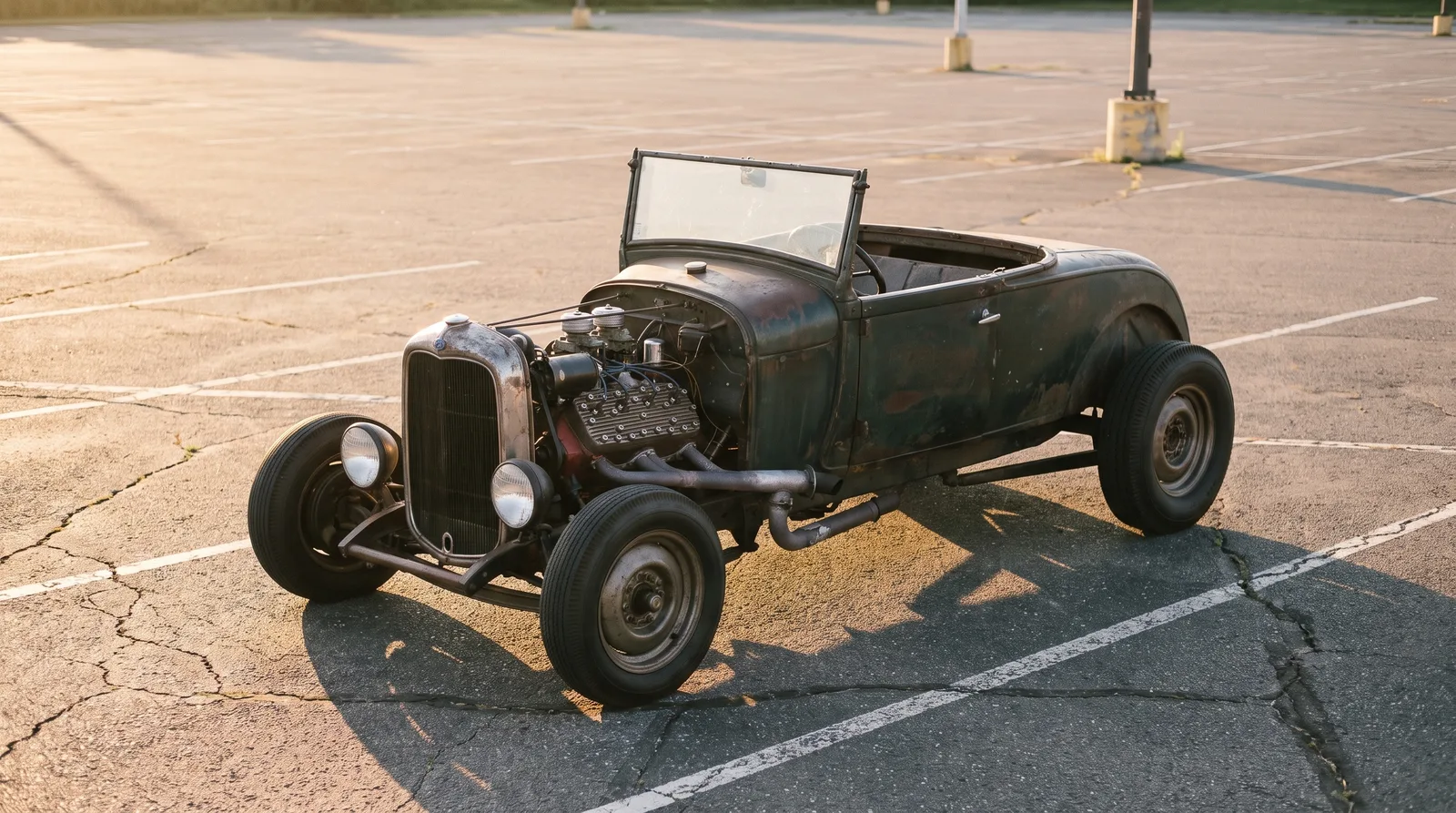
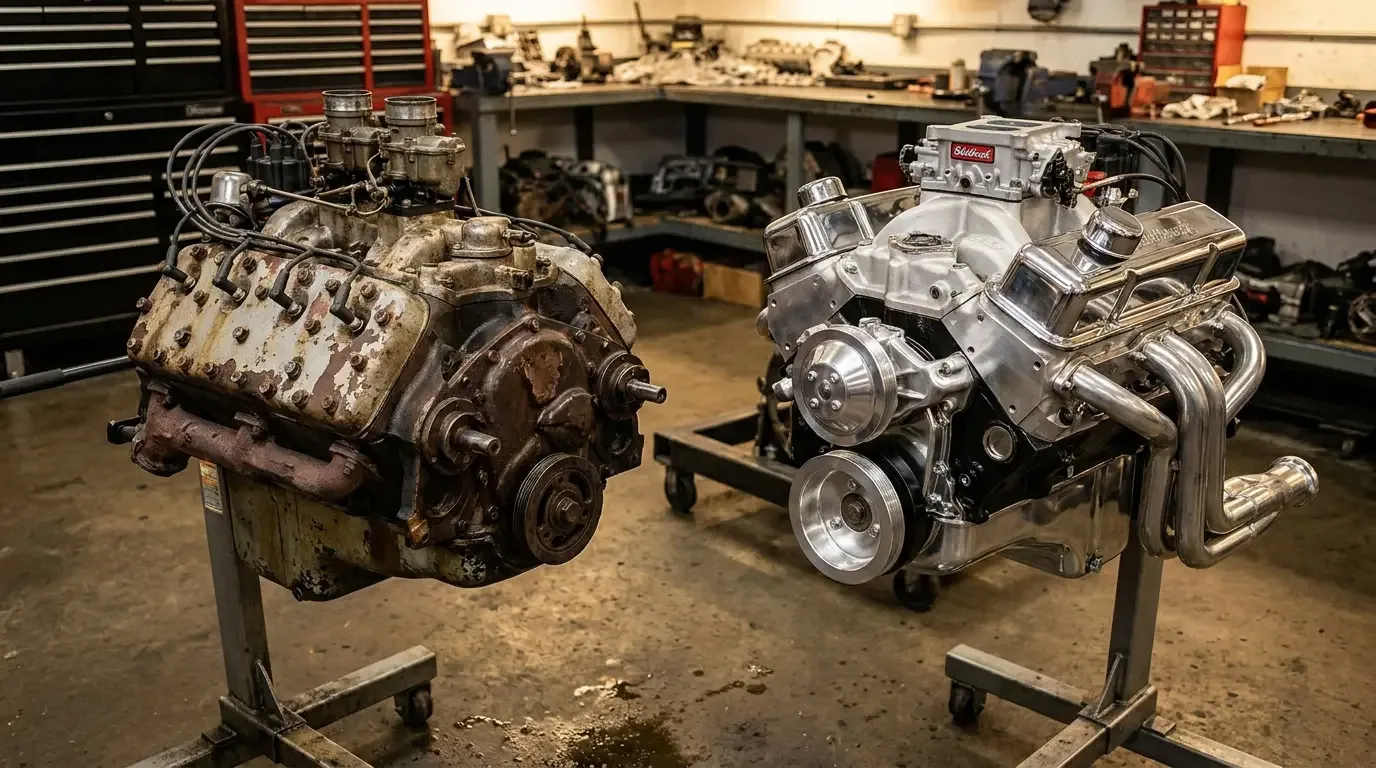
The Ford flathead V8 is the traditional heart of the whole hot-rod story. Ford built it from 1932 into the mid-1950s, and the late 239 cubic inch version put out around 100 horsepower stock. That is not much by modern numbers. What you get instead is the right look, the right sound, and a direct line back to the roots of the hobby. The flathead is also the expensive, fussy choice. Parts are scarce, they run hot, and a good rebuilt one costs real money. You run a flathead because you want a flathead, not because it is cheap.
The Chevy small-block is the opposite argument. It is the default budget V8 in America. Millions were built, junkyards are full of them, and every speed part known to man bolts on. A common 350 makes anywhere from roughly 150 to 300 horsepower depending on the year and application, and you can find a running one for a few hundred dollars. It is heavier on originality points and lighter on the wallet. For most first builds, this is the smart engine. Ford and Chrysler small-blocks do the same job.
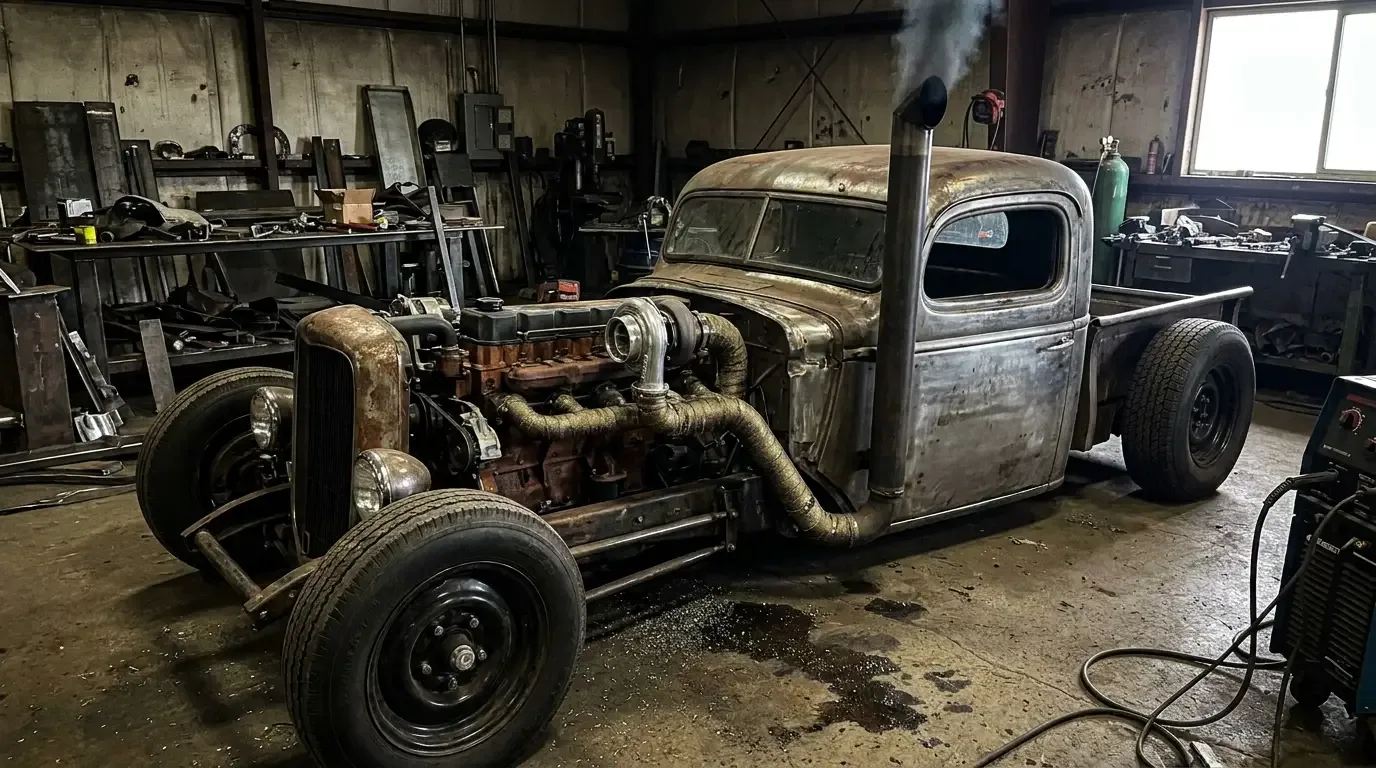
Then there is diesel. A junkyard Cummins or an older Detroit two-stroke turns a rat rod into a torque monster with an industrial voice. The old 12-valve 5.9 Cummins is the poster child here. In stock trim it made only around 160 to 215 horsepower, but it swung 400 to 440 lb-ft of torque down low, and that is the number that matters when you want a rat rod to pull like a tractor. Diesels are heavy and they change how the whole chassis behaves, so you have to plan the frame and the front suspension around the extra weight. But the low-end grunt is huge and the sound is unmistakable. That path has its own article: see Diesel Rat Rods: Big Torque on a Budget for the deep version. For the flathead-versus-small-block fight specifically, we broke it down in Flathead vs Small-Block in a Rat Rod.
| Engine option | Rough output | Cost to source | Best for |
|---|---|---|---|
| Ford flathead V8 (239 ci) | Around 100 hp stock (gross) | High, parts scarce | Traditional look and sound |
| Chevy small-block 350 | Roughly 150-300 hp | Low, everywhere | Cheap, reliable, easy parts |
| Straight-six (Chevy 250, Ford 300) | Roughly 140-160 hp | Very low | Simple, torquey, oddball cool |
| Junkyard diesel (5.9 Cummins 12v) | Around 160-215 hp, 400-440 lb-ft | Moderate | Grunt and industrial character |
Transmissions: manual character or automatic ease
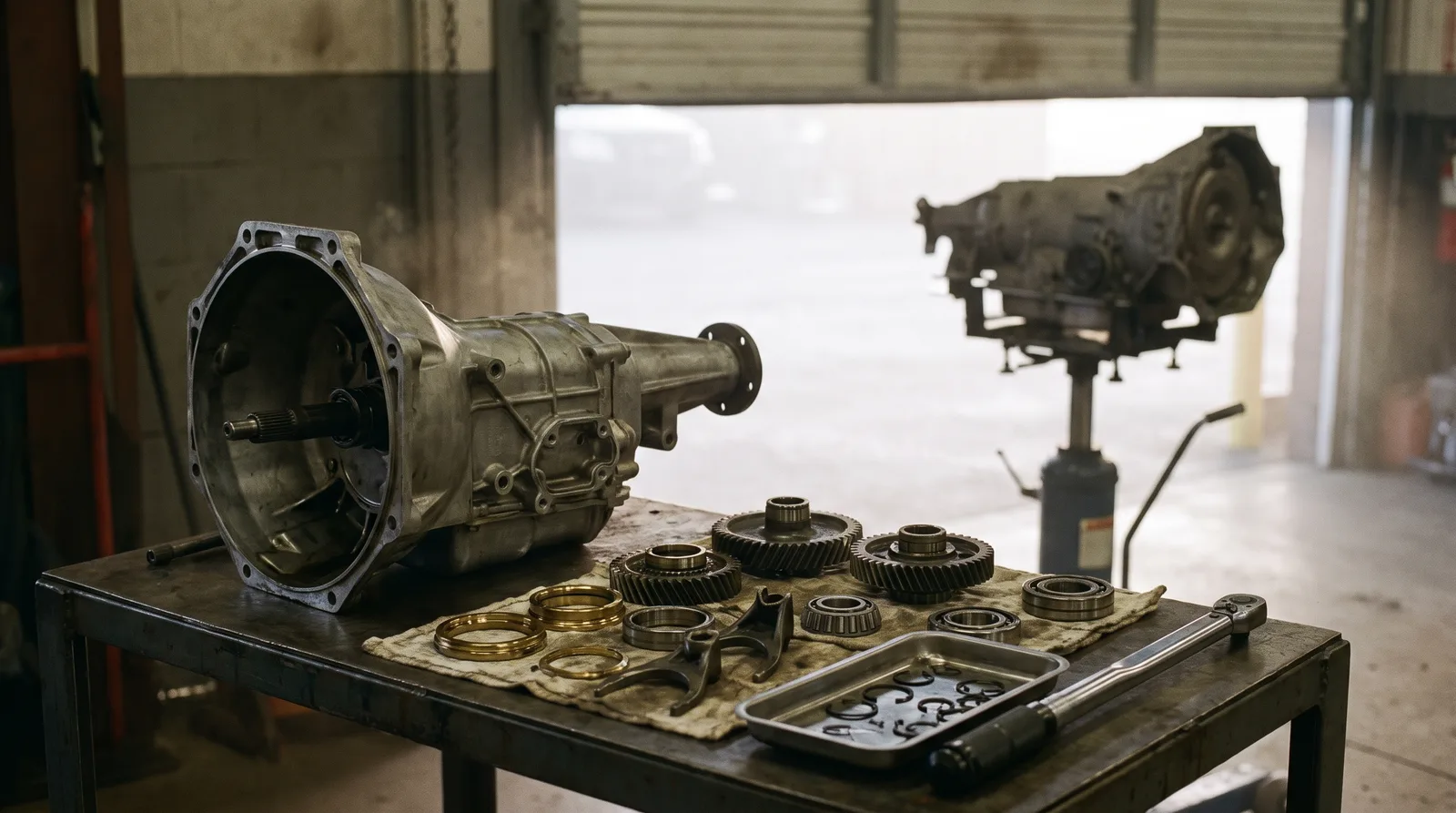
The transmission choice follows the engine and your patience. A manual gives you the mechanical, hands-on feel that suits a rat rod, but you have to sort out a clutch pedal, linkage, and a shifter that clears the body. An automatic is easier to live with in traffic and simpler to hook up once you have a matching bellhousing.
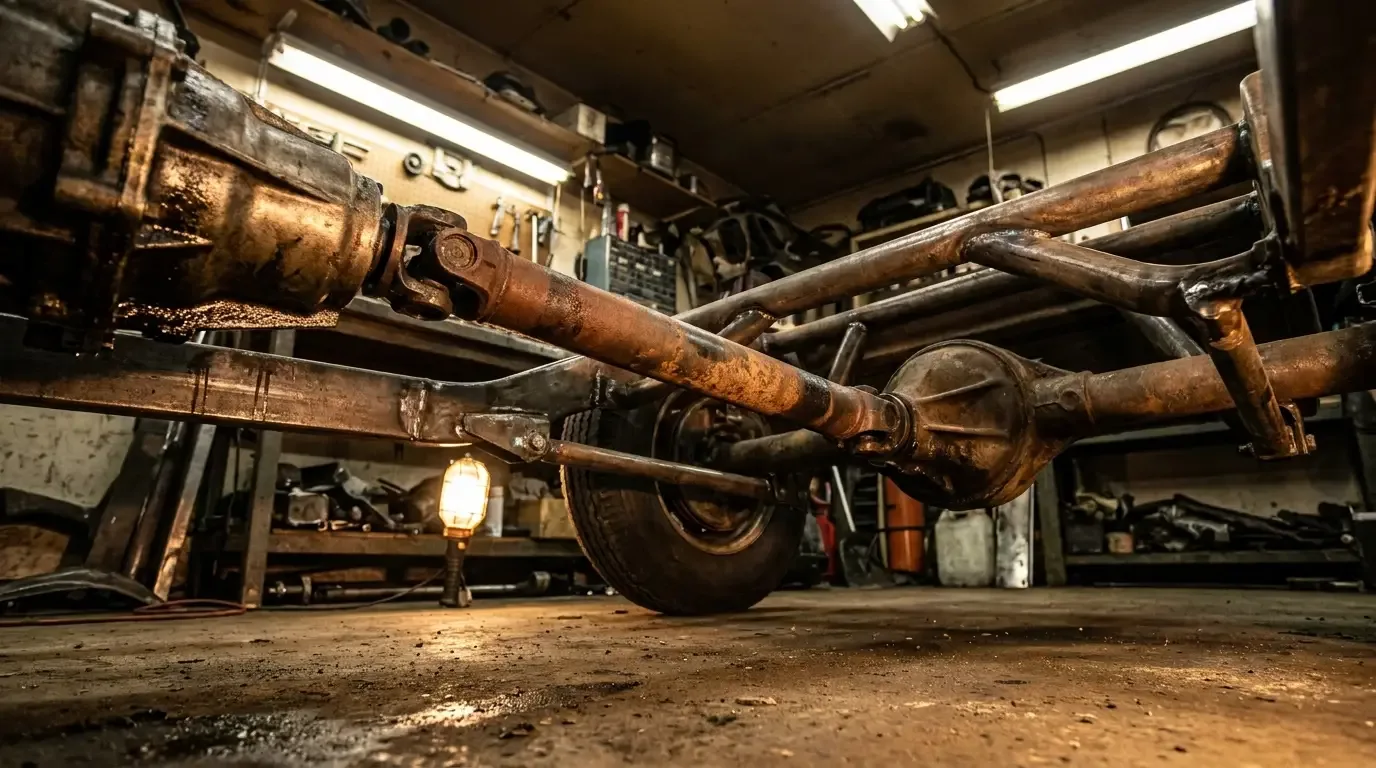
With a Chevy small-block, the cheap and reliable answer is a TH350 or TH400 automatic, or a Muncie or T-5 manual if you want to row your own gears. Behind a flathead you are often looking at a period three-speed or an adapter to something modern. Whatever you choose, the bellhousing pattern has to match the engine, and the output has to reach the rear end at the right angle. Do not guess on driveline angle. A bad angle vibrates, wears U-joints, and eventually breaks something expensive.
- TH350 / TH400 automatic: cheap, tough, forgiving. The default budget answer behind a small-block.
- Muncie / T-5 manual: more involved, more fun, and it keeps the mechanical rat-rod feel.
- Period three-speed: correct behind a flathead, but weak and slow. Character over capability.
Rear ends: what to steal from the junkyard
The rear axle is the one part where builders quietly agree on a favorite. The Ford 9-inch is the go-to rat rod rear end, and for good reason. It is strong, it came in millions of Fords and trucks from the late 1950s through the 1980s, and the ratios and widths are well documented. A GM 10-bolt or 12-bolt works too and is often even cheaper.
What you care about is three things: width, so the wheels sit right under the body; gear ratio, so the engine is not screaming at highway speed; and strength, so it survives whatever the engine dishes out. A rear end from a full-size sedan or a pickup is usually wide and stout enough. Measure the width flange to flange before you drag it home, because the wrong width means new axles or a narrowing job, and that eats your budget fast.
"People obsess over the engine and forget the rear end. I have seen guys drop a healthy small-block behind a tired open-diff axle out of a compact car and wonder why it grenades the first time they get on it. Match the rear to the power. A 9-inch is cheap insurance."
Mike Sullivan
Cooling: the thing that kills rat rods
Here is where a lot of cheap builds die. Rat rods run tight engine bays, small or half-hidden radiators, and sometimes no fan shroud because it did not look right. Then the thing overheats at the first stoplight. Cooling is not optional and it is not where you cut corners.
A flathead is famous for running hot because the exhaust passes through the block, so it needs a serious radiator and honest airflow. A small-block is easier but still wants a properly sized radiator, a working water pump, and either a good mechanical fan with a shroud or an electric fan that actually moves air. If you chop the front of the car for looks, make sure enough air still reaches the core. A rat rod that boils over in July is not cool, it is stranded.
Motor mounts and adapters: the part nobody photographs
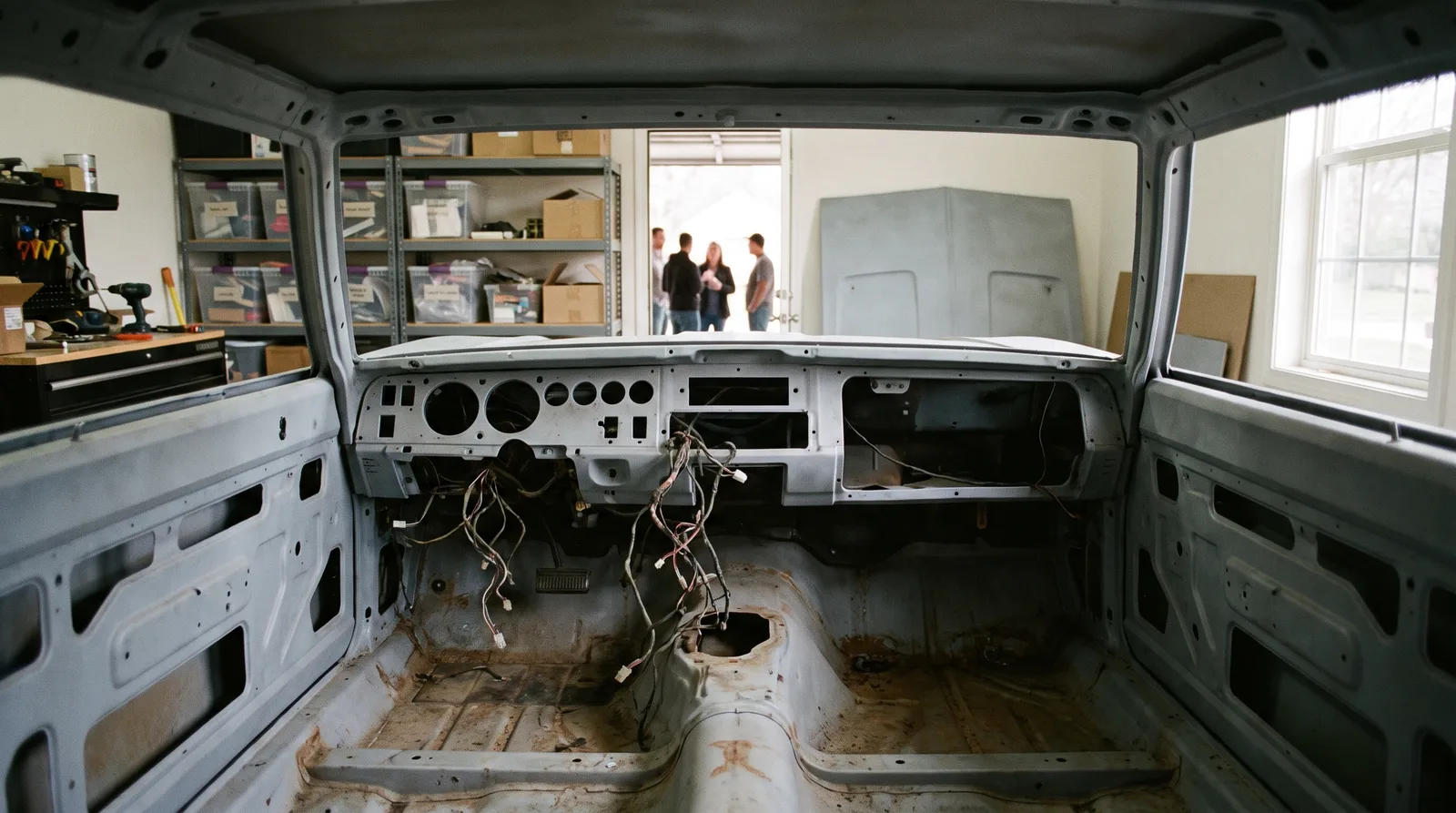
Here is the quiet truth of every engine swap. The engine you found almost never bolts straight into the frame you have. The block was designed to sit in one specific car, and your rat rod frame came off something else entirely. Bridging that gap is the job of motor mounts and, when the transmission does not match, a bellhousing adapter. This is unglamorous work and nobody posts photos of it, but it is where a swap gets sorted or where it goes sideways.
You have three honest routes. You can buy weld-in or bolt-in mount kits made for common combinations, and for a small-block Chevy into an early Ford frame those kits are cheap and everywhere. You can fabricate your own mounts from plate steel and rubber isolators if you can weld and you trust your measurements. Or you can adapt a factory setup from a donor car. Whatever you pick, the engine has to sit at the right height, the right angle, and centered so the driveline runs true to the rear end. Get the engine sitting crooked and every downstream part fights you, from the driveshaft angle to the exhaust routing to the way the hood or the lack of one lines up.
Rubber isolators are not optional either. Mount an engine solid to a bare frame and every vibration comes straight through into the body and your hands. A rat rod is already a loud, raw thing to drive, so do not make it worse than it needs to be. Cheap polyurethane or rubber mounts take the edge off and they cost almost nothing. On the transmission side, if your engine and gearbox came from different families you need an adapter plate to marry the bellhousing pattern, and you need to confirm the input shaft and pilot bearing match before you slide anything together. Measure twice, weld once, and dry-fit the whole driveline before you commit a single bead.
Cheap and reliable versus cool
This is the real decision behind every rat rod drivetrain. The cheap and reliable path is a junkyard small-block, a TH350, a Ford 9-inch, and a radiator sized like you mean it. That combination starts every morning, costs little, and lets you actually drive the car. The cool path is a flathead, a period gearbox, and a driveline chosen for authenticity over convenience. It looks and sounds right, and it will test your patience and your budget.
Neither answer is wrong. What is wrong is pretending an expensive, temperamental build is a low-buck one, or bolting a big engine to a weak driveline and calling it done. Be honest about which car you are building. If you want the mechanical background on how these cars came to be, the whole thing traces back through the rat rod story, and if you would rather buy a running one than build it, there are always used rat rods for sale that already have the driveline sorted.
Sources and notes
- Period and modern hot-rod and rat-rod press coverage of engine swaps and junkyard builds.
- Builder interviews and shop-floor experience with flathead, small-block, and diesel rat rod drivetrains.
- General engine and chassis reference material for flathead V8, Chevy small-block, straight-six, and diesel specifications. Specific horsepower and torque figures vary by year and configuration and are marked for verification.
- Rear-axle and transmission fitment references (Ford 9-inch, GM 10/12-bolt, TH350/TH400).
- Cooling-system sizing and driveline-angle guidance from standard automotive service practice.
Related Reading
Have a
Classic Car
for Sale?
Reach thousands of serious classic car collectors across the US.
Sell It Here →
Are You a Classic Car Dealer?
List your full inventory and connect with targeted classic car buyers.
Join as a Dealer →

About the author
Mike Sullivan
Detroit-area muscle car enthusiast and restoration specialist with three decades of hands-on experience working on American iron.
More in Restoration & Tech
Comments
Be the first to comment on this article.