
Picture a car that has sat in a barn for twenty years, and someone finally lifts the door handle. The smell reaches you before the hinges finish creaking: wet cardboard, old cellar, a faint sweetness underneath. It is not a dramatic smell, only a quiet one that gets into everything. Most of us know it from the first time we opened a project car, and it stays with us longer than the sight of the rust.
Restoration & Tech
7 min read
Removing Mold, Mildew and That Musty Smell
A musty smell in a classic car means moisture is hiding somewhere. How to find the source, kill mildew, treat the odor and keep it from coming back.
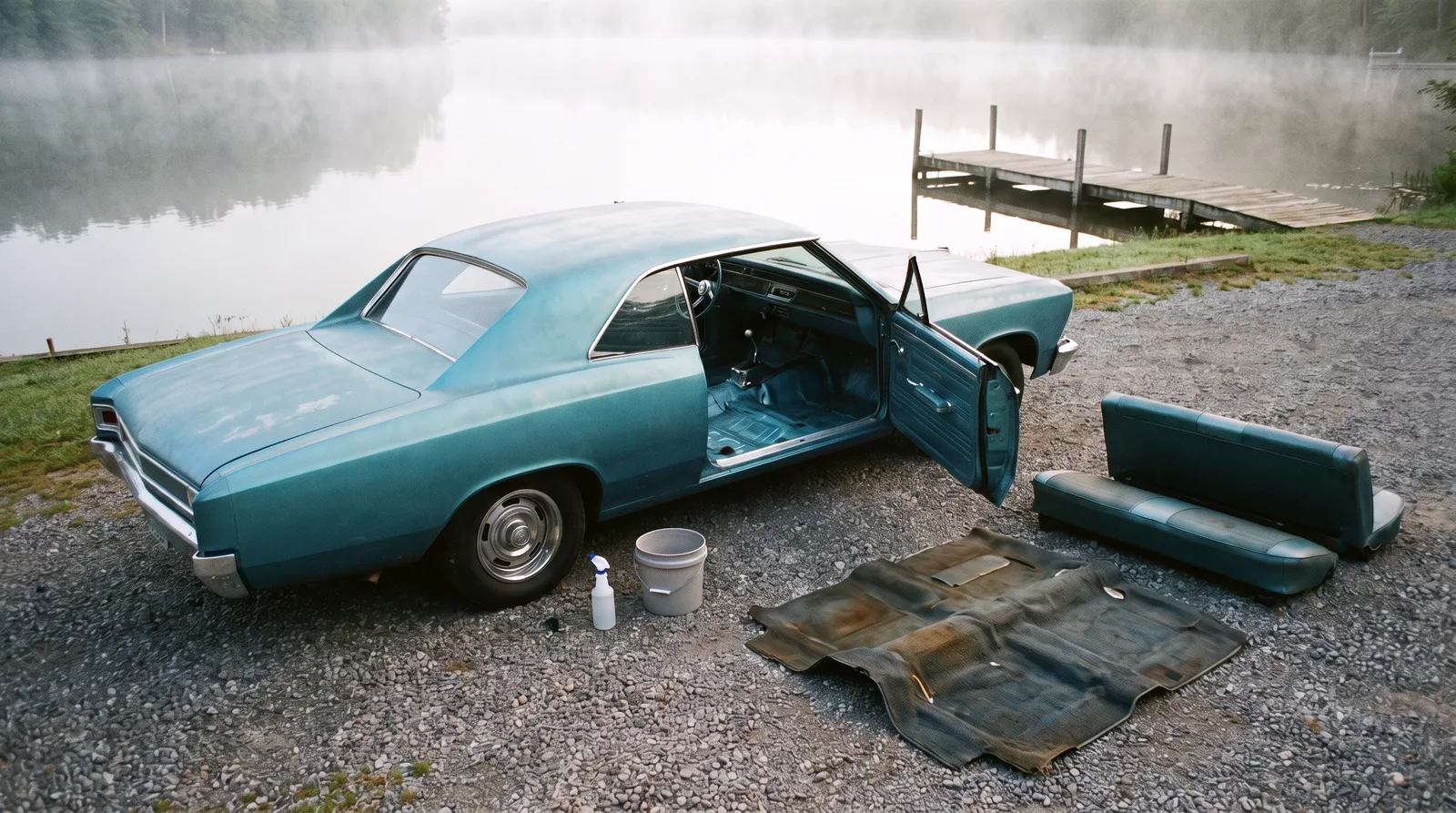
That smell is the car telling you something. It is moisture and something growing on it, and no amount of air freshener will answer it. The good news is that most of it can be solved, if you find the water first.
Find the water before you clean anything
Mold needs moisture, an organic surface to eat, and time. Cars have plenty of the second and third. So the order is always the same: stop the water, dry everything, then clean. Cleaning first only gives the mold a fresh start in a month.
Look for the usual paths. Worn door and window seals, a cracked windshield gasket, a rusted cowl, a plugged sunroof drain, a leaking heater core or a hole in the floor pan will all do it. Pull the carpet back at the corners and press the padding with your fingers. If it is cold or springs back wet, you have found the problem. A car that smells but has dry carpet may have a damp headliner or a wet trunk, so check both.
What you are dealing with
Surface mildew looks like gray or white fuzz and wipes off hard surfaces. Mold that has gotten into padding, seat foam and carpet backing is a different problem, because it grows inside the material where cleaners cannot reach. Black spotted growth on a headliner board or a seat frame is a warning that the material is likely too far gone. As a rule, if foam and padding have been wet for a long time, plan to replace them, not save them.
Think about your own health, too. Mold spores bother some people badly. Wear a respirator rated for particulates, gloves and goggles when you pull out a moldy interior, and bag the old material outside before it sheds in your garage.
A step by step cleanup
- Strip it. Remove seats, carpet, padding and any loose trim so you can see the floor. Photograph the layout as you go.
- Vacuum dry material first. A vacuum with a HEPA filter pulls spores out without throwing them into the air.
- Treat the metal. Scrub floors and seat mounts with a mix of detergent and water. The EPA advises detergent and water on hard surfaces, followed by complete drying. Skip bleach inside a car, since it can speed up rust. Rinse and dry fully.
- Look for rust. Wet interiors hide rust under the padding. If you see it, deal with it before anything else goes back in.
- Dry for days, not hours. Run fans and, if you can, a dehumidifier in a closed garage until the floor is bone dry to the touch.
- Decide what to replace. Carpet that cleans up well can be saved. Padding and foam usually cannot.
Odor is a separate job
Killing the growth does not always remove the smell. Odor molecules soak into foam, headliners and the felt layer under the carpet. Ozone generators are popular for this, but they are hard on rubber and some plastics, they are unsafe to breathe, the EPA found them largely ineffective against mold at safe levels, and they should be run with nobody and nothing sensitive inside. An enzyme based cleaner is gentler and can work on the source. For a stubborn case, a trial of activated charcoal or baking soda in open trays left in the sealed car for a week is slow and may take the edge off a mild case.
The smell that will not leave is usually in the padding. When a restorer says to replace it, that is not an upsell. It is the cheapest cure, and padding material is inexpensive compared to labor.
| Material | Can it be saved? | Typical approach |
|---|---|---|
| Bare metal floors | Yes | Scrub, rinse, dry, treat rust, repaint |
| Wool or cut pile carpet | Often | Vacuum, wash, dry fully, inspect backing |
| Jute or foam padding | Rarely | Replace |
| Seat foam | Rarely | Replace if mold is inside |
| Headliner | Sometimes | Replace board if stained or soft |
Keeping it from coming back
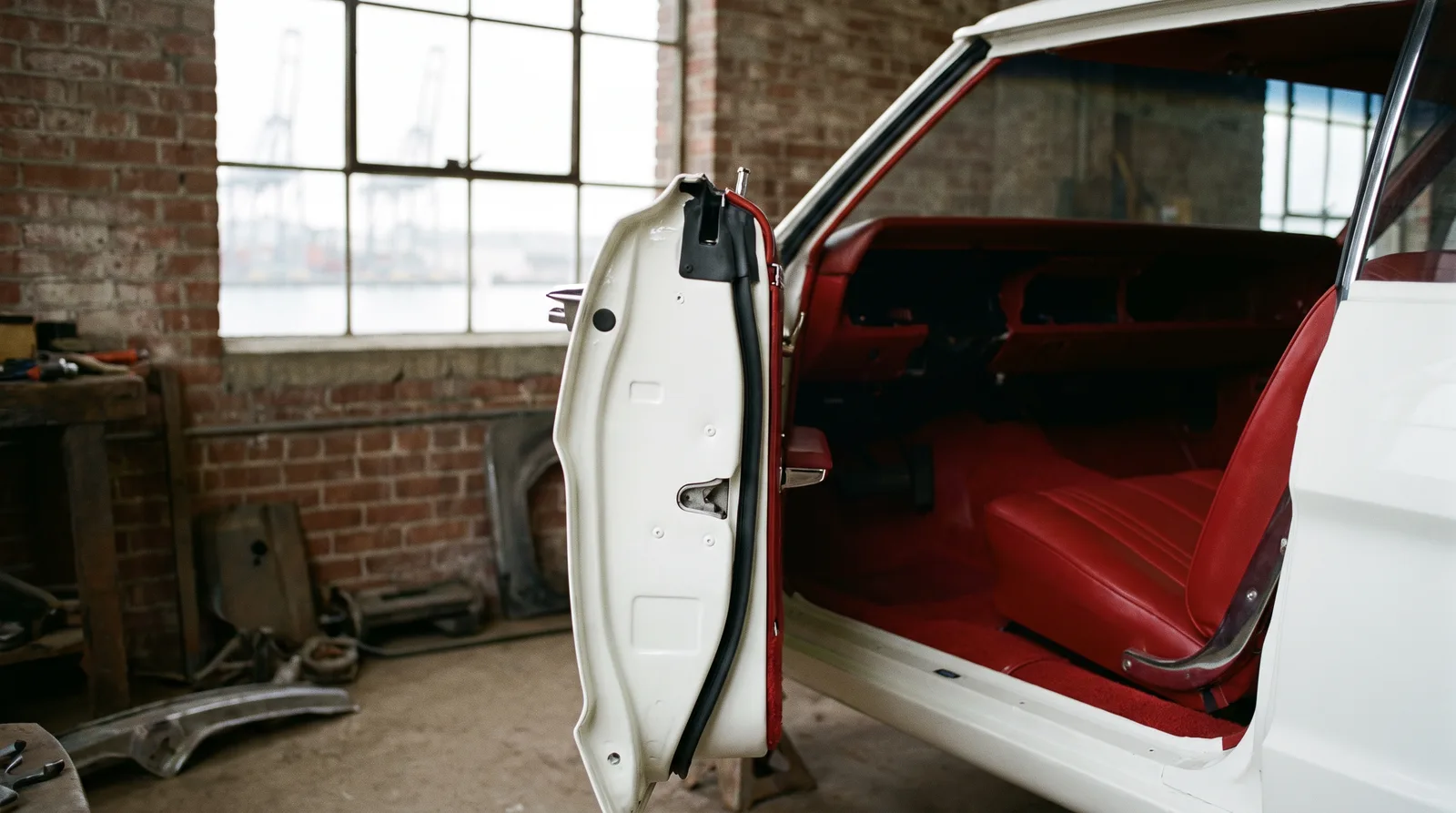
Once the cabin is clean and dry, give it a chance to stay that way. Fresh door and window rubber matters most, since a leak will bring it all back. Our guide to weatherstripping is a good place to start. Store the car with a little air movement, not under a tight plastic cover that traps humidity. If you keep it in a damp garage, a small moisture absorber or a dehumidifier on a timer is worth the electricity.
Drive it, too. A car that runs now and then dries itself out, and a heater and defroster cycle pulls moisture from the cabin.
"The smell is only the symptom. Follow it down to the wet spot, fix the leak, and the rest is just patience."
Nora Beckett
When to hand it to a pro
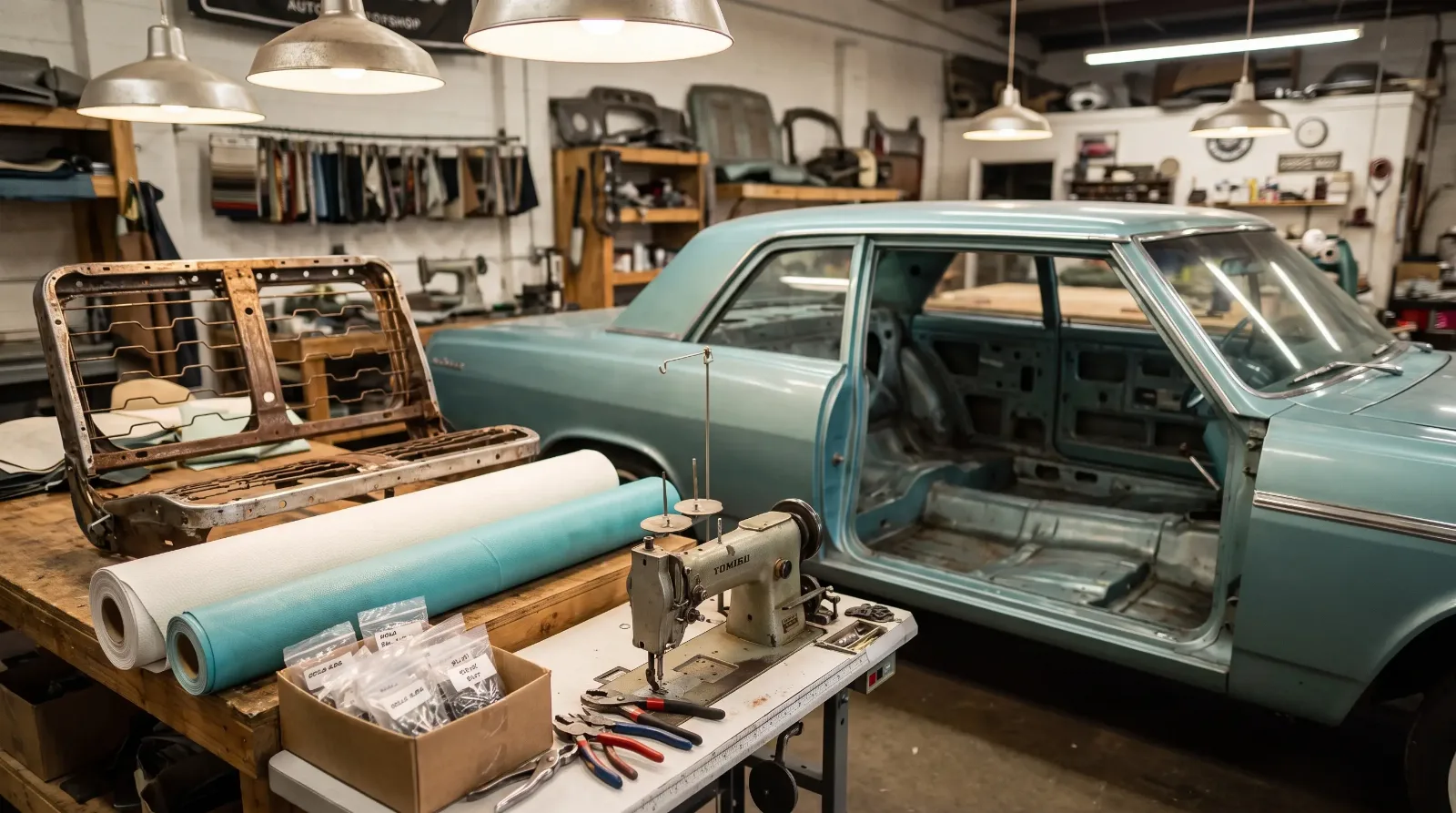
If the floors are rusted through, if mold is in the seat frames and wiring bundles, or if the car has been flooded, you are past a weekend job. A shop that does full interiors can strip, treat and rebuild the cabin properly, and it is worth looking for a local restoration shop that has done this on similar cars. If you are still deciding whether to take the work on yourself, read through the full process of restoring the interior first.
Buying a car that smells
If you shop for barn-stored project cars, treat a musty smell as information, not as a deal breaker. Ask why the car was stored, look for water lines on the seat bottoms and door panels, and lift the carpet at the lowest point. A damp smell with solid floors is a fair price to pay for a cheap project. A damp smell with soft floors is a rust job in disguise. And one more thing that is easy to overlook is the safety gear, since belts that sat wet for years are not worth reusing. We cover that in the piece on seat belts.
Sources and notes
- EPA: A Brief Guide to Mold, Moisture and Your Home, humidity below 60 percent (ideally 30 to 50), drying within 24 to 48 hours, porous materials
- EPA: Mold Cleanup in Your Home, respirator, gloves and goggles, detergent and water on hard surfaces, discarding carpet
- EPA: Ozone Generators That Are Sold as Air Cleaners, health risks, limited effect on mold and odors, damage to rubber
- Rick's Free Auto Repair Advice: removing mold from car carpet, replacing padding, no bleach in a car
- Chemical Guys: eliminating musty car odors, where moisture hides in carpet and seat padding, drying and odor neutralizers
Related Reading
Have a
Classic Car
for Sale?
Reach thousands of serious classic car collectors across the US.
Sell It Here →
Selling a classic? Here's how: where to sell your classic car online
Are You a Classic Car Dealer?
List your full inventory and connect with targeted classic car buyers.
Join as a Dealer →

About the author
Nora Beckett
Automotive features writer and photographer who tells the human stories behind the cars, from show fields to cross-country road trips.
More in Restoration & Tech
Comments (1)
D
datsun_dee
1 day ago
Rain country here in Hilo, so my 510 wagon had the smell bad. Culprit was the rear hatch seal soaking the jute. Good call on skipping bleach: sodium hypochlorite leaves chloride behind, and chloride on steel is basically an invitation to rust. Detergent, a fan and a week of patience fixed it.