
An unfinished restoration is the hardest kind of classic car to sell. The owner remembers every dollar spent. The buyer sees a list of everything that is left. Those two views almost never meet at the same number, and the gap is where most listings stall. This article is a plain look at how the market prices these cars, what raises or lowers the figure, and how to sell one without a long wait or a bad surprise at the end.
Restoration & Tech
6 min read
Selling an Unfinished Restoration Project
How to value, document and sell a half-finished restoration without leaving money on the table, from pricing the sunk cost to choosing the right buyer.
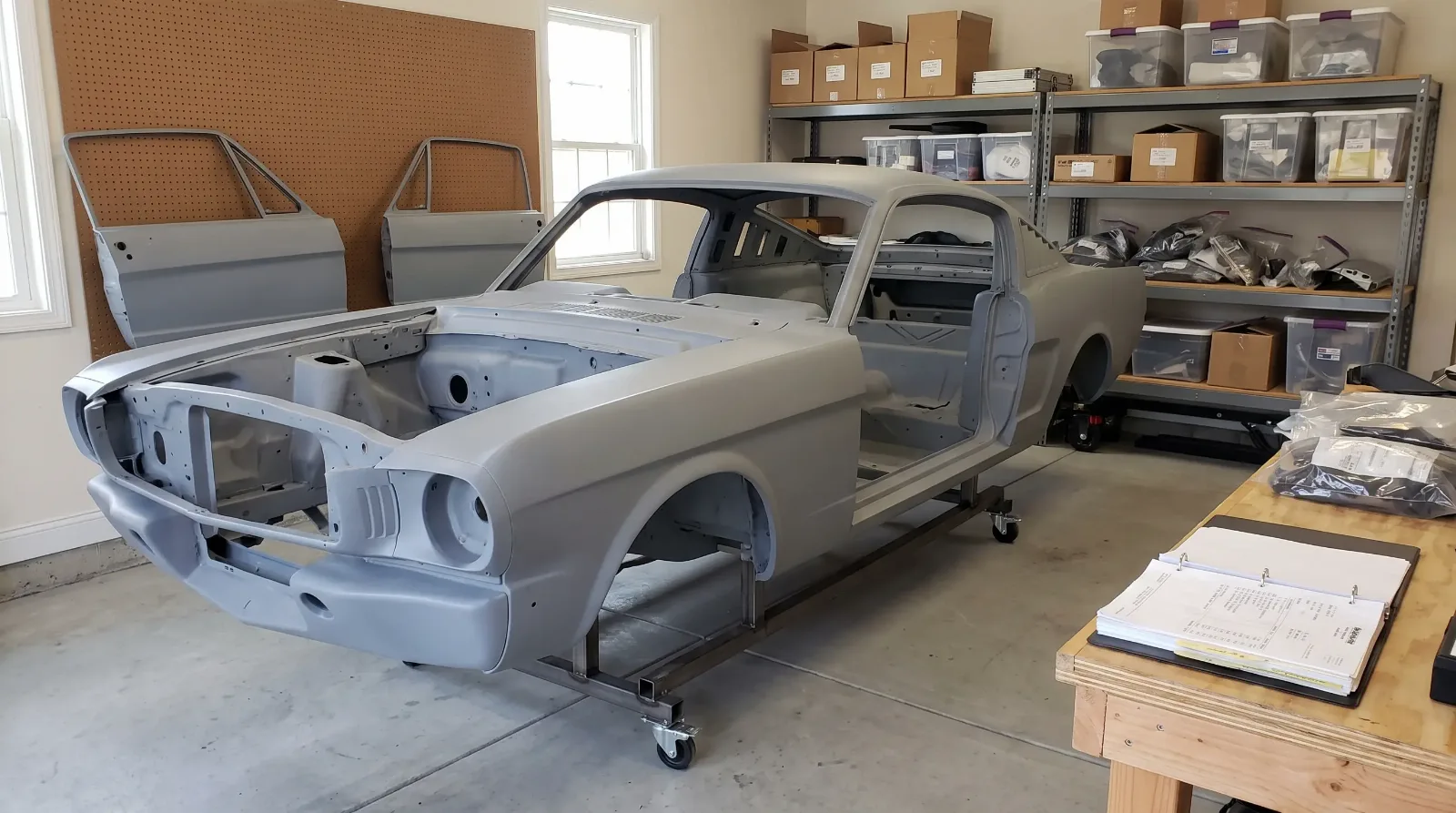
Sunk cost is not value
The first adjustment is psychological. Money spent on a project does not transfer to the buyer. A car with $40,000 of receipts and no paint is worth what a buyer will pay for a car in that condition, which is often well under the receipts. That is not unfair. It is how every partial asset is priced: the buyer pays for the remaining risk and the remaining work, and discounts both. If you want the other side of that math, read the cost guide to see what the buyer is about to face in typical totals.
A workable rule is to estimate the finished value, subtract a realistic cost to complete, and then subtract a margin for the buyer's risk. Buyers want some margin on top for the risk they are taking, and there is no fixed standard for how much, so expect to negotiate it. What is left is the ceiling. Most sellers do better pricing near that figure than hoping for a buyer who ignores it.
What raises the price
Condition tier matters even for a project. A car with a straight, rust-free body that is stripped and primed is worth far more than a car with the same receipts and a body that has not been inspected. Documentation is the next lever. A thick folder with photos taken during the work, parts invoices and the original build or title paperwork lets the buyer verify what was done. Without it, they must assume the worst.
Completeness is the third lever. A project that has all of its parts, even if they are in boxes, is more valuable than one that is missing trim, glass or a correct drivetrain. Buyers know that the rare and hard-to-source pieces are where costs run away. Label the boxes, photograph the contents and list them in the ad.
What lowers it
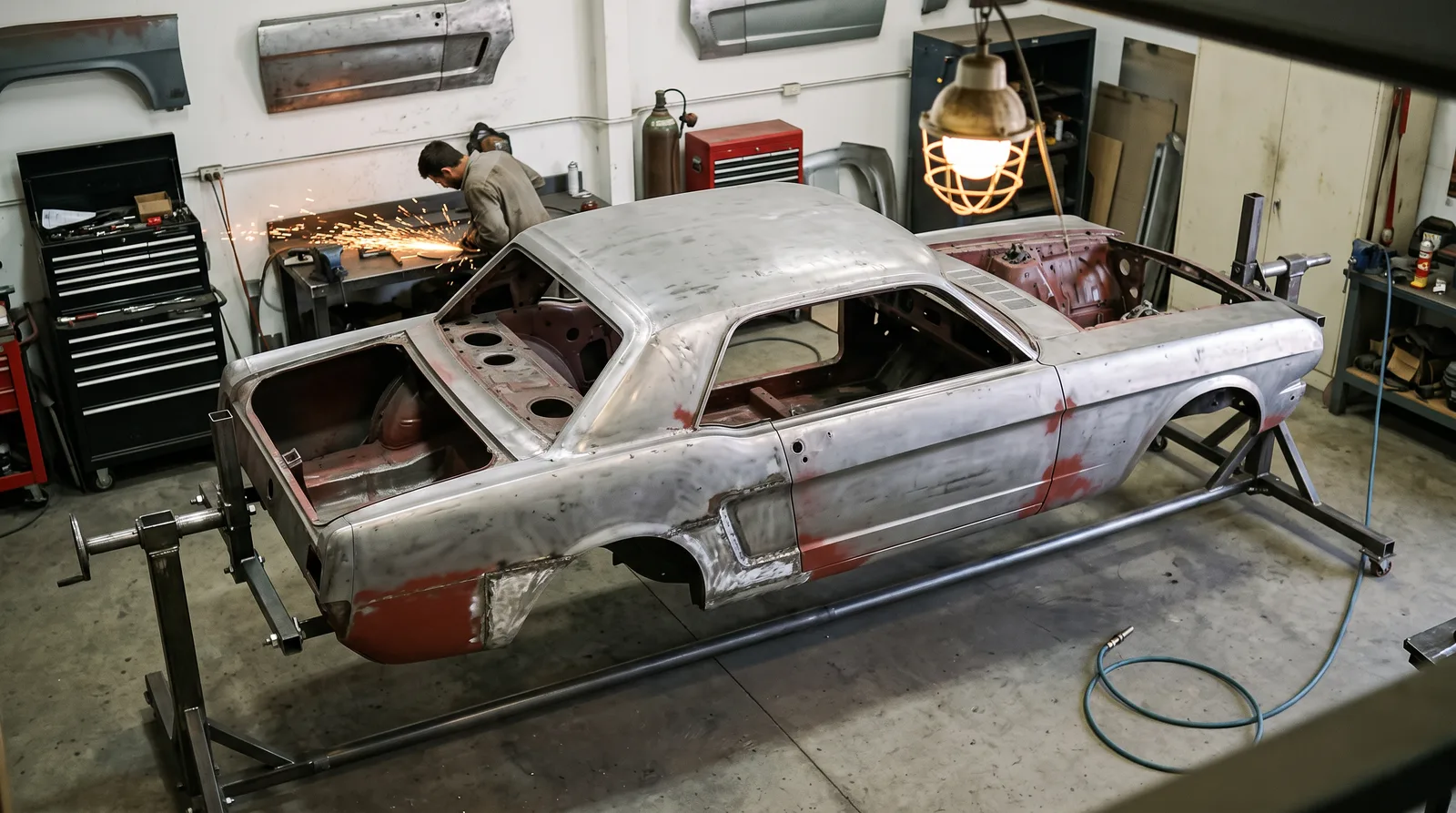
Three things discount a project fast. Work done by an unknown hand with no documentation is one: a body that looks fine may hide filler or poor weld repair. Parts that are the wrong specification are another, such as non-original engines on cars where originality drives value. The third is a car that has sat in a half-assembled state for years. Seals dry out, bare metal flash-rusts and rodents find wiring. Buyers price in all of it.
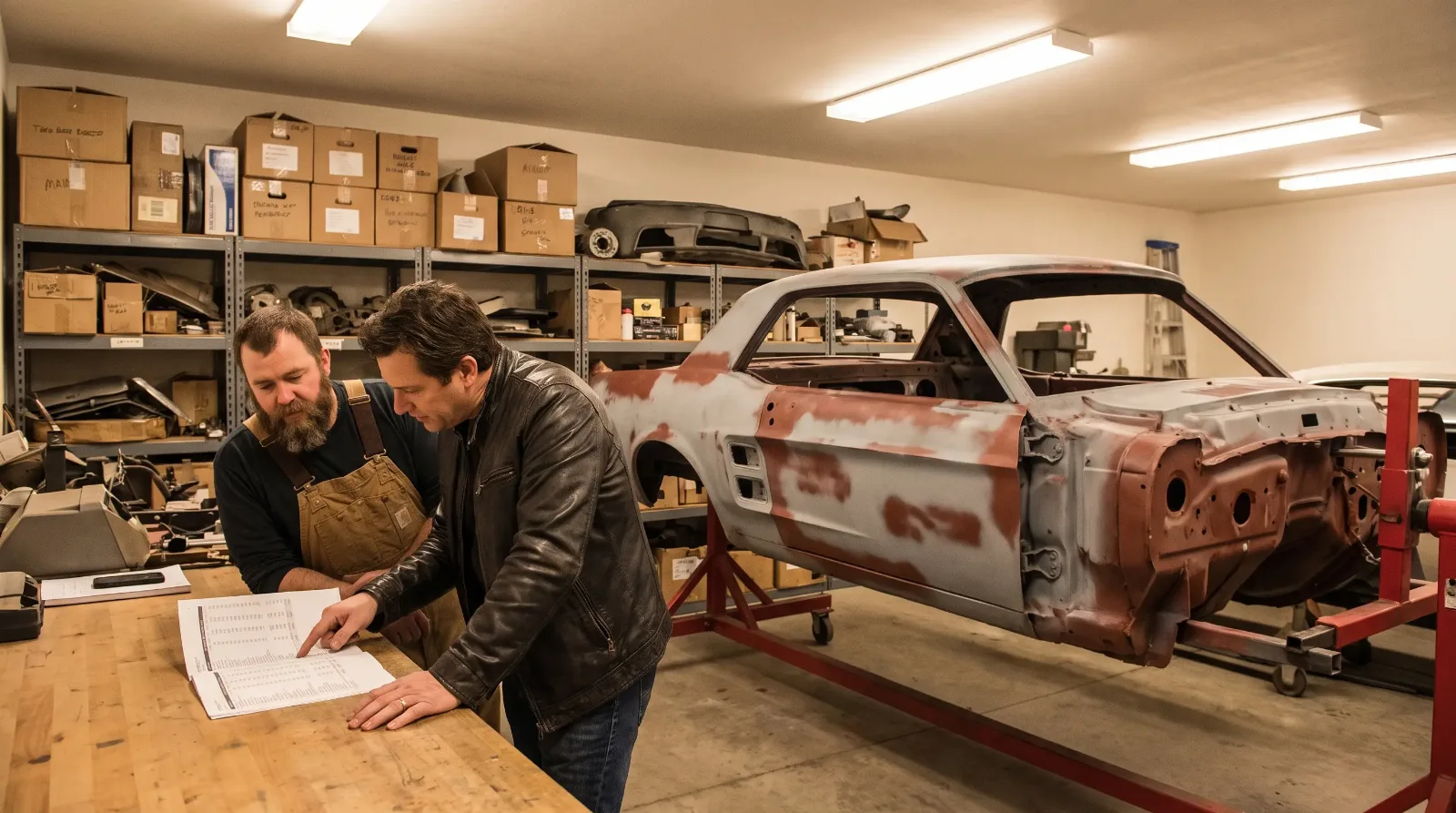
The most common mistake is a partial, cosmetic finish. Paint laid over unfinished bodywork looks like progress but tells the buyer nothing about what is underneath, and many will assume the paint is covering something. Either finish a stage properly or sell the car in the stage it is in.
Finish it or sell it
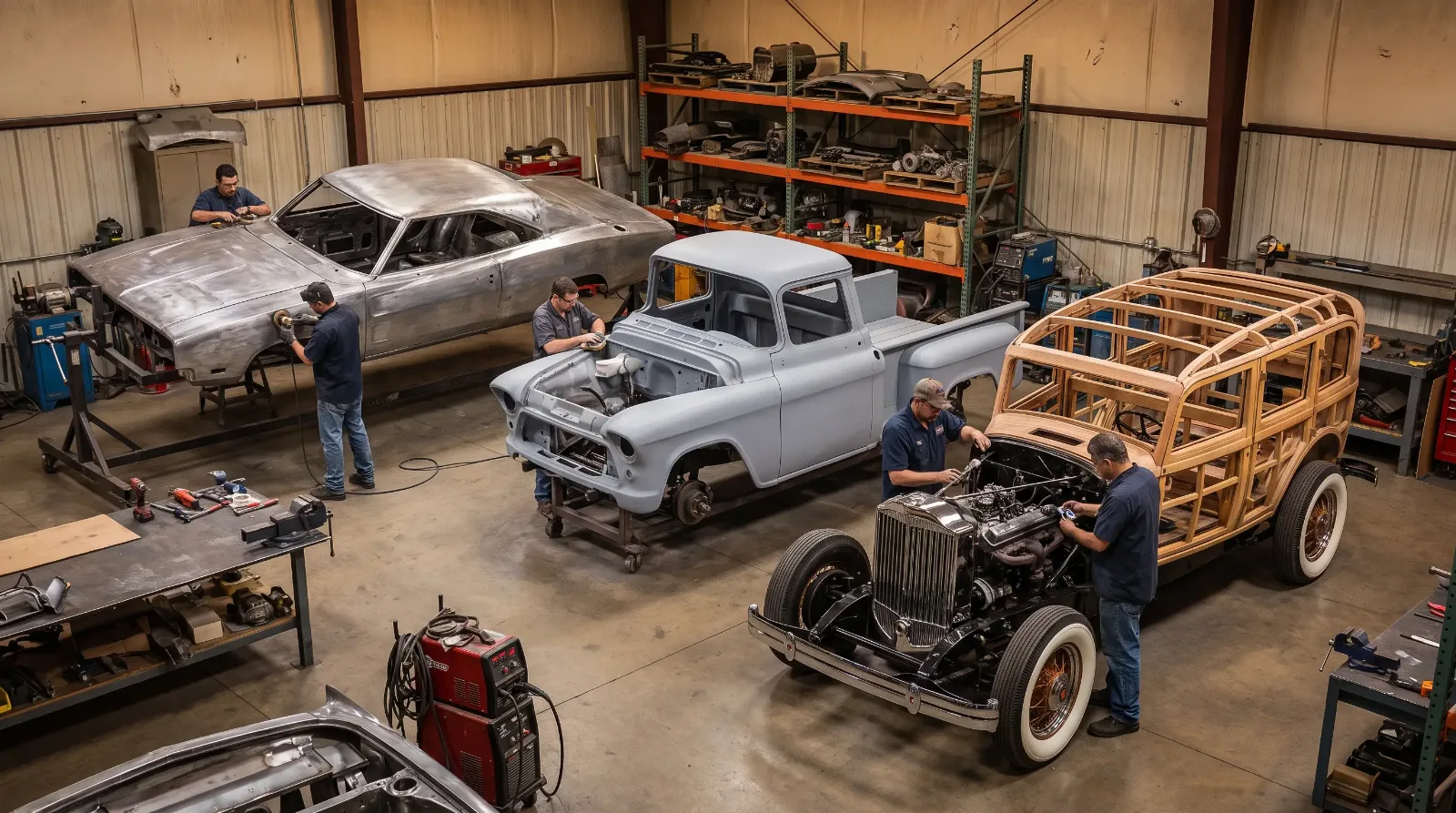
Some owners are better off completing the work first. If the remaining cost is small compared with the gain in value, finishing is the better path. If the remaining cost is most of the original budget, selling is usually smarter. Before deciding, it helps to understand how shops bill so you can judge any estimate you collect. If the numbers favor completion but you lack the time, you can find a shop to finish it and sell the car afterward at a finished-car price.
"A project sells at the price of the work remaining, not the work completed. The sooner an owner accepts that, the sooner the car moves."
Marcus Feld
Where and how to sell
The audience for a project is smaller than the audience for a finished car, so choose the venue to match. Online auctions that specialize in collector cars reach buyers who understand the risk. Enthusiast forums and marque clubs reach the people who can use the parts. Classified sites reach the widest group but also the most tire-kickers. A look at current classic project cars for sale shows how comparable cars are described and priced, which helps you set an honest asking price.
The listing itself should do the buyer's homework. Include dated photographs of the body, floors, frame and any areas where work was done. State what is complete, what is missing and what you do not know. Say whether the title is clean and in your name. Buyers who see an honest list trust the rest, and that trust shortens negotiation.
Selling the parts separately
Sometimes a car is worth more as components. If the body is poor but the drivetrain is correct and documented, or the car has rare options, a split sale may bring more than a whole-car sale. The trade-off is time and effort, plus the fact that a stripped shell is nearly unsellable afterward. Decide before you start listing, and do not part out a car whose value rests on being complete and original.
Closing the sale
Expect the buyer to inspect in person, and expect the inspection to reveal more than the photographs. Have the paperwork ready: title, receipts, parts inventory and a bill of sale that states the sale is as-is and describes the condition. If the car is on a trailer or in a shop, settle who pays for loading and shipping before the deal closes. Payment by wire or cashier's check, confirmed with the bank, is standard for a transaction of this size. The main discipline is keeping emotion out of the numbers. The car is what the next owner will pay for it, and nothing more. If the title is missing, lost or in a prior owner's name, resolve that first. Many states have a bonded or replacement title process, but it can take weeks or longer, and a car without a clean title usually sells at a discount.
Sources and notes
- Hagerty: what a car's condition really looks like, the six-grade condition scale including #5 project and #6 parts
- Hagerty price guide overview, the price guide covers four condition grades, #1 to #4, and how values are gathered
- Economics of restoring an MGA, disassembly lowers value, sunk costs, and the cost-to-finish versus finished-value method
- FTC: Dealers' guide to the Used Car Rule, the Buyers Guide rule applies to dealers, not private sellers, which is why a written as-is bill of sale matters
Related Reading
Have a
Classic Car
for Sale?
Reach thousands of serious classic car collectors across the US.
Sell It Here →
Selling a classic? Here's how: the best sites to sell a classic car
Are You a Classic Car Dealer?
List your full inventory and connect with targeted classic car buyers.
Join as a Dealer →

About the author
Marcus Feld
Accredited collector-car appraiser who reads the market through hammer prices, condition tiers and risk.
More in Restoration & Tech
Comments (1)
G
GearheadGranny
2 days ago
Paint over unfinished bodywork? That was my grandson's Camaro exactly. Buyers smelled it from the driveway. He sold it cheap.