
Ask ten shops what the average cost of classic car restoration is and you will get ten numbers, and most of them will be right for the car the shop happened to be thinking about. The segment matters more than almost anything else. A Chevy pickup and a Rolls-Royce share a vocabulary (strip, repair, prime, paint, assemble) and almost nothing else on the invoice. This article breaks the cost down by car type, using 2026 US dollars and ranges rather than single figures. For the full method behind the numbers, see the classic car restoration cost guide.
Restoration & Tech
7 min read
Restoration Cost by Car Type: Muscle, Truck, Luxury, European, Pre-War
What a full restoration costs by segment: muscle cars, trucks, luxury, European and pre-war classics, with 2026 price ranges and the factors that push each one up.
Why the car type moves the price
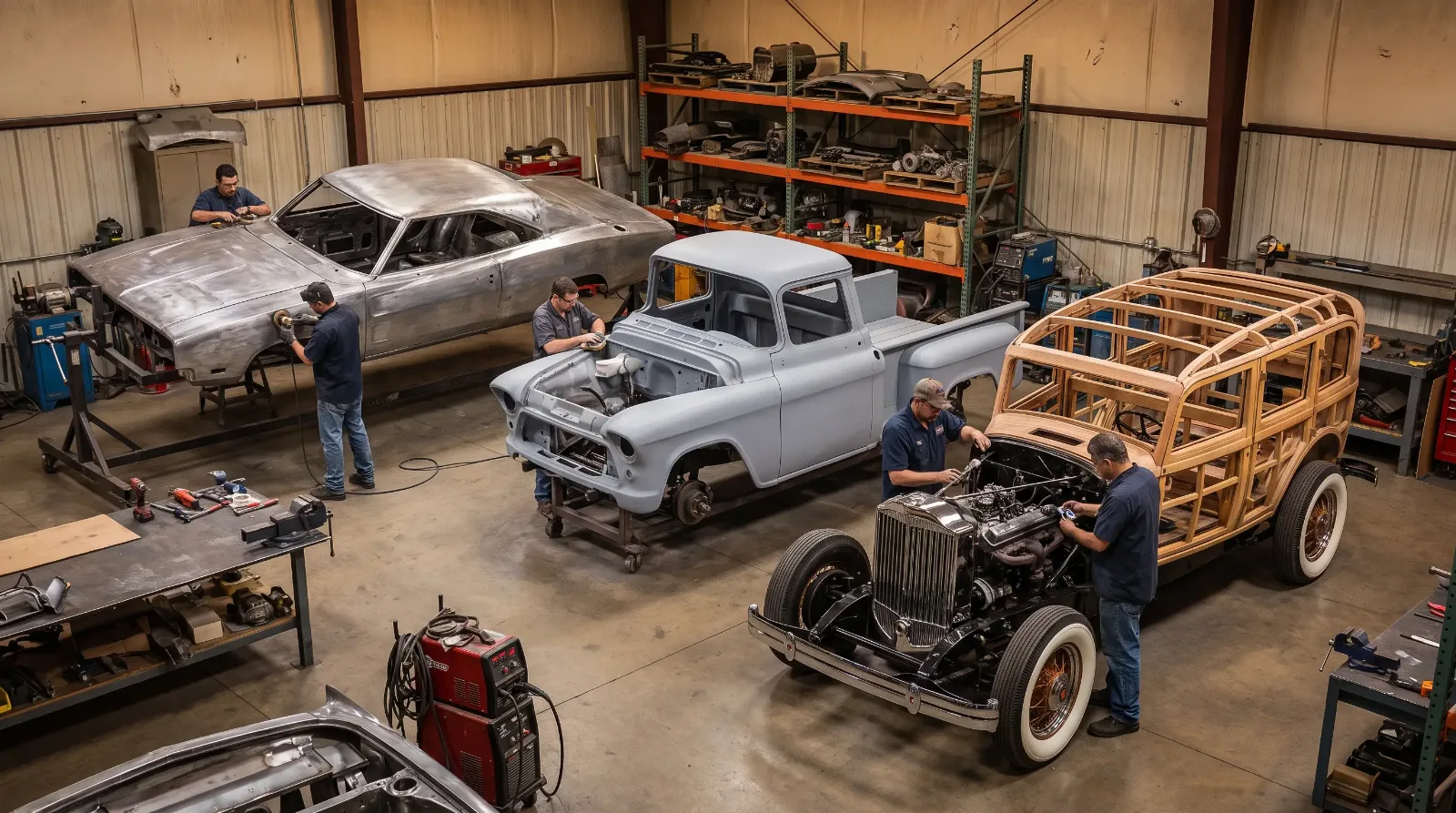
Three things separate one segment from another. The first is parts supply. A first-generation Camaro can be rebuilt largely from catalog parts, with new sheet metal, reproduction trim and complete interior kits on the shelf. A 1930s coachbuilt car has none of that, so every missing piece is fabricated by hand. The second is complexity: multi-link suspensions, air systems, power accessories and wood framing all add hours. The third is the finish standard the market expects. A driver-quality truck can be sold at a profit with good paint and a clean chassis. A concours Mercedes cannot.
Labor is the common thread. A driver-level restoration of a common American car typically takes 500 to 1,000 shop hours, a show-level car 1,000 to 2,000, and a concours build 2,500 to 5,000 or more. At 2026 shop rates of about $85 to $150 per hour at most independent shops (around $125 is typical, and concours or marque specialists charge $175 or more), the hours decide the budget before the parts do. If you want to compare quotes against these ranges, start with a restoration shop near you and ask for an itemized estimate.
| Segment | Full restoration range | Main cost drivers |
|---|---|---|
| Muscle car | $45,000 to $225,000, from driver to show quality | Rust repair, numbers-matching drivetrain, correct trim |
| Classic truck | $45,000 to $100,000 at driver level, more for show | Cab and bed metal, frame condition, paint prep on large panels |
| Luxury American | $100,000 to $250,000, typical shop quotes | Power accessories, brightwork, rare interior materials |
| European sports and touring | $100,000 to $300,000, typical shop quotes | Parts sourcing, specialist labor, complex mechanicals |
| Pre-war classic | $150,000 to $500,000 or more, typical shop quotes | Hand-fabricated parts, wood framing, coachwork |
These are 2026 US ranges for professional shop work. The muscle car and truck rows follow the driver and show tiers used across this guide; the luxury, European and pre-war rows are typical shop quotes, not published statistics, and individual cars can fall outside them.
Muscle cars and trucks
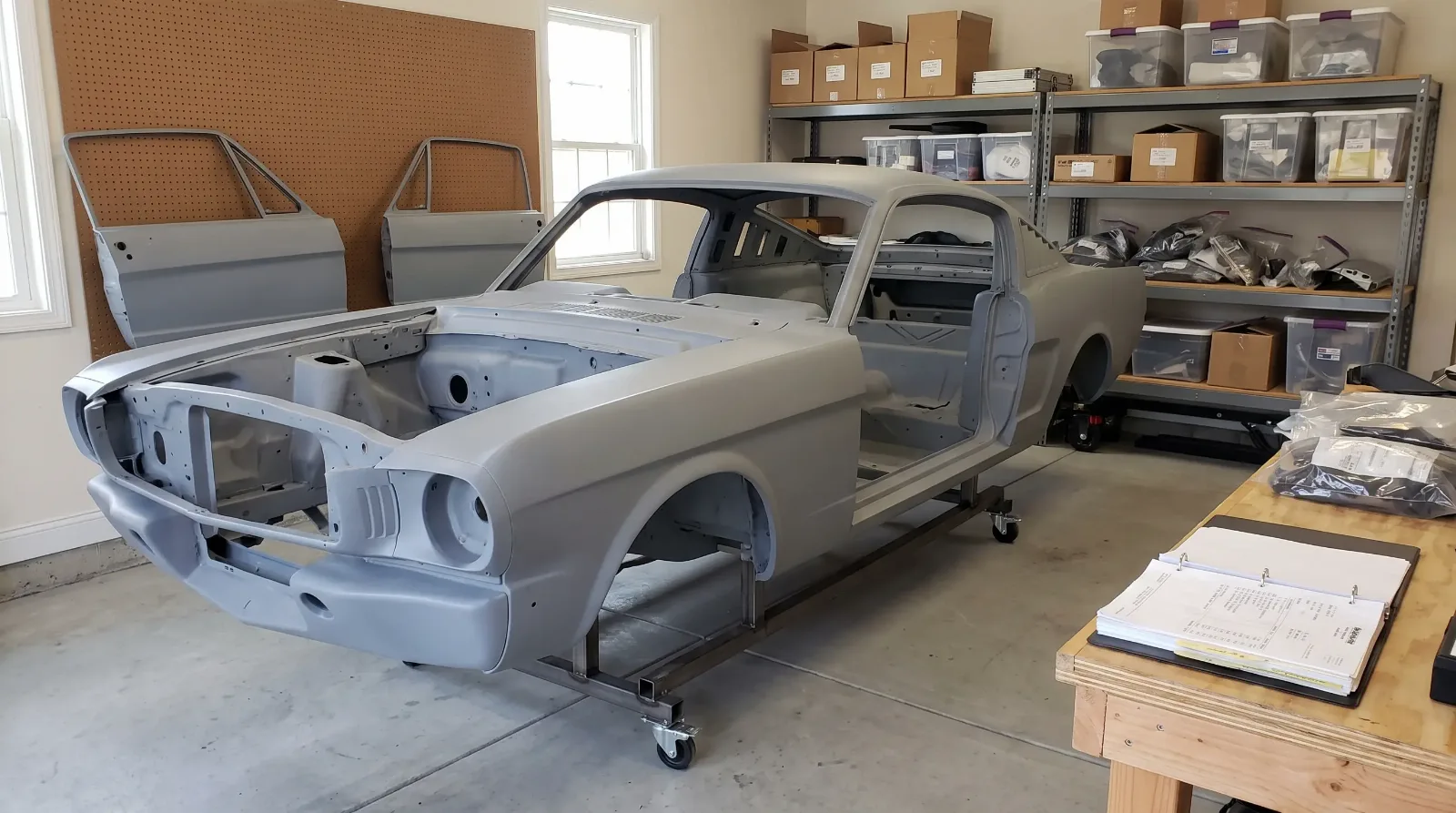
Muscle cars sit at the friendly end of the scale because the aftermarket is deep. The spread inside the segment is still wide. A small-block Chevelle with a solid body can come in near the bottom of the range, while a big-block, documented car where every stamping must be right pushes toward the top. Rust repair is the swing factor. A model with a known weakness, such as lower quarters or cowl, adds metalwork that no catalog covers. For worked numbers on specific models, the breakdown in muscle car restoration costs and the model study of the Camaro restoration cost are good comparables.
Trucks are cheaper per hour of work but not by a wide margin, because they are big. A full-size cab, bed and fenders mean more sheet metal to straighten and more square footage to prime and paint. The detailed look at what a classic truck restoration costs shows where the money goes. One market note: truck values have run strongly in recent years, but most restorations are still not recouped at sale unless the car is rare or high-value, and buying a finished car is usually cheaper.
Luxury and European cars
Luxury cars are where the budget stops being predictable. The cars were built with every option the factory offered: power windows, climate control, self-leveling suspension, elaborate wiring. Each system is a restoration inside the restoration, and each one has to work when the owner turns the key. The numbers in the real cost of restoring a classic luxury car show how quickly small items stack up.
European cars add a second layer: sourcing. A part that is a phone call for a Ford can mean a long wait and a steep invoice for a Mercedes, Jaguar or Alfa Romeo. Specialist labor also costs more, because fewer shops know the cars well. Where this goes wrong is usually not the big-ticket item but the accumulation of small ones that nobody quoted.
Pre-war classics
Pre-war cars carry the widest range of any segment. Wood framing under the body, nonstandard fasteners and engines with no parts catalog mean machinists and metalworkers are making components, not ordering them. A full restoration that ends in a concours field is typically a long project, and the final bill can exceed what the car is worth finished. That is a legitimate choice for an owner who intends to keep the car for decades. It is a poor one for anyone with a resale date in mind.
Where the surprises come from
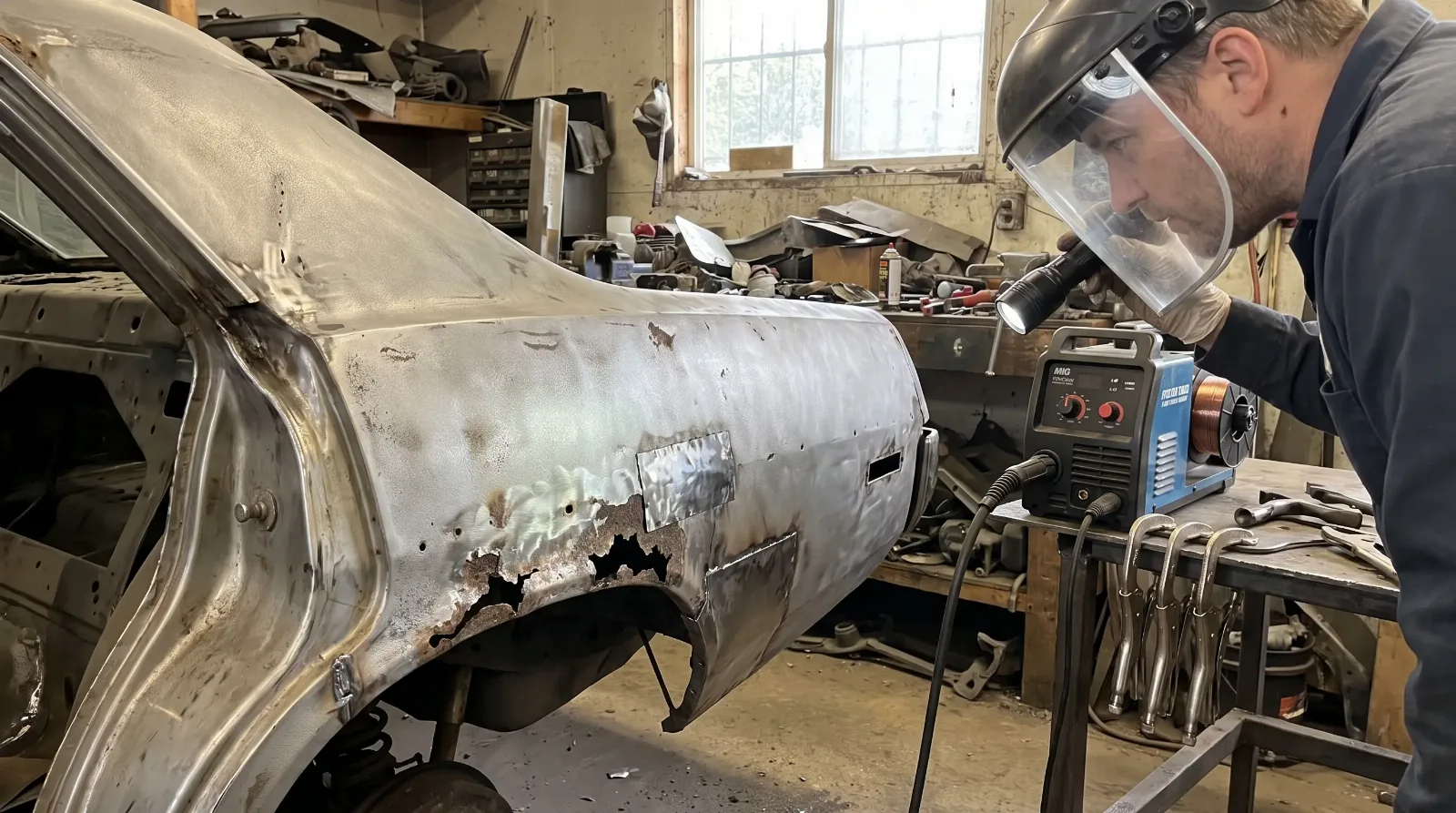
Across segments, the same four items blow budgets. Hidden rust under old paint or filler is first, and it is rarely visible until the car is media blasted. Second is the drivetrain: an engine or transmission that looked healthy can need a full rebuild once it is apart. Third is brightwork, since rechroming and polishing stainless trim is expensive and slow, and large pieces can be among the most expensive single items on the invoice. Fourth is scope creep, when the owner decides that while the car is apart, everything should be upgraded. Each is manageable if you plan for it and costly if you do not.
How to budget against these ranges
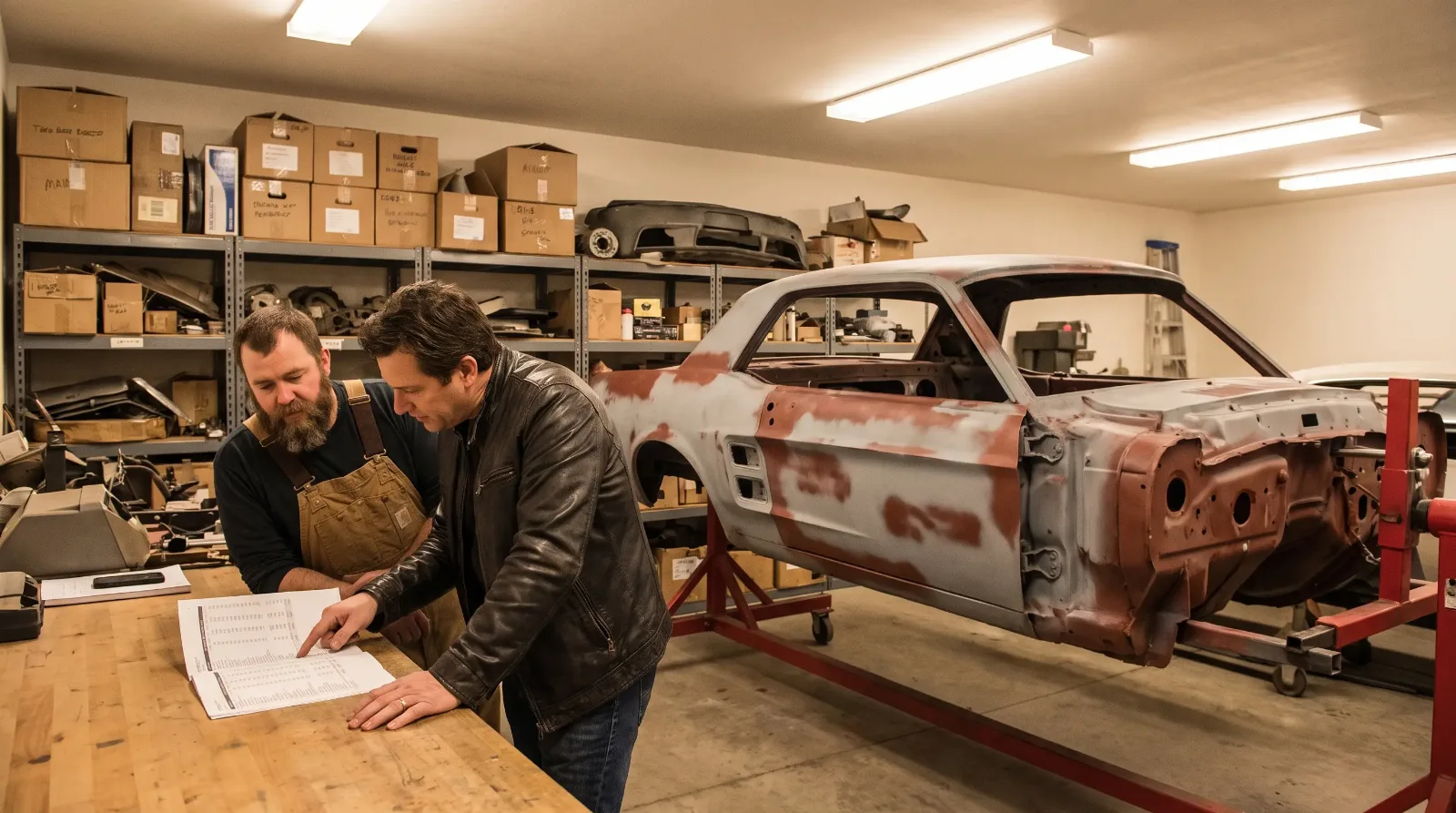
Treat the ranges as a starting point, then adjust for three variables: condition at purchase, finish standard and how much of the work you do yourself. A barn find that has been sitting in damp conditions can cost far more than its price suggests, as the cost breakdown of what a barn find restoration costs explains. Add a contingency of 20 to 30 percent on top of the estimate for surprises (more on cars from salt-belt states), because every restoration has them. Then ask what the finished car is worth. If your all-in cost lands well above the market value for a finished example in comparable condition, you are restoring for love, which is fine, but go in knowing it.
"The segment tells you the range. The car in front of you tells you where in that range you will land, and it is usually the upper half."
David Mercer
If the numbers look too high for the car you have in mind, there is a second route. Many buyers are better served by a finished car than a project, and the current muscle cars for sale show how much a completed example costs against a ground-up build. And if you already own something half done and the money has run out, the options are covered in selling an unfinished project.
Sources and notes
- Car restoration, Wikipedia, restoration levels, and that full restorations often cost well above the finished car's value
- Concours d'Elegance, Wikipedia, concours judging standard of near-perfect originality and condition
- Classic car, Wikipedia, how classic and pre-war categories are defined, including the CCCA 1915 to 1948 range
- Car restoration cost calculator, CarsCounsel, base cost classes for muscle cars and trucks, imports and pre-war cars, and a 20 percent contingency
- How much does it cost to restore a classic car? Hagerty, parts and labor as the main costs, rarity driving parts prices, and restoration cost typically exceeding the car's value
- The costs of restoring a classic car, RACQ, restoration costs usually far exceeding the restored value
Related Reading
Have a
Classic Car
for Sale?
Reach thousands of serious classic car collectors across the US.
Sell It Here →
Selling a classic? Here's how: where to sell your classic car online
Are You a Classic Car Dealer?
List your full inventory and connect with targeted classic car buyers.
Join as a Dealer →

About the author
David Mercer
Classic car market analyst with two decades of experience tracking collector car valuations, auction results, and investment trends.
More in Restoration & Tech
Comments
Be the first to comment on this article.