
Sympathetic restoration is a simple idea that is harder to carry out than it sounds. You repair what has failed, you stabilize what is failing, and you leave alone everything that is still doing its job. The car keeps its own history instead of being handed a new one.
Restoration & Tech
7 min read
Sympathetic Restoration: Repairing Without Erasing History
Sympathetic restoration repairs what has failed and keeps what is original. Here is how the approach works, where it fits, and how it differs from a full strip and rebuild.
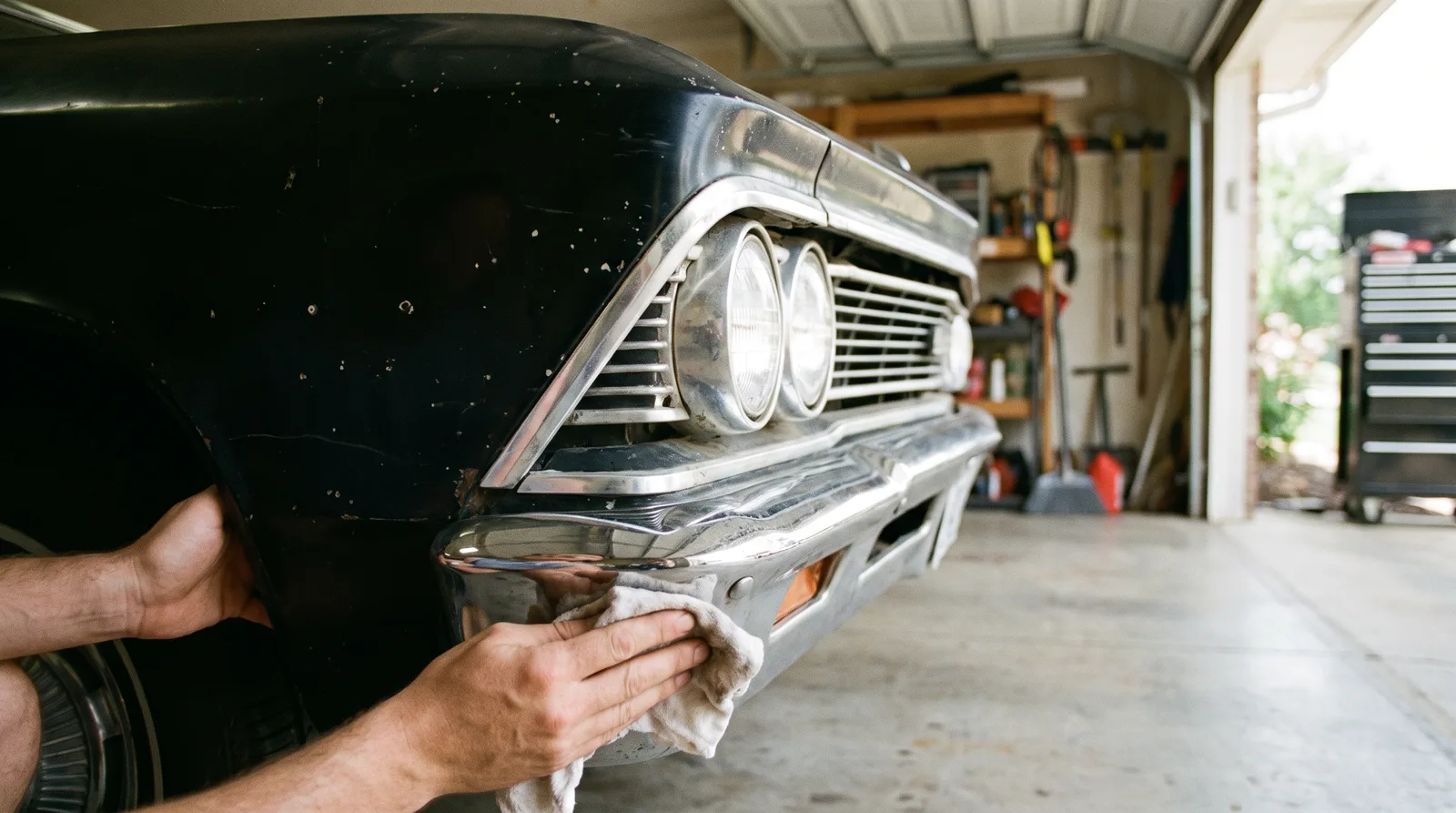
The term sits between two camps. On one side is strict preservation, where nothing is replaced and the car is only cleaned and made safe. On the other is the full rebuild, where every surface is stripped and renewed. Sympathetic work takes the middle ground, and the decisions you make inside that middle ground are the whole craft.
What sympathetic restoration actually means
The working rule is to do the least that returns the car to safe, reliable use, and to make every repair reversible where you can. A cracked original hose gets replaced with a correct reproduction, and the old hose goes in a labeled bag in the trunk. A tired original seat cover gets conserved, and it is reproduced only if it can no longer hold together. A seized brake caliper gets rebuilt, not swapped for a bolt-on upgrade from a different car.
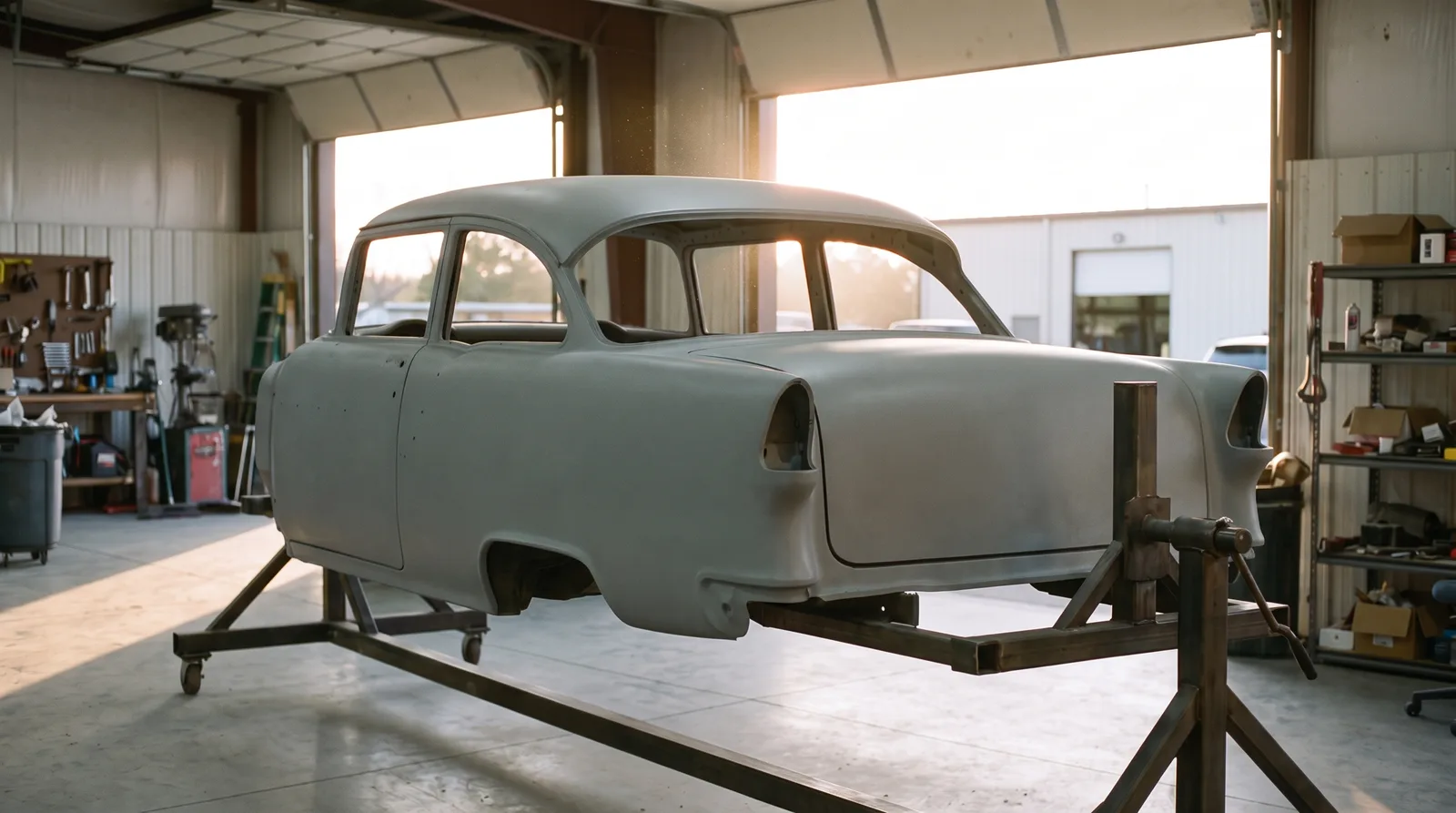
That is a different mindset from the one that drives a full job. If you want to understand how deep a restoration goes at the far end of the range, the contrast is useful. A frame-off car is judged on how new it looks and how correct the new parts are. A sympathetic car is judged on how much of the original it still carries, and on how honestly the repairs were done.
Why originality carries weight with buyers and judges
Original paint, original interior material, and period assembly marks cannot be bought back once they are gone. Reproduction parts can be excellent, but a reproduction is never the part the factory installed. For many collectors, especially on rare or low production cars, that single fact outweighs a flawless finish.
Judging bodies have formalized this. Some classes at major shows, often called preservation or survivor classes, are judged on originality and the survival of factory materials, so a refinished or replaced surface counts against the car. Pebble Beach added a preservation class in 2001 for exactly that reason. A car that scores well there can be worth more untouched than the same car after a professional repaint, which surprises owners who assume new always beats old.
The decision framework: conserve, repair, or replace
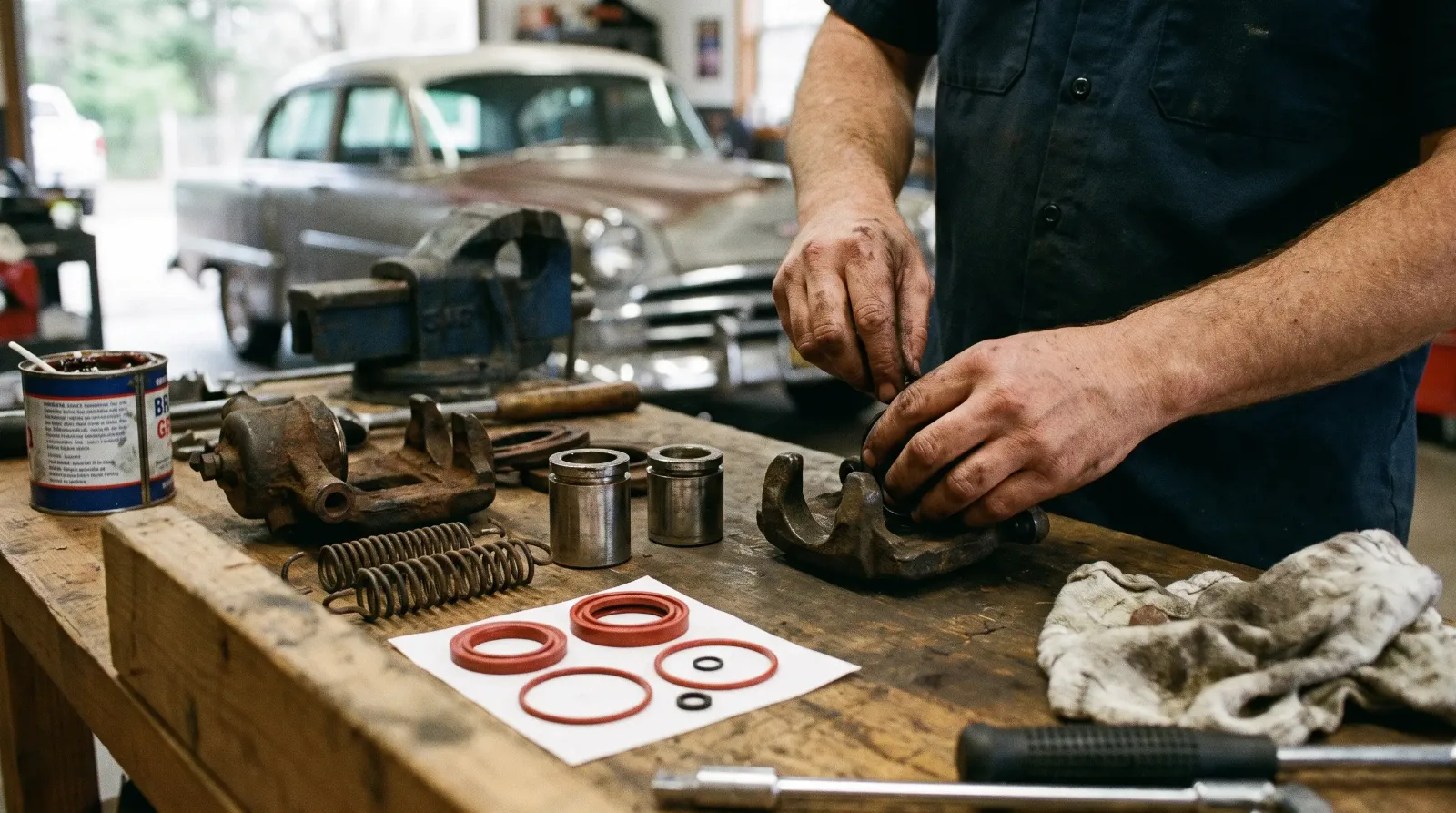
Every component on a candidate car sorts into one of three bins, and sorting honestly is most of the job.
- Conserve. The part is original, sound, and only dirty or dull. Clean it, protect it, and leave it. This covers most thin but intact paint, most chrome with surface haze, and most interior panels.
- Repair. The part is original and damaged but fixable. Weld a patch into a rusted floor, re-gel a cracked lens, straighten a bent bracket. Re-chrome nothing unless it is past saving.
- Replace. The part has failed in a way that affects safety or function: brake lines, fuel lines, hardened rubber, old tires, and any structure that has lost its strength.
Most owners lean toward replace because new parts are clean and easy to find. The sympathetic approach pushes the other way. Ask what the part is still doing right now, and ask whether a repair would hold for another decade of normal use before you order a new one.
Where sympathetic work makes sense
It makes the most sense when the car is rare, when it has documented history, or when the original surfaces are in better shape than most. A one owner car with original paint and a clean chassis is a poor candidate for a rebuild. A car with rust through the rockers and a worn out engine is not a sympathetic candidate at all, because the failures are too structural to leave in place.
The debate between the two philosophies has a lot of ground to cover. Our piece on preserving versus restoring a muscle car goes through the value arguments in detail, and the discovery case is covered in whether to preserve or restore a barn find. Both reach the same practical conclusion: decide before you touch the car, because the first wire brush or bottle of polish is already a choice.
"Every time someone redoes a surface that was still sound, an original disappears and a reproduction takes its place. The paperwork can record what was there, but the car cannot."
Tom Ramirez
Costs and trade offs
The opposite failure is worth naming. A car that has been finished far beyond what the factory delivered has its own problem, which we cover under over-restoration. Sympathetic work avoids both extremes.
It is not automatically cheap, though. The labor is slower and more skilled than a strip and rebuild, because a technician has to decide at every step what to save. A professional mechanical and safety recommissioning can run from a few thousand dollars, when the car mainly needs brake, fuel, and cooling work, to well into five figures if more has to be renewed, and shop quotes vary widely. A full frame-off restoration on a common American classic typically costs $75,000 to $200,000, several times that.
| Approach | What changes | Typical result |
|---|---|---|
| Preservation | Cleaned and made safe only | Honest survivor, visible age |
| Sympathetic restoration | Failed items repaired or replaced, originals kept | Reliable driver that still looks its age |
| Full restoration | Most surfaces stripped and renewed | Like new, history reset |
The trade off is visual. A sympathetically restored car will not photograph like a show car. Paint will show its age, chrome will have marks, and the interior will carry wear. For the right buyer that is the point. For a buyer who wants a flawless car it is a disappointment, so be clear about who the car is for before you commit.
Doing the work in the right order
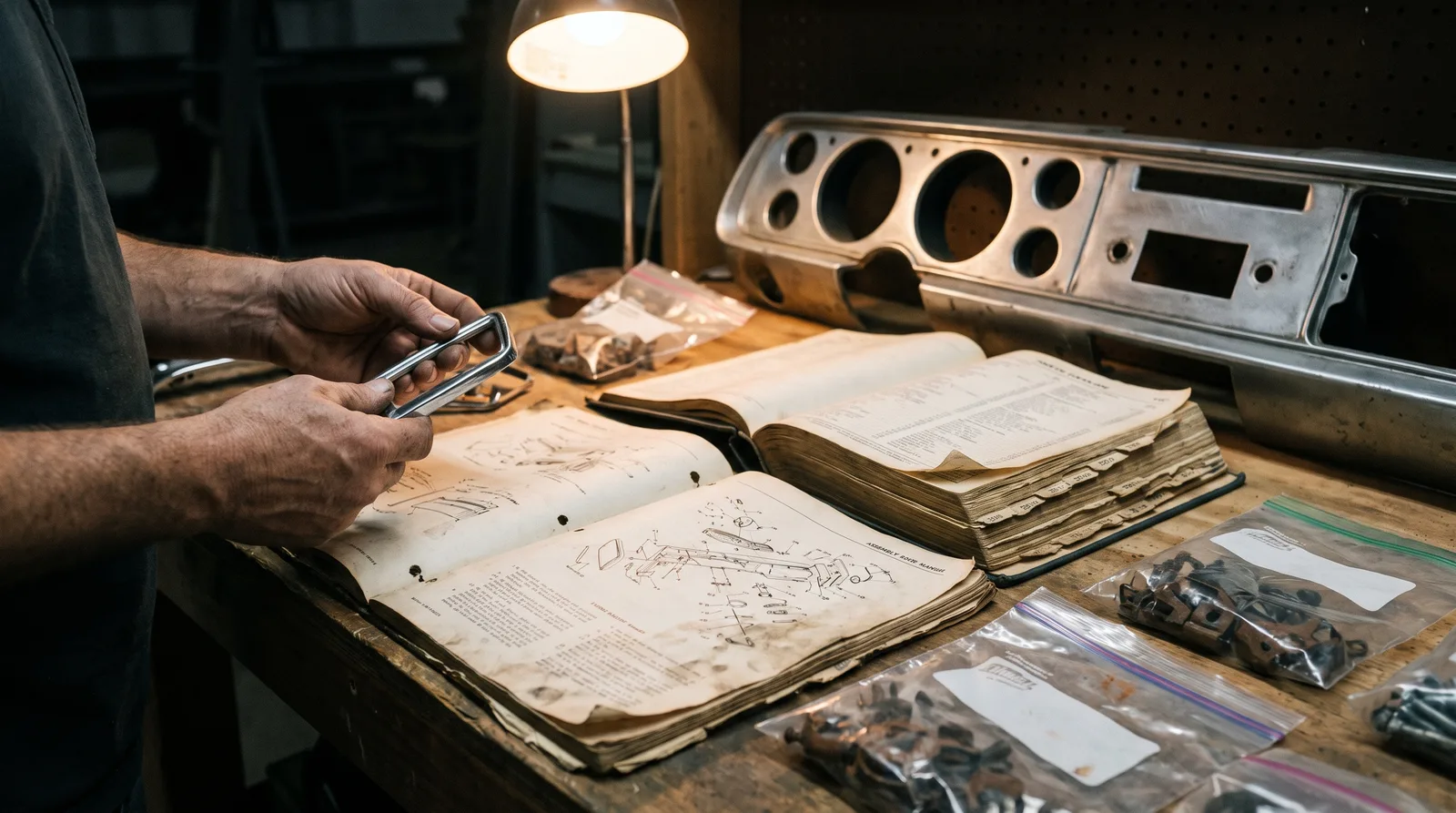
Start with a written inventory. Walk the car with a notebook and a camera, and record what is original, what has been replaced, and what is failing. Then work from safety to function to appearance. Brakes, fuel system, steering, tires, and cooling come first, because they can hurt someone or strand the car. Ignition and charging come next. Cosmetic work comes last, and often it comes down to cleaning.
Use period correct materials where a replacement is needed, and avoid anything that cannot be undone. A reversible repair leaves the next owner a choice. An irreversible one removes it.
The verdict
If your car is original, documented, and basically sound, start with the sympathetic path and move up only when the car forces you to. If it is rusted, modified, or missing its history, a full restoration is the honest answer. Either way, a clear plan before the first wrench turn is the cheapest decision on the project.
Sources and notes
- Conservation and restoration of automobiles (Wikipedia), preservation versus restoration, patina, and hybrid approaches that keep original finishes
- Pebble Beach Concours d'Elegance (Wikipedia), preservation class introduced in 2001
- Nitrocellulose lacquer (Wikipedia), 1923 Oakland and DuPont Duco as early factory lacquer, later replaced by multi-stage systems
- Practical Classics: recommissioning, what should I renew, brakes, fuel hoses, and cooling hoses as the first items to renew
- Porsche restoration preserves decay, Motoring Research, keeping worn paint and interior while overhauling the mechanicals
- Preservation, barn find or parts car, Supercars.net, preserved cars keep original materials and honest wear but must still be sound and safe to drive
Related Reading
Have a
Classic Car
for Sale?
Reach thousands of serious classic car collectors across the US.
Sell It Here →
Are You a Classic Car Dealer?
List your full inventory and connect with targeted classic car buyers.
Join as a Dealer →

About the author
Tom Ramirez
Corvette researcher and historian based in Bowling Green, Kentucky. Two decades documenting Corvette production history from original factory records.
More in Restoration & Tech
Comments
Be the first to comment on this article.