
The 1980 Z28 made 190 hp, more than any Camaro since 1974, and it was the last second-generation Z28 to pair the 350 with a four-speed. The 1981 Camaro Z28 gave some of that back: 175 hp, automatic only with the 350, and a computer watching the carburetor. Both cars wore the same piece of hardware on top, the Air Induction hood, and that hood is the easiest way to tell a late Z28 from the cars before it. It closed out the second-gen Camaro era on a stronger note than the smog years suggested it would.
Car Features
6 min read
The 1980 to 1981 Z28 and Its Air Induction Hood
The 1981 Camaro Z28 and the 1980 car before it: what the Air Induction hood did, 190 hp vs 175 hp, the 305 four-speed catch and the disputed 1981 count.
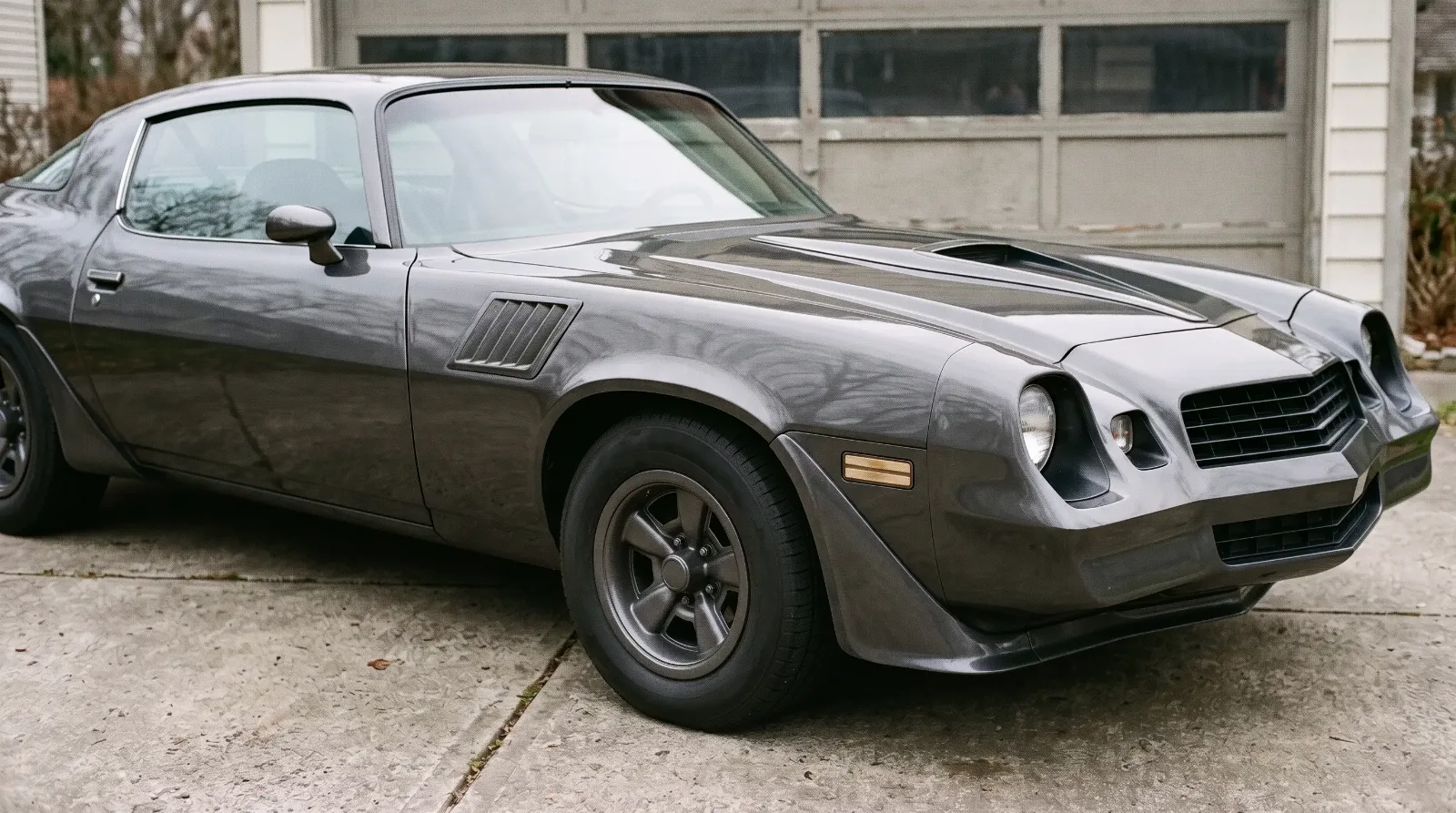
What the Air Induction hood actually did
Here is the hardware. A raised scoop sits on the hood and faces backward, toward the windshield. Inside it, a flap is worked by a solenoid, and the flap opens at full throttle. Part throttle, it stays shut. Floor it, and the engine breathes through the scoop.
That is a real working induction system, which matters, because the 1978 Z28 that came before it wore a hood scoop that did nothing. The 1978 piece was a non-functional NACA-style scoop. The 1980 piece moved air.
What it did not do is change the rating sheet by itself. No separate horsepower figure for the hood appears in the published numbers here; the 190 hp of 1980 and the 175 hp of 1981 are ratings for the whole package, hood included. Anyone who tells you the flap was worth a specific number of horsepower should be able to show you where that number came from. Most cannot. Treat it as what it was: a functional cold-air feature on a car that needed every bit of help it could get under 1980 emissions rules, and a visual cue that still sorts a late Z28 from an earlier one at fifty feet.
If you are looking at one, check that the solenoid and the flap are there and that the flap moves. A scoop with a stuck or missing flap is still the right hood, but it is no longer doing the job it was built for.
The 1980 Z28 by the numbers
Start with the result. Car and Driver ran a 1980 Z28 four-speed to 60 mph in 8.5 seconds and to a top speed of 120 mph, with the car at 3,660 lb. The issue date of that test is not stated in the source, so quote the figures with care. Those are not big numbers by 1970 standards, and they were not meant to be compared with 1970. They were compared with 1979.
Against 1979, the 1980 car was a clear step up. The 1979 Z28 was rated at 175 hp from its 350 four-barrel. The 1980 Z28's 350 four-barrel was rated at 190 hp, the highest Camaro figure since 1974, when the L82 350 in the Z28 made 245 hp net. California buyers did not get the 350; they got a 305 with the Turbo Hydra-Matic 350 automatic, and published ratings for it differ: some sources give 155 hp, others 165 hp. For the full picture of what sat under every second-gen hood, see the second-gen engine lineup.
The rest of the 1980 changes were small. The speedometer topped out at 85 mph, the Z28 got three-bar tri-color graphics, and the vinyl top was gone. Base price was $7,121; air conditioning added $566 and aluminum wheels $184. Chevrolet built 45,137 Z28s that year, out of 152,005 Camaros.
| Item | 1980 Z28 | 1981 Z28 |
|---|---|---|
| 49-state engine | 350 four-barrel, 190 hp | 350, 175 hp, automatic only |
| California engine | 305 with TH350 automatic | 305, 165 hp |
| Four-speed buyers got | The 350 | The 305, 165 hp |
| Computer Command Control | Not yet | New, with a check-engine light |
| VIN | 13 characters | 17 characters |
| Air Induction hood | Yes | Yes |
| Z28 production | 45,137 | 43,272 or 20,253 (disputed) |
The 1981 Camaro Z28: a computer and a split choice
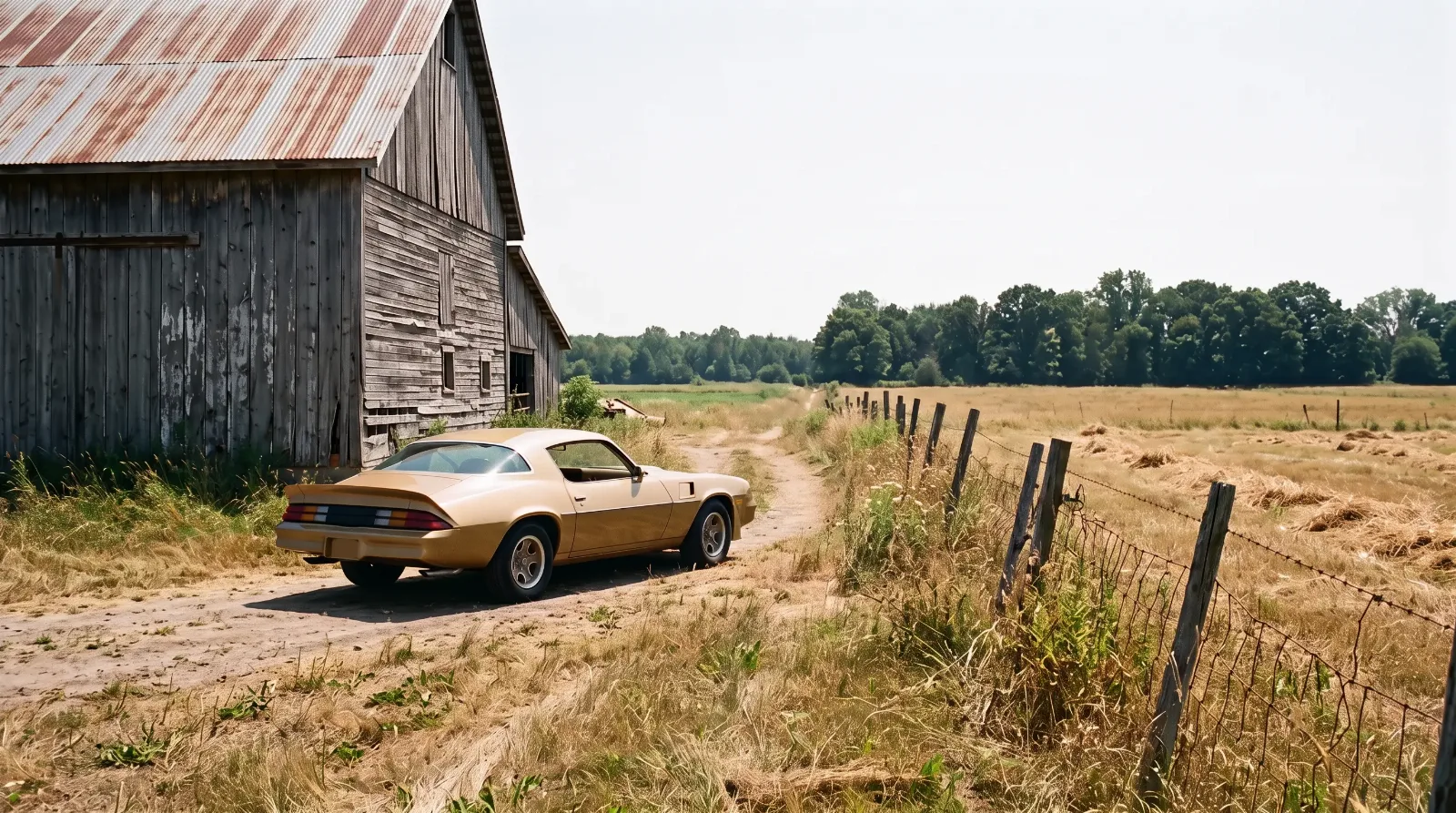
The 1981 car looks like the 1980 car. The difference is under the hood and on the order form. GM's Computer Command Control arrived for 1981, and with it the check-engine light. The 350 lost 15 hp, down to 175, and it came only with the automatic. If you wanted to shift for yourself, you got the 305 at 165 hp, which was also the California engine.
That is the blunt summary of the 1981 Camaro Z28: the buyer chose between the bigger engine and the clutch pedal, and could not have both. By the factory specifications, no 1981 Z28 left the plant with both the 350 and a four-speed. If you find one, it has had work done, and the paperwork should say so.
A few other 1981 changes are worth knowing. Power brakes became standard, the Rally Sport was dropped from the lineup (it did not return until 1989), and the VIN grew to 17 characters.
How many were built, and why the 1981 count is disputed
The 1980 number is solid: 45,137 Z28s. The 1981 number is not. Total Camaro production for 1981 was 126,139, and the sources agree on that total but split two ways on the models. One camp gives 43,272 Z28s and 20,253 Berlinettas. The other flips them: 43,272 Berlinettas and 20,253 Z28s. Both versions add up to the same total, which is why the swap is easy to miss. No primary GM record found so far settles it.
The 43,272 Z28 figure has more sources behind it and is the one most often quoted, but it should be printed as disputed until someone produces factory data. If a seller tells you a 1981 Z28 is rare because only 20,000 were built, ask which source. If he quotes 43,000 as gospel, ask the same question.
"The hood was real and the 190 hp was real. The rest of what gets said about these cars at swap meets needs a source attached before I believe it."
Dan Reeves
What a 1980 or 1981 Z28 is worth knowing about today
These cars spent decades as the cheap end of the Z28 story, overshadowed by the 1970 cars on one side and the third generation on the other. That has changed. A May 2024 market report found that values for the 1981 Z28 had risen 80 percent over four years, against 24 percent for the 1981 base car and Berlinetta. Across all 1970 to 1981 Camaros, quoted values were up 32 percent over three years.
Read that number the right way. A fast rise from a low base still leaves a late Z28 well short of the early second-gen money cars. What it does mean is that originality now pays. A car with its Air Induction hood, working flap and correct engine for its year and market is worth more than one that has been parted out and pieced back together.
If you want one, start with the year and the transmission you want, then work back to the car. Current listings of 1981 Camaros for sale are the place to see what the market thinks of a late Z28 right now.
Sources and notes
- Chevrolet Camaro (second generation), Wikipedia
- Your handy 1970 to 1981 Chevrolet Camaro buyer's guide, Hagerty
- 1981 Chevrolet Camaro production and models, conceptcarz
- Second-generation Camaro Z28 history, conceptcarz
- Camaro engines through the years: second generation, Chevy Hardcore
- Chevrolet Camaro production by model year, Wikipedia
Related Reading
Have a
Chevrolet Camaro
for Sale?
Reach thousands of serious classic car collectors across the US.
Sell It Here →
Selling a classic? Here's how: compare the places to sell classic cars
Are You a Classic Car Dealer?
List your full inventory and connect with targeted classic car buyers.
Join as a Dealer →
#camaro z28
#chevrolet camaro
#camaro production
#second generation Camaro
#1981 Camaro
#1980 Camaro

About the author
Dan Reeves
Performance engine builder from North Carolina's motorsports corridor, focused on swaps, forced induction and making real, repeatable power.
Related Listings - Chevrolet Camaro


Comments
Be the first to comment on this article.