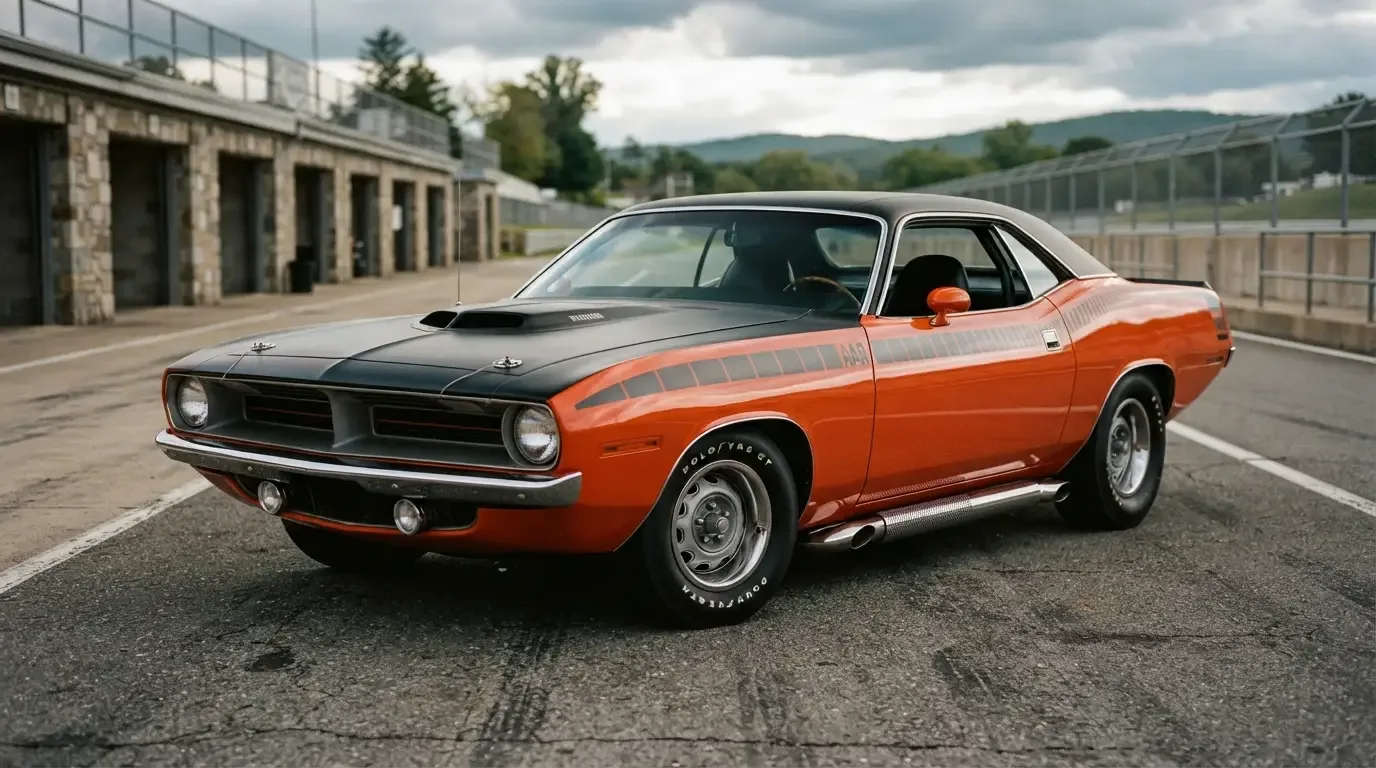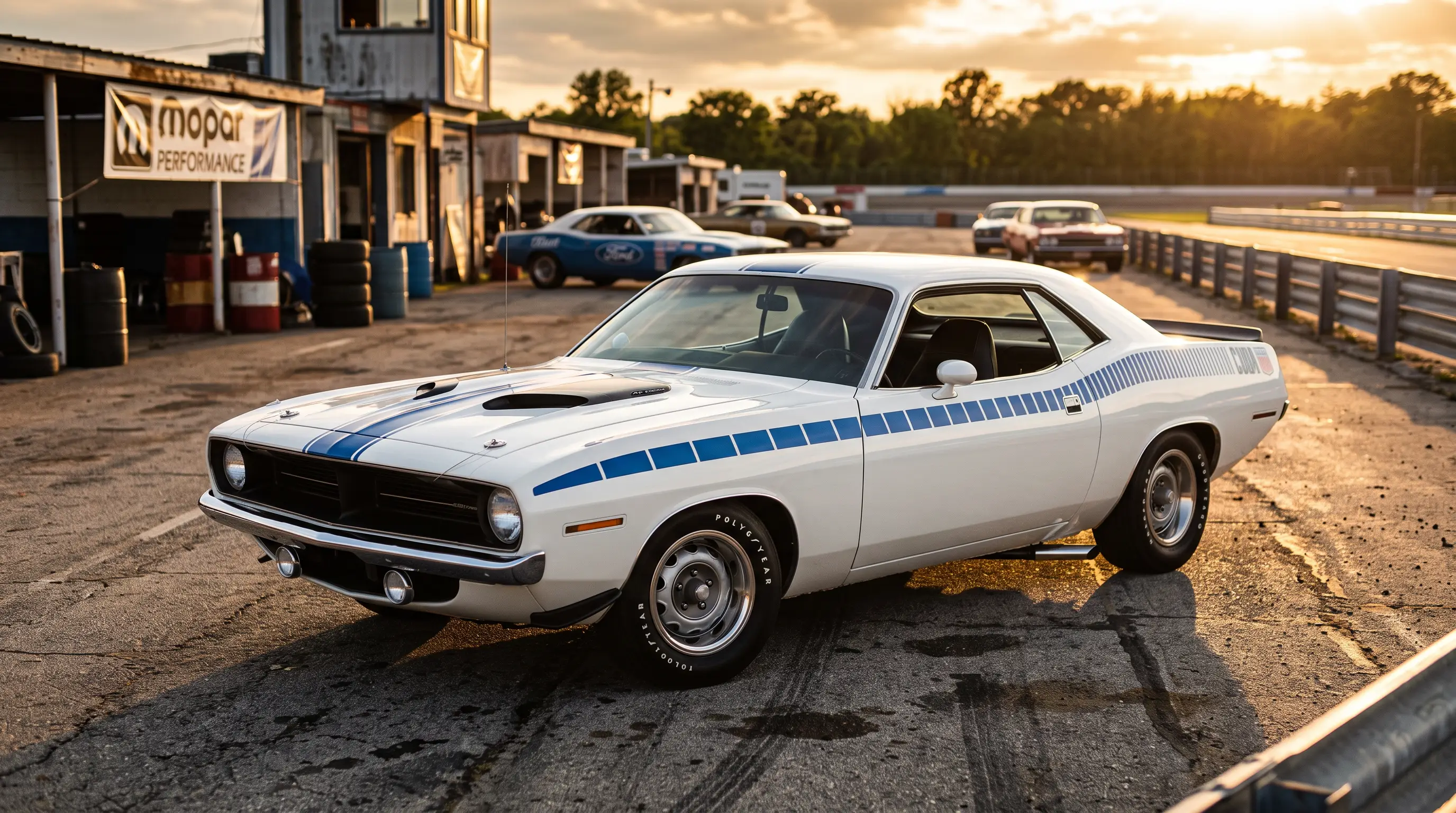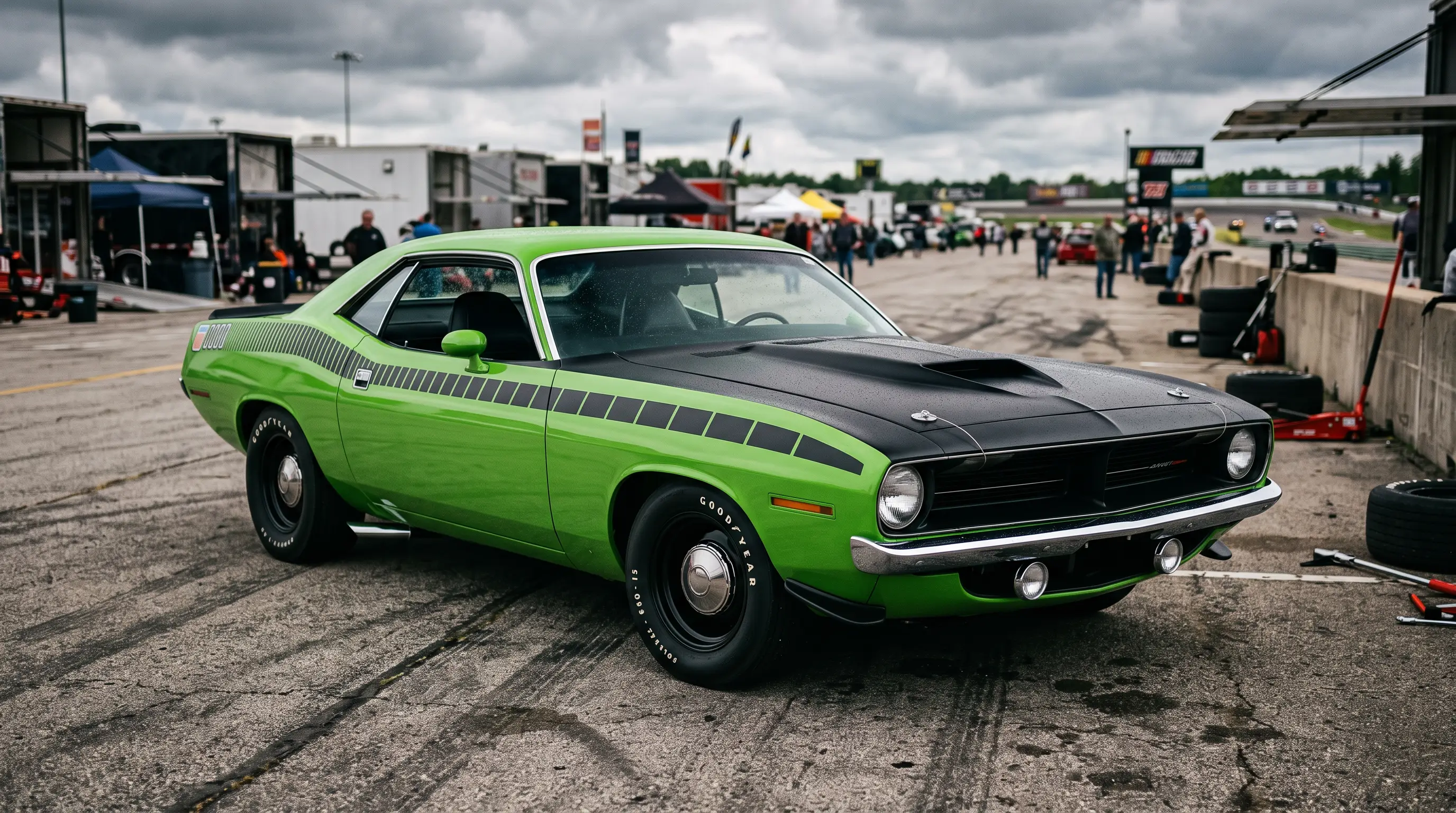
Rarity by itself does not make a car valuable. I have appraised plenty of genuinely scarce vehicles that nobody wants, because scarcity without demand is just a car sitting in a barn. The AAR Cuda is a different case, and understanding why requires separating three things that get conflated constantly: how few were built, how few survive, and how few survive with the documentation to prove what they are. Barracuda is one of those model names where all three numbers matter to the price, not just the first one.
How few were actually built
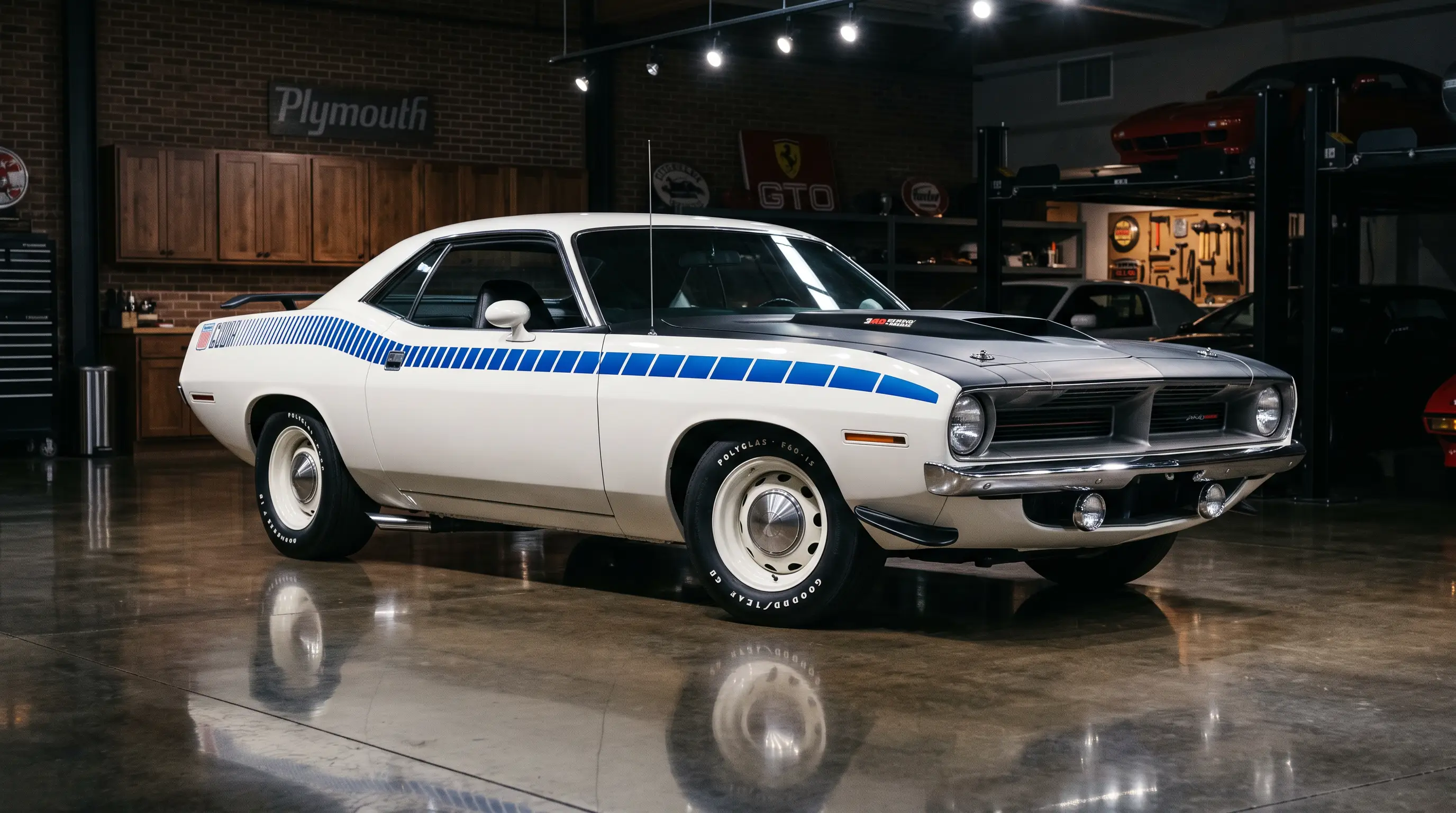
Plymouth built the AAR Cuda for a single model year, 1970, as a homologation requirement tied to the Trans-Am racing program. Production figures commonly cited put the number at 2,724 units, built during a five week window in the spring of 1970 to satisfy the SCCA's 2,500 unit homologation minimum, a figure small enough that even a modest survival rate leaves a genuinely limited population of cars on the road today. Compare that to the total Barracuda production for the same model year and the AAR represents a small fraction of the run, which is exactly the kind of ratio that supports long term value in this segment.
Low production alone does not guarantee value retention. What it does is set a ceiling on supply that cannot be increased no matter how strong demand gets. That is the first piece of the risk framing I use with clients: a car that cannot be manufactured again has a supply side that only shrinks, and shrinking supply against stable or growing demand is the basic mechanism behind long term appreciation in this hobby.
How few survive in original condition
Attrition is the second factor, and it is often underweighted by buyers who fixate on the original production number without asking what happened to those cars over the following five decades. Muscle cars from this era got raced, wrecked, rusted out in salt belt states, and in many cases simply used up by owners who had no reason to think a used performance car would ever be worth preserving. The AAR Cuda was not immune to any of that.
A car built to look and perform like a race car tends to get driven like one, and that use took its toll. Surviving examples in original, unmolested condition represent a smaller number still than the production figure suggests, and that gap between built and surviving is where a lot of the real scarcity in this model lives.
I have seen appraisal files where the client assumed a low production number automatically meant a low surviving number close to it, and that assumption is not safe. Some low production models survive at surprisingly high rates because early owners recognized what they had and parked the car rather than using it hard. Others survive at much lower rates because nobody realized the significance until half the population was already gone. The AAR Cuda sits closer to the second pattern than the first, which is part of why genuinely original examples command the premiums they do today.
The documentation gap that actually drives price
Here is where I tell clients something they usually do not want to hear. The single biggest risk factor on an AAR Cuda purchase is not mechanical condition. It is documentation. Because the model is rare and valuable, it has attracted decades of clone building, some done honestly as tribute cars and some done to deceive. A fiberglass hood, the correct stripe kit, and a set of side pipes can be reproduced convincingly enough to fool a casual inspection.
What cannot be reproduced convincingly is a clean paper trail: a broadcast sheet, factory invoice, or verifiable vehicle identification number that ties the specific car to its original build sheet. Read where this started for the full production history that any serious documentation check should be measured against. Buyers who skip that step are pricing a story, not an asset.
How I frame the buy decision
Value in this model comes down to condition, documentation, and liquidity, in that order of importance for most buyers I work with. Condition is visible and can be independently verified by a competent inspector. Documentation requires more work but is verifiable if it exists at all, and its absence should discount the price meaningfully rather than being waved off as a minor issue. Liquidity, the ease of eventually selling the car at a fair price, tends to track closely with how well the first two boxes are checked.
A car with excellent condition and thin documentation is a bigger risk than a car with modest condition and a complete paper trail, because condition can be improved with money while a missing history cannot be manufactured after the fact without crossing into fraud. That is not a popular opinion among sellers, but it is the one that protects buyers.
I also weigh how a car has been marketed leading up to a sale. Listings that lean hard on adjectives and light on serial numbers, invoices, or a named prior owner tend to correlate with weaker documentation, in my experience, though correlation is not proof either way. It simply tells an appraiser where to look first and what questions to ask before a number gets attached to the car.
"Every rare car has a story. My job is figuring out which parts of that story are documented and which parts are just repeated until they sound true."
- Marcus Feld
| Factor | Why it matters |
|---|---|
| Original production count | Sets the absolute ceiling on supply |
| Survival rate | Reduces usable supply well below original count |
| Documentation | Separates verified cars from convincing clones |
| Liquidity | Reflects how easily a documented, sound car resells |
What this means for a buyer today
The rarity story on the AAR Cuda is real, but it is only half the picture. A genuinely scarce car with no supporting paperwork carries meaningfully more risk than the production numbers alone would suggest, and pricing should reflect that gap rather than treating every example with the right visual cues as equally valuable. Buyers who understand this distinction tend to do better over a holding period of years rather than months.
If you are shopping this segment, treat the paperwork request as non negotiable rather than a formality. You can shop classic Barracuda listings to compare what is actually available, but bring the same documentation checklist to every car on the list before you let scarcity alone justify the price. A rare car with a clean file is worth pursuing. A rare car with an unverifiable one is a bet, not a purchase, no matter how the seller frames it. Price the risk accordingly, and do not let a compelling story substitute for a document you can actually verify against factory records.