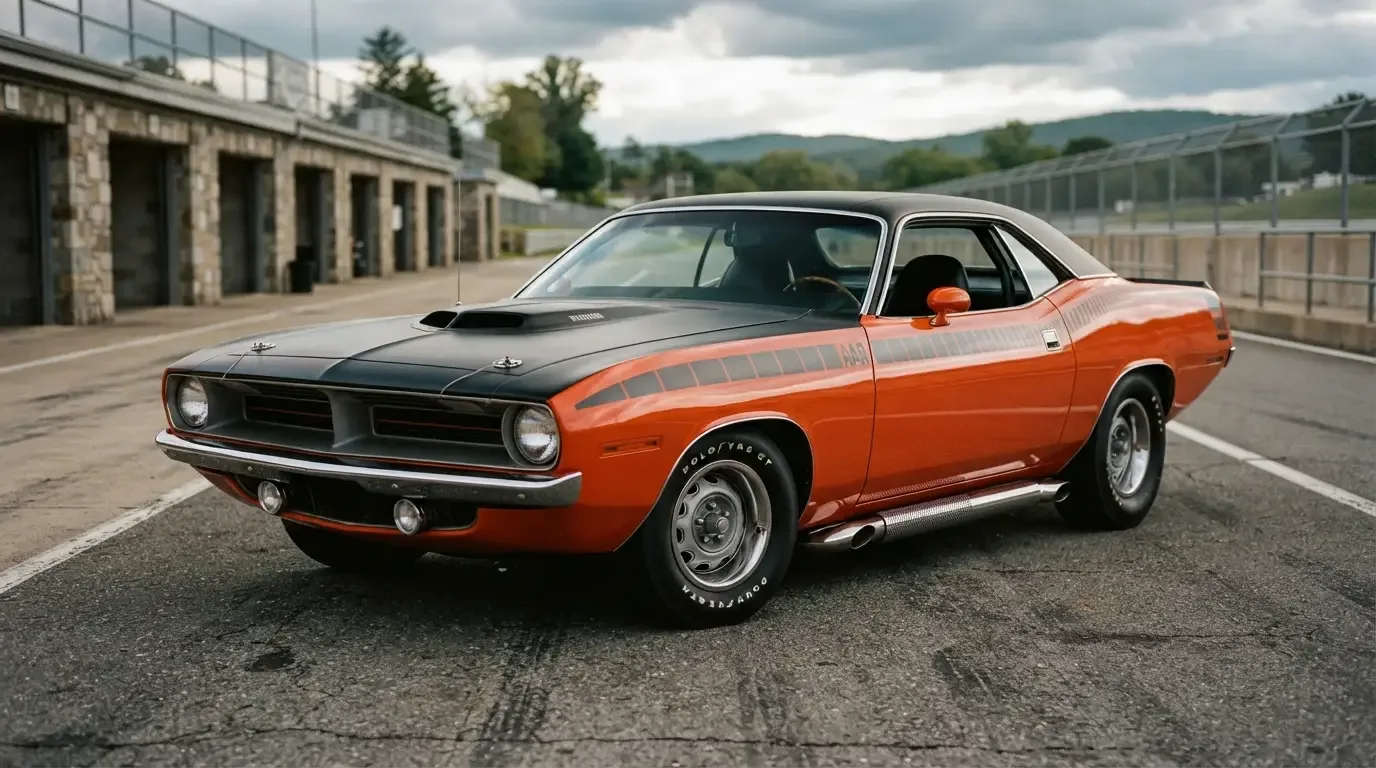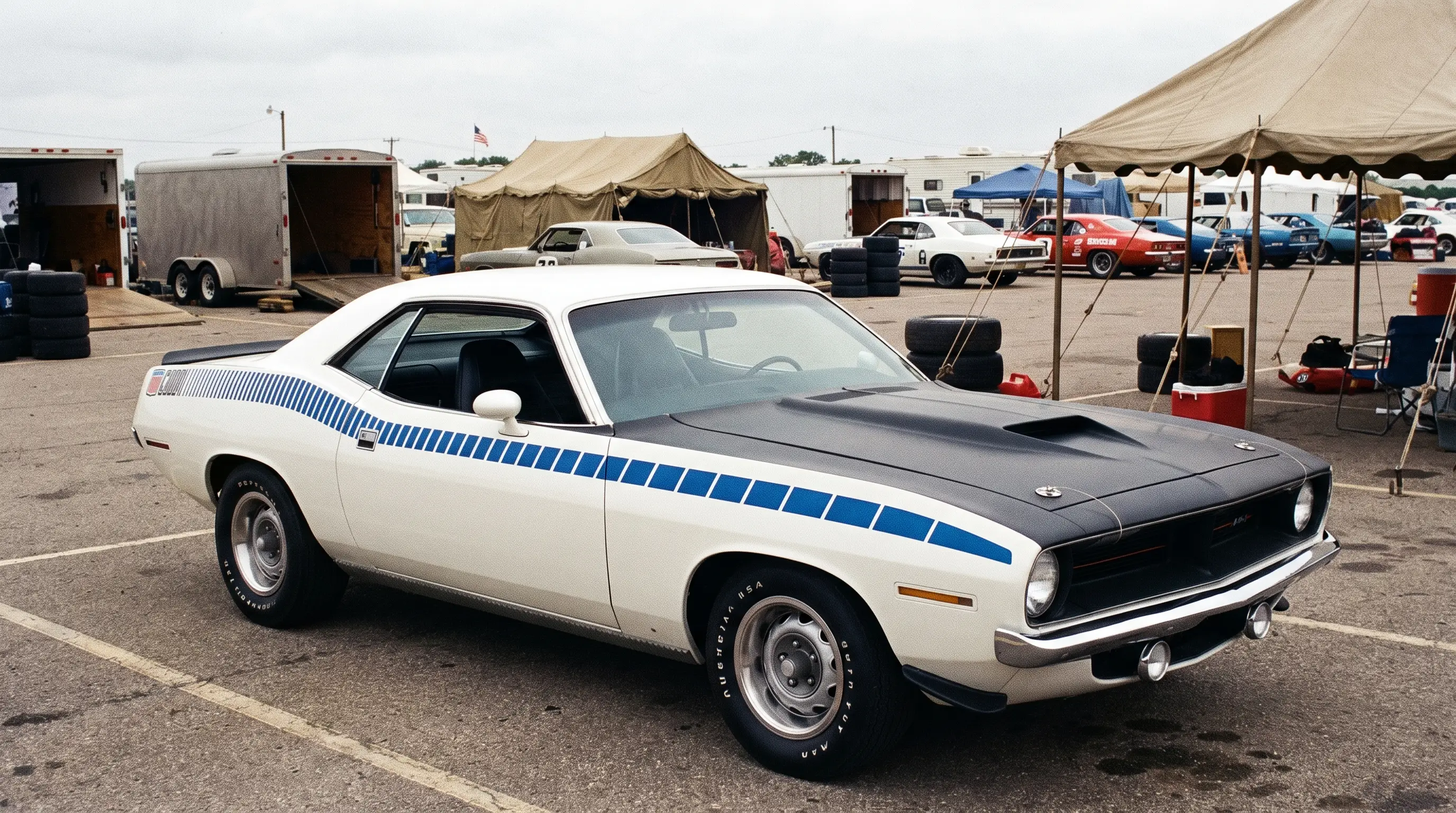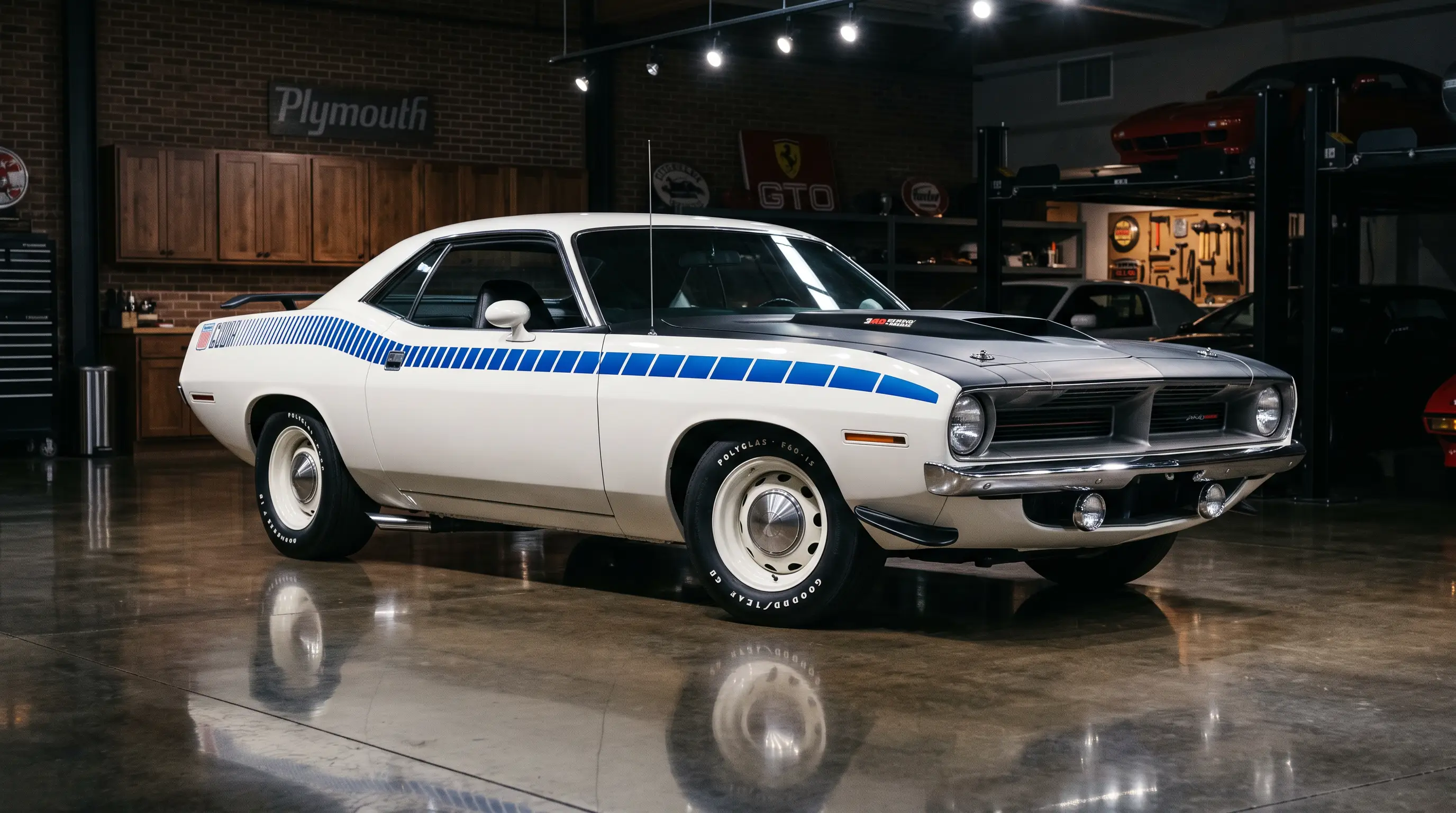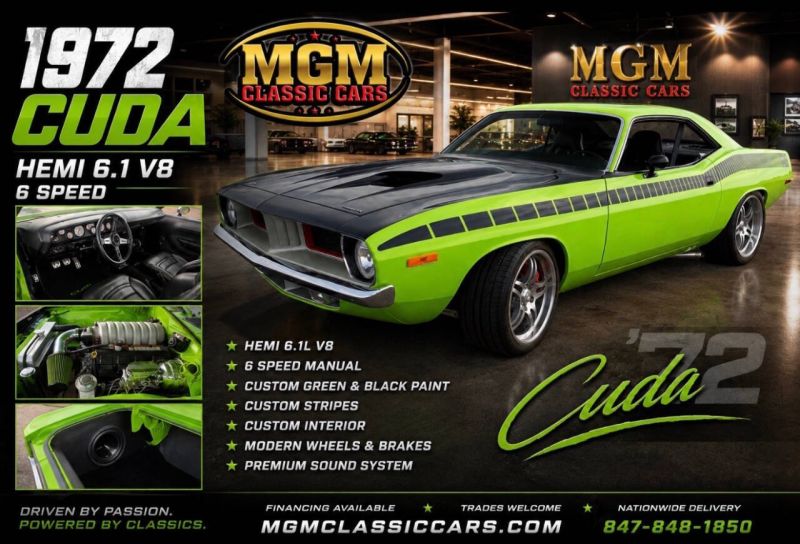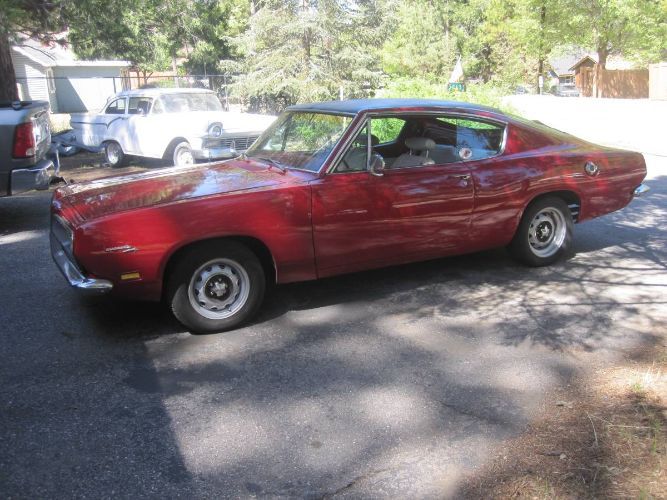
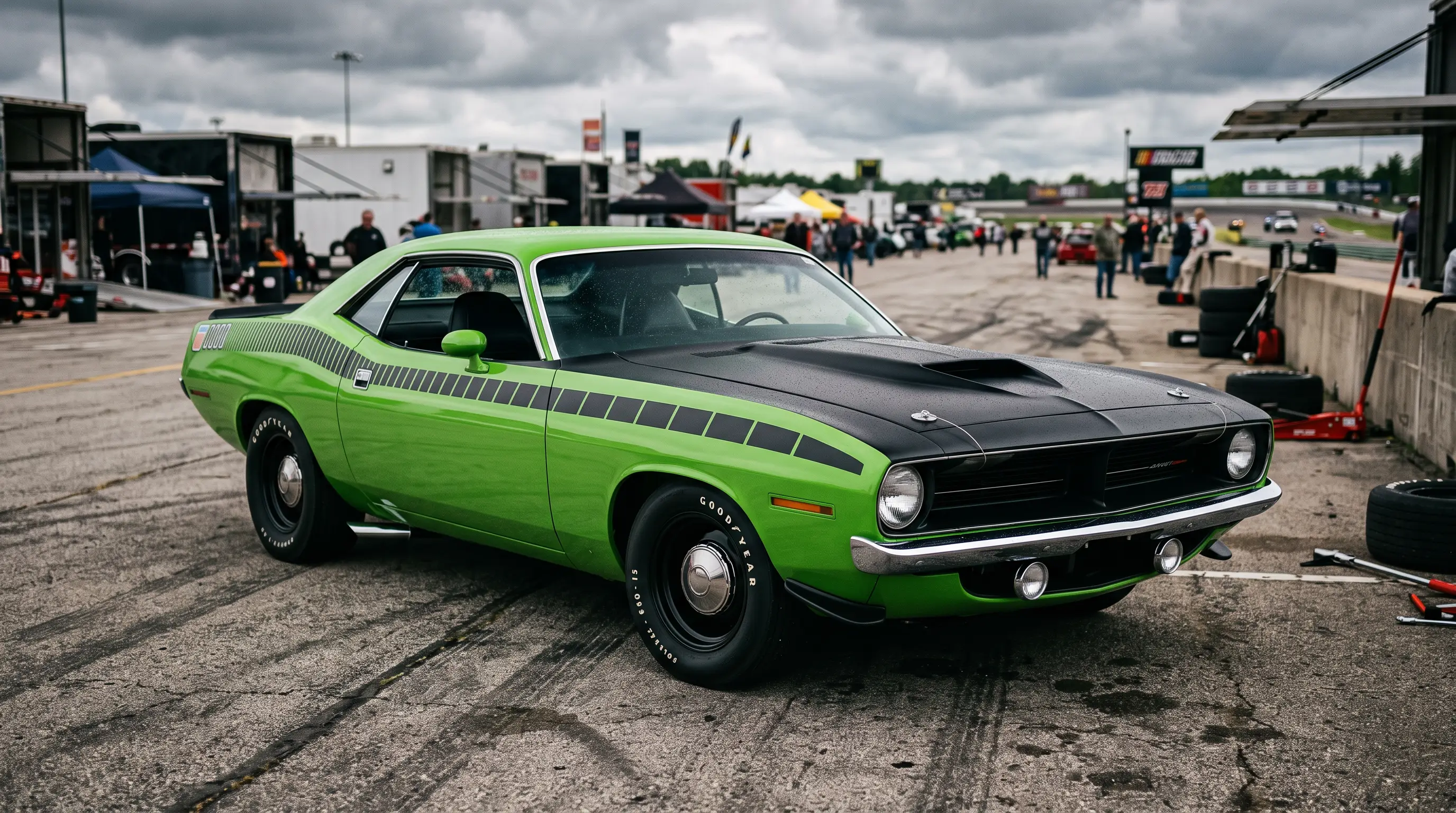
AAR Cuda colors were never an afterthought, and anyone who has stood next to a real one in the right light understands why. The 1970 AAR Cuda came in a specific, tight palette that Plymouth built around one central design idea: a wide fiberglass hood with a matte black finish and a bold, contrasting strobe stripe running down each side, and the body color underneath had to hold its own against that much visual noise without getting lost.
The palette Plymouth actually offered
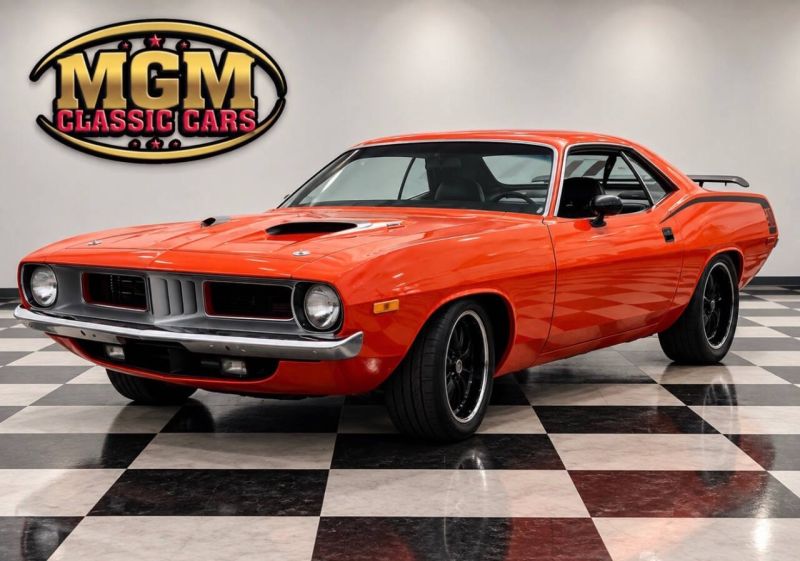
Colors like In-Violet, Lemon Twist, Sassy Grass Green, and Rallye Red were part of the High Impact color program Plymouth ran across its performance lineup in 1970, and the AAR Cuda drew from that same well. These were not subtle colors by any standard, then or now. They were built to be seen from across a parking lot, loud enough to compete with the strobe stripe rather than disappear underneath it. A car finished in a quieter, more traditional color still exists from this era, but the AAR Cuda's whole visual identity leaned into the louder end of the spectrum.
The strobe stripe itself deserves its own attention. Running along the lower rocker panel and up over the rear quarter, it was designed by Plymouth specifically for the AAR and Trans Am racing program tie-in, and it reads differently depending on the body color underneath it. On a white or light colored car the stripe reads as the dominant visual element. On something like In-Violet or Lemon Twist, the stripe and the body color fight for attention in a way that some builders love and others find busy.
Why the matte black hood mattered as much as the paint
The fiberglass hood was finished in a flat, non-reflective black specifically to cut glare for the driver, a genuine functional decision borrowed from racing practice rather than a styling flourish invented for the street car. That hood needed to read as matte against a body finished in high gloss enamel, and getting that contrast right during restoration is harder than it sounds. A hood painted with too much sheen looks wrong next to a correctly finished body, even if the actual color match is perfect. Builders who have worked on these cars know that the finish level matters as much as the hue itself.
What restorers get wrong most often
The most common mistake in a repaint is treating the strobe stripe as a decal applied over finished paint rather than understanding how it was actually laid out at the factory relative to body lines and panel gaps. Get the stripe width or placement even slightly off and the whole car looks off balance, no matter how correct the underlying body color is. The second most common mistake is getting the black hood too glossy, which flattens the visual separation the factory built in on purpose. A correct AAR Cuda restoration treats the hood finish, the stripe geometry, and the body color as one connected decision, not three separate ones handled by whoever happens to be doing that part of the job.
For a deeper look at how these color choices tie into the broader AAR Cuda story, including the racing program that inspired them, aar cuda colors history covers the full background in more detail.
"You can spot a poseur paint job from across a show field. The color might be right, but the stripe geometry or the hood sheen gives it away every time. Get all three right together or don't bother."
- Jim Vasquez
Original colors as a value signal today
An AAR Cuda finished in its original factory color, with a correctly executed stripe and matte hood, carries a real premium over a car that has been repainted in a different color along the way, even when the mechanical specification is identical. Buyers and appraisers treat original color as part of the documentation puzzle, alongside broadcast sheets and fender tags, because a color change is one more variable that has to be explained rather than simply verified. A car repainted decades ago in a non-factory shade is not automatically suspect, but it is one more thing a serious buyer wants explained with paperwork rather than a seller's word.
Production numbers for each individual AAR Cuda color varied enough that some combinations are noticeably rarer than others, which is worth understanding before assuming any two AAR Cudas of different colors carry equal collector interest. Readers curious about how many cars actually left the factory in each configuration should take a look at what a worth a look too on production numbers reveals about which colors turned out to be genuinely scarce.
Matching colors to paint codes correctly
Every High Impact color carried its own paint code, stamped on the fender tag alongside the trim and options codes, and getting that code right is a foundational step in any credible restoration. Modern paint suppliers offer formulas labeled for these colors, but formulations have shifted over the decades as older pigments were phased out for safety and environmental reasons, so a modern mix labeled Lemon Twist is rarely an exact match to a fifty year old factory panel that has not faded. Careful restorers cross reference original, unfaded paint found in a protected area of the car, inside a door jamb or under a trim piece, against the modern formula before committing to a full repaint, since relying on the paint code alone can produce a color that is technically correct on paper but visibly off in person.
This kind of attention to detail is exactly what separates a car built to satisfy a judge's checklist from one built to actually look right sitting in the sun. Both approaches can result in a technically accurate restoration, but only one of them holds up to the kind of scrutiny an experienced eye brings to a show field or an auction preview.
A note on interior and trim coordination
Plymouth did not pair every High Impact exterior color with every available interior shade, and getting that pairing wrong is another quiet giveaway on a repainted or reassembled car. Black interiors worked with essentially the whole palette, but some of the brighter interior options were factory-limited to specific body colors, a detail easy to overlook unless a builder is working directly from the fender tag rather than guessing at what looks good together. A correct AAR Cuda ties exterior color, stripe, hood finish, and interior trim into one coherent factory-specified package, and any restoration that treats these as independent choices risks producing a car that looks assembled rather than original, even when every individual component is technically period correct.
Buying with color in mind
Anyone shopping for an AAR Cuda today should treat original color as one line item in a longer checklist rather than the whole decision. A correctly documented car in a less flashy original color is a safer purchase than an undocumented car repainted into whatever shade currently commands the highest resale attention. The High Impact palette was built to turn heads, but the paperwork behind it is what actually protects a buyer's investment.
For anyone ready to see what is currently available across that palette and beyond, it is worth taking a look at classic Barracudas on the market to compare colors, documentation, and asking prices side by side.