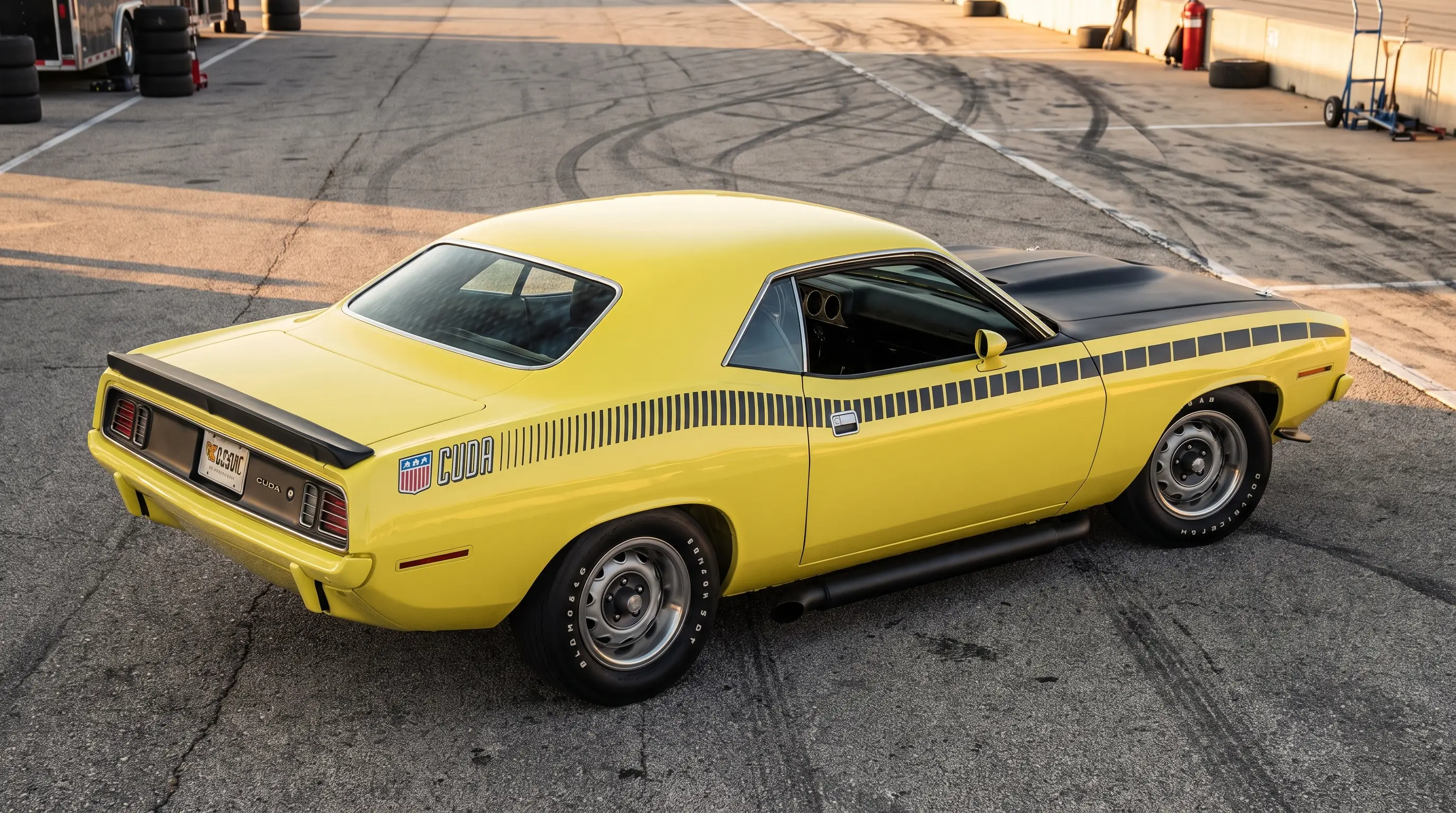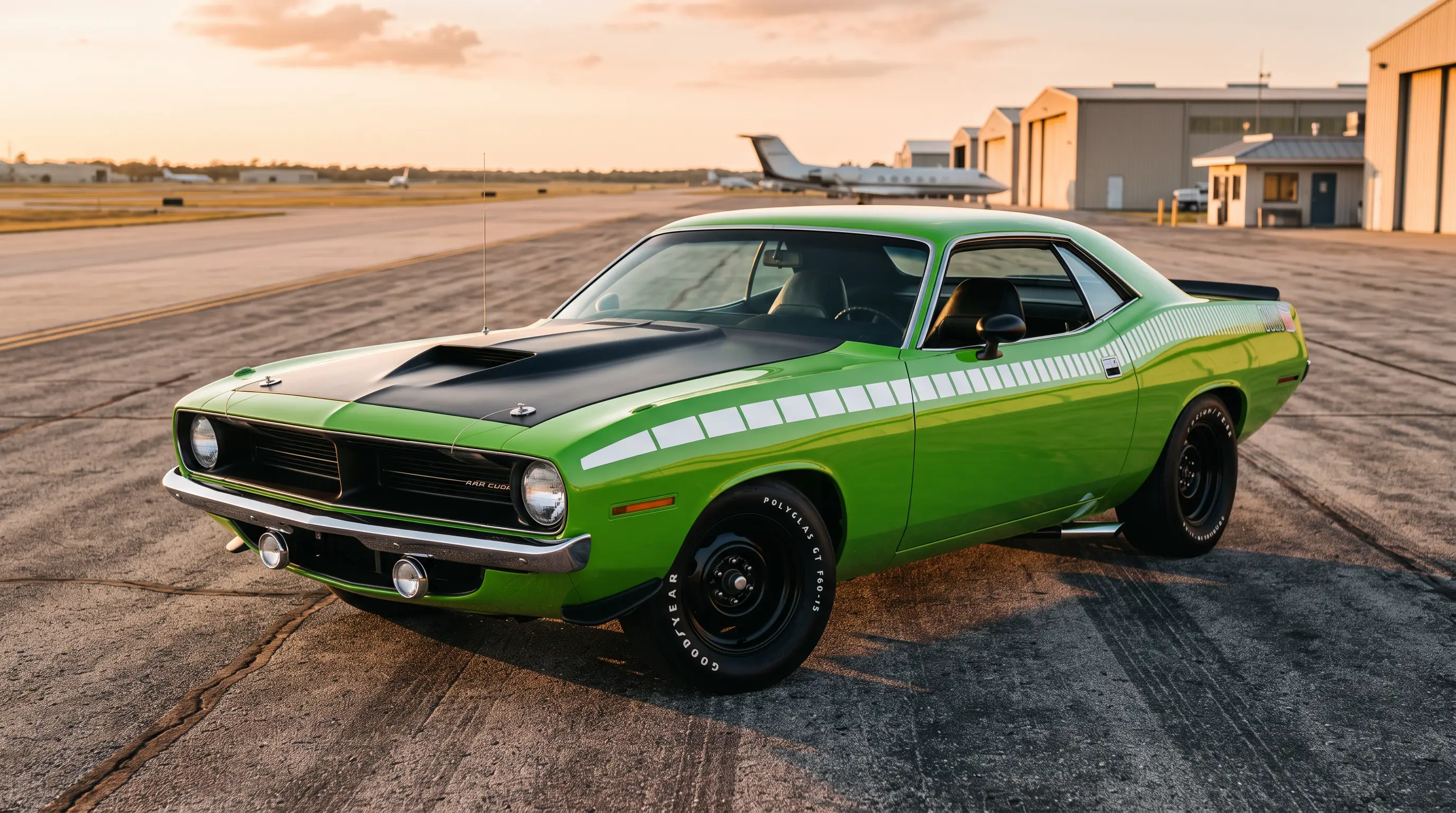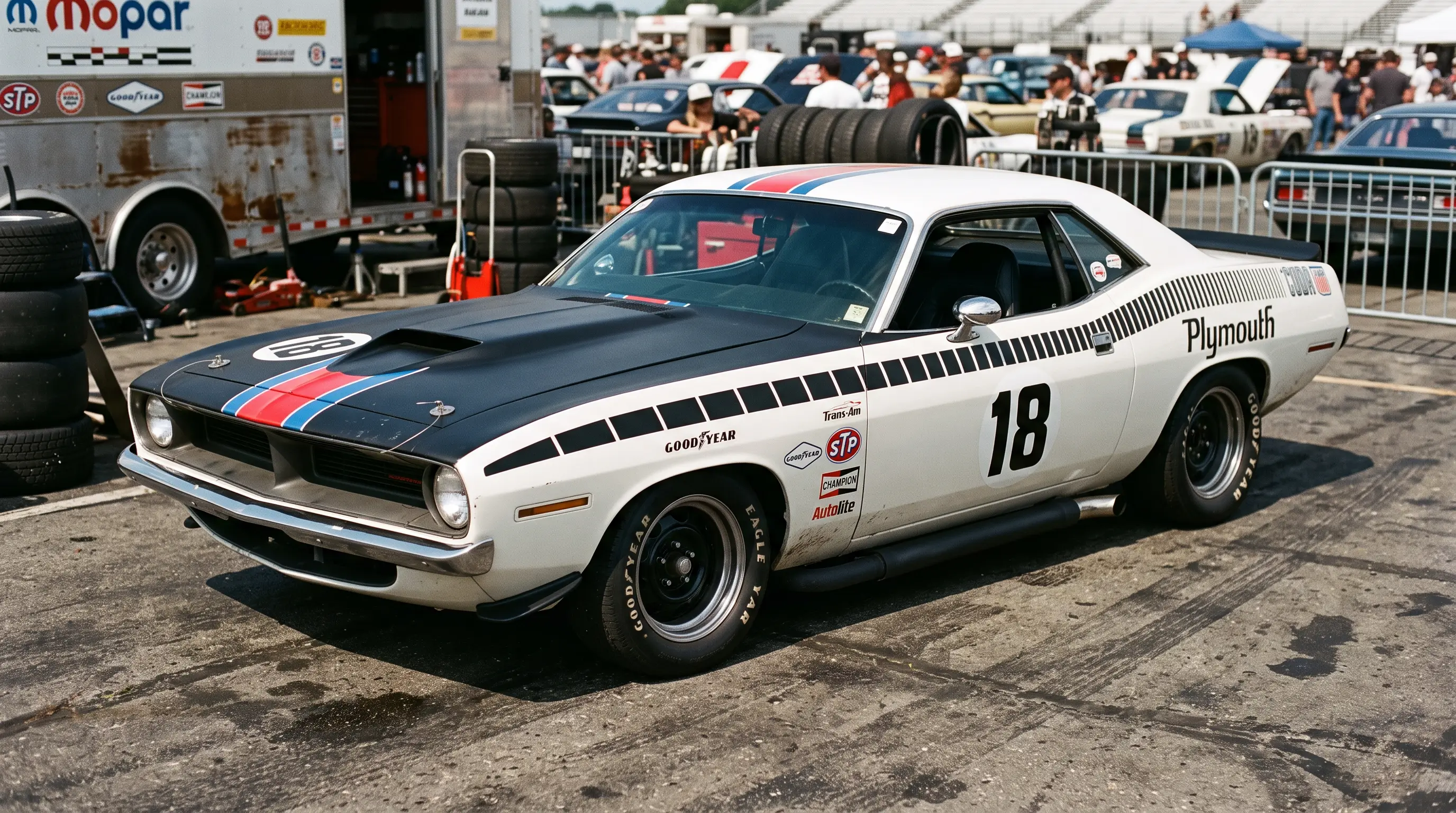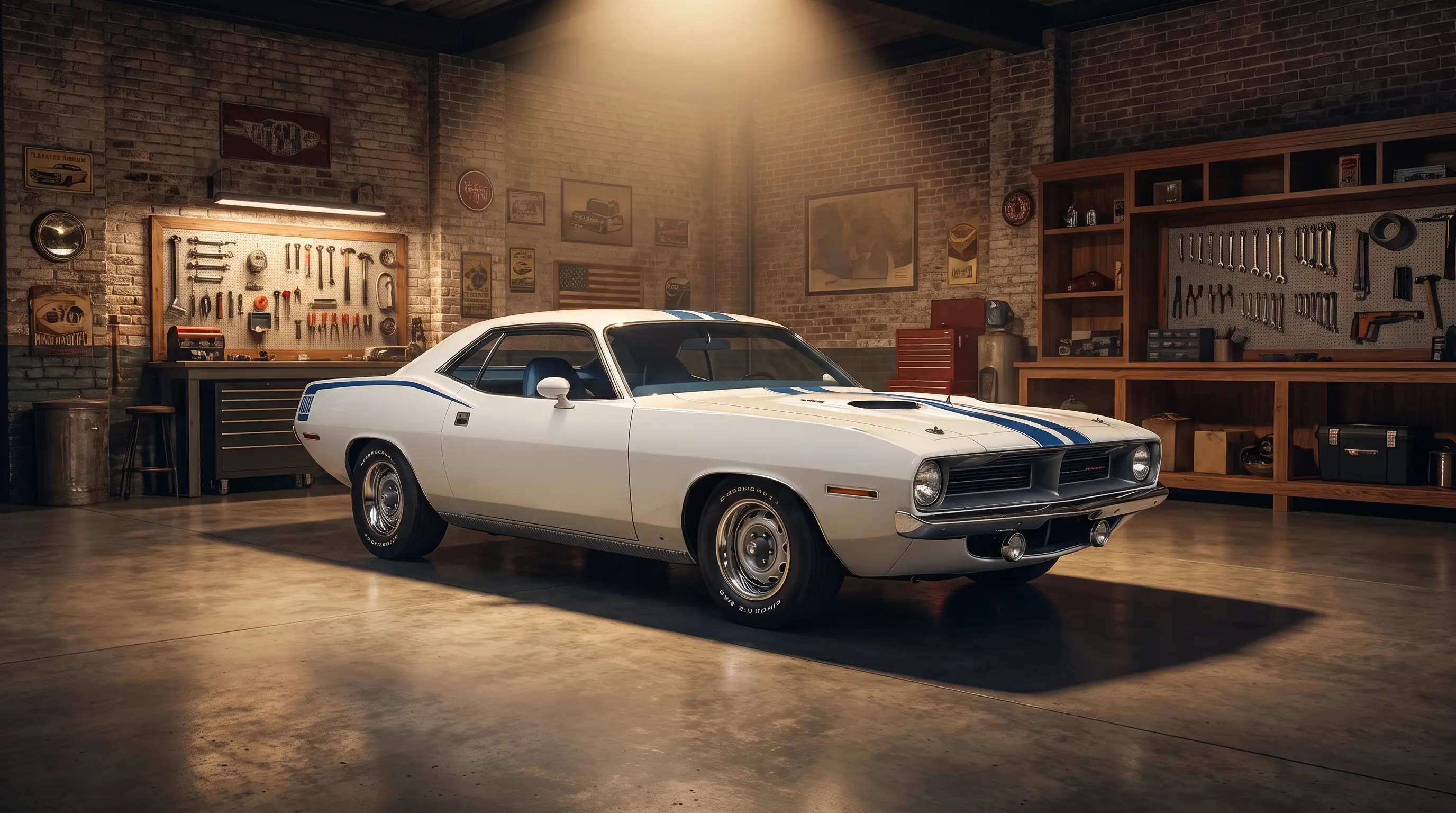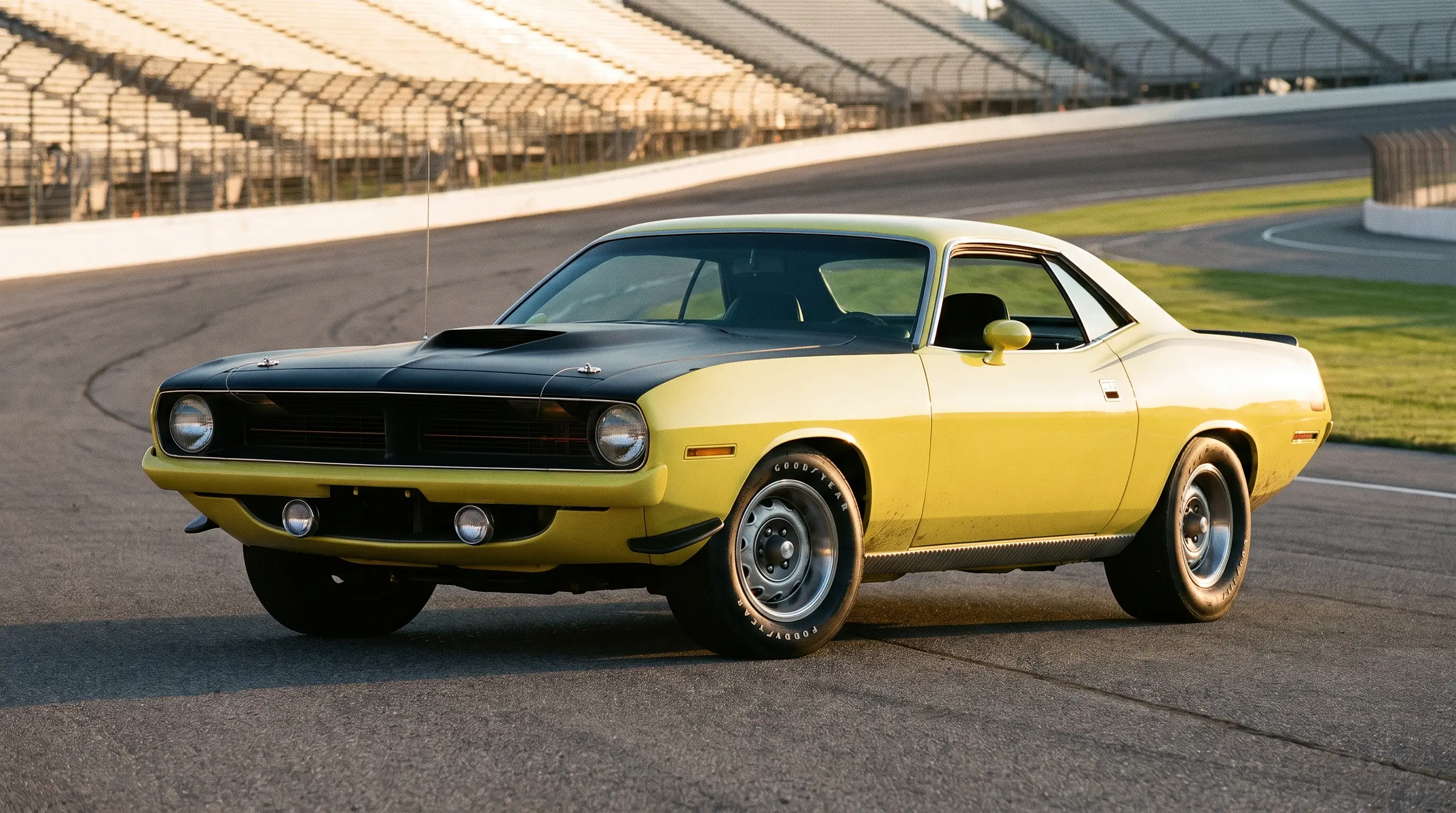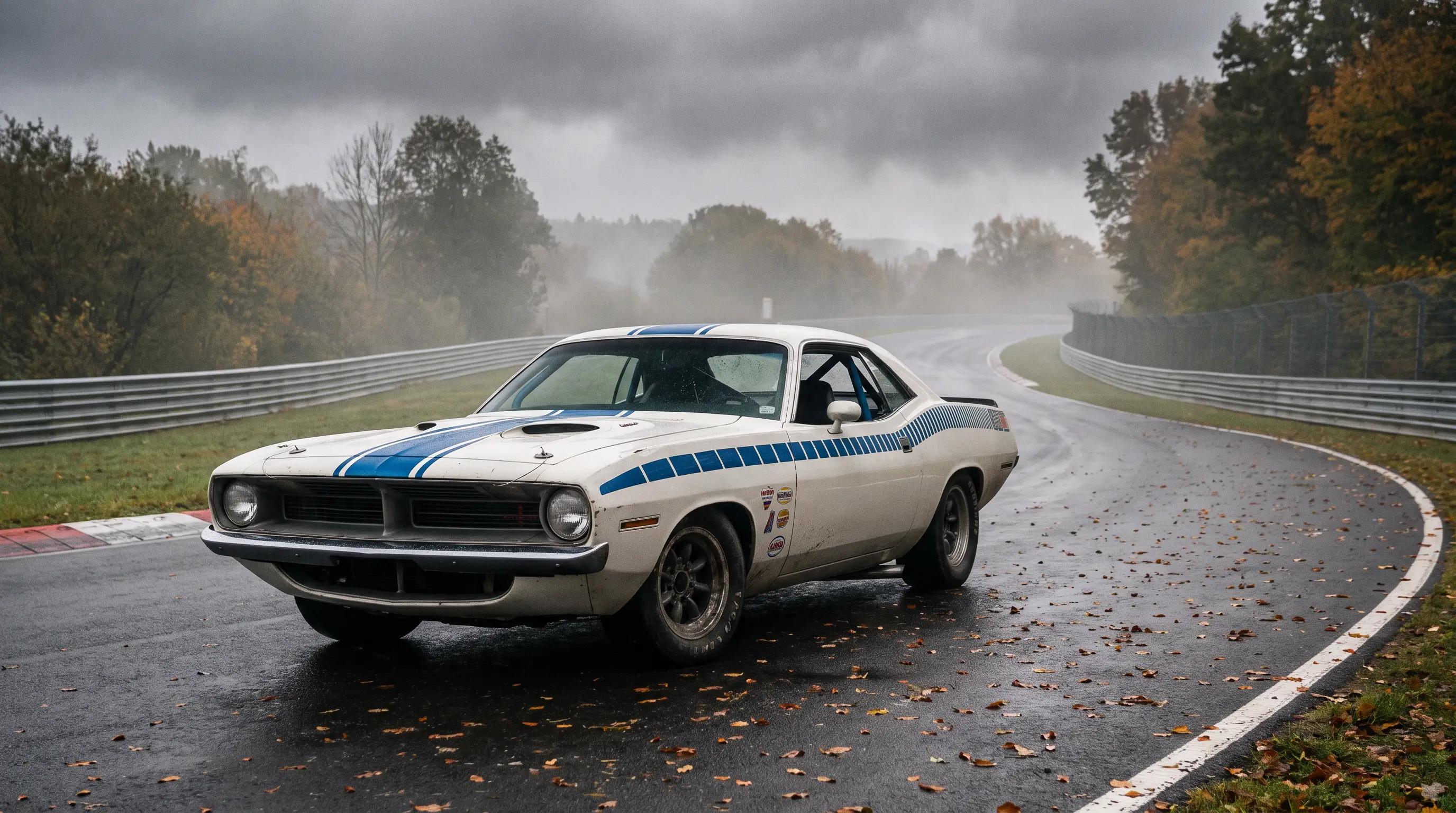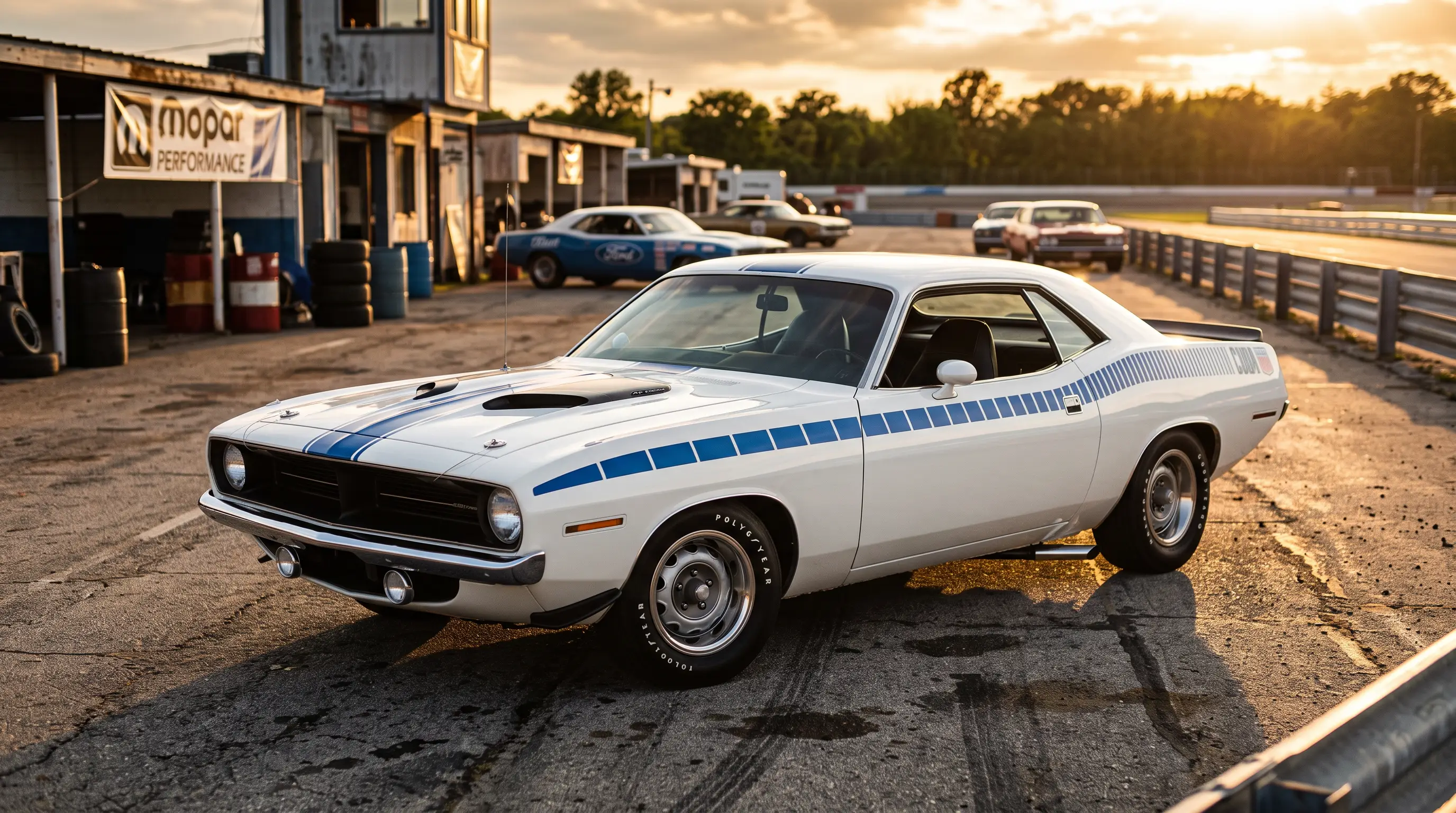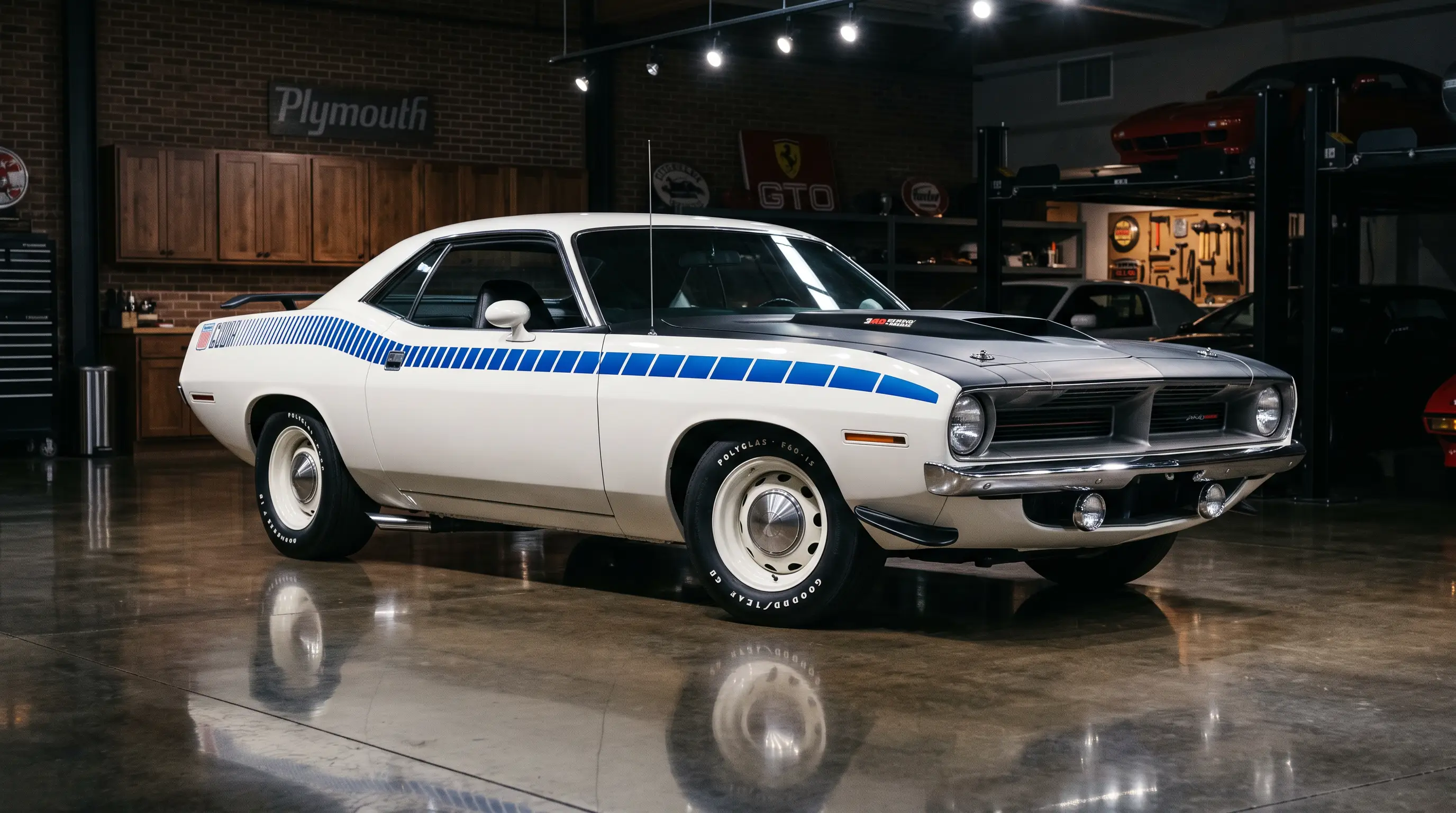
The AAR Cuda existed for one model year, 1970, and it existed for a reason most street cars never have to justify. Plymouth needed a homologation special to make the Barracuda eligible for the SCCA Trans-Am series, so it built a road car that borrowed its name and much of its attitude from Dan Gurney's racing outfit, All American Racers. The initials on the fender are not decoration. They are a receipt. If you want to understand why this particular Barracuda looks the way it does, you start with the rulebook, not the styling studio.
What follows is a look at how a racing requirement produced one of the most distinctive muscle cars of the era, and why the numbers behind it still hold up under scrutiny.
A car built to satisfy a sanctioning body
Trans-Am racing in 1970 was the closest thing American motorsport had to a factory war. Ford ran Mustangs, Chevrolet ran Camaros, and the field was thick enough that a manufacturer needed a genuine reason to show up. The SCCA required that a car sold to the public underpin the racing version, which is where the AAR Cuda comes in. Plymouth contracted with All American Racers, the team Dan Gurney and Carroll Shelby had founded, to develop and field the race cars. The street car existed to make the whole program legal.
That relationship is the entire story. The race cars ran a destroked 305 cubic inch small block because the series capped displacement there. The street cars could not use that engine, so Plymouth gave buyers something more usable and, frankly, more interesting to drive on a public road. The two versions shared a silhouette and a name, not a drivetrain. People who expect the road car to be a detuned race engine are working from the wrong assumption. The relationship was regulatory, not mechanical.
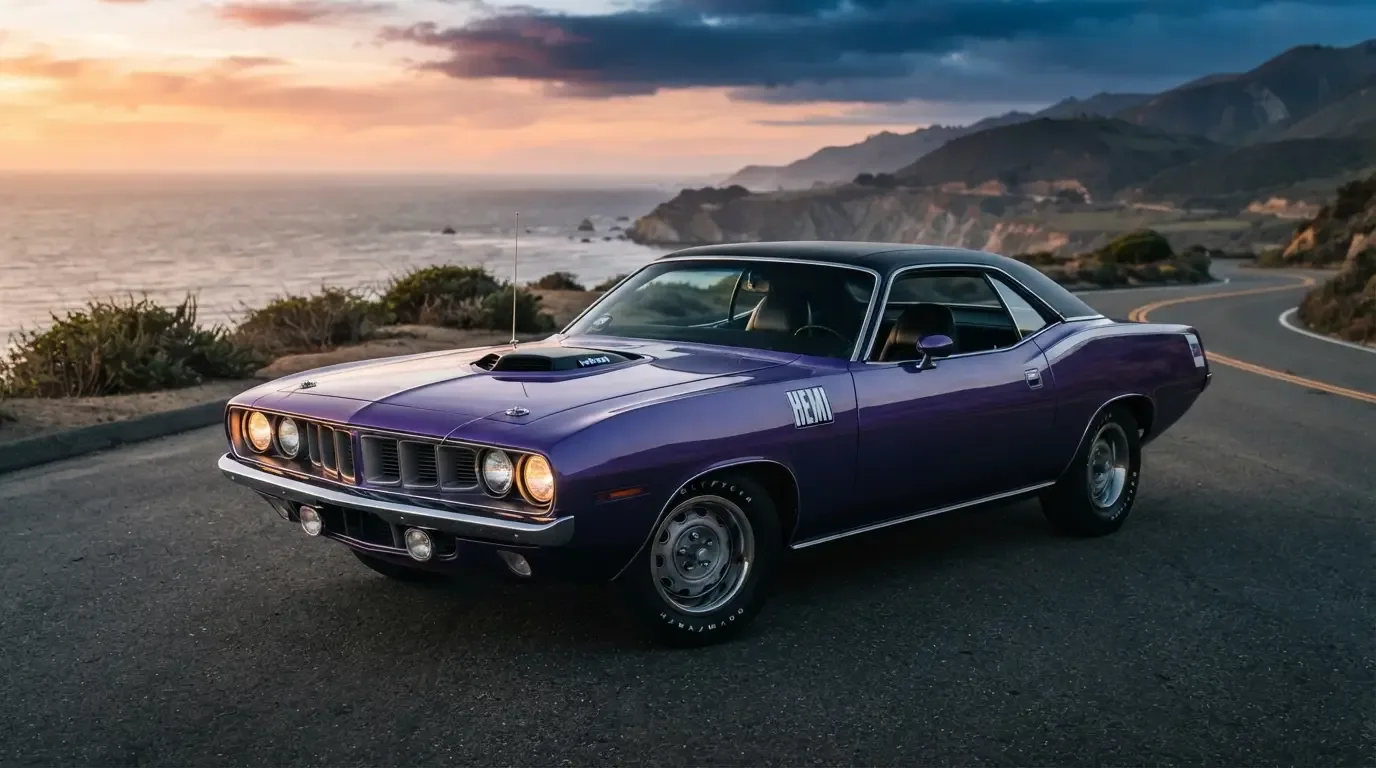
If you want the wider context of how this fit into the model line, the plymouth barracuda history covers the full arc from compact fastback to E-body muscle car. The AAR is one chapter in that, and a short one.
The 340 Six Barrel and what it actually delivered
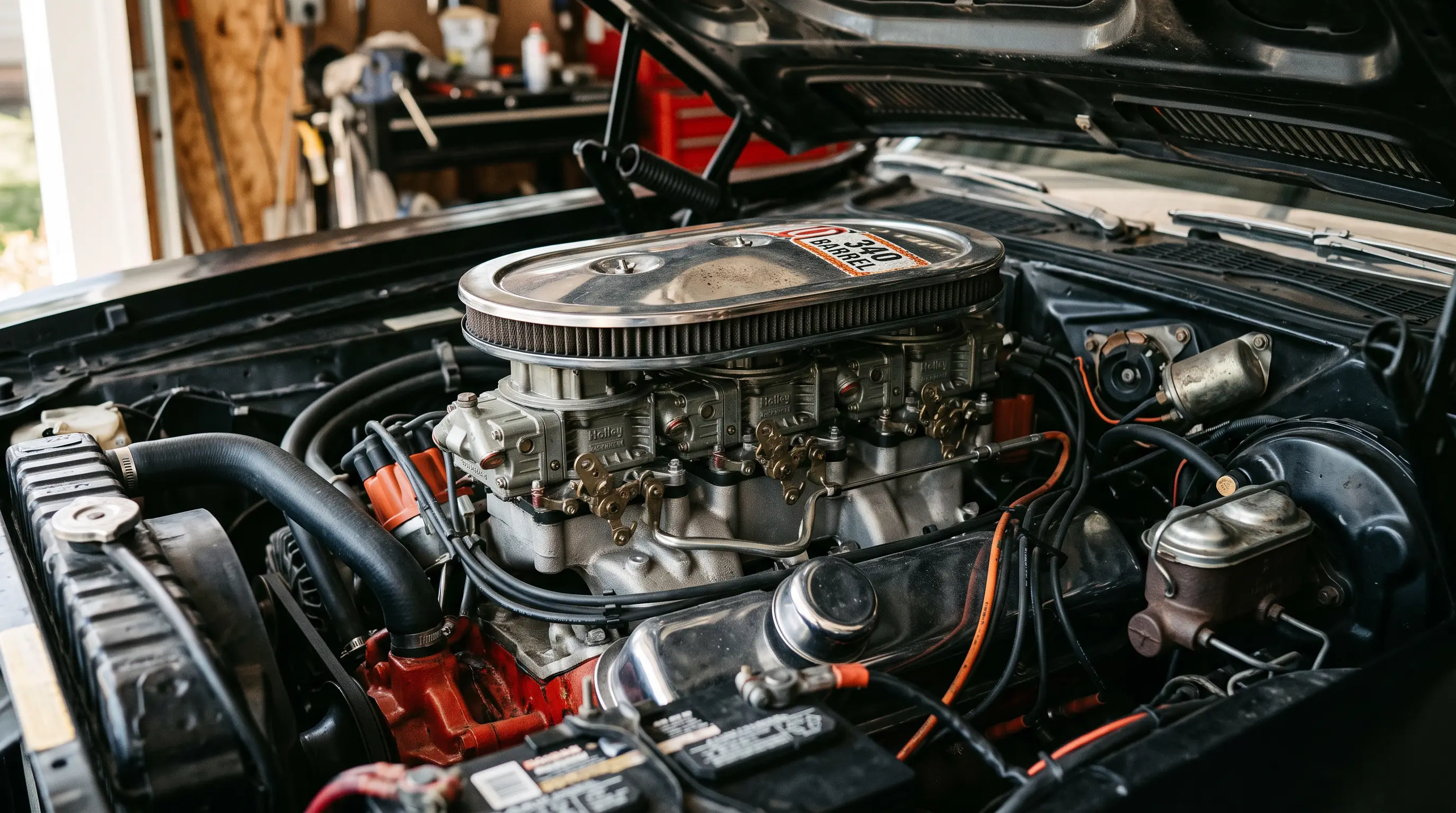
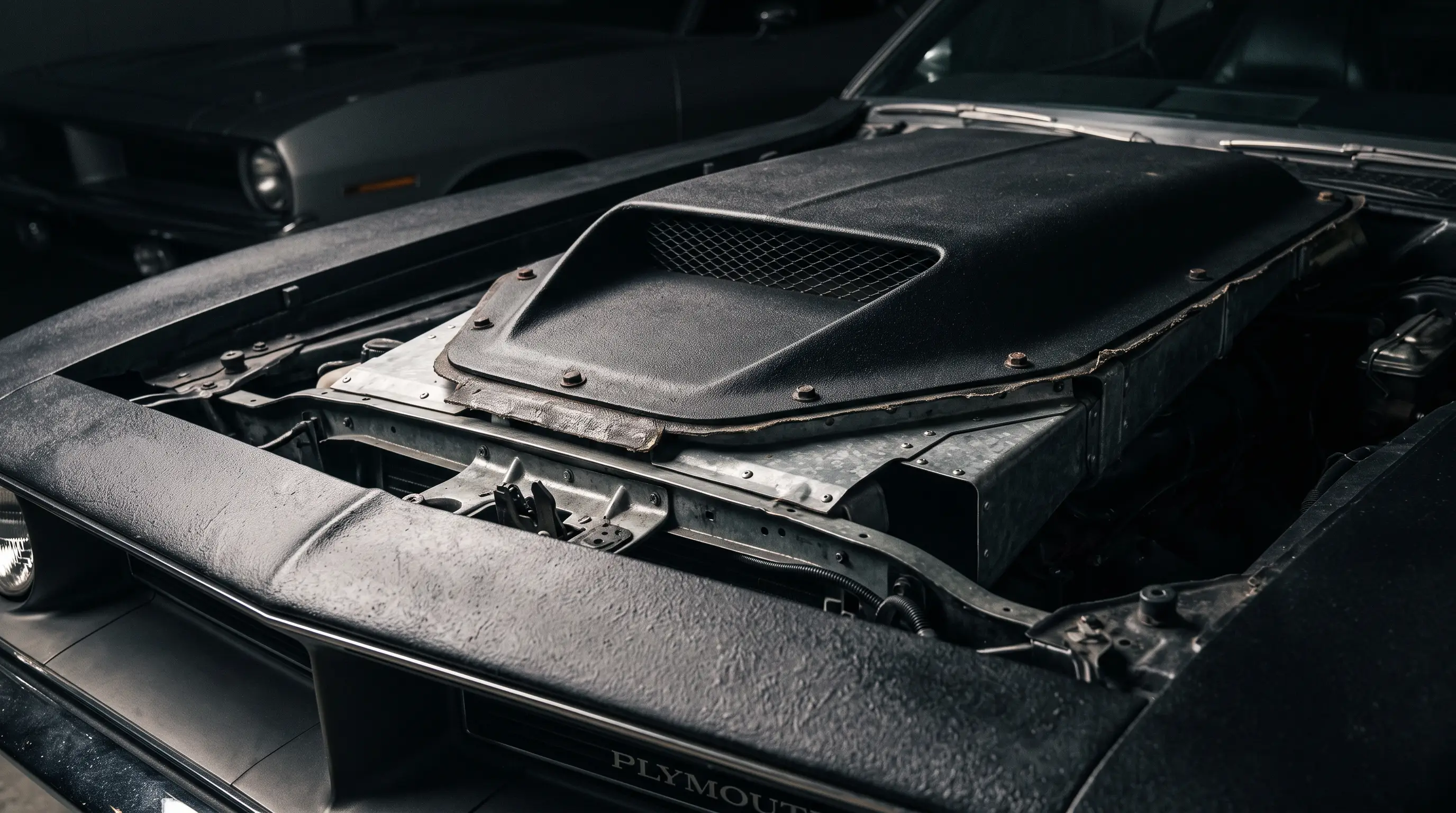
The engine under the fiberglass hood was a 340 cubic inch small block fed by three two-barrel Holley carburetors on an Edelbrock intake, a setup Plymouth marketed as the Six Barrel. Factory rating was 290 horsepower. That number was almost certainly conservative, which was common practice in the era for reasons that had more to do with insurance underwriters than engineering modesty.
The 340 itself deserves a moment of credit that the Six Barrel story usually steals. It was Chrysler's high-performance small block, introduced a couple of years earlier, and it had a reputation among people who understood engines as one of the better-breathing designs Detroit produced in the period. Its cylinder heads flowed well, its short stroke let it rev with enthusiasm, and it responded to tuning in a way the bigger, lazier engines did not. Dropping the Six Barrel induction onto that foundation was less about brute force and more about making a good engine more responsive across a wider range. The AAR is one of the few places you could buy that exact combination from the factory.
Here is the honest engineering read. A 340 with three two-barrels was not built for peak headline output. It was built for throttle response and a broad usable band. The center carburetor handled normal driving, and the outer two came in under hard throttle, which gave the car civilized manners at part throttle and a real shove when you asked for it. Chrysler's small block was already a strong-flowing design, and the Six Barrel arrangement suited it. The trade-off was tuning complexity. Three carburetors mean three times the opportunity for something to drift out of adjustment, and that is a maintenance reality owners still live with today.
| Specification | 1970 AAR Cuda |
|---|---|
| Model year | 1970 only |
| Engine | 340 cubic inch V8, Six Barrel |
| Induction | Three Holley two-barrel carburetors |
| Rated output | 290 hp |
| Transmissions | Four-speed manual or TorqueFlite automatic |
| Exhaust | Side-exit, exiting ahead of the rear wheels |
| Approx. production | 2,724 units |
Staggered tires, a raised rear, and the strobe stripe
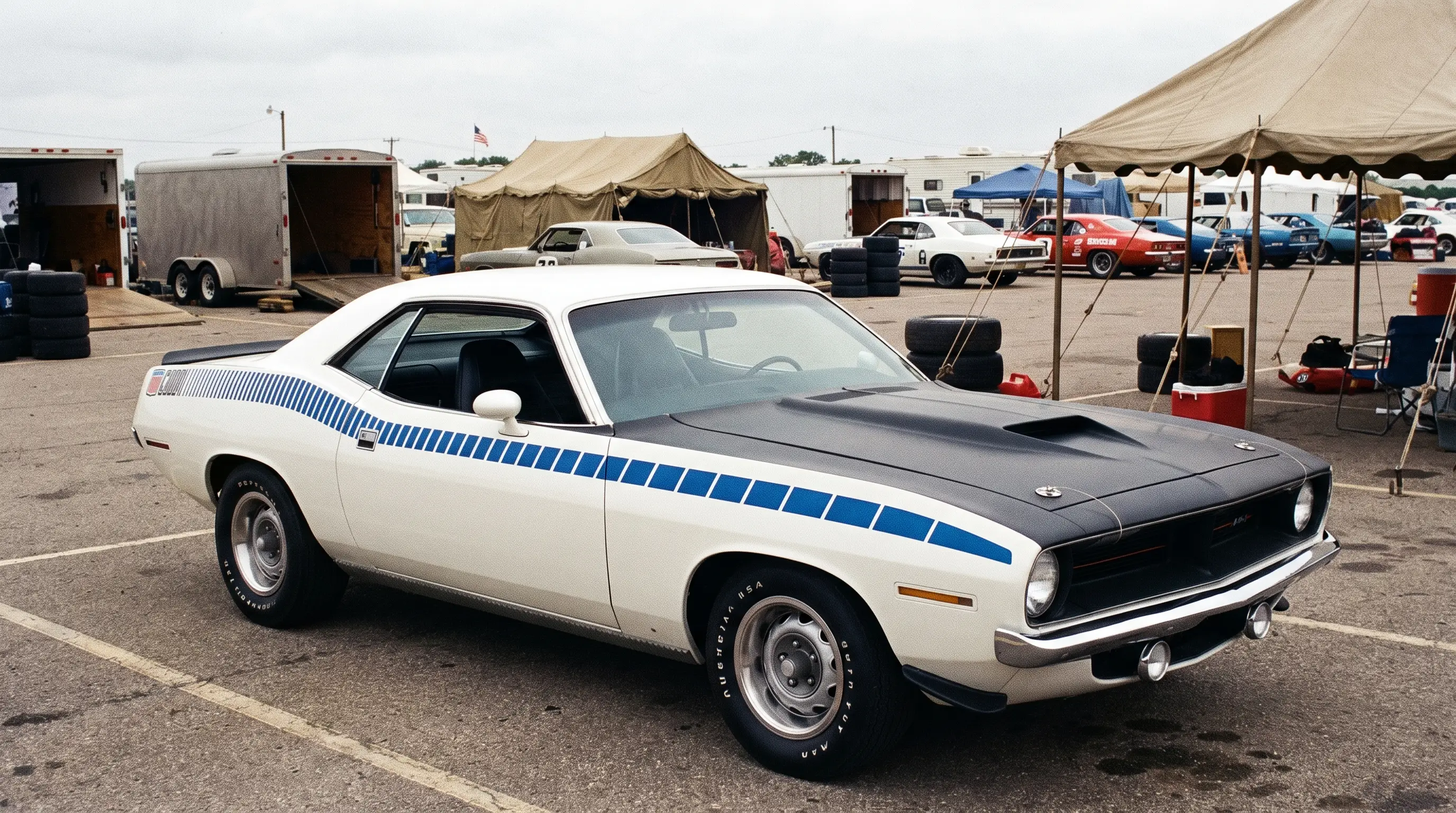
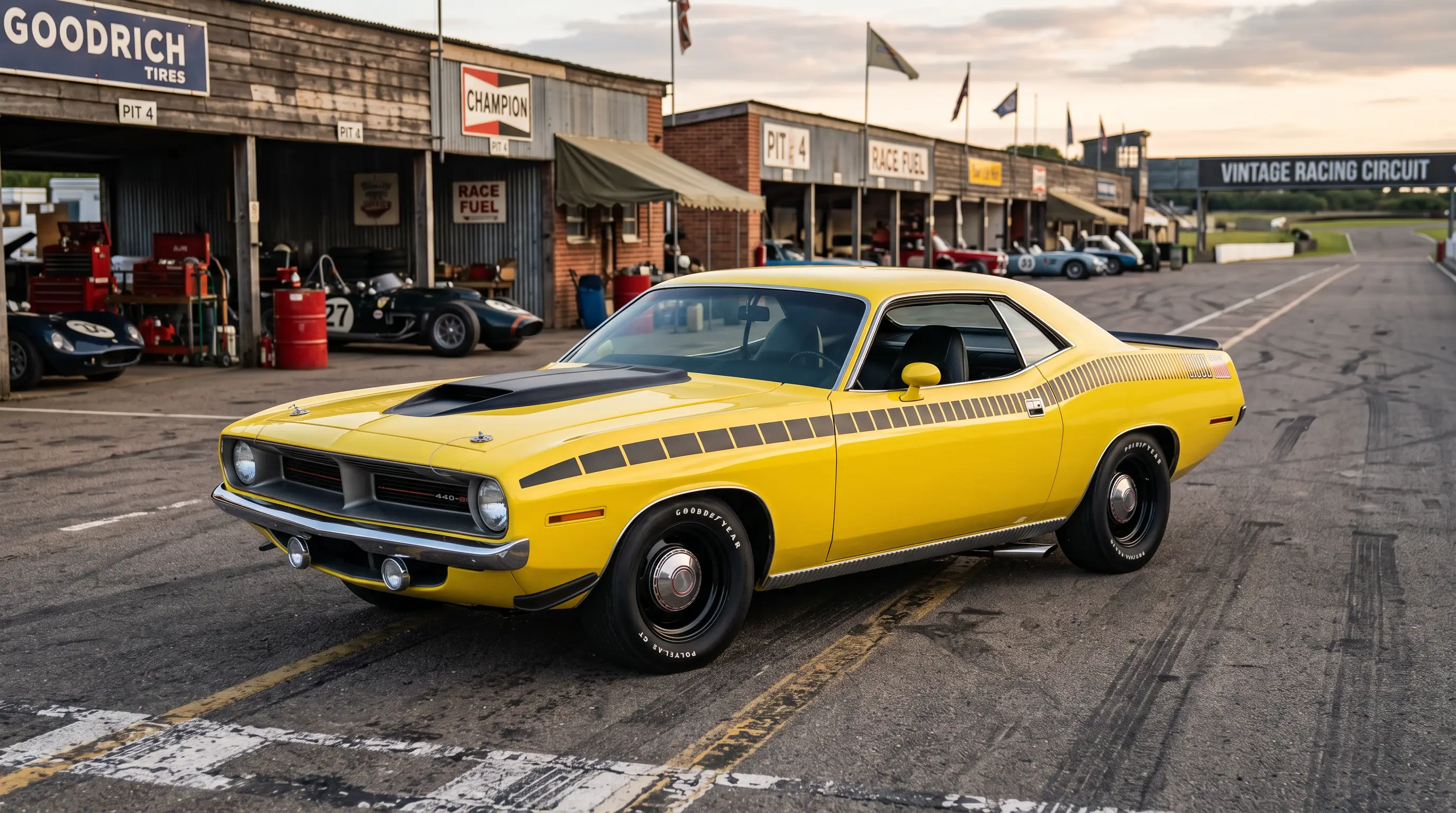
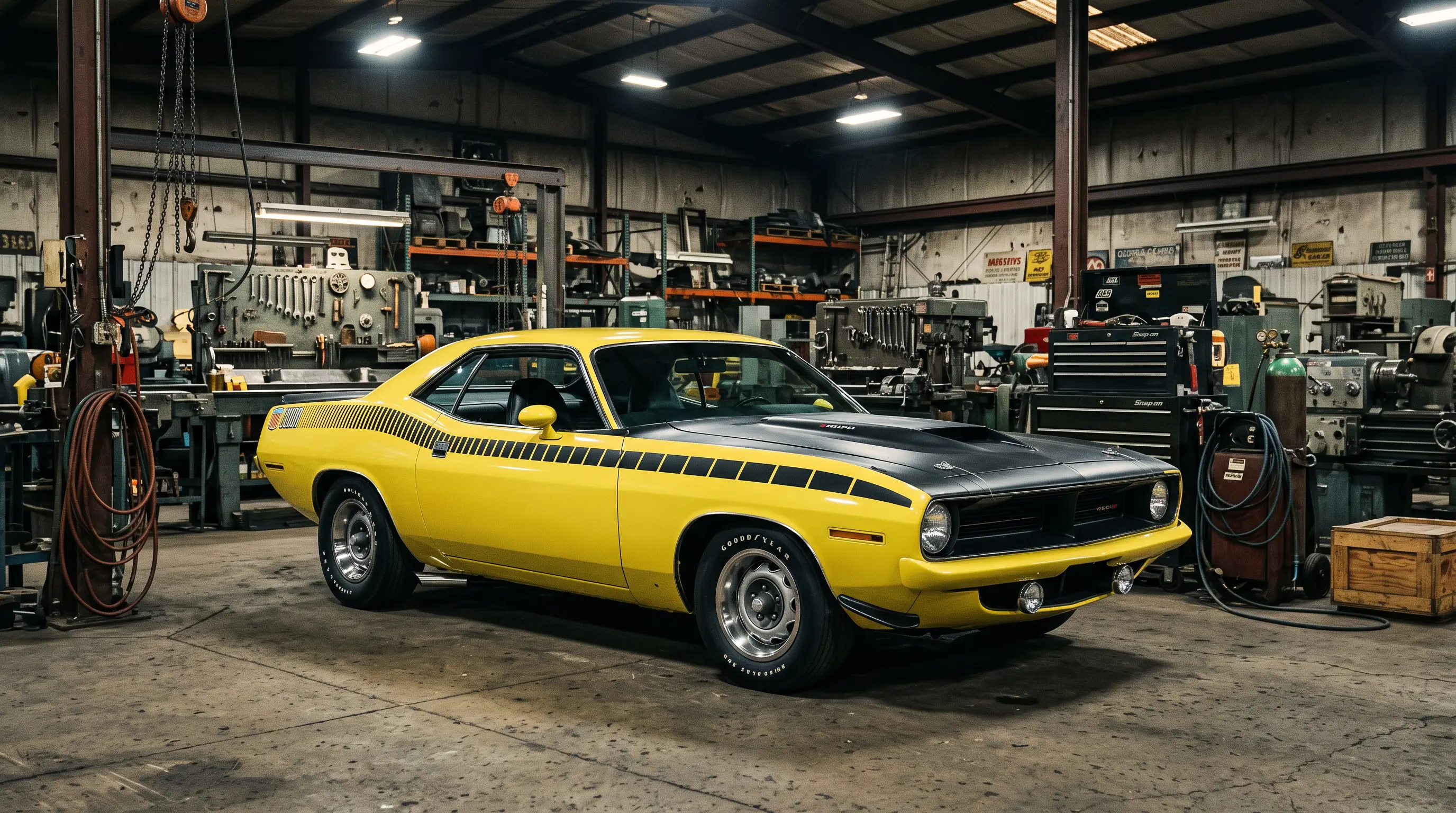
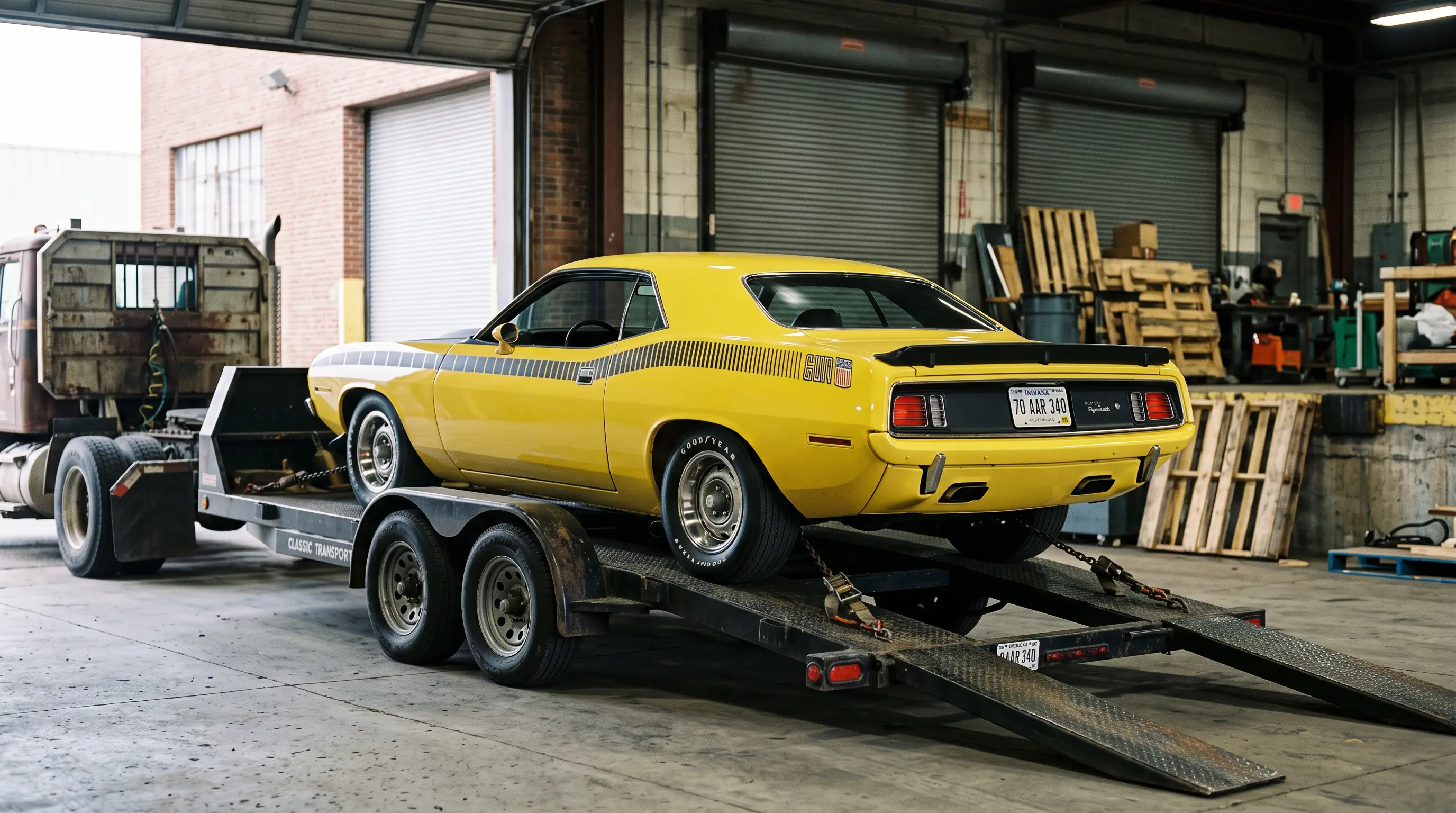
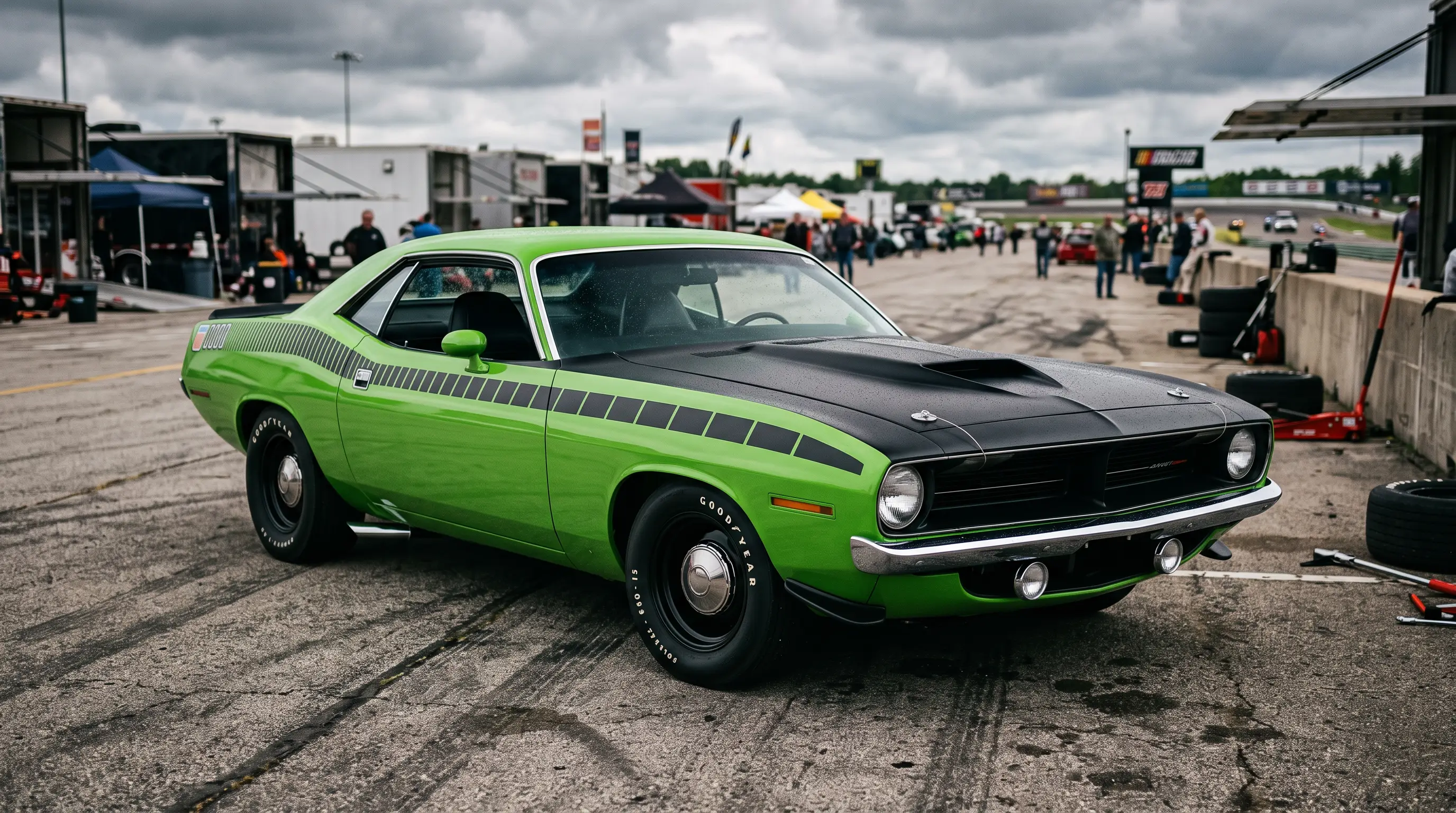
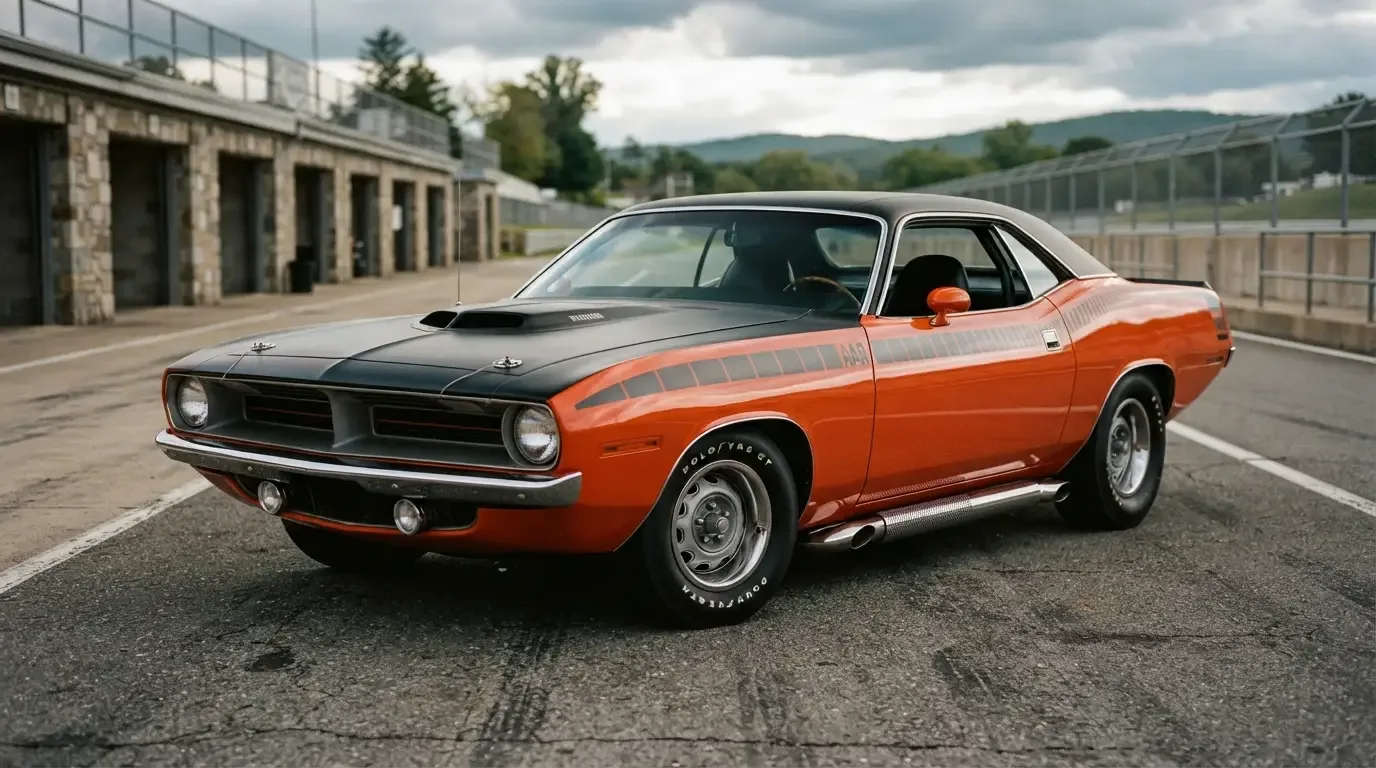
The AAR looked different because it was set up differently. It ran larger tires at the rear than the front, and the rear suspension sat higher to clear them, which gave the car a nose-down rake that no marketing department invented. That stance came from the tire package. The car wore a matte black fiberglass hood with a functional scoop, a ducktail rear spoiler, and a body-side strobe stripe that stepped down in width toward the tail. The stripe carried the AAR designation near the front fender.
None of this was styling for its own sake. The rake and the staggered rubber reflected the fact that the people building the road car came out of a racing program and thought in those terms. The result reads as aggressive because the priorities that shaped it were, in fact, aggressive. Dry observation: a lot of muscle cars faked this look. The AAR came by it structurally.
How the race cars actually did
The honest part of any homologation story is the racing result, and here the record is mixed. All American Racers ran the Trans-Am effort with drivers including Swede Savage and Dan Gurney himself. The Plymouth program did not win the 1970 Trans-Am championship. The season belonged to the better-funded, better-sorted efforts elsewhere in the field, and the Chrysler entries struggled against teams with more development time.
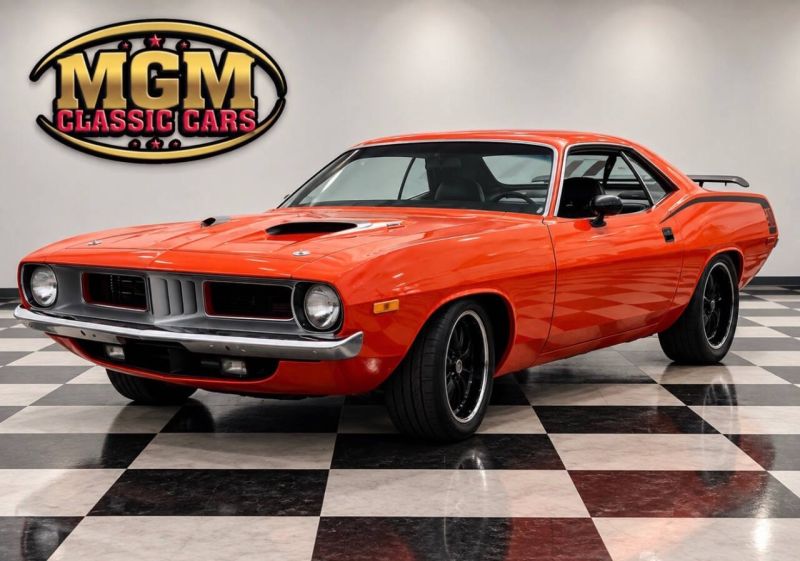
That does not diminish the road car. It contextualizes it. The AAR Cuda is desirable today because it is a rare, purpose-built, one-year-only machine with a real motorsport tie, not because it dominated a season it did not dominate. Collectors who tell you the race cars swept the field are selling a story the results do not support. The value case stands on scarcity and design, and it stands on those honestly. If you are shopping, you can browse current inventory and shop classic Barracuda listings to see how the surviving cars are priced against the rest of the E-body range.
Where it sits among 1970 muscle
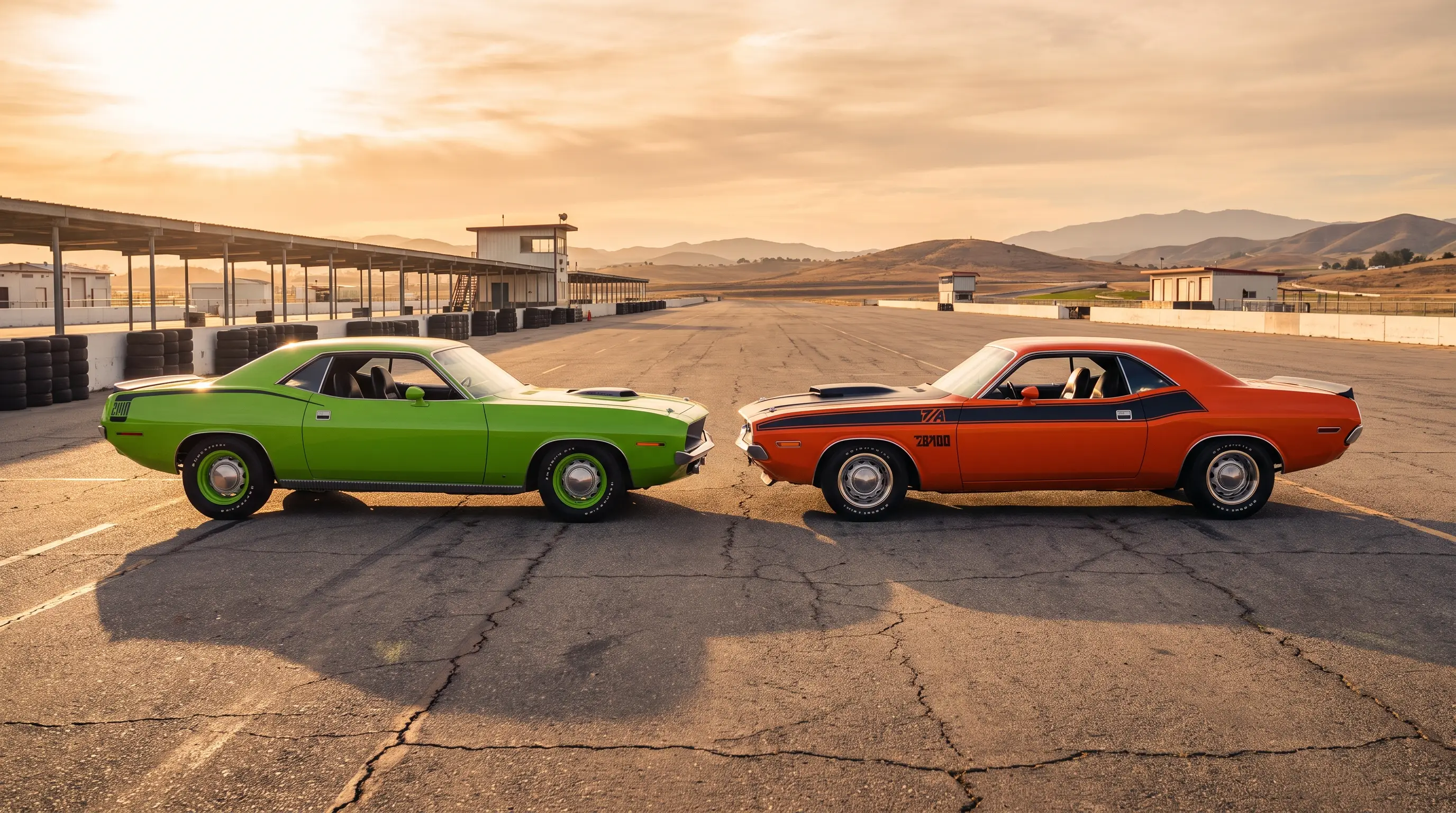
It helps to place the AAR against the company it kept in 1970, because that year was the high-water mark for the American muscle car and the field was crowded. Chevrolet had the Z/28 Camaro doing the same homologation job for the same series. Ford had the Boss 302 Mustang. Pontiac had the Trans Am, which borrowed the series name outright. Every one of those cars existed for the reason the AAR existed, to make a racing program legal, and every one of them wore the compromises of that purpose on its sleeve.
The interesting thing, from an engineering standpoint, is how differently each company solved the same problem. Ford and Chevrolet built high-revving small blocks tuned to live near the redline. Plymouth took its 340, already a strong street engine, and gave it the Six Barrel induction to broaden the torque rather than chase peak revs. The result was a car that felt more flexible in normal use than some of its rivals, at the cost of the last increment of top-end scream. Neither approach was wrong. They were answers to the same question by teams with different instincts, and the AAR's answer favored the person who actually had to drive the thing to work.
That flexibility is easy to overlook now that the car is a garage-kept collectible. When these were new, they were driven, and the ones that were driven hard are exactly the ones that thinned out. The survivors reward a buyer who understands what the car was optimized for. It was never the drag-strip weapon its big-block Cuda siblings were. It was the corner-carver of the Barracuda range, and it still drives like a car that was thinking about a road course.
Rarity, survival, and what to watch
Production is generally cited at 2,724 cars, which makes the AAR one of the scarcer factory muscle Barracudas even before you account for attrition. Cars that were driven hard, and many were, did not all survive. That scarcity is the core of the collectibility argument, and it is a defensible one. The failure mode for a buyer is not the car. It is the paperwork.
Because the AAR is valuable and visually distinct, it is a target for replication. A convincing clone can be assembled from a lesser Barracuda, and the surface details are reproducible. What is not easily faked is documentation. The engineering-minded approach to buying one is the same approach you would take to any claim: verify it. Match the numbers, trace the history, and treat an undocumented car as an undocumented car regardless of how good the stripe looks.
Why it endures
The AAR Cuda works as a collectible because it is coherent. Every unusual thing about it traces back to a single cause, a racing homologation requirement, and that gives the car an internal logic most one-year specials lack. It is not a trim package that someone dreamed up to move metal. It is the street-legal shadow of a racing program, with the compromises and the character that implies.
There is also the matter of the name, which does work that most badge engineering never manages. AAR stood for a real racing organization with real people behind it, Dan Gurney chief among them, and that connection was not manufactured for a brochure. Gurney was one of the most respected racing drivers America produced, a man who had won at the top level of the sport, and lending his team's initials to a road car meant something to the buyers who knew. The badge was a handshake with a genuine racing effort, not a costume. Cars that carry that kind of authentic tie tend to hold their meaning long after the marketing that surrounded them is forgotten.
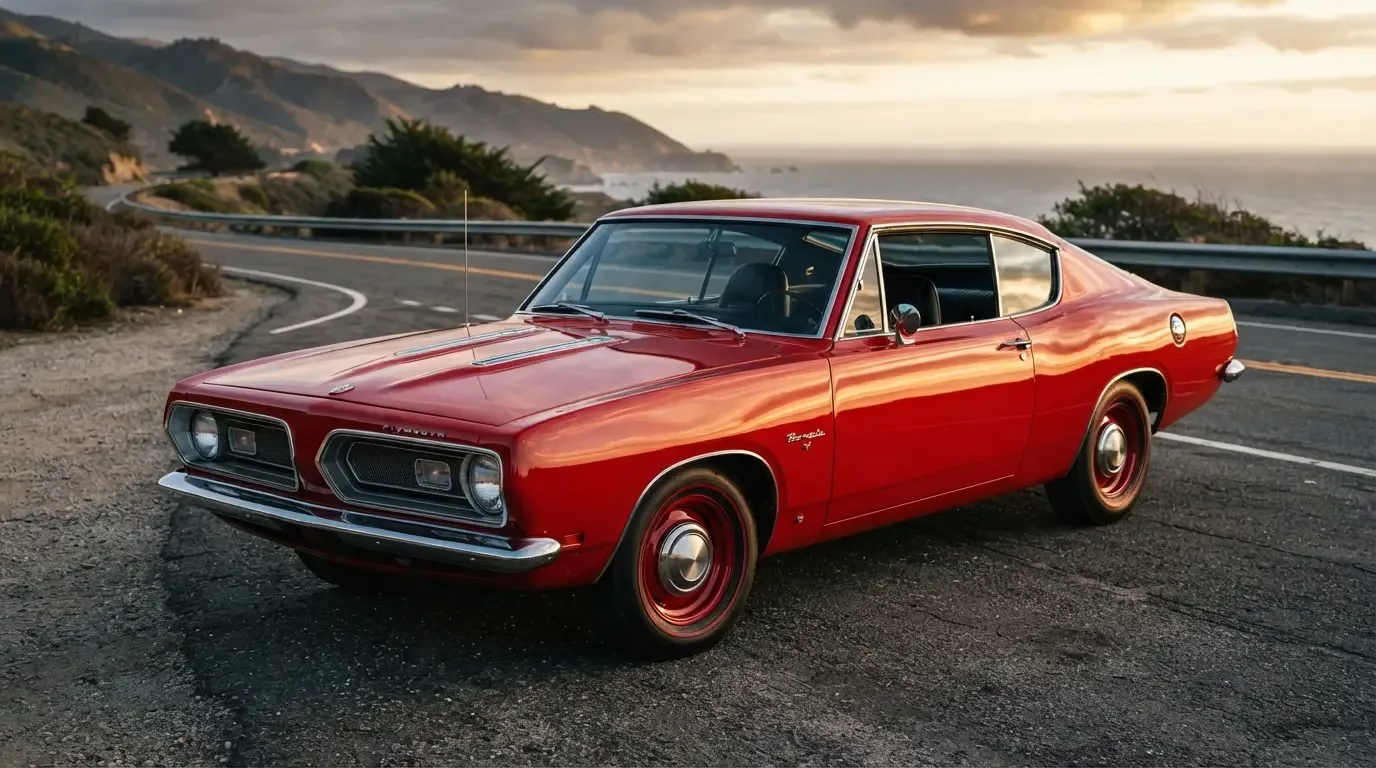
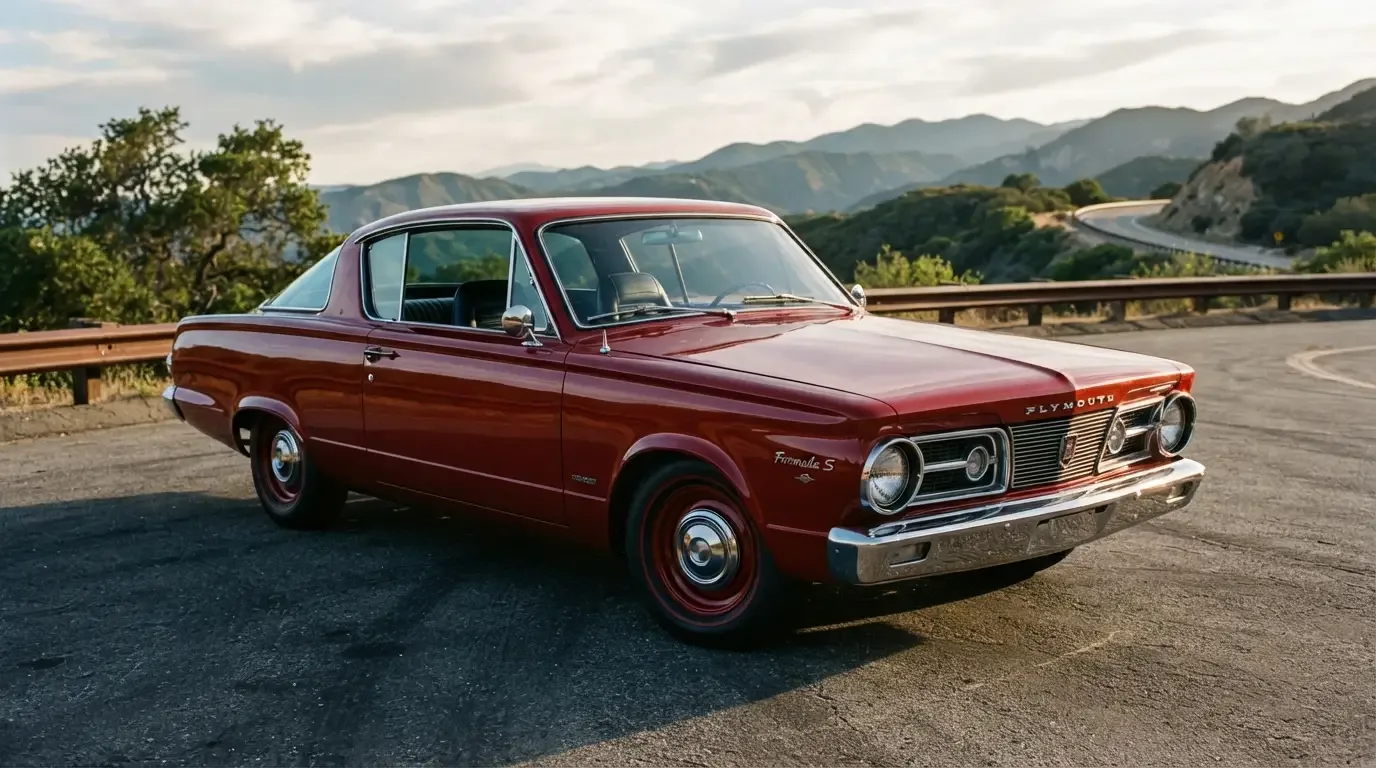
That coherence is also why enthusiasts keep coming back to it. You can explain the entire car in a paragraph, and the explanation holds. For a companion piece on the option package that first gave the Barracuda a performance identity, the Formula S story is worth a look too, because it shows how far the model traveled from a sporty compact to a homologation special in barely five years.
"Strip away the stripe and the aar cuda is still an honest car, because everything odd about it answers to a rulebook rather than a focus group. That is rarer than the production number."
- Emily Chen
The aar cuda is not the fastest muscle car of 1970, and its race season did not end in a trophy. It is something more durable than either of those things would have made it. It is a car that means exactly what it appears to mean, built for a reason it never hid, and that is why it still holds its ground four decades on.