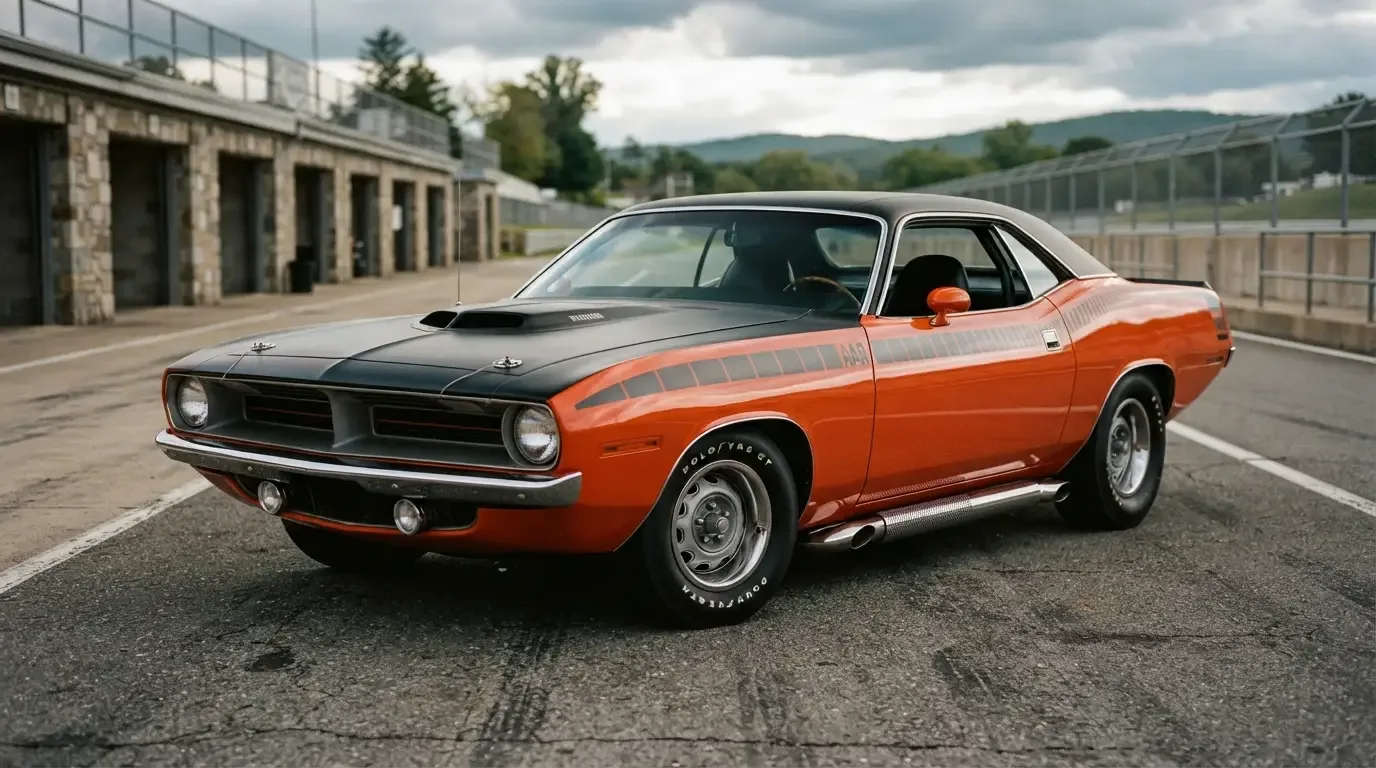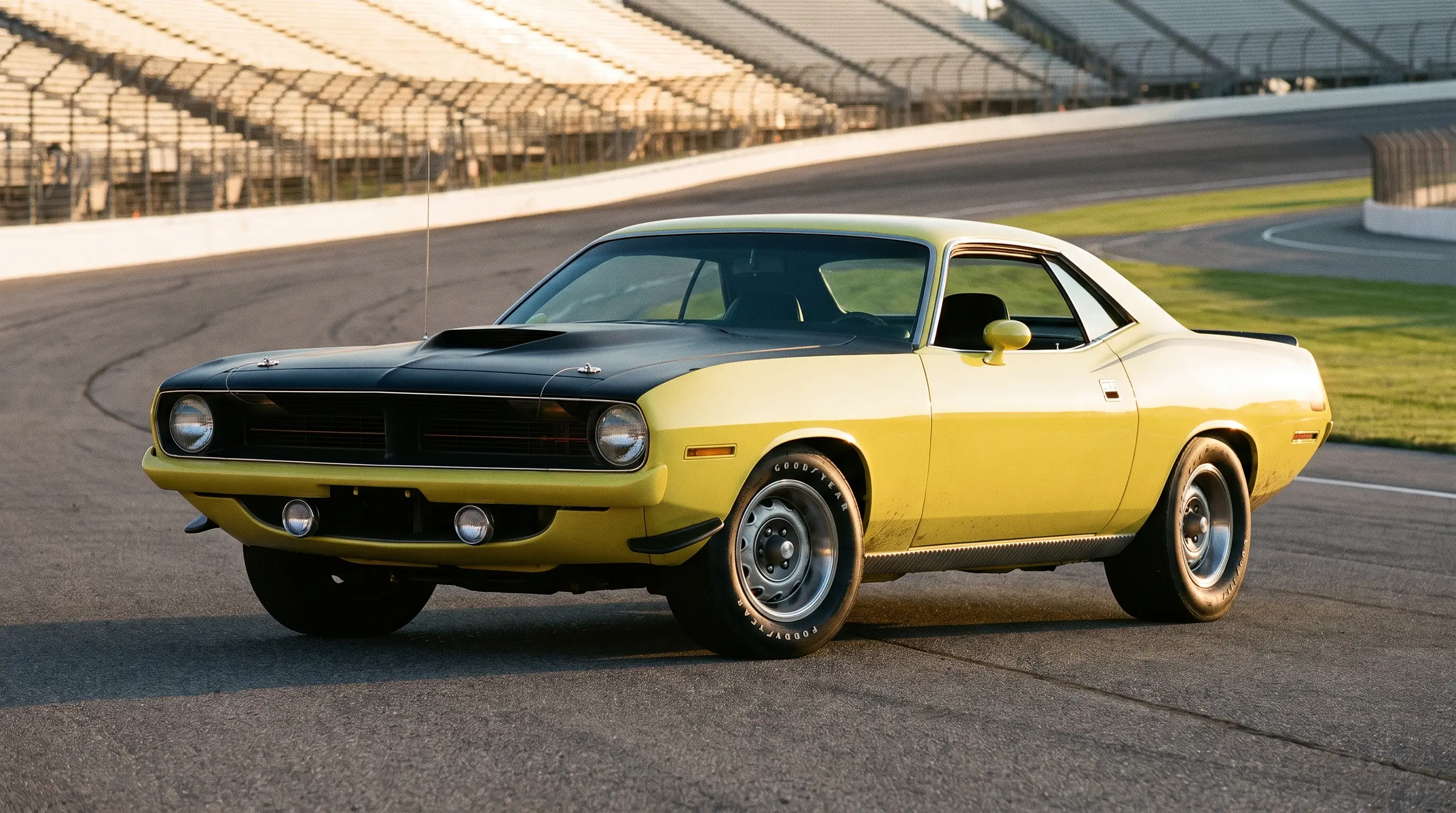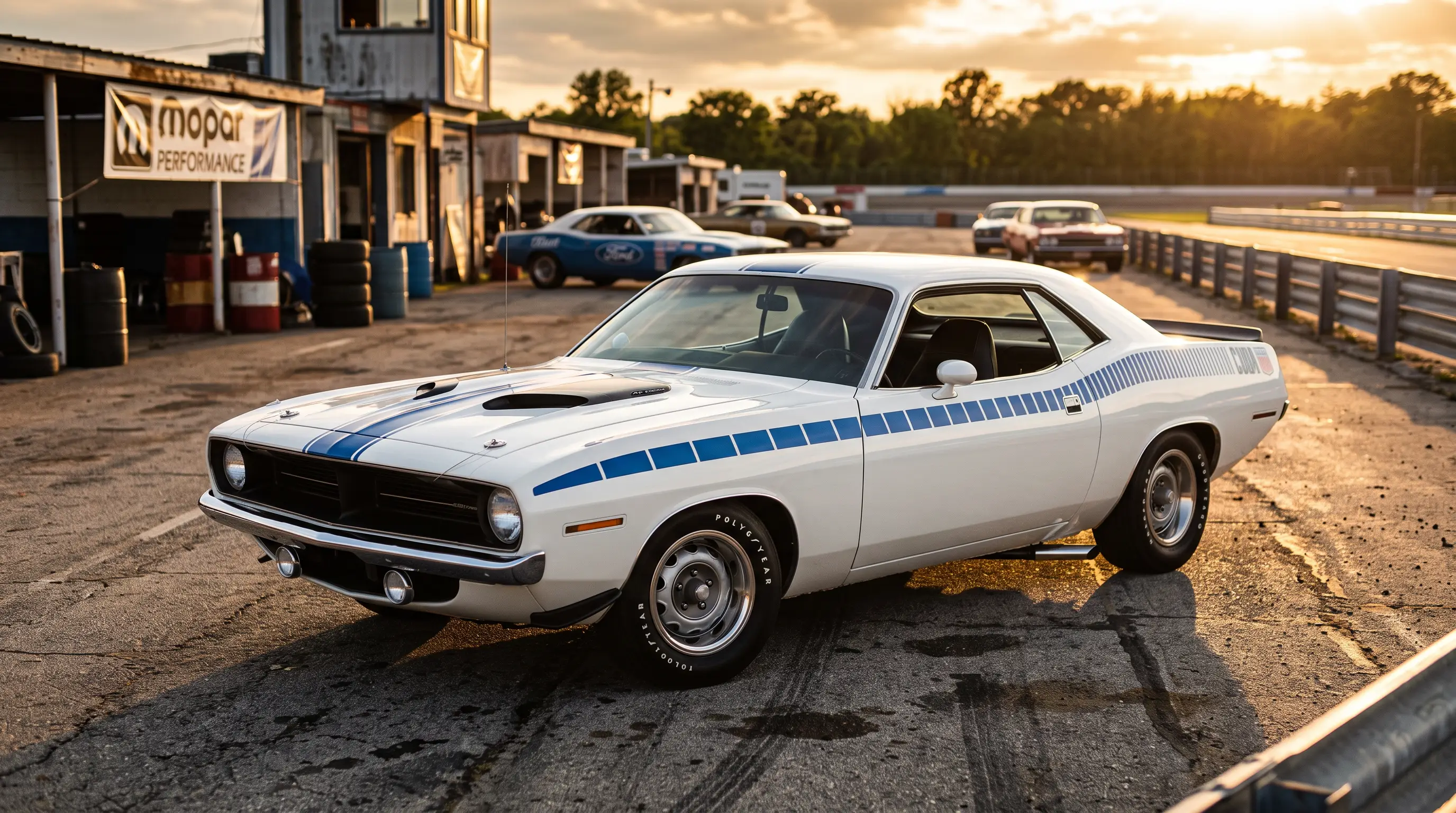
Dan Gurney had already won at Le Mans, in Formula One, and in Indy cars by the time Plymouth handed him a Barracuda and asked him to go beat Ford and Chevrolet on Sunday afternoons. The car he got was not a showroom Barracuda dressed up with a hood scoop. It was the reason the hood scoop existed. Plymouth built the AAR 'Cuda specifically to satisfy SCCA Trans-Am homologation rules, and the racing program that resulted is the whole reason the street car carries Gurney's team initials on its flank.
Why Plymouth needed a race team at all
The Trans-Am series in 1970 was the closest thing Detroit had to a public shootout. Ford ran Mustangs, Chevrolet ran Camaros, American Motors ran Javelins, and Plymouth had shown up late with the Barracuda. Trans-Am rules capped engine displacement at 305 cubic inches for the over-two-liter class, which meant none of the factories could simply drop in their biggest small-block and call it done. Plymouth needed a homologated street car with the right hardware, built in sufficient numbers, before its race cars could compete at all.
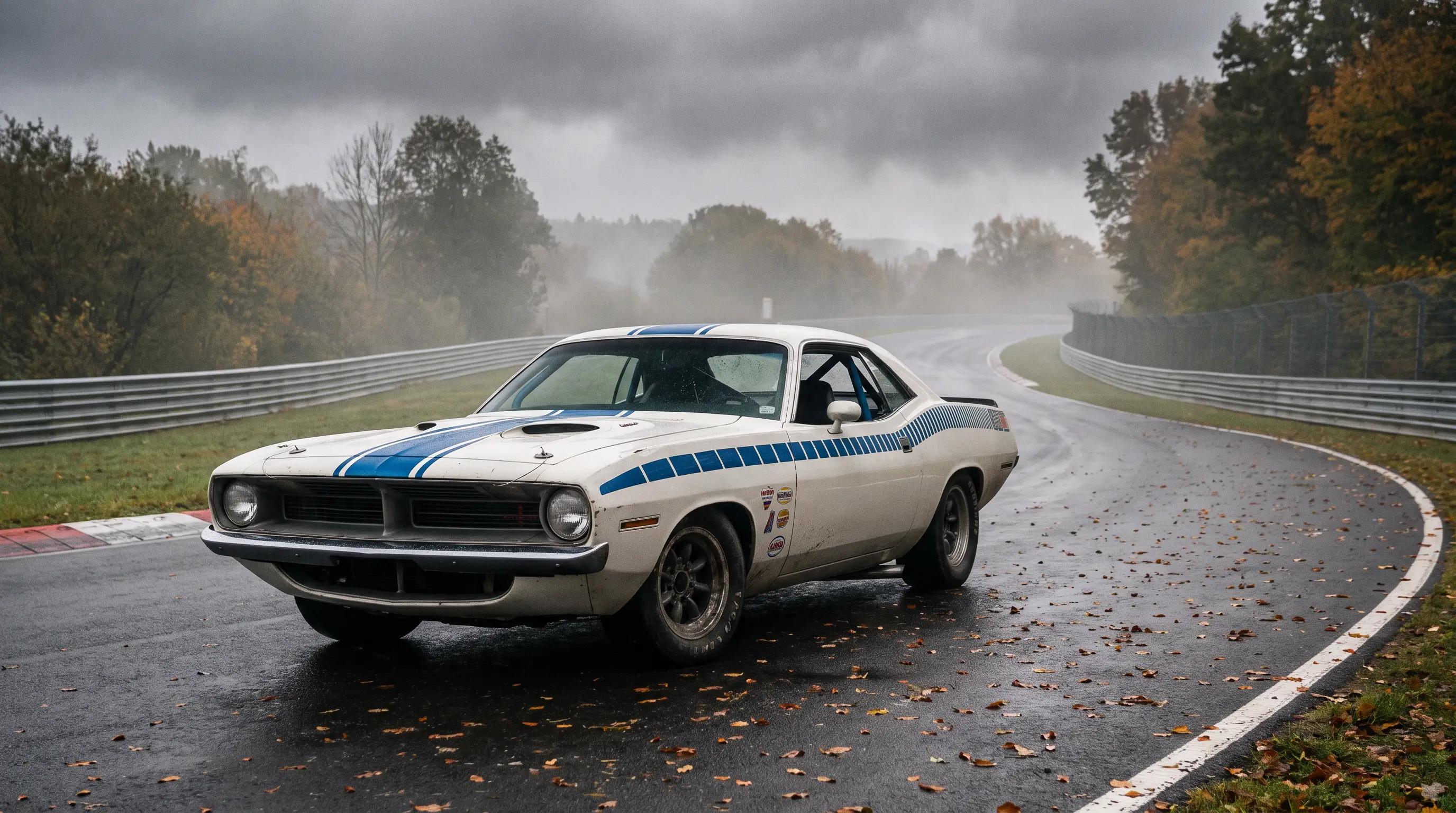
That is where Dan Gurney's operation, All American Racers, came in. Plymouth contracted AAR to run the factory Trans-Am effort, and in exchange the street car that made the whole program legal took the team's initials as its name. Gurney and Swede Savage drove the actual race cars, painted in AAR's distinctive red, white and blue colors, campaigning a season that put Plymouth back into a fight it had mostly watched from the sidelines.
The street car built to make racing legal
To race a 305 cubic inch small-block, Plymouth needed a production version. What it built instead, cleverly, was a 340 cubic inch engine, then destroked it internally to slide under the 305 limit for competition trim while the street version kept the full 340 displacement and ran three two-barrel carburetors, a setup enthusiasts still call the Six Pack or the Six Barrel depending on which parts bin supplied the intake. 290 hp at 5,000 rpm is the commonly cited factory rating, though period magazines measured output differently depending on test conditions and most agree the real number ran higher.
Buyers who ordered the manual transmission version got a Hurst-shifted four-speed rather than the automatic most Barracudas left the factory with, a detail that lines up with the car's competition intent rather than its role as a boulevard cruiser. The rear axle used heavier duty components in the higher output applications, and the front disc brakes were not an afterthought bolted on for showroom appeal. Plymouth engineers had watched what happened to underbraked muscle cars on road courses and built accordingly, and that same thinking shows up in the standard front sway bar and the wider wheels the car wore from the factory.
The visual cues on the street car were not styling exercises. The fiberglass hood with its functional scoop, the side-exit exhaust cutting out ahead of the rear wheels, and the staggered rear shock setup all existed because the race cars needed them and the rules said the street car had to have them too. A strut brace under the hood, a front spoiler, and a rear deck spoiler rounded out a package that looked aggressive because it was engineering, not decoration.
How the 1970 season actually went
The Trans-Am championship that year did not end with Plymouth on top. Ford's Boss 302 Mustangs, developed with a budget and a factory commitment that dwarfed most of the competition, took the manufacturer's title, and the season is remembered by historians as one of the deepest fields the series ever fielded. But Gurney and Savage were competitive, running with cars that had genuine pace even against factory-backed rivals, and the effort proved Plymouth belonged in the conversation rather than watching it from a distance.
Savage in particular was still building his reputation that season, a young driver paired with a veteran who had already done nearly everything a racing career could offer. The pairing gave Plymouth's effort a mix of experience and hunger that showed up in qualifying pace even on weekends where the finishing results did not tell the full story. Mechanical attrition, a fact of life in a series pushing engines and chassis to their limits every weekend, cost the team results on more than one occasion, and that is a common thread across nearly every manufacturer's Trans-Am campaign that year.
What matters for the street car's legend is not whether Plymouth won the championship. It is that the car exists at all because of that season, and every AAR 'Cuda built carries a direct link back to a specific racing program rather than a marketing department's idea of what a race car should look like. Read aar cuda history for the full production story of how few of these cars actually reached dealers.
A short production run with a long shadow
Plymouth built the AAR 'Cuda for one model year only, 1970, and the numbers were never large to begin with. Buyers who wanted the Six Pack engine, the fiberglass hood, and the visual package that announced a factory racing connection had a narrow window to order one, and by 1971 the model was gone, replaced by different trim strategies as the Trans-Am program wound down.
That brevity is exactly why the car still generates interest at shows and auctions decades later. A single season of competition, a single model year of production, and a name borrowed directly from the race team that ran it. Collectors chasing the story rather than just the horsepower figure tend to gravitate toward this car precisely because its racing pedigree is not implied, it is documented. For a deeper look at what happened after the season ended, a related story covers how the car's reputation grew once the racing stopped.
"Most homologation specials get built because a rulebook demanded it, then everyone forgets the rulebook and just remembers the car. The AAR 'Cuda is one of the rare ones where people still care about the racing that came first."
- Patrick Walsh
Why the racing story still matters to buyers
Anyone researching cuda trans am racing today is usually trying to answer a simple question: does this particular car's history line up with what Plymouth and AAR actually did in 1970? Documentation matters more here than on most muscle cars because the production run was tight and the racing connection is the entire premise of the model. A car with broadcast sheets, period photographs, or verifiable options that match the Trans-Am specification carries a different weight than one dressed up to look the part after the fact.
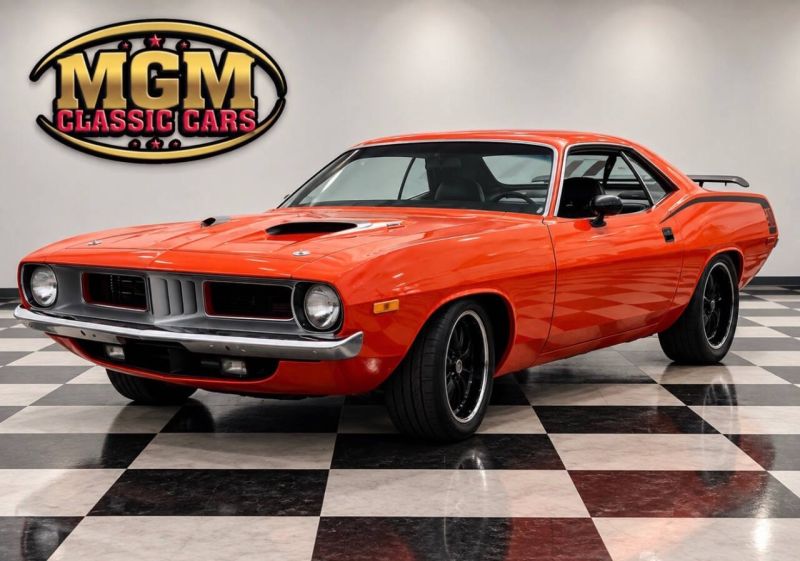
The season itself did not deliver a championship trophy to Plymouth, but it delivered something that has aged better than most trophies do: a genuine reason for a road car to exist. If you are looking to own a piece of that story rather than just read about it, Barracudas for sale now is the place to start comparing what is actually on the market against what the history books say should be there.